
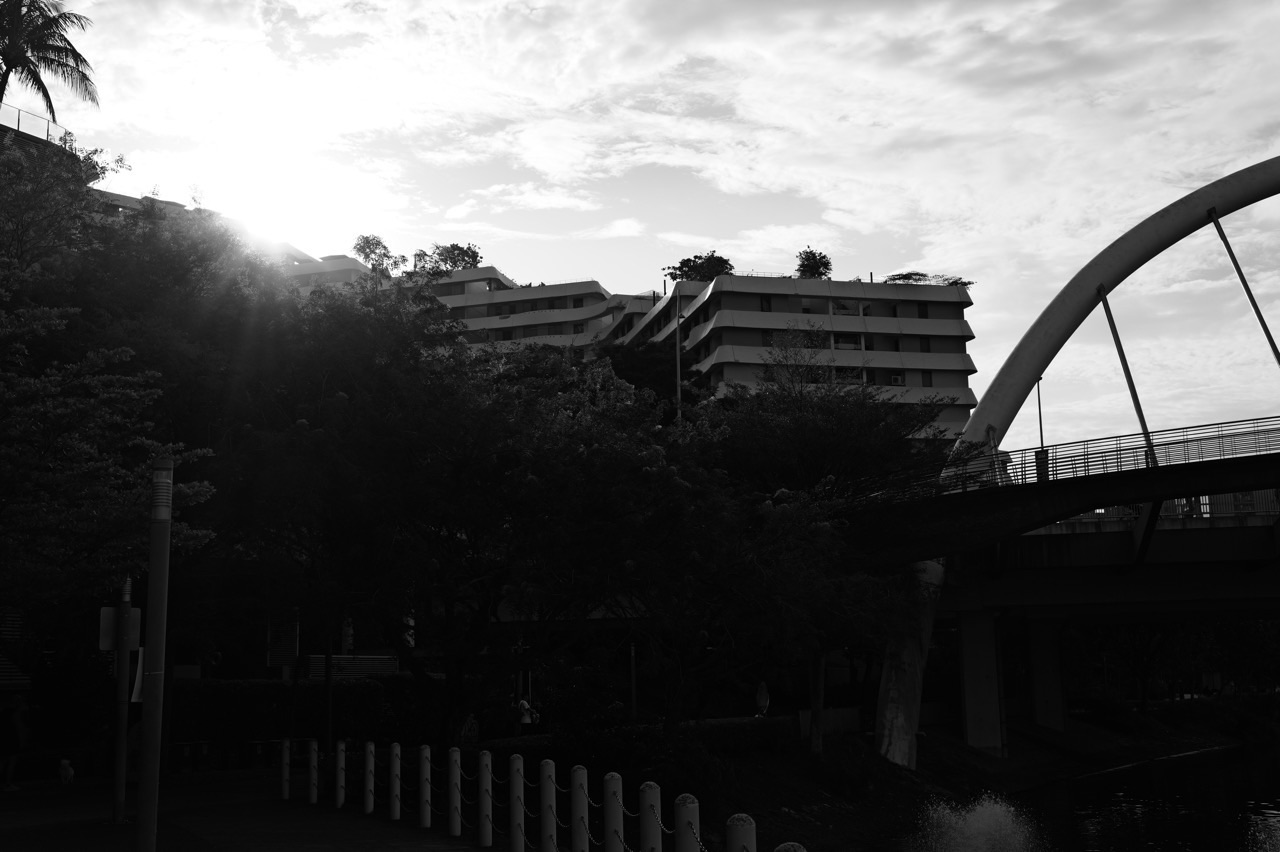
Solar panels on an HDB block in Punggol do not mean every household underneath receives free electricity or owns a share of the panels. Singapore’s SolarNova programme deploys photovoltaic (PV) systems on suitable public-building rooftops, including HDB blocks, through centrally organised arrangements. In HDB estates, the electricity can support common services such as lifts, lighting and pumps under the relevant electricity and purchasing arrangements. A family’s electricity account and retailer contract remain separate from these rooftop installations.
SolarNova is led by the Housing & Development Board and Economic Development Board. In March 2026, official government material stated that approximately 5,300 HDB blocks had solar panels by December 2025, around half the national HDB stock, and HDB would continue installing systems at suitable sites. HDB’s 2030 solar deployment ambitions form part of its green-town strategy. These are national figures; a Punggol building must be checked individually rather than assumed to be part of a completed installation.
Smart electricity meters are another distinct part of the energy system. An advanced meter can capture electricity use in half-hourly intervals and display details through the SP app, helping residents see usage patterns. Older cumulative meters are read periodically and can result in estimated interim billing that is adjusted later. Neither meter creates electricity, and the presence of solar panels nearby does not change the legal supplier of a household’s electricity.
This Understanding Punggol guide was checked against 2026 HDB, Energy Market Authority (EMA), Ministry of Trade and Industry and Open Electricity Market material. It helps HDB owners, condominium residents, students and households understand the technology, costs and proper responsibilities without claiming that a particular rooftop or private property has approved panels.
Fast answers residents can use
- SolarNova: a government-led solar deployment programme, not a retail electricity discount for every HDB household.
- Installed HDB solar: approximately 5,300 blocks by December 2025, subject to site suitability for further rollout.
- Typical estate uses: power for common-area lighting, lifts and pumps under appropriate arrangements.
- Owner of the solar installation: depends on programme and contracted developer/operator; residents do not automatically own it.
- Private flat balconies: do not self-install grid-connected systems without necessary authority, structural and electrical checks.
- Advanced meter: records half-hourly electricity consumption, visible in the SP app when supported.
- Cumulative meter: periodically read; estimated bills can be adjusted after actual readings.
- Electricity retailer: the customer’s regulated-tariff or Open Electricity Market arrangement remains relevant.
- Private condo panels: owner/MCST consent and technical compliance matter separately from HDB SolarNova.
- Home energy saving: track kWh, appliance run time, appropriate air-conditioner settings and actual contract charges.
1. Solar technology begins with sunlight, not an electricity discount
A photovoltaic panel turns some incoming sunlight into electricity. Its output changes with solar irradiation, temperature, shading and equipment conditions. Power electronics manage the electricity so it can serve appropriate loads or feed into authorised network arrangements. At night, ordinary solar panels do not generate from the sun.
A resident seeing panels on a high-rise roof should not assume the entire development runs only on solar energy. Buildings still require grid supply, especially after sunset and during poor solar conditions. Solar contributes to the energy mix rather than eliminating the national grid.
2. What SolarNova coordinates
SolarNova aggregates government-site demand for rooftop solar. The public-sector approach helps achieve scale across many suitable buildings and enables developers or operators to finance, install, operate and maintain approved systems under the tender and contracting structure.
The program is not a grant inviting each flat owner to install equipment wherever they choose. A public housing roof has structural, safety, access and property-management constraints. National deployment can therefore differ substantially from a private landed house installing its own array.
3. Why HDB rooftops are attractive sites
Singapore has limited land for large ground-mounted solar farms, while apartment roofs provide existing elevated surface area. Suitable blocks can host panels without converting another large public space into an energy facility. Practical suitability still depends on rooftop geometry, shading, plant rooms and safety access.
A tall block in Punggol may look sunny from the street yet contain unsuitable roof features or nearby obstructions. A neighbour’s block having panels does not mean every adjacent roof will receive the same installation. Technical evaluation determines suitability.
4. Who pays for solar installations under the programme
In common SolarNova leasing arrangements, a contracted solar developer finances and operates the PV system and sells electricity under an agreed arrangement to eligible public customers. The precise commercial contract governs ownership, maintenance, payments and expiry.
This arrangement is why residents should not assume they bought the panels through their HDB mortgage. They may benefit indirectly from estate efficiency, but any actual financial effect should be evidenced through the relevant public service or billing system, not inferred from a rooftop photograph.
5. Why common-area loads are an important target
Lifts, corridor lighting, water pumps and other common equipment consume electricity regardless of the individual family’s private choices. Solar power generated during suitable hours can support those shared systems within the authorised metering and electricity arrangement.
Common services are not identical to the sockets inside one flat. If electricity is used for a lift, it is part of the estate’s collective operations, not a private coupon assigned to everyone in that block. The distinction keeps billing expectations realistic.
6. A panel’s electricity does not automatically enter a resident’s meter
An HDB household has its own account and meter for its supply. The rooftop system can be connected and contracted for common-area or other eligible purposes. The ownership, metering and financial settlement are determined by the approved installation.
Therefore, a family cannot deduct an assumed solar contribution from its monthly electricity invoice. Check actual usage and applicable rebates, such as U-Save where eligible, through the proper account. A photovoltaic panel does not function as a universal household payment voucher.
7. The HDB national deployment figure needs a date
Government information in March 2026 stated approximately 5,300 HDB blocks had rooftop solar by December 2025, around half of all blocks, and more would be considered subject to site suitability. HDB’s later reporting can update this figure as installations continue.
Quote the date when discussing totals. It is inaccurate to say that 5,300 is an eternal cap or a live 2026 count for every Punggol precinct. A particular block needs individual confirmation from its responsible manager or relevant project information.
8. HDB’s wider green-town programme has multiple components
SolarNova is only one way public housing can reduce energy use or carbon emissions. HDB’s Green Towns initiatives also include smart LED lighting, lift-energy regeneration and measures to cool estates, among other programmes. Each has its own implementation schedule.
A family may benefit from comfortable outdoor spaces or efficient common lighting without its roof hosting solar panels. The energy system should be understood as demand reduction plus cleaner generation, not solely the number of panels visible.
9. How much power does one panel produce?
Output depends on the panel’s rated capacity, available sunshine, orientation, losses and actual site conditions. A hypothetical 400-watt panel operating at an equivalent of three full-output sun-hours would produce about 0.4 kW × 3 h = 1.2 kWh before losses. This is a teaching calculation, not a prediction for a Punggol rooftop.
Real production varies hour by hour and season by season. Avoid multiplying a panel’s peak-power rating by 24 hours to estimate daily output; the sun does not provide full rated conditions throughout the day and night.
10. Peak capacity and actual energy are different units
Solar project announcements often use MWp, meaning megawatt-peak installed capacity under standard conditions. Electricity bills use kWh, kilowatt-hours of energy actually consumed over time. A plant’s peak capacity is not the number of kWh it produces every hour.
For example, a 1-kWp system operating at an equivalent of 3 full-output hours could produce 3 kWh before losses in that simplified day. Actual weather and performance reduce or change the result. Converting between power and energy correctly prevents misleading solar claims.
11. Cloud cover affects solar output in Singapore
Punggol has tropical weather. Afternoon clouds and storms can reduce incoming radiation compared with clear conditions. Hot panels can also be less efficient than their rated laboratory output under certain circumstances.
These limitations do not make solar useless. Solar power contributes to Singapore’s energy mix and complements the grid, but solar capacity is not identical to firm around-the-clock supply. The national planning approach accounts for variability.
12. Why the national grid remains necessary
Homes need electricity when lifts operate overnight, residents cook after sunset and air-conditioning runs during cloudy weather. Solar production and electricity demand do not always occur simultaneously. Grid-connected electricity supports continuity under the relevant utility arrangements.
Storage batteries can serve some systems, but their costs, capacities and management must be assessed separately. A photograph of a solar roof does not establish that the development has batteries or can operate independently during a grid outage.
13. The Punggol Digital District uses a different energy architecture
JTC’s Punggol Digital District features sustainability and smart-grid concepts, with business park and SIT integration. Its energy systems, including district-level arrangements, should not be treated as identical to SolarNova on an ordinary HDB roof.
The two are useful examples of urban energy planning at different scales: a national rooftop public-housing programme and a purpose-designed mixed-use district. A reader should consult JTC for the actual PDD installation and HDB for public-housing deployment.
14. Solar power and district cooling are distinct
Solar PV produces electricity; district cooling supplies cooling services through a centrally designed system where applicable. A building can use both technologies, but one does not automatically imply the other. District cooling involves thermal infrastructure, service billing and a separate operating model.
A claim that Punggol’s rooftop panels mean every bedroom gets free cooling is incorrect. Air-conditioning inside most households still consumes electricity measured under the home’s account.
15. What an electricity smart meter measures
An advanced meter records electrical energy used through a connection, often providing half-hourly usage data accessible through the SP app. It makes patterns visible: when a household’s consumption increases, whether overnight baseline demand is high and how seasonal or behavioural changes affect usage.
A meter cannot identify exactly which appliance caused every half-hourly increase unless the household has additional appropriate monitoring. It records energy at the measured connection, not a personalised diagnosis of one person’s air-conditioner habits.
16. Cumulative meters work differently
A conventional cumulative meter records total units over time. EMA says such meters are typically read at intervals, and an intervening bill may use an approved estimate. Subsequent actual readings reconcile over- or under-estimation.
A resident noticing a corrected bill should check the recorded and estimated periods before assuming fraud. The proper comparison is actual kWh across a representative period and the retailer’s applicable tariff or pricing formula.
17. The smart-meter rollout is not proof of an individual installation
EMA has described a national rollout of advanced household metering, with wide coverage planned by 2026. However, operational FAQ material can still describe cumulative meters in use, so households should check their actual meter rather than infer their status from a national target.
Look at the SP account or meter information and the app’s available usage graph. Do not assume that every building in Punggol has identical hardware solely because it is new or close to a digital district.
18. A half-hourly graph can reveal patterns
Imagine a household’s SP app shows higher electricity consumption most evenings. That could reflect cooking, cooling, laundry or several appliances working together. The data can help the household test a plausible hypothesis over comparable days.
It cannot by itself prove one appliance is faulty. A family should avoid turning energy tracking into accusations about who used electricity. Use the graph as information for careful experimentation and sensible maintenance.
19. Worked example: air-conditioning running cost
Suppose an air-conditioner and its associated equipment consume an average 0.8 kW over six hours. The simplified energy is 0.8 × 6 = 4.8 kWh. At a purely illustrative electricity price of S$0.30/kWh, the energy component would be S$1.44.
The actual unit’s efficiency, duty cycle and charges can differ, so this is not a live quotation. It demonstrates how usage hours and measured consumption combine with the applicable price. HDB rooftop solar does not automatically erase the 4.8 kWh billed inside the home.
20. The electricity retailer remains important
Singapore households can purchase electricity at the regulated tariff through the applicable arrangements or choose an eligible Open Electricity Market retailer. The retailer’s plan, contract term, payment conditions and tariff determine what appears on the bill.
The grid continues distributing electricity regardless of the retail arrangement. A family should not interpret switching retailers as installing a new power line or owning a rooftop solar array.
21. Solar generation is not the same as electricity retail
A rooftop solar developer produces electricity under authorised arrangements; an electricity retailer sells supply to eligible customers. These functions may involve different organisations and contractual relationships. A customer’s bill can involve supply charges and regulatory components unrelated to a solar project’s ownership.
This separation also explains why a neighbour’s rooftop can host panels without the flat owner’s personal retailer contract changing. Electricity markets operate at a system level that is more complex than matching one roof to one kitchen.
22. What households can do about estimated readings
If the home has a cumulative meter and a bill uses estimated consumption, SP and the applicable electricity-market services provide authorised ways to submit a reading or review the account. An actual reading may adjust a previous estimate.
Keep photographs of the meter for private reference when appropriate, and note the dates. Do not tamper with seals or attempt to alter recorded units; electricity meters are regulated equipment.
23. Energy-saving and solar generation address different sides of the bill
Demand reduction comes from using less electricity for the same useful service, or improving efficiency. Solar generation supplies electricity from a cleaner source. A home with an efficient air-conditioner may reduce its bill even if no panels are on the roof.
A large new solar installation does not give residents permission to waste electricity. Demand and supply measures are complementary, and households retain control over many ordinary consumption habits.
24. Air-conditioner settings have practical consequences
EMA advises appropriate energy-saving habits such as setting air-conditioners to around 25°C or higher when suitable, switching off unused appliances at the socket and considering air-drying clothes. Such choices can affect consumption without changing the national energy infrastructure.
Comfort and medical needs differ between households, so no temperature should be imposed without context. The useful approach is to compare a realistic routine with the actual meter data and maintain equipment safely.
25. A sensible household energy audit
Start with the actual monthly kWh, not only the total dollar bill. Identify large appliances, their typical power ratings, use hours and unusual changes. Compare similar days rather than a heat-wave day with a cooler vacation day.
A checklist can include air-conditioning filters, refrigerator door seals, standby loads and whether appliances are appropriately sized. Do not perform dangerous electrical repairs to save a small amount of energy; engage qualified professionals for regulated work.
26. Smart meters are not private CCTV
An advanced meter records electricity use, not pictures or conversations. Usage patterns can nonetheless reveal aspects of household activity, so account access should be protected. A family member should not casually give unrelated people their utility account credentials.
Appropriate personal-data safeguards and secure app access support both billing transparency and privacy. Utility data is useful, but a graph alone should not be used to infer a resident’s whereabouts with certainty.
27. Households should not install rooftop panels themselves
HDB rooftops are shared or controlled assets subject to structural, access, electrical and safety requirements. An individual flat owner generally cannot treat the building roof as an extension of their personal unit and arrange an unapproved private solar installation there.
Even a small balcony-mounted system can raise risks involving structural loads, falling equipment, fire, electrical connection and common-property permissions. Seek the actual authority’s guidance rather than act on instructions from a product advertisement.
28. Private landed houses follow a different path
Owners of suitable landed properties may explore private solar PV, subject to structural suitability, regulatory requirements and grid-connection arrangements. The government has also simplified some mechanisms for owners to receive credits for exported electricity through recognised schemes.
The choice requires real roof assessment, quotations, warranties and an understanding of the applicable SP and EMA processes. Payback can vary with shading, consumption and the actual purchase terms.
29. Condominium owners face MCST governance
A private condominium’s shared rooftop generally cannot be committed to a solar vendor merely because one owner wants lower bills. The management corporation, title rights, structural conditions, voting or approval procedures and service agreements may matter.
A serious proposal should compare generation potential with maintenance, insurance, access, roof waterproofing and benefits to all residents. Our Punggol MCST guide explains how shared decisions are governed.
30. Solar equipment requires maintenance
Panels, electrical inverters, mounting systems and cabling require appropriate checks and long-term upkeep. Shading, soiling and equipment faults can reduce output or create safety risks. Maintenance responsibilities depend on the contract and operator.
A resident noticing loose equipment should not access a roof or touch wiring. Report concerns through the responsible building manager or operator. The safety of everyone below a high-rise installation is more important than an uninterrupted production graph.
31. Inverters and grid connection are technical components
Solar PV produces electricity that must be converted and managed for safe use within approved electrical infrastructure. Inverters, protection equipment and isolation arrangements are integral to such systems. Improper wiring can create risks for maintenance workers and residents.
A private owner should use competent, authorised contractors and follow EMA/SP requirements. A product advertised as ‘plug-and-play solar’ is not automatically legal or safe for a high-rise balcony or connection to household wiring.
32. Why rooftop waterproofing must be protected
High-rise roofs protect occupied spaces below from heavy tropical rain. Solar mounting arrangements must account for waterproofing, drainage, wind loading and access. A poorly executed installation can create damage beyond the performance of the panels.
A public programme’s technical design and maintenance requirements should be treated seriously. Homeowners should not try to modify roof penetrations or drainage simply to make room for another panel.
33. A national target is not a Punggol installation timetable
Energy-agency documents describe national solar capacity targets and commitments. These give direction for the energy transition but do not establish the installation or commissioning date for one HDB block in Punggol.
If a resident is evaluating a proposed project, ask for the confirmed building notice or project information. An HDB block may be excluded by suitability even as the national total rises. A target is not a contractual promise to each address.
34. Solar output can change with weather and shade
A building that receives strong morning sun may experience later shading from another block or cloud cover. The geometry of a rooftop matters. Peak production numbers should be interpreted with site assumptions, seasonal variability and unavoidable losses.
An ordinary street-level photograph is not enough to calculate yield. Technical assessment uses solar geometry, equipment data and operational factors. This is why generic Internet calculators cannot produce a guaranteed return for every Punggol roof.
35. What a power bill actually shows
A residential bill includes the charge for electricity consumption measured in kWh, price and any applicable administrative or regulatory components under the actual retail arrangement. Eligible rebates may offset the payable amount. The reading may be actual or estimated depending on meter type and method.
The key records are the account holder, reading period, units and tariff. A person should distinguish a consumption increase from a tariff increase; both can change the total even with identical behaviour.
36. U-Save does not mean solar-generated electricity
GST Voucher – U-Save is a household utility rebate for qualifying HDB residents under a separate government support programme. It is not a personal payout from solar panels. A household may qualify for U-Save whether or not its roof hosts SolarNova.
Our Punggol household vouchers guide explains the current rebate rules. Keep this bill credit separate from generation and retail prices.
37. Worked Punggol family scenario
A family sees solar panels on its estate roof and expects the next electricity invoice to fall. Instead of making that assumption, it checks the building’s common-service arrangement and the private meter. The household discovers that common-area power and personal usage are accounted for separately.
The family uses half-hourly meter readings, where available, to check whether changing unnecessary appliance use affects its consumption. This leads to a decision supported by data, rather than disappointment caused by a misunderstanding of SolarNova.
38. Worked apartment-manager scenario
A management agent receives questions about installation scaffolding and rooftop access. The proper response identifies the responsible programme operator, the approved work notice, expected safety precautions and who receives complaints. A generic statement that ‘solar is good for everyone’ does not answer residents’ practical concerns.
Residents should report unsafe access or loose equipment without entering restricted areas. Clear communication makes infrastructure improvements easier to understand and helps distinguish temporary construction inconvenience from a real hazard.
39. Worked energy-efficiency calculation
A household replaces an old lamp drawing 40 W with an appropriate efficient lamp drawing 8 W, used for four hours daily. The reduction is 32 W × 4 h = 128 Wh = 0.128 kWh per day, around 3.84 kWh over 30 days under the stated assumption.
The saving is modest for one lamp, but multiple improvements can add up. The actual result depends on daily use and equipment. The example shows the difference between reducing energy demand and generating electricity on a public roof.
40. Common myths to avoid
Myth: The panels belong to every flat beneath them. Correction: ownership follows programme and operator arrangements. Myth: All HDB roofs can accept PV equipment. Correction: technical suitability matters. Myth: A solar rooftop makes electricity free at night. Correction: the grid remains necessary.
Myth: A smart meter creates electricity savings without changing behaviour. Correction: it measures consumption, enabling informed action. Myth: A solar national target proves the date of a particular Punggol installation. Correction: building-level notices are needed. Myth: Every recorded peak of electricity use comes from air-conditioning. Correction: several appliances can contribute.
41. A useful homeowner checklist
- Check whether your block actually has an approved rooftop PV project.
- Distinguish common services from the flat’s private electricity supply.
- Do not install unapproved equipment on common rooftops or façades.
- Use qualified contractors for electrical work.
- Identify your current retailer, tariff and bill-reading method.
- Check whether the home has an advanced or cumulative meter.
- Review measured kWh alongside bill amounts.
- Use the SP app for eligible half-hourly data.
- Consider safe, realistic energy-saving habits.
- Keep U-Save or other subsidies separate from solar economics.
- For private or condo solar, confirm ownership, approvals and technical conditions.
- Use dated HDB and EMA statements for deployment statistics.
Frequently asked questions
Do Punggol HDB residents own the solar panels on their rooftop?
Not automatically. SolarNova systems are installed under authorised programme and operator arrangements, with ownership determined by the relevant contracts.
Does rooftop solar make my private electricity bill free?
No. Rooftop systems can support common services; your private meter, retailer and usage remain relevant.
What is SolarNova?
A government-led HDB/EDB effort to aggregate demand and deploy solar photovoltaic systems on suitable HDB and public-building rooftops.
How many HDB blocks had solar panels by December 2025?
Official March 2026 material stated about 5,300 blocks, approximately half of the HDB stock at that time.
Why does solar power fall during cloud cover?
Solar electricity depends on sunlight, so irradiation, shade, weather and equipment performance affect actual output.
Can I put solar panels on my HDB balcony without permission?
Do not assume so. HDB ownership, structural, façade and electrical safety restrictions require checking before installation.
What does a smart electricity meter show?
It can record electricity energy consumption in half-hourly periods and make that visible through the SP app where supported.
Why does an electricity bill sometimes contain an estimated reading?
A cumulative meter may be read periodically; the interim month can be estimated and later adjusted when a reading is recorded.
Is HDB SolarNova the same as the Punggol Digital District smart grid?
No. Both support sustainability but involve different sites, technical architecture, operators and contracts.
Does U-Save come from rooftop solar panels?
No. U-Save is a separate government utility rebate for qualifying HDB households.
Can a condominium MCST install solar?
Potentially, with appropriate governance, structural and regulatory approvals; an individual owner’s preference is not enough.
Is an MWp target the same as electricity generated each day?
No. MWp is peak installed power capacity; kWh describes energy actually produced or consumed over time.
Official sources and connected Punggol reading
- EMA — Driving Solar Deployment
- EMA — March 2026 SolarNova and Government Solar Factsheet
- MOT/MTI — Solar on private residences, January 2026
- EMA — Residential smart meter rollout and energy tips
- EMA — Cumulative vs advanced electricity meters
- Open Electricity Market — Metering options
- EMA — Billing and meter readings
- Open Electricity Market — Submit Meter Reading
- MOT/MTI — May 2026 residential solar outlook
- Understanding Punggol — Digital District and SIT
- Understanding Punggol — Utilities and Electricity Bills
- Understanding Punggol — Household Vouchers and U-Save
- Understanding Punggol — Strata MCST Rules
Bottom line: SolarNova turns suitable shared HDB rooftops into sources of cleaner power, while smart meters help individual homes understand consumption. Common-area generation, household bills, private solar projects and electricity rebates are separate systems. Check the actual building, meter and contract before drawing a financial conclusion.


