
A cloud engineer helps build and operate the computing environment that keeps digital services available, secure and manageable. In a real job, this can mean configuring networks, virtual machines, containers, identities, storage, deployment pipelines, monitoring and incident recovery. It is not enough to say you “know the cloud” because you have opened a dashboard or followed a tutorial once.
For someone exploring cloud engineering, DevOps or site reliability engineering careers around Punggol in 2026, the useful path is Linux and networking foundations → one cloud platform → infrastructure as code → deployment automation → access controls → monitoring and recovery → cost management → tested portfolio → verified job applications. The three roles overlap, but they do not have identical responsibilities. Read the actual advertisement before deciding which skill to demonstrate.
The IMDA Skills Framework for Infocomm Technology includes infrastructure, software engineering and operations roles. IMDA’s TeSA training partner programme explicitly identifies Cloud and Mobility, as well as Software Engineering and AI, among its areas of technical training. GovTech’s Government on Commercial Cloud is a concrete Singapore example of governed cloud operations. None of those official programmes or systems is a promise of employment at a particular Punggol company.
Cloud, DevOps and SRE: a quick comparison
| Question | Short answer | Evidence an applicant can show |
|---|---|---|
| What is a cloud engineer? | Designs or operates cloud infrastructure and services | Tested cloud deployment and configuration |
| What is DevOps? | Practices connecting development, delivery and operations | Reproducible CI/CD and collaboration |
| What is SRE? | Applies engineering to service reliability and operational risk | Metrics, alerts, incident simulation and recovery |
| Must I learn every cloud provider? | No; begin with one and transferable concepts | Clear explanation of trade-offs |
| Which foundations matter most? | Networking, Linux, scripting, identity and security | Troubleshooting and safe lab |
| What is infrastructure as code? | Versioned specifications for infrastructure | Repeatable setup and destroy process |
| What are containers? | Packaged applications sharing a container runtime | Built and tested application image |
| Why monitor? | Detect errors, saturation, latency and availability problems | Useful dashboard and alert plan |
| What does rollback mean? | Restore a known-good service or change | Tested failure and recovery |
| Why does cost matter? | Unused cloud services can incur continuing charges | Budget, resource tags, cleanup log |
| Do cloud certificates guarantee jobs? | No | Skills and project evidence still needed |
| Are government systems all on one provider? | GCC uses governed commercial cloud choices | Official current GCC documentation |
The employer needs a person who can reason about safe change and recovery, not someone who memorises service names without understanding what they do.
Why Punggol Digital District belongs in the picture
JTC’s Punggol Digital District is an integrated business-and-university setting. Organisations operating digital products may depend on networking, infrastructure, identity systems and reliable cloud-hosted services.
That creates a relevant career context, but the district’s published employment potential does not show how many cloud engineering vacancies exist today. A tenant might operate its systems from another team or outsource infrastructure operations to a provider based elsewhere.
A cloud engineer can work in finance, public digital services, telecommunications, commerce, logistics, education or many other industries. Some employers have Punggol offices; others serve customers from different places.
Read actual roles and confirm the legal employing entity, reporting location, hybrid schedule and any on-call expectations. A technical role named for Punggol might still involve data centres or customer sites elsewhere.
Nearby jobs can make commuting easier, but they are only a good career choice when the responsibilities and support are appropriate.
Infrastructure is the work beneath the application
When a customer uses an online booking service, there may be a web application, API, database, authentication service, network and monitoring system underneath the screen. Cloud engineers help provide and manage that foundation.
A system can fail because a server is unavailable, network routing is wrong, credentials have expired, storage is full, a deployment is faulty or demand exceeds capacity. One symptom can have many possible causes.
A good engineer asks what changed, which users are affected, what the available signals show and how to protect the service while investigating.
The work is not simply moving hardware into someone else’s building. Cloud platforms expose managed capabilities, but teams still need to configure, secure, monitor and pay for them.
This is why cloud engineers collaborate with software developers, security staff, product managers and operations teams rather than working in isolation.
Cloud engineer, DevOps and site reliability engineer are related but distinct
A cloud infrastructure engineer may focus on network layout, compute, storage, identity, governance and provisioning. A DevOps engineer often focuses on reliable build, test, release and configuration workflows connecting application and infrastructure teams.
A site reliability engineer (SRE) may focus especially on measuring availability, reducing operational toil, preparing incident response and improving the reliability of complex services.
Some employers combine the three roles in one team, especially smaller organisations. Others separate platform engineering, cloud operations, security engineering and SRE.
IMDA’s ICT career maps describe such role families and skills, rather than claiming every company uses one definition.
Choose portfolio evidence to match the job: a DevOps listing may prioritise CI/CD; a cloud infrastructure listing may prioritise networking and IAM; an SRE role may assess failure recovery and observability.
Foundation one: understand Linux
Many servers, containers and automated workflows use Linux or related operating systems. Learn how to navigate files, inspect processes, read logs, understand permissions and use a command line safely.
Set up a local virtual machine or controlled lab. Practise starting a small service, examining a failing process, checking disk usage and restarting it through an authorised procedure.
Understand why permissions matter. Running every command as an unrestricted administrator can conceal mistakes and create serious risk.
Learn how to read the actual error output rather than copying commands from an internet page without understanding their effects.
A good beginner project includes a few deliberately created failures and a written explanation of how they were diagnosed.
Foundation two: networking
Learn IP addressing, subnets, DNS, routing, firewalls, network ports, TLS and basic HTTP request flow. You do not need to become a telecommunications researcher first, but should know how a request travels to a service.
If a browser cannot reach a test application, distinguish DNS lookup failure from a blocked connection, a server that is not listening or an application error after a successful network connection.
Use a safe lab that you own or have permission to administer. Do not scan someone else’s network or test a Punggol building’s infrastructure to practise troubleshooting.
Draw a simple architecture with clients, public entry point, application service, database and private network boundaries. Explain which connections are allowed and why.
Networking skills are transferable across AWS, Azure, Google Cloud and on-premises environments.
Foundation three: identity and access management
Cloud services can be compromised when permissions are overly broad, credentials are exposed or inactive accounts retain access. Learn the concepts of identity, authentication, authorisation and least privilege.
A test application that reads a storage object should receive permission for the minimum legitimate operation, rather than full control of every service in the account.
Keep API keys and passwords out of repositories and screenshots. Use appropriately scoped credentials, managed secrets and rotation practices. A beginner should also learn how to revoke compromised access promptly.
A cloud training project should include a permissions explanation, not only a diagram showing everything connected. Security is part of normal engineering, not a specialist’s problem postponed until later.
Our Punggol cybersecurity analyst guide explores security operations separately; this article focuses on building and operating infrastructure responsibly.
Virtual machines, containers and managed services
A virtual machine provides a managed computing instance with its own operating system environment. A container packages an application’s code and dependencies to run through a container runtime. A managed platform service can abstract away some infrastructure administration.
No option is automatically best. A tiny application may use a managed web service; a specialised workload may need different control or performance. Choose based on operational needs, cost, security and the team’s skill.
A beginner should be able to explain what is being managed by the cloud provider and what still belongs to the application team. A managed database does not remove the customer’s obligation to set access rules or handle data correctly.
Avoid building a complex cluster merely because a tutorial says all modern applications require it. Start with the smallest system that demonstrates the intended principle.
Architecture should be understandable to the people who will maintain it, not just the person who built the demonstration.
Shared responsibility in cloud security
Cloud providers secure parts of the underlying service, while customers remain responsible for configurations and use appropriate to the chosen product. The boundary differs by service model.
For an infrastructure-as-a-service virtual machine, the customer may manage the operating system and application updates. For a managed service, the provider may perform more underlying operations but the customer still needs to configure identities, data protection and usage properly.
Do not claim that a government-certified or widely used cloud provider automatically makes every application compliant with all Singapore laws. Data classification, retention, access and sector-specific obligations remain relevant.
Document the actual provider’s shared-responsibility model for the services used in a project. Avoid promising unverified certifications or data residency.
A cloud engineer’s role includes knowing which tasks can be delegated to a service and which responsibilities remain with the employer.
Infrastructure as code turns manual setup into reviewable change
Infrastructure as code (IaC) allows infrastructure to be described in version-controlled configuration, enabling consistent setup, review and updates. Tools such as Terraform illustrate this practice, but the concept matters more than one tool.
A useful portfolio project provisions a small private network, application host and restricted storage. It includes code review, naming, tags and a cleanup process so resources can be removed safely.
Compare two approaches. Manually clicking through a dashboard can work once, but may be difficult to repeat or audit. An IaC specification can be reviewed, tested and reapplied, though a wrong specification can also replicate mistakes quickly.
Do not apply configuration changes to a real employer’s shared cloud account without authorisation. Use an isolated training environment.
The finished project should show not just that resources were created, but that they can be recreated and disposed of without lingering costs.
Version control and peer review matter
Git records changes to application or infrastructure code, but saving files to Git does not automatically make a deployment safe. Changes should be reviewed for effect, scope, security and rollback.
Write meaningful commit messages and a README that states assumptions. Keep the infrastructure project structured so another engineer can understand its purpose and boundaries.
Consider how the system handles different environments: development, test and production. A setting suitable for a local demonstration, such as unrestricted debugging, may be inappropriate for a live service.
Do not commit secrets. Check whether example configuration files accidentally contain customer identifiers, real service tokens or internal domain names.
The job skill is disciplined change management, not collecting a high number of commits.
Continuous integration and delivery
Continuous integration (CI) automates steps such as building software, running tests and checking changes. Continuous delivery or deployment (CD) prepares or releases an approved version into the appropriate environment.
A small training pipeline might install dependencies, run unit tests, build a container image and deploy to a safe test environment only after the checks pass.
Add a failure test: deliberately introduce a broken function and confirm the pipeline blocks deployment. Then restore the code and verify that the successful version can be released.
Do not grant an automation account unrestricted permission across all production services. Use appropriate credentials, environment separation and approval points for significant changes.
The GovTech cloud engineering internship example describes Terraform, CI/CD and cloud platforms as real learning topics; it is an illustration of technical work, not a permanent job offer or an active vacancy guarantee.
Worked CI/CD example: protect a small booking service
Imagine an invented booking API with tests for valid requests, duplicate booking attempts and missing fields. A new code change accidentally allows the same booking identifier to be accepted twice.
The CI pipeline runs a duplicate test and fails. The proposed release should be blocked until the defect is corrected and reviewed. This shows the value of automated checking.
Now imagine a different change passes tests but fails after deployment due to a configuration mismatch. The operations plan should identify how to detect the problem and restore a known-good version.
A portfolio can show the test results, pipeline steps, incident notes and successful recovery. No real customer records are necessary.
This fictional example demonstrates the full lifecycle, not proof that a candidate has operated a bank-scale service.
Monitoring: observe what users experience
A service can be “running” in the infrastructure dashboard but still fail every real customer request. Monitoring should therefore include indicators related to user outcomes.
Common signals include latency, traffic, errors and saturation. Measure response times, failure rates, request volume and resource limits as appropriate. Logs, metrics and traces can answer different questions.
For example, a slow request might result from database queries rather than the web server’s CPU. A useful dashboard helps narrow the problem instead of showing dozens of graphs without an action plan.
Define what constitutes a serious incident and who should respond. An alert should be actionable; a system that pages someone every minute for harmless fluctuations is not reliable operations.
A portfolio can contain a simple monitoring panel and a written explanation of what each metric would trigger.
SRE: reliability needs explicit objectives
An SRE team often defines a service-level indicator (SLI), such as successful requests, and a service-level objective (SLO), such as a target proportion of good requests over a period.
Those measures differ from broad marketing statements promising that a service is “always available”. Even a 99.9% objective permits some errors over an appropriate window; it does not guarantee no outage.
The SLO should reflect the product’s real user needs and operational constraints. A non-critical hobby site and an essential payment service may justify different reliability goals.
An error budget helps teams reason about how much unreliability can be tolerated while balancing changes and stability. It is a planning tool, not an excuse to ignore serious incidents or safety obligations.
A beginner can practise these concepts on a synthetic system without claiming to be a production SRE.
Worked example: an error budget with transparent arithmetic
Suppose a fictional digital service has a target of 99.9% successful requests over a defined evaluation period. Out of 100,000 requests, the objective allows approximately 100 unsuccessful requests within that simplistic request-count model.
If monitoring records 70 failed requests, roughly 30 failures of the illustrative budget remain. If 140 failures occur, the target has been missed. The exact operational policy depends on whether failed requests were counted correctly.
This is not a claim that all failures are equally important, or that a banking service can ignore a serious security incident because the percentage remains within target.
Latency, availability and correctness can require different indicators. A success response with incorrect data may still be a damaging failure from the user’s perspective.
The value of the arithmetic is to explain how teams make service objectives explicit, rather than relying on an undefined statement of “five nines”.
Incident response is an engineering skill
When an outage occurs, the first goal is to protect users and restore safe service, not immediately assign blame. Identify what broke, when it began and the scope of impact.
A practical incident process includes severity classification, a responsible incident lead, communication to relevant stakeholders, mitigation, recovery verification and a later review of root causes.
If a recent deployment caused the problem, rollback may be appropriate. If a credential was compromised, restoration may require revocation and security handling rather than simply restarting a container.
Keep a concise incident timeline. Distinguish observed facts from hypotheses. Explain what the team tried and why.
A junior cloud engineer can demonstrate this using an authorised controlled failure drill and a written post-incident review, without disrupting anyone else’s service.
Worked incident drill: a missing configuration value
In a fictional development service, a new deployment forgets a required environment setting. Requests to the API return server errors.
The test engineer confirms the user-visible failure, reviews recent changes, checks authorised application logs and compares the configuration with the last healthy version.
The team restores the known-good configuration, reruns a functional test and verifies that error rates return to normal. The post-incident note identifies a missing pre-deployment validation and proposes adding a check.
The result is not “we achieved perfect uptime forever.” It is a demonstrated method for detection, rollback and prevention of recurrence.
An employer reviewing the project can assess clarity, caution and process rather than a sensational outage story.
Backups are only useful when recovery is tested
A cloud console may report that backup files exist, but that does not prove they can be restored or that the recovered data are useful.
Learn the difference between backup frequency, retention, recovery point objective (RPO) and recovery time objective (RTO). A service that cannot tolerate more than fifteen minutes of data loss needs different arrangements from an archive updated monthly.
For a portfolio, create a database with synthetic records, take a controlled backup, deliberately remove the development copy and restore the data. Verify row counts and a few meaningful checksums or known values.
Do not test recovery by deleting a real customer database. Use an isolated environment and a clear safety boundary.
The ability to demonstrate recovery is stronger evidence than a screenshot of a green backup status icon.
Cloud storage and data governance
Different storage services have different characteristics around durability, consistency, access, versioning and cost. Choose a service based on how the application uses data.
Avoid publishing storage buckets or opening database access to the entire internet merely to make a tutorial work. Use least privilege and private networking where appropriate.
Data retention is not just a billing decision. Singapore’s PDPA and organisational contracts can require appropriate protection, retention limitation and controls over personal information.
For a public portfolio, use fictional records and clear lifecycle cleanup. A real employer may need vendor due diligence, classification and approved cloud regions.
Our Punggol AI and PDPA workplace guide explains why access to customer data is not permission to copy it into an unapproved environment.
Government on Commercial Cloud: a grounded Singapore example
GovTech’s Government on Commercial Cloud (GCC) gives government agencies a governed way to use commercial cloud services.
Its published page states that more than 70% of eligible government systems have moved onto GCC, with improved observability, auditability and operational controls. The platform supports use of AWS, Azure and Google Cloud under relevant Singapore Government requirements.
This does not mean every government system is public cloud, or that an ordinary private company’s cloud project automatically satisfies government security rules.
For a career learner, GCC illustrates why cloud engineering is about governed operations, not merely deploying a virtual machine.
The GovTech technology stack overview also describes infrastructure, API exchange, digital identity and reusable components that support digital government services.
Government cloud learning must not use unauthorised systems
A beginner can read public GovTech resources and develop original cloud projects. That does not give them permission to test government systems, scan restricted endpoints or present themselves as an authorised engineer.
If an official training or internship is available, follow its application and access rules. GovTech publishes illustrative project descriptions, which can help candidates understand expected skills.
A candidate can learn Terraform, CI/CD and IAM in their own account without copying internal government configuration. Public documentation is a learning resource, not an operational credential.
Never claim a public project is certified by GovTech because the design resembles a government architecture diagram.
A responsible engineer understands authorisation as well as technical ability.
Cost management: unused infrastructure is still a bill
Cloud platforms charge for various resources and usage. Storage, managed services, public addresses, data transfer and compute can continue to incur charges even when nobody is actively viewing the application.
Before creating a lab, set a realistic budget and alerts. Use the platform’s cost estimator and learn how services are billed. Clean up resources after each exercise.
Tag resources clearly and identify which account owns them. A repeatable destroy procedure is a useful portfolio feature, but check that it cannot remove unrelated resources.
A candidate should be able to explain the approximate cost of their architecture and how it might change with demand. Do not invent a “free forever” promise for services whose provider terms or allowances may change.
Financial discipline helps a cloud engineer choose practical solutions and protects a learner from an unexpectedly expensive training project.
A hypothetical cost comparison
Imagine an invented small application that receives only a few hundred requests daily. Option A uses a continuously running virtual machine, while Option B uses a managed service that charges largely by use.
Neither option can be selected solely from the description. Costs depend on region, compute size, storage, data transfer, free allowances and service characteristics. Security, operational complexity and latency also matter.
A valid experiment would estimate monthly charges using current provider calculators, deploy both options within a defined safe budget and compare observed behaviour. Record which costs were included and which were estimated.
Do not write that one particular provider is universally 40% cheaper without a grounded comparable workload and current price data.
A portfolio can show the decision process even without quoting an unreliable future bill.
Sustainable computing is part of cloud operations
Data centres consume energy, so infrastructure choices can affect environmental as well as financial performance. Resource utilisation, appropriate hardware, efficient software and operational practices can reduce waste.
IMDA’s Green Data Centre programme recognises operators demonstrating sustainable design and efficient management. The 2026 guidance includes energy efficiency, digital tools and maintainability.
This does not mean every cloud engineer works inside a data centre or holds a green-building certification. It means efficiency can be a meaningful engineering consideration alongside reliability and cost.
For a portfolio, show how a service scales down when idle or avoids unnecessary compute and storage. Do not turn that into an unverified claim of a specific carbon saving without a valid measurement method.
Punggol’s sustainability narrative offers context, but it does not change the need for genuine engineering evidence.
Training and certification: choose the gap first
Cloud vendors offer certificates and labs, and IMDA’s TeSA programmes help workers develop relevant skills. Certifications can give structure and demonstrate assessed knowledge, but their value depends on the role and actual competence.
A worker moving from IT support may already know troubleshooting and networking, needing further infrastructure automation. A software developer may know CI but need deeper cloud IAM and operations.
Do not spend money on five provider certifications without building a service or testing recovery. Employers may ask for hands-on examples, and a certificate alone does not explain what a candidate can operate safely.
The Skills Framework for ICT helps identify job pathways and technical skills. Check actual providers and employer requirements.
Some roles require specific professional qualifications or experience. Do not assume all entry-level cloud jobs are open to someone with no technical foundations.
How to design a safe first cloud portfolio
Build a small fictional appointment service with a database and simple API. Run it locally first, then deploy it to an isolated cloud training account.
Automate infrastructure creation with IaC, use a CI pipeline with tests and apply minimal permissions. Add monitoring for errors and a documented backup and recovery procedure.
Publish an architecture diagram, source code without secrets, deployment instructions, test outcomes and a cleanup procedure. Do not make real customer data available through an internet endpoint.
Add one controlled failure drill: introduce a reversible misconfiguration in the test environment, detect the issue, recover and explain the prevention measure.
A reviewer can now assess a complete workflow instead of a disconnected list of cloud service icons.
What to include in a cloud portfolio case study
| Section | Evidence to include |
|---|---|
| Problem | User-facing purpose and workload assumptions |
| Architecture | Services, network boundaries and ownership |
| Security | IAM, secrets, encryption and access decisions |
| Automation | IaC and tested deployment pipeline |
| Operations | Logs, metrics, alerts and incident roles |
| Reliability | Backup, rollback and recovery test |
| Cost | Budget method, assumptions and cleanup |
| Limitations | Missing production-scale tests, known risks |
| Reproduction | Code, safe sample data and setup instructions |
Do not include live credentials or internal employer endpoints. Demonstrate your own work and mark invented test data as invented.
On-call work is part of evaluating a cloud job
Some cloud and SRE teams provide support when systems fail outside ordinary office hours. Not every position is on call, but a candidate should check the actual arrangement before accepting.
Ask how often a worker is on call, which incidents trigger contact, how escalations work, what compensation or time arrangements apply and whether junior engineers receive supervision.
Someone living near Punggol Coast may save commuting time but still face disrupted evenings if the job has frequent incidents. A short walk to the office does not guarantee an easy schedule.
The employer should also plan sustainable incident response. Repeated overnight interruptions can create fatigue and mistakes, undermining the reliability the team is supposed to provide.
Our Punggol burnout and work-stress guide addresses the general wellbeing dimension without assuming technical roles are inherently unhealthy.
Junior cloud engineer interview questions
An interviewer may ask why a service is unreachable, how DNS differs from a firewall error, how to restrict an application’s credentials or what you would do after a failed deployment.
Other questions can test containers, IaC, safe storage, backups, monitoring and whether the candidate can identify the root cause of a simple issue. A senior SRE role may require deep experience in distributed systems and incident leadership.
Bring one tested project and explain the exact steps. Be able to say which choices you made, what evidence you gathered and how you would reduce risks.
Do not invent experience operating a production banking cloud because you deployed an application to a personal account. State the scope accurately and explain the transferable methods.
Our Punggol job interview guide provides a useful structure for presenting honest examples.
A twelve-week cloud engineering plan
Weeks 1–2: practise Linux, command line, files, logs and a basic web service. Learn DNS, ports and TCP/IP concepts through permitted local exercises.
Weeks 3–4: open a safe training account with budget controls. Deploy a small application, configure IAM and explain network access using a diagram.
Weeks 5–6: create the infrastructure using versioned IaC. Confirm that the setup can be reproduced and deleted without affecting unrelated services.
Weeks 7–8: add CI tests and an appropriate deployment workflow. Test what happens when code or configuration is broken.
Weeks 9–10: add logs, metrics, backup and a controlled recovery drill. Define a small service-level objective and appropriate alert conditions.
Weeks 11–12: review security and costs, remove secrets, document failures and limitations, publish the case study and practise troubleshooting questions.
The plan is educational and self-directed, not an official cloud certification or a promise that twelve weeks replace professional experience.
A thirty-day production-readiness audit for a real team
Week one: clarify the service’s users, critical tasks, actual data classification and dependencies. Confirm who is authorised to operate and change the system.
Week two: inspect identity permissions, networking, secrets handling and deployment change controls. Document unapproved or unnecessary access.
Week three: verify monitoring, on-call contacts, backup and recovery procedures through safe approved tests. Identify operational gaps.
Week four: review cost, capacity, documentation and the incident-response playbook. Assign owners to corrective actions and schedule a retest.
This is an editorial audit outline, not a government certification process. High-risk systems require appropriate expert assessment, internal approvals and sector rules.
It demonstrates to prospective cloud engineers that real operations involve continuous review, not a one-time installation.
Comparing cloud work with software and cybersecurity careers
Our software engineer article focuses on application development and maintainable code. Our cybersecurity analyst guide focuses on identifying, triaging and responding to security events.
A cloud engineer often enables the environment the application runs on, while DevOps work bridges reliable software delivery and operations. SRE focuses strongly on reliability outcomes and reducing operational toil.
The roles overlap in tools, but the questions they optimise differ. A developer might ask, “Does this feature work?” A cloud engineer asks, “Can we deploy and operate it safely?” An SRE asks, “Can users depend on it, and can we recover when it fails?”
Choosing a pathway becomes easier when the candidate is interested in the actual problems of the role, not only its salary or fashionable title.
Is formal education necessary?
Some employers seek diplomas or degrees in computing, engineering or related areas. Others may accept demonstrable skills and experience, depending on the role. Cloud operations involving critical systems can demand substantial technical maturity.
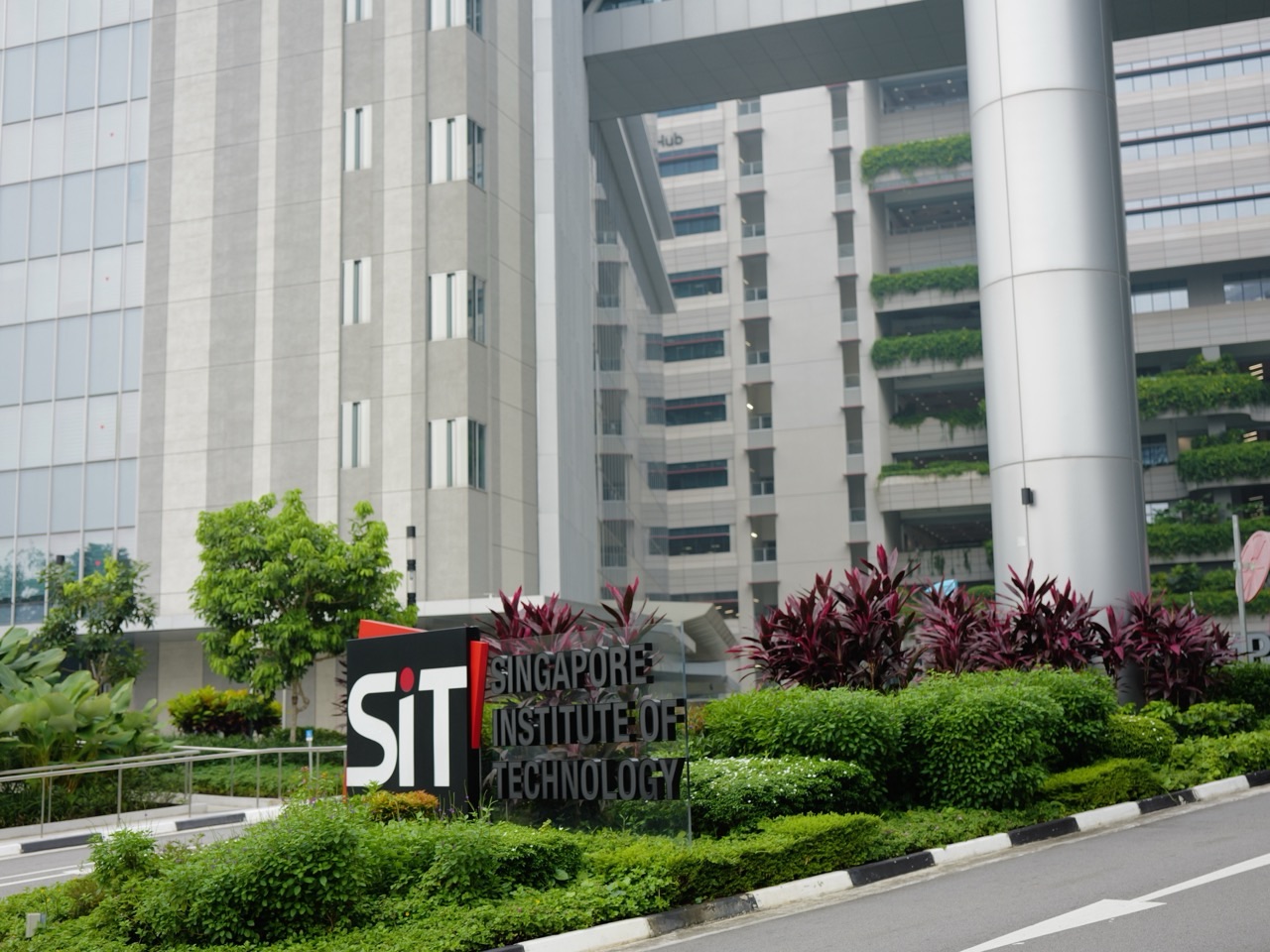
A Punggol resident may explore appropriate pathways at SIT, other institutions or professional training providers. The course must be verified individually; no campus automatically guarantees a cloud job.
A worker already in network administration or software development may find a transition more direct than someone who has never used a command line. An honest skills audit helps determine the next step.
Never misrepresent a home lab as years of commercial production experience. The lab can still be valuable when documented well.
Practical evidence and appropriate education complement each other rather than replacing the need for genuine work readiness.
Frequently asked cloud career questions
What does a cloud engineer do?
Builds and operates infrastructure, permissions, networks and services supporting digital applications.
Is DevOps the same as a cloud engineer?
The responsibilities overlap, but DevOps emphasises software delivery and operations practices while cloud engineering can focus more on infrastructure.
What does SRE mean?
Site reliability engineering applies engineering methods to service reliability, incident response, monitoring and operational improvement.
Do all cloud jobs require on-call shifts?
No. The working arrangement varies. Read the actual vacancy and ask the employer about incident cover.
Is Linux useful?
Yes, it is a common foundation for cloud infrastructure and containers, though roles differ by platform and operating environment.
Must I master AWS, Azure and Google Cloud together?
No. Start with transferable networking, identity and computing concepts and one platform, then learn differences as needed.
What is IaC?
Infrastructure as code expresses infrastructure configurations in reviewable, repeatable files instead of only manual clicks.
Is a Terraform course enough?
Not by itself. Employers may expect safe implementation, troubleshooting, testing and documentation.
What is CI/CD?
Automation that integrates code changes, tests them and prepares or carries out appropriate releases.
What are the four golden signals?
A widely used monitoring lens involves latency, traffic, errors and saturation. Actual signals should match the service.
What is a rollback?
Restoring an earlier known-good state or deployment when a change fails, using a tested and appropriate process.
Does having a backup mean recovery will work?
No. Test restoration with safe representative data and verify the result.
Is 99.9% uptime perfect?
No. It is a target allowing some errors or downtime under a defined measurement; actual impact matters.
Can a cloud project use actual customer data?
Only with proper rights and organisational approval. Use synthetic data for public portfolios.
Can a learner probe a PDD company’s network for practice?
No, not without specific authorisation. Build and test your own safe environment.
Does a cloud certificate guarantee a Punggol job?
No. Genuine vacancies, qualifications and demonstrated abilities still govern hiring.
Is GCC only one cloud provider?
GovTech describes governed use of multiple commercial cloud providers under its framework.
Is environmental performance relevant to cloud careers?
Yes, efficiency, utilisation and appropriate operational practices can matter, but specific carbon savings need actual measurement.
Should I learn cloud before programming?
Basic scripting helps. The optimal order depends on the role, but networking and Linux foundations are broadly valuable.
Are there guaranteed cloud vacancies at Punggol Digital District?
No. JTC’s district description and skills programmes do not establish current individual vacancies.
Sources, evidence and next steps
Verified in October 2026: IMDA’s ICT skills framework and TeSA cloud-related training tracks, GovTech’s Government on Commercial Cloud, the Singapore Government tech stack and IMDA’s green data-centre guidance. These establish a national skill and operational context, not guaranteed Punggol recruitment.
Illustrations: the booking API, error budget, incident drill, cost comparison and training timetable are original educational examples. They do not describe actual outages, cloud accounts or employer projects.
- IMDA: Skills Framework for ICT
- IMDA: TeSA training partners
- GovTech: Government on Commercial Cloud
- GovTech: Digital technology stack for the public sector
- GovTech: Cloud platform engineering internship example
- IMDA: BCA-IMDA Green Mark for Data Centres
- Singapore: Personal Data Protection Act
- JTC: Punggol Digital District
- MyCareersFuture: Official vacancy search
- eduKatePunggol: AI engineering career
- eduKatePunggol: Cybersecurity operations pathway
- Working in Punggol: All guides
Working in Punggol: connected technology career guides
Compare the skills, work evidence and career routes across Punggol’s technology occupations. Each guide owns a different job decision rather than repeating the same career advice. Browse the complete Working in Punggol series archive for more employment systems and career pathways.
