
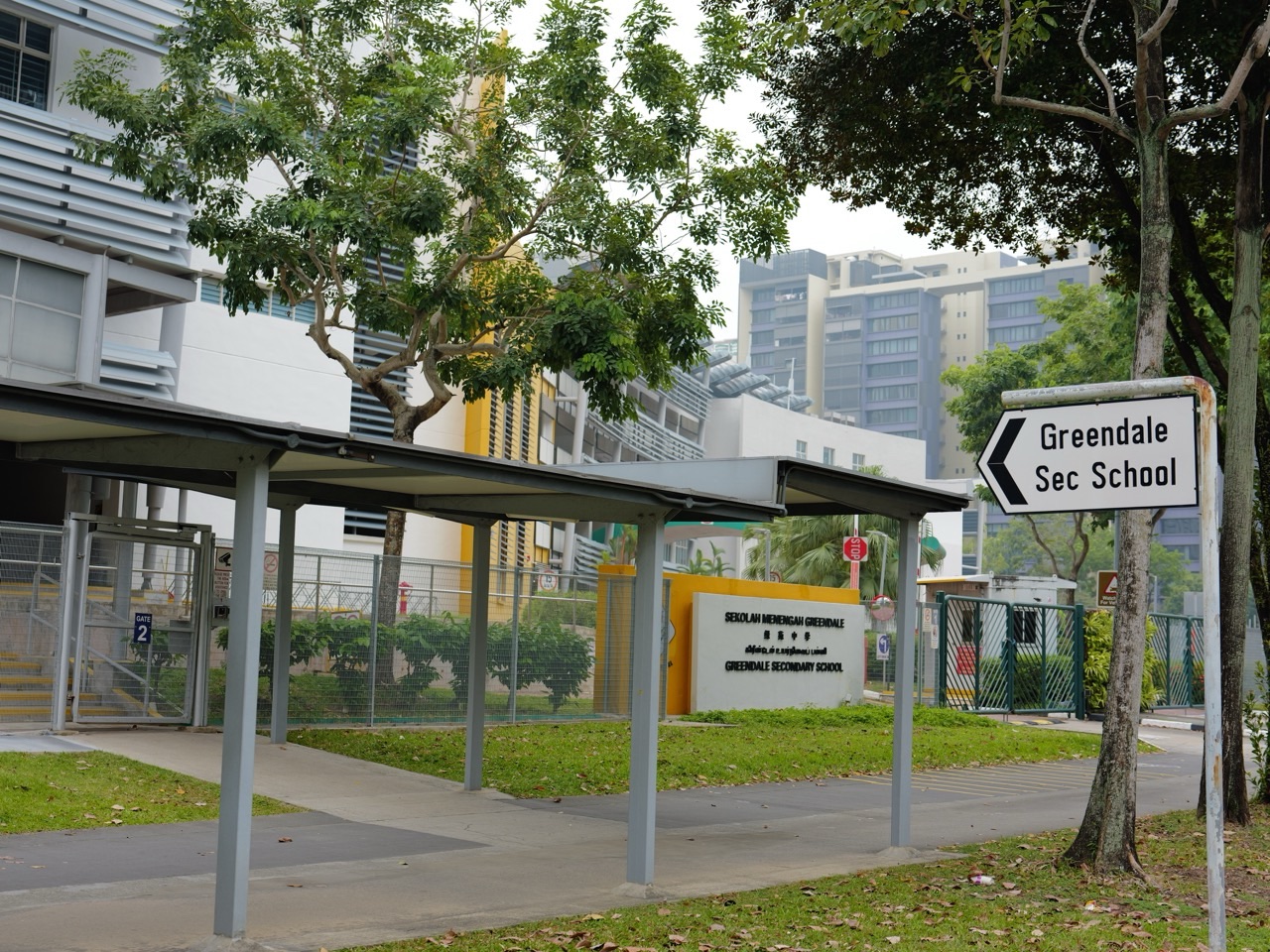
The quick answer: A school or campus open house should help a Punggol family answer whether an institution’s learning environment, programmes, support and daily journey suit the actual student. It is not an admissions guarantee, and the liveliest exhibition booth does not prove that a child will be offered a place. For a family approaching Secondary 1, the most useful open-house questions concern school culture, academic and CCA choices, student support, the route home and the individual’s interests. At ITE, polytechnic, JC or university, questions shift toward course content, prerequisites, projects, practical training, finance and graduate pathways.
Use a three-stage plan: Before visiting, shortlist institutions using official information. During the visit, ask the student to identify meaningful questions and listen to actual staff and learner experiences. After returning home, compare confirmed facts, what the student observed, and what remains to be verified. Keep admission eligibility, open-house participation and final posting or offer as separate steps.
This Life in Punggol guide covers open houses from the Primary 1 transition to secondary schools, JC, ITE, polytechnics and the Singapore Institute of Technology at Punggol. It does not reproduce a directory of event dates that quickly becomes outdated. The official Schoolbag Open House for Secondary Schools 2026 page lists verified secondary-school events and recommends talking to the child about strengths, interests and school life before deciding which schools to visit. The receiving institution remains authoritative for the timing, booking and access conditions of its particular event.
Open house versus school admission: keep the distinction clear
An open house offers information, demonstrations and conversation. An admissions process determines whether a student qualifies to apply, receives an offer and can enrol. A family can attend a school’s open house and still not receive a place. Conversely, a school could be a good fit even if the family cannot attend a particular event.
For Primary 1, MOE’s registration portal sets out the official phases and eligibility conditions. A primary-school tour or welcome event does not replace that process. For secondary school, posting after PSLE follows its own MOE rules. Polytechnic, ITE and university admissions use relevant programme and institutional procedures.
Do not make housing or tuition purchases based on a verbal promise from an event volunteer. Record programme information separately from formal admission decisions, and verify any specific eligibility claim through the issuing school or authority.
Decide what the student needs before looking at schools
A useful shortlist begins with the learner’s interests, present abilities, support needs, daily travel and realistic future choices. One child may enjoy Science experiments and small-group explanation. Another may value sport, music or service. A third may need a clear plan for classroom transitions and support.
Ask the child two questions: “Which activities are you curious about?” and “Which part of a new school worries you?” Adults can then choose which open-house features matter most rather than follow a list of fashionable programme names.
A school that suits one sibling is not automatically the best choice for another. Use the visit to see whether the child’s own preferences and needs can be meaningfully considered within the institution’s actual offerings.
A five-question shortlist for Secondary 1
Before attending a secondary-school open house, ask whether the school is an eligible realistic choice under the relevant year, what programmes or CCAs interest the child, how the typical commute would work, which learning supports are available and where official curriculum details can be checked.
MOE’s secondary-school choice guidance recommends discussing the child’s strengths, interests and learning needs, comparing schools and considering other aspects of school experience. The official MOE SchoolFinder provides the starting information.
This is a selection framework, not a claim that every factor carries an official numerical admissions weight. The family’s preferences cannot override posting rules or available places.
The student’s voice matters at the venue
Let the learner see a classroom or activity and ask their own question where appropriate. A shy student may prefer to write a question in advance; an outgoing student may enjoy speaking with a senior. Neither should be treated as less serious.
Ask the child what they understood about the school’s daily experience rather than simply whether the booths were fun. An attractive demonstration can spark curiosity, but sustained learning will include ordinary classes, assessments, group work and routines that a short visit may not show.
Parents can help with factual questions and logistics without answering everything on the learner’s behalf. The visit is a small opportunity to practise curiosity and informed decision-making.
How SchoolFinder and open houses work together
Use SchoolFinder before the event to establish the institution’s official name, location, programme information and other relevant details. Prepare a shortlist of a few schools with genuine potential fit rather than aimlessly visiting every advertised venue in Singapore.
At the open house, test questions that are difficult to answer from a website alone: What do the students actually do in a programme? How are they supported when they struggle? What activities are offered and how are they scheduled? Who can explain the current rules?
After the visit, return to the official sources to verify any factual claims. An enthusiastic student’s personal experience is useful context but cannot alone establish a universal policy.
The real commute starts at the school gate
Punggol families can use MRT, LRT, bus, walking or combinations of these. A school located a few kilometres away might still require a crowded transfer, a complicated crossing or a long final walk. Check the exact student entrance and the route that applies to the learner.
An open-house journey may take place on a Saturday morning, while an ordinary school day begins much earlier. Times and traffic can differ. Use a suitable weekday rehearsal where feasible rather than assume the event journey is representative.
For precise route planning, consult our Punggol school commute guide and current LTA transport information. Do not invent route timings based on a campus brochure.
A worked commute example: fifteen minutes is not trivial
Suppose a fictional family compares School A’s 28-minute door-to-door journey with School B’s 43-minute journey. The one-way difference is 43 − 28 = 15 minutes. For five typical school days and a similar return-trip difference, that is 15 × 2 × 5 = 150 minutes, or two hours and thirty minutes more travel in the illustration.
These figures are deliberately invented. They are not confirmed times for any Punggol school, nor evidence that School B is unsuitable. School B may offer a learning experience that the student values enough to justify the extra journey.
The correct decision combines verified school features, realistic travel, the learner’s interests and the family’s ability to sustain the routine. A commute figure is a planning input, not a universal school-ranking score.
Full Subject-Based Banding should be explained accurately
Secondary-school open houses may describe subject levels, grouping, CCA options or upper-secondary subject choices. Under Full Subject-Based Banding, relevant subjects may be studied at G1, G2 or G3 levels according to rules and individual arrangements. These are not descriptions of a student’s character or permanent potential.
Ask which subject combinations and school support arrangements are actually available, and how choices are made at the relevant stage. Do not assume every child will offer exactly the same subjects or that every school provides identical electives.
The first Singapore-Cambridge SEC examinations are in 2027 for the relevant graduating cohort. The school and SEAB SEC information provide the appropriate course and examination details.
Co-curricular activities reveal more than trophies
CCA booths can be engaging, but ask what a typical week involves, how new students join, what training or equipment is required and how participation supports personal growth. Awards can be evidence of achievement, but they do not tell the whole story of ordinary student experience.
A learner who genuinely enjoys a club might be more willing to develop skills over time. Nevertheless, CCA participation has school requirements and selection processes. Do not promise entry into a popular activity merely because a child enjoyed its exhibition booth.
For formal CCA and LEAPS recognition, see our Punggol CCA and LEAPS guide. An open house is an opportunity to ask, not a substitute for official selection rules.
Ask about how teachers support real learning gaps
A parent may want to know how a student who struggles with algebra, reading comprehension or transition routines can seek help. Ask which teacher or support channel handles the relevant educational concern, how parents communicate and what happens when a learning gap persists.
A good response will be specific about the school’s current provision, not a marketing promise that every student receives individual tutoring. No institution can reasonably guarantee the same result for every child based solely on attendance.
The learner may also ask what teachers expect students to do before seeking help. Our Punggol guide to asking teachers and mentors questions helps students prepare concise, evidence-based enquiries.
Additional needs require a confidential route
A child may have mobility, communication, sensory or other learning needs. An open-house booth is not a suitable place to announce a child’s confidential history to a crowd. Ask how to contact the institution’s authorised staff for a private discussion about relevant provision and any transition arrangements.
Do not assume that a school’s inclusion statement guarantees a specific accommodation, staffing allocation or placement. Actual school suitability and services depend on the learner’s needs and institution’s approved resources.
Our Punggol inclusive school-life guide explains how to describe specific barriers and support needs respectfully.
Parent impressions should be recorded without inventing facts
After a visit, write two columns. In the first, record what the school officially confirmed. In the second, record subjective observations such as “my child felt comfortable asking this student leader a question”. These are both useful, but they are not the same type of evidence.
Avoid conclusions such as “every teacher at this school must be friendly” based on one tour guide. Likewise, one busy booth does not prove the school is disorganised. A brief open house provides a bounded glimpse, not an exhaustive audit.
List unanswered questions for later verification. It is better to retain uncertainty than to fill a gap with a confident family assumption.
Primary school information days serve a different audience
A family approaching Primary 1 may attend an orientation or authorised school event after placement, or explore a school’s public information during the registration period. These activities can help the child become familiar with the environment, but they do not establish admissions priority.
Parents should use the MOE P1 registration process for school choice and placement facts. After a school is confirmed, the receiving institution can explain its actual reporting, recess and handoff routines.
Do not assume the programme seen during an open event is identical to a future Primary 1 timetable. A child needs predictable daily instructions and age-appropriate preparation more than a long list of showcase activities.
For JC and MI, ask about the actual subject journey
A pre-university open house can help learners understand available subjects, combinations, co-curricular opportunities and the learning culture. Students should read the institution’s actual course and subject requirements rather than assume “JC” means a single uniform timetable.
Ask what foundational knowledge the subjects require and how independent reading, problem solving and feedback work. A learner interested in a particular Science or humanities pathway should check applicable prerequisites and workload before judging a programme by one exciting demonstration.
University ambitions can inform course planning, but a JC open house cannot guarantee entry into a future degree. Selection remains governed by the actual receiving programme and results.
For ITE, look at the practical task behind the course title
ITE open houses and official programme resources can help students understand technical and vocational education. A course title may sound familiar but involve workshops, safety procedures, applied numeracy, documentation or work-based learning that the family has not encountered before.
Ask what students actually make, inspect, service or explain during the programme. Where a legitimate demonstration is offered, observe how learning connects to real skills. Ask about progression and programme entry conditions through official admissions staff rather than repeat broad promises about automatic diploma places.
The ITE official website provides current courses and admissions information. A past visitor’s story can be useful but should not replace the correct intake requirements.
Polytechnic open houses help clarify applied diploma learning
Polytechnic diplomas can include laboratories, design studios, projects, fieldwork and internships according to programme. An open house helps students move beyond an attractive course name to the actual content and modes of assessment.
Ask whether work is performed individually or in teams, what technical foundations are essential and how academic progression is assessed. A student interested in computing should know whether the programme contains substantial mathematics and programming, not only popular technology demonstrations.
The official receiving polytechnic’s programme page determines prerequisites, equipment and admission conditions. A visit should help the learner formulate stronger questions, not serve as proof that a diploma place has already been offered.
EAE and DSA deserve separate clarification
Early-admissions and aptitude-based routes may assess abilities, interest or other eligible evidence according to the specific programme. An open house can help the student discover the school or course, but attendance at the event is not the same as a valid EAE or DSA application.
Ask the authorised admissions team about the actual application window, assessment criteria, portfolio requirements and what happens after a conditional offer, if relevant. Do not pay a private intermediary for an allegedly guaranteed place.
Our Punggol EAE, aptitude and portfolio guide covers these distinctions. This open-house guide keeps the focus on evaluating environments and asking the right questions.
SIT Punggol is a real campus, not a guaranteed destination
SIT’s Punggol campus is located at 1 Punggol Coast Road within the Punggol Digital District. Its official Open House website provides programme and student-life information, including virtual booths and student projects.
For the 2026 open house, SIT listed activities on 7 and 8 February 2026. Those dates are already past in October 2026. A page labelled “Open House 2026/2027” may include historical videos and event schedules, so families should distinguish archived activities from currently announced future events.
A Punggol resident can research a programme but cannot assume unrestricted access to teaching spaces or student-only activities. Formal admissions and access procedures still apply.
Use SIT’s virtual booths before travelling
SIT’s Virtual Open House booths present undergraduate programme clusters and student-life topics. These resources can help a learner prepare focused questions before making an in-person visit when one is legitimately available.
Begin with programme content: what does the degree teach, which prior qualifications matter, how much applied work is expected and what professional or academic directions may follow? Ask admissions staff about current procedures through official channels. A virtual presentation can supplement, not replace, actual course documentation.
Families may also view SIT student projects to understand examples of applied work. Project showcases are illustrative and do not guarantee that a future enrollee will complete the same assignment or receive a job.
The commute to SIT Punggol Coast should be tested
The official SIT campus directions identify Punggol Coast MRT on the North East Line and other transport approaches to the campus. The precise journey depends on the student’s home, schedule, location within the campus and any activity taking place elsewhere.
A family should verify the correct teaching building, pedestrian route and current visitor entry procedures. An event’s temporary shuttle bus or free parking promotion should never be treated as a permanent student transport service.
Campus proximity can be useful for local students, but applied education may include industry activities outside the main campus. Do not equate “studying at SIT Punggol” with “never travelling for a course”.
An open house cannot validate every career claim
Admissions staff and students may discuss graduate experience or industry links. Such information can be useful, but a parent should distinguish a documented programme feature from a broad employment promise. A university’s applied-learning approach does not guarantee a role in Punggol Digital District or any named salary.
Ask how the curriculum prepares students for tasks in the field, what professional recognition or accreditation is relevant and how industry-linked activity is structured. Use the university’s published programme materials for formal details.
A stronger open-house question is “What skills will graduates need to demonstrate?” rather than “Will this degree definitely make my child successful?” One has a meaningful educational answer; the other depends on many uncertain future conditions.
A comparison framework that avoids fake precision
After visiting two or three institutions, use a simple record of confirmed admissions eligibility, learner interest, course content, daily travel, support arrangements and unresolved questions. These are different dimensions and need not be collapsed into one numerical score.
If a family chooses to rate personal preferences from one to five, label those numbers as subjective family judgements, not published school quality ratings. A score of five for enjoyment at an event cannot prove that a course meets formal entry criteria.
This prevents a seemingly scientific spreadsheet from concealing unsupported assumptions. The strongest choice often emerges from comparing non-negotiable eligibility with genuinely important personal fit.
Worked example: comparing two open houses
Imagine a fictional student visits School A and School B. At School A, the student enjoys a robotics demonstration but the family has not verified whether beginners can enrol in that programme. At School B, the child asks several questions about music activities and receives clear information about how CCA selection works.
The family’s decision sheet records robotics interest as an observation for A, programme availability still to verify, and verified CCA procedure for B. They also check both real routes before ranking either option. Neither event creates a guaranteed school place.
The teaching point is that the family now knows what it knows and what it does not. An informed choice is not the same as pretending that the most colourful booth was the best school.
The child’s post-visit reflection should be brief and specific
Ask the learner to complete three sentences: “I enjoyed … because …”; “I am still unsure about …”; and “The question I want to ask next is …”. For a Primary 6 pupil, this is age-appropriate reflection. For a diploma applicant, the questions can be more technical and course-specific.
Do not require an elaborate report after every visit or pressure the child to select the same institution as a friend. A good reflection should reveal how the learner understood the real opportunities and what remains unclear.
Keep the notes until the admissions decision, then update them with official offers and reporting instructions. A visit impression is not a permanent verdict on the institution.
Plan the open-house day without overloading the family
Multiple campuses may be spread across Singapore. A schedule that attempts four long visits in one day may produce tired children and superficial impressions. Use event times, travel connections and the learner’s attention realistically.
A younger sibling may need appropriate care while an older child attends a detailed school briefing. A parent with limited mobility or a shift-work schedule may prefer a legitimate virtual presentation or another available session. The student’s own capacity is part of sensible planning.
For multi-student households, use our Punggol family education calendar to protect essential pickups and avoid unnecessary collisions.
Parent and grandparent roles should be clear
A grandparent might accompany a child on an authorised visit or help with transport, but should not assume they can sign every admissions declaration or access private school records. The appropriate parent’s, guardian’s or student’s responsibilities follow the actual institution and legal arrangements.
A child can benefit from several adults asking thoughtful questions, but too many competing opinions can be confusing. Agree what the visit is intended to establish before setting off. Let the student explain their preferences rather than be treated as a passenger in an adult prestige tour.
This is especially important when a student is entering tertiary education and should increasingly manage their own applications, research and institutional communication.
A four-week open-house decision process
Week 1 — Define the decision: Identify the learner’s stage and current qualifications, then use SchoolFinder or the receiving institution’s official course pages to create a feasible shortlist. Exclude assumptions about guaranteed places.
Week 2 — Prepare the visit: Confirm which events genuinely exist and whether registration is required. Choose two or three questions specific to the child. Check access, travel and legitimate family supervision.
Week 3 — Visit and observe: Attend appropriate events, ask school staff for current policy facts and let the learner explore. Separate demonstrations from routine programme requirements. Take only permitted notes or photographs.
Week 4 — Verify and decide: Recheck admissions requirements, deadlines, support and daily journey. Compare notes with the student, ask unresolved questions through official channels and prepare for the correct application process. Do not confuse interest with an offer.
Case study: a Primary 6 pupil choosing between different strengths
A fictional Punggol Primary 6 child enjoys computing, but also likes performance activities. Their parents initially assume the school with the largest robotics booth must be best. During visits, the child discovers that another school provides interesting arts participation and a more workable daily route.
The family checks MOE’s current programme and school choice information instead of making the decision from demonstrations alone. They discuss the child’s interests without promising a posting at either school.
The result is a more thoughtful shortlist, not a guaranteed school place or an invented public school ranking.
Case study: a polytechnic applicant asks about real coursework
A Secondary 4 student attends an applied-technology diploma presentation. The marketing name is exciting, but the student is not sure whether the course involves Mathematics, coding or hardware work. They ask to see the programme’s module outline and an example of a legitimate student task.
The learner learns that understanding the content requires more than enjoying a technology demonstration. They go home and review prerequisites and admission conditions with current institutional information.
The case demonstrates how an open house can improve a student’s questions even when it does not produce an immediate decision.
Case study: a family visits SIT Punggol virtually first
A student interested in an applied degree cannot attend a historical February 2026 Open House event because it has already passed. Rather than claim the event is still available, they use SIT’s virtual booths and current programme pages to understand the field.
They record admission questions and ask authorised staff through the current official channel. The family also tests the journey to the campus and discusses how university independent study would fit home life.
The student now has a factual preparation plan without pretending an old open-house itinerary is a live booking.
Ten frequently asked questions
Does a secondary-school open house guarantee admission?
No. MOE’s posting and any applicable admissions processes govern eligibility and offers. An event provides information.
When should Punggol parents check secondary open-house dates?
Use the current Schoolbag or school announcements for the actual year, and recheck close to the event. Do not apply a previous intake’s date automatically.
Can my child choose a P1 school solely because they liked a tour?
Formal P1 registration phases and eligibility apply. A visit can inform preference but does not guarantee placement.
What should a Primary 6 student ask at an open house?
Ask about subjects, programmes, CCAs, student support, daily routine and activities that align with genuine interests and needs.
Are G1, G2 and G3 the same across every school’s electives?
Do not assume identical offerings. Check the actual school’s curriculum, available subjects and policies under Full Subject-Based Banding.
Should families visit every secondary school in Singapore?
No. A feasible shortlist based on eligibility, programme fit, travel and student preferences is more useful than exhausting visits.
Can a polytechnic open house guarantee an EAE place?
No. EAE has its own eligibility and selection processes. A visit provides programme information, not an offer.
Did SIT host Open House on 7–8 February 2026?
Yes, its published 2026 programme lists those historical dates. They have passed; check SIT for future event announcements.
Does living near Punggol Coast give a student preferential SIT admission?
No such automatic entitlement follows from proximity. SIT’s programme admission requirements and selection still apply.
What should the family do after the visit?
Record confirmed facts, the child’s experience and unanswered questions, then verify admissions rules and real transport before deciding.
Official sources and connected Punggol learning guides
The central references are Schoolbag Secondary Open Houses 2026, MOE secondary-school choice guidance, MOE SchoolFinder, MOE P1 registration, SEAB SEC, SIT Open House, SIT Virtual Booths, SIT Student Projects and SIT campus directions. All timetable claims must be reverified with the actual event organiser; family case examples and commute figures above are fictional.
For adjacent reader needs, continue with Punggol secondary-school choice after PSLE, school-stage transitions, the first university student in the family and life at SIT Punggol. A worthwhile open house leaves the learner with clearer questions, verified options and a more realistic understanding of daily life—not a promise that a place has been secured.


