
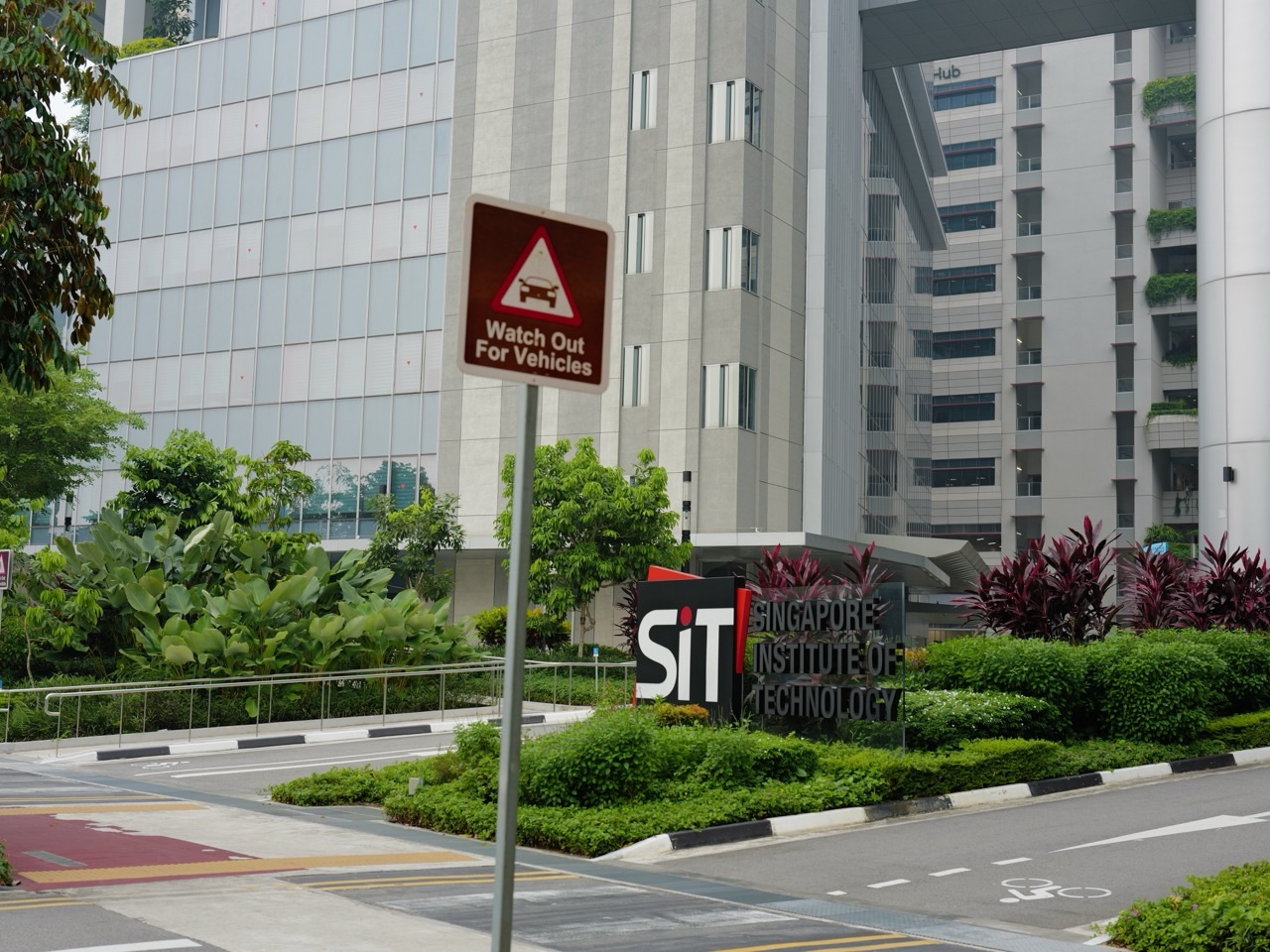
Quick answer, verified on 23 October 2026: The Singapore Institute of Technology is advertising a three-day Systems Thinking Habits for Champions course at SIT Punggol Campus from 14 to 16 December 2026. The published deadline to apply for this December run is 23 November 2026 at 11.59 pm, with a stated full fee of S$5,014 inclusive of GST and category-specific funded fees. This is a leadership and organisational learning course for managers, change professionals and project leaders. It is not a national school curriculum reform, a free Punggol community talk or a guarantee of a leadership appointment.
SITLEARN’s official course page describes teaching built around fourteen systems-thinking habits, practical modelling, recognising patterns, feedback and unintended consequences. The organiser names Associate Professor Jenson Goh from SIT’s Engineering Cluster as the teaching lead and lists a non-credit-bearing assessment with a Certificate of Attainment awarded under stated conditions. The same page includes an earlier November course run with an 20 October application deadline already past. Readers seeking a future application should use the December entry rather than assume that November’s expired deadline applies to all runs.
This is one of the more interesting education developments in Punggol because it teaches how to understand connected problems rather than merely learn another software package. Families use versions of systems thinking when balancing school, commuting, rest and tuition; schools use it when deciding whether an intervention solves a problem or displaces it; organisations use it to manage service bottlenecks and change. The methods can be introduced to teenagers through appropriate examples, while the professional course itself retains a clearly defined adult audience. Our aim is immediate factual retrieval followed by explanation that leaves readers able to reason independently.
Course details at a glance
- Programme: Systems Thinking Habits for Champions, SITLEARN, Singapore Institute of Technology.
- Next listed December run: Monday 14 to Wednesday 16 December 2026, three in-person days.
- Venue: SIT Punggol Campus, 1 Punggol Coast Road, Singapore 828608.
- Deadline: Monday 23 November 2026, 23:59, for the December run; confirm through the actual application portal.
- Full published fee: S$5,014 inclusive of GST. SIT’s illustrative after-funding fees are S$1,504.20 for eligible Singapore Citizens under 40 and PR/LTVP+ holders, and S$584.20 for eligible Singapore Citizens aged 40+ under enhanced funding.
- Intended participants: middle managers, transformation and change leaders, project managers, organisation-development professionals, sustainability leaders and emerging senior leaders.
- Certificate: at least 75% attendance and a passed non-credit-bearing assessment are needed for the listed Certificate of Attainment.
- Apply: read the official SIT course description and select the December run.
The official schedule identifies 14 and 15 December as training days listed at approximately 8.30 am–6 pm and 16 December with a later conclusion in the published timetable. Participants should confirm their specific daily reporting times in the joining instructions rather than relying on a compressed summary. These are full professional-learning days, so travel, work release, rest and family commitments require planning. The course page explicitly reserves the right to change arrangements; a calendar entry should not be mistaken for unconditional admission.
What systems thinking means without fashionable language
Systems thinking studies how parts interact over time and how behaviour can arise from the structure of those interactions. Instead of viewing a delay, complaint or performance problem as the fault of one person, the investigator asks what rules, incentives, information flows, constraints and repeated responses produce the observed pattern. This does not remove individual responsibility, but it prevents a shallow diagnosis in which the nearest visible worker is blamed for an issue caused by the entire process.
Consider a fictional family that adds more tuition whenever a child receives a lower school mark. Extra sessions reduce time for sleep and independent review; the child arrives tired, makes more mistakes, and receives still more tuition. The family intended to help, but its response may reinforce the difficulty. This is a hypothetical feedback loop, not a statement that tuition is universally harmful. In a different arrangement, carefully diagnosed tutorials with sufficient rest might help a child learn and grow. The point is to examine the actual relationship rather than assume that every increase in one input creates an improvement.
The difference between an event and a pattern
An event is a single observation: a student missed a deadline, a service took longer than expected, or a machine failed yesterday. A pattern is repeated evidence across time: missed deadlines cluster after a timetable change, or delays rise on days when demand peaks. A systemic explanation seeks the underlying structure that produces that pattern. If we react only to the latest event, we may miss a recurring constraint and repeatedly spend energy treating symptoms.
A manager may see one customer complaint and instruct staff to work faster. If the real bottleneck is incomplete requests entering the system, speed at the final counter may not resolve the delay. A better investigation examines queue lengths, handoffs, approval steps and missing information. A school might similarly ask whether students repeatedly lose marks because the underlying concept is weak or because test conditions are confusing. Different causes require different teaching responses.
Why the fourteen habits are more than a vocabulary list
SIT’s programme says participants will practise fourteen systems-thinking habits. The important distinction is between memorising named habits and using them to ask better questions. Thinking over time, seeing patterns, looking at the whole system, considering relationships and anticipating unintended consequences become useful only when applied to a real decision. The public page does not reproduce the entirety of the training materials, and this guide does not claim to be SIT’s licensed curriculum.
A good learning habit can be described plainly. Before recommending a solution, draw what you think is happening. Label assumptions separately from observations. Identify who is affected and which delays may hide the results of a change. Ask how an action could make one measure improve while a second measure worsens. Then decide what evidence could challenge the initial explanation. This approach is slower than reaching for the first obvious answer but may avoid expensive changes that create larger problems.
Feedback loops: what does ‘more causes more’ mean?
A reinforcing feedback loop amplifies change. Imagine a fictional reading group where confidence leads a child to read more, practice improves fluency, and fluency further strengthens confidence. The reinforcing pattern can become beneficial. Another reinforcing loop can work in an unwanted direction: repeated avoidance reduces practice, increasing anxiety and the tendency to avoid. These are plausible models of behaviour, not diagnoses of a particular child or claims that every learner follows the same path.
A balancing feedback loop counteracts change. A thermostat is the familiar example: when temperature rises above a target, control responds to bring it back down. A responsible manager might add capacity when queues exceed an accepted threshold and remove unnecessary extra capacity after demand falls. Balancing behaviour can be useful, but it may oscillate or overshoot if information is delayed. Thinking about timing matters because an intervention may be appropriate in concept but poorly calibrated in practice.
Worked example: an after-school timetable
Consider a fictional Secondary student with 24 hours in a day. Their schedule includes 7.5 hours of sleep, 7 hours in school, 1.5 hours commuting, 2 hours meals and personal care, 2 hours homework, 1.5 hours CCA-related activity and 1 hour family time. These categories sum to 22.5 hours, leaving 1.5 hours for everything else. The figures are invented for arithmetic, not a recommended daily timetable. Now imagine adding three hours of tuition every evening without removing anything. The model shows the pressure immediately.
The family must change the schedule because the day cannot expand. If sleep falls by three hours, fatigue may damage attention and learning. If independent homework disappears, tuition might inadvertently remove the opportunity to consolidate lessons. A systems view asks which activity solves the actual learning problem and what another activity sacrifices. The mathematical limit helps families reject the false belief that every desirable programme can simply be added without trade-offs.
Causal loop diagrams: arrows need explanation
A causal diagram can show a proposed relationship, such as ‘more independent practice → greater fluency → more confidence → more willingness to practise’. But an arrow is a hypothesis, not proof. A child might practise unproductively, or confidence may not rise because the material is mismatched. Good learners ask what evidence supports the connection and where conditions or delays could change its direction. The drawing becomes a tool for improving a model rather than an attractive diagram that cannot be questioned.
For professional managers, several loops may operate simultaneously. Increasing capacity can shorten waiting times, but easier access might also increase demand. A new digital platform could reduce repeated manual entry while creating a new dependency on IT support. A clever intervention in one department can transfer cost to another. The map should therefore include relevant stakeholders, delays and feedback, not only the team whose budget is being measured.
Stocks and flows: count what accumulates
A stock is something that accumulates, such as a backlog of cases, the number of pending repairs or a learner’s accumulated unread assignments. Flows add to or subtract from that stock. If a service receives 30 requests a day and completes 25, the backlog increases by five requests per day under the simplified assumption that all are comparable. At the end of four such days, the backlog would grow by 20. This is arithmetic practice, not a description of any actual Punggol service.
If the team raises completion to 35 requests a day while receiving 30, the stock shrinks by five each day until the backlog is cleared or conditions change. Merely reporting that staff completed more cases this week may hide whether incoming demand rose even faster. That is why measuring both arrivals and completed work gives a clearer picture than a single productivity number. The idea transfers to library loans, inventory, school assignments and support tickets.
Worked example: a backlog that never disappears
A fictional office begins Monday with 40 outstanding requests. It receives 18 each day and resolves 15. After five comparable working days, the stock is 40 + (5 × 18) − (5 × 15) = 55 requests. If the manager wants the backlog to fall, matching arrivals with completions is not sufficient. The team must temporarily complete more than 18 per day, reduce avoidable arrivals or improve the overall system without sacrificing service quality.
A superficial response might instruct staff to close requests earlier. That can improve the reported completion count while leaving the customer’s problem unresolved. The system has not truly improved. A stronger measure distinguishes verified resolutions from administrative closures and examines whether requests are reopened. This is why systems thinking must begin with a meaningful outcome, not with a metric selected because it is easy to manipulate.
Delays: why a solution can appear to fail too quickly
An intervention often has a delay between action and visible result. A student who rebuilds foundational algebra may not immediately score better on a demanding examination. A company that trains staff may need time for employees to apply the skill. A building retrofit may require commissioning and seasonal performance data before a confident conclusion. Stopping or reversing an intervention prematurely can prevent the intended benefit from emerging.
The opposite danger is waiting too long before recognising harm. A digital service change could create immediate accessibility problems for users even if its efficiency benefits will emerge later. A responsible decision sets appropriate early-warning measures alongside longer-term outcome checks. The question is not ‘Did the graph move by Friday?’ but ‘What change should we expect, through which mechanism, over which credible time horizon, and what would tell us to intervene sooner?’
High leverage and unintended consequences
A high-leverage intervention changes something important about the system rather than merely increasing effort at its most visible point. In a fictional school, better explanations of assignment requirements may reduce unnecessary clarification messages, freeing staff time for students who genuinely need support. A poorly chosen intervention might force every student to complete an additional form, making administration appear more consistent but increasing confusion and workload. The more people affected, the more care the change deserves.
Systems thinking is not a promise that every complicated problem has an elegant single solution. Constraints may be real: funding, physical space, staffing, safety or differing needs. A manager should evaluate who gains, who pays, and what new risks arise. The purpose of identifying leverage is to make changes proportionate and evidence-informed rather than assume that one diagram can eliminate all trade-offs.
How the December course differs from operational-excellence training
A separate SIT micro-credential in Operation Excellence and Process Improvement begins in January 2027 and focuses on areas such as Lean Six Sigma, quality and inventory. Systems Thinking Habits for Champions, by contrast, emphasises relationships, patterns, organisational leadership and the consequences of interventions across a larger system. The overlap in general improvement aims does not make the credentials interchangeable. Applicants should compare learning outcomes, prerequisites, assessment and intended roles with their actual needs.
A quality engineer who needs statistical process-control techniques may prefer one route, while a manager coordinating several teams and facing repeated policy side effects may find systems modelling particularly relevant. Some professionals need both perspectives at different times. Choosing a course should begin with a documented problem and a realistic learning goal rather than the popularity of the words ‘transformation’ or ‘innovation’ in marketing material.
Who should attend the leadership course?
The provider lists middle managers, transformation leaders, programme and project managers, continuous-improvement champions, organisation-development practitioners, sustainability leaders and emerging senior leaders. The shared characteristic is responsibility for decisions whose effects extend beyond one small task. The course’s case methods may be more meaningful to someone who can draw on workplace experience, compare real constraints and reflect on past interventions.
A Punggol resident who is a parent, student or retiree can still learn systems ideas at a suitable level without assuming the specific professional programme is meant for them. Residence beside the university does not grant admission or a subsidy. A working adult should contact SIT to verify their eligibility and whether the December course fits the current role. A parent may simply adapt the model questions to study routines, without presenting them as formal university instruction.
How to identify a genuine workplace problem
Before training, describe a recurring difficulty without inserting the solution into the problem statement. ‘Our team needs an automated chatbot’ already presupposes a remedy. ‘Customers wait an average of six days for a clear answer and frequently contact us again’ describes an outcome that can be investigated. Ask where data originates, whose experience the measure represents and what missing information might contradict the first impression.
Managers should also listen to people closest to the work. A policy designed at headquarters may depend on informal workarounds that leadership has not seen. Staff may have adapted intelligently to conflicting instructions. Removing those workarounds without understanding the underlying constraint can worsen performance. Systems-thinking education should encourage curiosity, evidence and respect for participants rather than treat workers as components to be rearranged without consultation.
Simple survey data can mislead
Suppose a fictional parent survey receives 20 responses, 16 saying a new homework portal is useful. The favourable share is 16 ÷ 20 = 80%. Does that prove 80% of all families find it useful? Not necessarily. Perhaps respondents with reliable internet were more likely to complete the survey, and those facing access barriers did not respond. The denominator shows what was measured, while the missing participation pattern limits what can be generalised.
A more thoughtful follow-up might compare respondents with non-respondents using privacy-respecting, authorised methods, ask what the portal actually improved, and track requests for help over time. This does not mean every survey needs complex statistical research. It means that a confident percentage can still rest on incomplete evidence. Mathematics becomes much more useful when learners question the population and conditions behind a number.
The four-stage decision conversation
A practical family or team can begin with four questions. First: what pattern are we trying to understand? Second: which connected causes might produce it? Third: what change could improve the outcome without creating a larger hidden problem? Fourth: how will we know, and when will we check? These questions turn a vague desire to ‘fix everything’ into a manageable learning conversation. They also prevent the common habit of choosing an intervention before defining the goal.
Use the method on a low-stakes fictional case before applying it to a serious problem. A group might examine why a community reading circle struggles to attract repeat visitors. Possible influences include inconvenient time, unclear programme information and unsuitable materials. A small schedule test may be more informative than launching a costly publicity campaign. Do not mistake this thought experiment for a claim about any actual Punggol library programme. The example exists to show how hypotheses and feedback can guide a careful decision.
System boundaries: what is inside the problem?
Every model has a boundary. If a manager studies only the last step of a customer service process, they may miss errors originating at intake. If a family studies only tuition hours, they may overlook commuting and sleep. Expanding the boundary can reveal a better explanation, but making it infinitely large becomes unmanageable. The skill is to define a boundary that includes the important causes and affected stakeholders while remaining specific enough to investigate.
A good model explicitly names what it leaves out. For example, a school attendance exercise might examine timetable, transport and communications but deliberately not attempt to model national demographics. The simplification does not invalidate the exercise; it makes the assumptions inspectable. Problems arise when the modeller quietly treats the simplified boundary as the whole world and claims a universal solution.
A problem with no single ‘best’ answer
Imagine a fictional neighbourhood wanting both more quiet study spaces and more active play areas. Allocating every available room to one activity ignores the other need. A decision process should compare demand at different times, accessibility, supervision, noise and cost. Shared space or different schedules may create a workable compromise, but no design makes competing objectives disappear. Systems thinking provides a disciplined way to recognise those trade-offs and communicate them openly.
This matters for students because school questions often have a unique correct numerical answer, while policy and organisational problems can involve multiple defensible options. Mathematics still helps establish constraints and likely consequences. Writing helps explain values and assumptions. Evidence helps test claims. The ability to reason across these domains is part of future-readiness, even for students who never pursue management.
Fees, funding and professional expectations
SIT’s full listed fee is S$5,014 inclusive of GST. Its after-funding table gives S$1,504.20 for eligible Singapore Citizens below forty and eligible PR/LTVP+ holders, and S$584.20 for eligible Singapore Citizens forty or older under the stated enhanced subsidy category. These figures are not guaranteed to every visitor. A learner must confirm current funding eligibility, payment arrangements and whether SkillsFuture Credit can be used against the actual outstanding fee.
A funded training place does not automatically include paid leave, accommodation, transport or an allowance. The published course explains that applicable SkillsFuture Credit may further offset eligible personal expenses, but this is not a universal benefit or proof of a particular account balance. Employers sponsoring a team should clarify what support is available and how staff will apply the learning afterwards. The most useful question is not solely the discounted price; it is whether the course closes a defined leadership or problem-solving gap.
Attendance and certificate limitations
SIT says participants need at least 75% attendance and a passing non-credit-bearing course assessment for the Certificate of Attainment. It may issue a Certificate of Participation to learners who attend sufficiently but do not pass. Neither document is a university degree or an automatic management qualification. Professional competence is shown through practice, sound decisions and the ability to explain what changed after an intervention.
An organisation should be cautious about measuring its leadership development only by how many certificates staff collect. A course can introduce valuable mental models, but outcomes depend on whether participants are allowed to apply them, whether decision-making incentives are compatible and whether later results are evaluated honestly. Training is an input. Improved work outcomes require further evidence and cannot be promised by an article about one future intake.
A seven-day preparation sequence for an adult applicant
- Day one: identify one recurring work problem and describe the outcome without naming a solution.
- Day two: collect only authorised, relevant observations about how that outcome has changed over time.
- Day three: list people or departments affected and ask which viewpoints are missing.
- Day four: sketch one possible reinforcing or balancing feedback loop and label assumptions.
- Day five: check potential delays, side effects and constraints.
- Day six: read the SIT syllabus, funding conditions, assessment details and December application requirements.
- Day seven: decide whether the course fits your goals, verify the provider’s deadline and submit only through its official channel.
This is an independently suggested preparation routine, not a mandatory SIT admission activity. An applicant can adapt it to actual circumstances. The essential behaviour is to enter the course with a genuine question, a willingness to challenge assumptions and enough time to participate fully. If the organisation’s problem contains sensitive staff or customer information, use a fictionalised or properly authorised example instead of carrying confidential files into a classroom without permission.
Independent practice: a small system model
- A: a fictional support team starts with 25 cases, receives 12 and completes 9. How many remain?
- B: it receives 12 and completes 15 the next day. What happens to the stock?
- C: why might measuring only completed cases lead to the wrong conclusion about service improvement?
- D: if a study timetable adds three hours of lessons, where could those hours come from?
- E: identify one unintended consequence of switching every school notice to a single digital platform without considering accessibility.
Answers: A is 25 + 12 − 9 = 28. B brings the backlog to 25. C requires the learner to consider arrivals, quality, reopened work and unresolved problems. D asks the learner to acknowledge that total time is fixed and that another activity must change. E might involve families who cannot access the platform reliably; it is a hypothetical risk, not a factual allegation against a named service. The explanatory questions encourage reasoning about mechanisms instead of memorising a formula.
What Punggol parents can take from an adult leadership announcement
A parent can introduce one systems-thinking habit by asking what happens before, during and after a recurring homework difficulty. Is the child unsure of the concept, rushing because of time pressure or losing track of instructions? A response should differ with the cause. More worksheets may help one student and overwhelm another. The method resembles the eduKate Secondary 1 Mathematics diagnostic approach, which emphasises identifying the exact incorrect reasoning step.
The best parent decision is usually modest and observable: adjust one element, define what improvement would look like, and review after a suitable period. Do not draw elaborate diagrams around every inconvenience or reduce a child’s emotions to a mechanical formula. Systems thinking is a tool for recognising relationships, not for removing empathy or turning family life into an engineering laboratory. Listening to the student remains part of gathering evidence.
A practical debrief after the December course
After returning from the programme, a learner can write a one-page account of a problem, the recurring pattern, a diagram of proposed relationships and two possible interventions. Identify one measure that could improve and another that might unintentionally worsen. Ask a colleague to challenge the assumptions before acting. This converts classroom ideas into a responsible conversation without claiming that the course has already solved a real problem.
Set a later review date appropriate to the intervention. Some effects are immediate, others may take weeks or months. Avoid both premature celebration and never-ending postponement of evaluation. The professional objective is learning: update the model when outcomes conflict with predictions. A strong decision-maker is not someone who never changes an explanation but someone who can say what evidence justified the change.
Frequently asked questions
Which December dates are currently listed?
SIT shows 14–16 December 2026 for the three-day Punggol in-person run. The November entry is separate and had a 20 October application deadline. Verify the December course record and reporting times with SITLEARN.
When must the December application be submitted?
The published December deadline is 23 November 2026 at 23:59. A late enquiry or visible sign-up button does not guarantee acceptance or that vacancies remain available.
Is systems thinking simply Six Sigma?
No. Both can support improvement, but systems thinking here is concerned with patterns, interdependencies, feedback and organisational change. Six Sigma more specifically emphasises disciplined process measurement and variation. The correct training depends on the task and the official course outcomes.
Can Primary or secondary students enrol?
The stated intended audience is professional managers and leaders. School pupils can learn age-appropriate ideas through stories, schedules and safe data problems, but this notice is not a school-enrolment announcement.
Does a certificate automatically lead to a promotion?
No. The provider offers defined training and a non-credit-bearing assessment. Employment, role changes and promotions remain separate decisions of employers under applicable conditions.
Is S$584.20 guaranteed to every older Singapore Citizen?
No. The amount is tied to the relevant funded category and personal eligibility. Obtain written fee confirmation instead of relying solely on the lowest figure in a general table.
Could a manager use real customer records in the classroom?
Only within the relevant employer, legal and provider permissions. A fictionalised example is preferable when the underlying data is confidential or cannot be shared. Effective training should not require breaching privacy.
One useful system-thinking exercise compares the experience of a person with the metric used by an organisation. A fictional customer may wait six days for a complete answer, while three departments each report meeting their own two-day processing target. Both facts can be true because time spent between departments is not counted in any one department’s measure. The larger system’s performance becomes visible only when the entire journey is considered. A leader who introduces one common end-to-end outcome metric must still be careful not to penalise teams for delays they cannot individually control. Measurement and responsibility need to be designed together.
A second issue is the difference between a correlation and a causal loop. Perhaps school participation rises in months when parents receive more reminders. That pattern does not by itself prove reminders caused the increase; the programme itself may have changed or a different group of parents may have responded. Systems diagrams are hypotheses to examine, not replacements for evidence. A good practitioner tests assumptions and updates the drawing when observations contradict it. Students benefit from the same discipline when writing cause-and-effect answers in Geography, Science and Social Studies.
A decision-maker should distinguish controllable interventions from conditions that cannot be changed easily. A school cannot create more hours in the day, but it may simplify assignment instructions or offer better access to help. A company cannot always change external demand, but it might redesign intake, make waiting times visible or improve coordination. Systems thinking does not erase resource limits. It helps teams select interventions that have a plausible mechanism and are feasible within those limits. This is why inviting frontline perspectives before imposing a change is part of good analysis.
Communication is essential because different stakeholders hold different parts of the system in mind. A teacher sees classroom patterns, a parent sees evening routines, and the child experiences both. None should automatically assume their view is complete. An effective conversation names observations without blame, identifies competing explanations and agrees on one next action. The process may look slower than commanding an immediate change, but it often saves time by preventing cycles of rework and misunderstanding. Systems thinking is most valuable when it improves how people collaborate, not merely how accurately they draw arrows.
A simple delayed-recall exercise can show whether the idea transferred beyond the classroom. Several weeks after learning about backlogs, offer a new fictional example involving library books awaiting repair. Ask the student to define arrivals, completions and the stock, then calculate whether it grows. Next ask what a numerical answer cannot prove about service quality. If the learner can solve the new problem and explain its limits, the concept has begun to transfer. If they copy the previous example but cannot describe the new mechanism, more carefully chosen practice is needed.
An organisation investing in this course can establish a useful review question before the learner attends: which repeated problem should become easier to analyse, and what evidence would demonstrate better decisions? The answer should not be merely the number of staff trained. A course certificate is an output of learning; improved work is a possible later outcome requiring observation. After training, managers can support supervised application, allow honest discussion of failed assumptions and review side effects rather than demand immediate numerical victories that encourage superficial reporting.
A measured follow-through is more useful than a celebratory report. Imagine a team completes training and proposes a change to reduce repeated enquiries. It should identify the original number of enquiries, measure the effect of the change over an appropriate period, and check whether unresolved problems or accessibility barriers increased. If performance does not improve, the team should look at the model again instead of hiding the result. An honest review can reveal a missing stakeholder, a delayed effect or an incorrect assumption. This is the educational value of systems thinking: it improves the questions people ask and their willingness to change course when evidence requires it, even after a solution has been publicly announced.
Sources and further Punggol education reading
- SITLEARN — Systems Thinking Habits for Champions, official December 2026 schedule, fees and audience
- SITLEARN — continuing-education catalogue and programme updates
- JTC — Punggol Digital District and university-industry environment
- eduKatePunggol — January 2027 Operation Excellence and Process Improvement
- eduKatePunggol — lifelong learning, SkillsFuture and SIT
- eduKatePunggol — Grid-Connected Solar Photovoltaic engineering course
Editorial check: 23 October 2026. Dated programme and funding facts are sourced from SIT’s official course listing. Family and workplace cases, diagrams and numerical exercises are hypothetical learning illustrations, not observations about identified Punggol schools, employers or services. Confirm admissions, fees and attendance details with SIT.


