
In July 2005, HDB offered 369 premium four-room flats at Coralinus in Punggol at advertised prices of S$169,000 to S$206,000. A September 2005 report subsequently said that 74% had been taken up, prompting HDB to call a construction tender. Together these reports show a housing offer that crossed the demand threshold only months after a different Punggol project, The Anthias, was cancelled.
Coralinus is a particularly instructive episode in Punggol’s early BTO history. It shows a conditional sales launch, an application response, the decision to proceed, and a later built estate. It also shows why an offer price from 2005 is a historical statistic, not an assessment of what an HDB flat is worth today.
Did you know? The contemporary reports described about 70% as an illustrative booking threshold and later recorded a 74% response. Those percentages refer to the 2005 sales exercise, not the occupancy rate of the estate today.
The 2005 Coralinus sales record
- The first question: what was Coralinus in 2005?
- Why the year is important
- 369 four-room flats, not 369 completed homes in July
- The advertised price range
- What did ‘premium’ mean in the advertisement?
- Location near Punggol’s transport hub
- The decision rule was more important than the rendering
- What September 2005 revealed
- 74% is a response measure, not a census
- Why the cancellation of The Anthias makes the difference clear
- The earlier project and the later project were separate offers
- The evidence for Coralinus II belongs to 2006
- The combined count is a later summary
- From housing application to construction record
- A new town could grow one accepted project at a time
- Why advertised dollars cannot be read as present-day property value
- The schools were part of the area’s appeal
- What the old publication cannot prove
- A useful data-interpretation exercise
- How to research older project brochures
- Frequently asked questions
- Sources and recommended history sequence
The first question: what was Coralinus in 2005?
Coralinus was a Build-to-Order public-housing offer in the developing Punggol town. The early phase comprised 369 four-room flats described as premium apartments with finishes above standard flats of the period.
The offer was a home-buying opportunity in 2005, not proof that the finished estate was ready for occupation that summer. Tendering, construction and eventual handover were later steps.
Why the year is important
The 2 July 2005 Straits Times article is listed in the National Library Board’s curated public-housing reference guide. A reproduced contemporary report provides details of the flats, price range, size and nearby amenities.
That places the sale in the first few years of Singapore’s BTO system and long before much of today’s Punggol waterfront was completed. A 2026 photograph of the town centre may show the later environment, but it cannot be evidence of the estate’s original 2005 surroundings.
369 four-room flats, not 369 completed homes in July
The 369 figure described the first sales offer. It should be recorded as a proposed number of flats available for booking under the exercise, not the number of households that had collected keys at the launch.
Straits Construction’s later projects register independently describes Coralinus I as six residential blocks with 369 homes at Punggol Road. The matching count gives useful continuity between a sales phase and a later recorded development.
The advertised price range
A buyer seeing Coralinus in mid-2005 would have encountered a stated range of S$169,000 to S$206,000 for premium four-room flats, as documented by the NLB’s newspaper citation.
That range must not be rewritten as a uniform asking price for every flat. Different units may have had different floor levels, facing directions or other attributes. Nor should it be compared directly to contemporary resale prices without controlling for time, transaction type and market conditions.
What did ‘premium’ mean in the advertisement?
The contemporary report distinguished the flats from the standard offerings of the time because of enhanced finishes. It described the homes as approximately 94 square metres each, giving readers a concrete idea of the floor area being marketed.
‘Premium’ was a public-housing product description, not a declaration that the homes were private condominiums or part of the later Design, Build and Sell Scheme. A property type must be identified from its actual programme.
Location near Punggol’s transport hub
The article placed Coralinus near Punggol Central and described the MRT/LRT stations as roughly a five-minute walk away. It also mentioned nearby schools including Edgefield Primary, Punggol Secondary and Mee Toh School.
A period marketing description of ‘five minutes’ reflects the estate’s intended accessibility. It is not a surveyed walking-time guarantee for every block, entrance or individual resident in 2026.
The decision rule was more important than the rendering
The July report noted that HDB would build the flats if a majority—illustratively around 70%—were booked. BTO allowed the housing agency to adjust supply rather than constructing every proposal immediately upon advertisement.
This was particularly significant in a new town that had experienced slower-than-expected development. An attractive housing model still had to meet a practical measure of buyer commitment before construction went ahead.
What September 2005 revealed
A later contemporary report, reproduced in a public-news correspondence thread, stated that 74% of the 369 premium four-room flats had been taken up by the time HDB confirmed its next step.
HDB consequently said it would call the tender for construction. That is the historically important turning point: Coralinus had gathered enough bookings to progress. A tender decision is not the same as an instant construction completion.
74% is a response measure, not a census
Multiplying 369 by 0.74 gives about 273. However, the percentage in the report may have been rounded, so that calculation should be treated as an approximation rather than an exact number of accepted applications.
For a sound historical statement, keep the reported percentage in its original form. Do not use it to infer the number of residents, average family size, eventual completion-day occupancy or total applications submitted.
Why the cancellation of The Anthias makes the difference clear
In March 2005, HDB had decided not to proceed with The Anthias in Punggol or Coral Green in Sengkang, saying the projects had insufficient take-up. In mid-2005 Coralinus, by contrast, achieved the threshold recorded in the September report.
This contrast illustrates how BTO decisions responded to the specific market interest in individual offers. It does not prove that every household rejected the cancelled project and immediately chose Coralinus. That buyer-migration claim would need linked application records.
The earlier project and the later project were separate offers
The Anthias was launched in December 2004 and cancelled on 31 March 2005; Coralinus arrived in a later exercise with a different product and pricing structure. Both belong to Punggol’s early development era.
A historical guide should preserve project name, location, launch date and decision outcome for each. Read our Anthias cancellation chapter to understand the prior case without confusing it with Coralinus.
The evidence for Coralinus II belongs to 2006
In February 2006, a second Coralinus phase was advertised. Contemporary accounts described 365 four-room flats and a separate S$182,000–S$220,000 price range.
Those are not extra homes hidden inside the 369 first-phase count. The contractor’s register separately lists Coralinus II as six blocks and 365 units at Punggol Place. Phase I and Phase II must not be blended when discussing a price launch, application response or construction timeline.
The combined count is a later summary
Adding 369 homes in Phase I and 365 homes in Phase II gives 734 across the two recorded projects. That sum is mathematically straightforward when the unit counts are sourced to the contractor’s register.
But the combined total does not mean 734 flats were offered in July 2005. The dates differ, and each project went through its own marketing and building stages. One total should not erase two separate launch histories.
From housing application to construction record
Straits Construction’s projects archive lists Coralinus I under 2009 and Coralinus II under 2010, identifying their unit counts and building locations. Those headings belong to the contractor’s construction chronology.
They do not by themselves specify the day the first family collected keys, the formal lease start date of every block, or the exact period of occupancy. A completion entry and a property transaction record answer different historical questions.
A new town could grow one accepted project at a time
Punggol’s longer story involves the 1996 Punggol 21 vision, early residential building, economic setbacks and later waterfront plans. Coralinus documents a small but concrete step in the period when the town was adding occupied neighbourhoods.
This scale matters. Urban histories tend to focus on opening a rail line or digging a waterway, but the decisions that let hundreds of families plan their homes also shaped the daily town being built.
Why advertised dollars cannot be read as present-day property value
The 2005 price range reflects that year’s housing policy, design and economic conditions. Purchasing power, household incomes, housing grants and market expectations were not the same as they are decades later.
It would be misleading to present S$169,000 as the current entry price for a four-room Punggol resale flat. A rigorous comparison needs current transaction evidence and a clearly stated methodology, not just two nominal numbers.
The schools were part of the area’s appeal
The contemporary Coralinus article named nearby schools as part of its location description. This tells us what a 2005 buyer was being told to consider alongside transport, floor plan and price.
The school names in an advertisement are not evidence of admission guarantees. School enrolment priorities and residential proximity rules must be understood for their own year, not projected backward or forward from this marketing text.
What the old publication cannot prove
The articles document the offer, pricing, sizes, reported take-up and HDB’s plan to tender construction. They do not give each applicant’s identity, final bank loan terms or whether every person who booked ultimately took possession.
Such limits do not weaken the core story. The record is already sufficient to identify a conditional sale that proceeded because reported buyer interest crossed the relevant threshold.
A useful data-interpretation exercise
Give students the figures 369, 74%, S$169,000 and S$206,000. Ask them to label which is a count, which is a percentage and which are advertised prices. Then ask what cannot be derived without another source.
The correct cautions include: no exact occupancy rate, no proven final profit, no present-day market valuation and no complete distribution of sale prices. Basic statistics are useful only when the population and measurement type are defined.
How to research older project brochures
Begin by identifying whether a document is a launch brochure, a contemporaneous newspaper report, a contractor’s project record or a modern property listing. Note the date of each and the purpose for which it was produced.
A launch brochure may contain unit layouts and proposed features; a contractor’s record may describe completed block counts; a property listing may report much later transactions. Each source should be used only for the question it can actually answer.
Frequently asked questions
How many flats were offered at Coralinus in 2005? The first phase listed 369 four-room flats. What did they cost? The reported range was S$169,000 to S$206,000. What was the take-up by the September report? 74%, and HDB said it would call for a building tender.
Was Coralinus II included in that 369? No. Did the original offer mean everyone could move in in July 2005? No. Was the first phase a private condominium? No, it was an HDB BTO development. Did a similar Punggol project fail earlier that year? Yes, The Anthias was cancelled in March.
Sources and recommended history sequence
Read the National Library Board reference to the 2 July 2005 premium-flats report; the contemporary reproduced July article supplies context, and the reproduced September take-up report records the 74% figure and tender decision. Use Straits Construction’s past-project records for the later two-phase construction timeline.
Our separate Coralinus building-history chapter studies the 2009–2010 construction record, while the Anthias story describes the contrasting March cancellation. The wider Punggol history directory connects those decisions to the town’s staged development. The historical answer is clear: Coralinus’s 2005 premium flats found sufficient demand to progress from offer to construction.
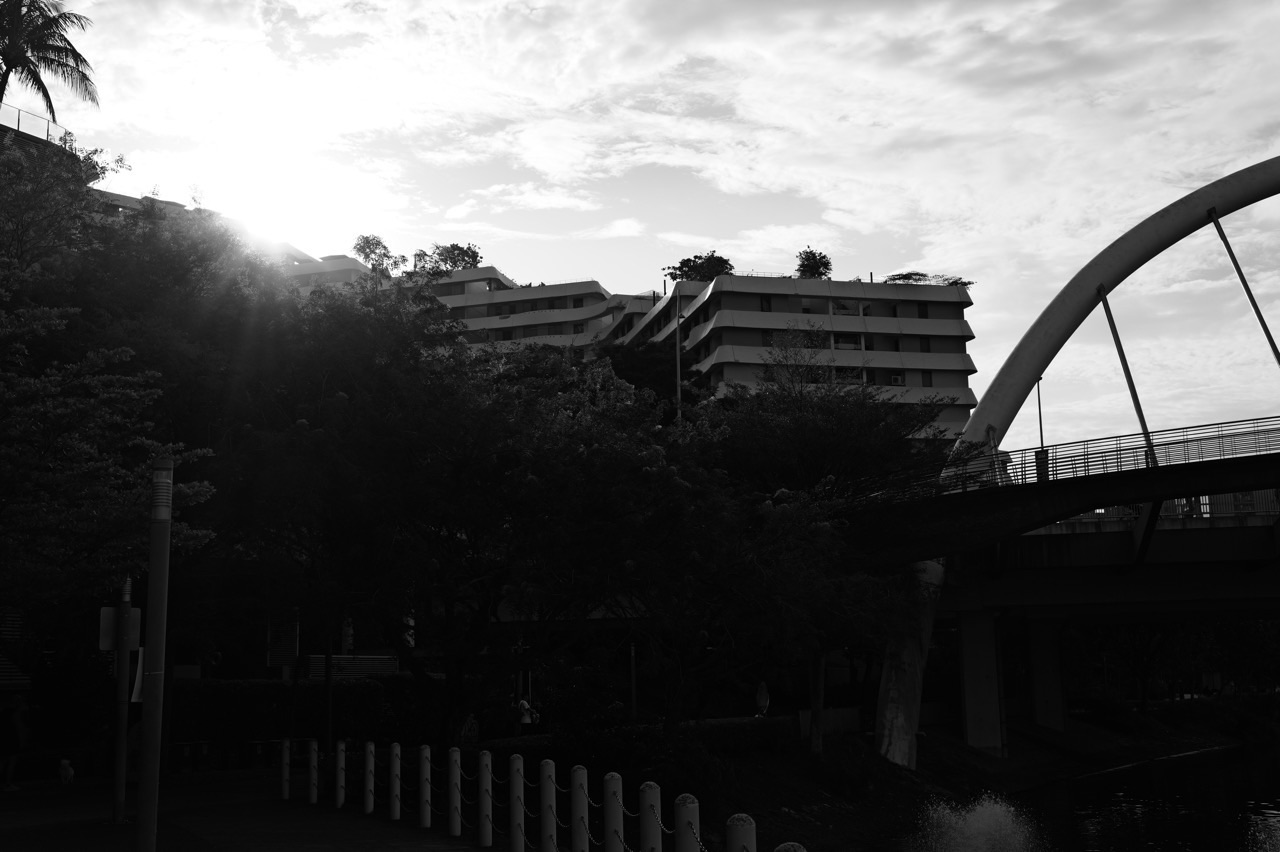
Featured photograph: present-day Punggol HDB housing, used to illustrate the completed new-town environment. It is not a 2005 Coralinus sales-office or construction photograph.


