
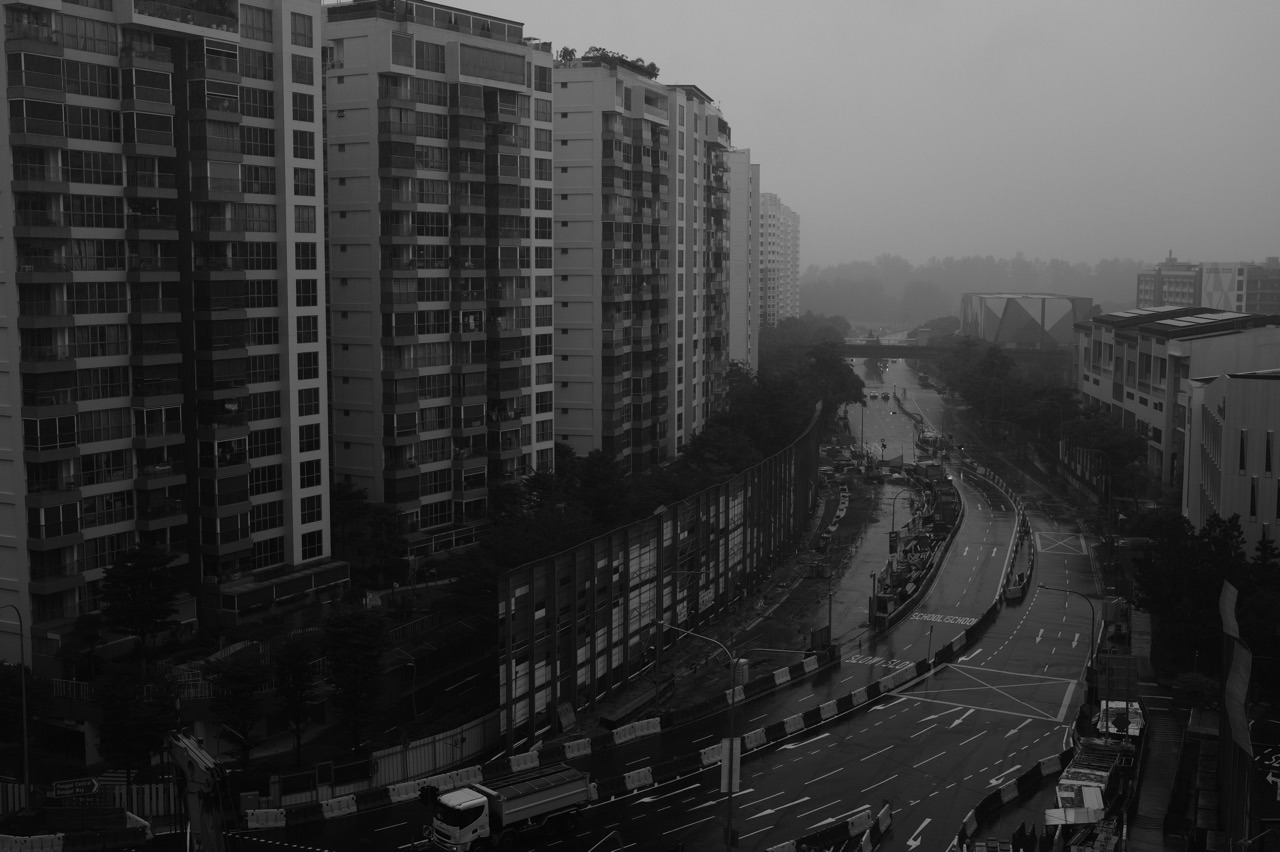
Quick answer. Singapore schools do not automatically close every time haze, thunderstorms, lightning or heavy rain occurs. MOE and schools assess current and forecast conditions, health advice and safety requirements; classroom teaching and outdoor activities may be adjusted, and families should act on official school and national-authority notices, rather than an unverified parent-chat message. Singapore’s October 2026 haze episode provides a real, recent example of how the national system responds.
In its 9 October 2026 Haze Task Force announcement, NEA explained that MOE schools would use well-ventilated enclosed classrooms with air purifiers and modify or avoid outdoor activities as necessary. Schools were to track one-hour PM2.5 readings for changing same-day conditions and use the 24-hour Pollutant Standards Index (PSI) forecast to help plan ahead. MOE would consider school closure if the following day’s forecast entered the Hazardous range, PSI greater than 300, taking all relevant information into account. This is a decision framework, not a promise of automatic closure at a particular reading.
Other environmental hazards require different action. During lightning, teachers and activity supervisors should move pupils away from exposed outdoor areas and follow school safety procedures. For very hot weather, Singapore’s Wet-Bulb Globe Temperature (WBGT) accounts for humidity, radiant heat, wind and air temperature; students follow their school’s activity guidelines rather than applying a generic adult-workplace threshold. For heavy rain and flash-flood risk, PUB advises pedestrians to avoid flooded areas and use a safer route, even if it takes longer.
For Punggol families, a complete plan covers the lesson, PE/CCA or learning journey, the trip home, school-bus and student-care handovers, authorised caregivers and national examinations. This guide offers a quick decision table, specific classroom examples, hypothetical learning exercises, checklists and 27 parent FAQs, with verified official sources. Facts checked 22 October 2026; the October 9 conditions are historical, not a claim about today’s live PSI.
At a glance: use the right hazard indicator
| Hazard | Official information | Practical school question |
|---|---|---|
| Haze, next-day planning | 24-hour PSI forecast (NEA) | Does MOE announce a change? |
| Haze, same-day activity | 1-hour PM2.5 (NEA) | Will PE or outdoor work move inside? |
| Thunderstorms/lightning | MSS lightning and school safety | Which safe indoor shelter is designated? |
| Heat stress | MSS WBGT plus school-specific guidance | What activity/rest adjustments apply? |
| Flooded walking/road route | PUB alerts and flood safety guidance | Which approved safer route or pickup works? |
Find the right family action
- Haze and possible school closure
- National examinations during haze
- Lightning and heat-stress planning
- Flood risks and school bus pickup
- Family preparedness plan
- Questions and official sources
1. A school day contains several different safety decisions
A child can be safe inside a supervised classroom while an outdoor CCA is unsuitable. The school may continue lessons, move PE indoors, postpone a field trip or adjust dismissal arrangements without announcing a nationwide closure.
That distinction matters because parents sometimes ask a single question—“Is school cancelled?”—when the actual decision concerns a particular activity or location. Different hazards require different information and authority.
The family should identify what is affected: ordinary lessons, outdoor play, national exams or travel home. Each has a separate operational plan.
2. NEA, MOE, MSS and PUB do different jobs
NEA reports air-quality information and coordinates the national haze response. MOE oversees schools and their education-related emergency responses. Meteorological Service Singapore provides weather, lightning and heat-stress information, while PUB supplies heavy-rain and flood-monitoring guidance.
A school may integrate these sources to decide how activities are conducted. Parents should not assume that a forecast automatically becomes a national school-closure notice.
Use the correct authority for the question. The latest PM2.5 reading, for example, cannot by itself tell a family whether an individual school bus will operate tomorrow.
3. The October 2026 haze response is a concrete example
NEA’s 9 October 2026 announcement described worsening smoke haze and convening of the national Haze Task Force, including MOE. On that date, the reported 24-hour PSI was in the Unhealthy range, while authorities prepared for the possibility of more severe conditions.
The statement also set out school preparations, including keeping students in suitable indoor enclosed spaces with air purifiers and modifying classroom or physical activities. Those were real operational plans, not merely general advice to families.
Any numerical PSI quoted from that announcement belongs to its specified date and time. A parent checking today’s conditions must use current NEA readings instead.
4. What the 24-hour PSI measures
Singapore’s Pollutant Standards Index is an air-quality measure that communicates conditions over a 24-hour period. It is used with forecasts to support planning for longer exposure and next-day activities.
A parent should distinguish an observed reading from the forecast for the following day. Neither describes every child’s personal health condition or the exact exposure in every classroom.
A school may use the forecast together with MOH advice, ventilation and pupil needs. One number does not replace the institution’s complete safety decision.
5. One-hour PM2.5 is different from the daily PSI
One-hour PM2.5 readings reflect shorter-term fine-particle conditions and are useful when outdoor conditions change during a school day. NEA’s October 2026 guidance explicitly directed schools to monitor those readings to adjust activities.
Parents should not compare a one-hour PM2.5 concentration and a 24-hour PSI as though both use the same unit or numerical scale. One can be elevated while the other describes a longer averaging period.
The appropriate action is to read the relevant advisory for the correct indicator, not invent a mathematical conversion between unlike measures.
6. Classroom lessons may continue with modifications
During the October 2026 haze preparations, MOE schools planned to continue indoor lessons with air purifiers and suitable arrangements, while adjusting activities that would create unnecessary exposure.
A school could replace an outdoor Science observation with indoor data analysis or move a sports activity into an appropriate space. That need not mean the academic subject itself was cancelled.
Parents can ask what has changed and whether the learner needs different materials or collection arrangements. A short formal school announcement is more reliable than a second-hand claim that “all classes are off”.
7. Outdoor PE and CCAs may be changed separately
PE, sports CCAs, outdoor education and other strenuous activities can involve substantial exposure to haze, heat and storms. A school may adjust intensity, change location or postpone an event under its safety procedures.
For example, a football CCA can replace field training with appropriate supervised indoor instruction when outdoor conditions are unsuitable. The replacement should match the school’s actual facilities and age group.
No family should require a child to continue vigorous outdoor activity solely because an upcoming competition is important. Relevant staff and official health guidance control the decision.
8. Very Unhealthy haze does not automatically mean no school
The October 9 Haze Task Force release distinguished responses at different air-quality levels. It described avoiding outdoor activities and modifying lessons while schools remained prepared to operate.
It separately stated that MOE would consider closing schools if the next day’s forecast reached the Hazardous range, above PSI 300. This is deliberately different from asserting automatic national closure at PSI 101 or 201.
Parents should look for an explicit closure notice rather than infer one from social media. The national authority must consider the forecast, health advice and disruption to families.
9. The hazardous forecast is a consideration, not a switch
The phrase “will consider closing” matters. MOE’s October 2026 statement says it would use the next-day Hazardous forecast and all relevant information before reaching a decision, including the effect on children’s care arrangements.
A parent who turns the number 300 into a guaranteed automatic policy has changed the meaning of the official statement. The resulting advice could cause unnecessary absence or childcare confusion.
Explain the difference to older students: a threshold can trigger review without predetermining the outcome. That is a practical lesson in reading policy language accurately.
10. Closure notices must come through official channels
If a school closes under an MOE-directed event, the family needs verified information about the affected date, level, lessons, student care and possible examination arrangements.
Parents Gateway, official school announcements and relevant MOE channels are more dependable than a screenshot with no date or school name. An outdated pandemic-era closure poster should not be reused during haze.
Keep the school’s authorised contact details accessible to all caregivers. A family plan works only when grandparents, parents and transport providers receive the same confirmed instruction.
11. What if a national examination coincides with severe haze?
NEA’s October 2026 announcement said that if school closures coincide with national examinations, affected papers would be rescheduled and the examination period extended. The announcement would be made together with the closure decision.
School candidates would be informed through their schools, while private candidates would receive information from SEAB through its own arrangements. This is not an instruction for individuals to choose their own later sitting.
Candidates should preserve health, follow the examination authority and avoid accepting unofficial “replacement paper” dates from commercial preparation groups.
12. Unwell examination candidates need the official procedure
The same national statement emphasised that a candidate’s health takes priority if they cannot sit or continue an examination, and that schools can escalate relevant cases to SEAB for special consideration under existing procedures.
A family should notify the school promptly and follow the actual documentation requirements. No private tutor can promise that a missed paper will automatically be ignored or that a replacement grade will be awarded.
Education and wellbeing are not opposing concerns. The correct approach is a truthful, timely report through the responsible authority.
13. A student with asthma may need individual planning
Pupils with asthma or other lung or heart conditions can be more vulnerable during haze. NEA and MOE’s October 2026 preparation included monitoring these students and arranging medical attention when needed.
Parents should tell authorised school staff about relevant medical plans and prescribed medication through appropriate secure channels. Do not publish the child’s diagnosis or medication in a general parent group.
A school may need to respond to the child’s actual symptoms even when the general timetable continues. Medical decisions belong to appropriately qualified professionals, not a generic PSI calculator.
14. N95 masks are not a universal short-commute requirement
NEA’s 9 October 2026 guidance stated that N95 masks are generally not needed for short outdoor exposures such as the commute from home to school or work, or for indoor settings. Advice differs for prolonged outdoor exposure and vulnerable persons under more severe conditions.
This is a dated national advisory, not an individual medical recommendation. Parents should follow the current NEA and healthcare guidance, especially where a child has breathing difficulties.
A face covering is not a substitute for safer indoor arrangements or medical attention when a pupil is unwell.
15. The difference between preschool and school measures
NEA’s October 2026 release described separate ECDA measures for preschools and MOE arrangements for schools. Preschool children have age-specific supervision and health needs, so a family should not assume every rule is identical.
For example, ECDA’s requirements included enclosed indoor spaces with appropriate ventilation and a prepared room with air purification in the specified haze response. MOE school arrangements also used indoor measures but were explained separately.
Families using KCare, an SCC and primary school for different siblings should confirm each provider’s instructions rather than send one general message to everyone.
16. Lightning is an immediate outdoor activity concern
A school field may be unsafe during a thunderstorm even if there is no haze and the next day’s PSI forecast is excellent. The appropriate response is to follow the school’s immediate lightning safety arrangements, move from exposed outdoor areas and seek safe indoor shelter.
A pupil should not stand under a lone tree or remain on an open field to finish an activity when staff have instructed them to stop. Outdoor sports and learning journeys should have a supervised plan.
Meteorological Service Singapore publishes lightning information, but a live weather map is not permission for a child to disregard a supervising adult’s safety instruction.
17. Do not decide lightning safety from one distant flash
A visible strike may occur away from the school while the storm still presents a risk nearby. A child cannot reliably determine a safe distance merely by looking at the sky or waiting for another person to finish.
Students should learn a simple response: stop the exposed activity when instructed, go to the designated safe shelter and remain there until the authorised supervisor clears resumption.
Avoid teaching a fabricated universal countdown as though it overrides the school’s official policy. The responsible organiser uses current lightning and activity-safety guidance.
18. What happens to a field trip during lightning?
A field trip needs a route, weather monitoring and an appropriate contingency that staff can implement. If lightning or heavy rain makes the planned outdoor stop unsafe, teachers may move to a suitable sheltered activity, wait or change the itinerary.
Parents should not assume the entire trip was wasted because one practical component was cancelled. A well-designed learning journey can use indoor exhibits, discussion or data interpretation to preserve educational goals when safe.
The school should provide relevant updated collection or arrival arrangements, especially when the bus returns at a different time.
19. Heat stress is different from ordinary temperature
Meteorological Service Singapore reports Wet-Bulb Globe Temperature (WBGT), which combines air temperature, humidity, wind and solar radiation. Two places with the same air temperature can have different heat stress conditions.
The difference is particularly important for prolonged outdoor exertion. Humidity can limit cooling by evaporation, and direct sunlight can increase environmental heat load.
The public Heat Stress Advisory explains general risk, while students are instructed to follow their schools’ own activity guidance. A parent should not convert a household thermometer reading directly into a WBGT category.
20. School heat decisions include the activity and child
An outdoor PE lesson with sustained running is not equivalent to a short walk between sheltered school blocks. Intensity, duration, clothing and a student’s health can change risk beyond the general weather reading.
Schools may adjust session length, rest breaks, water access or location according to the applicable heat precautions. Families should cooperate rather than insist that scheduled exertion continues unchanged.
A child who reports feeling unwell should tell the responsible teacher or another adult promptly. The correct response depends on symptoms and medical advice, not on meeting a sports target.
21. Original reasoning task: equal temperature, unequal conditions
Consider two fictional school activity areas showing an air temperature of 32°C. Area A is shaded with a breeze; Area B is exposed to strong sunlight with higher humidity. The air temperatures match, but their heat-stress conditions need not be equal.
Ask students which additional variables would affect WBGT and how a fair comparison might be made. They should name humidity, radiant heat and wind, rather than calculate a WBGT using air temperature alone.
This is an educational question, not an instruction to determine whether any real activity can proceed. The school uses its current safety guidance and suitable measurements.
22. Hydration and breaks are practical safeguards
During hot-weather activities, schools and pupils may need accessible drinking water, shaded or indoor breaks and appropriate attention to early discomfort. These are sensible practical measures, but the detailed schedule should follow the school and activity guidance.
Parents can check whether the child’s bottle is usable and whether the child knows how to ask for water or help. The adult should avoid turning hydration into a competition or forcing unsafe activity because peers appear comfortable.
For persistent symptoms or serious illness, seek appropriate medical assessment rather than relying on a generic internet rule about litres of water.
23. Heavy rain changes the pickup journey
An intense downpour may leave a normally straightforward Punggol walk slippery or cause delays for buses and caregivers. A school can continue classes indoors while the transport and collection plan becomes the major family concern.
Use the school’s authorised gate and collection process. A pupil should not decide alone to run across a road or leave school grounds to find a faster pickup point.
If the operator changes the route, verify the message through the known contact. A safe alternative may take longer and should be explained calmly to the child.
24. PUB alerts are for routes, not school admission
PUB’s Get Flood-Wise guidance encourages families to follow flood alerts, avoid flooded areas and find safer routes. These alerts do not tell families that a particular school is automatically closed or that exams have been postponed.
The relevant application is operational: determine whether the usual commute remains safe. A parent may need to change the route or collection point under school or transport instructions.
Never use a flooded walkway merely to avoid being late. Safety comes before an ordinary arrival-time target.
25. Do not walk through a flooded pedestrian route
PUB advises pedestrians to avoid flooded areas and turn back toward higher ground when they encounter flooding. Moving water and concealed hazards can create injury risks.
A child may not be able to judge water depth or whether a drain cover is secure. Families should not teach young pupils to wade through a flooded underpass to reach a school bus stop.
Follow official local alerts and a safer authorised alternative. Communicate the delay rather than asking the child to take an uncertain shortcut.
26. Bus operators and parents need a shared contingency
A school bus operator may face slower roads, altered visibility or a different safe pickup route during haze and heavy rain. The operator and school should supply legitimate updates under their procedures.
Parents should know who sends changes, what contact verifies a substitute vehicle and where the pupil waits. This is especially important for young children and families using student care later in the day.
An unconfirmed forwarded message saying “all buses cancelled” is not a safe operational instruction. Contact the actual responsible provider.
27. A school closure affects working families differently
MOE noted in October 2026 that school closure decisions can disrupt families’ care arrangements, which is one reason it considers the complete forecast and other information. Some pupils rely on school-based SCCs, transport, meals or authorised caregivers.
A family should know whether its specific student care centre would operate during an official closure and what backup plan applies. The school, care operator and caregiver may have different obligations.
A child’s safety must not depend on grandparents discovering a changed instruction from an undated screenshot several hours after other parents acted.
28. Use Parents Gateway and official school communication
A school may use Parents Gateway, official notices or other authenticated channels to report a change to an outdoor event, lesson or collection time. A family should maintain access and keep the correct parent contact registered.
If an older caregiver does not use the same application, parents can agree who will communicate verified instructions. Do not distribute sensitive pupil details while forwarding a general notice.
The best communication is short and specific: affected activity, new plan, time, collection location and who to contact if the child cannot follow it.
29. Weather data need dates and measurement units
A public claim such as “PSI is 180 today” is unreliable without the date, time and source. Similarly, a one-hour PM2.5 concentration has different units from a 24-hour PSI and a WBGT reading is not an ordinary thermometer temperature.
Students can learn to label every measurement, source and observation period. This reduces confusion and encourages responsible interpretation rather than viral weather rumours.
The 9 October haze numbers in this guide remain a historical source example. To decide what to do now, use fresh NEA or MSS data and school guidance.
30. Original measurement exercise: two different averages
A fictional school collects four hourly temperature readings: 28°C, 30°C, 32°C and 34°C. The arithmetic mean over those four observations is (28 + 30 + 32 + 34) ÷ 4 = 31°C.
That does not automatically equal the full day’s mean, the WBGT or a 24-hour PSI. The observation period and quantity differ. Students should avoid copying the correct number into an unrelated measurement field.
For transfer, try readings 29°C, 29°C, 31°C and 35°C; their four-reading mean is also 31°C despite a different pattern. Averages can conceal meaningful variation.
31. Original lesson planning exercise: indoor substitution
Imagine a fictional PE class with three planned outdoor blocks of 20 minutes each. Severe weather makes the outdoor plan unsuitable. The original scheduled activity totals 3 × 20 = 60 minutes, but that arithmetic does not mean a teacher must replace it with sixty minutes of strenuous indoor exercise.
A responsible teacher decides which safe learning outcomes can still be addressed: strategy discussion, age-appropriate movement where permitted, rules or reflection. Facility capacity and the school’s safety plan matter.
This is an illustrative lesson-design problem. It shows that preserving educational purpose can require changing the activity rather than mechanically copying its duration.
32. A fictional Primary 3 pupil with outdoor CCA
Imagine a Punggol Primary 3 learner whose CCA normally meets on an outdoor court. On a hazy afternoon, the parent sees a troubling weather screenshot but has no message from the school yet.
The parent checks the current NEA information and school’s authenticated announcement, rather than declaring a nationwide closure. If the CCA moves indoors or is postponed, they verify the new dismissal and student-care handover instructions.
The family can still discuss what the child learned in the revised session. This scenario is fictional and does not establish the actual condition at any Punggol school.
33. A fictional family facing flooded pickup access
A caregiver plans to meet a child at a stop near the estate, but a PUB flood warning affects the usual approach. The child has been told not to leave the school or supervised care location without a confirmed adult instruction.
The caregiver contacts the transport provider and school to establish a safe alternative and communicates the change through the authorised channel. Nobody asks the child to cross the flooded route for punctuality.
The case illustrates why pickup plans need one trusted verification path and an approved waiting location, not just a timetable that works on sunny days.
34. What should a student do when feeling unwell?
Pupils should tell a teacher, supervising adult or school health contact promptly if they feel unwell during haze, heat or other environmental events. Teachers and schools use their safety and first-aid procedures, including contacting parents and seeking professional care as appropriate.
A classmate should not be made responsible for deciding whether symptoms require medical attention. Nor should the pupil conceal a problem out of fear of missing a CCA or assessment.
Parents can help by keeping emergency contacts and relevant authorised medical information accurate. This is more useful than teaching children to diagnose themselves from one weather reading.
35. Emergency drills are part of school preparation
Schools conduct preparedness activities under relevant safety and operational requirements. Fire evacuation, sheltering and other drills aim to help pupils recognise instructions and move appropriately under adult supervision.
A student should know the authorised assembly or shelter procedure for their school, rather than copy instructions from an unrelated campus. Buildings, exits and age groups differ.
Parents can ask where verified emergency information will be communicated and how children requiring mobility or other assistance are supported. Do not publish sensitive security plans or exact pupil locations online.
36. Do not confuse a fire drill with weather sheltering
An evacuation for smoke inside a building and a move indoors because of lightning or haze can require different actions. Children should follow the specific instructions from authorised school staff.
A generic command such as “always run outside when there is danger” is unsafe because some hazards make outdoor exposure worse. The type of risk determines whether people move away from a building or toward appropriate indoor shelter.
This is a useful classroom reasoning lesson: context matters. A fixed slogan without understanding can fail when conditions change.
37. School calendar closures are another topic
Scheduled school holidays, public holidays and examination-related administrative days are not the same as weather-related closures. Families should check the official 2027 MOE school calendar and their institution’s notices to understand routine non-school days.
An environmental emergency can alter a particular day’s plan, but it does not rewrite the published calendar without an authorised announcement. Parents should preserve the distinction in childcare scheduling.
The Punggol school-calendar companion guide covers ordinary term, holiday and SEC periods separately from this emergency safety article.
38. How to compare information from two weather apps
Two screens can display different-looking numbers because they show different observation times, areas or measures. A sensible parent checks whether one reports air temperature and the other heat-stress WBGT, or one PSI and the other PM2.5.
Before claiming contradiction, identify source, timestamp, units and purpose. The correct number for next-day haze planning may not be the one used for immediate outdoor modification.
Teach older students to compare like with like. This habit extends to Science experiments and media literacy beyond the school weather question.
39. Four-week family preparedness plan
Week 1: save the school’s authorised communication channel and verify emergency contacts, authorised caregivers and the bus or SCC operator’s route-change process.
Week 2: practise safe walking and waiting routes for heavy rain, and make sure the child knows the adult-supervised procedure if an outdoor activity is stopped.
Week 3: teach the distinction among 24-hour PSI, one-hour PM2.5, lightning alerts, WBGT and flood warnings using current official sources rather than a fabricated threshold chart.
Week 4: review the family’s contingency for school closure, changed dismissal or a national-examination announcement. Make sure every authorised caregiver has the same plan.
40. Avoid the most common haze and weather errors
One mistake is calling a Unhealthy or Very Unhealthy PSI reading an automatic national school-closure order. Another is using the one-hour PM2.5 number as though it were a 24-hour PSI, or treating ordinary air temperature as equal to WBGT.
Others include telling a young pupil to cross a flooded walkway, assuming a bus will use the same pickup point in every storm, or treating an undated parent screenshot as an SEAB examination notice.
The solution is to identify the hazard, use the correct national data, follow the school’s specific decision and protect the child’s actual commute and health.
41. School, operator and family responsibilities connect
The school makes appropriate education and pupil-supervision arrangements. National authorities supply environmental and public-safety guidance. Transport and student-care operators manage their own approved services, while caregivers coordinate their child’s safe routine.
These responsibilities overlap but should not be confused. A parent can ask which institution controls a change and where to get verified information.
A good plan has an unambiguous answer to the practical question: who is responsible for the pupil at this exact stage of the day?
42. The central educational lesson is accurate judgement
Environmental safety provides an important example of critical thinking for children. A correct measurement can still be misused when its time window, unit or purpose is misunderstood, and an official policy can be misquoted if “consider” is changed to “automatically”.
Students benefit from learning to identify evidence, explain uncertainty and follow appropriate safety procedures. Those abilities matter across Science, Mathematics, reading and adult life.
For Punggol families the objective is not to predict every storm. It is to maintain clear information, thoughtful school–home coordination and safe, manageable learning during changing conditions.
Frequently asked questions
Does Singapore close schools automatically whenever PSI becomes Unhealthy?
No. MOE adjusts school activities and considers many factors; the October 2026 plan considered closure when the next day’s 24-hour PSI forecast is Hazardous above 300.
Does PSI above 300 guarantee school closure?
Not automatically. MOE said it would consider closing schools based on the next-day forecast and all available information.
What is the difference between PSI and PM2.5?
The 24-hour PSI is a broader time-window indicator used for planning, while one-hour PM2.5 helps interpret immediate fine-particle conditions.
Were there Unhealthy haze conditions in October 2026?
Yes, NEA’s dated 9 October announcement reported Unhealthy readings. That does not establish the current reading on a later date.
Do lessons continue during haze?
MOE’s October 2026 plans described indoor lessons continuing with suitable adjustments and air-purification arrangements.
Will outdoor CCA automatically proceed during haze?
No. Schools monitor relevant conditions and may modify, postpone or avoid outdoor activities.
Should every child use an N95 for a short school commute?
NEA’s 9 October 2026 advice says N95 masks are generally not required for short outdoor exposure; current medical and national guidance controls individual needs.
What if the student has asthma?
Tell the school through authorised channels and follow the child’s professional medical plan and the school’s safety procedures.
How does a severe haze school closure affect national exams?
NEA’s October 2026 plan provided for rescheduling affected papers and notifying candidates through schools or SEAB.
Can a private SEC candidate choose their own replacement paper date?
No. SEAB is the examination authority and communicates any official changes.
What is WBGT?
Wet-Bulb Globe Temperature, a composite heat-stress measure incorporating humidity, radiant heat, wind and air temperature.
Does 32°C air temperature mean WBGT is also 32°C?
No. The two measures are not interchangeable and can differ under varying environmental conditions.
Should pupils follow the general adult heat advisory only?
MSS specifically says students should follow their schools’ guidance for activities.
What if thunder occurs before outdoor PE?
Follow authorised school instructions to stop exposed activity and use suitable safe shelter.
Is a tree suitable shelter in a thunderstorm?
Do not use a lone tree or exposed outdoor location as an alternative to suitable indoor lightning shelter.
Can heavy rain cause timetable changes without a whole-school closure?
Yes. Outdoor activities, excursions and pickup may be adjusted while ordinary indoor teaching continues.
What should a child do at a flooded walkway?
PUB advises avoiding flooded areas, turning back toward safer higher ground and using an alternative route.
Does a PUB flood alert mean every Punggol school closes?
No. PUB alerts concern flood risk; school operating decisions must come from the responsible authority.
What happens if a school bus pickup changes?
Verify the update with the known operator and school, and agree on an authorised safe handover location.
Can pupils independently leave school to find another transport stop?
Young pupils should use their school’s supervised procedure and agreed adult contact rather than improvise.
How can a parent verify an emergency notice?
Check MOE, the school’s authenticated communication and appropriate NEA/MSS/PUB channels, with dates.
What about student care if school closes?
Contact the actual SCC operator for its own operating and collection arrangements; do not assume the school notice answers everything.
Should children conceal heat-related discomfort to finish sports training?
No. They should promptly inform supervising adults, who follow school safety procedures and seek medical care when needed.
Does haze change the school calendar permanently?
No. A particular emergency announcement must be distinguished from scheduled term and holiday dates.
What is one good weather-data lesson for students?
Identify measurement, unit, source and timestamp before drawing a conclusion.
What should Punggol parents prepare now?
Verified school contacts, authorised pickup, rain/flood alternative, child medical information where relevant and an exam-day contingency.
What is the main mistake to avoid?
Treating one weather number or an undated screenshot as an automatic official school-closure decision.
Official sources and Punggol companion articles
- NEA Haze Task Force 9 October 2026: school measures and possible closure
- MOE Haze Management and emergency preparedness
- NEA dated 10 October 2026 Haze Update (PSI versus PM2.5)
- NEA current haze and air-quality information
- Meteorological Service Singapore: Lightning Information
- Meteorological Service Singapore: Heat Stress and WBGT
- Meteorological Service Singapore: Current Heat Stress Information
- PUB Flood Safety Tips
- PUB Get Flood-Wise and myENV alerts
- PUB Flood Forecasting and Monitoring
- MOE Parents Gateway
- Singapore Examinations and Assessment Board
- Punggol school bus, pickup and MOE FAS guide
- Punggol student care and SCFA guide
- Punggol physical education and NAPFA guide
- Punggol 2027 school calendar and SEC dates guide
- Immutable eduKate Clementi Mathematics teaching reference
Editorial verification — 22 October 2026. The 9 October haze release supplies dated national facts, not present real-time conditions. MOE, NEA, MSS, PUB, SEAB and individual schools retain control of their respective safety and examination decisions. All pupils, measurements, schedules and scenarios marked illustrative are fictional. This guide cannot substitute for official emergency instructions or medical advice.


