
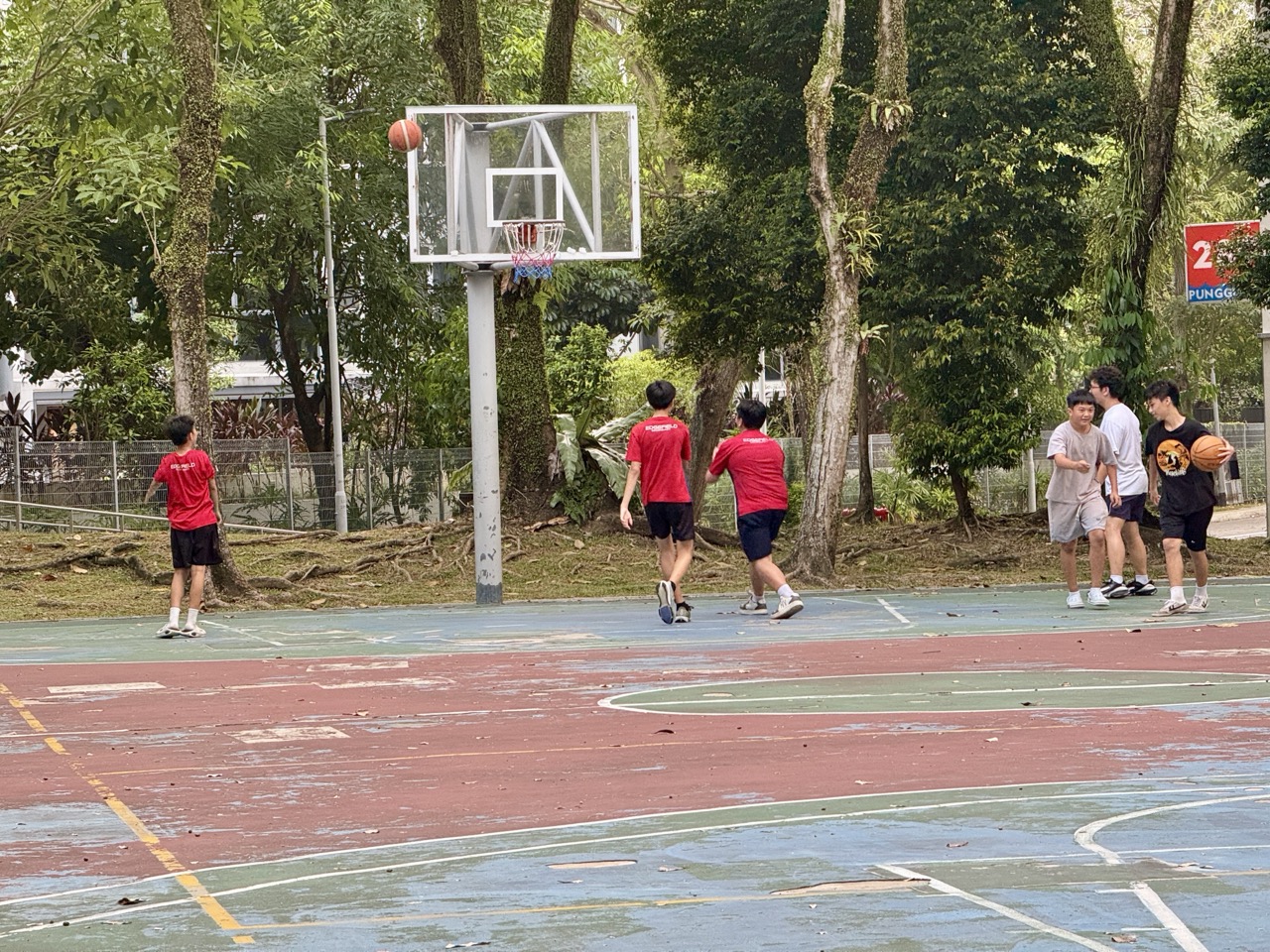
Quick answer. Physical Education (PE) in Singapore’s mainstream schools develops movement competence, healthy routines, enjoyment of activity, safety and social learning—not just performance on one fitness test. The National Physical Fitness Award (NAPFA) is an assessment used at specified levels. Official MOE school guidance describes NAPFA in Primary 4 and Primary 6, using five fitness stations plus a 1.6-km run/walk, and in Secondary 2 and Secondary 4/5, using five fitness stations plus a 2.4-km run.
The five stations measure different fitness components: sit-ups, standing broad jump, sit-and-reach, inclined pull-ups or pull-ups as appropriate, and a 4×10-metre shuttle run. The sixth is a distance run/walk appropriate to the level. Grading standards depend on the learner’s relevant age and test category. A child is not “bad at sport” simply because they are stronger at one station and weaker at another; each task provides different evidence.
For Punggol families, school PE, NAPFA, sports CCAs and specialist Sports School admission are separate. An ordinary school can teach badminton, movement or outdoor skills while pupils also participate in a CCA. NAPFA is not a PSLE or SEC academic subject and does not create an automatic Direct School Admission place. Pupils with injuries, disability, illness or other needs should follow their school’s health and participation arrangements rather than being pushed to complete an unsafe task.
This guide explains the national PE purpose, levels, test items, fair interpretation, safe preparation, recovery and sleep, school CCA pathways, sport-related mathematics and realistic Punggol exercise options. It includes original worked data and pacing tasks, a four-week non-intensive preparation framework, 26 FAQs and primary sources checked on 21 October 2026.
1. PE is a curriculum with learning goals
Singapore MOE’s 2024 Physical Education syllabus covers movement skills, physical health, safety and activities suitable to learners across primary, secondary and pre-university education. It is not simply a timetable slot for children to run laps without explanation.
A useful PE lesson may teach how to move safely, cooperate within a game, select a tactical option or understand why regular activity helps health. Students can demonstrate learning through practice, discussion, feedback and appropriate skill assessment.
Parents should ask what a child has learned rather than only whether the class played football. Genuine PE helps the learner participate confidently in more activities over time.
2. A pupil need not be a competitive athlete
Some children enjoy organised sports; others prefer cycling, walking, dance, swimming or recreational games. PE should provide appropriate opportunities to build movement competence and understand activity rather than limit physical confidence to the strongest interschool competitors.
A pupil who is hesitant about jumping or catching may benefit from step-by-step instruction and a supportive environment. Their present difficulty does not determine their eventual ability to enjoy movement.
Parents can encourage exploration without public ranking or comparison. A sustainable active habit is valuable even when the child never joins a school sports team.
3. Movement competence begins before NAPFA
Primary learners practise fundamental movements such as running, throwing, balancing, jumping and coordinating with others. These are foundations for games, gymnastics, dance and later sports. Different children develop at different rates.
A child who avoids a ball game may struggle with tracking or confidence rather than general effort. A teacher can simplify the task, change distance or use a suitable object while maintaining the learning goal.
Physical skill instruction benefits from accurate observation and gradual complexity. Repetition without useful feedback can reinforce an inefficient movement, just as repeating an incorrect arithmetic method can reinforce a misconception.
4. What NAPFA stands for
NAPFA is the National Physical Fitness Award, a longstanding Singapore fitness assessment framework. It uses multiple test items to describe aspects of muscular endurance, power, flexibility, agility and cardio-respiratory fitness rather than one universal measure of all health.
The awards and component grades are reported under published age-related criteria. The test is a snapshot of assessed performance at a particular time, not a medical diagnosis or a measure of the child’s character.
Families should read the actual school’s current information and avoid generic internet “NAPFA score generators” when the table does not match the student’s age or test category.
5. Which primary pupils normally take NAPFA
MOE primary school guidance identifies Primary 4 and Primary 6 as ordinary NAPFA test levels. For example, St Hilda’s Primary’s August 2026 NAPFA resource publishes separate P4 and P6 tables, while Clementi Primary’s parent circular describes different testing periods for the two cohorts.
Do not assume every primary pupil in every year sits the six-item test. Other levels can still participate in PE fitness activities, lessons and skill assessments.
The exact school’s calendar, weather arrangements and alternative activities must be verified. A parent should distinguish the year-level NAPFA requirement from ordinary PE observations in Primary 1, 2, 3 or 5.
6. Why the primary run is 1.6 kilometres
Primary NAPFA resources from official schools identify a 1.6-kilometre run/walk. The aim is to assess endurance under the relevant primary framework, not to replicate an older secondary pupil’s 2.4-kilometre task.
A parent should not pressure a ten-year-old to meet a teenager’s running time because an online chart lists a tougher distance. The school uses age-appropriate assessment standards.
An endurance result depends on preparation, pacing, conditions and the learner’s health on the day. The educational response should encourage safe development and accurate understanding, not humiliation when a result is below the desired band.
7. Which secondary pupils normally take NAPFA
Official MOE secondary school pages identify Secondary 2 and Secondary 4/5 as typical full NAPFA assessment levels. St Andrew’s Secondary’s May 2026 notice describes full tests at these levels, with separate in-house fitness checks for Secondary 1 and 3.
This illustrates why a class might practise fitness skills without receiving the national award test every year. A school can still use formative exercise tasks in other levels.
Parents should check the child’s own school’s test date and arrangement. Do not import another institution’s retest policy or timetable as a universal national requirement.
8. The secondary distance is 2.4 kilometres
Secondary NAPFA ordinarily includes a 2.4-kilometre run/walk. The distance is longer than the primary test, so the learner’s pacing and endurance development are not directly compared using the same raw time.
A pupil recording a particular time at 1.6 kilometres cannot simply divide it by 1.5 and claim an official 2.4-kilometre grade. Actual performance depends on endurance, terrain, weather and other conditions.
Parents should avoid promising improvement over a fixed number of weeks. A safe programme matched to the individual matters more than an arbitrary target time from a fitness influencer.
9. The five non-distance test items
The common station battery includes sit-ups, standing broad jump, sit-and-reach, a specified form of pull-up or inclined pull-up, and shuttle running. These test different movement qualities and produce different units: repetitions, centimetres or seconds.
A learner with a strong standing broad jump may still struggle in flexibility or upper-body endurance. That pattern is educational information rather than an overall verdict that they are unfit.
The school should explain how an attempt is performed and measured. Technique, valid repetition and safety instructions must come from authorised educators rather than guesswork from a short video.
10. Sit-ups are not a race for the largest number
The timed sit-up station measures a particular form of trunk muscular endurance under defined technique. A child who performs many movements without meeting the required form might not have achieved the corresponding number of valid repetitions.
The right preparation involves learning correct technique with appropriate teaching and avoiding unsafe overexertion. A parent should not ask a pupil to continue beyond pain or serious fatigue simply to obtain a better practice count.
An improvement should be understood alongside the learner’s safety and wellbeing. A PE teacher can clarify the relevant test instructions and acceptable performance.
11. Standing broad jump measures a different component
A standing broad jump records horizontal jumping performance, influenced by coordinated movement and leg power. It should not be interpreted as a comprehensive measure of cardiovascular fitness or athletic talent.
A pupil may benefit from learning stable take-off and landing technique in a supervised school lesson rather than making dangerous repeated jumps on a slippery public surface. The measured distance is meaningful only when the attempt follows a consistent procedure.
Parents can discuss how to read a tape measure and compare two valid attempts. Correct measurement and safe technique matter more than an exaggerated social-media distance.
12. Sit-and-reach is about a specific flexibility measure
The sit-and-reach station assesses a defined forward-reaching movement related to trunk and hamstring flexibility. It does not represent every joint’s mobility or diagnose all physical problems.
A learner who has a shorter reach should not be pushed forcefully into an extreme stretch. Physical development differs, and unsafe stretching can cause discomfort or injury.
Use the school’s current demonstration and staff guidance, particularly if the child has a relevant injury or condition. A test score can inform appropriate PE practice without becoming a judgment about the child’s body.
13. Pull-up and inclined pull-up arrangements vary
School NAPFA resources describe inclined pull-ups for many younger pupils, with full pull-ups for qualifying older male categories under the relevant standard. A pupil should check the age and category applied by their school rather than copy a neighbouring student’s station instruction.
The task involves upper-body muscular endurance with formal criteria for a valid repetition. Improper body positioning can make a practice result unlike the actual test.
Parents should avoid improvised or unstable equipment. School-supervised techniques and age-appropriate instruction are safer than forcing a child to attempt difficult hanging movements without a suitable setup.
14. The shuttle run is a test of controlled speed and turning
The 4×10-metre shuttle run involves short lengths with directional changes. Results can reflect agility, coordination, speed and the ability to turn efficiently while following the proper test procedure.
A student may be fast in a straight run yet lose time from awkward turns. That suggests a specific movement issue rather than poor general fitness. Teachers can observe footwork and give constructive feedback.
Practice should take place on a safe, suitable surface with enough clear space. A narrow HDB corridor, crowded footpath or busy carpark is not an appropriate training lane.
15. NAPFA award labels require the correct table
Official schools publish Gold, Silver and Bronze conditions based on individual station grades and combined points. But families should use the current age-specific award table and school instructions, not a generic calculation copied from a different cohort or testing system.
A high total may not settle the award if one station fails a minimum requirement. Likewise an apparently average result in one component does not alone determine the child’s overall grade or wellbeing.
The important next action is to clarify what the actual score means and which skill the pupil can improve safely over time. Award pursuit must not overtake education or health.
16. An original total-points illustration
Suppose a fictional six-station system assigned component points of 4, 4, 3, 5, 3 and 4 to a learner. The illustrative total is 4 + 4 + 3 + 5 + 3 + 4 = 23 points.
That arithmetic does not declare a Gold award. Actual recognition requires checking the station-grade floor, category and current official standard as well as the total points.
Parents should teach children to read the entire rule rather than only add points. This is a useful mathematical lesson in interpreting multiple constraints, not an official grading prediction.
17. School PE is larger than six NAPFA stations
The 2024 PE syllabus includes domains such as games and sports, dance, gymnastics, outdoor education and physical health and safety. A child could learn cooperation, rhythm or responsible decision-making through activities not included in the six fitness stations.
A student who does not excel at distance running may still develop valuable movement skills in dance or ball games. NAPFA is one assessment tool, not the full curricular purpose.
Families can ask what the school teaches across the year and how success is demonstrated in different domains. Fitness results should not erase achievements in broader physical learning.
18. PE and sports CCA serve different purposes
All mainstream pupils participate in PE under school arrangements, while sports CCAs provide additional opportunities for interested students to train, contribute to teams and develop specific skills. Availability, selection and competition roles differ by school.
A pupil joining badminton CCA does not automatically receive the highest NAPFA score; the tests measure various fitness components. Likewise a good NAPFA result does not grant immediate membership in every competitive sports team.
Parents should ask about training commitment, access for beginners and how the school manages students’ broader workload. Enjoyment and skill development matter as much as selection for competition.
19. National School Games are another programme
The National School Games framework provides opportunities for schools and teams to participate in organised sports competitions. Selection for a team depends on the school and sport arrangements, and is not a general consequence of completing PE lessons.
Competitive participation can teach cooperation, preparation and dealing constructively with victory and loss. It should not require a child to hide an injury or neglect school commitments.
A parent’s useful question is how the programme supports skill, safety and education. Winning a medal is an achievement, not proof that every other participant failed to learn.
20. Specialist Sports School is a separate admission path
Singapore Sports School operates a specialist high-performance sports and education programme with its own selection and academic routes. It is not equivalent to a secondary-school PE class or ordinary CCA.
A student interested in Sports School needs to read sport-specific trials and admission conditions, including training and academic expectations. NAPFA test performance alone does not create a Sports School offer.
Punggol families should consider the actual commute, curriculum and physical wellbeing as well as talent. A high-stakes sport pathway should be chosen for fit, not simply as a prestigious consequence of a good fitness test.
21. Why test results do not define a child’s health
NAPFA measures specific performance outcomes in controlled tasks. It does not replace individual medical assessment, nor can a parent deduce a diagnosis from one low station grade. Sleep, illness, disability, growth and preparation may affect an observed result.
A school may provide alternatives or exemptions under documented health and participation rules. Parents should communicate genuine concerns through the proper channels.
Encourage the pupil to notice progress without comparing bodies or making sweeping personal judgments. Physical confidence can improve through enjoyable, appropriate activity even when a formal award is not earned.
22. Medical exemption is not the same as unwillingness
A child with a current injury, significant illness or relevant medical restriction needs an appropriate school decision about participation. This differs from a student who dislikes running and wants to avoid an ordinary school task.
The family should provide genuine documentation where required and follow the school’s health and safety instructions. A child should not be asked to conceal a problem to complete an award station.
Conversely, ordinary encouragement to participate should be respectful and age-appropriate. Health concerns belong with school staff and qualified professionals, not with a private online scoring calculator.
23. Rest and hydration support school participation
Children need appropriate rest, hydration and meals for normal physical activity. An exhausted pupil who has just spent hours in class may perform differently from one who is rested and well. A school testing day should not become an excuse for drastic last-minute exercise.
Parents can help by keeping daily routines predictable and ensuring the child understands how to tell an adult if they feel unwell. If a specific medical condition is present, follow professional guidance.
The aim is safe learning and sustainable physical activity rather than chasing a number regardless of how the child feels.
24. Overtraining can reduce rather than improve learning
Repeated maximal running or jumping without suitable recovery can increase fatigue and risk. A motivated teenager may believe more repetitions always produce a better result, but physical adaptation requires time and appropriate effort.
School PE guidance can help learners plan feasible activity at their stage, while medical or specialist advice may be needed for injuries or high-performance training. This general education article cannot prescribe a clinical programme.
Parents should look for gradual, comfortable progress, appropriate supervision and enthusiasm for activity. A NAPFA award is not worth forcing unsafe exercise.
25. A child can enjoy PE even in a non-test year
Primary 5 and Secondary 1 pupils may not be scheduled for the same full NAPFA award test as Primary 4 or Secondary 2 pupils. They still participate in school Physical Education and develop movement, fitness, teamwork and health-related understanding.
Families should not treat the absence of a national award test as a reason to stop all activity. Sustained enjoyment of movement is valuable at every school stage.
A parent can ask which movement skills the current PE module teaches, and help the learner recognise improvement without making every family outing into an informal examination.
26. What one weaker station really tells the teacher
A strong distance-run result but weaker sit-and-reach performance reveals a different learning profile from a pupil who jumps confidently but finds endurance difficult. The items measure different aspects of performance and cannot be reduced to one personality label.
The teacher can observe technique, instruction-following and readiness, then discuss an appropriate next step. A family should not respond to one weak station by demanding extreme general exercise.
The aim is safe, useful physical learning. Identifying the specific movement concern is much more informative than saying that the child is simply unathletic.
27. Original primary running pace calculation
Suppose a fictional P6 student completes 1.6 kilometres in twelve minutes. Average pace is twelve divided by 1.6, giving 7.5 minutes per kilometre, or seven minutes thirty seconds per kilometre.
This arithmetic is not a recommended running target for a child or an official NAPFA grade. The student’s category and actual school scoring table determine the formal result.
For transfer, fourteen minutes over 1.6 km produces 8.75 minutes per kilometre, or eight minutes forty-five seconds. The learner has applied rate calculation independently while keeping a clear distinction between numbers and health advice.
28. Original secondary pace calculation
A fictional Secondary 2 learner records fifteen minutes over 2.4 kilometres. The average pace is fifteen divided by 2.4, equal to 6.25 minutes per kilometre—six minutes and fifteen seconds.
This describes the hypothetical observation; it does not mean the learner maintained exactly that pace throughout, or that a particular award was earned. Formal grades are based on the relevant age table and test conditions.
Ask the learner how the calculation would change with a longer time over the same distance. That is a Mathematics transfer task, not a prescription for exercise intensity.
29. A shuttle-run example: lower time is faster
Imagine two valid attempts at a shuttle run: 12.1 and 11.8 seconds. The better time is 11.8 seconds. A child might mistakenly choose 12.1 because the number is larger.
This reveals a misunderstanding of the measured quantity. In a standing broad jump, a greater valid distance is desirable; in a timed race, a shorter time for the same distance indicates greater speed.
For transfer, ask the pupil to compare 12.3 and 12.0 seconds. Understanding whether a larger or smaller measurement reflects improved performance matters in Science and Mathematics too.
30. Fitness measurements can vary
A stopwatch measurement can differ slightly when different people trigger it, and an attempt can be affected by starting position, test instructions and ordinary fatigue. Parents should not assume a difference of a tenth of a second proves a major developmental change.
Formal school procedures aim for comparability. Home practice data may use a different setting or technique, so it should not be entered into a national scoring table uncritically.
A constructive learning conversation asks which conditions were alike, which changed and whether a result should be repeated safely. This builds evidence awareness instead of score anxiety.
31. Scores have different units and cannot be added raw
A broad jump may be recorded in centimetres, sit-ups in repetitions and the shuttle in seconds. Adding those raw measurements would have no coherent fitness meaning because the units are incompatible.
NAPFA uses category-based grading and points so results across items can be recognised under defined rules. Families should not invent an aggregate such as “120 centimetres + 20 sit-ups − 12 seconds”.
The student can learn why meaningful comparisons require a common scale and explicit criteria. This is an example of physical learning connecting with numerical reasoning.
32. Gold, Silver and Bronze are formal conditions
Schools provide Gold, Silver and Bronze criteria using component grades, points and the relevant age standard. A good point total might still fail the award condition if one station’s minimum is not met.
The family must check the actual current school table rather than assume any online website’s calculator is authoritative. Historical award details can differ in how instructions are presented.
Teach the pupil to read a multi-condition rule completely. A certificate is recognition of performance, but it is not a full account of the student’s health or all movement abilities.
33. PE safety includes environmental judgment
A child may know how to run but fail to notice that a surface is wet, crowded or uneven. Responsible physical education includes choosing a suitable activity space and following instructions, not simply trying to improve a stopwatch result.
A busy Punggol footpath or carpark is not an appropriate private shuttle-run track. Families should prefer safe, permitted, supervised spaces and stop when conditions are unsuitable.
Sound judgment is a transferable outcome: identify the hazard, adjust the activity and explain the choice. The physical task becomes part of wider safety education.
34. Body comparison should not become shame
Children develop at different rates and can feel exposed when fitness results are discussed publicly. A weak station grade should not be used to mock appearance, body size or gender.
Parents can describe the tested skill without making the child feel that their entire identity is a result. Teachers and caregivers should handle personal scores appropriately and avoid circulating identifiable pupil information without permission.
A respectful environment encourages ongoing activity. Humiliation can drive students away from the very movement experiences that Physical Education is meant to support.
35. Injury and illness require appropriate processes
A child with injury, current illness or relevant medical restrictions should follow the school’s official participation procedures. A fitness assessment is not more important than wellbeing, and parents should not tell pupils to conceal problems to secure a score.
School staff and appropriate qualified professionals can advise on safe participation, medical evidence or exemptions where warranted. A general online guide cannot decide the individual case.
The family should communicate concerns early so that test-day confusion does not put the learner under unnecessary pressure.
36. Fitness and medical assessment are different
NAPFA reports performance in specific physical tasks. It is not designed to diagnose all medical conditions or determine whether a child is medically healthy in every respect.
A very low or unusual result might reflect unfamiliar technique, fatigue or other circumstances. It should not trigger a parent’s unsupported diagnosis or an extreme self-imposed regimen.
When genuine health concerns exist, discuss them with qualified health professionals and authorised school staff. Otherwise, use the feedback constructively as part of normal PE learning.
37. Exercise should remain enjoyable
A child might prefer walking, swimming, cycling, dance or ball games to timed running. Suitable physical activity can build movement confidence even if it does not perfectly imitate one NAPFA station.
Parents can support safe recreational experiences at suitable Punggol facilities and parks. Not every afternoon needs a stopwatch or a new target, especially when the child already has a long school day.
The educational value lies in sustainable habits and positive movement experience, not only in preparing for a single test week.
38. Punggol Regional Sport Centre requires current checking
Sport Singapore’s facilities master plan includes a Punggol Regional Sport Centre with a stadium, swimming and other facilities. Its 2026 planning announcements described completion as expected in that year.
An expected completion is not confirmation that every pool, court or programme is already open. Before making arrangements, verify the current facility opening and booking information directly with Sport Singapore or ActiveSG.
The centre may offer future recreation opportunities for families, but its public services are separate from MOE’s school PE or NAPFA administration.
39. Sports CCA and PE should complement one another
A sports CCA can provide sustained training and team experience beyond ordinary PE, but its participants still learn the wider school curriculum. A child who plays competitive badminton may not excel in every fitness station, and another who likes running may not want competitive team sport.
Parents should discuss training demands, appropriate recovery, academic work and student interests with the school. A CCA place is not an automatic fitness award.
Good planning supports enjoyable sport without forcing a pupil to choose between physical wellbeing and the rest of school learning.
40. Sports School admission is a separate route
Singapore Sports School has specific academic and sport-talent criteria. A pupil does not gain entry solely from completing the school NAPFA test or earning a Gold award.
The school’s actual trials, sports programmes, learning pathways and student support should be checked from the official admissions material. A Punggol family must also consider travel or residential arrangements where relevant.
Parents can encourage athletic talent while remaining clear about the distinction between ordinary national fitness assessment and specialised school selection.
41. A fictional P4 learner with jump anxiety
Imagine a Primary 4 pupil who enjoys swimming but worries about standing broad jump. The parent initially interprets the concern as general inability at sport. The PE teacher explains the movement and gives appropriate age-specific feedback.
The family stops comparing the child’s performance with older siblings and encourages safe, manageable participation. The child begins to understand that one skill can improve without becoming a statement about their worth.
This scenario illustrates supportive educational discussion, not an individual training or medical recommendation. Real advice must fit the learner’s circumstances.
42. A fictional Sec 2 learner with too many commitments
A Secondary 2 student participates in a sport CCA, has school assessments and wants extra exercise before NAPFA. After several long days, the child becomes unusually tired and less focused on schoolwork.
The family reviews the real calendar and asks the school how suitable preparation is ordinarily taught within PE. It avoids adding daily maximal-effort activities simply because a social-media video promises rapid improvement.
The objective is a sustainable routine with appropriate rest. Academic and physical development can support each other when neither is treated as unlimited.
43. A four-week family planning framework
Week 1: read the child’s official school notice and identify the correct test level, distance and relevant health procedures.
Week 2: ask about station technique and age-appropriate PE activity. Do not improvise risky equipment or force painful movements.
Week 3: maintain normal sleep, meals and enjoyable movement while noting practical questions for the PE teacher.
Week 4: confirm test attire, date and reporting instructions. After the result, discuss what was learned rather than asking for a universal award guarantee.
44. Three common mistakes with NAPFA
The first is reading a secondary 2.4-kilometre standard as though it applies to a Primary 4 pupil. The second is adding raw centimetres, seconds and repetitions directly instead of using the formal scoring system.
The third is assuming a lower result diagnoses a medical condition or that a higher award guarantees entry to competitive sport. All confuse a limited assessment with a much wider claim.
The alternative is precise: know the test, check the correct category and use the feedback to support appropriate physical learning.
45. A Punggol parent’s final checklist
Confirm whether the child has a full NAPFA test or another PE assessment, which stations and distance apply, and how the school handles health needs. Ask for the actual scoring instructions and whether any special timetable arrangements exist.
Balance physical activity with CCAs, ordinary learning, meals and rest. Verify current local sports facilities before travelling rather than assuming planned amenities are open.
A successful PE experience builds safe movement, confidence and lasting activity habits. A formal NAPFA award recognises one part of that development.
46. Interpreting progress across a school year
A learner can improve in physical confidence without a dramatic change in one formal station. They may learn to land safely, participate more comfortably in a game or judge a risky situation more accurately. These are educational outcomes worth recognising.
A school can use various observations and feedback across PE modules, while NAPFA offers a narrower standardised snapshot. Parents should not replace one with the other or expect a single award label to describe an entire year of development.
A constructive conversation asks what movement skill has become more reliable and what the learner now understands about safe activity.
47. What to ask the PE teacher about scoring
Request the correct age and test-category scoring instructions, the school’s planned schedule and the procedure for genuine absences or medical restrictions. A parent should not demand a retest based solely on another school’s policy.
If the pupil is disappointed, ask which station’s method or result needs explanation. The teacher can clarify how valid attempts and award conditions are recorded under the current process.
The aim is fair understanding and appropriate support, not a private negotiation over a national score or public comparison with classmates.
48. Learning to plan with others
Team games and outdoor activities help pupils practise communication, turn-taking, adapting to others and responding to rules. A child who learns to share roles fairly in a team may make real progress even if their distance-running time barely changes.
Parents can ask what the child did when a teammate needed help or when a strategy failed. Those questions encourage reflection about responsibility rather than only winning.
Physical Education develops knowledge, behaviour and movement together. That broader purpose is why families should resist reducing the subject to a fitness certificate.
49. From school fitness to adult wellbeing
PE gives students a foundation for choosing physical activities beyond school. A teenager may later enjoy recreational badminton, cycling or swimming without entering professional sport or keeping a formal NAPFA score.
The durable outcome is understanding how to participate safely, respect others and continue moving in a way appropriate to personal circumstances. Those habits require more than a brief examination-day effort.
For Punggol families, supportive routines and access to genuine facilities are more valuable than unverified training promises. Health concerns should still be addressed through the appropriate qualified professionals.
Frequently asked questions
What does NAPFA stand for?
The National Physical Fitness Award used in Singapore’s fitness assessment framework.
Which primary school years take the full NAPFA test?
Official primary school guidance identifies Primary 4 and Primary 6.
What is the distance for primary pupils?
A 1.6-kilometre run/walk in the primary NAPFA format.
Which secondary years normally have full NAPFA?
Secondary 2 and Secondary 4/5 in the published school programmes.
What is the secondary running distance?
Typically 2.4 kilometres for the secondary full fitness test.
How many items are assessed?
Six, comprising five fitness stations and a distance run/walk.
What are the five stations?
Sit-ups, standing broad jump, sit-and-reach, pull-ups or inclined pull-ups as relevant, and shuttle run.
Why does the pull-up test vary?
Age and category determine the appropriate test method under the school’s published standards.
Are higher times better in shuttle run?
No. Under comparable valid trials, a faster result has fewer elapsed seconds.
Are higher broad-jump distances better?
For comparable valid attempts, a greater distance is the stronger performance.
How do Gold and Silver awards work?
Official points and minimum-station-grade rules apply; use the correct age-category table.
Does Primary 1 take the ordinary Primary 4 NAPFA?
No general claim should be made; ordinary fitness learning in P1 differs from the P4 formal test.
Can Sec 1 pupils still have fitness checks?
Yes. Some schools run in-house checks outside the formal award levels.
Is NAPFA a PSLE or SEC exam subject?
No. It is distinct from the academic national certificate examinations.
Does NAPFA diagnose a child’s medical condition?
No. It measures specified fitness performance and cannot substitute for clinical assessment.
What if a child has a medical restriction?
Follow the school’s participation and exemption rules with appropriate professional advice.
Does a Gold NAPFA award guarantee Sports School admission?
No. Specialist sports admission is a separate selection process.
Does PE include activities other than running?
Yes. The MOE syllabus covers games, dance, gymnastics, outdoor education and safety, among other learning.
Is a sports CCA the same as PE?
No. CCA sport offers different and often more sustained specialist participation.
Should every pupil train to maximum effort every day?
No such universal approach is justified; safe, developmentally suitable activity and recovery matter.
Can parents time a child at home for an official grade?
An informal time is not an official school NAPFA result and may use different conditions.
Can pupils do NAPFA on any public corridor?
Use a safe appropriate location and follow school instructions; busy corridors or carparks can be unsuitable.
Is Punggol Regional Sport Centre open?
Its completion was planned for 2026; check current official operating and booking status rather than assume.
Can children enjoy exercise without competitive sport?
Yes. The curriculum supports a wide range of movement interests and healthy habits.
Does a weak station prove the child is bad at all sport?
No. Different stations measure different qualities and do not define the child’s overall capability.
What should parents check first?
The child’s current level, formal test date, age-specific standards and suitable safety instructions.
Official primary sources and related Punggol guides
- MOE 2024 PE syllabus for primary, secondary and pre-university
- St Hilda’s Primary P4/P6 NAPFA standards 2026
- Princess Elizabeth Primary NAPFA guide
- St Andrew’s Secondary 2026 NAPFA arrangements
- Hougang Secondary fitness resource
- Damai Secondary PE curriculum in 2026
- Sport Singapore facilities master plan including Punggol
- Sport Singapore 2026 facilities statement
- Punggol specialist school and Sports School guide
- Punggol Secondary CCA and LEAPS recognition
- Punggol outdoor adventure and school camps
- Immutable Clementi learning benchmark
Editorial check, 21 October 2026. MOE and official school sources establish the NAPFA levels, distances and test items. No medical diagnosis, mandatory training target or individual award is asserted. Family scenarios and calculations are illustrative.


