
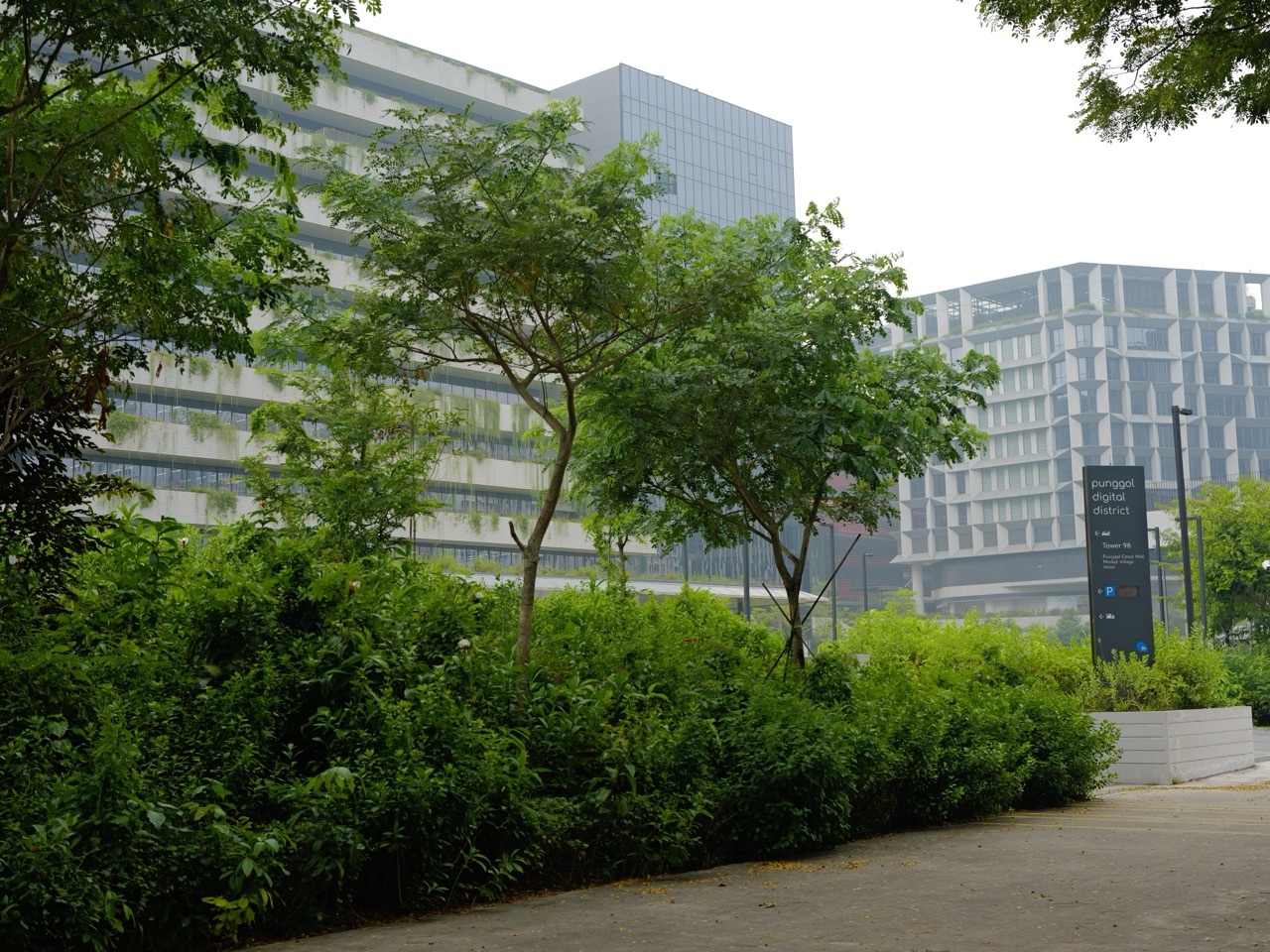
The top 10 things to do in Punggol for Design Thinking students are to examine BCA’s award-winning Punggol Coast MRT design, map an integrated visit to One Punggol, define one library-service problem, compare commuter access preferences, ideate a clearer waterway rest-point map, prototype multilingual wayfinding responsibly, explore multiple resident perspectives through Punggol Stories, test paper interfaces, design graceful service failure and present a small evidence-led improvement portfolio.
Start with a real documented case: Punggol Coast MRT received BCA’s 2025 Universal Design Excellence Award and is described as the first MRT station conceptualised through design thinking. Its documented features include barrier-free exits, accessible lifts, clear wayfinding and community-centric areas. Students can use that case to understand how people with differing needs influence design, without claiming to conduct a professional station audit.
This October 2026 guide uses the human-centred sequence of understanding needs, defining a problem, generating alternatives, creating low-cost prototypes, testing and iterating. A public institution’s documented features, a student’s observation and a user’s voluntary feedback are different sources of evidence. No one needs permission to draw a paper idea at home, but actual public alterations and organised interviews require appropriate authority and consent.
One useful design-thinking process
- Empathise: consider what people genuinely need to accomplish rather than imagining one average user.
- Define: write a specific problem with a user, context and measurable task.
- Ideate: generate several approaches before selecting a favourite.
- Prototype: represent one idea cheaply and clearly, often first on paper.
- Test: observe a consenting participant attempt the task without being coached into success.
- Iterate: revise in response to evidence and record uncertainty.
- Respect: protect personal data and obtain permission for any real-world installation or organised research.
Why Punggol provides useful design problems
The district contains a rail interchange, a newer station linked to a growing employment and education area, public parks, integrated community services and an inclusive regional library. These places involve different journey objectives. A visitor may want the shortest route, clearer instructions, a suitable lift, shelter or a quiet rest stop. A good design project starts by understanding the task instead of declaring every attractive technology an improvement.
BCA’s Punggol Coast award case is particularly useful because it documents actual user-centred decisions rather than an imagined success. It describes input from social service agencies and older communities. A school project may not have access to a comparable research programme, so it should state its smaller scope. A paper card tested with a family member is educational evidence for that card, not proof that a station needs redesign.
Design also involves constraints. A sign can create clutter, a smartphone app can fail offline, a new bench has maintenance and access requirements, and a translation error can produce more confusion than an English-only draft. Students should not leap from ‘I have an idea’ to ‘the government should install it’ without understanding feasibility, public safety, rights and approval.
Ten Punggol design-thinking activities
1. Study empathy-led design at award-winning Punggol Coast MRT
Where: Public passenger areas at Punggol Coast MRT (NE18), or BCA’s 2025 award case study.
Why this is a real design-thinking problem
BCA identifies Punggol Coast MRT as the first MRT station designed through a design-thinking approach to receive the Universal Design Excellence Award in 2025. The case describes wide level circulation, barrier-free exits, a Passenger Service Centre with clear sightlines, tactile guidance, hearing enhancement and family-friendly facilities. Students can therefore explore a real example of a user-centred process without inventing a private interview or declaring every visitor equally satisfied.
A practical process
Read the current BCA case study before choosing one public task: a new commuter needs to find the correct exit. From a lawful passenger area, note what information the visitor can use, which sign comes first and what the person would need if they cannot rely on visual text alone. Map the likely journey from arrival to a specific public exit, identifying two decision points. Record questions about actual access separately from features the award documentation confirms.
Worked Punggol design correction
A learner sees a lift and concludes that the whole district route must be step-free. BCA’s study documents thoughtful station connectivity, but the final walk and any temporary lift outage are separate issues. The student’s revised note is ‘The station provides barrier-free design features; a particular destination route still requires current verification.’ That is a better problem definition than praising every part as perfect.
A more advanced iteration
Write a neutral empathy statement: ‘A first-time visitor needs clear confirmation of the chosen exit before committing to a corridor, because uncertainty can create a wrong turn.’ Develop two paper sketches of improved confirmation, then ask someone who has not seen the original map which they understand faster.
Permission, inclusion and accuracy limits
Do not conduct deceptive disability simulations near rail platforms, film passengers intrusively, interfere with tactile paths or claim that a school observation constitutes regulatory accessibility certification.
Primary reference: Study empathy-led design at award-winning Punggol Coast MRT. Check the venue’s current access and information before travel.
2. Map a multi-purpose resident journey through One Punggol
Where: One Punggol, 1 Punggol Drive, using PA’s public facilities information.
Why this is a real design-thinking problem
One Punggol integrates a Community Club, ServiceSG Centre, Punggol Regional Library and Level 2 hawker centre, among other public functions. It is a useful setting for a service-design journey map because one resident can have multiple goals on a visit. Designers should consider the entire journey, not just one polished counter or app screen. The PA directory documents the services, but not a promise that every appointment or specialist room is available when a visitor arrives.
A practical process
Choose an invented but realistic user: a parent wants to borrow a book, ask a government-service question and have lunch. On paper list stages from transport arrival to first service, transition, meal and return. For each stage write action, information required, possible friction and an opportunity for clearer guidance. Use official location facts but do not invent personal waiting times. If visiting, observe only public areas without collecting residents’ identifiable information.
Worked Punggol design correction
A first journey map contains only three boxes labelled Library, ServiceSG and Food. A revised map adds wayfinding, deciding the correct floor, locating an authorised help desk and choosing the return route. The new map reveals that transitions between services are part of the user experience, not empty space between attractions.
A more advanced iteration
Create a service blueprint separating what the visitor sees from back-office processes that would need agency verification. Mark unknown steps with a question mark instead of claiming to know how staff process applications. Ask whether a simple leaflet or digital map would reduce uncertainty more effectively than a new app.
Permission, inclusion and accuracy limits
Do not enter healthcare, childcare or restricted service rooms without legitimate purpose or permission. PA describes facilities, not all programme availability or any confidential staff workflow.
Primary reference: Map a multi-purpose resident journey through One Punggol. Check the venue’s current access and information before travel.
3. Define a precise library-borrowing problem before brainstorming
Where: Punggol Regional Library and NLB’s publicly documented inclusive features.
Why this is a real design-thinking problem
NLB describes Punggol Regional Library as an inclusive multi-level library with accessible services. A student might be tempted to propose ‘make the whole library better’, but design thinking needs an actionable need, a defined user and an observed or validated barrier. The discipline is to distinguish a hypothesis from a complaint. A design brief should describe the task a visitor is trying to perform, not prescribe a solution before the problem has been understood.
A practical process
Choose a private hypothetical persona who wants to find and borrow a specific book. Write the task, starting context and desired outcome. Read NLB’s current public features and consider which parts need real confirmation. Construct a ‘How might we’ question such as ‘How might we help a newcomer understand where to begin the library search without requiring them to ask for directions?’ Do not assume the current library fails to provide that service. Note what observation or user consent would be needed to validate the question.
Worked Punggol design correction
A student’s original problem statement is ‘Punggol Library needs a new app’. That is a solution masquerading as a problem. The revised statement is ‘Some fictional first-time readers may be unsure whether to search a shelf or the catalogue first; we want to test which explanation is clearer’. The second can be tested with a paper instruction without collecting anyone’s personal borrowing records.
A more advanced iteration
Write three alternative ‘How might we’ questions for the same task, then select the one small enough to test in one hour. Compare a verbal instruction, a diagram and a simple search flow, making sure a tester understands the aim before giving feedback.
Permission, inclusion and accuracy limits
Never conduct unsanctioned usability sessions that disrupt library users. Do not take identifiable patron photos or store borrowing records. Published inclusive features are not proof of a specific individual’s experience.
Primary reference: Define a precise library-borrowing problem before brainstorming. Check the venue’s current access and information before travel.
4. Compare a fast, a sheltered and a lift-based route as different user goals
Where: Public access between Punggol Coast MRT and Punggol Digital District.
Why this is a real design-thinking problem
BCA’s award description highlights Punggol Coast station’s sheltered connectivity, barrier-free routes, wide fare gates and user-focused circulation. Designers must understand that ‘shortest route’ is only one possible objective; a family with a stroller, an elderly visitor who needs seating and a commuter in a hurry can have different priorities. Treating all users as a single average person produces fragile solutions. The same public route can be evaluated through several legitimate goals without impersonating an actual disability.
A practical process
Use BCA’s documented features and a current public map to create three hypothetical personas with differing route preferences. Draw a choice diagram showing key route questions: where is the destination, is there shelter, and is a lift route confirmed? Do not state a live lift status unless official information confirms it. Ask consenting peers which route they would choose based on each persona’s needs. Observe how the preferred answer changes when the objective changes.
Worked Punggol design correction
A design team chooses a route with the fewest metres in a fictional map, then a peer notes that it requires an unsuitable staircase. The team revises the algorithm to consider a step-free requirement before distance. They learn that user requirements can act as constraints, not merely extra decorative options on a map.
A more advanced iteration
Make an interface prototype that allows a user to choose ‘step-free’, ‘fewest transfers’ or ‘more shelter’ before displaying a suggested path. Show an ‘information unavailable’ state if a necessary live access detail is unverified, and explain why confidently inventing a path could harm someone.
Permission, inclusion and accuracy limits
A paper route design is not an authorised navigation service and cannot guarantee individual accessibility. Never use a mobility aid without permission or create physical barriers during a test.
Primary reference: Compare a fast, a sheltered and a lift-based route as different user goals. Check the venue’s current access and information before travel.
5. Practise divergent thinking with a waterway rest-point challenge
Where: Punggol Waterway Park public sitting areas, studied without changing the landscape.
Why this is a real design-thinking problem
Punggol Waterway Park includes pathways, planting and rest locations used by different visitors. A design-thinking challenge might ask how someone can better recognise the next legitimate rest opportunity on a walk. The principle is divergent ideation: generate several credible alternatives before committing to the first attractive solution. A bench, map, sign or digital notification has costs and constraints, so the best idea may be a clearer use of existing infrastructure rather than adding a new object.
A practical process
Read NParks’ public park information and, if safe, observe a short open path without blocking it. Define one hypothetical user’s need, such as a visitor wanting to know whether a rest point is nearby. Set a timer for eight minutes and draw at least five different ideas: a printed map, a symbol, a route choice card, an information board concept and a digital accessibility note. Label them sketches, not approved installations. Evaluate each against ease of understanding, maintenance and possible effects on other users.
Worked Punggol design correction
A team initially proposes installing twenty new signs along a public route. After considering maintenance and clutter, it draws an alternative compact entrance map that groups rest points and turnbacks. A paper test may show the second design is easier to interpret. The lesson is not that NParks must install it, but that a better design can involve reducing objects rather than adding them.
A more advanced iteration
Use an impact-effort matrix: classify each idea by potential benefit, complexity, permissions and maintenance. Explain that high scores assigned by students are speculative until relevant users and authorities validate the assumptions. Choose one simple paper prototype to test next.
Permission, inclusion and accuracy limits
Do not erect signs, attach markers, move park benches or collect location data about individual visitors without permission. Any real park change is the managing authority’s decision.
Primary reference: Practise divergent thinking with a waterway rest-point challenge. Check the venue’s current access and information before travel.
6. Prototype a two-language information card without inventing translations
Where: A home or classroom using verified One Punggol destinations.
Why this is a real design-thinking problem
Visual communication in Singapore often serves people with different language preferences and familiarity with local places. A design-thinking prototype can investigate whether icons, floor labels and concise text help a newcomer find a public facility. But unverified translation is not inclusion: a wrong direction in another language may be worse than an honest English-only test. Good design teams ask competent speakers to evaluate any proposed multilingual content.
A practical process
Choose two public services whose official names and floors are verified. Make a small mock-up using concise English, a clear arrow and a generic pictogram. Ask a consenting tester unfamiliar with the design to identify the destination. If a second language is added, consult a competent speaker and record the verification, then test whether layout and font remain legible. Make the prototype on paper or a local screen only. Do not reproduce the authority’s official logo as if the card were issued by PA.
Worked Punggol design correction
A learner uses the label ‘L’ for library and ‘H’ for hawker centre. One tester interprets ‘L’ as left and the card fails. The next version writes the destinations out fully with a floor description and a simple arrow. That feedback is usable evidence about the mock-up; it does not prove the current building signage needs replacement.
A more advanced iteration
Test the card in greyscale and at a smaller print size. Ask which information remains clear when colour cannot be relied on. Discuss how a person unfamiliar with English may need more than icon substitution, and what professional translation or user consultation would add.
Permission, inclusion and accuracy limits
Never place amateur directional signs inside an operating community building or station. Translation needs genuine verification and consent; avoid pretending a classmate represents an entire language community.
Primary reference: Prototype a two-language information card without inventing translations. Check the venue’s current access and information before travel.
7. Use Punggol Stories to practise co-creating without erasing a community’s history
Where: NLB Punggol Stories exhibition at the regional library, with later private design work.
Why this is a real design-thinking problem
Design thinking requires careful attention to lived experience. NLB’s Punggol Stories documents earlier kampongs, seaside recreation, agricultural activities and later urban development, including memories contributed by residents. This makes it a valuable warning against inventing a single universal ‘Punggol resident’ persona. A design project can use historical material to broaden questions, but published memories should be attributed and not turned into unapproved endorsements of a student’s product.
A practical process
Check the current exhibition information and choose one documented theme. Write two different possible user needs that might arise when people with different generations or memories use a public interpretation display. Clearly label these as hypotheses unless supported by actual consent-based input. Create a paper prototype of a short exhibition guide with accurate source references. Ask a consenting test reader whether the historical fact and student interpretation are easy to distinguish.
Worked Punggol design correction
A student writes ‘All older residents dislike the new district’. NLB’s exhibition cannot support that universal claim. A revised design question might ask ‘How could an interpretation panel allow multiple personal memories alongside a reliable timeline?’ It preserves diverse perspectives without attributing a viewpoint to people who were never asked.
A more advanced iteration
Compare an interview transcript with an exhibition caption and note the difference between a first-person memory and curatorial interpretation. Ask how to make the source visible without overwhelming the design. A short optional ‘Learn more’ reference may work better than copying a long archive passage into the main display.
Permission, inclusion and accuracy limits
Do not copy complete copyrighted poems or oral histories, photograph identifiable visitors without permission or conduct unsolicited interviews about sensitive personal experiences. A design hypothesis is not a resident survey.
Primary reference: Use Punggol Stories to practise co-creating without erasing a community’s history. Check the venue’s current access and information before travel.
8. Create a paper prototype, test it and revise only one variable
Where: A household table or approved classroom, using one earlier Punggol task.
Why this is a real design-thinking problem
DesignSingapore Council’s user-centred design guidance emphasises empathising, synthesising needs, ideating, prototyping, testing and iterating. The core strength of a small prototype is that it is inexpensive to change. A student can test whether a route card, poster or service instruction helps someone complete a task before building an app. Testing only polished final work invites confirmation bias, because the designer may be reluctant to change it.
A practical process
Choose one clear problem statement from the earlier exercises. Draw two paper screens or instruction cards and decide in advance what success means, such as a reader correctly naming the next public destination. Ask a consenting participant to attempt the task without coaching. Observe where the wording causes confusion and write it down. Revise only one element, such as icon label or step order, and repeat with the same task, acknowledging that a tiny sample does not establish universal usability.
Worked Punggol design correction
The first card contains four small icons without text, and the volunteer hesitates before choosing the route to a library. The revised card adds the full destination name but keeps the same layout. The volunteer now interprets it more quickly. This suggests a useful improvement in the tested situation, not proof that all library visitors need the same card.
A more advanced iteration
Develop a table with hypothesis, prototype version, task, observed result, change and remaining uncertainty. Ask why a successful test with one familiar adult might not predict the needs of a child, an older visitor or someone who relies on nonvisual navigation. Suggest an inclusive future test plan without recruiting strangers informally.
Permission, inclusion and accuracy limits
Participants should understand the purpose and agree to testing. Do not store unnecessary data, ask for secrets or manipulate people into a result. DesignSingapore’s guidance is a process resource, not approval of an actual Punggol installation.
Primary reference: Create a paper prototype, test it and revise only one variable. Check the venue’s current access and information before travel.
9. Test how a proposed community service responds when something goes wrong
Where: A fictional Punggol library or community-hub service process, modelled privately.
Why this is a real design-thinking problem
A service can work in its ideal case and still fail the person who needs it most when the usual route is unavailable. The design-thinking process should include error recovery and uncertainty, not just aesthetics. A proposed kiosk might give correct instructions when a destination is open, but what happens if a programme is full, a lift is closed or the user cannot complete authentication? These are legitimate design questions even without access to internal service data.
A practical process
Choose an ordinary hypothetical task such as finding a library event or booking information. Draw a service journey with a normal path and three clearly fictitious disruptions. For each, ask what the user needs to know and who has authority to resolve it. Use PA’s or NLB’s current public information for genuine facilities, but make no claim about an agency’s internal workflow. Design an ‘unavailable, check official service’ state rather than showing a fictional successful booking.
Worked Punggol design correction
A mock-up says ‘Your workshop seat is confirmed’ after the user taps a decorative button. The program has no live booking service, so the output is false. The team revises it to ‘View current NLB programme registration’ with an actual official link and a clear note that availability must be checked. The design becomes more trustworthy by admitting its boundary.
A more advanced iteration
Create a service blueprint separating frontstage messages seen by users from backend actions requiring actual provider permissions. Mark all unknown operations explicitly and ask what happens when no live connection exists. A responsible design should not infer acceptance from an advertisement or a previously published event date.
Permission, inclusion and accuracy limits
Do not impersonate a government service, claim booking authority or probe real service accounts and APIs without permission. The prototype is a learning artifact, not a live public product.
Primary reference: Test how a proposed community service responds when something goes wrong. Check the venue’s current access and information before travel.
10. Present a tested design case instead of a list of attractive ideas
Where: An authorised classroom or home, with references to the studied Punggol public spaces.
Why this is a real design-thinking problem
A design-thinking portfolio should demonstrate the relationship between user need, evidence, selected idea, prototype and test result. BCA’s documented Punggol Coast design shows that accessibility features resulted from engagement with social service agencies and elderly communities. A student is unlikely to have equivalent research resources, but can still be honest about scale and testing. A small, well-documented paper prototype is stronger than a sweeping promise to redesign Punggol in a weekend.
A practical process
Prepare five pages: user goal and context; evidence and what remains unknown; alternative sketches; one tested prototype; and a conclusion with limitations. Cite official BCA, PA or NLB sources where relevant and distinguish their findings from the student’s own small test. Present the proposed design to a teacher or consenting small group and ask what assumptions remain unsupported. Revise the final page rather than adding more untested features.
Worked Punggol design correction
A team’s first presentation announces it has ‘solved station accessibility’ because one student preferred its sign. The revised claim is ‘In one desk test, our route label was interpreted more clearly by one volunteer; real accessibility would need larger inclusive user research and current operator data.’ The second statement is more professional because it defines the evidence and the next responsible step.
A more advanced iteration
Apply a decision matrix containing usefulness, inclusion, feasibility, maintenance, cost and evidence strength. Identify which criteria remain unknown instead of assigning invented perfect scores. Conclude with one next practical research action and which authority would need to consider any physical implementation.
Permission, inclusion and accuracy limits
Do not publish private interview data, misrepresent BCA awards as endorsements of student work or install prototypes at live sites without authorisation. A portfolio is an educational report, not an official planning proposal.
Primary reference: Present a tested design case instead of a list of attractive ideas. Check the venue’s current access and information before travel.
A ninety-minute beginner design sprint
First 15 minutes: define the task
Use verified information about a public Punggol place, choose a fictional first-time user’s goal and write one ‘How might we’ question. Avoid a problem as broad as ‘make Punggol more modern’. Instead focus on finding the right entrance or understanding a facility name. State which elements you have observed and which are assumptions.
Next 20 minutes: create multiple ideas
Draw five distinct solutions, including at least one low-tech option. A paper direction card may solve a task better than a newly created account-based application. Evaluate them by clarity, inclusion, effort, maintenance and likely dependence on live information. Choose one to prototype, explaining why alternatives were rejected.
Next 25 minutes: make a paper prototype
Create the smallest possible working representation: two connected screens, one printed card or an annotated service journey. Use current factual facility names from PA, LTA or NLB but do not incorporate official logos deceptively. Prepare an instruction that lets a person try it without additional coaching.
Next 20 minutes: test and revise
Ask one consenting peer to complete a specific task. Watch for wrong turns, hesitation or misunderstanding without telling them the intended result. Revise one design choice and repeat. Keep both versions and record how feedback influenced the change. With one tester, do not claim general statistical significance or universal accessibility.
Last 10 minutes: document the limit
Write a conclusion with three headings: what the test showed, what remains unverified and what would need authority or broader user participation. Acknowledging these boundaries demonstrates design maturity. A project need not be deployed into a live public space to be worthwhile.
Five errors common to first-time design thinkers
- Beginning with an expensive app instead of defining the actual user task.
- Declaring every person in an age group has the same preferences.
- Treating an empathy map filled with guesses as real user research.
- Testing a prototype while telling the participant which button to choose.
- Ignoring the needs of people who cannot use a particular visual or digital channel.
- Claiming a successful one-person test proves a universal design improvement.
- Installing signs or using public facility data without permission.
- Hiding the lack of real-time information behind a confident interface.
- Confusing an authority’s documented design with a student’s own observation.
- Discarding the failed version instead of recording what was learned.
Frequently asked questions
What is design thinking?
A human-centred iterative approach that identifies user needs, frames a problem, generates alternatives, prototypes and tests ideas.
Is there a real design-thinking example in Punggol?
Yes. BCA’s 2025 award case identifies Punggol Coast MRT as the first station conceptualised with design thinking.
Why was Punggol Coast MRT recognised?
BCA describes inclusive station connectivity, circulation, wayfinding, facilities and engagement with community stakeholders.
What is a user journey map?
A representation of the steps, needs, information and possible friction involved in completing a task.
What does ’empathise’ mean in a project?
Seek to understand a person’s relevant experience and needs instead of assuming that yours are universal.
Do I need to interview strangers to do design thinking?
No. Begin with desk research and hypothetical personas. Any real interviews require appropriate consent and context.
What is a ‘How might we’ question?
A focused problem-framing question that invites ideas without prescribing one solution in advance.
What is a prototype?
A testable representation of an idea, which can be as simple as paper screens or an annotated card.
Can students improve One Punggol’s signs directly?
Do not alter public signage without authority approval. Make educational paper mock-ups and obtain real permission for any proposal.
Can I test whether Punggol Coast lifts are always working?
A casual student walk cannot guarantee real-time lift status. Use official operator information for actual accessibility decisions.
Why are multiple route preferences important?
Users may value step-free access, shelter, simple directions or shorter travel differently.
What is an inclusive test?
A responsibly designed test that considers varying abilities and access needs and does not force participants to disclose private conditions.
Can a school team use BCA’s award information in a project?
Yes, with attribution and accurate distinctions between official case information and the team’s own ideas.
Does successful feedback from one tester prove the design works for everyone?
No. It supports a limited finding for that test and suggests where broader research may be needed.
What is iteration?
Revising a design after evidence or feedback and testing whether the change better serves the goal.
What is a service blueprint?
A model separating user-visible steps from supporting backstage activities, including what the designer does not yet know.
What should an app do when a service is not verified?
Communicate that uncertainty, provide an appropriate official route and avoid inventing successful bookings or current access.
Can design thinking apply to a library rather than a technology product?
Yes. Finding books, understanding services and accessing public spaces are legitimate design problems.
Is a public park a place for an unapproved design installation?
No. Observe responsibly and seek the managing authority’s permission for any physical change.
What belongs in a design-thinking portfolio?
A specific problem, researched context, alternatives, prototypes, test notes, revisions, citations and remaining uncertainties.
Official references and related Punggol guides
- Study empathy-led design at award-winning Punggol Coast MRT
- Map a multi-purpose resident journey through One Punggol
- Define a precise library-borrowing problem before brainstorming
- Compare a fast, a sheltered and a lift-based route as different user goals
- Practise divergent thinking with a waterway rest-point challenge
- Prototype a two-language information card without inventing translations
- Use Punggol Stories to practise co-creating without erasing a community’s history
- Create a paper prototype, test it and revise only one variable
- Test how a proposed community service responds when something goes wrong
- Present a tested design case instead of a list of attractive ideas
- BCA’s 2025 Punggol Coast Universal Design recognition
- NAC interdisciplinary arts learning context
- Punggol accessibility design fieldwork
- Punggol planning and public realm
- Punggol makerspace and prototyping
- eduKateSG structured learning and error-diagnosis reference
A useful design understands people and owns its uncertainty
Punggol’s community hub, regional library, waterway and award-winning Punggol Coast station demonstrate the importance of connections between places and people. Start with one genuine task, generate alternatives, test a modest prototype and describe what the evidence can actually support. A thoughtful design does not need to be installed to teach the habits of empathy, clarity, safe iteration and responsible decision-making.


