
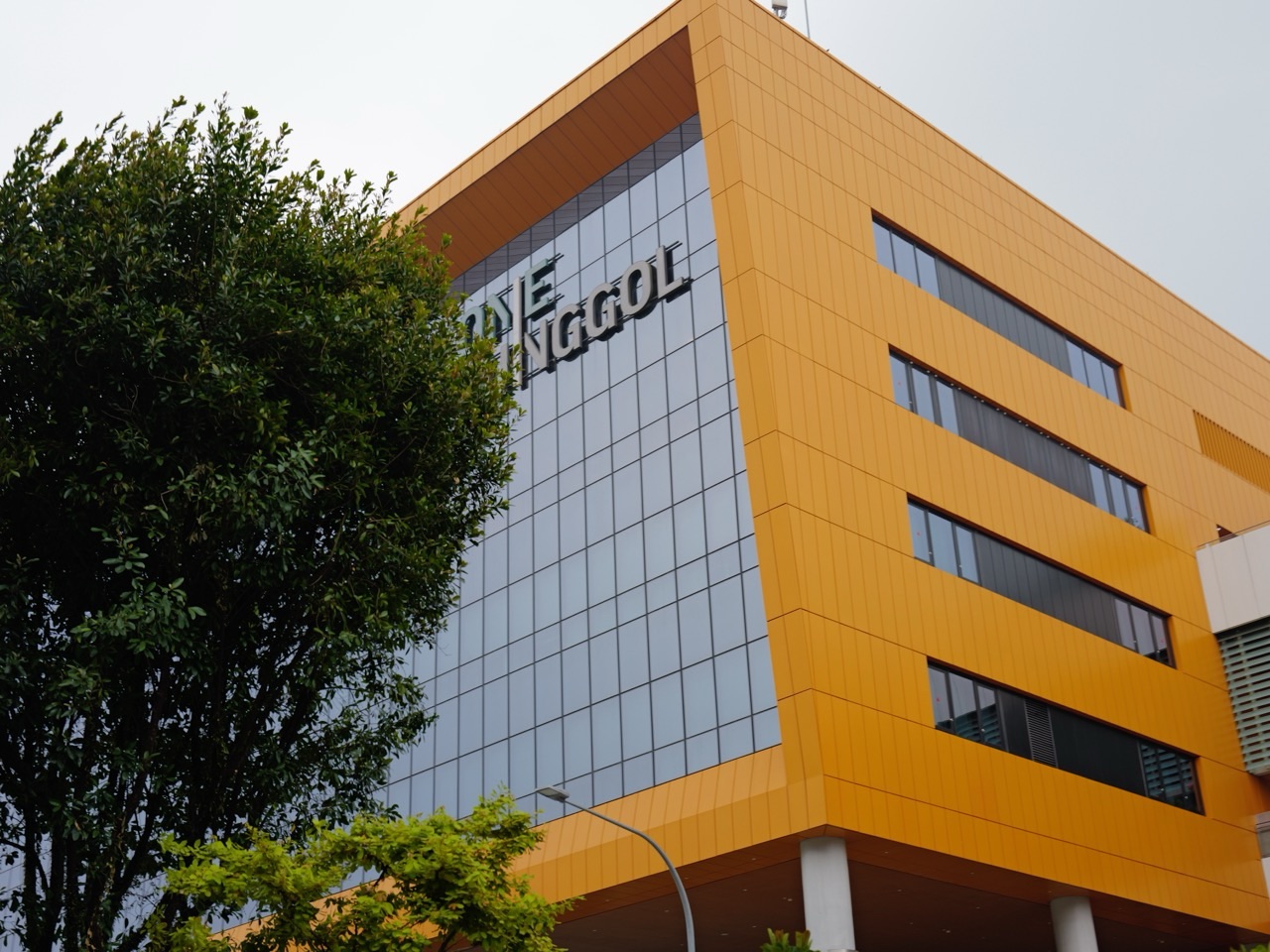
Punggol residents interact with several public and community organisations that sound similar but have different legal responsibilities. The Punggol Group Representation Constituency (GRC) determines parliamentary representation and the electoral register for the constituency. The Punggol Town Council manages relevant HDB common property and Service and Conservancy Charges. The North East Community Development Council (CDC) supports district-level community programmes. The People’s Association (PA) and its local grassroots organisations facilitate community activities, assistance and resident engagement. None of these replaces HDB, the police, a healthcare provider or the government agency with actual authority over an individual application.
As of October 2026, Punggol GRC is represented in Parliament by four elected MPs: Gan Kim Yong, Janil Puthucheary, Sun Xueling and Yeo Wan Ling. The Punggol Town Council describes their local divisions as Punggol North, Punggol Coast, Punggol West and Punggol Shore, respectively. The current GRC was formed for the 2025 General Election from Punggol areas formerly under Pasir Ris–Punggol GRC together with Punggol West SMC. Historical pages describing the old Pasir Ris–Punggol arrangements do not necessarily identify the right present-day resident service channel.
The simplest practical rule is to match the problem to the responsible organisation. A faulty lift or common corridor in an HDB estate typically belongs with the Town Council; a question about parliamentary representation or a Meet-the-People Session belongs with the relevant MP’s office; a community course goes through the PA or onePA; district initiatives may involve North East CDC; and a statutory housing approval still comes from HDB. A citizen can also use the official Elections Department (ELD) services to verify their current electoral registration rather than guessing constituency solely from the word “Punggol” in their address.
This Understanding Punggol | Things to Know guide uses official Parliament, ELD, Punggol Town Council, PA and CDC records checked on 22 October 2026. It is a neutral guide to public institutions and civic participation, not an endorsement of any candidate, party or political viewpoint. Representatives, boundaries, opening times and individual programmes can change, so the linked official sources remain the final reference.
Who is responsible? The quick Punggol directory
- Parliamentary constituency: Punggol GRC, a four-member Group Representation Constituency following GE2025.
- Current MPs: Gan Kim Yong, Janil Puthucheary, Sun Xueling and Yeo Wan Ling.
- Local divisions used by Punggol Town Council: Punggol North, Coast, West and Shore.
- HDB common-property cleaning, lifts and S&CC: Punggol Town Council, where the block belongs to its managed estate.
- HDB purchase, resale, rental approval or HIP: Housing & Development Board, not the Town Council’s normal service counter.
- District community assistance and activities: North East CDC, which covers Punggol along with several other north-east constituencies.
- North East CDC Mayor: Baey Yam Keng under the official 2026 CDC listing.
- Community Club and interest groups: PA and onePA, with distinct venue and programme arrangements.
- Residents’ Committees and Residents’ Networks: PA grassroots platforms for community connection and local feedback.
- Meet-the-People Sessions: use the actual Punggol division’s current official schedule; these are not government agency approval counters.
- Electoral register: use ELD Voter Services or supported Singpass and official service centres.
- Public danger: police, SCDF or the applicable emergency service; routine civic channels do not replace urgent response.
1. Four different meanings of “local government”
An organisation can be local in geography without having broad governmental power. Singapore’s elected MPs serve in Parliament; a Town Council manages certain HDB estate assets under statute; the PA organises and supports civic activity; the CDC administers programmes across a district. The public often encounters them through the same community events or noticeboards.
The overlap can be convenient but confusing. A volunteer may explain how to apply for a subsidy without being authorised to approve it. An MP may raise a resident’s concern with an agency but does not thereby become the officer applying that agency’s statutory criteria.
A reliable guide identifies the decision-maker, not only a familiar logo. Correct routing improves the chance of a useful response and reduces unnecessary trips.
2. What a parliamentary constituency actually is
An electoral division, commonly called a constituency, groups registered electors for parliamentary elections. Singapore has Single Member Constituencies (SMCs) represented by one MP and Group Representation Constituencies (GRCs) represented by teams of MPs. The constituency is an electoral and representative arrangement rather than a land-title boundary or postal district.
A resident may live in an estate marketed as “Punggol” but need to check the actual electoral boundary rather than infer it from a nearby shopping centre. Boundaries can change between elections in response to the national review process.
The official ELD maps and electoral register are the proper sources for confirming a person’s division. Property advertisements and historical neighbourhood articles are not authoritative for voting particulars.
3. Why Punggol GRC differs from the old Pasir Ris–Punggol GRC
Before the 2025 General Election, Punggol neighbourhoods were represented partly within the larger Pasir Ris–Punggol GRC and partly through Punggol West SMC. The 2025 boundaries created a new four-member Punggol GRC and a distinct Pasir Ris–Changi GRC.
A family looking at an older guide might still find contact information for the former arrangements. The historic record is valuable, but using it as current advice can direct residents to an office that no longer serves that particular division.
The lesson is to date all civic information. Punggol’s identity as a town endures, while parliamentary and Town Council arrangements can be reorganised.
4. Why a GRC has multiple MPs
The GRC system was established to support minority representation within Parliament through group elections, under the Parliamentary Elections Act. A GRC elects a team of MPs rather than an individual candidate for every neighbourhood. The precise team size and designation are decided within the national election framework.
Punggol GRC currently has four MPs under Parliament’s official constituency directory. Residents should not assume that every GRC has four seats; others have different numbers.
Within a GRC, MPs commonly serve particular local divisions for constituency engagement, while the elected team represents the whole electoral division in Parliament. The local service allocation does not create four unrelated SMC elections.
5. Who the four Punggol MPs are
Parliament’s October 2026 constituency record lists Gan Kim Yong, Janil Puthucheary, Sun Xueling and Yeo Wan Ling for Punggol GRC. Punggol Town Council associates them with North, Coast, West and Shore, respectively.
These are public representative identities. A neutral information guide should not infer how any of them would decide an individual’s complaint or portray official constituency services as proof of agreement with every government policy. Residents of any political opinion may seek legitimate assistance.
When names or portfolio descriptions matter, use Parliament’s Punggol GRC page rather than a dated election poster.
6. The Town Council is not Parliament
Punggol Town Council manages and maintains specified HDB common property in its estates. It handles shared assets such as lifts, common lighting, refuse infrastructure, landscaping and estate cleanliness, alongside its S&CC billing functions. These are practical statutory estate-management responsibilities.
Parliament, by contrast, debates national legislation, scrutinises government and performs representative functions. An MP’s constituency role may help channel concerns, but that is not the same as operating every lift contractor or collecting every municipal charge personally.
A resident reporting a faulty common-area light should generally use the Town Council’s official service channel first. A national law question should be directed through the proper representative or agency route.
7. Punggol Town Council is a newer local arrangement
The 2025 constituency reorganisation was accompanied by the creation of the current Punggol Town Council arrangements following the division of the earlier Pasir Ris–Punggol representation. Its website now identifies Punggol’s own councillors, divisions and estate-service functions.
This explains why some older receipts, signboards and online pages mention a previous Town Council structure. Historical references need not be fraudulent, but current payments and maintenance enquiries should use the organisation that legally manages the specific property today.
Check the Punggol Town Council site and its town map rather than rely on the old name alone.
8. Four local divisions make constituency service easier to locate
The Town Council site presents Punggol North, Punggol Coast, Punggol West and Punggol Shore, each associated with an MP and a Meet-the-People Session arrangement. These divisions help residents identify a practical constituency contact, but should not be confused with URA planning subzones, postal codes or separate municipalities.
For example, a local division name may not match the name on the nearest LRT station. A household should verify the precise block and official current service map.
The purpose of local divisions is practical engagement within the broader GRC. It does not mean the resident can ignore the statutory agency responsible for a particular issue.
9. Punggol North’s constituency contact
The current Punggol Town Council page identifies Gan Kim Yong with Punggol North, including a Meet-the-People Session location at Block 402 Northshore Drive #01-01 under its published schedule. Arrangements can change around public holidays or special events.
A resident should confirm the latest session timing before making a journey, especially with work or caregiving commitments. An MPS location is not an emergency response centre and may not be staffed throughout the week.
When attending, bring a concise explanation and relevant documents, keeping personal bank, medical or identity records private until an authorised caseworker needs them.
10. Punggol Coast’s constituency contact
The Town Council’s current information associates Janil Puthucheary with Punggol Coast, including a session venue at Block 303A Punggol Central #01-782. The label Punggol Coast in this context should not be confused with every property immediately adjacent to the Punggol Coast MRT station.
A family should verify the local division using an official constituency reference rather than guess from proximity. The office can advise the current session arrangement and accepted contact route.
A meaningful enquiry identifies the issue and what agency action is sought. It should not assume that the MP personally makes every operational decision.
11. Punggol West’s sessions have more than one location
The Town Council lists Sun Xueling with Punggol West, showing Meet-the-People Sessions at different venues on different Mondays, including Block 308C Punggol Walk and Block 221B Sumang Lane. The date determines which location is relevant.
This is an important practical detail. A resident who saves one address permanently may arrive at the wrong venue on a different week. Official notices also describe exclusions for some fifth Mondays and holiday periods.
Use the current Town Council or constituency office schedule before attending, and check whether advance contact or a queue process is required.
12. Punggol Shore’s constituency contact
The current Town Council site identifies Yeo Wan Ling with Punggol Shore, including a Meet-the-People Session venue at Block 171B Edgedale Plains #01-438. As with the other divisions, session arrangements may change.
Do not assume that a local MP meeting is the correct channel for a police report, urgent social-care emergency or building danger. The session can provide advocacy or referral where appropriate, but the relevant agency retains its legal role.
For a planned meeting, prepare dates, reference numbers and a clear description of the help needed. Keeping the enquiry focused supports a useful conversation.
13. What happens at a Meet-the-People Session?
Meet-the-People Sessions (MPS) are constituency engagement opportunities where residents may raise difficulties with an MP’s team. Caseworkers often collect information and may help communicate with the relevant public agency about a legitimate issue.
The service does not guarantee a housing appeal, waiver, grant or immigration decision. Agencies must still apply the law and their actual assessment criteria. An MP’s letter is not a replacement for an official permit or medical certificate.
A resident can benefit from describing what was already attempted, the agency response and the exact outcome they seek. This is more effective than presenting an unfocused collection of unrelated complaints.
14. Preparing an MPS case file
Useful information includes the resident’s name and contact information, the responsible agency, actual correspondence, application or case number, relevant dates and a concise account of why further assistance is sought. Personal documents should be shared only through the authorised casework process.
A parent requesting help with an administrative issue should avoid publicly posting the child’s full identification number, report cards or health records in a residents’ group. An authorised office may request relevant evidence privately.
Be accurate and state what remains unresolved. Exaggerated or contradictory claims can slow the process and make appropriate referrals harder.
15. MPs do not replace the formal appeal process
An agency may have a statutory appeal or review route with deadlines and required documents. Attending MPS does not automatically suspend those deadlines. A resident should preserve their right to make the prescribed application or appeal while seeking any additional constituency guidance.
For example, a housing decision may require an HDB review through official channels. A parking fine may have its own contest procedure. Different authorities cannot simply be replaced by one MP office.
The best practice is to ask: What is the formal procedure, when is the deadline, and which document shows it was filed? Civic advocacy and administrative rights can work in parallel.
16. What the Town Council’s S&CC covers
Punggol Town Council’s current S&CC page explains that charges support common-property services such as lift maintenance and rescue, water pumps, switchrooms, shared lighting, cleaning, landscaping, repainting, roof works and refuse infrastructure. That is different from a resident’s in-flat electricity and water consumption.
The S&CC amount depends on flat type and the applicable reduced or normal rate category. A shared-building service is funded collectively; an owner cannot waive all contributions merely because they seldom use a particular staircase.
Use the current Punggol S&CC rates for the actual bill and payment arrangements rather than an old estate notice.
17. Town Council payment does not settle HDB rent or property tax
S&CC differs from HDB rental, the owner’s mortgage, annual IRAS property tax, and the SP utilities bill. They fund or govern different obligations. A household might receive a rebate on one category while continuing to owe the others.
This distinction matters for older residents and families facing temporary hardship. A person who has difficulty paying S&CC should use the Town Council’s current assistance or instalment process where available, while a separate ComCare or utilities issue may need another agency.
A clear household budget names each payee and reference number. It prevents both duplicate payment and mistaken assumptions about subsidies.
18. A common-property repair report should name the asset
If a corridor light is out, report the block, floor and approximate position. If a lift is not functioning, identify its number or lobby and what was observed. If bulky rubbish blocks a shared path, provide the exact location and a safe photograph where relevant.
The Town Council needs operational details rather than an accusation that all estate maintenance has failed. A contractor can often investigate a specific fault faster than a vague complaint about the neighbourhood.
For immediate danger, use the applicable urgent safety channel. A routine feedback form should not delay assistance when someone is trapped or a fire is developing.
19. HDB remains the housing policy and flat authority
The Housing & Development Board governs HDB flat eligibility, BTO applications, resale procedures, whole-flat rental permissions and certain in-flat renovation programmes. These responsibilities are not transferred to a Town Council merely because the flat is physically located inside the council’s estate.
A resident with a problem about the legal approval to rent a flat should speak with HDB rather than assume the Town Council can legitimise a tenancy. A private dispute with a renovation contractor may require a different consumer process altogether.
Our Understanding Punggol HDB housing guide explains those property-specific decisions.
20. OneService helps route municipal issues
The Municipal Services Office’s OneService platform supports many municipal feedback categories and can route issues to the responsible authority. It is a practical entry point where a resident cannot easily determine whether a particular common-area issue belongs to Town Council, NEA, NParks or another participating agency.
A good report contains exact location and observable facts. It should not be used for police emergencies or as a substitute for filing a time-sensitive statutory application.
The platform can help coordinate non-emergency municipal feedback, but it does not make a private commercial dispute a municipal issue merely because it occurred in Punggol.
21. North East CDC covers more than Punggol
The North East Community Development Council is one of Singapore’s five CDCs, each covering a district composed of multiple constituencies. The official 2026 list places Punggol, Pasir Ris–Changi, Sengkang, Tampines and Tampines Changkat within North East CDC.
The CDC is therefore not another name for Punggol Town Council. It has district-level objectives and partnerships and may deliver initiatives across several distinct residential towns.
A resident should use the relevant CDC programme’s current eligibility conditions. Living within North East District does not automatically mean every CDC benefit is available to every individual.
22. The North East Mayor is not the Punggol MP
The official 2026 CDC leadership list identifies Baey Yam Keng as Mayor of the North East District and chairman of North East CDC. This role is separate from Punggol GRC’s four elected MPs; the CDC district includes multiple constituencies.
A headline about a North East CDC initiative may feature the Mayor without indicating that the Mayor is the Member of Parliament for each town involved. Avoid treating regional leadership and parliamentary constituency representation as interchangeable.
For current leadership and district coverage, use CDC Singapore and North East CDC.
23. What the CDC actually does
North East CDC describes its focus on social support, family and youth development, digital wellbeing, jobs and learning, and partnerships with community organisations and businesses. It can bring together resources across a district larger than one Town Council estate.
The specific programme determines its beneficiaries, dates and application route. A support initiative launched for qualifying households is not automatically a national subsidy or a cash grant available to every resident.
Good advice is to start with the actual North East CDC programmes rather than quote a social post without eligibility details. Community wellbeing and financial assistance can intersect but are administered through named schemes.
24. CDC Vouchers are a separate national distribution mechanism
Residents often encounter “CDC” through the CDC Vouchers Scheme, which uses the CDC network for household spending support and participating merchants. That does not make every CDC a supermarket or the Town Council responsible for voucher-account technical problems.
The voucher scheme has its own eligibility, disbursement, redemption categories and expiry dates. North East CDC may communicate relevant local participation but the official digital voucher programme provides the current transaction information.
Our Understanding Punggol CDC and Climate Vouchers guide explains how to avoid confusing vouchers with cash, utilities or other benefits.
25. What the People’s Association is
The People’s Association is a statutory board under the Ministry of Culture, Community and Youth. Its mission includes promoting racial harmony, community connection and engagement across Singapore. It works through Community Clubs, grassroots organisations, volunteer networks and other programmes.
PA is distinct from an elected Parliament, the civil service, a political party and a private condominium management corporation. The organisation engages with government policy and community participation through its statutory role.
A resident can take a onePA class or volunteer with PA without needing to agree with every public policy or treating participation as an election declaration.
26. Grassroots organisations have defined functions
PA maintains a network of grassroots organisations, including Citizens’ Consultative Committees, Residents’ Committees, Residents’ Networks and other activity groups. They bring people together, communicate relevant public information, gather feedback and support local initiatives.
These are often managed by volunteers appointed under PA arrangements. A volunteer’s commitment does not grant general power to approve a housing loan, issue a legal penalty or inspect private medical records without authority.
The correct question is what the particular grassroots group is authorised to do. A resident who wants a community event may benefit from it; a person facing a formal enforcement decision should contact the responsible statutory agency.
27. What Citizens’ Consultative Committees do
Citizens’ Consultative Committees (CCCs) are described by PA as apex grassroots organisations. They support major constituency activities, community assistance and engagement, including relevant fundraising, dialogues and emergency preparedness initiatives.
PA’s October 2026 description also mentions support such as the CCC ComCare Fund, Edusave awards and other local assistance activities, under each programme’s rules. This is not identical to Social Service Office assessment of national ComCare assistance.
A household seeking help should identify whether the question concerns an urgent local community fund or the regular MSF social-assistance system. Both may be important, but the correct applicant conditions and administrator differ.
28. Residents’ Committees focus on neighbourliness
Residents’ Committees (RCs) originated in HDB estates to encourage neighbourliness, community participation and communication with authorities. Their current roles include gathering feedback, connecting neighbours and supporting community activities.
An RC can be a useful place to learn about events or raise a shared estate concern, but it is not a court or a substitute for the Town Council’s maintenance service. Volunteers should not be asked to make legal findings about a neighbour dispute.
For a social disagreement, community mediation or another appropriate service may help more than a public argument at the RC. Neighbour trust depends on fair procedures.
29. Residents’ Networks can serve different housing types
PA’s Residents’ Network (RN) framework supports community connection and collaboration across neighbourhoods. Its council promotes good practices among RCs, Neighbourhood Committees and RNs, including engagement across public and private housing communities.
A private Punggol condominium may have community opportunities that interact with nearby HDB precincts, but its MCST remains responsible for private common property. Grassroots participation does not transfer the condominium’s legal management to PA.
This matters when a resident wants a neighbourhood celebration involving people from different estates. The event can be organised collaboratively while each venue’s rules remain in force.
30. Community Club Management Committees have another role
PA’s Community Club Management Committees (CCMCs) help plan and manage community activities and club spaces, supported by staff and volunteers. Their programmes can cover sports, arts, cultural events, family learning and social connection.
Someone booking a hall at One Punggol should use the correct onePA or facility application instead of assuming that a Town Council S&CC payment includes automatic access to PA facilities. Booking and fee policies are distinct.
Our Understanding Punggol community bookings guide covers actual venue and event processes.
31. Punggol has two similarly named but distinct CCs
One Punggol Community Club operates within One Punggol at 1 Punggol Drive, while Punggol 21 Community Club is located at 80 Punggol Field. They do not share one universal course inventory or venue schedule.
A parent dropping off a child for an activity should confirm the exact site, floor and entrance. An organiser inviting guests should not write only “Punggol CC” in the address line.
A booking confirmation from onePA is stronger evidence than a search snippet. The platform can show the current facility, availability and specific programme conditions.
32. ServiceSG is not a grassroots organisation
ServiceSG provides integrated government service support, including the ServiceSG Centre within One Punggol. It can help residents navigate selected transactions, but it does not decide every specialist application. It is not a Residents’ Committee or the Town Council’s general works counter.
A person seeking help to use Singpass may benefit from ServiceSG guidance. Someone seeking a building-structure renovation permit still needs the proper HDB process, while an urgent crime report belongs to police.
Different counters sharing one building do not create one organisation. Check the function and operator shown on the actual service notice.
33. Community volunteering is not the same as voting
Volunteering with a grassroots group can be an opportunity to assist neighbours, organise events and learn about community needs. Voting at an election is a separate civic right and duty governed by the electoral register and Parliamentary Elections Act.
A person may volunteer without becoming an elected representative. Likewise, an eligible elector does not need to be a grassroots volunteer to have voting rights. PA participation should not be described as a compulsory political act.
Neutral civic education should preserve these distinctions so residents can choose how to participate in their community.
34. What ELD manages
The Elections Department (ELD) administers key election processes including registers of electors, voter services, election procedures and official electoral information. It is the proper authority for verifying electoral registration and the applicable polling district.
It does not manage town lifts or distribute every CDC voucher. A resident asking for the correct voting constituency should use official ELD services rather than a Town Council invoice or a developer’s postcode map.
ELD’s Registers of Electors page provides the current system and available verification routes.
35. Who is generally eligible to be an elector?
ELD says eligible electors generally must be Singapore Citizens aged at least 21, not legally disqualified and appropriately recorded with a Singapore residential NRIC address or a qualifying registered local contact address for overseas Singaporeans.
Actual registers use prescribed cut-off dates, so someone who recently turned 21 or gained citizenship may not appear immediately until the relevant revision. A resident should not infer wrongdoing simply because an administrative record has not yet caught up with a recent status change.
Use authenticated ELD Voter Services for the person’s own record. Avoid posting full identifying details in public requests for help.
36. A changed Punggol address can affect electoral division
When an eligible voter moves, the official residential address registered with ICA can affect which electoral division the person belongs to during the next relevant register revision. ELD’s rules allow corrections and claims under specified inspection procedures.
Buying an apartment or changing a courier address does not by itself prove a person has officially moved for electoral purposes. The correct registered residential address is important, and the legal cut-off can affect the register in use for a particular election.
See Understanding Punggol ICA address changes for the separate identity-record requirements.
37. A postcode search is not the same as a voter’s register
A digital election map can help locate a constituency or polling district by postcode, but the individual’s authenticated electoral details remain authoritative. The Government’s 2025 General Election Map supports historical and spatial understanding.
Use the map to understand changing boundaries, then use the current ELD voter service for real registration status. A child aged ten may share a residential postcode with their parent but is not thereby a registered elector.
A static graphic from a previous election can be useful history but should not substitute for the next election’s official register and polling notice.
38. Electoral boundaries can change again
Singapore’s electoral boundaries may be reviewed before a General Election, taking account of matters including population shifts and new housing. The government explains that the review is conducted by the Electoral Boundaries Review Committee within the prescribed process.
Punggol’s growth helps show why boundaries can change across election cycles. The 2025 GRC configuration is the present context, not an eternal planning category fixed independently of future population developments.
An article should state its date and source whenever naming an electoral constituency. Accurate civic guides are designed for update rather than assuming the 2025 map will remain permanently unchanged.
39. Planning areas and constituencies are not identical maps
URA planning areas organise statutory land-use and urban development, while electoral divisions organise representation and registers. Postal codes serve delivery and addressing. Town Council boundaries identify specified estate-management responsibilities. A single place may appear under several overlapping geographic systems.
This explains why searching a Punggol address can generate different labels in transport, housing, electoral or planning documents. One label is not necessarily an error; it may describe a different purpose.
Before sharing a map, ask what question the boundary is meant to answer. A land-use map is not authoritative for voting and a constituency map is not a permit for construction.
40. One Punggol demonstrates co-located but separate services
The One Punggol integrated development brings community, library, hawker and government-service functions together. A visitor can handle several errands near the same address, but each operator manages its own hours, applications and eligibility.
For example, a library-book reservation is under NLB, a CC course under PA, a specific ServiceSG transaction under its public-service system, and a social-assistance assessment under MSF/SSO arrangements. Proximity is useful but does not combine them into one account.
Our Understanding Punggol One Punggol services guide provides the physical building context.
41. Worked scenario: a faulty lift and an unsuccessful housing appeal
A fictional resident reports a lift that frequently stops between floors and also wants help understanding an HDB housing appeal. The lift problem should go promptly to the Town Council or applicable urgent lift-response route, with exact location and observations. The housing appeal belongs with HDB’s official process.
The resident may separately attend the appropriate MP’s MPS if they want constituency assistance communicating about the HDB matter. The MPS caseworker cannot simply replace a lift engineer or approve the housing application personally.
The benefit of this approach is clear accountability: two problems, two appropriate operational channels, with representative support where useful.
42. Worked scenario: a family needs financial help
A Punggol family faces temporary income disruption and is unsure whether the Community Club, CDC, SSO or MP’s office can help. The national ComCare pathway is assessed through MSF’s Social Service Office. Some community programmes or CDC initiatives may offer separate help under their own criteria, while an MP’s office may assist with legitimate case referrals.
A CDC voucher is not the same as a guaranteed ComCare grant. A local volunteer can explain a programme without being its eligibility assessor.
Our Understanding Punggol ComCare guide explains the appropriate application and supporting documents.
43. Worked scenario: a new resident wants to know their MP
A household moves from another part of Singapore into a Punggol block. Instead of guessing from an old electoral map, the adults check their ICA residential address status and the actual parliamentary constituency information. They identify the Punggol GRC division relevant to their address through current official sources.
They note the constituency contact separately from Punggol Town Council’s maintenance line, the nearest Community Club and the right CDC programme portal.
This creates a simple household information sheet without relying on a single neighbourhood social-media administrator to handle every issue.
44. Worked scenario: residents want a neighbourhood event
Residents of several blocks wish to run an inclusive weekend gathering. They approach the suitable PA/Community Club or grassroots contact for support and identify the real venue operator. If common property in an HDB estate is needed, they also obtain the appropriate Town Council or other property permissions.
They do not assume that a volunteer’s verbal enthusiasm automatically reserves a hall or authorises a loudspeaker. Booking, safety, food, accessibility and participant privacy must still be considered.
The event can improve community connection while keeping the legal and administrative tasks in the correct hands.
45. Civic information can be used responsibly without partisanship
Residents hold different political views. A useful institutional guide should present who currently holds public office, which agencies have legal authority and where official procedures can be found, without prescribing how readers should vote or portraying political disagreement as a problem to be corrected.
Public feedback can be constructive whether it supports or challenges a policy. The relevant facts and formal complaint process should be described fairly. A statutory agency should apply its eligibility criteria independently of a resident’s political preference.
Accurate, nonpartisan civic literacy makes public services more accessible and strengthens community trust.
46. Mistakes that make civic enquiries frustrating
Mistake one: using pre-2025 Pasir Ris–Punggol GRC contacts as though they were current. Mistake two: confusing the Town Council with the Housing & Development Board. Mistake three: assuming a CDC voucher is issued by an MP at an MPS.
Mistake four: treating a grassroots volunteer as a statutory permit officer. Mistake five: using a URA planning subzone as the voter constituency. Mistake six: believing a community event booking grants access to every part of One Punggol.
Mistake seven: missing a legal appeal deadline because an MPS letter was requested. Mistake eight: posting private application and identity details into a public discussion group. Each can be prevented with a simple check of agency, purpose and official service.
47. Punggol civic services checklist
- Confirm whether the question is about electoral representation, housing, common property, assistance or community activities.
- Use Parliament’s current record for Punggol GRC MPs.
- Identify the relevant local Punggol North, Coast, West or Shore division through current official sources.
- Confirm MPS venue and schedule before attending.
- Keep MPS requests accurate and tied to the appropriate statutory agency.
- Use Punggol Town Council for eligible common-property and S&CC matters.
- Use HDB for purchase, resale, rental and specified renovation approvals.
- Use OneService for supported non-emergency municipal reports when the agency is unclear.
- Use North East CDC for district initiatives and their published criteria.
- Use onePA for PA courses, bookings and community participation.
- Distinguish CCC, RC and RN volunteering from statutory enforcement authority.
- Verify electoral status through ELD authenticated services.
- Keep ICA residential address records up to date where applicable.
- Avoid using older electoral maps to promise current constituency contacts.
- Use emergency services for immediate danger, not an MPS queue or routine feedback form.
- Protect application records, NRIC and medical details during community requests.
- Recheck important names, addresses, eligibility and service hours before acting.
Frequently asked questions
Is Punggol a four-member GRC in 2026?
Yes. The current Punggol GRC has four MPs under the post-2025 electoral boundaries, as shown by Parliament and ELD.
Who are the current Punggol GRC MPs?
Gan Kim Yong, Janil Puthucheary, Sun Xueling and Yeo Wan Ling, according to Parliament’s official constituency page.
Is Punggol Town Council the same as the old Pasir Ris–Punggol Town Council?
No. The current Punggol Town Council serves the relevant Punggol HDB estates after the 2025 reorganisation. Use its official current website for maintenance and billing.
What does a Town Council maintain?
Specified HDB common property, including lifts, common lighting, cleaning, landscaping and maintenance works, under the estate’s statutory arrangements.
Who runs North East CDC?
The 2026 CDC directory identifies Baey Yam Keng as North East Mayor and chairman of North East CDC. This role covers a district larger than Punggol.
Are the People’s Association and the Town Council the same?
No. PA supports community and grassroots activities, while the Town Council manages specified HDB common property and S&CC.
Can an MP directly approve an HDB appeal or ComCare payment?
An MP’s office may assist with representations or referrals, but the relevant agency makes the formal decision under its actual rules.
Where should I check my electoral constituency after moving?
Use ELD Voter Services and the correct registered ICA residential address. A general map helps orientation but does not replace the individual electoral record.
What is a Residents’ Committee or Residents’ Network?
A PA grassroots organisation supporting neighbourliness, community engagement and local feedback; it is not a court or a housing permit authority.
Can non-citizens participate in community activities even if they cannot vote?
Many community activities accept residents according to the programme’s individual conditions. Voting eligibility is a separate legal status requiring Singapore citizenship and other statutory criteria.
Official references and related Punggol guides
- Parliament: Current Punggol GRC Members of Parliament.
- ELD: GRC and SMC electoral division types.
- ELD: Registers of Electors and voter services.
- ELD: Current voter procedures and FAQs.
- data.gov.sg: Official GE2025 electoral map.
- Punggol Town Council: MPs, divisions and MPS venues.
- Punggol Town Council: S&CC rates and services.
- Punggol Town Council: Town map.
- CDC Singapore: Constituencies covered by North East CDC.
- CDC Singapore: Mayors in 2026.
- North East CDC: Mission and programmes.
- PA: Grassroots organisations and local roles.
- PA: Citizens’ Consultative Committees.
- PA: Residents’ Committees and community participation.
- PA: Grassroots volunteering.
- OneService: Municipal feedback.
- Understanding Punggol: One Punggol and Town Council services.
- Understanding Punggol: Community events and volunteering.
- Punggol: Meet-the-People Sessions—what to bring.
- Understanding Punggol: ComCare and household assistance.
- Understanding Punggol: Residential address changes.
Bottom line: Punggol’s GRC, Town Council, CDC and grassroots organisations operate at different levels. Understand the correct institution, current boundary and legal responsibility, then contact the service that can actually address the issue. Civic participation is useful when accurate, respectful and open to residents with different views.


