
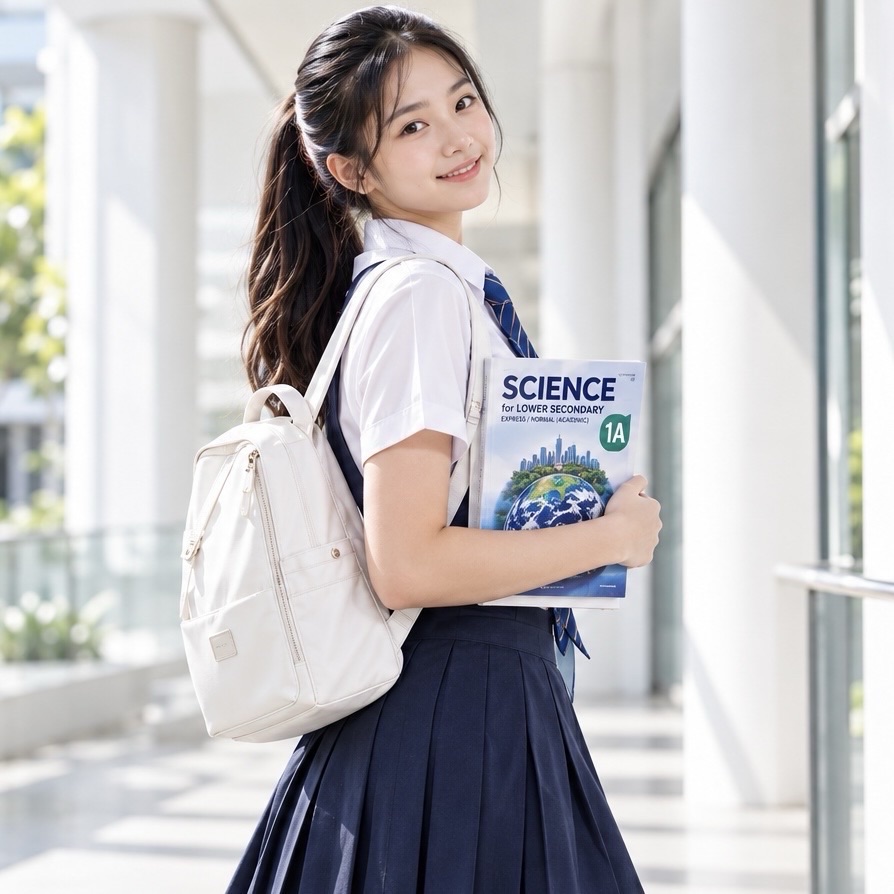
What is the polytechnic Applied Science route for a family in Punggol? It is a post-secondary education pathway built around defined diploma programmes in fields such as Applied Chemistry, Biomedical Science, Food Science, Chemical and Biological Engineering, Optometry and formulation science. Students study academic concepts alongside laboratory methods, quantitative analysis, industry problems and practical projects. It is not one uniform national subject or a Punggol-specific examination. The correct programme must be chosen by its actual title, provider, year and eligibility requirements.
The important admissions date: the first Singapore–Cambridge Secondary Education Certificate (SEC) candidates sit their papers in 2027, and MOE introduces the consolidated Post-Secondary Admissions Exercise (PSE) from 2028. The official MOE PSE hub advises those candidates to consult its updated information in mid-2027. The polytechnic diploma entry rules and Polytechnic Foundation Programme route have separate criteria. Do not plan a 2028 application using an old screenshot of JAE cut-off scores or assume a Science result by itself guarantees entry.
Where are real diplomas? Singapore Polytechnic’s School of Chemical & Life Sciences lists Applied Chemistry, Biomedical Science, Chemical & Biological Engineering, Food Science & Technology, Perfumery & Cosmetic Science, Optometry and a Common Science Programme. These are verified examples at SP in 2026, not a promise that every polytechnic offers identical subjects or that an applicant will secure a place. From Punggol, check the real campus address, lesson schedule and route before deciding what commute is sustainable.
Quick answer: five questions before a diploma application
| Parent question | Correct evidence | Avoid this mistake |
|---|---|---|
| Which intake and qualification? | Actual SEC year, subject levels and MOE PSE timetable. | Use older GCE-era application instructions as if unchanged. |
| Which diploma and provider? | Current course page with modules and published criteria. | Treat Applied Science as a single interchangeable qualification. |
| What kind of Science? | Chemistry, biology, food, process engineering, optics or formulation goals. | Choose a course solely from its fashionable name. |
| How is competence assessed? | Provider’s lab, projects, examination and placement information. | Assume a course is entirely academic or entirely hands-on. |
| What follows the diploma? | Official course-specific university or employment information. | Assume every diploma is automatic admission to medicine or a degree. |
Singapore Polytechnic examples: one school, several different careers
| Current SP option | Science focus | Typical skill developed |
|---|---|---|
| Applied Chemistry | Chemical analysis, materials and product research. | Interpret instrument results and chemical measurements. |
| Biomedical Science | Human biology, biomedicine and laboratory approaches. | Explain cellular data and maintain sample integrity. |
| Chemical & Biological Engineering | Process, physical systems and industrial biology. | Model production conditions and quality. |
| Food Science & Technology | Food composition, safety and processing. | Relate testing to formulation and food systems. |
| Perfumery & Cosmetic Science | Product formulation and cosmetic materials. | Apply chemistry to tested product properties. |
| Optometry | Vision and clinical optics. | Use measurement and relevant supervised procedures. |
| Common Science Programme | Initial exposure to related disciplines. | Choose a suitable specialisation under school rules. |
SP’s Common Science Programme describes progression to four specified diploma options under its own arrangement. SP also describes a University Accelerated Pathway Programme with NUS and NTU for eligible high-achieving students in certain diplomas, who may take up to three university modules. Neither fact establishes automatic entry into any specialisation or university. Read the current conditions before telling the child what is possible.
Thirty specific learning and admissions decisions
1. A diploma is a qualification, not the name of one national Science syllabus
Every Applied Science diploma is offered by a particular institution with its own module structure and assessment. A diploma in Food Science is not interchangeable with a diploma in Chemical & Biological Engineering simply because both use Chemistry. Students should examine actual module lists and career context, not assume the same laboratory preparation applies everywhere.
Concrete example. One learner enjoys microbes, another likes process flow charts. Both may call themselves ‘good at Science’ but need different opportunities. Compare what they would measure and build in each course. A lab-based test of a product differs from designing production equipment.
What to do next. Parent diagnostic: ask the child to describe one actual module and the kind of evidence or output it would involve. If they can only repeat the course title, more programme research is needed.
2. SEC 2027 and PSE 2028 refer to two different events
The SEC is the national secondary examination certificate. The PSE is the admissions exercise after the results, beginning in 2028. Its existence does not mean a candidate will sit an entrance test called PSE Science. Eligibility follows specific subject and aggregate criteria published for each destination.
Concrete example. A learner taking subjects at different G-levels must accurately record the subject level actually examined. Applying a grade conversion casually or using an old Express/Normal stream label can misstate eligibility. MOE is the source for the formal rules.
What to do next. Create an admissions file containing the student’s actual SEC subject list, MOE’s current PSE page, named diplomas and dated eligibility checks. Do not fill missing requirements with guesses.
3. Eligibility is not the same as receiving an offer
Meeting a programme’s minimum entry conditions normally makes an application possible; it does not by itself guarantee placement. Applicant numbers, ranking arrangements, course capacity and relevant selection processes can affect offers. Families must distinguish what is formally required from what is competitively offered.
Concrete example. An example: a pupil meets published subject prerequisites for a Science diploma but sees a previous year’s competitive score online. That historical figure may guide questions but is not a future guaranteed threshold. The intake year matters.
What to do next. Ask which published rule is an eligibility requirement, which is an indicative historical score and which outcome is still uncertain. Record them in separate columns before ordering course preferences.
4. PFP is a distinct programme with its own rules
The Polytechnic Foundation Programme is not the same as taking Foundation Science in a primary examination or studying any preparatory subject. MOE describes the PFP separately from direct polytechnic diploma admission. Candidates must satisfy its applicable route and conditions.
Concrete example. A parent sees the word foundation and assumes their child has automatic PFP access. The correct procedure is to read MOE’s live PFP criteria and the student’s exact SEC results before considering whether the route applies.
What to do next. Explain the difference between an academic level label and an admissions programme. A precise definition avoids expensive misunderstanding.
5. Common Science reduces immediate specialisation but does not remove choice rules
A Common Science Programme can offer initial study across Science areas before the pupil moves into a named diploma specialisation, subject to provider criteria and availability. At Singapore Polytechnic, published options include Applied Chemistry, Biomedical Science, Food Science & Technology and Perfumery & Cosmetic Science.
Concrete example. A pupil who has not chosen between chemistry and living systems may find the exploration useful. However, the common programme cannot be promised as an unrestricted transfer into any Science course nationwide.
What to do next. Ask when specialisation occurs, how choices are allocated and which academic requirements apply. These are provider-specific facts, not qualities guaranteed by the word common.
6. Applied Chemistry is not merely memorising equations
Applied Chemistry blends quantitative chemical analysis, physical properties, instrumentation and applications in materials or manufacturing. The learner may have to justify an analytical result, consider uncertainty and understand safety and traceability. It requires both symbolic chemistry and reliable laboratory practice.
Concrete example. Consider a hypothetical colourless sample. Its clear appearance cannot prove purity or composition; an appropriate validated test is needed. A diploma student should specify which measurement addresses the question and what the result can support.
What to do next. Parent diagnostic: ask the child to distinguish a direct observation from a chemical identification. Correct equations without evidence can still be a poor experimental conclusion.
7. Biomedical Science does not confer a clinical licence
Biomedical science courses examine biology and laboratory methods relevant to human health, but they are not medical degrees. They do not authorise a diploma learner to diagnose a patient or practise a regulated profession outside their qualifications and supervision.
Concrete example. A student might enjoy human anatomy yet find working with graphs, statistics and carefully logged samples unfamiliar. Biomedical laboratory Science values exact specimen identification and controlled procedure as well as knowledge of cells.
What to do next. Ask the diploma provider which supervised practical experiences are part of the course and separately check any future medical or allied-health degree admission rules.
8. Chemical and Biological Engineering solves system problems
A process-engineering diploma asks how a plant, reactor or manufacturing line converts inputs into outputs while controlling energy, safety and quality. The underlying Science is used with Mathematics, measurement and engineering design. It is not a collection of named reactions reproduced for marks.
Concrete example. A fictional production line takes two streams and combines them under specified conditions. The student must consider rates, concentration, temperature and product yield rather than choose a favourite reagent from an exam list.
What to do next. Ask whether the pupil enjoys integrating several variables at once. A system problem involves trade-offs and may have more than one acceptable engineering design.
9. Food Science uses several disciplines around one product
Food Science & Technology includes food chemistry, microbiology, preservation, processing, packaging and product-development questions. A pupil who chooses it because they enjoy cooking should also understand the measuring, data, hygiene and manufacturing demands.
Concrete example. Imagine two package materials and a hypothetical mass-loss test. The package that loses less mass under one condition has not necessarily been shown to be safe for longer storage; shelf-life and microbiological criteria require other controlled evidence.
What to do next. Ask which parts of the course involve making, which involve analytical measurement and which are regulated safety responsibilities.
10. Perfumery and cosmetic development are real applied chemistry
A formulation course uses material properties, stability, sensory evaluation and appropriate regulatory evidence to design a product. A pleasant fragrance or familiar ingredient is not proof of chemical stability or skin safety.
Concrete example. A student compares the viscosity of two fictional formulations and records repeat measurements. That can address consistency of one property, but it does not establish clinical effects or broad consumer safety.
What to do next. Learning should connect formula, measurement, product goal and limitation. Avoid any home testing of concentrated fragrances or unknown skincare mixtures.
11. Optometry combines optics with professional training
An optometry diploma applies vision science and supervised clinical skills. The student must interpret measurements and work within professional boundaries. The course is different from both a Physics degree and an unsupervised eye-care service.
Concrete example. The presence of a school topic about lenses does not mean a child is trained to diagnose an eye condition. Provider-run clinical training is governed by institutional and professional rules.
What to do next. Read the diploma’s current practical requirements, actual study location and subsequent registration expectations if the profession is the student’s goal.
12. Laboratory work begins with approved method and risk control
An institutional laboratory has procedures for personal protection, equipment, chemicals, biological material, waste and incidents. A student must learn to decide whether a proposed experiment is appropriate before evaluating its elegance.
Concrete example. A social-media activity that mixes household cleaners to make gas does not provide safe Chemistry practice. A teacher can use the reaction’s supplied data or a safe model rather than reproducing unsafe steps.
What to do next. An effective investigation identifies hazards and supervision needs. Scientific curiosity is not permission for hazardous home experimentation.
13. The sample label is as important as the instrument
Data are traceable only if the sample, date, condition and measurement procedure are recorded accurately. A highly precise instrument reading attached to a wrongly identified sample can be scientifically useless.
Concrete example. In a fictional lab, containers A and B are exchanged after measurement but before the spreadsheet is updated. The data values may remain internally consistent while the chemical conclusions are assigned to the wrong objects.
What to do next. Ask the learner to design a basic chain-of-custody table using invented identifiers and explain how a mix-up would be detected.
14. Calibration is a measurement relationship, not just zeroing a machine
Calibration connects an instrument’s output to reference values under specified conditions. Accuracy, precision, bias and working range must be distinguished. Resetting a display to zero cannot prove measurements remain accurate across an instrument’s full range.
Concrete example. A sensor reads 9.7 when a reference is 10.0 and 19.5 when a reference is 20.0. The differences are not identical, so assuming one universal fixed correction is not justified by these two points.
What to do next. A well-designed lab records calibration evidence and reports limitations rather than treating any machine’s displayed digits as exact truth.
15. Concentration calculations need complete units
Applied Science uses grams, moles, litres, percentages and ratios. A calculated concentration without a unit can confuse mass fraction, molarity or another quantity. Understanding the definition prevents plausible-looking but physically incorrect calculations.
Concrete example. An imaginary 0.0500 mol dissolved to a total volume of 0.500 L has molarity 0.100 mol/L. If the learner uses 500 in a formula requiring litres, the numerical outcome will be wrong by a factor of a thousand.
What to do next. Teach units before substitution and ask what the measurement directly establishes and what requires more tests.
16. Chemical yield is not equivalent to product quality
A manufacturing process may have high mass yield yet make an unacceptable product, or low yield despite correct quality of the portion produced. Definitions of theoretical yield, acceptable units and losses must be clear before numbers are compared.
Concrete example. A process has a theoretical output of 200 kg and records 160 kg of actual product. Simple yield is 80%, but this does not show whether the product passes purity or safety criteria.
What to do next. Ask students to list what they know from yield and what additional acceptance tests are needed.
17. Microbiology uses containment and evidence discipline
Food and biomedical students may learn microbial analysis, but uncontrolled sampling and culturing unknown organisms should not be undertaken at home. Biosafety requirements, sample handling and disposal are institutional responsibilities.
Concrete example. A child can still practise interpreting a fictional colony-count table, an experimental design or a contamination scenario using teacher-provided data. This develops reasoning without growing unknown microbes.
What to do next. Separate a safe paper-based learning task from laboratory work requiring approved supervision and appropriate facilities.
18. Quality control and quality assurance have different roles
Quality-control checks examine samples and outcomes against stated acceptance criteria. Quality-assurance systems aim to make the wider process dependable. One passing result does not automatically prove all requirements of a regulated product have been met.
Concrete example. A hypothetical batch has a measured mass within the specified range but no data yet on microbial quality or stability. Reporting that it passed every possible requirement would be unsupported.
What to do next. Ask which tests were performed, which specifications were addressed and which results remain unknown.
19. Process control requires watching change over time
Applied engineering and science often use sensors to monitor a process while conditions vary. An average temperature can conceal dangerous or costly excursions, so time-series reasoning can matter as much as a final value.
Concrete example. A hypothetical tank records 40°C, 52°C and 42°C across three times. Its simple average is not a substitute for checking whether a 45°C upper limit was exceeded at one observation.
What to do next. Students should read the stated allowable range and actual sequence instead of assuming any plausible average establishes compliance.
20. Environmental observations need validated measurements
Environmental Science connects chemistry, ecology, instruments and policy. Visual clarity of water or a bright photograph of the sky does not measure specific pollutant concentration. Punggol Waterway can inspire a question, but is not an open invitation to collect samples.
Concrete example. A student claims a reservoir must be safe to drink because it looks clean. That is not a justified conclusion. Safety requires appropriate monitoring and official information from responsible authorities.
What to do next. Create an evidence checklist: the measured quantity, instrument, sampling method, source and date. Use existing public data when field sampling is inappropriate.
21. Projects are learning records, not just polished posters
A diploma capstone can demonstrate authentic inquiry when the learner records decisions, raw observations, analysis, limitations and revisions. An attractive final prototype alone may not show who performed the work or why the design improved.
Concrete example. A fictional package is claimed to extend shelf life by 30%. Without clear definition of shelf life, validated controls and relevant tests, the claim is marketing language rather than a measured scientific conclusion.
What to do next. Ask for the original question, data source, changes made after feedback and an independent explanation of a new issue.
22. Internships differ between diplomas
Applied Science courses commonly describe industrial experiences, but placement duration, employer and assessed work are course-specific. For example, SP describes 22- and 44-week options for its Applied Chemistry students. This is not the rule for every science-related diploma.
Concrete example. A student can work in analytical testing, product development or process operations depending on programme and placement. Each may require different documentation and safety training.
What to do next. Read the official internship requirements for the specific diploma instead of assuming placement equals an employment offer after graduation.
23. Accelerated university modules are selective opportunities
SP’s Chemical & Life Sciences page identifies a University Accelerated Pathway Programme with NUS and NTU for eligible high-achieving students in designated diplomas. The opportunity to take up to three university modules does not guarantee direct university admission.
Concrete example. The learning value comes from completing challenging work at an appropriate level. A student must also satisfy the provider’s academic and registration conditions, which can change by intake.
What to do next. Check which exact diploma is included, how the modules are counted and whether a receiving university recognises them for a specific programme.
24. University progression requires a second admission decision
A diploma may qualify a student to apply for relevant degrees at NUS, NTU, SIT or other institutions, but degree eligibility is course-specific. Course relevance, prior modules, grades and selection can matter. A biomedical diploma does not automatically grant a place in medical school.
Concrete example. Compare the degree’s actual published prerequisites with the diploma module transcript. Some university Science majors distinguish diploma qualifications and Mathematics preparation, so the words ‘science diploma’ alone may be insufficient.
What to do next. Maintain dated official admissions links and mark uncertain future requirements for later checking.
25. Career titles are possibilities, not entitlements
Course brochures may list roles such as research assistant, lab technologist, process technician or product development staff. These illustrate possible industries, not employment guarantees. Professional registration and company hiring requirements may apply separately.
Concrete example. A student enjoying analytical Chemistry might prefer a laboratory route while another likes operating and improving industrial systems. Their interests are useful, but labour-market outcomes also depend on results, experience and employer needs.
What to do next. Ask which actual skills are taught and how a graduate demonstrates them. That question is more grounded than a predicted salary or a prestigious job title.
26. Travel from Punggol is a practical learning constraint
The child’s home near Punggol does not relocate polytechnic laboratories to the neighbourhood. Most in-person classes occur at the enrolled provider’s campus, and internships may occur elsewhere. Journey time affects fatigue, project work and the feasibility of early laboratory sessions.
Concrete example. Instead of estimating a commute from a university advertisement, locate the actual campus and the programme’s typical attendance requirements. Build a realistic schedule including travel, rest and independent study.
What to do next. A nearby location is not a substitute for course fit or eligibility, but daily practicality can legitimately influence the choice between otherwise suitable offers.
27. Scientific careers require communication as well as instruments
Laboratory results have to be explained to supervisors, colleagues and sometimes regulators or customers. A correct numerical reading without a clear report can lead to misunderstanding of what was tested and which limitations remain.
Concrete example. Ask the learner to write a brief report on an invented concentration result: what was measured, method assumptions, reading, unit, interpretation and one missing piece of evidence. Compare it with a vague claim that the product is perfect.
What to do next. Clear writing, honest source attribution and appropriate uncertainty are scientific skills, not an unrelated English exercise.
28. A healthy plan values understanding over collecting certificates
A student may be tempted to choose an extra course, enrichment badge or expensive workshop to strengthen an application. These activities have value only if they develop skills, reveal genuine interest and do not undermine core study. A collection of achievements is not a guarantee of admission.
Concrete example. Ask the child to choose one scientific question they would still investigate without a prize. That answer may reveal real interest in cell biology, chemistry or engineering and guide a better diploma choice.
What to do next. Use feedback, revised explanations and new-context performance to judge growth rather than attendance or a certificate count.
Original worked examples: calculations and scientific limits
Concentration and unit conversion
A fictional analyst dissolves 0.0600 mol of a substance to produce exactly 0.750 L of solution. Its concentration is 0.0600/0.750 = 0.0800 mol/L. Changing 0.750 L into 750 mL without changing the formula’s units produces a factor-of-1000 error. A concentration result by itself does not establish the sample’s chemical identity or medical safety.
Process yield versus specification
An imaginary plant begins with a theoretical output of 150 kg and records 120 kg of usable product under defined conditions. Its mass yield is 120/150 × 100% = 80%. The remaining mass could be accounted for in several ways; without production records, it would be wrong to declare it all evaporated or was wasted. A product also needs applicable quality checks.
Laboratory calibration and uncertainty
A fictional meter reports 9.8, 19.8 and 29.6 arbitrary units for standards of 10.0, 20.0 and 30.0. The differences are −0.2, −0.2 and −0.4. These suggest a potential calibration issue, but three measurements alone do not prove a fixed error of −0.2 throughout the range. An appropriate calibration curve and verification are required.
Food packaging comparison
Two hypothetical packages begin with identical 400 g products. At the end of a controlled interval one records 389 g and the other 394 g. Their measured mass decreases are 11 g and 6 g. The second shows a smaller mass change for the described test, but this does not prove longer safe shelf life or lower microbial risk. Those claims require appropriate additional measurements.
Why one graph does not prove a pollution cause
A fictional dataset shows an increase in particle concentration and an increase in reported eye irritation over several days. That correlation can motivate an investigation but does not establish individual medical causation or remove the possibility of other influences. A defensible student response identifies the data source, measurement units, time, possible confounders and what further study would distinguish explanations.
A five-week study-and-decision plan
| Week | Practical activity | Parent-visible outcome |
|---|---|---|
| 1 | Verify year and route in official MOE PSE information. | Correct qualification and programme eligibility list. |
| 2 | Compare actual provider diplomas, modules and study locations. | Two or three specific options with reasons. |
| 3 | Work through original Science and Mathematics data questions. | Independent explanation, units and one limitation. |
| 4 | Review practicals, industry placements, costs and workload. | Realistic expectation of how the course operates. |
| 5 | Verify entry criteria and possible later university routes. | Documented ranked choices, plus uncertainties to revisit. |
Frequently asked questions
Is Applied Science one identical diploma at every polytechnic?
No. Providers have distinct diplomas, modules, facilities and requirements. Check the exact institution and intake.
When does the new PSE begin?
From 2028 following the first SEC examinations in 2027. MOE is the official source for current application details.
Does a single Science result guarantee a diploma offer?
No. Subject levels, grades, programme prerequisites and admissions conditions matter.
What is the Common Science Programme at SP?
A programme giving students a chance to explore relevant disciplines before choosing from the published eligible diploma options, subject to its conditions.
Is Biomedical Science the same as Medicine?
No. The diploma and medical qualification are different programmes with separate admissions and professional rules.
Do all diplomas have the same internship duration?
No. Even within one provider, offerings and placements can vary by programme.
Can a child use household cleaners for chemical investigation?
Do not mix household chemicals or conduct unknown reactions outside appropriate supervision.
Can a student culture microbes to show interest in Biology?
Unsupervised culturing of unknown microorganisms is unsafe. Use approved teaching materials and provided data.
Is a polished project poster enough to demonstrate research?
Not by itself. A credible project needs traceable methods, data, reasoning and limitations.
Can diploma graduates apply to universities?
Yes, for relevant programmes when they meet individual admission requirements; no place is guaranteed.
Does living near SIT Punggol grant admission benefits?
No. University access and eligibility remain separate from a local residential address.
What should families verify again in 2027?
The latest 2028 PSE notices, course requirements, programme offerings and any conditions changed for their intake.
Compare Science diplomas through their actual learning tasks
The productive comparison begins with what the student will do every week, not merely the job title on a course poster. Applied Chemistry may require chemical analysis, formulation and measurement; Biomedical Science may emphasise physiological understanding, biological data and specimen handling; Chemical & Biological Engineering can involve process flows, design constraints and industrial operations. These disciplines share scientific habits but have different technical demands. Parents should retrieve the actual module sequence, assessment tasks, laboratory requirements and placement conditions from the provider. An inspiring graduate story is context, not a substitute for knowing the degree of Chemistry, Biology, Mathematics or Engineering the learner must actually study.
Try placing two official diploma descriptions side by side. Ask the learner to identify one module they truly want to learn, one skill they already possess, one prerequisite they will need to strengthen and one technical responsibility they find meaningful. After a college briefing, ask them to revise the comparison rather than sticking to a first impression. If they can explain their preferred course without depending on its perceived prestige, they have a better decision basis. Course conditions still have to be verified and offers remain subject to the intake’s actual admissions process.
Prepare for a polytechnic laboratory without pretending to be a trained technician
A teenager does not need to buy professional laboratory reagents to prepare for applied Science. They need to read units accurately, distinguish observation from interpretation, identify controlled variables and understand why safety procedures matter. Start with a supplied dataset and require a table that states the measured quantity, method assumptions and limitations. Then give a flawed fictional experiment with different starting volumes or incorrect sample labels. The learner should explain which conclusion becomes unreliable and how a new controlled comparison could repair the design. This teaches scientific thinking while keeping potentially hazardous work within approved laboratories.
A student can also practise writing a short lab-style note using imaginary identifiers: question, method, observations, calculations, conclusion and remaining uncertainty. If their result disagrees with an expected answer, they should inspect the reasoning and preserve what was actually measured rather than alter the data to fit the prediction. Any task involving dangerous chemicals, microbes, human samples, high heat or electrical apparatus needs appropriate institutional supervision. Choosing a safe analytical alternative is part of technical competence, not evidence that the student lacks interest in experiments.
Why the 2028 PSE boundary deserves a fresh admissions check
Full Subject-Based Banding allows students to study subjects at different G-levels subject to applicable school rules. For the first SEC-to-PSE cohort, families need to keep the exact subject title, G-level and grade together. A grade in one subject level cannot simply be relabelled as a grade at another level. The formal 2028 aggregate and entry rules determine which combinations qualify for particular diploma courses. A common admissions platform does not mean every provider uses identical subject thresholds, programme requirements or selection processes.
Before ranking choices, return to MOE’s live PSE pages. Confirm the grade and subject requirements, any course-specific conditions and the official application process. If the published guidance tells 2027 candidates to check again at a later date, preserve that uncertainty instead of inventing an answer. Use the provider’s current diploma page to confirm what is actually offered and where. This is especially important when comparing prior-year JAE or direct-entry materials with new SEC records. A family’s planning document should have a dated official source for every requirement that materially affects eligibility.
An applied Science study routine that builds independence
Polytechnic learners often encounter regular projects, laboratory records and cumulative technical learning rather than only topic-by-topic revision before a national examination. A useful weekly routine is to review the current concept, complete one carefully chosen quantitative example, explain one method limitation and revisit an earlier corrected misconception in a new context. A student should preserve their own first attempt and subsequent correction so they can identify what changed in their understanding. Completing more worksheets is not, by itself, an educational outcome.
Parents can support the transition without pretending to supervise the chemistry or equipment. Ask what was measured, why the measurement mattered, what conclusion was supported and what additional evidence would be needed. If the learner cannot explain, locate the first confused concept rather than demanding more practice indiscriminately. Also consider project workload, travel from Punggol and sufficient rest when evaluating offers. The goal is consistent laboratory judgement, accurate communication, appropriate scientific curiosity and a capacity to learn independently from feedback.
Sources and interconnected eduKate Science routes
- MOE 2028 PSE admissions overview
- MOE PSE polytechnic diploma admission
- MOE PFP route and requirements
- SEAB SEC framework for 2027
- Singapore Polytechnic Chemical & Life Sciences
- Singapore Polytechnic Common Science Programme
- Singapore Polytechnic Applied Chemistry
- Singapore Polytechnic Chemical & Biological Engineering
- SIT Food Technology
- NUS College of Humanities and Sciences prospective students
- eduKatePunggol complete Primary–University Science pathways
- eduKatePunggol Secondary 4 Science and SEC
- eduKatePunggol Polytechnic Mathematics
- eduKatePunggol ITE Higher Nitec pathways
- eduKatePunggol Six Universities
Source verification — 21 October 2026: MOE determines PSE arrangements, SEAB determines the SEC, and actual polytechnics determine the diplomas and modules they offer. SP programme examples are not nationwide promises. All numerical examples are original hypotheticals. They do not represent Punggol reservoir analyses, patient data, industrial output, guaranteed university admission or forecasts of future cut-off scores.


