
Punggol has several layers of everyday food and shopping infrastructure: HDB neighbourhood centres, privately operated shopping complexes, public hawker centres, coffee shops and smaller ground-floor shops. The practical difference is not only what is sold. It is where residents can buy daily necessities without making a long journey, how food affordability is supported, how centres are managed and how prices, hygiene, opening hours and accessibility are verified.
The core places to distinguish are Oasis Terraces near Oasis LRT, Northshore Plaza near Samudera LRT, Punggol Plaza near Coral Edge LRT, Waterway Point beside the Punggol town-centre interchange, and the hawker centres at One Punggol and Punggol Coast. They serve different catchments, have different owners and sometimes contain similar kinds of shops. A restaurant directory tells you what looks interesting; a systems guide helps you understand which location actually works for a week’s groceries, a quick lunch, a caregiver’s errand or a student’s meal.
This is the next article in the Understanding Punggol | Things to Know series. The research uses official HDB, NEA, SFA, PA, CCS and related resources available on 18 October 2026. Price examples are deliberately hypothetical unless expressly cited. Individual stall rosters, market prices, hygiene records, stock and transport conditions change, so check the source before relying on a particular offering.
The fast answer: where to start
- Near Oasis LRT: Oasis Terraces is HDB’s first new-generation neighbourhood centre, with shops, food choices and Punggol Polyclinic integrated into the development.
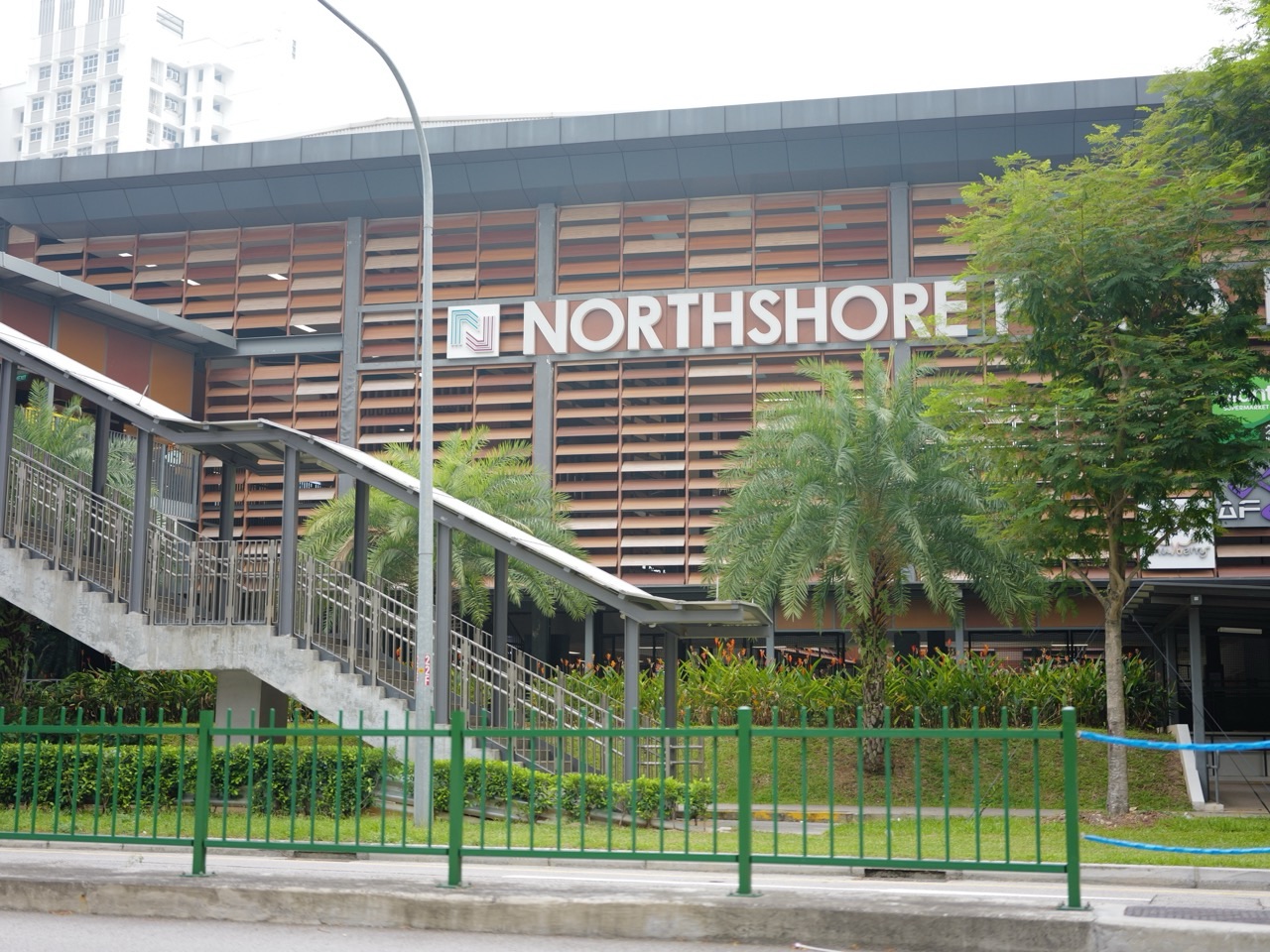
- Near Samudera LRT: Northshore Plaza I and II serve the Northshore district; HDB describes the first seafront new-generation neighbourhood centre in an HDB estate.
- Near Coral Edge LRT: Punggol Plaza combines shopping with a supermarket, dry market and eating places according to HDB’s official directory.
- Near Punggol MRT: Waterway Point is a major commercial and dining node beside the station; the operator’s current directory determines tenants and opening hours.
- Near One Punggol: One Punggol Hawker Centre is in the civic hub at 1 Punggol Drive and has a distinct hawker-centre operating framework.
- Near Punggol Coast MRT: Punggol Coast Hawker Centre is at 84 Punggol Way and is listed under NEA-appointed hawker-centre operators.
- Before buying: compare price per relevant unit, actual needs, expiry, transport effort and food safety, not only a promotion label.
- Before eating out: check the stall’s hours, dietary suitability and official hygiene information where relevant; return trays and clear table litter after dining.
- Important update: One Punggol Hawker Centre’s previous operator had a scheduled handover in August 2026. Do not rely on older website descriptions naming its former operator as though nothing changed.
1. What a neighbourhood centre actually does
HDB describes neighbourhood centres as an integral component of housing towns, giving residents convenient access to food, healthcare, services and everyday shopping. A neighbourhood centre is therefore a piece of town infrastructure, not merely a place to spend money. Its usefulness depends on its relationship to homes, transport and the ordinary errands people repeat.
A family may make several small trips each week rather than one big shopping expedition. The ability to buy a forgotten ingredient near home, collect an item on the way to an appointment or find a simple meal close to childcare can save disproportionate time. This is why the design of a centre includes pedestrian access, public spaces and a useful tenant mix instead of focusing only on the size of its retail footprint.
A resident should ask which centre best serves *their specific block*, not which centre is most famous online. Every transfer, road crossing or exposed walk affects real convenience. A location with spectacular architecture can be less useful for a weekday errand than a modest shop within a short sheltered walk.
2. Why Punggol has more than one kind of shopping node
Punggol developed in phases, so its commercial network includes neighbourhood clusters designed at different times. Some are HDB-developed centres with community spaces, while others are larger privately operated shopping complexes. Civic hubs and hawker centres also add their own food and service functions. Comparing them all as one category obscures their different roles.
A shopping mall’s tenant list can be changed by leasing decisions. A hawker centre’s operator works within NEA’s hawker-management framework. A ground-floor shop may be locally convenient but have limited seating and no broad range of services. A civic hub may co-locate a library and hawker centre but does not operate as one single restaurant business.
The choice depends on what you are trying to do. “Buy vegetables”, “have lunch while collecting a book” and “take visiting relatives to a waterfront dinner” are three separate journeys. Naming that objective before opening a search app makes the right venue much clearer.
3. Oasis Terraces: the new-generation neighbourhood-centre model
HDB identifies Oasis Terraces, at 681 Punggol Drive, as the first of its new-generation neighbourhood centres, introduced in 2019. It is located near Oasis LRT and was planned with input from residents. HDB explains that the complex integrates retail, food and beverage, recreation and community spaces, and notably has Punggol Polyclinic and childcare functions.
This is important because the centre addresses several needs in one location. A family taking someone to a non-emergency polyclinic appointment may be able to combine it with grocery shopping, a meal or another nearby errand. That is an example of integrated neighbourhood design, not a guarantee that an appointment, school place or particular shop item will be available.
A resident should confirm the exact facility within the complex. Punggol Polyclinic has separate SingHealth rules, an appointment process and clinical operating hours. The mall’s retail directory cannot be used to infer that the healthcare service accepts walk-ins at the same times. The right place can host several systems while their eligibility and timing remain distinct.
4. Northshore Plaza: shopping connected to a district
HDB describes Northshore Plaza, in Blocks 407 and 418 Northshore Drive, as the first seafront new-generation neighbourhood centre in an HDB estate. It includes a supermarket, food court, restaurants, shops and services and forms part of the Northshore district’s walking and community network. HDB notes links toward Samudera LRT and Punggol Promenade.
For someone living near Northshore, the centre may be an everyday provision anchor rather than merely a destination for weekend photographs. The presence of different building sections and linked routes matters: a person should identify the correct entrance, level and operating outlet instead of assuming a generic “Northshore Plaza” search result leads straight to the intended shop.
The waterfront setting also produces practical trade-offs. A scenic link may be enjoyable in suitable weather, while a protected or shorter path may be preferable in heat or rain. Newcomers should test a normal grocery journey from their own block. What matters most is carrying goods home comfortably, especially when returning with children or helping an older resident.
5. Punggol Plaza: a different neighbourhood-shopping tradition
HDB lists Punggol Plaza at Block 168, Punggol Field, Singapore 820168, near Coral Edge LRT. Its official description includes a supermarket, dry market, food court, restaurants and everyday shops. This is a useful reminder that Punggol’s commercial story did not begin with the Waterway or the newest waterfront projects.
A dry market offers a different retail experience from a supermarket aisle. A household may prefer to choose fresh produce in person or buy smaller quantities for a specific recipe, while another household needs a larger one-stop trolley shop. Neither shopping format is inherently the best or the cheapest on every day. Quality, available quantity, accessibility and price all change the calculation.
Punggol Plaza is also a useful case study in neighbourhood-scale planning: retail close to residences and LRT access can support ordinary repeated trips. It should not be described as redundant simply because newer centres exist elsewhere. Residents often need different options for different jobs.
6. Waterway Point: a town-centre commercial anchor
Waterway Point is a major retail and dining location beside Punggol MRT and LRT. That makes it an accessible meeting and shopping node for people coming from other neighbourhoods or switching between transport modes. The range of commercial offerings can be broad, but the exact mix is controlled by the mall and individual operators rather than by a permanent public-service rule.
A person combining train travel with grocery shopping should still consider which exit and entrance are closest to the desired store. A visitor with luggage may need lifts, a practical pickup point or a restaurant where bags can be managed safely. A resident returning home late should know the transport connection rather than assume every retail outlet is open as long as trains run.
Waterway Point’s convenience is a function of its place in the transport network, not proof that all other centres are unnecessary. A household at the far side of Punggol may find the closest neighbourhood shops more practical for routine purchases, while choosing the town centre for a larger or specialised outing.
7. One Punggol Hawker Centre is not the whole civic hub
One Punggol at 1 Punggol Drive is a multi-use civic destination. The PA identifies the hawker centre on Level 2, connected with public community spaces and accessible from the broader hub. Other facilities in the same development include the community club, Punggol Regional Library and ServiceSG. The hawker centre, however, has its own food-stall operations.
Residents might combine a meal with borrowing books or a family errand, but should verify each service’s hours separately. A library programme may require registration, a government-service counter has a last-queue time and a hawker stall may close earlier or on a different day. A building does not become one giant provider because services share its roof.
It is also sensible to identify seating and accessible routes before bringing a large group. A busy meal period may be uncomfortable for someone with mobility needs or a small child. The best time and entry route are household-specific, not a universal dining recommendation.
8. One Punggol Hawker Centre’s operator transition in 2026
A key fact-checking trap is the identity of One Punggol Hawker Centre’s operator. Some older descriptions call it a Timbre+ Hawkers facility. But NEA issued an official statement on 29 December 2025 saying that Timbre+ Hawkers Private Limited would conclude its tenancy on 14 August 2026, with a tender process to appoint a new operator. That dated announcement must not be ignored in a guide published after August 2026.
The announcement also set out protections for stallholders during the planned changeover, including retention requirements for eligible existing hawkers. However, it does not justify inventing the incoming operator’s name or claiming that no trading arrangements changed after the handover. A current directory or fresh operator notice is required for that.
For readers, the lesson goes beyond one food centre. A government or landlord website may preserve a correct historical description that is no longer current operational guidance. When a service has a tender, renewal or handover, the latest agency announcement should carry greater weight for present-day decisions than a static building profile.
9. Punggol Coast Hawker Centre and the northern food network
NEA lists Punggol Coast Hawker Centre among its operator-managed centres. Official planning announcements identify its address as 84 Punggol Way, Singapore 829911. Its position matters as Punggol Coast develops into a university, employment and residential destination; the centre can serve people who are studying, working or visiting that northern part of town.
A student who has a thirty-minute break should prioritise travel time, queue length and return route. A worker may care about a quick weekday lunch. A family visiting the coast may want a meal near its intended activity rather than another train trip to the town centre. These are different use cases for a shared hawker facility.
Never assume the same stalls or value meals are available at all times. Individual traders can have different operating days and stock. NEA’s centre announcements and the present operator’s information are better starting points than an undated influencer list.
10. How Socially-conscious Enterprise Hawker Centres work
NEA’s Socially-conscious Enterprise Hawker Centre (SEHC) model aims to balance affordable and diverse food choices for patrons with a sustainable business environment for stallholders. NEA appoints operators through tenders that consider price and quality, and operators manage day-to-day matters including stall mix, centre operations and community activities.
The model is not simply a subsidy that makes all food uniformly cheap. Different dishes have different ingredient, labour and preparation costs. NEA says operators are expected to keep a value-meal choice at each stall under the scheme, while recognising that hawkers should not be forced to make a loss. A value meal is a category of offering; it is not a promise that every listed dish or serving size costs the same.
For a resident comparing a lunch near home and one near a workplace, it is reasonable to examine visible menus, queues and practical portions. The public benefit lies in having a real choice of meals rather than relying on a single advertised low number.
11. Affordable food is a system, not a photograph of one S$3 meal
A photo of a low-priced dish can be useful evidence that it was sold at a particular stall on a particular day. It is not evidence that everyone in Punggol can obtain a nutritionally balanced meal at that price, at all hours and in every neighbourhood. Portion size, dietary needs, stall opening days and availability all matter.
When budgeting, separate a price point from an affordable weekly food routine. A person might eat one economical cooked meal outside but spend more on drinks, transport or snacks. Another household can save through planned home cooking but incur grocery waste by buying too much perishables. Both patterns are common; neither should be reduced to a slogan.
A good food-cost comparison records the date, location, actual item, included ingredients or sides, portion relevance and total spending. It also considers how far someone must travel to obtain the food. A cheaper meal that requires a long extra journey may not solve the family’s real problem.
12. A clear map beats a long list of supermarket brand names
Supermarket tenants change, and a store that appears in one mall’s 2024 promotion may not be present in 2026. The stronger way to plan is to identify a reliable grocery destination near each routine route: home, work, school, transit, and medical or caregiving errands. Use the current official centre directory to confirm a particular retailer.
A household may need a large supermarket for weekly staples, a smaller convenience outlet for emergency essentials and a dry-market option for fresh produce. These can coexist. The ideal combination differs by household size, storage space and willingness to carry heavy goods on public transport.
A student buying lunch ingredients for one person does not automatically benefit from the same bundle offers as a family of five. A senior with limited mobility may value a slightly dearer nearby shop more than a marginal saving that requires difficult travel. Shopping quality includes time, comfort and the likelihood of actually using what is bought.
13. Compare price per unit, not the size of the discount sticker
The Competition and Consumer Commission of Singapore (CCS) defines unit pricing as expressing cost per standard measurement, such as price per kilogram or litre, to make different package sizes comparable. In 2025 and 2026, CCS and CASE piloted and expanded displays for selected grocery categories with participating retailers. The programme is not proof that every shelf at every Punggol shop displays a comparable label.
For ordinary shopping, you can calculate the unit price yourself. Divide total price by weight, volume or quantity using consistent units. This helps identify whether a larger package is actually better value. It also helps when a promotional pack looks enormous but contains less usable product.
A fair comparison should be like-for-like. Price per litre is not enough when one item is a concentrate and another is ready to drink. Price per kilogram does not determine whether fresh produce is spoiled or whether a product suits an allergy. Unit pricing is a powerful tool, but it is one element of a sensible purchase.
14. A worked supermarket comparison
Suppose a 500-gram packet of rice costs S$4.20 and a 750-gram packet of comparable rice costs S$5.70. Convert to kilograms: 500 g = 0.5 kg and 750 g = 0.75 kg. The first packet’s unit price is 4.20 ÷ 0.5 = S$8.40 per kg. The second is 5.70 ÷ 0.75 = S$7.60 per kg.
The larger packet therefore has a lower unit price for the same kind of product. But does it save money for someone who will use only 300 grams before leaving for several months? Not necessarily. If the remainder expires, is damaged or must be thrown away, the theoretical unit saving may disappear. Storage and actual use remain part of value.
These prices are imaginary teaching numbers. They should not be published as today’s shelf prices at any named Punggol supermarket. The purpose is to teach a repeatable calculation that works when real figures change.
15. A second worked example: meal versus total outing cost
Imagine a parent and two children choosing between a nearby simple meal and a distant location with an advertised low-priced dish. At the nearby place, hypothetical meals and drinks cost S$24 total. At the distant place, the same family expects S$19 for food, but adds S$6 for extra transport. The total is S$25, not S$19.
That does not mean the distant outing is wrong. It may provide a different experience or desirable activity. It means that a meal price should not be equated with total household spending. The value of a visit may include recreation, family time or a specific cuisine; a budget decision should explicitly acknowledge these benefits.
For a routine school-day dinner, families may prefer predictable travel and portions over novelty. For a weekend celebration, a longer trip may be worthwhile. Both decisions can be rational if the real objective is clear.
16. Time is a real shopping cost
A person who leaves work at Punggol Coast and travels to a distant supermarket before collecting a child may save a few dollars on one product but lose the buffer needed for the pickup. A caregiver may spend so much time moving between small errands that the day becomes exhausting. Town-centre design matters because it can reduce these hidden costs.
Write down a route from the actual station or block, including walking, crossings and the return journey with shopping bags. A ten-minute distance quoted by a marketing page may omit the effort of lifts, turns and weather. An accessible path can be more valuable than a shortcut with steps.
For a family where one person is responsible for several dependants, a practical shopping loop is often more important than finding the absolute lowest price at one store. The right question becomes: what combination of food, supplies and services can be completed safely in the available time?
17. How food safety is monitored
Food safety should be judged through the correct regulator and evidence, not only the appearance of a restaurant. The Singapore Food Agency (SFA) oversees food safety and provides information about licensed food establishments. Its Safety Assurance for Food Establishments (SAFE) framework began Phase 1 on 19 January 2026, with grades based on food-safety track records and a *NEW* grade for recently opened establishments.
A SAFE grade is useful information but not a guarantee that illness is impossible or that one diner will enjoy a particular dish. Hygiene and food handling still require appropriate practices. An establishment’s grade may change; consult SFA’s current track-record information, licence QR code or official directory rather than relying on an old photograph of a grade sign.
If concerned about food poisoning or an unsafe food establishment, use appropriate SFA healthcare and reporting pathways. A social-media rumour without dates, evidence or a verified source is not an adequate basis for accusing a business.
18. Why an old hygiene grade may be misleading in 2026
Singapore’s food-safety grading and communication have evolved. SFA’s SAFE framework explicitly sets out a new regime from January 2026. A review site may contain an older hygiene grade or an image of a sign that was correct when posted but no longer reflects the current framework. Search results can easily blend old and current information.
A reader should check the official record and its date, identify whether the outlet is the same business and premises, and distinguish a legal food-safety grade from a five-star customer review. Taste, service and hygiene are related to a dining experience but measure different things.
The practical benefit of current licensing information is not to make casual diners perform a full audit. It is to give them a credible source if they want to verify a claim or report a serious concern.
19. Dietary needs make “many choices” a personal question
A food centre may contain numerous cuisines yet still be difficult for someone who needs halal-certified food, avoids a particular allergen or follows a medically advised diet. Do not assume certification from a food photograph, a stall’s decoration or a broad claim that a centre offers multicultural options. Check the relevant certification or operator records and ask the actual stall about ingredients.
For allergies, cross-contact and preparation conditions can matter. A menu label alone may be insufficient, so the person should follow clinical advice and communicate with the food establishment. A parent buying for a child may need to confirm the ingredients of sauces and side dishes rather than only the main protein.
A neighbourhood’s diversity is valuable when it increases practical choices, but a responsible guide does not promise that every vendor accommodates every requirement. It gives residents a way to ask the right question and choose a suitable provider.
20. Tray returns and table litter are part of the public dining system
NEA and SFA have implemented table-litter controls at hawker centres, coffee shops and food courts. Their official guidance says diners should clear used trays and crockery and dispose of table litter appropriately. This supports cleaners in focusing on sanitising tables and maintaining the venue rather than merely collecting every abandoned item from a seat.
The rules have allowances for people who are clearly unable to clear their own tables, including certain frail older adults, persons with disabilities and young children. Dining companions should assist where appropriate. There is also practical guidance for full tray-return racks and facilities that provide dedicated table service.
The point is not to blame cleaners or visitors. A busy shared food facility requires coordination. Returning a tray, clearing tissues and leaving a reasonable space for the next person are small everyday contributions to public service quality. Check the official guidance rather than relying on stereotypes about whether an older diner can or cannot participate.
21. Hawker centres are managed spaces with cleaning schedules
A hawker centre can temporarily close for spring cleaning or maintenance even when individual stalls would otherwise be open. NEA maintains a schedule of cleaning and repairs or redecoration periods for the centres under its relevant arrangements. This is a useful example of why a familiar location should not be treated as permanently available without checking.
The shutdown does not necessarily imply that the centre is failing. Planned maintenance supports hygiene, repair and the long-term operation of a public facility. However, it matters to someone who travels a long distance for a particular meal or relies on the centre for a daily work break.
Before organising a group visit, check current NEA announcements and operator details. Also recognise that stall-level closures and centre-wide closures are separate. A centre may be open while your chosen stall is not trading that day.
22. Eating out near schools and study destinations
Children and teenagers use the same food system as adults but have different time, supervision and nutritional needs. A secondary-school student may need a predictable meal and a safe route home after enrichment. A parent waiting for tuition may want a modest place to sit without assuming that every commercial venue allows unlimited studying. A university student at Punggol Coast may organise a quick lunch around scheduled classes.
The useful advice is to choose a food venue based on the school or campus’s actual location, break duration, dietary needs and travel route. A shop that looks close in the wider Punggol district may require an LRT transfer or a long uncovered walk. Allow enough time so the person is not pressured to rush across crossings or skip a proper meal.
Households can also plan simple packed food where appropriate, using food-safety precautions for temperature and storage. Eating locally can reduce travel time, but there is no universal need to buy every meal outside. The aim is a workable and healthy routine.
23. Eating out as an older adult or caregiver
For some older residents, a dining venue’s accessibility is as important as its menu. The route from home, availability of lifts, height of tables, seating, toilet access and noise level can influence whether a meal is comfortable. A bargain that requires difficult travel may not truly be an affordable choice when assistance or transport costs are included.
A caregiver planning a shared outing should identify one suitable food stop near an essential errand rather than build a crowded list of attractions. Check whether a companion can assist with tray return or carrying meals where needed. Avoid presuming every older person needs help; ask about their preferences and independence.
Dining is also social participation. For residents who live alone, an accessible neighbourhood hawker or coffee shop may offer valuable ordinary interaction. Good urban design makes these places easy to reach repeatedly, not just photogenic during a festival.
24. Food delivery is another channel, not a guaranteed substitute
Food delivery can be helpful during rain, after work or when a household member has limited mobility. But delivery involves fees, service areas, opening schedules, minimum orders and possible delays. It is not always cheaper than collecting food nearby. A menu’s item price may differ between platforms or from the physical outlet, and packaging can affect quality.
Compare the complete checkout total and expected delivery time rather than only the banner discount. Be mindful of food temperature and packaging on arrival, especially for young children or vulnerable household members. If an order is wrong or delayed, use the platform’s official dispute route rather than disclosing payment details in an unrelated chat.
Delivery can complement the neighbourhood retail network, but it does not eliminate the importance of shops reachable by foot. Local access is a resilience advantage when platforms are busy or weather disrupts deliveries.
25. Grocery delivery and bulk buying require realistic storage
Online grocery shopping may be attractive for heavy goods, but buying in bulk creates its own constraints. The available fridge and cupboard space, expiry dates, carrying requirements and delivery windows matter. A small Punggol flat does not automatically benefit from a warehouse-sized package of every household item.
Begin with a simple inventory of staple foods and likely use over the next week or two. Calculate unit prices only for comparable products, then check whether the quantity can be consumed safely. A multi-pack offer may be cheaper per unit but more expensive overall if some of it is wasted.
For delivery, verify the address and access instructions carefully. In high-rise housing, delivery workers need the correct block, lift lobby and unit. Good instructions reduce delays and repeated calls without exposing more personal information than necessary.
26. Food waste and environmental cost
NEA’s national statistics show that food waste remains a significant stream in Singapore’s overall waste generation. Unsold or spoiled food represents not only household money but also resources used in production, transport and disposal. The most effective response for many families begins before a meal is cooked: plan purchases, rotate stored food and prepare appropriate portions.
A person using a supermarket promotion should check the likely expiry and use. A cooked meal that is too large for the diners creates a different kind of cost from its advertised selling price. Ask for appropriate portion options where offered and store leftovers safely when possible. Never eat unsafe food merely to avoid waste.
Food waste should not contaminate blue recycling bins. NEA advises that contaminated recyclables may be unsuitable for recovery. Waste prevention, food safety and correct recycling are connected; the household need not sacrifice one of them to perform the others.
27. How a retail centre’s ownership affects a complaint
A broken lift or leaking ceiling inside a privately operated shopping mall generally belongs to that mall’s facility-management process, while a maintenance issue in an HDB-managed neighbourhood centre may involve its designated managing agent. A road crossing outside either complex may fall to a different authority. A hawker-centre hygiene issue belongs to the relevant food operator or regulatory framework.
Therefore “who do I call?” is not answered solely by saying “Punggol.” Read the facility signage and contact the appropriate operator. For neighbourhood municipal issues, OneService can help route reports to public agencies or the Town Council. For an immediate dangerous condition, avoid the hazard and seek proper urgent assistance.
Good reporting includes the outlet or centre name, the exact level and location, date, clear description and safe supporting evidence. This is often more useful than a broad social-media post saying that the entire town’s amenities are poorly maintained.
28. A worked first-month shopping system for a new resident
Imagine a family moving to a Punggol flat with no car. During their first week, they identify the nearest grocery shop for emergencies, one centre suitable for a larger weekly purchase, an easy meal location for tired evenings and a reliable route to the child’s school or caregiver service. They test these routes rather than rely exclusively on map distances.
They also check who accepts the preferred payment methods, where heavier items can be carried safely, which stores provide delivery and what hours matter for their household. One family might choose Oasis Terraces because of a nearby clinic; another might find Northshore Plaza better aligned with its home route. Different answers are expected, not failures to discover “the best mall.”
By the end of the month, the family can build a repeatable routine. They will know which goods must be bought fresh, which pantry staples can be purchased less frequently and which errands can sensibly be combined.
29. A worked lunch plan for the Punggol Coast district
A student or employee based near Punggol Coast has a 45-minute break. Rather than assuming that every popular Punggol food venue is a short stroll away, they start with the exact building and choose an accessible nearby option, checking whether that provider is actually open. Punggol Coast Hawker Centre may be relevant, while a town-centre food court could require extra rail travel.
The person budgets time for queueing, eating and returning, not merely for walking to the stall. If a particular meal has a long queue, an alternative from another stall or a prepared lunch may be better. Someone with a dietary restriction should verify ingredients and certification before joining the queue.
This approach is transferable to other parts of Punggol. Time-constrained food choices should be optimised for the real base location and current conditions, not popularity rankings.
30. A worked family grocery budget without invented market prices
For a hypothetical exercise, a household sets aside S$160 for a week’s groceries and related essentials. They assign S$55 to staple foods, S$45 to vegetables and fruit, S$40 to proteins and S$20 to remaining household items. The categories add up to S$160. These numbers are examples for learning, not estimates of what any specific family should spend.
During shopping, the family compares actual shelf prices and adjusts. If a planned item is unavailable or overpriced, they may substitute a suitable alternative while protecting dietary needs. If a promotion would push spending over budget or leave perishables unused, it may be rejected. The total is checked at checkout, including any delivery costs.
After a week, the household reviews what was eaten, wasted or unexpectedly required. This feedback is more valuable than a rigid shopping list copied from a stranger’s household. Good budgeting is a cycle of planning, observing and adjusting.
31. Food-centre ownership and hawker culture
The relationship between government, operator and stallholder is especially important in Singapore’s hawker culture. NEA explains that socially-conscious enterprise operators manage premises and curate a range of offerings while stallholders operate their own food businesses. Tender rules, rent arrangements and operating requirements seek to balance patron access with the economic sustainability of hawkers.
A low-priced meal should not be interpreted as evidence that labour and ingredients are free. Likewise, a restaurant that charges more may have a different service model, rent or ingredient mix. The consumer can compare value without pretending all stalls have identical conditions. Public policy tries to support affordability while allowing operators and vendors to remain viable.
For a school project, this provides an example of how local systems work: government plans and regulates, operators coordinate a shared venue, independent stallholders prepare food and diners contribute through purchasing and proper use of the space. It is an ecosystem, not one institution providing every plate.
32. Myths that make Punggol food advice unreliable
Myth one: all Punggol food centres are at Punggol MRT. Several major centres sit near different LRT or MRT stations, and the exact entrance matters.
Myth two: every hawker stall offers the same hours or meal price. Operators, stallholders, services and menus differ.
Myth three: a 2025 list of operators is automatically current in late 2026. One Punggol Hawker Centre had an officially announced August 2026 handover.
Myth four: the biggest package is always the cheapest. Calculate unit prices and consider waste.
Myth five: every food hygiene badge or review tells the same thing. SFA’s SAFE framework and customer ratings serve different purposes.
Myth six: a mall with a library or clinic has one universal opening schedule. Each institution sets service access and eligibility.
Myth seven: a meal’s advertised cost equals a family’s total outing cost. Include drinks, transport and practical time.
33. Practical checklist for food and shopping in Punggol
- Identify your exact starting block or transport station.
- Choose the centre that fits the errand rather than popularity rankings.
- Use HDB or the facility operator’s current directory for outlet details.
- Confirm the opening day and any venue-wide cleaning closure before a long trip.
- For hawker centres, understand NEA’s management and current operator information.
- Compare full meal cost and portion suitability, not only a low price in an advertisement.
- Use consistent units when comparing supermarket package sizes.
- Check expiry, storage and realistic consumption before bulk purchases.
- Review current SFA food-safety information when verification is needed.
- Verify halal or other dietary requirements through appropriate current records.
- Return trays and clear table litter in accordance with NEA/SFA guidance.
- Plan step-free access, comfortable seating and nearby toilets when necessary.
- Leave time for queues and the actual return journey.
- Keep delivery and payment confirmations through official services.
- Avoid waste by planning meals and buying quantities your household can use.
- Separate private-mall maintenance from public municipal reporting.
- Review the routine after a month as shops or household needs change.
Frequently asked questions
What is the first new-generation HDB neighbourhood centre?
HDB identifies Oasis Terraces in Punggol, introduced in 2019, as its first new-generation neighbourhood centre. It integrates shopping and community functions and is near Oasis LRT.
Where is Punggol Plaza?
HDB lists it at Block 168, Punggol Field, Singapore 820168, near Coral Edge LRT. It includes a supermarket, dry market and eating options, subject to current tenants and hours.
Is Northshore Plaza near an LRT station?
HDB describes Northshore Plaza I and II as linked to the Northshore district’s pedestrian network and Samudera LRT. The specific entrance and route matter for the part of the complex you plan to visit.
Is One Punggol Hawker Centre the same as Punggol Coast Hawker Centre?
No. One Punggol’s food centre is within the civic hub at 1 Punggol Drive. Punggol Coast Hawker Centre is listed by NEA at 84 Punggol Way and serves a different part of the town.
Does Timbre+ still operate One Punggol Hawker Centre in October 2026?
Do not rely on older claims. NEA announced that Timbre+ Hawkers’ tenancy would conclude on 14 August 2026 and that a new operator would be appointed. Check the latest NEA or current operator notice for confirmed present-day management.
Do socially-conscious enterprise hawker centres offer value meals?
NEA describes value-meal requirements under the SEHC framework, but specific offerings, portions and availability depend on stalls and current terms. Do not interpret that requirement as a universal price for every dish.
How can I check a food outlet’s official safety grade?
Use SFA’s food-establishment records or the licence QR code. The SAFE framework’s first phase began on 19 January 2026, so historical grading information may be outdated.
Are diners required to return their trays?
NEA and SFA enforce table-litter rules at covered dining venues and expect diners to return trays and crockery and clear litter. The official guidance recognises circumstances where some vulnerable persons or young children cannot do so themselves.
Is a larger supermarket pack always better value?
Not necessarily. Calculate the price per matching unit and consider how much your household will actually use before deterioration or expiry. The lowest unit price may still cause higher waste.
Which shopping centre is best for every Punggol household?
There is no universal winner. Choose based on the exact home or workplace, the required goods, transport, opening hours, accessibility and total cost. The closest practical centre for an ordinary errand can be more useful than a famous destination.
Official evidence and next reading
- HDB: Punggol neighbourhood-centre overview.
- HDB: Oasis Terraces.
- HDB: Northshore Plaza I and II.
- HDB: Punggol Plaza.
- PA: One Punggol hub, hawker centre and co-located services.
- NEA: Hawker centres with appointed operators.
- NEA: One Punggol Hawker Centre 2026 operator transition.
- NEA: Socially-conscious Enterprise Hawker Centres.
- NEA: How SEHCs support affordability and stallholders.
- NEA: Hawker centres, cleaning and upgrading announcements.
- NEA/SFA: Cleaner tables, trays and dining responsibilities.
- SFA: SAFE food-establishment assurance and grading.
- CCS: Unit pricing pilot and standard-measurement comparisons.
- NEA: National food-waste guidance.
- Understanding Punggol: Location and neighbourhood planning.
- Understanding Punggol: MRT, LRT, buses and walking.
- Understanding Punggol: Civic services and One Punggol.
- Understanding Punggol: Electricity, water, utilities and household waste.
Bottom line: Punggol’s food and shopping environment is a network of neighbourhood centres, commercial malls and public hawker facilities. Choose the one that fits the real journey, use current operator and SFA information, compare prices with sensible units and make shopping decisions that suit your family’s actual needs. The system is more useful once it is treated as everyday infrastructure rather than a list of restaurants.


