
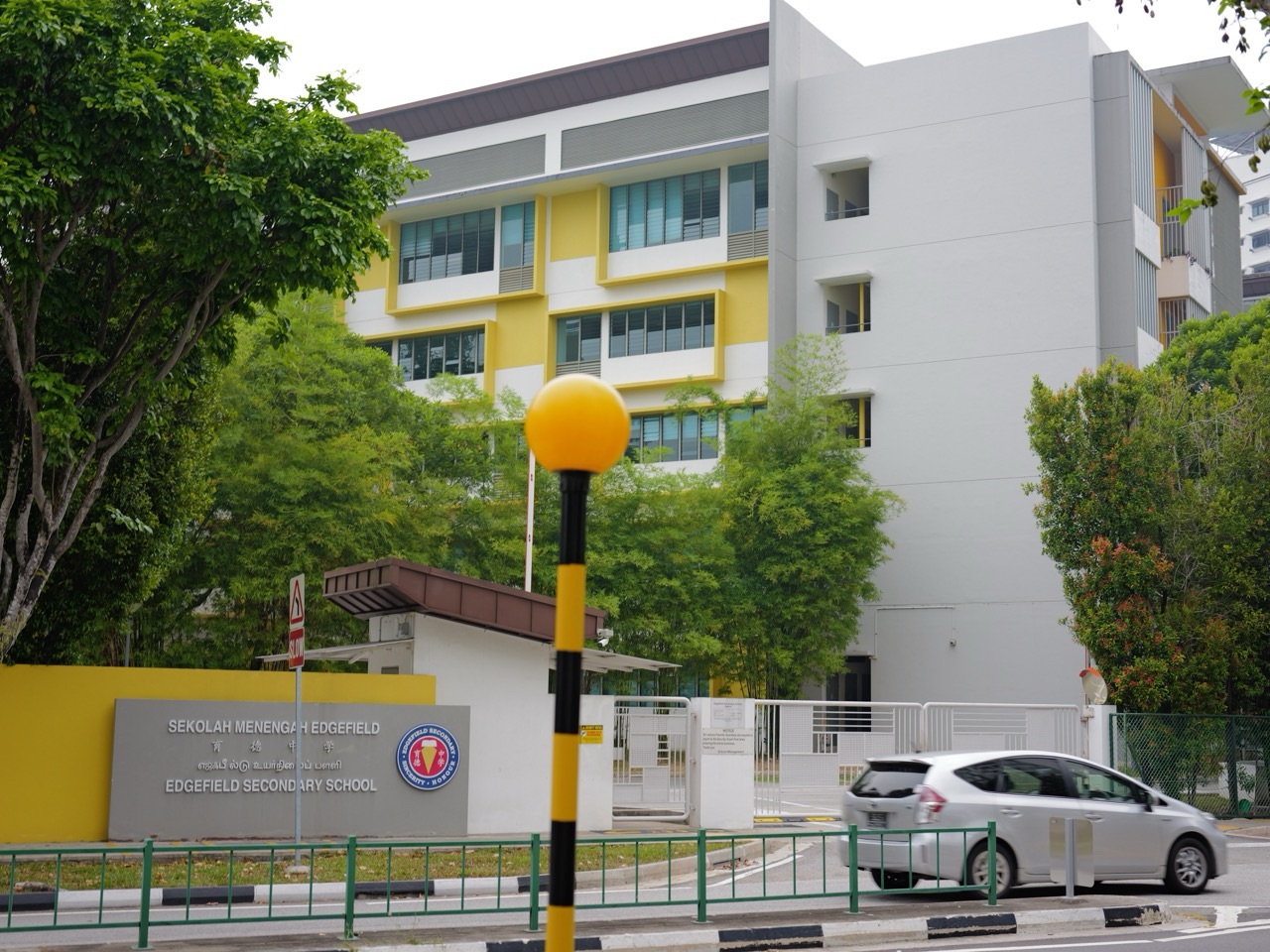
Secondary 3 and Secondary 4 are the bridge from school-based academic assessment to the Singapore-Cambridge Secondary Education Certificate (SEC). The first SEC is held in 2027, replacing the separate GCE N(T)-, N(A)- and O-Level certificates for the first graduating cohort under Full Subject-Based Banding. Candidates take subjects at their applicable G1, G2 or G3 subject levels, and their SEC reports the subjects and levels actually examined. G1, G2 and G3 are subject standards, not separate certificates awarded to three permanent streams.
The SEC is a national examination; the Secondary 3 school WAs, end-of-year examinations and Secondary 4 preliminary tests are school-based assessments. The internal marks help a learner and school prepare, but are not mechanically averaged into the national SEC subject grades. Current MOE schools publish different lower- and graduating-year assessment plans. For example, Meridian Secondary School’s September 2026 guidance gives Sec 1–3 WA weights of 15%, 15%, 15%, with 55% end-of-year, while Sec 4–5 have WA1 15%, WA2 15% and a 70% preliminary examination. Those percentages are a school-specific illustration, not a universal SEC score formula.
For Punggol families the right approach is to confirm the child’s graduation year, subject levels, actual syllabus codes, school assessment plan and post-secondary aims. The 2026 GCE N/O-Level timetable is not automatically the 2027 SEC timetable. In 2028, the new Post-Secondary Admissions Exercise (PSE) will offer the first SEC cohort a consolidated application system for eligible JC, Millennia Institute, Polytechnic and ITE routes, subject to the announced criteria.
This guide explains the year-by-year transition, SEAB codes, examination expectations, school prelims, Mathematics, English and Science worked examples, subject-level readiness, PSE 2028, LEAPS 2.0 and educational wellbeing. Official information checked on 18 October 2026; individual school programmes and the evolving 2027 notices must be reconfirmed by the learner’s family.
Follow the Punggol education progression: P1–P2: No exams and learning progress → P3–P4: Weighted assessments → P5–P6: PSLE ALs and prelims → Sec 1–2: Full SBB and WA → JC/MI: A-Levels and 70-point UAS.
1. Secondary 3 is about depth and subject combination
Secondary 3 brings more specialised subject combinations and a sharper focus on the knowledge needed at the relevant graduating level. A pupil might study English and Mathematics alongside a particular Science or Humanities combination, or additional elective and applied subjects where offered.
Under Full SBB, the family should name the actual G level of each academic subject. The idea that a learner’s old stream label dictates every subject is out of date for students entering Secondary 1 from 2024. The school explains the subject-combination availability, eligibility and timetabling.
Good planning begins with the child’s strengths and prerequisites. A pupil who loves biological processes but has a fragile algebra foundation should receive appropriate support in each domain instead of being asked simply to “work harder at all subjects”. Specificity helps both course choices and daily teaching.
2. Secondary 4 is the year of graduating examinations
Many pupils sit national examinations after Secondary 4, while some pathways include further secondary study or different completion arrangements under the system’s current rules. The family’s actual cohort and programme determine the administrative route.
In 2026 the existing GCE N- and O-Level examinations still operate for relevant graduating cohorts. Starting in 2027, the unified SEC becomes the national certification route for the new Full SBB graduating cohort. Parents must not assume these two sets of candidate instructions are identical.
School preliminary exams can test readiness before the national sitting. They do not issue the final certificate or allow a parent to predict national grades through a fixed formula. A pupil should use them diagnostically.
3. What Full SBB changed about the graduating qualification
The former secondary streams were associated with separate examination labels. The 2027 SEC consolidates the national assessment into one certificate that records subjects at their individual G1, G2 and G3 levels.
SEAB’s SEC overview, updated May 2026, explains that the qualification is jointly examined and awarded by SEAB, MOE and Cambridge International Education. It says the overall examination standards remain consistent and that the qualification continues to be recognised.
The critical change is not simply a new cover page. It supports a secondary education system in which pupils can take different subjects at different levels based on strengths, rather than being defined by one course label.
A parent should inspect what the child actually studies, which subject-level syllabus applies and what the future pathway requires, instead of asking whether the child is “really an Express student”.
4. 2027 SEC and 2026 GCE are not the same timetable
The first SEC belongs to 2027 graduates. Candidates sitting the 2026 GCE O-, N(A)- or N(T)-Level examinations follow the appropriate 2026 SEAB publications, subject codes and rules. A guide written for one year can be misleading if copied into the next.
MOE has also described consolidation of the SEC examination calendar to support students taking combinations of G levels. The actual oral, listening, written, practical and coursework dates are issued through the relevant official SEAB and school notices.
A parent should record exact years beside every document: “2026 GCE” versus “2027 SEC”. An undated tuition-centre summary may contain a formerly correct code but the wrong administrative context.
This distinction is especially important for families with two secondary-age siblings in different graduating cohorts.
5. G1, G2 and G3 are subject-level labels
G1 is broadly mapped to the former Normal (Technical) standard, G2 to Normal (Academic), and G3 to Express. This describes subject demand and curriculum, not a permanent judgment of the student’s intelligence or future prospects.
A learner may offer different subjects at different G levels where eligible. The student should prepare using the actual syllabus for each subject rather than a generic set of “Sec 4 notes” with no level label.
The school can explain whether an upper-secondary subject-level adjustment is possible and the evidence required. No responsible article should promise that one good school assessment automatically upgrades a national subject entry.
The educational goal is to choose a demand the learner can meet with meaningful growth, while keeping relevant pathways open where possible.
6. Find the authoritative SEAB syllabus, not a copied paper
SEAB’s 2027 pages list syllabuses separately for G1, G2 and G3 school candidates, along with subject codes and links to specimen papers for revised syllabuses where applicable. The pages were updated in September 2026.
The official lists matter because a similar subject name can refer to different level standards or assessment formats. An English paper at G1 should not automatically be replaced with an old Express practice paper as though the demands are identical.
Parents should identify the exact subject title, G level, subject code and revision year, then confirm which component is examined through the syllabus. An older textbook or tuition worksheet can still be useful practice if it matches the taught skill, but it is not the controlling examination specification.
Avoid buying an entire collection of “SEC papers” without first checking that the papers and year actually correspond to the pupil’s entries.
7. Three English codes that demonstrate the new structure
In its September 2026 published 2027 lists, SEAB identifies English Language G1 as K100, English Language G2 as K200 and English Language G3 as K300. These codes are useful because they visibly distinguish the subject-level specification within one national qualification.
A school candidate’s exam entry should follow the specific current syllabus. The student should not assume that changing only the letter on a practice book reproduces the correct paper structure or standard.
The code also offers a simple verification question for parents: does the revision source match the subject title and level on the learner’s school examination documentation?
This is a source-checking habit, not a reason to overload families with dozens of codes. The school remains responsible for the formal national entry.
8. The SEC is not a new extra examination on top of O-Levels
A common misunderstanding is that every student will sit old N/O-Level papers and then a separate additional SEC exam. That is not the reform. SEC is the name and structure of the graduating qualification replacing the former certificates for the applicable cohort.
Students sit subjects at their entered G levels. The exact combination of subjects, paper formats and required components follows SEAB’s relevant syllabus information.
Another misunderstanding is that one SEC automatically erases differences among G1, G2 and G3 academic standards. SEAB explicitly states that the certificate reflects those levels. The system offers flexibility without pretending every syllabus is identical.
Parents can explain the change plainly to learners: prepare for your actual subject examinations; the national certificate records them together.
9. School weighted assessments are not national grades
A Secondary 3 WA measures school-selected learning objectives under the school’s assessment programme. It may inform teachers about mastery and support progression decisions. The 2027 SEC grade, however, is awarded under national examination procedures.
A pupil’s internal school average is not automatically converted to the final SEC grade through a fixed multiplier or a universal “school difficulty adjustment”. Similarly, receiving a high preliminary mark does not guarantee a particular national result.
The family should use school assessments to find what needs teaching. That is particularly important when the pupil takes subjects at different G levels, because the questions and expectations can vary by syllabus.
Confusing internal and national assessment can cause unnecessary panic or false confidence.
10. The authentic 2026 school assessment example
Meridian Secondary School publishes 15%/15%/15%/55% for Sec 1–3 in 2026 and 15%/15%/70% for its graduating Sec 4–5 school assessments. Its page also notes subject-specific variations, especially for common-curriculum subjects.
These are genuine school policies and useful illustrations of the difference between year-end examinations and preliminaries. They are not a national 2027 SEC formula, nor do they establish the assessment percentages at every secondary school in Punggol.
An individual school might use coursework, performance tasks or approved exceptions to the normal structure for particular subjects. The parent should consult the pupil’s actual assessment circular.
Using attributed school examples is more accurate than presenting an invented “Singapore Sec 4 standard prelim weight”.
11. Original weighted-mark example for a graduating year
Suppose a fictional graduating pupil earns 74% for Term 1 WA, 82% for Term 2 WA and 78% for prelims. Under an illustrative 15%/15%/70% school structure, contributions are 74 × 0.15 = 11.1, 82 × 0.15 = 12.3 and 78 × 0.70 = 54.6.
The overall school-based figure is 78.0%. It is not the national SEC result and should not be converted mechanically to a G-level national grade.
The calculation shows why prelims can matter substantially to an internal annual report, while still serving a diagnostic role. Families should distinguish weighted arithmetic from the educational explanation of mistakes.
12. No mid-year exams does not mean no school assessment
MOE removed mid-year examinations as part of its broader assessment reforms. Schools can still conduct appropriate WAs in their permitted terms and continue non-weighted quizzes, feedback, homework and practical assessment.
A pupil therefore cannot ignore learning until Term 3 simply because the old mid-year exam no longer exists. Teachers may have already found errors in formative work that need attention.
The most productive habit is to check misconceptions regularly, revise through retrieval and use school tasks to build the skills needed for broader exams.
Parents should also avoid purchasing an advertised “2027 SEC mid-year paper” as though it were a compulsory national examination category. The current official school and SEAB notices determine the real tasks.
13. The purpose of a school preliminary examination
A prelim gives pupils experience with a larger set of questions and an opportunity to assess readiness under timed conditions. It can reveal gaps in knowledge, pacing, interpretation of commands and presentation of working.
A school can design its preliminary paper to be demanding, but that does not justify a universal claim that its mark is always ten or fifteen points below the national examination result. The actual questions and candidate preparation differ.
Parents should classify the pupil’s errors and decide whether the first problem was concept, language, method or time management. This produces a constructive revision plan without relying on unreliable predictions.
A strong prelim analysis is more than a mark on a report card; it is a diagnosis and an opportunity to repair.
14. 2027 English: correct expression and sound reasoning
English Language at an appropriate G level requires pupils to interpret instructions, understand texts, communicate arguments or narratives, and use language accurately according to the syllabus. A student may be strong in oral communication but need help organising written responses.
The teacher should distinguish missing vocabulary, weak inference, grammar errors and failure to answer the requested format. Those weaknesses call for different instruction.
Parents can help through reading and discussion rather than merely memorising model essays. Ask the learner to support claims with text, write for a specified audience and explain why a particular phrase is suitable.
The national syllabus code and paper format must be checked for the pupil’s entry, because not every G level uses identical assessment components.
15. Worked English evidence example: two interpretations
Consider an original fictional passage: “The hall was empty when Darius arrived. He checked his watch twice, then sat beside the entrance.” A student might conclude that Darius is upset because his friends deliberately abandoned him.
The passage does not establish deliberate abandonment. A more defensible inference is that he may be waiting for someone or concerned about time, supported by the empty hall and repeated checking. The learner should state the evidence and avoid adding unsupported motives.
Now change the passage: “Darius smiled, took out his book and read calmly.” The inference should change because the evidence changes. This is the essential comprehension habit, not memorising that every watch-checking character is anxious.
The question is hypothetical and designed to illustrate accurate analysis rather than an official SEC item.
16. Upper-secondary Mathematics needs a stable algebra base
Sec 3–4 Mathematics can combine algebraic manipulation, graphs, geometry, trigonometry, statistical representations and other topics according to the actual syllabus level. A weak understanding of negative numbers, equations or factors often reappears inside a difficult problem.
A pupil who cancels an x incorrectly in an algebraic fraction may have memorised an unsafe shortcut. A student who uses a trigonometric relation in an unsuitable triangle may not have checked the assumptions. The correction should identify the first invalid mathematical operation.
Ask the learner to explain how each equation follows from the previous one. A sound chain of reasoning protects against errors that cannot be repaired by copying a final answer.
17. Worked algebra example: quadratic factorisation and checking
Suppose a fictional G3-level practice asks for the roots of (x^2 – 5x + 6 = 0). Factorisation gives ((x – 2)(x – 3) = 0), so x = 2 or x = 3.
The pupil should check by substitution: for x = 2, 4 − 10 + 6 = 0; for x = 3, 9 − 15 + 6 = 0. This confirms both roots solve the equation.
A fresh practice example is (x^2 – 7x + 12 = 0), giving factors ((x – 3)(x – 4)) and roots 3 and 4. The student has to identify the new sum and product rather than copy the previous factors.
This is an original instructional example, not a statement that every G1 or G2 syllabus tests identical quadratic methods.
18. Science subject combinations change upper-secondary learning
Upper-secondary pupils may take different combinations of Physics, Chemistry, Biology or Science papers, depending on school offering and subject level. SEAB’s 2027 syllabus lists distinguish the relevant subjects and G-level codes.
A family should confirm what Science combination the learner actually offers before buying revision notes. An explanation designed for separate G3 Physics may exceed the detail expected in a different Science combination, while an oversimplified Combined Science worksheet may omit required content.
The most reliable study plan uses the subject title, syllabus, paper format and genuine classroom feedback. The pupil should understand the principles and practise unfamiliar contexts, not merely memorise an indiscriminate collection of model answers.
School-specific subject-combination guidance remains important when pupils select courses before Secondary 3.
19. Worked Science example: a fair test of light and growth
Consider a hypothetical plant-growth experiment in which Plant A receives six hours of sunlight daily and Plant B receives two hours, while water quantity, plant type and soil are kept comparable. The student measures growth after a defined period.
The independent variable is light exposure duration, and the outcome is the measured growth. A conclusion must be based on actual recorded observations. If the plants also received different water quantities, the comparison would no longer isolate light duration.
For transfer, ask the pupil how to test water quantity instead. The learner should vary water while controlling other relevant factors, keeping the measurement method consistent.
This scenario is a safe teaching description, not a recommendation to conduct unsupervised biological experiments or a claim about a real school trial.
20. National examination practical and coursework rules require attention
Some SEC subjects have written papers, practical examinations, oral components or coursework as specified by SEAB. The components, permitted materials and administrative deadlines can differ. Parents should not assume all subjects consist of one written paper on the same day.
A student who is academically strong but misses a coursework deadline may face a different problem from one who struggles with scientific concepts. Preparation must include organisational skills and knowledge of official submission requirements.
The school communicates candidate-level instructions, while the official SEAB syllabus governs national paper structures. Use both sources rather than a third-party schedule with uncertain update dates.
Do not attempt to reproduce hazardous practical work at home merely because the pupil expects a laboratory examination.
21. The 2027 SEC examination timetable has a distinct structure
SEAB’s 2026 SEC guidance states that written English Language and Mother Tongue examinations will take place in September. The remaining written subjects will be examined between October and November. Non-written components, including oral, listening and practical examinations, are scheduled before the written papers as appropriate.
There is one national written sitting per year for Mother Tongue across G1, G2, G3 and G3 Higher Mother Tongue under the SEC arrangement. This is different from the former O-Level structure, where some Mother Tongue candidates could have a separate mid-year sitting.
The exact examination dates for the child’s papers must be read from the relevant SEAB calendar. September, October and November are broad official scheduling periods, not invented appointment times for a specific student.
Families should plan travel, rest and school commitments around the actual issued timetable, not a screenshot from another cohort.
22. The SEC produces one common results-release period
SEAB describes the SEC results being released in January of the following year, instead of the older split between mid-December N-Level results and mid-January O-Level results. For students taking SEC in 2027, the first results cycle is expected in January 2028.
This makes it possible to compare eligible post-secondary routes using one consolidated set of national results. It can reduce administrative confusion for learners taking a combination of G levels.
A parent should not use the result-release date for the 2026 GCE N(A) examination as a confirmed deadline for the 2027 SEC. The reform is a genuine administrative change.
The exact January result day and school reporting instructions will come from SEAB and MOE, and should be checked when released.
23. How subjects are graded at G1, G2 and G3
SEAB’s official SEC overview states that G1 subjects use grades A, B, C, D and E; G2 subjects use grades 1, 2, 3, 4, 5 and 6; and G3 subjects use grades A1, A2, B3, B4, C5, C6, D7, E8 and 9. These grading structures correspond to the earlier examination standards of the respective levels.
A pupil cannot add a G1 grade letter to a G3 numeric grade without applying the recognised progression rules when a particular admissions aggregate requires mapping. SEAB says mapping is applied where necessary to compute mixed-level aggregates for post-secondary progression.
Parents should therefore avoid a “universal conversion calculator” that treats every combination the same. The relevant programme’s admission rules determine which subjects, grades and mappings are permitted.
24. The certificate records the individual subject level
The SEC does not state merely that a candidate “passed Secondary 4”. It records each subject attempted and the G level at which that subject was examined, along with the relevant results.
This reflects an important educational principle: one learner may demonstrate advanced readiness in Mathematics while taking another subject at a different level. The certificate recognises the resulting subject profile instead of forcing all learning into one inherited course label.
A family should therefore plan using the child’s actual intended certificate profile. If they are considering a particular post-secondary course, they must identify required subjects and levels before selecting preparation materials.
This is not a promise of automatic admission; the national certificate and institution’s course criteria remain separate decisions.
25. New 2028 PSE combines several application exercises
MOE announced in March 2026 that from 2028, the new Post-Secondary Admissions Exercise (PSE) will provide a unified route for eligible SEC graduates seeking Junior College, Millennia Institute, Polytechnic and specified ITE Higher Nitec pathways. It replaces several separate admission exercises that historically applied to different N/O-Level cohorts.
The new application will start when 2027 SEC results become available in January 2028, subject to the actual operational dates. Students can rank eligible courses across different routes through the central process.
The administrative simplification does not eliminate minimum course requirements. A pupil may be eligible for some routes and not others depending on their SEC profile and the published criteria.
Parents should research pathways and courses early but avoid guessing exact portal dates or vacancies before MOE issues the current notice.
26. Choice order is an important 2028 tie-breaker
MOE’s March 2026 announcement specifies the PSE posting tie-breaker order when applicants have the same net aggregate score: citizenship, choice order, gross aggregate score, and computerised balloting, applied in that order.
This means course rankings should reflect genuine preferences, not a list copied from a social-media influencer. A family should consider both eligibility and suitability before arranging choices.
The tie-breaker rule is not a substitute for achieving the relevant entry requirements. It is only applied within the allocation process when candidates otherwise tie according to the stated conditions.
Parents can teach students to rank choices deliberately, with awareness of course content, transport, costs and future opportunities rather than treating choice order as a minor administrative detail.
27. What happens to early admissions?
MOE states that the Direct School Admission to JC, Polytechnic Early Admissions Exercise and ITE Early Admissions Exercise continue after the 2028 PSE reform. Their selection, offers, acceptance conditions and consequences remain governed by their specific official instructions.
A pupil with a strong aptitude in a field may consider the appropriate aptitude-based route, but that does not remove all academic or administrative conditions. Families should distinguish a conditional early offer from final successful enrolment.
An interview, portfolio or audition should showcase genuine interests and ability. A manufactured portfolio copied from an online guide can misrepresent the student and lead to poor educational fit.
Students should review commitments and deadlines before accepting any offer; the relevant admission authority determines how early admission interacts with later PSE choices.
28. JC, MI, Polytechnic and ITE are different destinations
The new SEC and PSE arrangement does not make all post-secondary institutions identical. Junior Colleges generally offer a two-year pre-university route, Millennia Institute a three-year route, Polytechnics diploma programmes with applied and specialised learning, and ITE technical and vocational qualifications.
Eligibility, course prerequisites, curricula, duration and future progression differ. One family’s preference for a JC should not become a universal measure of another student’s success. A learner’s strengths and interests matter.
Parents should compare what the course actually teaches, how learning is assessed, realistic travel and support needs, and the opportunities available after completion.
The certificate is the starting evidence for a pathway choice, not a guarantee that every learner should pursue one particular destination.
29. Why subjects should be chosen with destinations in mind
A learner who is interested in engineering should check the Mathematics and Science requirements of relevant Polytechnic or JC routes. Another interested in design or service sectors may find a different course structure suitable. Actual eligibility and prerequisites must be taken from current official course information.
The goal is to keep appropriate options open without forcing pupils into subjects they cannot learn sustainably. A student who takes a more demanding subject solely for status may struggle and reduce time available for other important competencies.
Ask the school’s Education and Career Guidance staff what combinations are available and what future paths they support. Good guidance compares real subjects and courses rather than vague prestige rankings.
30. LEAPS 2.0 and admissions must be separated from exam marks
Secondary CCAs, leadership and Values in Action are recognised through the LEAPS 2.0 framework. Under applicable post-secondary admission criteria, an overall Excellent, Good or Fair co-curricular outcome may provide recognised bonus points.
These points are not added as marks to an individual SEC Mathematics or English paper. They operate within the relevant course admission calculation and its stated limits. The precise treatment under PSE should be checked against the applicable MOE instructions.
A student should continue meaningful participation while balancing examination preparation and wellbeing. Chasing a last-minute leadership title solely for admissions points can obscure the genuine educational purpose of the activity.
Read the existing Punggol LEAPS 2.0 guide for the four domains and attainment criteria.
31. How an upper-secondary subject level can change
Full SBB gives students flexibility to take academic subjects at suitable G levels. Changes must follow the applicable eligibility, school arrangements and appropriate timing, rather than an automatic upgrade after one strong WA.
Parents should ask whether the student has the prerequisite understanding for the proposed syllabus, how performance has been demonstrated across multiple tasks and whether the change is educationally beneficial.
A move to more demanding material without a sound conceptual base can create gaps. A move to a more appropriate level may sometimes allow a learner to rebuild confidence and competence. Both require respectful and evidence-based guidance.
Subject level describes the curriculum being attempted; it should not be used to shame students or to determine their worth.
32. Common misconceptions about Additional Mathematics
Some learners add Additional Mathematics at upper secondary as part of their subject combination where offered and eligible. It demands fluent algebraic reasoning and connects to later mathematical courses. It is not simply a longer version of Primary 6 problem sums.
A pupil who has difficulty with linear equations, indices or algebraic manipulation may need to repair those foundations before challenging quadratic, trigonometric or calculus-related topics, according to the actual syllabus level.
Do not promise that every G-level student can take every Additional Mathematics syllabus at their school. Confirm subject availability, code, prerequisite and level-specific expectations.
Strong teaching begins with the relationship and proof of each operation, not a memorised collection of formula shortcuts.
33. Original Mathematics diagnostic: discriminate valid cancellation
Consider the expression ( (x^2 + 3x)/x ) for (x eq 0). A student may incorrectly cancel the x in only one term and write (x^2 + 3). The correct simplification factors the numerator as (x(x+3)), giving x + 3 when divided by x, provided x is not zero.
The key principle is that cancelling is division of a common factor of the entire numerator and denominator, not removal of a symbol from whichever term looks convenient.
Test transfer with ( (2y^2 + 6y)/(2y) ) for nonzero y. Factor 2y from the numerator to obtain (2y(y+3)/(2y) = y+3). A learner who explains the valid factor shows real understanding.
This is a teaching illustration, not a promise that every SEC level examines this exact expression.
34. Original data interpretation: the graph does not prove causality
Imagine a fictional school survey showing that students who sleep longer often report higher revision satisfaction. The graph may show an association, but it does not by itself prove that increasing sleep duration alone caused the difference.
Other factors, such as workload, personal routines and self-selection, could matter. A pupil should distinguish correlation from causation and ask what additional evidence would support a stronger claim.
For transfer, use a graph comparing daily screen use with another reported activity. The student should again describe the trend accurately without making an unsupported causal conclusion.
This reasoning applies in Mathematics, Science, Humanities and daily evaluation of online claims—an important 21st Century skill beyond examination technique.
35. English source analysis: identify argument rather than mood
A short commentary may contain a claim, supporting reasons, examples and a response to critics. Students should distinguish each element rather than assume that every persuasive paragraph is true because its tone sounds confident.
For an age-appropriate practice, ask a pupil to summarise the author’s main proposal, identify one example that supports it and explain what further information would be necessary to judge its effectiveness.
Then change the topic and repeat the structure. Transfer shows that the learner can examine argument construction without memorising a single model response.
This habit benefits English and Humanities, as well as future General Paper and workplace communication.
36. Humanities and source reliability
Upper-secondary Humanities work may involve interpreting sources, checking provenance, recognising perspective and evaluating whether evidence supports a claim. A pupil who quotes a source without explaining its relevance may not have completed the intended reasoning task.
Ask who created the source, when it was produced, what claim is being made and which limitations matter. Students should avoid overclaiming from one document or treating a social-media screenshot as official evidence.
A strong answer links source content to the question and considers the context. This is the same discipline parents should use when verifying a new education-policy announcement.
Historical knowledge matters alongside source skills; reasoning cannot replace learning the actual events and concepts under the syllabus.
37. Science practical readiness and safety
Practical assessments can involve planning, observations, measurements, recording and explanation. Students should be comfortable reading instrument scales, identifying variables and recognising the limits of an experimental conclusion.
A pupil who obtains the right final number but fails to record a unit or misreads the instrument may need measurement practice. Another who records measurements accurately but draws an unsupported conclusion needs conceptual guidance.
All practice involving laboratory equipment should be teacher-supervised and follow approved safety rules. Families can review diagrams and data at home instead of attempting hazardous experiments.
38. Digital and AI literacy during examination preparation
Digital tools can help students review concepts, organise notes and practise question interpretation. However, AI-generated answers can include mistakes or invented references, and school rules may prohibit particular assistance for assessed work.
A responsible learner verifies a Mathematics calculation by substitution, checks a factual assertion against an official source and explains the reasoning in their own words.
An apparently polished answer that the student cannot defend is not evidence of mastery. Academic integrity and independent judgment remain important as schools introduce more digital learning tools.
Parents can model healthy scepticism without prohibiting every useful technology. The rule is to understand what the software did and what the pupil must still know.
39. What to do after a disappointing preliminary result
Start with a classified error list rather than a blanket instruction to practise more. Identify subject content that was never mastered, questions misread under pressure, avoidable procedural mistakes and incomplete explanation.
Select the two most consequential gaps. Repair the earliest missing foundation and test a similar unfamiliar task. A student who improves after a short explanation may need targeted reinforcement rather than a new timetable filled with unrelated lessons.
A low prelim result can be emotionally difficult. Keep communication specific, constructive and respectful. Persistent distress or health concerns deserve appropriate school or professional support.
The purpose of a prelim is to improve readiness, not to create an unchangeable identity.
40. Four-week SEC readiness plan
Week 1 — Verify: record the child’s examination year, actual G levels, SEAB subject codes and current school’s assessment arrangements. Identify which tasks in the prelim or WA reveal significant misconceptions.
Week 2 — Repair: teach the smallest insecure foundations in two priority subjects, using diagrams, explanation and guided attempts. Avoid making every evening a full mock exam.
Week 3 — Transfer: attempt unfamiliar but syllabus-appropriate questions and explain the reasoning. Practise the appropriate paper format and examination conditions where the school advises.
Week 4 — Consolidate: check official exam notices, discuss remaining needs with teachers and protect sleep, meals and recreation. A sustainable plan is more valuable than maximum worksheet volume.
41. Punggol geography, study schedules and commuting
Punggol families may attend neighbourhood secondary schools or travel beyond the estate. An upper-secondary pupil can have long school days, CCA, laboratory activities, consultation sessions and transport commitments.
A good revision plan accounts for real travel time and a backup route. Some students can study on the MRT; others need the journey for rest. Parents should not assume every minute of commuting must become homework time.
When the school offers a consultation, clarify its timing and how the child gets home safely. The family should compare the educational value of a session with the actual cost in time and energy.
A learner who sleeps adequately and knows which two concepts to repair may be better prepared than one who spends every free moment copying answers.
42. Family case study: a mixed-level SEC profile
Imagine a fictional student in a Punggol household taking some subjects at G3 and others at G2. The parents worry that the certificate must show a single overall G level. The school explains that SEC reports each entered subject and its level.
The family identifies suitable post-secondary courses, checks actual subject prerequisites and chooses revision materials that match the pupil’s entered syllabuses. They do not combine unlike grade scales with an invented conversion formula.
The learner can then focus on accurate content and performance rather than an abstract stream label. This is the practical benefit of reading the system at the subject level.
The example is fictional and does not guarantee eligibility for any particular PSE course.
43. Key mistakes that create avoidable confusion
Do not tell 2026 GCE candidates that their own examination has already been renamed SEC. Do not use an old subject code for a 2027 entry without checking SEAB. Do not assume SEC removes the distinction among G1, G2 and G3 examination standards.
Do not equate school prelim marks with national grades or apply Meridian’s internal percentages to another school automatically. Do not add different subject grade formats without the relevant posting conversion instructions.
Most importantly, do not interpret one disappointing result as proof that all future education routes are closed. The system contains several post-secondary pathways with different entry requirements. Accurate knowledge creates better choices than prestige-driven rumours.
44. After results: turn an examination score into a useful decision
When official SEC results are released, the learner and family should confirm the actual subject grades, check course eligibility and rank meaningful post-secondary options under the applicable 2028 PSE instructions.
The decision should combine academic fit, interests, course structure, travel, fees and future opportunities. A good plan may include several eligible routes rather than one preferred label repeated without examining the programme.
Keep application acknowledgements, verify dates and consult school Education and Career Guidance staff when choices are unclear. Early admission offers have separate rules and should be considered explicitly.
The purpose of a national certificate is to represent learning and support progression—not to reduce every student to one permanent social category.
Frequently asked questions
What is the first year of SEC examinations?
2027. SEC replaces the separate GCE N(T), N(A) and O-Level certificates for the first graduating Full SBB cohort.
Is SEC an extra exam in addition to O-Levels?
No. It is the replacement common secondary qualification under which candidates sit subjects at their entered G levels.
Do all students take SEC subjects at the same level?
No. Eligible learners may have combinations of G1, G2 and G3 subjects; the certificate reflects each subject and level.
When are written English and Mother Tongue SEC exams held?
SEAB’s 2026 SEC guidance schedules the written English and Mother Tongue papers in September of each year under the new timetable; check the exact published calendar.
When are other written SEC examinations?
Other written subjects are scheduled during October–November. Non-written oral, listening and practical components generally occur earlier.
How many Mother Tongue written sittings are there under SEC?
SEAB states there will be one annual written sitting across the relevant G1/G2/G3 and Higher Mother Tongue subject levels.
When will SEC 2027 results be issued?
The official structure provides a common release in January of the following year, so the first SEC results cycle is expected in January 2028; check the exact date later.
Does G1 SEC use A1, A2, B3 grading?
No. SEAB states G1 uses A–E, G2 uses grades 1–6, and G3 uses A1, A2, B3, B4, C5, C6, D7, E8 and 9.
How are mixed-level subject grades combined for admissions?
Only through the conversion or mapping rules relevant to a specified post-secondary aggregate. Do not invent one universal sum for all programmes.
Are school WA and prelim scores part of the national SEC score?
No. School assessments provide internal evidence and preparation. National SEC grades are awarded under SEAB’s examination processes.
Does every Punggol secondary school use the same preliminary weighting?
No. Meridian published 15/15/70 for Sec 4–5 in 2026; other schools or particular subjects can differ under the relevant policy.
Is the mid-year examination still held in Sec 3–4?
MOE’s reforms removed mid-year examinations. Schools can still conduct permitted WAs and ordinary formative tasks during the year.
What is the SEC G1 English code in 2027?
SEAB lists K100 for G1 English, K200 for G2 and K300 for G3. Verify every subject code against the actual school-candidate syllabus page.
Can a Sec 3 student change a subject’s G level?
Subject-level adjustments follow MOE eligibility, appropriate timing and the school’s decisions. One WA result alone does not guarantee a change.
Does SEC stop the JC, Polytechnic and ITE pathways?
No. The 2028 PSE will coordinate eligible applications across routes including JC, MI, Polytechnic and specified ITE courses. Course criteria remain distinct.
What happens in 2028 for post-secondary applications?
MOE will introduce the Post-Secondary Admissions Exercise after the first SEC results. Students use the published portal and current eligibility criteria to choose among appropriate courses.
What are the PSE posting tie-breakers?
MOE announced citizenship, choice order, gross aggregate score and computerised balloting, in that order, for applicants with the same net aggregate score.
Will Poly EAE, ITE EAE and DSA-JC disappear in 2028?
MOE says those early-admission routes continue. Each has its own admission requirements and acceptance conditions.
How should a child revise after prelims?
Categorise errors, repair the earliest missing concept and test new syllabus-aligned questions. Protect sleep and wellbeing while practising exam formats appropriately.
Can LEAPS 2.0 bonus points be added to national subject grades?
Not as subject exam marks. Recognised co-curricular attainment may affect eligible posting aggregates under the particular admission scheme’s rules.
Does a high G3 Maths score guarantee every post-secondary course?
No. Eligibility depends on the full subject profile and individual course requirements, in addition to vacancies, choices and applicable admission rules.
Where should families check the real 2027 examination rules?
Use the SEAB SEC overview, the G1/G2/G3 school-candidate syllabus pages and the student’s own school’s candidate notices.
Is a lower G level a permanent label on the student’s intelligence?
No. The level records the standard of a particular subject qualification. Education and career pathways depend on a broader profile and current eligibility.
Is it worth arranging more tuition immediately after one low WA?
Only if there is an identified need that appropriate school support and targeted practice have not resolved. Start with error diagnosis rather than generic worksheet volume.
Official primary sources and Punggol education links
- SEAB Secondary Education Certificate overview and 2027 timetable
- SEAB 2027 G1 school-candidate syllabuses
- SEAB 2027 G2 school-candidate syllabuses
- SEAB 2027 G3 school-candidate syllabuses
- MOE COS 2026 — Post-Secondary Admissions Exercise 2028
- Meridian Secondary School — 2026 internal examination weighting
- Punggol Secondary Schools and the 2027 SEC system
- Punggol Post-secondary JC, MI, Polytechnic and ITE overview
- Punggol 2028 Post-Secondary Admissions Guide
- Punggol LEAPS 2.0 and Bonus Points
- Immutable Clementi Mathematics teaching reference
Editorial audit, 18 October 2026. SEC dates, grading standards and syllabuses are grounded in SEAB sources, while 2028 PSE rules are grounded in MOE’s March 2026 announcement. Every individual pupil, mark and question is fictional. Current official exam and course notices supersede earlier reporting.


