
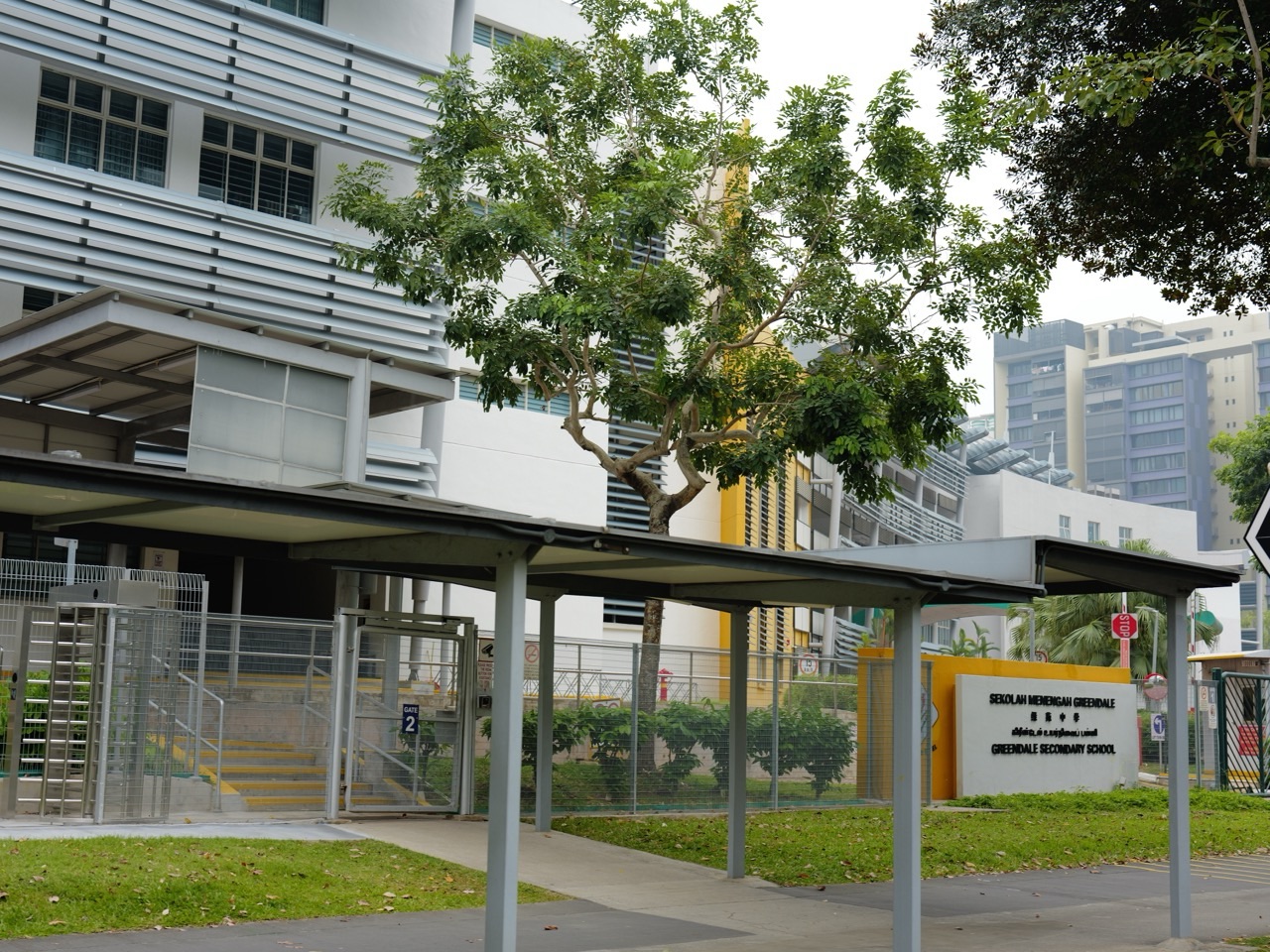
Secondary 1 and Secondary 2 are the first two years of learning under Singapore’s Full Subject-Based Banding (Full SBB) system. From the 2024 Secondary 1 cohort, mainstream secondary pupils entered mixed form classes instead of the old Express, Normal (Academic) and Normal (Technical) stream-based form-class model, and eligible students can study academic subjects at G1, G2 or G3 levels suited to their strengths. G means “General”. Posting Group 1, 2 or 3 helps determine admission and initial subject levels; it is not a permanent label assigning all subjects to one level for all four years.
The assessment rules are equally important. MOE has removed mid-year examinations, and schools generally conduct no more than one weighted assessment per subject per term, alongside formative teaching tasks. An authentic 2026 local secondary-school example is Meridian Secondary School, whose published Sec 1–3 plan gives Term 1 WA 15%, Term 2 WA 15%, Term 3 WA 15% and Term 4 end-of-year examination 55%. Other schools, modules and subjects may use different weights, so Punggol parents must use their child’s actual school notice, not treat 15/15/15/55 as nationwide policy.
This guide explains the school timetable, subject levels, assessment arithmetic, mixed-form life, the Primary 6-to-algebra shift, appropriate subject-level adjustments, parent communications, emotional wellbeing and the route to Secondary 3. It includes original worked Mathematics, English and Science diagnostics, an examination-weighting example and a structured four-week plan. Official sources checked 18 October 2026; school-specific eligibility and schedules require direct confirmation.
Follow the Punggol education progression: P1–P2: No exams and learning progress → P3–P4: Weighted assessments → P5–P6: PSLE ALs and prelims → Sec 3–4: SEC and prelims → JC/MI: A-Levels and 70-point UAS.
1. Full Subject-Based Banding changed the meaning of Secondary 1
Before Full SBB, families commonly thought about secondary schools through Express, Normal (Academic) and Normal (Technical) courses. The reform phased out the old stream labels for students entering Secondary 1 from 2024 and introduced Posting Groups for admission, then subject levels that respond more closely to individual strengths.
The change matters because a learner who is ready for more demanding Mathematics might need a different starting level for another language or academic subject. Previously, a stream label could dominate how the family described the pupil. Under Full SBB, the educational conversation can focus more precisely on each subject.
Not all subjects are structured at three G levels. The school also has common-curriculum subjects and programmes with different arrangements. The family’s task is to inspect the student’s actual subject combination rather than assume every timetable cell carries a G label.
Punggol secondary pupils follow this national structure alongside their peers elsewhere in Singapore. The neighbourhood influences the campus and commute, not a separate Punggol definition of G1, G2 or G3.
2. Posting Group is primarily an entry mechanism
PSLE scores and the Secondary 1 posting framework guide which Posting Group a pupil can initially use to enter secondary school. The Posting Group helps determine the starting academic subject levels, but it does not permanently define the pupil’s entire secondary education.
Students may have opportunities to adjust individual academic subject levels at suitable junctures when their performance and school arrangements indicate they would benefit. Parents should therefore not treat Posting Group 2, for example, as shorthand for every subject at G2 forever.
Ask the school what the child is actually offering in English, Mathematics, Science and other relevant subjects, and which rules apply to taking a subject at a more demanding or more suitable level. Individual subject changes must follow MOE and school procedures.
The practical benefit is educational fit. A learner need not be defined by a single exam result when strengths differ across academic domains.
3. G1, G2 and G3: subject standard rather than personal worth
G1 aligns broadly with the former Normal (Technical) standard, G2 with former Normal (Academic), and G3 with former Express standard. These mappings explain curriculum demand; they should not be used as permanent judgments about intelligence, motivation, character or future possibility.
A G3 algebra task may introduce symbolic complexity earlier than a related G1 task, but both require mathematical understanding appropriate to the syllabus. A student receiving G1 instruction still needs clear explanations, useful feedback and the chance to become independent.
Similarly, a child taking Mathematics at G3 may need a slower, more supportive approach to a language subject. Parents should avoid equating any particular subject level with a prediction that a learner cannot progress later.
When discussing a student’s academic plan, name the specific subject and level rather than saying only that the child is “a G2 student”. This improves precision and protects dignity.
4. Mixed form classes change the everyday school experience
The Full SBB model brings students of different Posting Groups together in common form classes. The form class provides a shared school community, while pupils attend suitable subject classes according to the school’s academic organisation.
This can encourage friendships and shared experiences beyond old stream boundaries. Students may work together during common-curriculum activities, CCAs, assemblies and school programmes while following different academic groupings for some subjects.
It also requires organisation. A Secondary 1 learner may have several teachers, subject rooms and different timetables from a friend in the same form class. Parents can help by establishing routines for checking the school timetable and understanding where each subject takes place.
A mixed form class is not the same as teaching every child every subject at one identical level. The whole point of Full SBB is to combine social integration with flexibility in subject learning.
5. The official 2026 assessment structure is not a single national timetable
MOE’s assessment policy reduces excessive formal testing. Schools use weighted assessments to count selected tasks toward results while continuing ordinary practice, quizzes, classroom work and feedback that may be non-weighted. The actual dates and types of tasks are set by schools.
Meridian Secondary School’s September 2026 student assessment page provides a clear example: for Secondary 1 to 3, Term 1, Term 2 and Term 3 each contribute 15%, while a Term 4 end-of-year examination contributes 55%. The school notes that assessment of common-curriculum subjects such as Art, Design and Technology or Food and Consumer Education can differ according to the learning objectives.
Peicai Secondary School also published a 15/15/15/55 structure for Secondary 1–3 in July 2026. These school examples support a useful model, but parents should confirm the individual child’s school and subject.
An internet percentage calculator that ignores the school’s official plan can produce a polished-looking but incorrect annual mark.
6. Why mid-year examinations are no longer part of the normal plan
MOE removed mid-year examinations to create more time for teaching, meaningful activities and regular feedback. The change does not eliminate every Term 2 assessment or prevent schools from checking whether learners are progressing.
A Term 2 WA might assess a narrower set of learning outcomes than a traditional mid-year examination. Parents should distinguish the assessment’s size, purpose and percentage rather than equate any written test in June with an abolished formal mid-year exam.
Schools continue to expect students to complete non-weighted work. A pupil who ignores weekly assignments until the next formal examination may miss opportunities to repair misconceptions early.
The policy is best understood as a redistribution of learning time, not the removal of accountability or national syllabus expectations.
7. One weighted assessment per subject per term
MOE’s reduced-assessment framework generally restricts schools to no more than one weighted assessment in a subject in each school term. School guidance may note special arrangements for modular subjects, so parents should read the actual plan and its stated exceptions.
The unit is a subject, not the entire child’s timetable. A pupil can have a Mathematics WA, English task and Science WA in the same term, while also receiving unweighted homework and classroom checks.
Parents should keep an up-to-date assessment calendar based on the school’s official circulars. They can help the student spread revision across weeks, preserve rest and avoid last-minute panicked cramming.
When an assessment is announced, ask what part of the syllabus it covers, what kind of evidence it asks students to produce and when feedback will be given.
8. Worked annual-weight calculation: 15, 15, 15 and 55
Consider a hypothetical Sec 1 learner whose four marks are 72% for WA1, 80% for WA2, 68% for WA3 and 76% for the end-of-year paper. Using the 15/15/15/55 school example, the contributions are 72 × 0.15 = 10.8, 80 × 0.15 = 12, 68 × 0.15 = 10.2 and 76 × 0.55 = 41.8.
The total is 74.8%. The arithmetic mean of the four raw marks would be 74%, but that is not the score under the stated unequal weights. Neither number defines a national G-level boundary.
The worked calculation is illustrative. Actual school subjects may have other weightings or different assessment forms. Parents must use the correct published plan before combining a child’s results.
9. School marks and subject levels answer different questions
A weighted annual mark describes performance on tasks under the school’s assessment plan. A G subject level identifies the syllabus demand the pupil is following. They are related but should not be collapsed into one universal numerical conversion rule.
For example, a score of 75 on a G2 paper is not automatically equivalent to 75 on a G3 paper. The topics, task complexity and expected methods may differ. Schools follow current MOE guidance when determining whether a subject-level change is appropriate.
A parent should ask what evidence the school uses to recommend an adjustment, what the student has demonstrated across time and how the pupil would cope with the new syllabus. The raw score alone cannot answer every question.
This principle helps families avoid making decisions from speculative online formulas about upgrading from one G level to another.
10. The first-year transition involves learning a new academic language
A pupil entering Secondary 1 encounters subject-specific notation, longer written instructions, laboratory expectations, more specialised teacher vocabulary and a greater need for independence. Primary-school methods remain useful, but some tasks require a new formal structure.
Mathematics moves more decisively toward algebra and equations. Science expects careful variable identification and causal explanation. English increasingly requires interpretation, argument and purposeful writing. The challenge is not only more information; it is a different way of organising reasoning.
A student who performed comfortably at PSLE may still be uncertain at Secondary 1. Teachers and parents should inspect which new concept is causing difficulty rather than assuming that the student was previously overestimated.
Good bridging instruction explains what changed and connects the new notation or skill to the knowledge already held.
11. Worked Mathematics example: arithmetic becomes algebra
A pupil may understand 3 × 7 = 21 but hesitate when the same relationship is written as 3x = 21. The issue is recognising that x represents an unknown quantity and that the equation states an equality.
Divide both sides of 3x = 21 by three to obtain x = 7. Check by substituting the value: 3 × 7 = 21. The operation works because the same non-zero divisor is applied to both sides of the equation.
For transfer, solve 4y = 28: divide both sides by four to obtain y = 7, then verify. A learner who explains the balance principle rather than repeating “move the three over” has acquired a more reliable method.
This illustration follows the Clementi teaching benchmark: explain the mechanism first, then build fluency with a changed problem.
12. Directed numbers: errors reveal sign confusion
Negative numbers are a common transition challenge. A student may conclude that −7 + 12 = −19 because they combine the numbers and keep the negative sign. This is not solved simply by telling the learner to memorise more sign tricks.
On a number line, start at −7 and move twelve units right. The answer is 5. The physical direction of the movement explains why adding a positive twelve increases the value, even if the starting number is negative.
For a fresh test, ask the student to calculate −9 + 14 and explain the movement. The result is 5. If the pupil can now reason rather than guess a sign, the error has been addressed more meaningfully than through unexamined drill.
13. Expanding brackets and the hidden distributive rule
Consider 3(x + 4). A learner might write 3x + 4 because only the first term is multiplied. The correct expansion is 3x + 12 because three applies to every term within the bracket.
Use repeated groups to explain the rule: 3(x + 4) means (x + 4) + (x + 4) + (x + 4). Collecting like terms gives 3x + 12. This model helps the learner understand the distributive property instead of remembering a phrase without meaning.
For transfer, expand 2(2y − 5), giving 4y − 10. The negative term tests whether the pupil has understood that multiplication distributes to the full bracket, not merely to positive terms.
14. Mathematics at different G levels requires suitable teaching
A student taking G3 Mathematics may encounter more demanding algebraic and representational tasks sooner than one taking G1, but both must connect symbols to meaning. Parents should request the actual syllabus level and school’s teaching sequence before choosing revision materials.
An overly advanced worksheet may produce failure unrelated to the skills currently expected of the pupil. Conversely, a learner who is comfortable with the present content might need deeper reasoning and unfamiliar applications rather than repeated easy questions.
The useful questions are what concept has been taught, whether it is stable and what the student should be able to explain next. Subject level is a teaching context, not a replacement for diagnosis.
15. Secondary English: reading for evidence rather than keywords
A longer Secondary 1 reading text may contain contrast, uncertainty and several perspectives. Students should not simply locate a keyword and copy the surrounding line. They must identify what the question requires and whether the selected details actually support the response.
For example, a character saying they feel calm may be contradicted by descriptions of nervous preparation. A careful student considers both the spoken words and the narrator’s evidence.
Parents can practise this through discussions of age-appropriate articles and stories, asking which sentence justifies an inference and what information remains unknown. Accuracy matters more than sophisticated-sounding expressions.
16. Worked English comprehension: do not infer an unsupported cause
Consider an invented passage: “Farah checked her timetable repeatedly before entering the hall. She told her friend she was ready.” A question asks how Farah might be feeling. A supportable response is that she may be nervous or careful about preparations, indicated by her repeated checking.
The passage does not prove she will perform poorly, has forgotten her notes or is dishonest. A pupil who adds those claims has moved beyond the evidence. The task is to reason about what the text permits.
For transfer, change the passage so Farah laughs with friends and forgets about the timetable. The inference may change. A student who can revise their interpretation demonstrates careful reading, not mere memorisation of an emotion word.
17. Lower Secondary Science requires experimental reasoning
Secondary Science expands pupils’ understanding of matter, energy, living systems and experimental inquiry. A pupil may know some facts but struggle to distinguish controlled conditions from the factor being tested in a fair experiment.
A useful science explanation identifies the variable deliberately changed, what is measured and relevant factors kept comparable. A conclusion should not claim more than the observation supports.
Parents can ask the learner to explain why an experiment is fair, then change the scenario to test the same reasoning. Copying a diagram label is not equivalent to understanding the experiment’s logic.
18. Worked Science example: electrical resistance and current
Consider a simple circuit with a 6 V ideal source and a single resistor of 3 Ω. Ohm’s law gives I = V ÷ R = 6 ÷ 3 = 2 A. A student who multiplies six by three and answers 18 A may have selected the wrong mathematical relationship.
The correct reasoning is to identify voltage as the potential difference, resistance as opposition to current, and apply the appropriate equation. If the resistor were changed to 6 Ω with the voltage unchanged at 6 V, the current would be 1 A.
These are idealised numerical examples. In a real circuit, source and component behaviour may differ. The educational goal is to understand the relationship before applying it to other problems.
19. Secondary 2 asks for more independence
By Secondary 2, students usually encounter more elaborate subject content and decisions about upper-secondary combinations. School expectations for planning homework, organising files, participating in group work and seeking help also increase.
A pupil who cannot yet explain a Secondary 1 algebra rule may struggle when equations combine several steps. An English comprehension weakness may become more visible when texts contain competing viewpoints. The right response is to locate and repair the earlier dependency.
Parents can arrange brief subject check-ins rather than supervising every worksheet line. Independence grows when learners know how to recognise confusion, ask for clarification and apply feedback.
20. Subject-level adjustments should use evidence
Under Full SBB, pupils can move to a more demanding subject level at appropriate transition points if they meet the conditions and school guidance, or consider other appropriate adjustments based on needs. The process is not automatically triggered by one impressive test or one difficult week.
Before requesting a change, ask which concepts are secure, how the student has performed across different tasks and whether the next level would support motivation and long-term learning. Also consider workload in the other subjects.
A good decision responds to the learner’s strengths and readiness. The purpose of Full SBB flexibility is educational fit, not turning every family discussion into a competition over G labels.
21. Secondary 2 subject combinations are not a one-number destiny
Toward upper secondary, students may receive guidance about elective and compulsory subjects, including Humanities, Sciences and other available options. Subject combinations depend on the school, MOE syllabus framework, timetabling and eligibility.
A learner interested in Chemistry may need to understand which subject levels and Science combinations are offered. Another may be more interested in Art, Design and Technology or Computing. The family should not assume that all secondary schools offer the same combinations simply because they follow Full SBB.
Ask the school for its current Secondary 3 subject briefing, prerequisites, timetable and the consequences of choosing a particular combination. A good decision reflects strengths, interests and realistic support, not only a neighbour’s preferred route.
22. The subject-level change conversation
When a pupil performs strongly at one G level, the parent may want an immediate move to a more demanding level. But a single WA is not the full evidence of readiness. Consistent performance, depth of conceptual understanding, independent problem-solving and wellbeing should also be considered.
The school can explain applicable national and local criteria and the next permitted review point. Parents should ask which prerequisite knowledge the student would need if a change is approved. A suitable bridge may be necessary to avoid gaps when content demands differ.
Similarly, a learner struggling at a higher level may need targeted teaching or an appropriate adjustment. Neither choice should be treated as a permanent statement about intelligence. The goal is a curriculum demand the child can learn from successfully.
23. The end-of-year examination serves a different purpose from a WA
In the 2026 examples from Meridian and Peicai Secondary, an end-of-year examination at Sec 1–3 is the final and largest weighted checkpoint. It can cover a wider scope than a term WA and may therefore require students to integrate concepts learned earlier in the year.
The size of a paper makes time planning and question-reading important. But a correct revision method should still begin with accurate concepts. A learner who never understood negative numbers is unlikely to solve the problem by practising only long mixed papers.
The year-end examination can show accumulated learning across a broader content range, yet it remains a school assessment. It does not itself issue the Singapore-Cambridge SEC qualification, which belongs to the later graduating stage.
24. What a 55% year-end weight should and should not cause
A 55% weight is large enough that families should pay attention to revision and assessment technique. However, it does not mean every waking hour in Term 4 should be spent on worksheets or that a disappointing year-end result erases all evidence from classroom work.
A useful plan starts by organising the syllabus, identifying two major weaknesses and practising retrieval across earlier topics. The student should also check unfamiliar problem types and explain corrections. Practice quality matters more than page count.
Parents should keep ordinary sleep, meals, physical activity and communication routines intact. Excessive last-minute volume can increase avoidable errors through fatigue. Academic planning and wellbeing are connected.
25. Original graph-reading diagnostic for lower secondary
Imagine a distance–time graph showing that a walker travels 200 metres in the first 100 seconds, then remains at 200 metres for the next 50 seconds. A student may claim that the person continued walking because time on the horizontal axis increased.
The flat section indicates unchanged distance, so the walker was stationary during that 50-second interval. During the first segment, the average speed is 200 ÷ 100 = 2 metres per second, assuming the motion is represented accurately by the graph.
For transfer, show a graph rising from zero to 300 metres over 150 seconds and then remaining flat. The average speed during the rising portion is also 2 m/s, while the flat interval again represents zero speed. The pupil has learned how slope relates to motion rather than memorising one answer.
26. English writing requires audience and organisation
Lower Secondary English students increasingly write with specific audiences and purposes. A report, speech, formal email and narrative each require different choices about format, tone, evidence and structure.
A pupil may write fluent sentences but ignore the purpose of a situational task. Ask them to identify who will receive the text, what the reader needs and what the response must achieve before composing. A strong introduction alone cannot repair omitted required information.
Parents can practise using ordinary life messages. Write a short, precise note to a school club about a meeting change, then compare it with a narrative describing the same event. The difference in communication purpose is the learning.
27. Original English writing example: argument, evidence, response
Suppose a fictional class discussion asks whether pupils should be allowed to use their phones during recess. One learner writes, “Phones are useful, so they must always be allowed.” The claim is too broad, ignores safety and offers little evidence.
A more developed answer could propose limited use in designated settings, cite legitimate needs such as contacting caregivers when permitted, acknowledge distractions or cyber-wellness concerns, and explain how school rules might balance them. The writer should not invent school policies as factual support.
For transfer, ask the learner to discuss tablets in lessons rather than phones at recess. The same structure—claim, relevant evidence, counterargument and qualified conclusion—should work with a different issue. This is independent argument development rather than copying a memorised paragraph.
28. Science practical safety is part of the curriculum
Laboratory work requires safe procedures, accurate measurement and respect for instructions. A student who gets the right calculation while mishandling materials has not demonstrated complete practical competence.
Teachers introduce safety procedures suitable to the experiment, including correct handling of equipment, labelling and disposal. Parents should never attempt to recreate hazardous school experiments at home merely to practise for an assessment.
A learner can develop practical reasoning safely through diagrams, data interpretation and teacher-approved activities. The essential skill is to know what observation means and what conclusion is justified, not to produce the most dramatic demonstration.
29. Worked Science example: fair testing of temperature
Consider a hypothetical investigation comparing the rate at which an equal amount of sugar dissolves in water at different temperatures. A valid design should hold sugar amount and form, water amount and stirring conditions as comparable as possible, while changing the water temperature under safe supervision.
A student who changes temperature, sugar quantity and stirring at the same time cannot validly attribute a difference to temperature alone. The problem concerns experimental control rather than an inability to read a stopwatch.
For transfer, ask how to investigate stirring rate instead. The student should keep temperature and quantities comparable and vary the stirring method appropriately. An explanation of those controls shows understanding that can be applied across Science topics.
30. CCE, cyber wellness and friendships are also part of school
Secondary 1 and 2 include Character and Citizenship Education, peer interaction, National Education, healthy decision-making and cyber wellness. Pupils are adjusting not only to academic subjects but also to greater independence in friendships and online communication.
Under Full SBB, mixed form classes create opportunities to interact across different strengths and interests. Teachers also guide respectful cooperation and responsible digital behaviour. A child who receives cruel messages in a class group needs appropriate adult support, not a lecture that examinations are the only priority.
Parents should discuss school life beyond grades, asking whether the pupil has trusted classmates and staff, understands online boundaries and feels safe seeking help. These conditions affect learning participation.
31. CCA builds participation and responsibility
Students join co-curricular activities that can develop physical, artistic, leadership or service skills. Sustained participation can contribute to LEAPS 2.0 recognition in the relevant secondary years, but the educational purpose extends beyond bonus points.
For a Punggol family, practical details matter: the CCA’s weekly dismissal time, transport after training, safety arrangements and the student’s interest. A programme that leaves the child chronically exhausted may need timetable adjustment or a more suitable activity.
The learner should have opportunities to discover interests, contribute to teams and build friendships. The family can encourage reliability without treating every club meeting as another graded examination.
32. Student Learning Space and personal devices
Singapore schools use digital platforms including the Student Learning Space, and secondary students may use Personal Learning Devices under approved arrangements. These can support independent reading, interactive lessons, feedback and collaborative work.
A device does not perform the learning for the pupil. Clicking through answers or copying generated text can produce a successful-looking submission without understanding. Ask the child to explain a response and try a comparable new task offline.
Use the school’s permitted software and account rules, protect passwords and seek approved support when a device fails. For families with limited access, the school may explain suitable support or alternatives. The goal is reliable learning access, not a competition for expensive hardware.
33. AI assistance must not replace the student’s reasoning
AI tools can generate plausible explanations, but they can make errors or fabricate facts. MOE’s digital-learning guidance emphasises responsible use, teacher control and verification of AI-generated content.
A Sec 2 pupil might ask an AI tool to solve an algebra question. Before using the explanation, the learner should check each algebraic step and substitute the result. For an English passage, the learner should locate source evidence rather than accept an invented quotation.
Academic integrity remains important. If a teacher requires independent work, submitting AI-produced writing as personal work can defeat the assessment’s purpose. Parents can encourage questions and verification without turning software into a substitute tutor or author.
34. What happens when the pupil is absent during a WA
Schools publish documentation rules for absence from weighted assessments, school examinations and practical tasks. A medical certificate or authorised explanation may be required, and the school decides how missing assessment evidence is handled under its policy.
Do not assume that an MC grants an automatic duplicate sitting. Nor should a parent ask a pupil to attend despite significant illness simply to protect a mark without appropriate advice. Health and legitimate assessment procedures must be handled together.
Contact the school promptly, follow the official instructions and ask what learning the pupil missed. The answer may involve both administrative documentation and a targeted catch-up task.
35. Support for students with special educational needs
A learner may need classroom or assessment accommodations for a genuine learning, physical, sensory or communication barrier. Subject levels and support needs are distinct: a pupil studying G3 Mathematics can still need appropriate access support.
Teachers and SEN Officers can help document functional difficulties, coordinate adjustments and advise families on the school process. A clinical diagnosis requires qualified professional assessment, not merely a test mark or an online checklist.
If formal national-examination Access Arrangements will be relevant later, discuss the timeline with the school’s designated coordinator. Ordinary school support does not automatically become SEAB approval.
36. A practical lower-secondary parent–teacher conference
At a meeting, ask for the student’s exact G subject levels, current school assessment plan, a representative strength, a recurring error and the next learning goal. Avoid discussing only rank or comparing pupils who take different subject levels.
For Mathematics, ask whether algebraic manipulation or number foundations are unstable. For English, distinguish vocabulary, comprehension and writing purpose. For Science, inspect experiments, terminology and causal explanations.
Agree on one school action, one feasible home action and a review date. This creates a productive partnership rather than a vague plan to study every subject harder.
37. Punggol school geography affects the home timetable
Punggol students can attend local secondary schools or travel farther for a preferred programme. Families near the Waterway, Northshore, Punggol Central and other precincts may have very different commute routes and journey demands.
The student may use the North East Line, LRT, buses or walking links. Calculate realistic door-to-door travel from the actual home, including wet weather, school dismissal and CCA days. A student who returns late may have less capacity for further study.
Good academic planning uses the student’s actual weekly schedule. A shorter, well-focused study session after adequate rest can be more productive than another long block of worksheets undertaken while exhausted.
38. Case study: one pupil, two different subject levels
Imagine a fictional Secondary 2 learner attending a Punggol-area school. They follow a more demanding Mathematics subject level, but a different level for English. The parents initially ask whether the pupil should be moved wholesale into “the higher stream”.
That question misreads Full SBB. The school can assess progress and adjustment opportunities for each subject separately. A Mathematics strength should be developed, while English support should target the actual language need. A single overall label is less informative.
The family requests a subject-by-subject plan and assesses timetable feasibility. This respects both academic differentiation and the learner’s dignity.
39. Case study: a mark of 75 in different subjects
A fictional Sec 1 learner receives a Maths mark of 75 and an English mark of 75. Parents might assume the same numerical result means identical progress. Yet the Maths mark may conceal sign errors in otherwise sound algebra, while the English mark may reflect weak comprehension with strong writing.
Inspect the work. In Maths, a number-line explanation could repair negative-number misconceptions. In English, evidence-based reading and unfamiliar inference tasks might be needed. The same score leads to different teaching prescriptions.
Subject-level differences add another reason not to compare scores without context. A good report must identify what was assessed, at which level, and how the child reasoned.
40. Four-week plan to strengthen Secondary 1–2 learning
Week 1 — Establish context. Confirm subject levels, actual school WA weightings and the upcoming timetable. Select two recurring mistakes from authentic work and let the pupil explain the original reasoning.
Week 2 — Repair. Teach the smallest unstable idea, whether negative-number structure, algebraic balance, reading evidence or experimental variables. Use meaningful diagrams and short guided practice.
Week 3 — Transfer. Present new questions with changed numbers, wording or contexts. Remove unnecessary prompts and ask the pupil to justify their methods.
Week 4 — Review. Compare fresh independent work with the original errors, consult teachers where helpful and decide whether the strategy is working. Protect sleep, CCA participation and a sustainable daily rhythm.
41. The bridge to Secondary 3
Secondary 3 commonly brings more specialised subject combinations and more demanding work, leading eventually to the SEC. Students benefit from ending Secondary 2 with accurate algebra, reading comprehension, scientific reasoning and organisation.
The school will advise on the actual combination process and eligibility for different subject levels. A student may find that strong performance supports a particular option while other choices require further foundations or timetable considerations.
Parents should keep admission and curriculum rules separate from individual teaching needs. The next guide in this series explains upper-secondary assessment and the 2027 SEC transition, including how school preliminaries differ from the national qualification.
42. Mistakes to avoid when interpreting Full SBB and WA
Do not call G1, G2 and G3 permanent streams for every subject. Do not assume a Posting Group labels the student forever or defines personal worth. Do not equate a 75 mark at different G subject levels as though the papers were identical.
Do not use Meridian Secondary’s 15/15/15/55 percentages for another school without checking, or average four marks equally when one component has greater weight. Do not assume “no mid-year exam” means there cannot be a Term 2 WA.
The safest approach is to identify the exact authority, school, subject level, assessment plan and misconception. The information should make the next learning decision clearer rather than produce a more elaborate but inaccurate ranking.
Frequently asked questions
Does Full Subject-Based Banding apply in Punggol?
Yes. It is a national MOE system implemented for Secondary 1 entrants from 2024 across mainstream secondary schools, not a separate neighbourhood trial.
What does G stand for in G1, G2 and G3?
General. G1, G2 and G3 describe subject levels broadly corresponding to the former N(T), N(A) and Express academic standards.
Is Posting Group the same as the student’s permanent stream?
No. Posting Groups facilitate entry and initial subject-level eligibility. Under Full SBB, the learner may take different subjects at different levels and adjust them at suitable points when eligible.
Do mixed form classes mean every subject is taught at one level?
No. Form classes provide shared school experiences, while academic subject grouping follows each pupil’s actual subject levels and school timetable.
Are Sec 1 and 2 mid-year examinations still held?
MOE removed mid-year examinations. Schools can continue appropriate weighted assessments and ordinary learning checks during Term 2.
How many weighted assessments can one subject have per term?
The general MOE policy is no more than one per subject in a term, with school guidance on specialised modular assessment arrangements. Check the relevant school plan.
Does every school weight assessments 15, 15, 15 and 55 per cent?
No. Meridian and Peicai Secondary publish that example for Sec 1–3 in 2026, but parents must check their child’s actual school and subject.
How do I calculate a weighted annual mark?
Multiply each assessment score by its published weight and sum the contributions. Do not average unequal components as though they were identical.
Can a pupil study Mathematics at a different G level from English?
Yes, subject-level flexibility is a key part of Full SBB, subject to school offerings and MOE eligibility criteria.
Can a student change to a higher subject level?
There are appropriate review and adjustment opportunities based on current criteria, performance and school guidance. One WA score does not independently guarantee a change.
Are Secondary 2 subject combinations the same at every school?
No. Schools differ in subject offerings, programme features, eligibility and timetabling. Read the actual school’s Sec 3 combination guidance.
Does G1 mean a learner cannot develop advanced skills?
No. G levels describe syllabus standards at a point in time, not permanent intellectual capacity. Students can progress and benefit from suitable instruction.
Why do negative numbers cause difficulty at Sec 1?
Students must understand directed values and sign operations, not just memorise sign phrases. Number-line models can expose the specific error.
What is the purpose of an end-of-year examination?
It is a broader school assessment checkpoint, often more heavily weighted than term WAs. It is not the national SEC qualification.
Is SEC already the Sec 1–2 examination?
No. SEC is the national graduating secondary certificate starting in 2027. Sec 1–2 pupils complete school-based assessments under their own school’s plan.
Can AI complete SLS assignments for a student?
Teacher instructions and academic integrity rules govern permitted assistance. Students should demonstrate their own understanding and verify generated content rather than submit work they cannot explain.
Does CCA attendance affect academic subject marks?
CCA and LEAPS recognition have separate rules from ordinary subject WA results, though a student’s weekly timetable and wellbeing can influence learning.
What if my child has an SEN diagnosis and needs support?
Discuss functional needs with the school and relevant professionals. Support eligibility and national examination Access Arrangements are distinct from G academic subject levels.
What if my child misses a weighted assessment due to illness?
Follow the school’s current documentation and missing-assessment policy. Do not assume a replacement paper is guaranteed; ask how the result will be handled.
Do Sec 1 and 2 need extra tuition for every subject?
No. Additional help should address genuine, diagnosed learning gaps and be manageable for the pupil. A targeted explanation often matters more than raw worksheet volume.
What should parents do before choosing Sec 3 subjects?
Confirm current levels, interests, real performance, school prerequisites and workload. Avoid making decisions based solely on a prestigious-sounding label.
How can families reduce examination anxiety?
Provide a predictable revision routine, realistic goals, supportive feedback and adequate rest. Persistent distress deserves appropriate school or professional guidance.
Official sources and further Punggol reading
- MOE Full Subject-Based Banding overview
- MOE Education Conversations — Full SBB and assessment reforms
- Meridian Secondary — 2026 WA 15/15/15/55, 1 September 2026
- Peicai Secondary — 2026 assessment and promotion criteria
- Dunearn Secondary — 2026 Assessment and Formative Feedback
- SEAB — Singapore-Cambridge SEC starts 2027
- Punggol Secondary Schools and Full SBB Overview
- Punggol Secondary School Subject Combinations
- Punggol Secondary CCA and LEAPS 2.0
- Clementi Secondary 1 Mathematics immutable reference
Editorial review, 18 October 2026. Official policy statements are based on MOE and SEAB, and the 2026 weighting examples are attributed to individual schools. All student cases and worked questions are original hypothetical teaching examples. This independent guide does not determine subject-level eligibility or school examination outcomes.


