
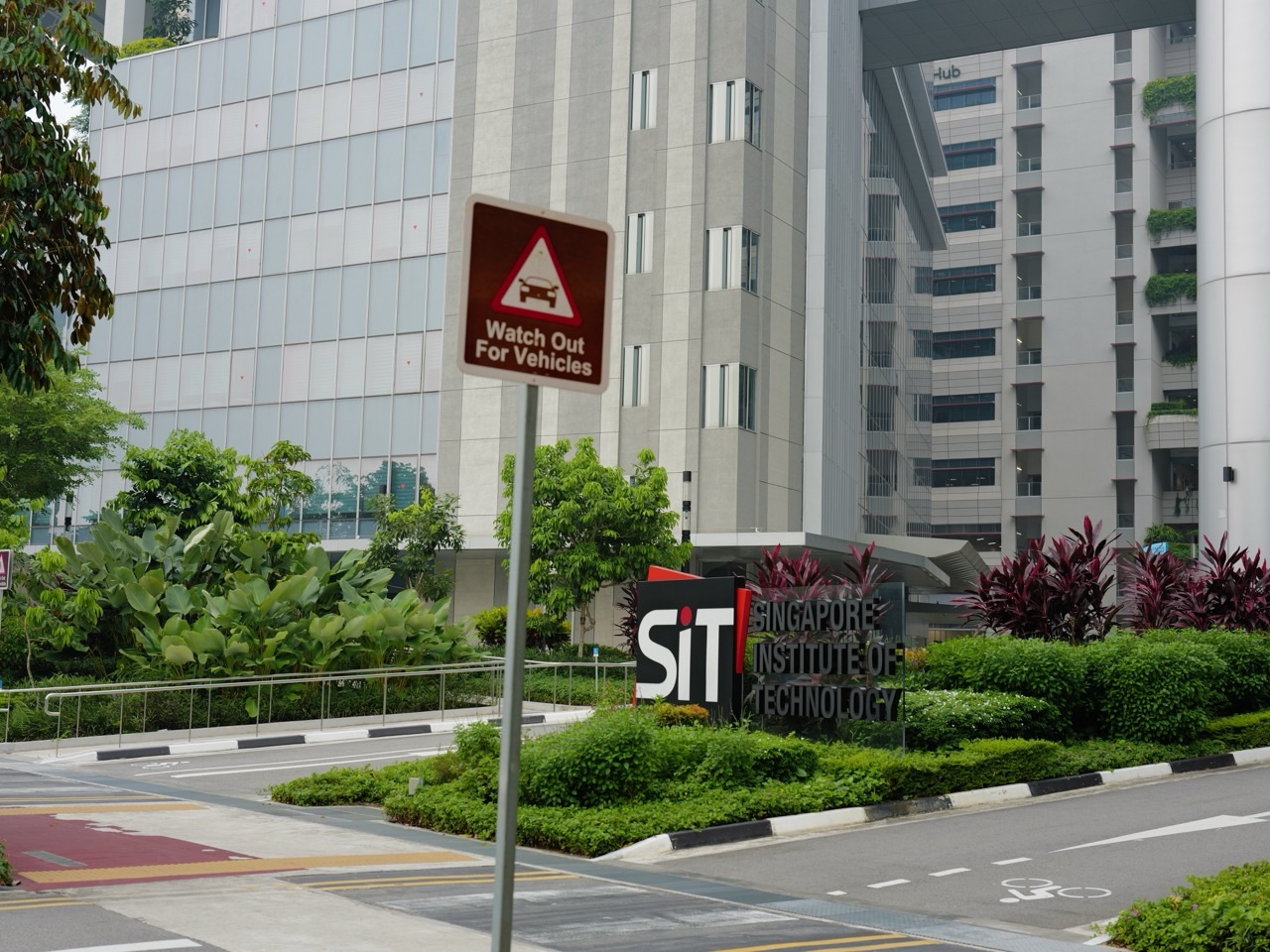
Quick answer. Students living in Punggol enter Singapore’s national post-secondary education system after secondary school. Eligible routes include junior colleges (JC), Millennia Institute (MI), polytechnics and the Institute of Technical Education (ITE); later routes include universities, arts institutions, work-study programmes and other approved education and training opportunities. Punggol itself is home to the Singapore Institute of Technology (SIT) Punggol Campus at 1 Punggol Coast Road, but living nearby neither guarantees nor substitutes for university admission requirements.
The most useful question is not “Which pathway sounds highest in a ranking?” It is “Which route matches this student’s interests, academic readiness, preferred way of learning and realistic next step?” A student who enjoys experiments may prefer a practical diploma; a student who thrives on intensive academic subjects may consider pre-university study; another may build a career foundation through Higher Nitec and progress further later. These are genuinely different educational experiences, not interchangeable labels.
The application system is changing. Under Full Subject-Based Banding, students from the first graduating cohort sit the new Singapore-Cambridge Secondary Education Certificate (SEC) examinations in 2027. MOE has announced a new Post-Secondary Admissions Exercise (PSE) from 2028 for relevant routes, as well as revised JC and polytechnic entry arrangements. This guide distinguishes what is established as at 18 October 2026 from what families must confirm for their own intake year.
Post-secondary pathways at a glance
| Route | What the learning commonly involves | Typical qualification or destination | What to verify |
|---|---|---|---|
| Junior College | Two-year pre-university academic study | GCE A-Level or other school-specific programme where offered | Current subject prerequisites, admissions and workload |
| Millennia Institute | Three-year pre-university academic programme | GCE A-Level | Programme, distance and eligibility |
| Polytechnics | Diploma education with applied coursework and projects | Diploma, employment or later degree study | Course entry criteria, curriculum, attachment and accreditation |
| Institute of Technical Education | Career, technical and vocational training | Higher Nitec or other approved qualifications, with progression options | Specific programme duration, subjects and course entry route |
| Singapore Institute of Technology | University-level applied education with industry engagement | Degree or relevant further study credentials | Specific degree prerequisites, admissions, fees and work-study model |
1. The Punggol address and the Singapore education system
Punggol does not have a separate post-secondary admission authority. The Ministry of Education sets national frameworks, while institutions such as ITE, polytechnics, junior colleges and universities administer their own programmes under the applicable rules. A student can live in Punggol and attend a course elsewhere in Singapore; conversely, someone from another town can apply to SIT in Punggol if they qualify.
A neighbourhood-based guide should therefore separate two questions. The first is educational eligibility: Which qualification, subjects, grades, experiences and other criteria does the programme require? The second is local feasibility: How will a student travel to the institution, participate in late classes or projects, pay for study and balance family commitments? A short commute does not fix an admission gap, but it can make a demanding programme more sustainable.
Punggol has a distinctive education connection because the SIT campus sits within Punggol Digital District, alongside a broader technology and business environment. This makes applied higher learning tangible for residents. Still, the campus is not a continuation of a nearby secondary school and does not automatically provide an admission preference for Punggol residents.
A family’s planning document should always show the student’s expected graduation year and the year the entry requirements apply. When rules change, as with the upcoming SEC and PSE, an undated pathway chart becomes unreliable. Use current MOE information, institution websites and the student’s own academic evidence rather than relying on family anecdotes from a different cohort.
2. Four different routes do not mean four levels of personal worth
Secondary school leavers often hear that one destination is “better” than another, as though education were a single ladder climbed at the same pace by everyone. That framing hides substantial differences in learning method. Pre-university programmes usually require sustained academic preparation for a subsequent admission stage. Polytechnics centre learning on specific diploma disciplines and applied work. ITE offers technical and vocational programmes with clear occupational and progression aims.
These routes can lead to further study or employment, depending on the individual’s performance, course, qualification and later admissions criteria. They are not a promise that every graduate can enter every higher-level programme. Nor should they be dismissed because they have different admission profiles. A student who chooses an appropriate hands-on route and works purposefully may build valuable skills, credentials and professional confidence.
Think about three fictional students. One loves reading, debating and theoretical science, and wants to keep several academic disciplines open. Another designs interactive prototypes and learns fastest through projects. A third enjoys maintaining machines and wants structured technical training before deciding on further education. They could reasonably choose different initial routes without anyone having chosen a lesser life.
Parents can make better decisions by talking about actual modules, weekly activities, assessment formats, course length, internships, career possibilities and progression requirements. Replace “prestige” with evidence. The goal is a learner who understands the pathway and has a reason to participate wholeheartedly.
3. Junior colleges: intensive pre-university study
Junior colleges usually provide a two-year pre-university route for eligible students. They prepare learners through relevant subjects and school programmes, with national qualifications such as the GCE A-Level used for further education. Individual institutions can have different offerings, including particular programme types where applicable, so check the relevant college’s official information.
JC learning places significant demands on abstract reasoning, extended reading, mathematical fluency, analysis and self-directed study. A student considering the route should inspect the actual subject requirements and combinations, not merely compare school cut-off figures. What appears familiar as “Science” or “Humanities” at secondary level may become more specialised and intensive.
MOE announced revised JC admission criteria from 2028, replacing the earlier six-subject L1R5 gross aggregate calculation with a five-subject L1R4 approach. The detailed Mathematics/Science and Humanities group requirements still matter, as do any updated rules on bonus points. Families with a 2027 SEC graduate should use the published 2028 framework, not an older O-Level calculation shared online.
A student choosing JC does not have to know their entire career immediately. However, they should have evidence that they enjoy and can sustain intensive academic study. Encourage course visits and conversations with current students, while noting that one person’s experience is not a universal outcome.
4. Millennia Institute: a three-year pre-university alternative
Millennia Institute (MI) offers a three-year pre-university route leading towards the GCE A-Level examination. The longer programme structure can suit some students’ learning pace, subject interests or personal circumstances. It is not accurate to describe MI merely as a weak version of a junior college. Families should examine what the timetable, subjects, experiences and support arrangements actually involve.
Students considering MI need to understand the same basic questions as prospective JC students: eligibility, prerequisites, assessment requirements, study load and future goals. A longer duration can provide a different rhythm, but it does not mean that the work ceases to be academically demanding. Teachers and education counsellors can help the learner evaluate readiness.
For Punggol residents, travel is especially relevant because the programme is not located at every neighbourhood school. Test the real route, particularly if the student has co-curricular responsibilities or family obligations after lessons. A journey that works on an open-house weekend may feel very different over three academic years.
MI also appears in the national post-secondary admissions reform announced for 2028. Its exact entry criteria should be checked with MOE and the institution in the relevant year. A family comparing MI and JC should not use last year’s exercise handbook as though the rules cannot change.
5. Polytechnic diplomas: learning a discipline through applied work
Singapore has five polytechnics: Singapore Polytechnic, Ngee Ann Polytechnic, Nanyang Polytechnic, Temasek Polytechnic and Republic Polytechnic. They offer diploma programmes in a wide range of disciplines, from engineering and information technology to business, health, design and other areas. The programmes include coursework, assessment and, where applicable, project and workplace components. Course structure differs substantially by discipline and institution.
A polytechnic is not simply an easier version of JC. A diploma learner often has to apply specialist knowledge, collaborate on assignments, manage extended projects and demonstrate competence in specific practical or professional tasks. A student fascinated by designing a useful app may welcome programming and project work. Another who dislikes laboratory procedures may discover that a related science diploma requires far more hands-on work than expected.
Use MOE CourseFinder and the polytechnic’s official course pages to inspect module lists and admission criteria. Ask what students actually build, test, write or present, which skills are needed at entry and what graduates commonly do next. Employment and degree-study opportunities vary by qualification, grade profile and the receiving institution’s rules; they should not be presented as automatic.
For a Punggol household, the best-fitting diploma may be located outside the town. Consider transport and the possibility of irregular project schedules or attachments. A carefully chosen course can be worthwhile despite travel, but the family should understand the daily commitment before accepting an offer.
6. Polytechnic admission: understand what changes in 2028
MOE announced that, beginning with the 2028 intake, students could use an eligible G2 subject in the ELR2B2 aggregate used for admission to polytechnic Year 1. The announced framework permits the last ‘Best’ subject in the calculation to be mapped from G3 or taken at G2, subject to the published rules and mapping. MOE also announced an adjustment of the relevant aggregate threshold from 26 to 22 points under the new calculation.
It is easy to misread that statement as “a G2 subject automatically gets a student into polytechnic”. It does not. The overall academic criteria, subject prerequisites, course-specific requirements, actual competition and application system still matter. Mapping a G3 grade to a G2 grade for one calculation is a defined technical rule, not permission to ignore all other requirements.
Families should compare their expected SEC subject levels with the precise programme requirements. If a course needs particular Mathematics or Science foundations, investigate them early rather than assuming the new aggregate will solve a prerequisite problem. Admissions policies are designed to create appropriate routes, not erase necessary preparation for specialist study.
A parent seeking a course with strong practical elements should read beyond the aggregate. Check what the course teaches and whether the student likes the everyday learning tasks. An attractive course title is not enough; an accurate understanding of its modules is essential to choosing well.
7. Polytechnic Foundation Programme and alternative entry arrangements
In addition to direct Year 1 applications, Singapore has had routes such as the Polytechnic Foundation Programme (PFP) and other admissions arrangements for students who meet specific criteria. These routes can help suitable learners progress through different educational stages, but their eligibility and structure depend on the policy in the relevant admission year.
The important distinction is between a published route and a blanket promise. A student must satisfy the actual admission conditions, including applicable results and subject requirements. Some routes may involve a foundation year; others may recognise technical education or performance in particular programmes. Terms such as PFP, DPP and early admissions should never be treated as synonyms without examining their current meaning.
Families planning around the 2027 SEC should take special care because the wider post-secondary application landscape changes in 2028. An old diagram created for a pre-SEC cohort can contain historically accurate information yet provide the wrong instructions for a new applicant. Use MOE’s current admission information and the relevant institution’s pages.
A good planning approach is to maintain two routes: the student’s preferred qualification and at least one realistic alternative. For each, identify the official entry requirements, application window, expected course length and next available progression step. This turns pathway choice from guesswork into manageable research.
8. ITE and the three-year Higher Nitec curriculum
The Institute of Technical Education provides technical and vocational education intended to develop practical, career-relevant skills. Its Higher Nitec offerings cover sectors such as engineering, information and communications technology, healthcare-related disciplines, business, services, design and hospitality, subject to the actual course list. Learners can progress into employment or further education where they meet the relevant requirements.
ITE confirmed that by 2026 its Nitec courses had completed a transition to an enhanced three-year curricular structure leading directly to Higher Nitec certification, with a broad range of three-year programmes. Some other Higher Nitec and diploma arrangements also exist. This is why a parent should not rely on the old shorthand that every ITE course follows the same two-year Nitec-plus-two-year-Higher-Nitec pathway.
A student interested in mechatronics, for example, should examine modules involving sensors, circuits, mechanics and automated systems. Hands-on learning can be challenging and requires disciplined study. A successful learner needs to understand concepts, work safely, document tasks and solve unexpected problems, not merely handle tools.
Ask ITE about the exact current course length, eligible entry qualification, curriculum, internships or workplace elements and progression options. A meaningful conversation might begin with a device the student enjoys repairing or an environment where they like solving problems. The best initial route builds on evidence of aptitude and readiness.
9. Higher Nitec is not a dead end
A persistent misconception is that technical education ends a student’s opportunity to continue studying. The national education system includes progression routes, such as qualifying entry from appropriate ITE credentials into polytechnic diploma courses or further applied qualifications, subject to grade requirements, programme mapping and the receiving institution’s conditions. These opportunities should be described accurately rather than promised indiscriminately.
The practical difference is that a progression route has requirements at each transition. A student may need a particular cumulative GPA, completion of a designated course, relevant Mathematics background or other selection criteria. The correct route also depends on when the student applies, because academic structures and admissions rules evolve. Parents should gather the current details from ITE and MOE rather than relying on statements from graduates many years earlier.
Work experience can also be part of a meaningful educational journey. Some students discover a professional interest only after building a practical skill. Others choose further study to deepen theory or qualify for a new role. Neither sequence is inherently invalid.
For Punggol families, keeping the child involved in these decisions matters more than preserving the adults’ preferred prestige narrative. A student who understands why a course matters is more likely to practise deliberately, ask for help and maintain motivation through difficult modules.
10. Work-study diplomas, internships and employer learning
Education can take place in classrooms, workshops, laboratories and workplaces. ITE and higher-education institutions offer different work-study and industry-linked opportunities, and SIT is especially associated with applied education and industry engagement. These programmes are not interchangeable, however. Their admissions, employment structures, obligations, assessment and qualifications differ.
Before choosing a work-study route, ask what work the learner actually performs, who supervises it, how performance is assessed, how classroom learning is integrated and whether there are contractual commitments. An internship should not be sold merely as a guaranteed job. It is a structured learning opportunity whose quality depends on supervision and the student’s participation.
Consider a fictional student interested in cybersecurity. Working in an environment where they document system vulnerabilities and discuss risk may teach skills that differ from purely theoretical study. But practical exposure alone is not sufficient if the student lacks foundational networking, operating-system or ethical-security concepts. Effective professional development connects practice to explanation.
Punggol Digital District provides a local example of why education and industry may be discussed together, but not every company in the district offers internships and not every university student receives a local placement. Students should use actual programme and employer information rather than assuming a district-wide promise.
11. Singapore Institute of Technology: Punggol’s university campus
Singapore Institute of Technology’s principal Punggol Campus is at 1 Punggol Coast Road, Singapore 828608, within Punggol Digital District. SIT’s current campus information says its Punggol campus houses all five academic clusters and the university’s corporate office. Its programmes are based there except for the specified Culinary Institute of America, Singapore culinary programmes offered at a different campus.
SIT describes its educational approach in terms of applied learning, industry partnership and learning experiences that connect academic concepts with real-world work. That is a distinctive university model and a valuable local part of Punggol’s developing educational landscape. It does not mean the university teaches the same curriculum as a polytechnic or guarantees graduates a particular job.
Students considering SIT should inspect individual degree descriptions, programme-specific prerequisites, admission assessment processes and fees. A degree in an engineering or health-related discipline may require specific prior learning or professional suitability checks. The university’s actual programme page, not a generic statement about applied learning, is the controlling source.
The Punggol campus offers a useful answer to a young resident who wonders whether education must stop at Secondary 4. It shows university-level teaching, research, collaboration and industry-connected learning within the neighbourhood, while remaining part of Singapore’s national higher-education system.
12. How to get to SIT Punggol Campus
SIT’s official campus page places Punggol Coast MRT Station near the campus, with Exit 1 providing direct access. Teck Lee LRT station is another access option via surrounding pedestrian links. The Punggol Coast transport area also has bus connections. Actual services, journey times and operating arrangements should be checked for the planned visit date.
The campus sits in a car-lite district, so public transport is encouraged. A student from Punggol may find the route straightforward, while someone outside the North East region will need to compare transfers. This can affect the feasibility of early classes, evening laboratories, project work and campus activities.
For an open house or programme appointment, do not assume every building is accessible at every hour. Use SIT’s official campus wayfinding and the published visitor information. A classroom block, library, laboratory and office may have different access rules. Those limitations matter if a family is visiting rather than being enrolled.
Students weighing SIT against another university should keep travel in perspective. It can matter significantly to well-being and study time, but it should not override degree suitability or admission eligibility. A good programme choice balances intellectual fit, career relevance, academic support, costs and the commute.
13. University admission is a new application, not a neighbourhood continuation
A Punggol resident may have attended local preschool, primary school and secondary school, yet still need to apply independently to a university such as SIT. A local residential address is not a substitute for the relevant diploma, pre-university qualification or other eligible entry credential. The university evaluates applicants under its own admission procedures and programme requirements.
Students may approach university from different prior educational routes, depending on the university and programme. A polytechnic diploma, pre-university qualification, relevant prior study or other accepted pathways may be considered under the institution’s rules. Some fields require specific subject backgrounds, portfolios, interviews, aptitude evidence or other assessments. None of these can be inferred solely from a person’s interest in a topic.
When a student says, “I want to study technology at SIT,” ask which specific course they mean. Software engineering, information security, digital design, electronics and other technology areas are not a single academic programme. Read modules, entry prerequisites and professional expectations. Identify what relevant skills can be demonstrated now and which must be developed.
A student who is not admitted on the first attempt still has choices to investigate, but these depend on individual circumstances and current university policies. Useful advice focuses on what qualification or competency gap exists and the available legitimate routes to address it, not blanket promises of eventual entry.
14. Degree or diploma: compare the work, not the name
Families sometimes assume that a degree is always the immediate right destination and a diploma is merely a compromise. This misses the difference between qualifications and the sequence in which people build competencies. A diploma can provide specialist preparation for employment or later degree study where admission criteria are met. A degree generally involves deeper academic and professional study at university level, but every programme has its own structure.
Consider a student who enjoys solving real manufacturing problems. A suitable polytechnic diploma may build strong applied fundamentals, after which the student can work or apply for an eligible degree. Another student may choose an academic pre-university route and then an engineering degree. Both sequences can make educational sense, yet neither is guaranteed to produce an identical career outcome.
Ask four questions before comparing credentials: What do graduates know how to do? What academic and practical work must be completed? Which employers or further-study programmes recognise the qualification? What does the student’s actual interest and readiness suggest? If an institution promises a progression route, read the written conditions.
In Punggol, the presence of a university alongside an industry district makes these questions unusually visible. Residents can see the broader economy as part of the conversation, but should resist treating a neighbouring building as proof of a promised career pipeline.
15. A real-world comparison of learning styles
A student who thrives in academic argument and essay writing may enjoy pre-university study; another who loves building prototypes may prefer diploma-level projects; a student who learns through practical technical tasks may be strongly suited to a Higher Nitec route. These are tendencies, not personality tests. Many students enjoy more than one method, and disciplines combine theory, practice and teamwork in different proportions.
The strongest course research goes beyond admission cut-offs. Ask for the first-year module list and a realistic example of assessment. Is the student writing analytical essays, performing laboratory experiments, solving engineering calculations, producing design work, completing practical competency checks or building group projects? Every pathway has deadlines, mistakes and feedback that students must be prepared to handle.
For instance, a student interested in artificial intelligence might encounter mathematics, programming, data ethics, system design and project documentation. Calling the course “AI” does not remove the need for those foundations. Another who wants healthcare work may need strong communication, science knowledge and professional behaviour as well as practical skills.
Encourage students to speak with course representatives and compare real tasks. An appropriate route is the one the student is willing to understand and practise, not merely the one that looks most impressive on a social media profile.
16. Original worked example: using evidence to choose between routes
Imagine a fictional Punggol student, Farah, who scores confidently on Mathematics and Science tasks, enjoys programming and becomes disengaged during lengthy unstructured writing assignments. Her parent assumes that a pre-university route is automatically the best because she can study academically. Farah is interested in a technology diploma but does not yet understand its curriculum.
The family collects evidence over four weeks. Farah completes a small programming project, explains the mathematics behind it and writes a concise technical report. She also examines the course modules of a relevant polytechnic diploma and the subject structure of a suitable JC. She identifies where she enjoys the work, where she struggles and which assessments she could sustain over time.
The family then creates a comparison matrix: admissions eligibility, modules, teaching style, required independent work, travel, finances, internships, future progression and student motivation. They do not assign arbitrary prestige points. A programme scores well only when it genuinely meets a meaningful criterion. Where information is missing, they contact the institution rather than inventing a value.
The final choice is still Farah’s informed educational decision made with adult guidance. The method has value even if she selects JC in the end. It replaces a status argument with evidence about a real student, a real curriculum and a feasible next step.
17. Original worked example: engineering skills grow in stages
Suppose a teenager wants to understand a simple automated watering system for a community garden. The system includes a moisture sensor, a microcontroller and a small pump. A surface description says, “The sensor waters the plants.” That obscures the mechanism and cannot guide troubleshooting. The learner needs to identify input, processing, output and feedback.
When soil moisture falls below a chosen threshold, the sensor provides an input signal. The controller compares it with a programmed condition and activates the pump where appropriate. A safety-aware design should include suitable electrical isolation, water protection and system constraints. The student must test whether the sensor is calibrated, the pump works and the logic behaves as expected.
Different education pathways develop related skills at different depths. Technical training may emphasise safe installation, diagnosis and maintenance. A diploma may integrate circuit analysis, programming and project design. University engineering may examine deeper models, system optimisation, reliability and broader professional requirements. These are illustrative descriptions, not a promise that any one course teaches precisely this garden device.
Punggol’s public environment and technology ambitions make such problems relatable. The lesson for parents is that applied learning still demands theory, explanation, documentation and critical thinking. A route should build the student’s capacity to solve increasingly complex problems—not simply let them copy a finished gadget.
18. Costs: compare actual payable education expenses
The sticker price of a programme does not describe the household’s full cost. Families should investigate the tuition fee applicable to the student’s citizenship, admission category and institution, plus programme-specific charges, learning materials, transport, meals and any required equipment. Some courses may involve significant project expenses or internship arrangements that affect the monthly budget.
Different institutions and students may be eligible for subsidies, financial aid, bursaries, scholarships or other assistance under rules that change over time. Ask for an official fee table and current financial-aid instructions. Do not use a dated blog’s income threshold or fee estimate as though it still applies. Verify application requirements and deadlines well before enrolment.
Consider the hidden opportunity cost of time. A long commute consumes hours that could be spent studying, working part-time if appropriate, resting or supporting family. A student who saves on tuition but incurs substantial daily travel and accommodation costs may not have a lower total cost. Conversely, a strong programme farther away may still justify the effort if its fit is markedly better.
Create a one-year budget that separates confirmed costs from assumptions. Include a contingency for equipment replacement or course-related events. A family that discusses expenses openly can make more sustainable educational choices without making the student feel ashamed of needing financial support.
19. Scholarships, bursaries and financial aid are not interchangeable
A scholarship may have selection criteria related to merit, leadership, specific disciplines or sponsor aims. A bursary usually focuses on financial need within published criteria. Institutional financial assistance can take other forms. Students should check the exact funding source, eligibility, application process, renewal conditions and any obligations attached to an award.
Avoid assuming that an excellent examination result automatically covers all living costs, or that a family not meeting one scheme’s criteria has no options. Different institutions administer different assistance arrangements. Some awards require new applications each academic year, and some may depend on maintaining suitable progress. Read the official terms before counting funds as certain.
A practical funding folder contains the institution’s fee quote, the family’s agreed education budget, current award information, income documents where required, submission dates and contact details for the financial-aid office. Keep the application information private and submit it only through authorised channels.
Financial planning should support genuine choice. A teenager who believes one route is impossible because of an unverified fee may abandon an otherwise appropriate aspiration. Equally, a family should not take on a burden based solely on a vague assurance that funding ‘should be available’. Real numbers and written conditions are empowering.
20. Internships and career relevance: questions worth asking
A career-focused course description should be tested against its actual curriculum and opportunities. If an institution advertises an industry attachment, ask whether it is compulsory, how long it lasts, how places are arranged, what students are assessed on and which alternatives exist if circumstances change. The answers may differ between programmes and intakes.
Students should also understand that industry requirements change. Technical disciplines evolve as tools, software, regulations and professional practices develop. The enduring advantage is not merely knowing one current application, but understanding principles and being able to learn unfamiliar systems. An educational programme that cultivates diagnosis, communication and ethical judgement builds adaptable skills.
A Punggol student interested in the companies located around Punggol Digital District might explore relevant public events or official programme partnerships, where available. But physical proximity does not mean a guaranteed internship, job offer or industry mentor. Students still need to meet application conditions and behave professionally.
When speaking with an employer or graduate, ask which skills were unexpectedly important: communicating with teammates, interpreting data, following safety procedures, documenting work or handling uncertainty. These answers help a prospective student evaluate whether they understand the realities of the career rather than only its attractive title.
21. How Punggol Digital District fits into education
Punggol Digital District is part of a broader development in which technology, workplaces, infrastructure, public spaces and higher education are brought into proximity. Its relevance to education is that residents and students can encounter examples of digital systems, sustainability questions, engineering, business operations and industry-connected learning within the same local environment.
This setting can support informal curiosity. A family might notice building energy features, transport planning, accessible pedestrian routes, information systems or digital services and ask how they work. A secondary-school student could use those observations to form better questions about engineering, urban planning or data. Such activity can deepen awareness without requiring special access or claiming that every public feature is a student laboratory.
SIT’s Punggol campus is a major institutional anchor in this environment. Its presence helps demonstrate a connection between applied university education and a modern working district. The actual partnership, training and research details should still be checked against university announcements rather than inferred from the phrase “digital district”.
The educational opportunity is conceptual as well as geographical: students learn that subjects are connected to real human needs and work. An interest in Mathematics may lead to data analysis, an interest in design to user experience, or an interest in Biology to health sciences, but the choice requires exploration and formal preparation.
22. How to research a course before applying
Begin with the specific programme, not a broad institutional reputation. Read the official admissions page, programme synopsis, module structure, assessment methods, progression information and current fees. Record what is known, what is assumed and what needs a direct enquiry. A parent and student should be able to explain the difference between a diploma in one discipline and a degree in another without relying on the institution name as the only distinction.
Next examine prerequisites carefully. A minimum aggregate is not always the only condition; individual subjects, interviews, portfolios, work experience or professional requirements may apply. Where the new SEC or 2028 admissions system is relevant, make sure the document explicitly covers that entry year. If guidance remains provisional, note that uncertainty rather than presenting a promise.
Then test fit through evidence. Try a beginner project, read a first-year topic, speak with programme representatives and ask whether the student can imagine doing the ordinary work every week. Do not judge a field entirely by the easiest introductory activity or the glamour of its best-known occupations.
Finally, compare at least one realistic alternative and a contingency. The student should know what to do if the first offer is unavailable, how and when appeals work where provided, and which steps maintain progression. Research is successful when it produces decisions, not endless tabs and a ranking spreadsheet no one understands.
23. A four-week education and career planning routine
Week 1 — Map strengths and interests. Gather subject results, work samples, teacher feedback, activities the student chooses voluntarily and experiences that have been frustrating. Separate skill, interest and aspiration. Enjoying video games, for example, does not automatically mean enjoying programming; try creating or debugging something small before treating gaming as a course prerequisite.
Week 2 — Investigate three concrete courses. Select one or more routes from JC, MI, polytechnic or ITE that genuinely fit the student’s stage and eligibility. Compare official modules, assessment, entry conditions, programme length, fees and travel. Ask the institutions direct questions for missing details. Record the date of each source.
Week 3 — Run a low-stakes experience. Read an academic text, attempt a simple coding or design project, shadow an appropriate public career event, or speak with a graduate. The activity must be safe, lawful and suitably supervised. Afterwards, ask what was enjoyable, what was difficult and whether the student wants to practise the underlying skill further.
Week 4 — Decide the next action. Choose a preferred route and realistic alternative. Identify the most important missing qualification or skill, set a short learning goal and update the application timeline. If admission is not imminent, the outcome may simply be a better subject selection or a conversation with a school education and career guidance counsellor.
24. Education and career guidance is more than a personality quiz
Education and career guidance (ECG) should help students explore options, understand themselves, locate credible information and make decisions. A short quiz may spark conversation, but it does not determine suitability for a profession. People develop interests through exposure, achievement, relationships and experience. A student who has never visited a laboratory or workshop cannot be expected to make a fully informed choice from job titles alone.
Ask a counsellor how to compare routes based on prerequisites, learning style, employment sectors and progression. Bring evidence: a project, a difficult subject, an open-house reflection and specific questions. “I enjoy building things but dislike writing reports” is useful because technical programmes still require documentation and the learner may need to strengthen that skill.
Students should learn to identify reliable career information rather than relying on viral salary charts. Employment outcomes vary over time, by industry and by individual. Statistics, where available, describe groups and cannot guarantee one graduate’s starting salary or career growth. Working conditions, values and long-term learning matter as well.
The purpose of guidance is not to make teenagers decide their entire lives at sixteen. It is to help them take a well-informed next step and develop the skills to make later decisions. That perspective reduces unnecessary anxiety and makes the education system easier to navigate.
25. Alternatives, setbacks and changing direction
An application may be unsuccessful. A student may enter a course and later discover that the daily work differs from their expectations. A family may face financial or caregiving constraints. These situations are important, but they do not automatically end the student’s educational opportunities. The appropriate next step depends on the individual qualification, current institutional rules and the reason for the difficulty.
Distinguish three problems. An entry-requirement gap may need an eligible bridging or progression route. A learning difficulty may need targeted academic support or a different pace. A mismatch of interest may call for accurate advice about programme changes or future applications. Treating every setback as a failure of character leads to poor choices.
If a student hopes to transfer, defer or appeal, contact the relevant institution and read its current written rules. No general online guide can guarantee an outcome. Keep academic records, important communication and application deadlines organised, and avoid withdrawing from an existing route before understanding the consequences.
Young people benefit from hearing that professional lives rarely follow a perfectly straight line. Qualifications, work, further education and personal responsibilities interact over time. A thoughtful plan builds on real strengths while accepting that goals can evolve. The aim is resilient progress, not an uninterrupted sequence of prestigious labels.
26. A family decision table that can actually be used
A comparison table works best when parents limit it to factors that can be investigated. For each route, write down the published admission conditions, evidence of the student’s readiness, core modules, typical learning tasks, course duration, financial implications, commute and available progression. Put “unknown” rather than an invented estimate where information is unavailable.
Use a simple traffic-light decision only if the meaning of each indicator is clear. Green could mean the requirement is confirmed and manageable. Amber could mean it needs a teacher or institution enquiry. Red could mean a published prerequisite is not met today. An amber item is not a sign that the student is weak; it is a request for more information.
Do not collapse everything into a single score that conceals important differences. A student may genuinely prefer practical learning, while a parent gives academic prestige an inflated weight. Discuss the trade-offs openly, including the student’s responsibilities after enrolment. A young person must participate in the decision if they are to own the commitment.
Once a choice is made, create a short action plan rather than reopening the argument every week. List the application window, documents, funding tasks, route test and the first skill the student will practise. Good planning translates information into the next useful step.
27. The role of family support after secondary school
Post-secondary students increasingly need to manage timetables, assignments, travel, group work and communication with institutions. Parents can support by helping them understand requirements without taking over every interaction. Encourage the student to ask an admissions office a precise question, read module notes and use a personal calendar. Independence is learned through supported practice.
Family routines still matter. A student travelling across Singapore for a diploma or pre-university programme may need reliable meals, sleep and a quiet place for concentrated work. A learner managing industry attachments may have different hours from classmates. Avoid assuming that a seventeen-year-old needs no practical support simply because they can travel alone.
When a teenager experiences a setback, discuss the work rather than the label. Ask what requirement was unclear, which study habit needs adjustment and whom they can contact. Feedback should be specific enough to help the student improve. Comparing the student with an older sibling’s entirely different route often obscures the actual problem.
The best family support is eventually less visible. The student becomes able to recognise a challenge, seek credible information, make a plan, practise and review. Those capabilities matter at JC, MI, polytechnic, ITE, university and in employment.
28. From Punggol schoolchild to lifelong learner
A child may begin education in a Punggol childcare centre, enter a nearby primary school, study at a secondary school in another town and eventually choose a diploma, Higher Nitec, pre-university programme or degree. None of these transitions creates a separate “Punggol qualification”. They are stages in Singapore’s wider education and skills framework, made concrete through the child’s local life.
The most useful family habits remain consistent across ages. Verify official requirements, ask what a learner genuinely understands, select a challenge suited to readiness, and respond to errors with specific teaching. Discuss routes in terms of knowledge, motivation and opportunity, not only social prestige. The details of the curriculum change, but evidence-based decision making continues to work.
SIT’s Punggol campus gives the district a visible higher-education presence and makes the idea of applied learning easy to discuss with younger students. It also reminds residents that learning connects to employment, public needs, research and innovation. The presence of a university is a resource for community understanding, not a promise of automatic admission.
The best next step for a particular student is one they can explain and commit to. Whether the initial route is JC, MI, a polytechnic or ITE, the central question remains: What will the learner understand and be able to do at the end, and how does that support a realistic future choice?
Frequently asked questions about further education in Punggol
Is there a polytechnic in Punggol?
The five Singapore polytechnics are Singapore Polytechnic, Ngee Ann Polytechnic, Nanyang Polytechnic, Temasek Polytechnic and Republic Polytechnic. Punggol is notably home to SIT’s university campus, which is not itself a polytechnic. A Punggol resident can apply to polytechnic programmes elsewhere if eligible.
Is SIT the same as ITE?
No. Singapore Institute of Technology is a university, while the Institute of Technical Education is a separate institution providing technical and vocational education. Their qualifications, programmes and admissions differ. The similar abbreviations should not lead students to treat the institutions as interchangeable.
Where is SIT Punggol Campus?
SIT lists its principal campus at 1 Punggol Coast Road, Singapore 828608, within Punggol Digital District. Punggol Coast MRT provides convenient access via Exit 1 according to SIT’s current transport guidance. Visitor access and exact routes should be confirmed before travelling.
Do Punggol residents get automatic admission to SIT?
No. Admission is based on the university’s current programme-specific criteria and assessment. A residential address in Punggol is not an entry credential. Check the exact degree programme, accepted qualifications, prerequisites, applications and any other requirements before planning.
Which subjects can be studied at SIT?
SIT’s campus houses academic clusters that cover areas such as engineering, infocomm technology, business and communication, health-related disciplines, and food or biotechnology. Specific degrees and availability can change. Use SIT’s programme directory rather than assuming that every subject named here is an offered stand-alone degree.
Is JC better than polytechnic?
Neither is automatically better for every student. JC normally focuses on intensive pre-university academic study, while a polytechnic diploma centres on a specialist discipline with applied learning components. Compare eligibility, modules, assessment, student interest and progression rather than ranking the routes by name alone.
How long is junior college?
The common junior college route is two years. Individual programmes and institutions have specific timetables, subjects and requirements. Students should use MOE and the relevant college for current information rather than choosing based solely on the programme’s duration.
How long is Millennia Institute?
MI offers a three-year pre-university programme towards GCE A-Level. This differs in pace and setting from the common two-year JC model. Admission and subject offerings should be verified for the actual cohort, including any requirements announced for the 2028 exercise.
How long is a polytechnic diploma?
Full-time polytechnic diploma programmes are commonly three years, but individual routes, exemptions or specialist programmes may have different structures. Confirm the exact course length and curriculum on the institution’s official page before making financial or timetable assumptions.
Did ITE replace Nitec with three-year Higher Nitec?
ITE announced the completion of its transition to an enhanced three-year Higher Nitec curricular structure for its former Nitec programmes by 2026. Other eligible Higher Nitec, diploma and specific course arrangements also exist. Always check the actual programme and entry route.
Can a Higher Nitec graduate enter polytechnic?
Progression routes exist for eligible students, subject to the relevant academic results, programme mapping and receiving institution’s criteria. A Higher Nitec award alone is not an automatic place in any chosen diploma. Check ITE and polytechnic admission conditions for the specific course and year.
What is the 2028 Post-Secondary Admissions Exercise?
MOE announced a new PSE from 2028 that follows the first SEC results and covers relevant national applications to JC, MI, polytechnic and ITE pathways. It replaces existing central admissions exercises for those routes while some early admissions schemes continue. Exact dates and rules must be verified when published.
What happens to the 2027 SEC results?
MOE has said that graduating students will receive SEC results in January 2028, making them available for the new PSE. The exact date, result-processing arrangements and available programmes will be governed by official notices for the cohort.
How does polytechnic Year 1 entry change in 2028?
MOE announced a revised ELR2B2 calculation permitting one relevant G2 subject in the last Best-subject component under prescribed mapping, with an adjusted aggregate threshold. Applicants must also meet all remaining academic, subject and course-specific criteria. Do not interpret the reform as unconditional admission.
What happens to JC entry from 2028?
MOE announced a move from the earlier L1R5 six-subject calculation to L1R4, involving five subjects, for the 2028 JC admission exercise. Detailed subject-group requirements and other criteria still apply. Students should use the current MOE guidance for their actual entry year.
What is Polytechnic EAE?
The Polytechnic Early Admissions Exercise is an aptitude-focused route subject to institution and course requirements, selection and any relevant academic conditions. MOE has said it continues under the new post-secondary admissions landscape. Applicants should read the exact year’s official instructions and not assume a portfolio guarantees an offer.
What is ITE EAE?
ITE Early Admissions Exercise is an aptitude-oriented admission route to relevant ITE programmes under published conditions. It remains distinct from a guaranteed place. Students need to follow the applicable entry criteria and institutional instructions for the specific year.
Can a diploma lead to a degree at SIT?
Eligible diploma holders may apply for relevant SIT programmes, subject to accepted credentials, programme prerequisites and selection. Entry is not automatic. A student should inspect the specific degree’s admission page and consider how prior modules align with the intended programme.
Does SIT guarantee internships or jobs in Punggol Digital District?
No district-wide guarantee should be inferred. SIT’s educational model includes applied and industry-linked learning, but programme arrangements and employer opportunities vary. Always check official course requirements and actual placement processes. Living near the district does not create a private employment entitlement.
Can a student from Punggol attend ITE, JC, MI or a polytechnic elsewhere?
Yes, subject to qualification and admission rules. A residential address in Punggol does not confine the student to institutions within the town. The household should consider travel, programme fit and financial practicality alongside eligibility.
How should parents compare education fees?
Ask each institution for its current fee schedule and the student’s applicable payment category, then add travel, materials, project requirements and living costs. Check official scholarships, bursaries and financial aid separately. Do not treat an outdated estimate or unconfirmed award as available money.
What if a student’s first application is unsuccessful?
Follow the relevant institution’s published appeal or alternative-entry process, if one exists, and check deadlines. Explore realistic options such as another eligible programme or a later progression route. Do not withdraw from an existing place or accept informal promises without understanding the official consequences.
How can a teenager find a suitable pathway?
Compare real course modules, entry prerequisites, assessment, learning method and progression, then try a small relevant project or speak with a programme representative. Keep a preferred route and realistic alternative. Involve the student directly so the decision reflects both evidence and commitment.
What if a student prefers practical learning but is strong academically?
Practical interests and academic ability are not opposites. Polytechnic diplomas, technical education and applied university programmes can require substantial mathematics, science, writing and reasoning. Investigate the actual course work and keep appropriate academic options open rather than making decisions based on stereotypes.
Do university degrees always lead to higher salaries?
No individual earnings outcome is guaranteed by a credential alone. Employment depends on discipline, market conditions, skills, performance and opportunities. Official graduate employment or career data may provide useful group context but cannot predict a particular student’s salary. Choose education through a broader evaluation of fit and opportunity.
Official source desk: admissions, qualifications and campus
- MOE Post-Secondary Education Institutions overview — ITE, polytechnic, JC and MI pathways.
- MOE 2026 announcements — the new 2028 Post-Secondary Admissions Exercise.
- MOE 2024 announcements — 2027 SEC and 2028 polytechnic subject-level calculation.
- MOE 2025 announcements — revised 2028 JC L1R4 criteria.
- MOE CourseFinder — course exploration and current admission context.
- ITE official Higher Nitec course guidance — latest programme structure and courses.
- ITE 2026 Higher Nitec transition announcement — official background on the new structure.
- SIT Campus Locations — Punggol Campus address, university clusters and transport.
- SIT Admissions FAQs — entry information and programme-specific queries.
- Singapore Institute of Technology — applied learning, industry engagement and current degrees.
Explore the full Punggol education journey
- Part 1 — Preschool, childcare and MOE Kindergarten in Punggol
- Part 2 — Primary schools, P1 registration and PSLE in Punggol
- Part 3 — Secondary schools, Full SBB and the 2027 SEC
- A learning-diagnosis model for Mathematics foundations and later study
Editorial fact-check date: 18 October 2026. This is an independent parent and student guide. Admission exercises, academic prerequisites, campus access, awards, funding and individual programme content may change. Make binding education decisions from the relevant institution’s current official publication for the student’s specific year.


