
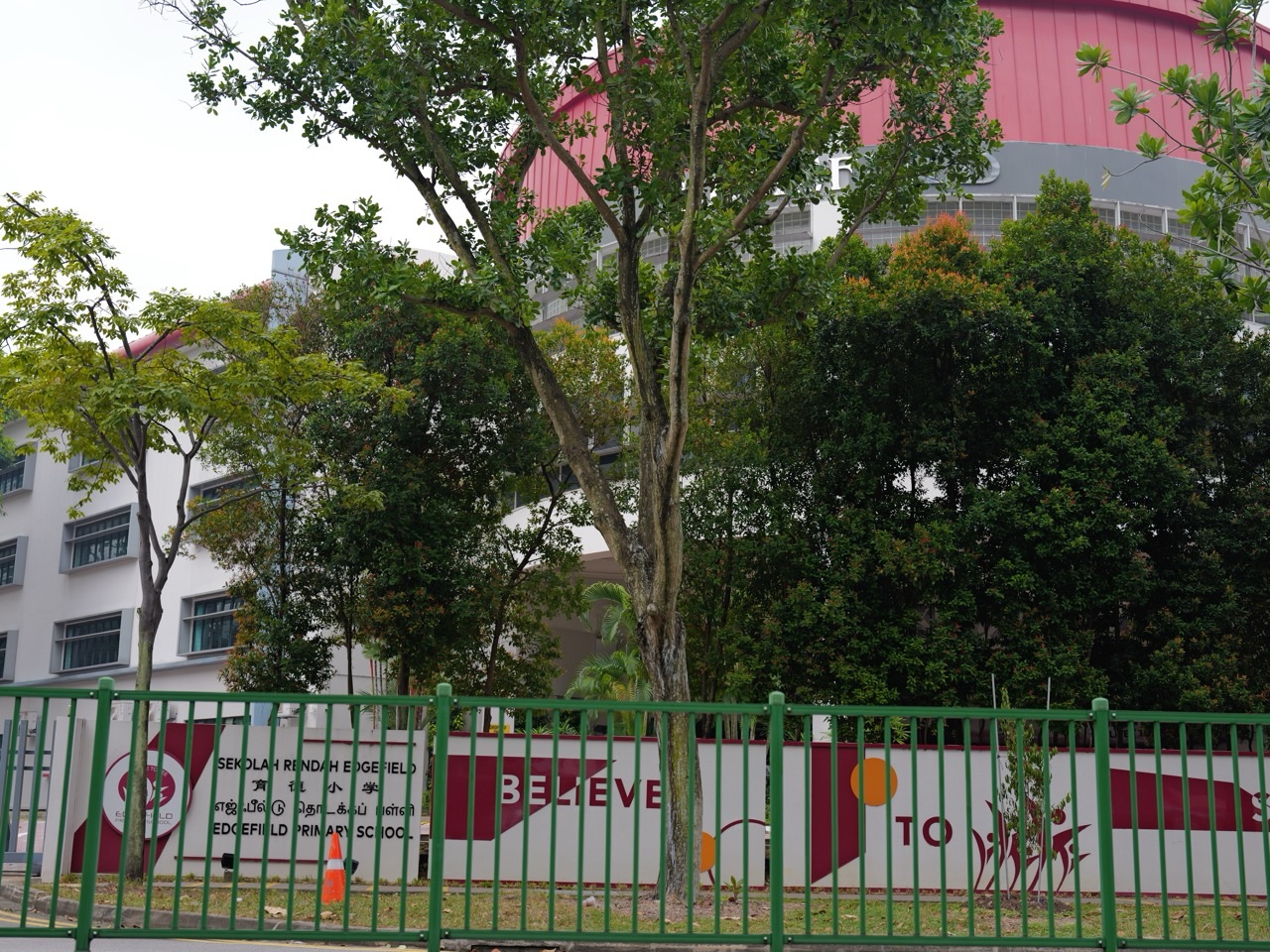
School-based Student Care Centres (SCCs) in Punggol provide supervised after-school care for eligible primary-school pupils, but admission to a primary school does not automatically secure a place in its student care centre. This is the distinction parents should understand before planning work shifts, family transport and a child’s Primary 1 transition. Singapore’s Ministry of Education says that all mainstream primary schools have school-based student care provision, yet specific centres may have more applicants than places and their application arrangements can differ.
For families planning the 2027 school year, another significant change matters: from 1 January 2027, the Ministry of Social and Family Development (MSF) will raise Student Care Fee Assistance (SCFA) income eligibility thresholds. For households of up to four members the gross monthly household-income ceiling increases from S$4,500 to S$6,500. For households of five or more, the per-capita income ceiling increases from S$1,125 to S$1,625. Other SCFA conditions still apply, and subsidy approval does not create an automatic centre place.
This article in Understanding the Education System of Punggol is a practical guide to the system: what an SCC does, how families seek a place, who sets the operating rules, the difference between school-based and community-based programmes, realistic costs, the 2027 subsidies, alternatives if places are full and a child’s safety, wellbeing and schoolwork after lessons end.
Reviewed on 18 October 2026. The 2027 income change is announced but not yet in force. School operators can revise fees, application procedures and vacancies, so use each school’s and centre’s current published notice before making arrangements.
Quick facts parents should know
- Coverage: MOE says every mainstream primary school has school-based student care provision.
- Admission: a primary-school place and an SCC place are separate allocations; the latter depends on centre admission arrangements and space.
- Purpose: supervised care after school, with activities, routines and support that differ by centre; it is not automatically a private tuition course.
- Who operates it: centres may be run by external service providers on school premises, within governance arrangements involving schools and the relevant authorities.
- Fees: vary by centre; ask about full monthly charges, deposits, meals, holidays and late collection, not just an advertised base figure.
- Subsidies: MSF’s SCFA is for eligible children and families using centres registered to administer the scheme.
- From January 2027: SCFA household-income ceiling rises to S$6,500 (up to four members), or S$1,625 per capita (five or more members).
- Application: contact the school and actual operator about admission procedures; separately apply for SCFA through the official MSF/SupportGoWhere process if eligible.
- Backup: if a school centre is full, evaluate community-based SCCs, approved caregivers and another realistic after-school arrangement rather than assuming a school admission guarantees childcare.
The national rules apply throughout Singapore. The Punggol-specific work lies in checking individual schools, household schedules and the child’s journey home across Punggol’s residential precincts.
The first distinction: primary school versus student care
A mainstream primary school provides the child’s formal academic programme and school-day structure. Student care starts when the usual school timetable ends, filling the gap before an authorised caregiver collects the child. The two serve related but different functions.
A parent might receive good news that a Primary 1 registration application to a Punggol school has succeeded. That admission does not mean the school can instantly assign the child a place in a student care group. SCCs have their own supervision capacity, staffing and admission process. Some families will need to submit a separate application, and some may encounter a waiting list.
This separation is important for working parents because the consequences are practical. A child needs a reliable adult handover every school day. If a parent has arranged employment hours on the assumption that student care is guaranteed, a full centre can produce a difficult last-minute change. Plan the child-care system at the same time as the school-choice system.
For the separate school-admission framework, see Understanding the Education System of Punggol — Primary 1 Registration Changes from 2027.
Why Singapore provides school-based student care
Primary-school lessons commonly finish long before many adults finish work. Students may be too young to spend several afternoon hours alone, prepare meals independently or manage transport between activities without support. A supervised after-school environment can bridge this mismatch.
The useful service is not merely a room in which children sit until collection. A good care arrangement can offer predictability: a secure transfer after lessons, time to eat and rest, opportunities to play, and a manageable routine for homework and social interaction. The exact programme may include structured enrichment or outdoor activity, but parents must ask what a specific operator actually provides.
The educational benefit is indirect as well as direct. A child who feels safe, gets appropriate food and experiences a calm afternoon may be better placed to learn the following morning. But student care should not be treated as a guarantee of improved examination grades; quality and suitability depend on actual supervision and the child’s needs.
Where responsibility sits: MOE, school, operator and MSF
Understanding who makes which decision saves families time. MOE governs the mainstream primary-school system and sets the broad school-based student care framework. The school coordinates arrangements on its premises and provides the formal parent communication channels. A student care operator runs the daily care programme and deals with matters such as fees, attendance, pick-up arrangements, group routines and some admission processes.
MSF separately administers the Student Care Fee Assistance framework through eligible registered centres and the official application system. Eligibility for SCFA is not the same issue as eligibility for a school place or for an SCC place. It is possible for a family to qualify financially but still have to wait for a particular school’s limited student care capacity.
If you need an answer about the school’s class timetable, ask the school. If you need an answer about the SCC’s refund policy, daily activities or maximum collection time, obtain the operator’s written terms. If you need an answer about subsidy eligibility, use MSF’s official guidance and appeal processes. Avoid sending all three questions to an informal parent chat.
School-based and community-based centres: two viable models
A school-based SCC operates within the primary school campus. Its most obvious convenience is the transition from the school day to a supervised programme without a separate journey across the neighbourhood. This can reduce the complexity of transport and handover for a young child.
A community-based SCC operates outside the school, potentially in a community facility or residential neighbourhood. It may offer more convenient collection near home or have openings when the school centre is full. But the family needs to understand exactly how the child reaches the centre: escorted walk, transport, parent handover or another arrangement.
Neither format is automatically superior. School-based care may simplify the afternoon but can be inconvenient for a parent who works near the home rather than the school. Community-based care may offer a stable local network but introduce transport and road-crossing risks that must be reviewed.
Compare the two models using the child’s actual route, hours of operation, quality of care and total cost rather than the words ‘school-based’ or ‘community’ alone.
How to seek a school-based SCC place after P1 registration
The typical sensible sequence is to confirm the primary-school place, read the school’s parent information, find the school-based operator and complete that centre’s specified application process. Exact application dates and mechanisms vary, so families should not assume the school automatically registers all new Primary 1 pupils or uses the same form in every year.
Check whether the SCC accepts applications before the P1 orientation, at orientation or through an online system. Ask what the operator does when applications exceed vacancies: for example, whether it has published priorities for families with particular care needs, how a waiting list operates and when a vacant place may be released. Do not rely on a general claim that all working parents are guaranteed priority.
If a centre announces a place, read the contract before paying a deposit. Confirm the start date, whether there is a trial or orientation, required medical information and the conditions for withdrawal. Keep records of communications, application acknowledgements and payments.
Can a school-based centre be full?
Yes. Nationwide provision means the facility exists across the mainstream primary-school network; it does not mean every child who wants a place at a particular time can be accommodated immediately. Capacity depends on the premises, staffing, operational requirements and demand.
MOE has discussed student care waiting lists and alternative arrangements in Parliament, including during March 2026. Parents should therefore treat capacity as a real planning constraint, not as an edge case that can safely be ignored.
If a child is waitlisted, ask for the centre’s precise process and an indicative update method, while understanding that the operator may not be able to guarantee a date. Make a second plan that can work for weeks or months if necessary. A functioning alternative is better than telling a child every day that an uncertain place will probably become available tomorrow.
What to ask before joining a waiting list
Request the written admission policy, rather than assuming first-come-first-served or priority for a particular employment category. Check whether the family must periodically renew interest, whether any deposit is required, and how offers are issued and accepted.
Ask whether waiting-list updates are tied to a particular school term, whether families are notified electronically, and how much time they have to respond. A deadline can be missed if the adult who normally handles school messages is travelling or working a shift.
Avoid paying an unofficial intermediary who claims to be able to secure student care admission. Use the school or named operator and verify any payment through its official channels.
Student care for a Punggol Primary 1 child: the first weeks
Entering Primary 1 is a substantial change even for a child who previously attended a full-day preschool. The child must learn a new classroom, new routines, unfamiliar peers and often a more independent lunch or snack schedule. Adding a student care group extends the day further.
Do not judge the transition by whether the child instantly enjoys every afternoon. Some children are initially tired, quiet or irritable when collected. Ask the supervisor about attendance, meals, friendships, rest time and any incidents. Compare these observations with what the child says at home.
A sensible transition might involve an early bedtime, practising where to meet the student care staff, identifying one trusted adult to approach for help and placing a simple written card in the bag showing approved collection arrangements. The aim is to build security before expecting independent study habits.
What should a typical student care afternoon contain?
Parents should ask whether the programme provides a balanced sequence of meal or snack, rest, personal organisation, supervised homework time where offered, play, social opportunities and collection. The centre’s actual schedule is what matters; there is no basis to claim that every Singapore student care centre provides the same curriculum.
A child who finishes homework during student care may have more family time at home. Yet completing homework quickly is not the only mark of good care. Children also benefit from movement, conversation, creativity and appropriate unstructured play after a demanding morning.
Look for a routine that matches the child’s age. A Secondary 2 student attending an eligible community-based SCC would have different needs from a six- or seven-year-old in a school-based Primary 1 setting. One standardised homework target does not suit all children.
Student care is not automatically tuition
Student care and tuition can overlap in activities, but they have different primary purposes. The SCC is responsible for after-school supervision and its advertised programme. A tuition provider offers specific teaching or academic intervention. Some centres may offer optional enrichment, but that should not be assumed without checking the contract.
A family wanting support for reading, Mathematics or homework organisation should first ask what the SCC means by ‘homework supervision’. Does staff ensure the child starts the task? Check every answer? Help with instructions? Inform parents if work is incomplete? No centre should be presumed to provide individual subject tutoring without advertising and staffing for it.
For many younger children, the priority is healthy routine. Good sleep, reading for pleasure, manageable schoolwork and positive adult relationships create a sounder foundation than packing every afternoon with additional academic drills.
What if a child has learning differences or additional support needs?
Families should be explicit about what support the child requires without assuming either automatic exclusion or guaranteed specialist provision. Ask how the operator handles medication-related instructions, sensory needs, communication challenges, emotional distress, food restrictions and safe transitions between activities.
The school’s learning-support arrangements may not be identical to the SCC operator’s staff training or supervision model. Permission to share information and a clear adult-to-adult handover can help avoid misunderstandings. Agree on who the centre should contact first if a child is overwhelmed or unwell.
Where a child needs specialist care, investigate the availability and suitability of relevant services, including Special Student Care Centres where applicable. Their eligibility, operations and funding rules are different from ordinary SCCs and should not be copied from the mainstream student care subsidy tables.
Student care safety: the questions parents should not skip
A student’s physical and emotional safety matters more than an impressive activity brochure. Ask about the authorised collection list, identity checks at pick-up, what happens if nobody arrives on time and how the centre records arrival and departure.
Ask how staff handle injuries, bullying concerns, lost children, severe weather, allergies, emergency medication, toilet access and incidents requiring parental notification. Look for specific written procedures and a clear point of contact. General assurances such as ‘we take safety seriously’ are useful only when they translate into verifiable practice.
Confirm what happens during a school emergency or unexpected dismissal. Does the child report to the centre as usual? Who tells the centre if the pupil is absent? A parent should not rely on the child alone to communicate changes to a collection plan.
Who is allowed to collect the child?
Many incidents can be prevented by precise handover instructions. Provide current names and contact details of approved collectors, and review the operator’s verification procedure for unfamiliar relatives or household helpers.
Discuss arrangements for divided caregiving or unusual custody instructions with the school and operator using proper documentation where required. Do not assume that a message from an unknown number, a verbal claim of kinship or another parent’s goodwill is adequate authorisation.
Punggol families using different adult collectors across weekdays should give the child a simple, consistent instruction: if the expected person is not there, stay with the supervising adult and ask the centre to contact the authorised caregiver.
Meals, allergies, rest and the child’s wellbeing
School lunch arrangements do not necessarily cover all the hours of an SCC day. Ask which meals or snacks are provided, what is included in the fee, how food is stored and how allergies or dietary requirements are handled. If the child must bring food, clarify food-safety and storage expectations.
Young students may have relatively little time to eat at school or may find a noisy care room tiring. A child who comes home exhausted does not necessarily need more revision; the immediate issue might be insufficient rest, a missed snack, poor hydration or an overpacked afternoon.
Check opportunities for quiet activity and how the centre adapts for age differences. Good supervision includes helping children recover from the ordinary demands of the school day.
The full cost: fees are more than one advertised figure
In July 2026, MSF reported that most school-based student care centres charged between S$220 and S$450 per month. That national range is useful for budgeting, but it is not a verified fee quotation for any named Punggol centre, and actual charges can vary.
Before accepting a place, request the current fee schedule in writing. The family budget may include a monthly care fee, administrative or registration charge, deposit, meal charges if separate, holiday programme charges and penalties for late collection. Check whether charges change during school holidays when care hours can be longer.
Ask what happens during a planned closure, public holiday or school break. Some parents assume a monthly fee covers full-day holiday supervision every day, but this should be confirmed with the operator. A cheaper base price may not be cheaper over the whole year.
SCFA: the government subsidy for eligible student care families
Student Care Fee Assistance (SCFA) is an MSF scheme supporting eligible children attending registered student care centres. The general SCC scheme applies to children aged 7 to 14 in the year subsidies begin, corresponding broadly to Primary 1 through Secondary 2. This age range does not mean a school-based primary SCC ordinarily serves secondary students; it describes the wider subsidy framework including qualifying community-based centres.
SCFA is means-tested. Beyond the household-income threshold, eligibility involves the child’s citizenship or residency conditions, parents’ employment requirements and attendance at a centre that administers SCFA. MSF’s published criteria include that a child be a Singapore Citizen or qualifying Permanent Resident with at least one immediate Singapore Citizen family member in the same household, and generally require both parents to work at least 56 hours per month, subject to the scheme’s applicable provisions.
A family should not assume that being within the income threshold alone makes it automatically eligible. Apply through the official route and confirm the final decision.
October 2026 versus January 2027: the income thresholds side by side
Until 31 December 2026: for households with four or fewer family members, the general SCC SCFA gross monthly household-income ceiling is S$4,500. For households with five or more members, the relevant gross per-capita ceiling is S$1,125 per month.
From 1 January 2027: the ceilings increase to S$6,500 and S$1,625 respectively. MSF has also revised the income bands and subsidy tiers within the enlarged eligibility group.
This is an important difference for a Punggol family planning care for a child entering Primary 1 in 2027. A family that exceeds the 2026 ceiling may fall within the 2027 ceiling, provided all other requirements are met. Do not use a 2025 article or an outdated subsidy chart to decide eligibility for January 2027.
The authoritative source is MSF — Student Care Fee Assistance, which publishes the current and revised income tiers.
Worked SCFA eligibility examples
Example A — Four-person household. Two working parents live with two children, making four household members under the relevant family definition. Their combined gross monthly income for eligibility assessment is S$5,200. Under the general 2026 GHHI ceiling of S$4,500, that amount is above the threshold. From January 2027, it is below the new S$6,500 ceiling. The family may be within the revised income range, but must still satisfy the work, residency, child-age, centre and administrative requirements.
Example B — Six-person household. An eligible household of six has an assessable combined gross income of S$8,400 per month. Its per-capita income is S$8,400 divided by six, which equals S$1,400. This exceeds the general SCC 2026 PCI ceiling of S$1,125 but is within the revised 2027 PCI ceiling of S$1,625. Again, this is an income-screen illustration, not a guarantee of final approval.
Example C — A family already below the old threshold. Two working parents and one child have assessable gross household income of S$2,000. They may already be within the old ceiling, but the actual subsidy depends on the relevant tier, fee structure and all remaining criteria. The 2027 review can change the applicable tier; the family should consult the current MSF table.
These fictional examples illustrate the arithmetic of thresholds. The official household-member definition and means-testing system determine how a real family’s circumstances are counted.
How much does SCFA pay?
SCFA is not a blanket promise that government pays all student care costs. MSF’s published scheme provides up to 98% subsidy for the relevant lowest-fee bands, with a maximum stated subsidy of S$290 per child per month under the ordinary SCC schedule, depending on household income and the centre fee. Actual support varies by tier.
For illustration, suppose a household qualifies for a maximum monthly subsidy of S$290 and the relevant centre fee is S$295. The theoretical difference is S$5 before any separately chargeable items, assuming the full S$290 is approved and the centre’s fee qualifies as stated. This is not a quotation for a Punggol SCC and does not establish the amount any particular child will receive.
If the centre charges more than the maximum covered amount, the family may need to pay the difference plus any permitted ancillary charges. Review the provider’s fee statement and the issued subsidy approval together, rather than relying on a general online calculator.
What is the one-time Start-Up Grant?
MSF also publishes a one-time Start-Up Grant of up to S$400 per eligible child under SCFA, subject to its criteria. This may help with upfront costs associated with beginning student care. The availability and permitted expenses should be checked with MSF and the administering centre.
A family should never assume that a specific deposit, transport expense or holiday enrichment charge will necessarily be paid by a grant. Ask the centre what the grant covers, how it is claimed and whether the family must pay first and receive assistance later.
Treat a start-up grant separately from the recurring monthly subsidy. Mixing them can make a monthly budget look more affordable than it truly is.
How to apply for SCFA
Use the official MSF guidance and SupportGoWhere’s SCFA application route. MSF explains that families may apply as early as six months before the intended enrolment, allowing assessment to proceed before the student care start date. Approval may be in principle until centre enrolment is confirmed.
Prepare the details required by the portal, including identity and household-income information. The official assessment process may verify information through government systems and request additional documentation where needed. Keep the application acknowledgement and respond to requests within the stated deadlines.
A subsidy application and a centre admission application are two distinct steps. A family should work on both. A positive subsidy eligibility result does not force a full SCC to admit an additional child.
What if the subsidy is not enough?
MSF’s guidance explains that families having difficulty with the remaining monthly co-payment may seek an appeal through the student care centre, supported by information on changed circumstances. Appeals are considered case by case; submitting an appeal is not a guarantee of a higher subsidy.
A family whose income, employment or household composition changes should check whether a reassessment is necessary. Do not guess how a new shift pattern, temporary unemployment or a relative moving in will affect household calculations.
If there is a gap between eligibility and the centre’s collection deadline, speak directly to the authorised operator about acceptable payment arrangements. The child should not be asked to carry the anxiety of adult finances into school.
Student care subsidy and other school financial assistance are different
School fees, textbooks, uniforms, meals and transport may be supported through different government or school schemes. MOE financial assistance is not automatically the same as MSF Student Care Fee Assistance. A child may qualify for one programme without qualifying for another.
For overall school expenses, consult Punggol Education System — School Fees in Singapore. For SCC affordability, use the SCFA information and centre operator’s invoice.
Parents should budget separate categories for formal schooling, student care, travel, meals and optional enrichment. Clear categories make it easier to identify which official assistance programme may apply.
What happens during school holidays?
A school-based SCC may continue to offer care outside regular term-time lessons, but the hours, operating dates, activities, holiday programme conditions and fees are decided under its actual arrangements. Parents cannot infer year-round full-day coverage simply from a term-time contract.
Check the December and June holiday schedule, March and September breaks, public holidays, staff training days and school-specific closure arrangements. A centre might require advance booking for holiday programmes or apply different meal and activity schedules.
If a parent works shifts, ask specifically about earliest drop-off and latest collection for each type of day. General statements such as ‘open on weekdays’ may not answer the family’s real coverage problem.
Homework, screen time and play: what balance works?
Student care should support the child, not extend school into an unbroken academic marathon. Ask how long homework time lasts, whether children can ask for clarification and what happens if tasks remain incomplete at collection.
A centre should communicate realistically with parents. ‘Homework supervised’ might mean a quiet place and adults encouraging children to work, not checking every answer. A child with recurring difficulty in reading or Mathematics may need a separate conversation with teachers or targeted support.
Ask about digital devices: when children may use tablets, what content is permitted, how photographs are handled and whether free time includes non-screen alternatives. Rest and real social interaction deserve space in a school-age child’s afternoon.
Choosing a centre in Punggol: check the route, not just the address
Punggol’s residential precincts, Waterway routes and transport connections affect family routines. A school-based centre at Edgefield Primary, Greendale Primary, Horizon Primary, Mee Toh School, Northshore Primary, Oasis Primary or Punggol Cove Primary would be associated with that particular school environment. These examples identify local schools, not verified vacancies, operator assignments or fee quotations.
A centre near home may make evening collection easier; one inside the school reduces the afternoon transfer. Parents commuting through Punggol MRT or Punggol Coast may favour a different arrangement from parents who collect by foot near their housing block.
Walk the journey at the actual collection time. Check sheltered routes, crossings, lighting, rainy-weather options, safe public meeting points and whether the child will be accompanied. A convenient map pin is not the same as a safe daily handover.
Worked family decision: two working parents and a P1 child
Consider a fictional household in Punggol. One parent starts work early and the other normally arrives home around 6.30pm. Their child has a confirmed P1 school place but the school’s student care centre has not yet confirmed admission.
The wrong decision is to tell employers that the centre place is secured. The family instead asks the operator for the status of its application and precise collection rules. It also contacts one community-based alternative, checks the transfer arrangement and obtains a written quote. Meanwhile, the parents identify a trusted approved caregiver for any days that neither centre can cover.
The family checks SCFA eligibility against the 2027 threshold if student care will begin in January 2027. A subsidy application may be prepared independently of admission. Once a place is confirmed, the family rehearses the child handover and documents who can collect.
The result is a plan built around confirmed information, with a contingency that does not rely on predicting when the waitlist will move.
Worked family decision: the child who becomes exhausted
Another Punggol child attends school-based care every weekday. Homework is usually complete, yet the child cries during evening collection and falls asleep before dinner. The parents initially consider adding more structured enrichment to ‘help the child cope’.
A better first investigation concerns the child’s daily load. The family asks staff how much time is spent sitting, whether the child eats the afternoon snack, when physical play occurs, how much rest is available and whether peers or noise create stress.
Parents can then discuss a gentler routine: an earlier bedtime, quieter activities or a shorter care day on some afternoons if family circumstances allow. Student care should make family life workable, not simply maximise hours spent in institutions.
A child with allergies: what practical arrangements should exist?
Imagine a pupil with a documented food allergy. Parents should not assume that handing over an old form to the school automatically transfers every critical detail to an externally operated SCC. With appropriate consent and documentation, the family should confirm that relevant centre staff know the allergy, emergency contact, food plan and response protocol.
Ask who prepares snacks and who oversees food brought from home. Clarify whether the centre can safely accommodate the child’s needs and what staff are expected to do if there is accidental exposure.
Parents should not share unnecessary medical records indiscriminately. Share the relevant instructions securely with the authorised parties and keep the details current.
What if a student care operator changes?
Because school-based centres may be operated by service providers, an operator may occasionally change. A family should not assume the same staff, fees, contract and activities will continue indefinitely. MOE has addressed governance and minimising disruption if a centre closes abruptly, underlining the importance of contingency planning.
When changes are announced, ask for the transition timetable, new contact details, any changes to charges or staffing and how student information is transferred appropriately. Keep copies of contractual terms and payment records.
For the child, continuity matters more than the administrative label. A familiar adult, clear routine and accurate handover of support needs can ease a change of operator or room.
A practical comparison table to build before committing
Instead of choosing on a single fee, make a short comparison of the centres realistically available to the family. For each one, note location, admission status, hours on school days, holidays, monthly and upfront cost, SCFA administrator status, meal arrangements, handover process, staff communication and child’s response to the environment.
Mark each entry as confirmed, unconfirmed or not applicable. A blank entry is not a reason to assume the best. If two centres seem equally suitable, the total cost and daily logistics may decide the issue.
Most importantly, write down the earliest date by which the family needs certainty for employment and other caregiving arrangements. That transforms an open-ended worry into a manageable planning task.
A four-week family preparation sequence
Week 1 — Establish the facts. Confirm the primary-school place, identify the school-based centre and locate the current application instructions. Ask about deadlines, vacancies and centre admission criteria. Do not confuse school admission with centre admission.
Week 2 — Inspect the routine. Review the operating hours, collection rules, safety procedures, holiday service and fee schedule. If possible under the operator’s arrangements, attend an orientation or speak with staff about a typical afternoon.
Week 3 — Review affordability and alternatives. Check MSF’s SCFA thresholds for the correct calendar year and whether the provider administers SCFA. Prepare a community-based backup and confirm how the child would reach it safely.
Week 4 — Rehearse transition and contingency. Update authorised collectors and emergency contacts, practise the child’s after-school meeting point, clarify meal needs and agree on what to do if the child is absent, unwell or the normal collector is delayed.
This sequence can be done before the first school day and adjusted to the operator’s actual dates. It is a planning framework, not a government-prescribed application schedule.
Mistakes to avoid
- Assuming successful Primary 1 registration also guarantees a student care place.
- Assuming ‘available at every school’ means unlimited places at every centre.
- Confusing SCC fees with regular MOE school fees or optional tuition charges.
- Using the 2026 SCFA income ceiling for a January 2027 enrolment.
- Assuming a family qualifies for the full 98% subsidy merely because it is below the overall income ceiling.
- Applying for SCFA without checking whether the chosen centre administers the scheme.
- Assuming a subsidy approval guarantees centre admission.
- Comparing quoted fees without checking deposits, meals and holiday charges.
- Forgetting about collection deadlines, approved collectors and late-pickup arrangements.
- Expecting student care staff to provide individual tuition unless that service is explicitly included.
- Choosing an off-campus programme without checking safe transfer from school.
- Leaving the child’s allergy, safety or communication requirements unresolved until the first day.
- Making a major employment change based on an unconfirmed waiting-list prediction.
Frequently asked questions
Does every primary school in Punggol have a student care centre?
MOE says every mainstream primary school has school-based student care provision. Check the school’s current website and operator for the specific arrangements, hours and available places.
Is a student care place guaranteed when my child enters P1?
No. Primary school admission and school-based student care admission are separate. Ask the centre about vacancies, application and priority procedures.
Is school-based student care compulsory?
No. It is an after-school care option for families that need or choose it, not a compulsory part of the mainstream primary curriculum.
Must my child attend the school to use its school-based centre?
School-based centres are associated with pupils at the host school. Ask the operator about its specific admission arrangements. Community-based programmes can serve a different catchment.
What if my preferred school-based SCC is already full?
Ask about the waiting-list process and assess a community-based SCC or another reliable supervised arrangement. Do not leave the child without a confirmed daily after-school plan.
How much does student care cost per month?
Fees differ by provider. MSF reported a national school-based majority range of S$220–S$450 in 2026, but get the current quotation from the specific centre.
Will SCFA eligibility change in 2027?
Yes. From 1 January 2027, the general SCFA ceiling rises to S$6,500 gross monthly income for households with four or fewer members or S$1,625 per capita for households with five or more members, subject to other eligibility rules.
Do all SCFA-eligible families pay only S$5 monthly?
No. The S$5 illustration refers to a particular lowest-income subsidy and fee scenario. The remaining payment varies with the approved subsidy, income tier and centre’s actual charges.
Can I apply for subsidies before I have a confirmed care place?
MSF permits advance applications under its procedures and may give in-principle approval before the final centre enrolment. Follow the official SCFA instructions and confirm the centre’s status.
Does student care provide tuition and guarantee completed homework?
Not automatically. Ask what the operator actually provides. Supervised homework time is not the same as individual tutoring or a guarantee that every answer is correct.
Does school-based student care operate every school holiday?
Holiday arrangements, opening dates and fees vary. Read the individual centre’s operating calendar and contract.
What if my child needs disability-related or specialist care?
Discuss the child’s requirements with the school and provider. Special Student Care Centres and their subsidy arrangements form a distinct pathway that requires separate eligibility checks.
Official sources and related reading
- MOE — School-Based Student Care Centres
- MOE — September 2026 Reply on Access to School-Based SCCs
- MOE — Primary Students on Waiting Lists for Student Care Places
- MOE — Governance of Student Care Centres
- MSF — Student Care Fee Assistance and January 2027 Changes
- MSF — 2026 Committee of Supply: SCFA Improvements
- SupportGoWhere — Official SCFA Application
- MSF — 2026 SCC Operator and Fee Context
- Punggol Education System — Primary 1 Registration Changes from 2027
- Punggol Education System — Compulsory Education
The simplest reliable advice: confirm three things separately before your child starts school: the primary-school place, the student care place, and the subsidy status if applicable. Then build the daily handover, safety and family timetable around what has actually been confirmed, not around a hopeful assumption.


