
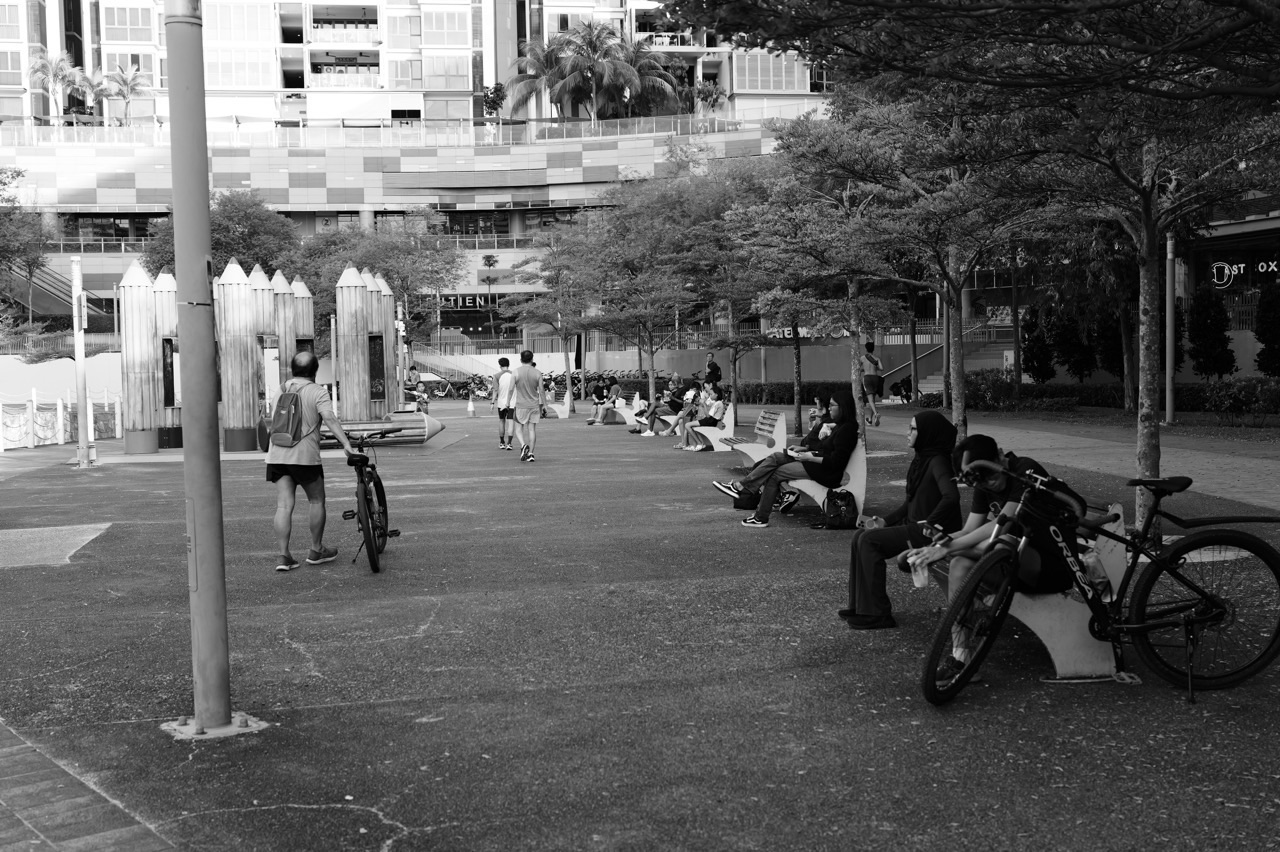
The top 10 things to do in Punggol for seniors are a visit to Punggol Waterway Park’s Therapeutic Garden, a short waterside walk, browsing Punggol Regional Library, a meal at One Punggol, intergenerational board games at the Comics & Games Library, an open-section Heritage Trail walk, a comfortable Waterway Point movie, a Punggol Coast food-and-mall visit, a family photo-and-memory walk, and a pre-arranged therapeutic horticulture programme where eligible.
This is a practical guide to senior-friendly things to do in Punggol, not a claim that every older adult wants the same pace. Many seniors are independent cyclists and walkers; others value short journeys, seating, accessible paths or frequent rest. The right outing follows the individual’s interests and comfort. Short public trips can offer conversation, intellectual interest and familiar routine without pressure to reach distant destinations.
The most reliable starter cluster is Punggol MRT → One Punggol or Waterway Point → a nearby open public route. Punggol Coast MRT is a separate cluster for newer food, mall, comics library and the first currently open 400 metres of Punggol Heritage Trail. Do not promise that all pathways, lifts, benches or exhibitions are available at a particular moment. Check the current operator details and specific route with the people actually going.
This 2026 article avoids a common mapping mistake: Punggol Waterway Park, which contains a verified Therapeutic Garden, is not the same as Punggol Park in the Hougang area. It also avoids recommending Punggol Point Park as an open attraction while upgrading closure affects it from August 2026 with completion expected late in 2027. The practical ten below use confirmed operating categories while being explicit about what still needs checking.
Quick answer: which of the ten should you choose?
| Who or what | Best starting choice | Practical condition |
|---|---|---|
| Quiet garden | Punggol Waterway Therapeutic Garden | Short, self-paced outdoor visit |
| Gentle exercise | One section of Waterway Park | Turnaround and rests |
| Reading | Punggol Regional Library at One Punggol | Indoor and calm |
| Local food | One Punggol Hawker Centre | Choose familiar dietary needs |
| Family games | Comics & Games Library | Entry and space rules |
| Town history | Open 400m Heritage Trail section | Check actual accessible route |
| Indoor film | Shaw Theatres Waterway Point | Showtime and seating check |
| Food and browse | Punggol Coast Mall and Hawker Centre | Different station cluster |
| Family memory activity | Short photo and storytelling walk | No long trek required |
| Organised nature group | Therapeutic horticulture programme | Programme and eligibility check |
These are ten alternatives, not a route linking ten venues. Look first at the activity that matches the people attending, next at its exact geographic cluster, and finally at today’s access or admission conditions. Central Punggol, Punggol Coast and SAFRA are separate travel decisions; a short comfortable visit should not spend most of its time transferring between them.
Which 2026 details are confirmed?
NParks confirms Punggol Waterway Park and its Therapeutic Garden as real public assets. JTC identifies the current Punggol Coast food, mall and opened Heritage Trail segment. NLB provides current information for regional-library and Games Library services. SAFRA and the Waterway Point operator provide their own facilities and notices. These are more appropriate sources than an undated photograph. Any claim about an individual seat, temporary session, opening on a special date, tenant or promotion must be rechecked against the operator.
Pay particular attention to closures and phases. Punggol Point Park is subject to upgrading closure from August 2026 with anticipated completion in late 2027. JTC reports only the first 400 metres of the Heritage Trail as currently opened, despite its larger intended final route. Even at a public park advertised as open 24 hours, weather warnings and section works can change a safe visitor’s plan.
How we rank activities for actual visitors
Match the person, not the stereotype
Age itself does not determine which activities are suitable. Some seniors prefer longer and more vigorous recreation than their adult children; others need a stable seat every few minutes. Ask the visitor whether they want quiet, company, learning, walking, an indoor outing or a meal. A good guide does not turn comfort needs into an identity or make assumptions about what an older person can do.
Use one meaningful transport anchor
A workable plan begins with the person’s actual route. Central Punggol’s MRT, Waterway Point, One Punggol and waterway sections are relatively coherent destinations. Punggol Coast MRT provides access to a distinct district. Coney Island entrances and northern coastal locations can mean a longer approach, uneven paths or more exposure; they should be optional choices for people who actively want those conditions.
Be precise about accessibility and admission
Public accessibility needs precise language. A venue may have lifts and accessible toilets, but a particular garden route, maintenance corridor, seating area or connecting pavement can still pose difficulties. Waterway Point’s official visit page lists wheelchair-loan service, yet actual availability and collection conditions should be checked. Call the operator for specific assistance rather than equating a broad accessibility claim with proof that every route works today.
Count time and money realistically
Travel comfort includes time spent arriving and leaving, not just the attraction. Leave margin for moving from station platforms to lifts, finding restrooms, using escalators if appropriate and walking from a transport stop to the activity. Avoid scheduling several destination clusters in one afternoon solely because each has an impressive name. A short successful trip is more repeatable than a tiring tour.
Choose the safest weather response
Heat, lightning and rain change what a public-space visit demands. Choose a comfortable time and check NEA’s myENV information before leaving. A 24-hour park opening does not make an outdoor bridge a safe place during a thunderstorm. For a visitor sensitive to heat, make an indoor venue the primary destination and keep the garden as an optional brief addition.
Keep freedom to shorten or change the outing
A meaningful older-adult outing can involve friendship and personal choice, not only health goals. A familiar film, a shared childhood food story, a book recommendation or a low-key game can be as satisfying as a long scenic walk. Ask permission before taking photographs or sharing personal memories online. Treat an accompanying older person as an equal participant in the day’s decisions.
Top 10 Punggol activities, explained
1. Visit the Therapeutic Garden at Punggol Waterway Park
Where: Near Carpark A in Punggol Waterway Park. Best for: Visitors who enjoy planting, sensory gardens and unhurried outdoor observation.
The useful fact and reason to visit
NParks identifies a 900-square-metre Therapeutic Garden at Punggol Waterway Park, near Carpark A, opened in May 2020 and listed as open 24 hours. Its features include a communal planter, fitness area, wellness zone with sensory plants and views toward the waterway. This is a specific existing place, not a generic ‘green corner’ invented for a senior itinerary.
An attraction earns a place in this guide only if the visitor has a reason to choose it over merely staying at home or visiting another part of the island. The real question is whether visit the therapeutic garden at punggol waterway park provides the right mix of engagement, comfort and reachable public space. In practice, a modest, well-judged visit often has more value than an impressive-sounding itinerary with several difficult transfers.
How to make this activity work in Punggol
Choose a cooler time, verify the precise accessible approach and plan a short stay before entering a long waterfront route. Invite the visitor to select two planting details, sit if appropriate and decide whether to continue. The garden is a natural start for a self-paced outing because it has a clear purpose without requiring an athletic distance or a paid programme.
Before leaving, identify the exact entrance, the first point where the visitor can rest or regroup, and the last time the group should turn back. Check whether the attraction is actually operating today, not simply listed in a destination directory. When an event or facility has restricted entry, booking and eligibility are part of the experience; they cannot be solved by arriving early and hoping for an exception.
Worked visit: how a real day could unfold
A grandparent and adult child visit for twenty minutes. They notice differences in leaf texture and plant fragrance, talk about plants once grown at home, and then decide to have a drink nearby. The family does not treat the visit as incomplete because they did not walk every park zone.
Notice what changes the outcome here: the group has a single main objective and gives itself permission to adjust. The visit is not spoiled by taking a break, finishing early, picking a different meal or declining an additional stop. Instead of measuring success by the number of attractions reached, measure whether the participants actually enjoyed a meaningful period together or completed the modest activity they selected.
What can fail, and how to avoid it
An official garden location does not promise a staff-led horticulture session. A programme has separate registration and dates. Paths may also change with maintenance, and midday sun can make a theoretically short walk uncomfortable. The visitor’s needs determine how long to stay. Avoid picking plants, using equipment against instructions or blocking access.
A contemporary local guide should not turn temporary venue information into a permanent guarantee. Staff advice, on-site barriers, safety rules, capacity restrictions and current official alerts take precedence over a saved itinerary. When a claim about access is uncertain, verify it or select a conservative alternative. Do not improvise access to a closed attraction because an older webpage or social media image appears to show it open.
Compare this choice with its closest alternative
Choose the garden over a long park walk when the goal is quiet sensory engagement with a limited distance. Choose the library if the weather is oppressive or seating is required for much of the visit. The garden can be a destination on its own, rather than a minor stop before an unnecessarily strenuous route.
Make the experience personally valuable
Ask the visitor what a particular plant reminds them of: a family garden, a market, a childhood home or a favourite dish. The question invites memory without forcing a biography. On a later visit, notice the same planter again and discuss seasonal or maintenance changes. Avoid interpreting ordinary conversation as a therapeutic intervention.
For the operative detail, use the linked primary authority or venue reference immediately before your visit. It may confirm a facility’s identity and usual opening pattern while still leaving the day’s session, price, accessibility or admission available for separate checking. A reliable guide is explicit about that difference rather than treating every marketing description as a live availability feed.
2. Take one gentle waterway bridge walk
Where: Accessible public sections of Punggol Waterway Park near Punggol MRT and Waterway Point. Best for: People who want light exercise, fresh air and a clear opportunity to stop.
The useful fact and reason to visit
NParks describes Punggol Waterway Park as a 24-hour park with four zones. The opportunity for older visitors is not necessarily a complete circuit. A short public segment offers water, greenery, railings and everyday town scenery, with the advantage that central Punggol has food, toilets and rail nearby.
An attraction earns a place in this guide only if the visitor has a reason to choose it over merely staying at home or visiting another part of the island. The real question is whether take one gentle waterway bridge walk provides the right mix of engagement, comfort and reachable public space. In practice, a modest, well-judged visit often has more value than an impressive-sounding itinerary with several difficult transfers.
How to make this activity work in Punggol
Begin at an easily recognised landmark, choose one safe bridge or seating point as the turnaround, and plan a route back toward an indoor stop. Check the walking surface and current works. If anyone uses a walking aid or wheelchair, confirm the actual ramps or lifts before assuming the entire route is barrier free. Pause before fatigue becomes obvious.
Before leaving, identify the exact entrance, the first point where the visitor can rest or regroup, and the last time the group should turn back. Check whether the attraction is actually operating today, not simply listed in a destination directory. When an event or facility has restricted entry, booking and eligibility are part of the experience; they cannot be solved by arriving early and hoping for an exception.
Worked visit: how a real day could unfold
Two friends who normally meet only for lunch agree to walk ten minutes first, sit and look at the water, then return. They enjoy talking while moving but preserve energy for the meal. The plan provides activity without making either person prove a fitness standard.
Notice what changes the outcome here: the group has a single main objective and gives itself permission to adjust. The visit is not spoiled by taking a break, finishing early, picking a different meal or declining an additional stop. Instead of measuring success by the number of attractions reached, measure whether the participants actually enjoyed a meaningful period together or completed the modest activity they selected.
What can fail, and how to avoid it
Crowds, shared cyclists, humidity and sudden storms may make a familiar path less comfortable. Keep safe distance from the water edge and avoid pausing in active-mobility lanes. A rainy night is not the same experience as a cooler daytime walk. Check weather and return transport rather than extending until somebody struggles.
A contemporary local guide should not turn temporary venue information into a permanent guarantee. Staff advice, on-site barriers, safety rules, capacity restrictions and current official alerts take precedence over a saved itinerary. When a claim about access is uncertain, verify it or select a conservative alternative. Do not improvise access to a closed attraction because an older webpage or social media image appears to show it open.
Compare this choice with its closest alternative
Choose this over a Coney Island adventure when a flatter, shorter and easier-to-exit route is important. Choose the therapeutic garden if the visitor would rather remain in one small planted setting. Both are meaningful; the correct choice depends on preference and stamina, not an abstract fitness ranking.
Make the experience personally valuable
Use one bridge for a gentle observation game: identify three reflections or discuss how the town has changed since the visitor first knew Punggol. Taking one photograph from a stable public viewpoint may create a keepsake. The conversation, rather than the total steps, is the central reward.
For the operative detail, use the linked primary authority or venue reference immediately before your visit. It may confirm a facility’s identity and usual opening pattern while still leaving the day’s session, price, accessibility or admission available for separate checking. A reliable guide is explicit about that difference rather than treating every marketing description as a live availability feed.
3. Browse books at Punggol Regional Library
Where: Punggol Regional Library, One Punggol, 1 Punggol Drive. Best for: Independent readers, grandparents with family, and people who want a calm indoor afternoon.
The useful fact and reason to visit
Punggol Regional Library offers a public indoor environment where visitors can read, browse and share books without purchasing an admission ticket for ordinary browsing. One Punggol gives a recognizable civic hub and access to food. A library is especially useful for a low-pressure visit when weather is unpredictable or an older person would like to remain in a comfortable indoor setting.
An attraction earns a place in this guide only if the visitor has a reason to choose it over merely staying at home or visiting another part of the island. The real question is whether browse books at punggol regional library provides the right mix of engagement, comfort and reachable public space. In practice, a modest, well-judged visit often has more value than an impressive-sounding itinerary with several difficult transfers.
How to make this activity work in Punggol
Choose a section connected to the visitor’s real interests—history, gardening, cooking, travel, fiction or local culture. Allow independent browsing instead of selecting books on their behalf. Check current NLB opening hours and any particular service or room access. Follow quiet-space and food rules, then move to a social area for longer conversations.
Before leaving, identify the exact entrance, the first point where the visitor can rest or regroup, and the last time the group should turn back. Check whether the attraction is actually operating today, not simply listed in a destination directory. When an event or facility has restricted entry, booking and eligibility are part of the experience; they cannot be solved by arriving early and hoping for an exception.
Worked visit: how a real day could unfold
An adult child asks their parent to recommend a childhood book or a genre they never had time to explore. They spend half an hour looking through shelves, then discuss the choice over lunch. The older visitor makes a meaningful decision instead of simply being escorted from place to place.
Notice what changes the outcome here: the group has a single main objective and gives itself permission to adjust. The visit is not spoiled by taking a break, finishing early, picking a different meal or declining an additional stop. Instead of measuring success by the number of attractions reached, measure whether the participants actually enjoyed a meaningful period together or completed the modest activity they selected.
What can fail, and how to avoid it
Busy study areas, noise restrictions or limited seating may affect a visit. Not every displayed workshop is open to walk-ins, and study zones can have different hours from other floors. Check if a particular accessible seat or assistance service is necessary; do not promise availability solely because the building is open.
A contemporary local guide should not turn temporary venue information into a permanent guarantee. Staff advice, on-site barriers, safety rules, capacity restrictions and current official alerts take precedence over a saved itinerary. When a claim about access is uncertain, verify it or select a conservative alternative. Do not improvise access to a closed attraction because an older webpage or social media image appears to show it open.
Compare this choice with its closest alternative
Choose the library over an outdoor park when rain, heat or mobility concerns make walking unpleasant. Choose the Comics & Games Library for a more playful intergenerational meeting in the Punggol Coast district. Both are library environments, but one suits quiet general browsing and the other features a specialist comics-and-games collection.
Make the experience personally valuable
Build a recurring reading exchange: one person chooses a short book or illustrated article; the other recommends a topic from lived experience. The point is not to judge reading levels or to assign homework. A shared curiosity can carry conversations across age groups while keeping every participant in control.
For the operative detail, use the linked primary authority or venue reference immediately before your visit. It may confirm a facility’s identity and usual opening pattern while still leaving the day’s session, price, accessibility or admission available for separate checking. A reliable guide is explicit about that difference rather than treating every marketing description as a live availability feed.
4. Have a relaxed meal at One Punggol Hawker Centre
Where: One Punggol integrated hub near the town-centre MRT. Best for: Local food lovers, friends meeting for conversation and multigenerational families.
The useful fact and reason to visit
A neighbourhood hawker meal is an activity when visitors have enough time to enjoy their choices and each other’s company. One Punggol’s integrated community environment makes it useful for pairing a meal with the regional library or nearby public spaces. A familiar dining venue can reduce the planning burden for visitors who dislike long trips.
An attraction earns a place in this guide only if the visitor has a reason to choose it over merely staying at home or visiting another part of the island. The real question is whether have a relaxed meal at one punggol hawker centre provides the right mix of engagement, comfort and reachable public space. In practice, a modest, well-judged visit often has more value than an impressive-sounding itinerary with several difficult transfers.
How to make this activity work in Punggol
Meet at a clearly identified entrance and choose seating before sending a large group in different directions. Check which stalls operate on the day and whether the visitor has dietary, mobility or queueing preferences. Allow the person to select the meal instead of assuming a senior automatically wants the cheapest or softest dish.
Before leaving, identify the exact entrance, the first point where the visitor can rest or regroup, and the last time the group should turn back. Check whether the attraction is actually operating today, not simply listed in a destination directory. When an event or facility has restricted entry, booking and eligibility are part of the experience; they cannot be solved by arriving early and hoping for an exception.
Worked visit: how a real day could unfold
Three former neighbours meet in Punggol. One recalls a noodle dish from childhood; another prefers a different cuisine. They choose separate dishes and share stories at the table. Nobody must spend a large amount or rush through a formal restaurant course.
Notice what changes the outcome here: the group has a single main objective and gives itself permission to adjust. The visit is not spoiled by taking a break, finishing early, picking a different meal or declining an additional stop. Instead of measuring success by the number of attractions reached, measure whether the participants actually enjoyed a meaningful period together or completed the modest activity they selected.
What can fail, and how to avoid it
Stall hours and menus change, and a busy hawker centre may have limited suitable seating. Do not make blanket claims about allergen safety or halal status; verify the chosen stall directly. If the hall is crowded, choose another nearby open venue rather than making a person stand for an unreasonable time.
A contemporary local guide should not turn temporary venue information into a permanent guarantee. Staff advice, on-site barriers, safety rules, capacity restrictions and current official alerts take precedence over a saved itinerary. When a claim about access is uncertain, verify it or select a conservative alternative. Do not improvise access to a closed attraction because an older webpage or social media image appears to show it open.
Compare this choice with its closest alternative
Choose One Punggol over Punggol Coast Hawker Centre if the group wants the central MRT cluster with the regional library close by. Choose Punggol Coast when exploring the digital district is a main part of the day. The quality of lunch depends on access and company more than crossing town to chase a ranking.
Make the experience personally valuable
Turn the meal into a gentle food-history conversation. Ask which dish first appeared in the visitor’s family, how recipes changed over time, or which food they associate with festive seasons. That can be engaging without demanding that anyone share private memories. Keep the food budget and atmosphere comfortable.
For the operative detail, use the linked primary authority or venue reference immediately before your visit. It may confirm a facility’s identity and usual opening pattern while still leaving the day’s session, price, accessibility or admission available for separate checking. A reliable guide is explicit about that difference rather than treating every marketing description as a live availability feed.
5. Play a board game with family at the Comics & Games Library
Where: Punggol Coast Mall, Tower 7, 88 Punggol Way, #01-140. Best for: Grandparents, older adults and younger family members interested in games, stories or illustration.
The useful fact and reason to visit
NLB describes a Comics & Games Library with more than 7,000 comics and game-themed reads, graphic novels and board games, alongside a dedicated games area. It need not be a teenage-only destination. Families can use a shared game as a bridge across generations while respecting the public-library setting.
An attraction earns a place in this guide only if the visitor has a reason to choose it over merely staying at home or visiting another part of the island. The real question is whether play a board game with family at the comics & games library provides the right mix of engagement, comfort and reachable public space. In practice, a modest, well-judged visit often has more value than an impressive-sounding itinerary with several difficult transfers.
How to make this activity work in Punggol
Check NLB’s entry requirements and current hours; the official node listing currently states 10am–10pm daily, including public holidays. Choose a game with rules everybody understands and a session short enough for the group. Allow the older participant to select a preferred role rather than assuming they should supervise younger players.
Before leaving, identify the exact entrance, the first point where the visitor can rest or regroup, and the last time the group should turn back. Check whether the attraction is actually operating today, not simply listed in a destination directory. When an event or facility has restricted entry, booking and eligibility are part of the experience; they cannot be solved by arriving early and hoping for an exception.
Worked visit: how a real day could unfold
A teenager teaches a grandparent an unfamiliar board game, while the grandparent suggests a card-game strategy learned decades ago. They play one round, laugh about the rules and finish with a modest meal in Punggol Coast. The activity creates two-way learning rather than simply entertaining children in an adult’s presence.
Notice what changes the outcome here: the group has a single main objective and gives itself permission to adjust. The visit is not spoiled by taking a break, finishing early, picking a different meal or declining an additional stop. Instead of measuring success by the number of attractions reached, measure whether the participants actually enjoyed a meaningful period together or completed the modest activity they selected.
What can fail, and how to avoid it
Game selection and seating are not guaranteed. Some participants find loud or competitive environments tiring, and library spaces have behaviour rules. Choose a gentle collaborative game when appropriate, and leave if the setting is uncomfortable. Entry through an eligible ID or QR-day-pass system may need preparation.
A contemporary local guide should not turn temporary venue information into a permanent guarantee. Staff advice, on-site barriers, safety rules, capacity restrictions and current official alerts take precedence over a saved itinerary. When a claim about access is uncertain, verify it or select a conservative alternative. Do not improvise access to a closed attraction because an older webpage or social media image appears to show it open.
Compare this choice with its closest alternative
Choose this over a quiet conventional library visit if the family explicitly wants interaction and play. Choose Punggol Regional Library if quiet reading, shorter walking routes or central transport are priorities. Both can be low-cost, but the Punggol Coast location is a distinct trip.
Make the experience personally valuable
At the end, ask everybody about a game they enjoyed growing up. A younger person might learn traditional strategy or a story about neighbourhood play; an older person may discover a modern game. This exchange is valuable even if nobody masters the rules.
For the operative detail, use the linked primary authority or venue reference immediately before your visit. It may confirm a facility’s identity and usual opening pattern while still leaving the day’s session, price, accessibility or admission available for separate checking. A reliable guide is explicit about that difference rather than treating every marketing description as a live availability feed.
6. Explore the currently open Punggol Heritage Trail section
Where: Publicly opened first 400 metres of the Punggol Heritage Trail, near Punggol Coast. Best for: Older adults interested in historical change, streetscapes, old Punggol Road and family storytelling.
The useful fact and reason to visit
JTC confirms that the first 400 metres of the Punggol Heritage Trail are currently open. The route incorporates remnants and the alignment of Old Punggol Road in a newer digital district. It provides a distinctive conversation between past and present that can resonate with people who remember Punggol before its newer housing, MRT and campus developments.
An attraction earns a place in this guide only if the visitor has a reason to choose it over merely staying at home or visiting another part of the island. The real question is whether explore the currently open punggol heritage trail section provides the right mix of engagement, comfort and reachable public space. In practice, a modest, well-judged visit often has more value than an impressive-sounding itinerary with several difficult transfers.
How to make this activity work in Punggol
Use Punggol Coast MRT as the area anchor, consult current JTC access information and choose only the officially open section. Before walking, check whether the particular route has stairs, slope, nearby seats or suitable rest options for the visitor. Read interpretation when available, then return to the mall or hawker area rather than continuing into unopened works.
Before leaving, identify the exact entrance, the first point where the visitor can rest or regroup, and the last time the group should turn back. Check whether the attraction is actually operating today, not simply listed in a destination directory. When an event or facility has restricted entry, booking and eligibility are part of the experience; they cannot be solved by arriving early and hoping for an exception.
Worked visit: how a real day could unfold
A family member remembers older coastal Punggol while a younger relative knows the current digital district. They walk part of the open section, look at mature trees and compare their memories with documented displays. A twenty- or thirty-minute heritage visit is enough to prompt a long conversation afterward.
Notice what changes the outcome here: the group has a single main objective and gives itself permission to adjust. The visit is not spoiled by taking a break, finishing early, picking a different meal or declining an additional stop. Instead of measuring success by the number of attractions reached, measure whether the participants actually enjoyed a meaningful period together or completed the modest activity they selected.
What can fail, and how to avoid it
The trail’s planned final length is not proof that every phase is open; construction and private campus spaces may be nearby. Do not cross barriers or assume all paths are wheelchair suitable without checking. Avoid an exposed heritage walk when lightning, rain or significant heat make it unsafe.
A contemporary local guide should not turn temporary venue information into a permanent guarantee. Staff advice, on-site barriers, safety rules, capacity restrictions and current official alerts take precedence over a saved itinerary. When a claim about access is uncertain, verify it or select a conservative alternative. Do not improvise access to a closed attraction because an older webpage or social media image appears to show it open.
Compare this choice with its closest alternative
Choose this over a generic mall browse if local history is the group’s shared interest and the route fits mobility requirements. Choose the library if the weather is difficult or somebody would prefer seated interpretation. The two can be paired on separate visits instead of forcing both clusters into one day.
Make the experience personally valuable
Record an oral-history question with the older visitor’s consent: ‘What surprised you most when Punggol changed?’ Listen without correcting every recollection. Later, compare the account with official historical sources and label memory and documented fact separately. That makes the experience respectful and educational.
For the operative detail, use the linked primary authority or venue reference immediately before your visit. It may confirm a facility’s identity and usual opening pattern while still leaving the day’s session, price, accessibility or admission available for separate checking. A reliable guide is explicit about that difference rather than treating every marketing description as a live availability feed.
7. Enjoy a daytime movie at Shaw Theatres, Waterway Point
Where: Shaw Theatres Waterway Point, East Wing, #B2-11. Best for: Friends or family who prefer a seated indoor activity with fixed start and end times.
The useful fact and reason to visit
The cinema at Waterway Point offers timed screenings near Punggol MRT. The mall’s directory identifies Shaw Theatres and its East Wing location. For older visitors, the advantage can be a straightforward indoor trip with food and transport nearby, provided film preferences, seating comfort, audio levels and any accessibility requirements are considered.
An attraction earns a place in this guide only if the visitor has a reason to choose it over merely staying at home or visiting another part of the island. The real question is whether enjoy a daytime movie at shaw theatres, waterway point provides the right mix of engagement, comfort and reachable public space. In practice, a modest, well-judged visit often has more value than an impressive-sounding itinerary with several difficult transfers.
How to make this activity work in Punggol
Choose a current screening and suitable seats from the cinema’s actual booking information. Confirm the film’s language, subtitles, classification and finish time. Check any eligible promotions before purchase instead of assuming a general senior concession. Meet inside the mall at a clearly identified location and allow enough time to move to the screen without rushing.
Before leaving, identify the exact entrance, the first point where the visitor can rest or regroup, and the last time the group should turn back. Check whether the attraction is actually operating today, not simply listed in a destination directory. When an event or facility has restricted entry, booking and eligibility are part of the experience; they cannot be solved by arriving early and hoping for an exception.
Worked visit: how a real day could unfold
Two neighbours choose a weekday film after comparing its running time and public transport journey. They meet early, settle in comfortably and share a meal afterwards to discuss the story. The outing does not require a complicated route through several districts; the time and destination are clear.
Notice what changes the outcome here: the group has a single main objective and gives itself permission to adjust. The visit is not spoiled by taking a break, finishing early, picking a different meal or declining an additional stop. Instead of measuring success by the number of attractions reached, measure whether the participants actually enjoyed a meaningful period together or completed the modest activity they selected.
What can fail, and how to avoid it
Promotions change. A Waterway Point FRx50+ page in 2026 describes a conditional weekday offer for eligible over-55 members through year-end; eligibility, exclusions, purchase channel, time windows and availability are specific. Do not advertise that as a universal senior ticket. Cinema volume, seat access and crowded lobbies can also affect comfort.
A contemporary local guide should not turn temporary venue information into a permanent guarantee. Staff advice, on-site barriers, safety rules, capacity restrictions and current official alerts take precedence over a saved itinerary. When a claim about access is uncertain, verify it or select a conservative alternative. Do not improvise access to a closed attraction because an older webpage or social media image appears to show it open.
Compare this choice with its closest alternative
Choose a film over an outdoor walk when the weather is unfriendly and the visitor enjoys watching movies. Choose the library or a meal instead if extended sitting or high volume is uncomfortable. The existence of an indoor attraction does not make it the right one for every person.
Make the experience personally valuable
Invite each person to share one character or scene they related to. Older and younger viewers often notice different details, and discussing those perspectives afterward can be rewarding. Avoid treating disagreement about the film as a quiz or debate.
For the operative detail, use the linked primary authority or venue reference immediately before your visit. It may confirm a facility’s identity and usual opening pattern while still leaving the day’s session, price, accessibility or admission available for separate checking. A reliable guide is explicit about that difference rather than treating every marketing description as a live availability feed.
8. Plan a Punggol Coast food-and-mall afternoon
Where: Punggol Coast Mall and Punggol Coast Hawker Centre near Punggol Coast MRT. Best for: Seniors who prefer an indoor-first outing with food options and a short optional outdoor view.
The useful fact and reason to visit
JTC confirms the Punggol Coast district has a mall, an operating 40-stall hawker centre and public amenities near Punggol Coast MRT. This creates a practical new-town destination for people who have already explored central Waterway Point and want a different environment without turning the day into a demanding nature trek.
An attraction earns a place in this guide only if the visitor has a reason to choose it over merely staying at home or visiting another part of the island. The real question is whether plan a punggol coast food-and-mall afternoon provides the right mix of engagement, comfort and reachable public space. In practice, a modest, well-judged visit often has more value than an impressive-sounding itinerary with several difficult transfers.
How to make this activity work in Punggol
Begin at Punggol Coast MRT, identify the nearest suitable route to the chosen food venue and keep the mall as the main sheltered base. Browse one or two shops and eat without rushing. Check the actual lift, restroom and seating situation for the person attending; public descriptions of the district cannot establish the condition of a particular escalator or path on the visit day.
Before leaving, identify the exact entrance, the first point where the visitor can rest or regroup, and the last time the group should turn back. Check whether the attraction is actually operating today, not simply listed in a destination directory. When an event or facility has restricted entry, booking and eligibility are part of the experience; they cannot be solved by arriving early and hoping for an exception.
Worked visit: how a real day could unfold
A retired couple takes the train to a newer district, chooses a relaxed lunch and looks at the surrounding public architecture from accessible areas. They are curious about the campus but do not enter private buildings. They return after one district visit rather than trying to add Coney Island in the heat.
Notice what changes the outcome here: the group has a single main objective and gives itself permission to adjust. The visit is not spoiled by taking a break, finishing early, picking a different meal or declining an additional stop. Instead of measuring success by the number of attractions reached, measure whether the participants actually enjoyed a meaningful period together or completed the modest activity they selected.
What can fail, and how to avoid it
The word ‘new’ does not guarantee a completely barrier-free route or a conveniently empty seat. Stalls, shops and public works can change. A big mall may also mean more standing than expected, so the group should choose a comfortable meeting and recovery point before walking far.
A contemporary local guide should not turn temporary venue information into a permanent guarantee. Staff advice, on-site barriers, safety rules, capacity restrictions and current official alerts take precedence over a saved itinerary. When a claim about access is uncertain, verify it or select a conservative alternative. Do not improvise access to a closed attraction because an older webpage or social media image appears to show it open.
Compare this choice with its closest alternative
Choose this over One Punggol when the visitor wants to see the newer north-coast urban district and is comfortable reaching Punggol Coast MRT. Choose One Punggol when the regional library and a familiar central station make the journey easier. Neither needs to claim that the other is inferior.
Make the experience personally valuable
Ask visitors to compare Punggol Coast with what they remember of the town centre. Architecture, transport and food become conversation topics. A simple two-photo comparison—one contemporary new district image, one earlier family photo brought from home—can prompt discussion without imposing a history lesson.
For the operative detail, use the linked primary authority or venue reference immediately before your visit. It may confirm a facility’s identity and usual opening pattern while still leaving the day’s session, price, accessibility or admission available for separate checking. A reliable guide is explicit about that difference rather than treating every marketing description as a live availability feed.
9. Make a short photo-and-memory walk with family
Where: A single comfortable public viewpoint near Punggol Waterway Park or One Punggol. Best for: Grandparents and family members who want conversation, original photographs and modest walking.
The useful fact and reason to visit
Photography does not require a long trail or expensive equipment. One accessible viewpoint can support a memorable family outing if the older visitor chooses what to photograph and which memories to discuss. Punggol’s bridges, greenery, LRT structures and residential scenes provide enough variety for a small visual story.
An attraction earns a place in this guide only if the visitor has a reason to choose it over merely staying at home or visiting another part of the island. The real question is whether make a short photo-and-memory walk with family provides the right mix of engagement, comfort and reachable public space. In practice, a modest, well-judged visit often has more value than an impressive-sounding itinerary with several difficult transfers.
How to make this activity work in Punggol
Choose a spot known to be publicly accessible and suitable for the participant’s route needs. Take one scene photograph, one detail and one optional group photograph with consent. Ask what the visitor notices that younger family members overlook. Return to an indoor stop before the outing becomes tiring, and keep backup transport or rest arrangements simple.
Before leaving, identify the exact entrance, the first point where the visitor can rest or regroup, and the last time the group should turn back. Check whether the attraction is actually operating today, not simply listed in a destination directory. When an event or facility has restricted entry, booking and eligibility are part of the experience; they cannot be solved by arriving early and hoping for an exception.
Worked visit: how a real day could unfold
A family photographs an ordinary bridge near the waterway. The grandparent recalls how the neighbourhood looked before nearby flats or public facilities were built, while a student notices the bridge’s geometry. They later choose two pictures and write down the story in the speaker’s own words.
Notice what changes the outcome here: the group has a single main objective and gives itself permission to adjust. The visit is not spoiled by taking a break, finishing early, picking a different meal or declining an additional stop. Instead of measuring success by the number of attractions reached, measure whether the participants actually enjoyed a meaningful period together or completed the modest activity they selected.
What can fail, and how to avoid it
Do not pressure a family member to be photographed or publish their story publicly. Avoid filming strangers, standing in cycle paths or requiring a visitor to hold a pose near an edge. A route that is visually attractive may have difficult surface transitions; check it rather than assuming the photo stop is automatically accessible.
A contemporary local guide should not turn temporary venue information into a permanent guarantee. Staff advice, on-site barriers, safety rules, capacity restrictions and current official alerts take precedence over a saved itinerary. When a claim about access is uncertain, verify it or select a conservative alternative. Do not improvise access to a closed attraction because an older webpage or social media image appears to show it open.
Compare this choice with its closest alternative
Choose this over a heritage trail when the visitor values personal storytelling but would prefer less walking. Choose the Heritage Trail when historic interpretation and an open route are specifically part of the day’s goal. Both build memory, yet one can be completed close to familiar transport.
Make the experience personally valuable
Create a private three-caption album: ‘what we saw’, ‘what I remember’ and ‘what I want the next generation to know’. Label uncertainties honestly. Stories recalled from memory are valuable but should not be presented as independently verified history. The visitor should decide whether and with whom the album is shared.
For the operative detail, use the linked primary authority or venue reference immediately before your visit. It may confirm a facility’s identity and usual opening pattern while still leaving the day’s session, price, accessibility or admission available for separate checking. A reliable guide is explicit about that difference rather than treating every marketing description as a live availability feed.
10. Join a confirmed therapeutic horticulture programme when suitable
Where: NParks therapeutic horticulture programming associated with Punggol Waterway Park. Best for: Older adults interested in facilitated plant activities and groups with appropriate eligibility.
The useful fact and reason to visit
NParks describes therapeutic horticulture programmes led by trained personnel and maintains a page for joining or starting groups, including listings associated with Punggol Waterway Park. These are organised sessions, not an automatic feature of visiting the garden. They can appeal to participants who want structured planting and conversation rather than merely walking past a landscaped space.
An attraction earns a place in this guide only if the visitor has a reason to choose it over merely staying at home or visiting another part of the island. The real question is whether join a confirmed therapeutic horticulture programme when suitable provides the right mix of engagement, comfort and reachable public space. In practice, a modest, well-judged visit often has more value than an impressive-sounding itinerary with several difficult transfers.
How to make this activity work in Punggol
Open the NParks programme page to check current dates, application procedure and the organiser’s eligibility requirements. Enquire about access, pacing and any necessary support before reserving a place. Only add the visit to an itinerary after confirmation. If no appropriate session exists, choose independent garden observation rather than promising that staff will run an unlisted event.
Before leaving, identify the exact entrance, the first point where the visitor can rest or regroup, and the last time the group should turn back. Check whether the attraction is actually operating today, not simply listed in a destination directory. When an event or facility has restricted entry, booking and eligibility are part of the experience; they cannot be solved by arriving early and hoping for an exception.
Worked visit: how a real day could unfold
A community group hears about horticulture programming but the preferred date is no longer available. The organiser contacts NParks for future options instead of gathering participants and arriving unannounced. Meanwhile, members organise a simple self-guided public garden visit with suitable rest and transport.
Notice what changes the outcome here: the group has a single main objective and gives itself permission to adjust. The visit is not spoiled by taking a break, finishing early, picking a different meal or declining an additional stop. Instead of measuring success by the number of attractions reached, measure whether the participants actually enjoyed a meaningful period together or completed the modest activity they selected.
What can fail, and how to avoid it
Some programmes are intended for specific groups, may require a coordinator and may not be advertised for casual individual walk-ins. Do not interpret therapeutic branding as individual medical treatment or a guaranteed health outcome. Follow the provider’s conditions and distinguish a scheduled session from unrestricted public access to the garden.
A contemporary local guide should not turn temporary venue information into a permanent guarantee. Staff advice, on-site barriers, safety rules, capacity restrictions and current official alerts take precedence over a saved itinerary. When a claim about access is uncertain, verify it or select a conservative alternative. Do not improvise access to a closed attraction because an older webpage or social media image appears to show it open.
Compare this choice with its closest alternative
Choose a facilitated programme when the visitor enjoys working with others and a suitable confirmed place is available. Choose a self-guided Therapeutic Garden visit if spontaneity and flexible duration matter more. Both use the same public green asset but offer different levels of commitment and support.
Make the experience personally valuable
Invite participants to share the name of a plant they know and one way people use it in cooking or culture. This creates respectful conversation without requiring medical disclosure or personal history. After the session, invite an optional return visit to see how the garden changes.
For the operative detail, use the linked primary authority or venue reference immediately before your visit. It may confirm a facility’s identity and usual opening pattern while still leaving the day’s session, price, accessibility or admission available for separate checking. A reliable guide is explicit about that difference rather than treating every marketing description as a live availability feed.
Three realistic Punggol itineraries
1. A comfortable one-hour outing
Meet near Punggol MRT, choose One Punggol for library browsing or a meal, and finish before the group becomes fatigued. If the visitor specifically wants greenery, replace the indoor part with a short waterway section; do not automatically add both. Check individual access needs and return transport.
Treat the route as a guide to sequence rather than a timetable to enforce. Travel to the primary site, complete the main purpose, take a break, and leave by a route known to everybody attending. If the activity is cancelled or the weather deteriorates, use the simplest safe alternative nearby. Avoid crossing several parts of Punggol just to protect the original plan from change.
2. A garden-and-lunch morning
Confirm a suitable path to the Punggol Waterway Therapeutic Garden, spend twenty to forty minutes observing plants, then travel to a nearby comfortable meal stop. Keep the garden as the primary activity and shorten rather than extend when the weather changes. This plan is about shared presence, not reaching a fixed step count.
Treat the route as a guide to sequence rather than a timetable to enforce. Travel to the primary site, complete the main purpose, take a break, and leave by a route known to everybody attending. If the activity is cancelled or the weather deteriorates, use the simplest safe alternative nearby. Avoid crossing several parts of Punggol just to protect the original plan from change.
3. An intergenerational Punggol Coast day
Meet at Punggol Coast MRT, enter Comics & Games Library if entry conditions are satisfied, try a simple shared game and have lunch in the same district. A very short heritage walk may be added only if everyone wants it, the section is officially open and the approach suits those attending.
Treat the route as a guide to sequence rather than a timetable to enforce. Travel to the primary site, complete the main purpose, take a break, and leave by a route known to everybody attending. If the activity is cancelled or the weather deteriorates, use the simplest safe alternative nearby. Avoid crossing several parts of Punggol just to protect the original plan from change.
Costs, transport, timing and safety
The price of an outing is not just an admission ticket. Add transport, meals, paid equipment or bookings, and any cost of changing plans. Ask whether each item is optional and whether the visitor actually values it. Public libraries and gardens can support low-cost days, but specific programmed activities can have their own rules. Conversely, an expensive activity is not automatically better because it comes with a booking or branded venue.
Transport should be explained by the nearest useful gateway: Punggol MRT for Waterway Point, One Punggol and central Punggol; Punggol Coast MRT for the newer digital district, mall and Games Library. A separate northern, eastern or SAFRA venue may require more travel. Avoid assuming that a neighbourhood name means a short walk between every attraction. Use current journey planning and an exact entrance rather than copying an old bus-service list.
Timing means more than an announced opening hour. A place may be open while a specific programme is full, or a session may finish before visitors can arrive. For special equipment, workshops, games, screenings and seasonal offers, treat availability as a separate fact to confirm. Keep a shorter fallback. In a group, determine the agreed finish time early enough that nobody must choose between staying with companions and making a safe journey home.
Storm safety deserves its own decision. Singapore’s myENV provides official weather, rain and lightning information. Do not linger under a small open shelter or tree during lightning, and avoid crossing floodwater. For an outdoor plan, move to genuinely substantial shelter or postpone the exposed portion. For an indoor plan, assess the safety of the journey itself. Weather can make a sensible destination unsuitable to reach for a period of time.
Good accessibility means asking what works for a particular participant rather than treating a generic website statement as proof of every path or entrance. Check lifts, steps, surface changes, seats, toilets and access restrictions for the actual route. Courtesy also includes asking before taking or publishing somebody’s photo and choosing social activities that do not pressure shy, tired or less experienced companions.
A ten-check decision list before you leave
- Choose one primary attraction and its exact current entrance.
- Select a rail or bus anchor that every participant understands.
- Check the official page for operating hours and temporary notices.
- Distinguish free browsing from a bookable programme or ticketed service.
- Confirm age, membership, mobility or equipment eligibility if relevant.
- Agree on a comfortable time budget and return time.
- Allow for food, water, toilets and a short rest.
- Check weather, lightning and air quality close to departure.
- Put safety rules and public-space etiquette ahead of photo opportunities.
- Choose one nearby fallback rather than adding another far destination.
This checklist is deliberately short enough for an everyday plan. Each item protects the experience from a predictable failure: arriving at a wrong location, spending money on a closed session, facing an unsuitable path, or ignoring a storm. Once the practical decisions are settled, leave the timetable loose enough for the visitors to enjoy themselves. Competent planning should create freedom rather than remove it.
Frequently asked questions
What is the easiest senior-friendly Punggol outing?
For many visitors, One Punggol’s public library and nearby food offer a compact indoor option. The correct choice depends on the individual’s mobility, interests and preferred length. A short waterfront walk can be equally good when weather and access are comfortable.
Is the Therapeutic Garden in Punggol Park or Punggol Waterway Park?
This guide refers to the Therapeutic Garden inside Punggol Waterway Park, near Carpark A. Punggol Park is a different NParks location associated with the Hougang area. Check the specific address rather than assuming similarly named parks share an entrance.
Can wheelchair users enjoy Waterway Park?
Some public routes may be suitable, but the existence of a park or ramp does not guarantee that every path, crossing and rest stop suits every mobility aid. Check the precise route, construction notices and access conditions before travelling, and ask the visitor what assistance, if any, they want.
Are library visits free for seniors?
General public-library browsing ordinarily does not require a commercial admission ticket. Particular workshops or equipment services can have registration and eligibility rules. Check current NLB services and opening times, especially around holidays.
Is there a cinema discount for seniors?
Offers may exist and have narrow terms. A Waterway Point 2026 FRx50+ Shaw page describes an eligible-members promotion with specified days, times and conditions, rather than a universal senior rate. Verify the current offer before treating it as part of the budget.
What should families bring for a senior’s outdoor day?
Carry water, comfortable footwear and any personal items the visitor normally requires. Ask rather than imposing an elaborate packing list. Arrange rest and shelter points and respect individual preferences about walking aids, sun protection or assistance.
Is Punggol Coast suitable for a shorter visit?
Yes, one can plan a meal or library-game visit around Punggol Coast MRT without touring the entire district. Check the actual access to the selected venue and avoid treating the long-term Heritage Trail plan as a fully opened route.
Are the horticulture activities drop-in sessions?
Not necessarily. NParks programmes have published dates and joining procedures that may depend on group eligibility and capacity. Only describe a session as available after the organiser confirms the actual booking. Independent garden visits are a separate option.
Should seniors avoid Coney Island?
Not as a group. Some older adults enjoy rustic hiking and cycling. Others may prefer a shorter route because terrain can be rough and the island requires more preparation. The visitor’s own interests and physical comfort are a better guide than age-based assumptions.
Is Punggol Point Park open for a seaside visit?
Upgrading closure affects Punggol Point Park from August 2026 to an expected late-2027 completion. Do not plan around entry to the closed park. Verify surrounding businesses and public promenade access separately if a northern seafront outing is being considered.
Official sources and related Punggol guides
Venue and public-agency links below distinguish verified facts from provisional visits. Where a notice or specific tenant detail changes after this guide’s October 2026 review, prefer the venue’s current statement. Existing eduKatePunggol articles provide additional explanations but should not replace checking a current operator for a booking or access decision.
- NParks Punggol Waterway Park
- NParks Therapeutic Garden
- NParks Therapeutic Horticulture Programmes
- NLB libraries
- NLB Comics & Games Library
- JTC Punggol Digital District community
- Waterway Point visitor accessibility
- Waterway Point Shaw Theatres
- Waterway Point conditional senior cinema offer (2026)
- NEA myENV
- More on seniors in Punggol
- Top 10 Punggol date ideas
- Top 10 Punggol kids’ outings
Your next Punggol outing should be easy to choose
The purpose of these ten choices is to help older adults, families accompanying parents or grandparents, and neighbours seeking comfortable and meaningful leisure select one activity that fits real conditions. Pick a meaningful reason to go, a reliable location, a suitable duration and an honest fallback. There is no reward for forcing every activity into one day or pretending an official venue’s future phase is already open. A familiar, comfortable Punggol outing that works today is worth more than a spectacular itinerary that collapses at the first change of weather or schedule.


