
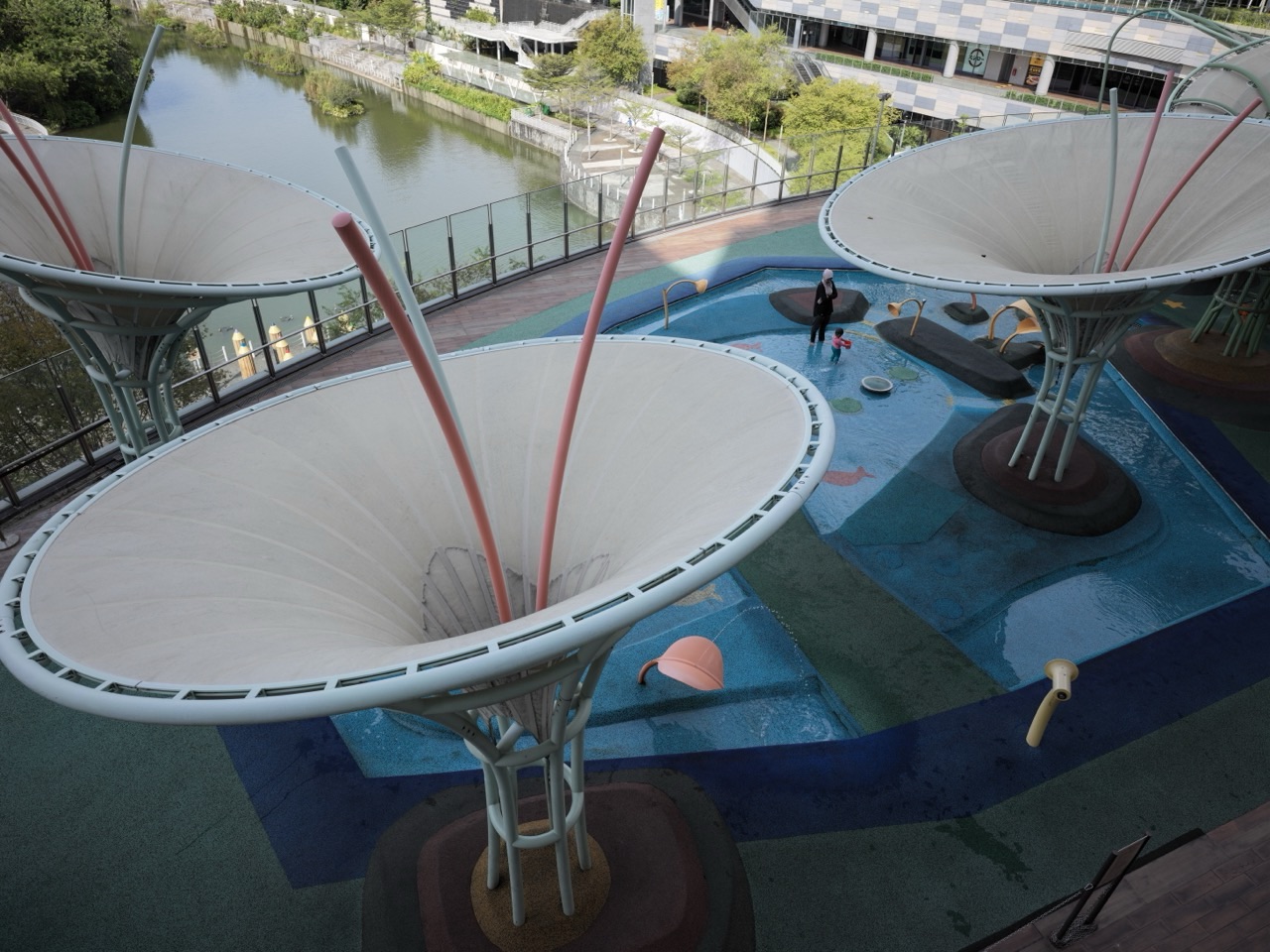
Going playground-hopping is one of the best free things to do in Punggol during the school holidays: pick a cluster of estate playgrounds, give each Punggol playground a score, and turn an ordinary morning into a cheerful neighbourhood expedition.
“Which is the best playground in Punggol?” is a question most children ask at least once. Very few get to answer it properly.
This is idea #42 in eduKate Punggol’s Top 100 Things to Do in Punggol During the School Holidays. This guide gives you three or four ready-made clusters of playgrounds, a scoring system your child will actually enjoy, and the practical details (shade, toilets, closures) that keep a playground morning happy.
The point is not to find a winner.
It is to look closely, compare fairly and explain your choice.
And it so happens that children love doing all three when there is a slide involved.
This idea is perfect for families who want to:
- spend a whole morning outdoors without spending money;
- discover parts of Punggol they never walk through;
- give energetic children a long, varied run-around;
- add a little map-reading and scoring to the fun;
- keep a preschool sibling and an older child busy at the same time; or
- start a holiday-long project that can be picked up again any week.
Quick look
- Best for: preschool to Primary 6, with teens as route planners
- Time needed: 2 to 3 hours for three or four playgrounds
- Cost: free (HDB estate playgrounds are open-access)
- Best time: 7.45am to 10.30am, before the sun and the afternoon storms
- Nearest LRT: depends on the cluster; Oasis, Samudera and Sam Kee are handy starting points
- Rain plan: duck into the nearest neighbourhood centre, such as Oasis Terraces, or finish at Punggol Green beside One Punggol, where the library is a short dash away
See all 100 school-holiday ideas · Chat with eduKate Punggol on WhatsApp · Visit eduKate Punggol on Facebook
A Punggol Playground Tour Is Bigger Than It First Appears
To an adult, a playground is a slide, a climbing frame and a bench in the shade.
To a child, each one is a different world.
Punggol’s estate playgrounds come in themes. There are ships, a train with a cow-catcher, an aeroplane with netted wings, a tall tower with a twisting slide, huts in the air facing the water, and animal playgrounds near the coast. Little Day Out, in its November 2025 round-up of Punggol playgrounds, describes the Punggol Point Crown playground as inspired by the old Punggol Zoo, with shoreline birds, a tiger and a tapir.
Play the town’s playgrounds one after another and something interesting happens. Children begin to notice that each neighbourhood has its own character. They see how the blocks, paths and common greens fit together. They start asking where they are, how far they have walked and which way home is.
That is a walk with a purpose, a little geography lesson and a run-around, all at once.
The Hidden Lesson in Giving a Playground a Score
Ask a seven-year-old to rate a playground and you will usually get, “Ten out of ten.” Then the next one is also ten out of ten. So is the one after that.
So change the question.
“Let’s give each playground a score out of five for three things: how good the climbing is, how much shade there is, and how fun the slide is.”
Now the answers sound different. “The ship was five for climbing but only one for shade. The pyramid was smaller, but it had swings.”
The scores have not made the playgrounds better or worse.
They have made the thinking clearer.
This is the quiet skill underneath the game: using the same criteria every time so that a comparison is fair. It is how children later compare two sets of results in Science, two methods in Mathematics or two characters in a book. Adding up three scores and choosing a winner is simple addition. Explaining why the winner deserves it is reasoning.
Why Punggol Families Love Playground-Hopping
There is no ticket, no queue and no booking. You just step out of the lift.
The joys of a playground morning
- It is free and can start from your own block
- Every playground is a little different, so nobody gets bored
- Short walks between stops give tired legs a rest
- Older children can plan the route and lead the way
- Younger children get a new slide every half-hour
- It works for one hour or three, depending on energy and weather
- It turns into a holiday-long collection, one cluster a week
- Children see more of their own town than the usual route to the MRT
And when someone asks, “Can we do another one tomorrow?”, you will already have the answer.
What You’ll Find in Punggol’s Playground Clusters
The clusters below come from Little Day Out’s November 2025 guide to Punggol playgrounds (a secondary source) and our own Best Playgrounds in Punggol guide. HDB playgrounds can be closed for repair or changed, so treat every stop as “check on the day”.
The ship trail: Edgefield Plains and Edgedale Plains
This is the favourite for pirates. Little Day Out lists a pirate-ship playground at 670A Edgefield Plains, a larger ship linked to a “ridge” by nets at Block 669 Edgefield Plains, and a three-masted ship at Block 683 Edgedale Plains. Also on Edgefield Plains, the Waterway Banks playground at 673B has a train with a cow-catcher to climb and a tube into the locomotive. Three ships and a train on neighbouring streets make a perfect first expedition for under-eights; check the walking order on OneMap.
Punggol Drive and the Oasis end
At Block 678C Punggol Drive, the Waterway Brooks playground has a terraced slope with slides and a wooden climbing net. The Punggol Drive Two-Tier playground at 665A Punggol Drive has netted play on two levels and sits beside Oasis Terraces, which makes it a handy final stop if you want a toilet, a drink or an early lunch.
Punggol West: towers, pyramids and an aeroplane
On the western side, Little Day Out lists the Punggol Wave playground at Block 212B, built around an aeroplane with netted wings; a tall tower with a twisting slide at Block 229B Sumang Lane; a toddler playground with a roller slide at Block 227C Sumang Lane; and a mini climbing pyramid with swings at Block 322D Sumang Walk, beside Jewel Bridge.
Northshore: huts in the air and a ship by the water
Up at Northshore, the “Huts in the Air” playground at Block 420D has elevated, connected huts facing the water. There are more playgrounds around Northshore Plaza, including a ship-themed one next to Northshore Plaza II. Samudera LRT is the natural starting point, and idea #47 covers the plaza itself.
The animal playgrounds near the coast
The Punggol Point Cove playground has a tiger-and-elephant theme, and Punggol Point Crown features shoreline birds, a tiger and a tapir. Our playground guide places these around 448A Punggol Way and 435B Punggol Point Road. These HDB playgrounds are separate from Punggol Point Park, but stay on public paths and follow any diversion signs in the area.
Punggol Green: the rain-switch playground
Next to One Punggol, Punggol Green is a 12,000-square-metre linear park with playgrounds for toddlers and for children aged 6 to 12, plus basketball courts and senior fitness corners, according to the People’s Association. It runs beneath the rail viaduct between Punggol MRT and Sam Kee LRT. With the library and hawker centre next door, it is the easiest place in town to end a playground morning if the sky turns.
Two playgrounds to skip this year
Please do not plan around these. Punggol Point Park, including its sand playground, has been closed for upgrading since 11 August 2026, with works expected to finish on 31 December 2027, according to NParks. And the old water playground at Punggol Waterway Park has been demolished. For water play, see idea #2 (Happy Park at Waterway Point) or idea #31 (Splash @ Kidz Amaze) instead.
How to Plan a Brilliant Playground-Hopping Morning
Ten minutes of planning the night before makes the morning feel like an adventure rather than a long walk.
1. Pick one cluster
Choose one group of three or four playgrounds close together. Trying to cover the whole town in a day ends in tears. Save the other clusters for other weeks.
2. Check the sky and the air
Look at the forecast and at haze.gov.sg the evening before and again in the morning. October 2026 brought unhealthy haze readings, so this is a good habit for the whole break. If the air is poor, swap to an indoor idea.
3. Map the route together
Open OneMap and let your child find each block number and plan the order. Mark where the nearest toilet and drink stop will be.
4. Make a playground passport
Fold a sheet of paper into a little booklet. One page per playground, with a box for a sketch, a sticker or stamp, and three scores out of five. Children will walk a surprisingly long way to fill a passport.
5. Agree on the scoring rules
Decide on the three categories before you leave, such as climbing, shade and slide. Keep them the same at every stop. That is what makes the final ranking fair.
6. Set a heat-and-thunder rule
Agree in advance that you will stop for water at every playground and head home or indoors at the first rumble of thunder, or when anyone is too hot. A three-playground morning done happily beats a five-playground morning done grumpily.
A Sample Holiday Day, Hour by Hour
Here is the ship trail as a holiday-weekday morning.
7.30am: Breakfast and passport-making
A quick breakfast and a few minutes decorating the passport. Let one child be the navigator and another the scorekeeper.
8.15am: Playground one
Start at the Waterway Banks train at 673B Edgefield Plains. Twenty to thirty minutes of play, then scores and a sketch before moving on.
9am: Playgrounds two and three
Walk on to the ships at Block 669 and 670A Edgefield Plains. Compare them: which ship is bigger, which has better nets, which has more shade?
9.45am: The three-masted ship
Head to Block 683 Edgedale Plains. By now the children will be experts, and the scores will be getting serious.
10.30am: Water, toilets and a snack
Move indoors before the sun is strong. Oasis Terraces, beside the Punggol Drive Two-Tier playground, is one option for a drink and a toilet; check OneMap for the walk from your last stop.
Afternoon: The grand ranking
At home, add up the scores, draw a simple bar chart and announce the winner. Ask, “Would the winner change if shade counted double?”
Three Ways to Enjoy It
Every age group can own a different part of the expedition.
For little explorers (Primary 1–3)
Keep it to three playgrounds and use smiley faces instead of numbers if that is easier. Ask simple comparison questions: “Which slide was the longest? Which one was the scariest?” Preschool siblings will happily join in, but look for toddler-sized equipment, such as the toddler playground at Block 227C Sumang Lane, and stay close on taller structures.
For big kids (Primary 4–6)
Hand over the map. Let them choose the cluster, plan the order, estimate the walking time between stops and keep the scores. A Primary 5 or 6 child can work out each playground’s average score and explain why one category should count more than another.
For teens (Secondary 1–4)
Teens may roll their eyes at playgrounds, so give them a different job. They can photograph each playground for a “Punggol playground map” for younger cousins, or design a fair scoring rubric and test it. A teen who leads a younger sibling around one cluster is also practising planning, patience and responsibility.
The Learning Bridge: Mathematics Without the Worksheet
A playground passport is quietly full of Mathematics. Here are three modest links to what children meet in primary school.
- Data: Collecting scores, putting them in a table and drawing a bar graph is the kind of work children do in the Statistics strand of primary Mathematics. Ask, “Which playground scored highest for shade? How do you know?”
- Position and direction: Reading OneMap, drawing the route and adding a north arrow practise the map and direction skills children meet in primary Geometry.
- Averages and fairness (upper primary): Finding the average of three scores, and noticing how one very low score pulls the average down, is a gentle real-world use of a topic older primary children learn.
Keep it playful. One “What would change the winner?” question does more than a page of sums. For more ideas, our article on using the school holidays for Mathematics explains how to repair, consolidate or prepare ahead without overloading a child.
Little Hiccups and How to Dodge Them
Most playground mornings go wrong for the same few reasons.
Hot slides and hot sun
Playground equipment can get very hot in the midday sun. Touch slides and metal parts before little ones use them, go early, and rest in shade between stops. MSS publishes a heat stress advisory worth checking on very hot days.
Thunder and lightning
The year-end holidays fall in the Northeast Monsoon, when thundery afternoons are common. Leave the playground at the first sign of thunder or lightning; a shelter roof is not lightning protection. MSS has a lightning alert page for real-time information.
Haze days
Check haze.gov.sg before you go. If readings are high, our Punggol Haze Playground Guide has indoor alternatives.
A playground under repair
HDB playgrounds are sometimes fenced off for maintenance. Keep one spare playground in mind for each cluster so a closure does not spoil the passport.
No toilet in sight
Estate playgrounds rarely have toilets. Plan a stop at a neighbourhood centre, mall or community building, and visit before you set off.
Roads between stops
Hold hands at road crossings and car-park entrances, and teach the “stop, look, listen” rule before each crossing.
What a Great Day Looks Like
You will know the morning worked when the children:
- filled at least three passport pages;
- can explain why their winner won, not just which one it was;
- found their way from one playground to the next with the map;
- tried a piece of equipment they had never used before;
- asked which cluster you are doing next week; and
- came home sweaty, happy and hungry.
That last one means you did it right.
When to Go
The 2026 year-end school holidays for MOE primary and secondary schools run from Saturday 21 November to Thursday 31 December 2026, according to MOE. That is six weeks, so one cluster a week is a lovely rhythm. MOE’s 2027 calendar gives the next breaks as 13 to 21 March, 29 May to 27 June and 4 to 12 September 2027, with the year-end holiday from 20 November 2027.
Go early. From about 7.45am to 10.30am the equipment is cooler, the light is gentle and you are ahead of the afternoon storms that the monsoon often brings. Weekday mornings are usually quieter than weekends. Late afternoon can work too, but watch the sky.
Getting There from Around Punggol
Most families can walk to the nearest cluster. For the others, the Punggol LRT gets you close. Oasis LRT (PE6) is the station for Oasis Terraces and the Punggol Drive Two-Tier playground beside it. Samudera LRT (PW4) serves Northshore Plaza, from where a sheltered community spine leads towards the waterfront. Sam Kee LRT (PW1) and Punggol MRT bracket Punggol Green. For the Edgefield and Sumang clusters, check OneMap for the nearest station and the shortest walking route from your block.
A money tip: on weekdays except public holidays, the first rail trip is free if you tap in before 7.30am or between 9am and 9.45am at any Sengkang-Punggol LRT station, under an LTA scheme extended in October 2026 (LTA).
Location: HDB estate playgrounds across Punggol (see the clusters above)
Nearest LRT: Oasis (PE6), Samudera (PW4), Sam Kee (PW1), or walk from home
Entry: free, open-access
Quick Details
Activity: a self-guided playground-hopping tour with a scoring passport
Where: HDB estate playgrounds in Punggol, grouped into clusters (Edgefield and Edgedale Plains, Punggol Drive, Sumang, Northshore, Punggol Green)
Best ages: preschool to Primary 6; teens as route planners
Cost: free
Time needed: 2 to 3 hours for one cluster
Booking: none needed
Accessibility: paths between blocks are generally flat, but equipment and surfaces vary; check each playground on the day
Status checked: October 2026, from Little Day Out’s November 2025 Punggol playgrounds guide (secondary) and the NParks Punggol Point Park closure notice; equipment condition not verified
What to Bring
- A water bottle for each person
- Hats and sunscreen
- The playground passport and a pencil
- A phone with OneMap for navigation
- Small snacks and a bag for rubbish
- Wet wipes or hand sanitiser
- A light umbrella or raincoat
- A small towel and a spare T-shirt
Frequently Asked Questions
Are Punggol’s estate playgrounds free?
Yes. HDB estate playgrounds are open-access and free to use. Please share the equipment kindly with residents.
Which Punggol playground is best for toddlers?
Look for toddler-sized equipment, such as the roller-slide playground at Block 227C Sumang Lane, or the toddler playground at Punggol Green next to One Punggol. Stay close on taller structures.
Is the Punggol Point Park playground open?
No. Punggol Point Park, including its sand playground, has been closed for upgrading since 11 August 2026, with works expected to end on 31 December 2027, according to NParks.
Is there still a water playground at Punggol Waterway Park?
No. It has been demolished. For water play, try Happy Park at Waterway Point (idea #2) or Splash @ Kidz Amaze at SAFRA Punggol (idea #31).
How many playgrounds should we visit in one morning?
Three or four in one cluster is plenty for most children. Spread the other clusters across the holidays.
What if it starts to rain?
Leave at the first thunder and head indoors. Punggol Green, beside One Punggol, is the easiest playground to finish at, because the library and hawker centre are next door.
Helpful Reading for Punggol Families
- Top 100 Things to Do in Punggol During the School Holidays
- Punggol School Holiday Guide: A Week-by-Week Plan for the Year-End Break
- Best Playgrounds in Punggol 2026: Block-by-Block and District Family Guide
- Active Play in Punggol for Primary School Children
- Things to Do in Punggol With Kids
- Coney Island Playground: Casuarina Exploratory
- School Holiday Mathematics: Repair, Consolidate or Prepare Ahead?
- People’s Association: One Punggol hub information
- MOE: School Terms and Holidays for 2026
Punggol Playgrounds for Punggol Families
A slide is never just a slide.
A ship becomes a pirate’s quest.
A pyramid becomes a mountain.
A passport becomes a record of the holidays.
For little ones, playground-hopping is a treasure hunt with swings.
For big kids, it is a chance to plan, score and lead.
For teens, it is a way to see their town with fresh eyes, and to help someone smaller do the same.
And for parents, it is a reminder that the best holiday mornings can begin at the bottom of your own block.
Plan the Rest of Your School Holidays
When the afternoon storms arrive, take the fun indoors. Browse the full Top 100 Things to Do in Punggol During the School Holidays, or carry straight on to idea #43, a movie day at Waterway Point.
And if a calm, small-group learning block is also on your holiday list, eduKate Punggol teaches English, Mathematics and Science in classes of three. Come find out more.
Book a consultation · Chat on WhatsApp
eduKate Punggol
Small-group English, Mathematics and Science
Primary and Secondary
By appointment · +65 8823 1234
Properly taught kids shine a bright light into the future.
← Previous: #41 Indoor playgrounds · All 100 ideas · Next: #43 Movie day at Waterway Point →
Checked October 2026. Opening hours, prices, programmes and closures change, so please confirm with the official source before you go.


