
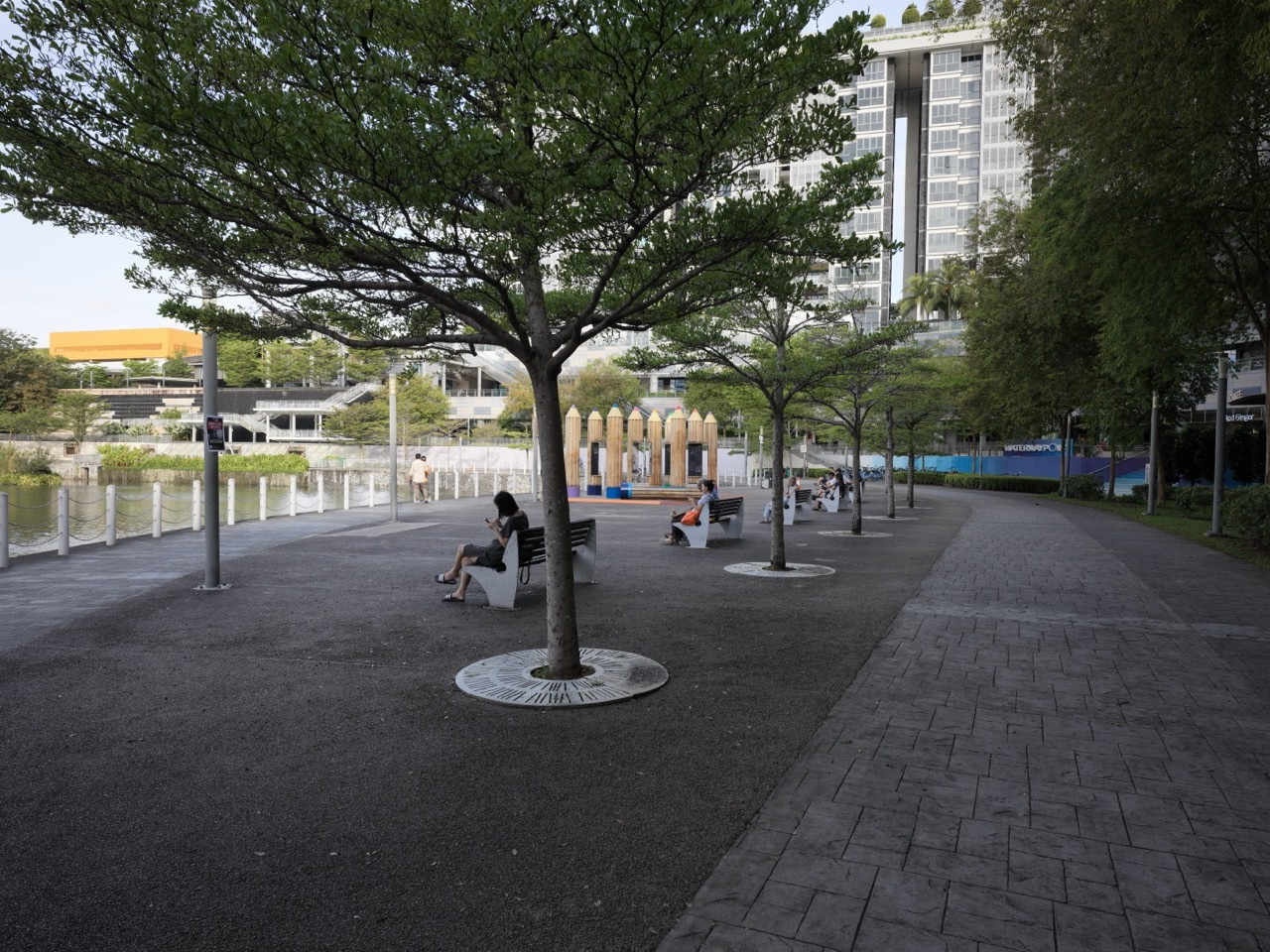
Keeping a holiday journal for kids is one of the simplest, cheapest things to do in Punggol during the school holidays: one notebook, one page a day, and by the end of the break your child owns a small book about their own life.
Day 1. “Today nothing happened. I ate chicken rice. The end.”
This is idea #71 in eduKate Punggol’s Top 100 Things to Do in Punggol During the School Holidays. It is the quietest idea in the whole series, and possibly the one your child will keep the longest. Below you will find how to start, what to write when “nothing happened”, where in Punggol to write, and how to keep it going for six weeks without nagging.
That first entry is not a failure.
It is a beginning.
By Day 12, the same child may write half a page about the bird that would not stop singing near the Waterway, the uncle who gave them extra chilli, and why their little brother cried at the library. Nothing about the holiday changed. The child simply learnt to notice.
This idea is perfect for families who want to:
- give the holidays a gentle daily rhythm without a timetable;
- keep a child writing in a way that feels nothing like homework;
- remember the small, funny moments that usually vanish by January;
- have a calm, screen-free ten minutes every evening;
- help a younger child build the habit of putting thoughts on paper; or
- end the year with something the whole family will want to reread.
Quick look
- Best for: Primary 1 to Secondary 2 (older teens can keep a lighter “line a day” version)
- Time needed: 10 to 20 minutes a day
- Cost: a notebook and a pencil you probably already own
- Best time: the same time every day, such as after dinner or before bed
- Nearest MRT/LRT: none needed; for a library writing session, Punggol MRT or Sam Kee LRT
- Rain plan: this idea is the rain plan
See all 100 school-holiday ideas · Chat with eduKate Punggol on WhatsApp · Visit eduKate Punggol on Facebook
A Holiday Journal for Kids Is Bigger Than It First Appears
A notebook. A few sentences. A drawing of a cat that may or may not be a cat.
Look again.
A journal is the only holiday activity that collects all the others. The cycling morning, the library visit, the rainy afternoon of board games: each one gets a page. Without a journal, the year-end break blurs into one long week. With one, it becomes forty-one separate days, each with a name.
That number is real. The MOE year-end holidays for primary and secondary schools run from Saturday 21 November to Thursday 31 December 2026. That is 41 days, and 41 pages is a proper little book.
It also gives a child ten minutes a day in which nobody is asking them to perform. No marking scheme, no red pen. For many children, that is the first time writing has ever felt like theirs.
The Hidden Lesson in Writing One Page a Day
Here is what usually happens in the first week.
Day 1: “We went to the library. It was fun.”
Day 4: “We went to the library. I borrowed a book about sharks because the cover had a shark with its mouth open.”
Day 9: “At the library, my sister wanted the same shark book, so we made a deal. She reads it first, but I get to tell her the ending. She was not happy about that deal.”
The library did not become more exciting. The writer became more precise.
The child moved from a summary (“It was fun”) to a reason (“because the cover had a shark”) to a small story with a problem and a solution (the deal). That is the journey every young writer must make: from telling the reader what happened to showing why it mattered.
Nobody taught a lesson. The child just had to fill a page, and a page is too big for “It was fun”.
A fixed daily space nudges, gently and repeatedly, towards detail.
Why Punggol Families Love a Holiday Journal
Punggol is a town full of small, writeable moments: otters in the Waterway, the LRT gliding past your window, the hawker queue at lunchtime, a sudden thunderstorm rolling in over the blocks. You do not need a big trip to have something to say. You just need a place to put it.
The joys of a one-page-a-day journal
- It costs almost nothing and needs no booking
- It works on hot days, wet days and haze days alike
- It turns ordinary Punggol outings into stories worth keeping
- Children can draw, stick, list or write, so it suits every personality
- Siblings of different ages can do it side by side
- It gives the evening a calm, predictable ten minutes
- Grandparents love being interviewed for a page
- On 31 December, you have a book about your family’s year-end
And years later, it becomes the thing everyone fights over when you clear out the cupboard.
What Goes on the Page
A blank page can frighten a child. A page with a little structure invites them in. Here are the parts that work best, and how to vary them so the journal never feels like a form.
The date line and a weather word
Start every page with the date and one word for the weather: “sunny”, “drizzly”, “hazy”, “thundery”. It takes five seconds and gets the pencil moving. Over six weeks, those words quietly record the Northeast Monsoon arriving.
The main event, in three to five sentences
What was the biggest thing that happened today? For younger children, three sentences is plenty: what happened, who was there, how it felt. Older children can aim for five, with one sentence that describes something they saw, heard, smelt or tasted.
One small thing nobody else noticed
This is the secret ingredient: the colour of the bus seat, the smell of rain on the void deck, the exact words a stranger said. Hunting for one small detail each day trains a child’s eye.
A drawing, a ticket or a list
Not every page needs paragraphs. A sketch of a Waterway bridge, a library receipt or a “top three” list all count. Children who resist writing will often happily caption their drawings, and captions are writing.
A rotating prompt for “nothing happened” days
There will be quiet days. Keep a few prompts at the back of the journal for them:
- “If our block could talk, what would it say about today?”
- “Review the best thing you ate this week, like a food critic.”
- “Interview a family member with three questions and write their answers.”
How to Plan a Brilliant Journal Habit
A journal succeeds or fails in the first week. These steps give it the best possible start.
1. Let your child choose the notebook
Ownership matters. Let them pick the cover and whether the pages are lined or blank. A slim A5 notebook is less frightening than a thick one, and half-blank pages leave room for drawing.
2. Fix a time and a place
Pick one daily slot that rarely changes, such as after dinner. Tie the journal to something that already happens every day, and it survives busy weeks.
3. Agree the “one page” rule together
One page is the target, not a punishment. On a big day, they can write more. On a tired day, a drawing with a caption counts. Agree this in advance, so there are no arguments at 9pm.
4. Make it private, then invite sharing
Tell your child the journal is theirs, and you will not read it unless invited. Children who know they have privacy often choose to read entries aloud anyway, and those are some of the best conversations of the holidays.
5. Do not correct spelling in the journal
This is the hardest rule for parents. Resist. The journal is for ideas. If a word keeps being misspelt, practise it separately another time.
6. Write alongside them
The single most effective trick: keep your own journal at the same time. Even three lines a night. Children copy what they see, and a parent writing quietly at the table says more than any lecture.
A Sample Holiday Day, Hour by Hour
Here is how a journal fits into an ordinary Punggol holiday weekday without taking it over.
8.30am: Breakfast and a “spy mission”
Give your child a mission: “Collect one interesting sentence someone says today.” The whole day becomes material.
10am: Out and about
Head out while it is cool: Punggol Regional Library (NLB also calls it Punggol Library), a short Waterway walk or the market. The journal stays home; the spy mission comes along.
Noon: Lunch and a quick note
Ask, “What is the best thing so far?” Remembering out loud is the first draft of a journal entry.
3pm: Rest, reading or rain
Afternoons in the Northeast Monsoon often bring thundery showers, so this is a good indoor block. Reading in the afternoon fills the well that writing draws from in the evening.
7.30pm: Journal time
Ten to twenty minutes at the table: date line, weather word, main event, one small thing. Write your own entry beside them.
8pm: The optional read-aloud
If your child wants to share, listen and respond to the content, not the spelling: “That deal with your sister was clever.” Then close the book until tomorrow.
Three Ways to Enjoy It
A journal grows with the writer. Here is how to shape it for different ages.
For little explorers (Primary 1–3)
Keep it short and visual. A big drawing and two or three sentences is a full page. Sentence starters help: “Today I…”, “The funniest part was…”. If writing is slow, let your child dictate a sentence for you to write, then copy it. Preschool siblings can keep a “drawing journal” so they feel part of the ritual.
For big kids (Primary 4–6)
Push gently for detail and variety. Challenge them to use one new describing word each day, or to write one entry as a dialogue. Primary 6 children who have just finished the PSLE may enjoy a page on results day (tentatively 24 to 25 November 2026, according to SEAB): how they felt the night before, what happened, and what they want to remember. Keep it gentle; it is their story to tell.
For teens (Secondary 1–4)
Teens may resist anything that sounds like school. Offer a looser format: one honest line a day, a bullet journal of lists and sketches, or printed photos with captions. They decide what fills the page, and many discover they like having a private place to think.
The Learning Bridge: English Without the Worksheet
A holiday journal is not a disguised worksheet, and it should not feel like one. But it does quietly practise real skills your child meets in school.
- Writing and Representing: MOE’s English syllabus lists Writing and Representing as one of its areas of language learning. A daily recount practises past tense, time connectors (“first”, “after lunch”, “by evening”) and putting events in a sensible order.
- Continuous Writing: PSLE English Paper 1 includes Continuous Writing. For Primary 5 and 6 children, a journal full of real moments becomes a store of authentic ideas, feelings and details they can draw on when a composition topic appears.
- Situational Writing: A page written as a thank-you note to a grandparent, or a letter to a future self, practises writing for a real reader with a clear purpose, which is the heart of Situational Writing.
- Statistics, quietly: If your child records a weather word every day, they can tally the words at the end of the holiday and draw a simple bar graph. That is real data they collected themselves.
Keep it light and never mark the journal. To understand how compositions are built and assessed in school, our Primary Composition guide explains the PSLE Writing format, idea generation and structure in detail.
Little Hiccups and How to Dodge Them
Every journal hits a bump or two. Here are the common ones.
The blank-page freeze
If your child stares for more than two minutes, offer three prompts and let them pick. Choice gets the pencil moving faster than encouragement.
Missed days
They will happen. Do not “catch up” by writing five entries in one night; that turns joy into debt. Simply write today’s date and carry on. A journal with gaps is still a journal.
The “it’s boring” protest
Change the format for a few days. A comic strip, a list of ten things, a recipe for a “perfect holiday day”, a review of a hawker dish. Variety rescues most journals.
Writing outdoors on hot or stormy days
If your child likes writing at a Waterway bench, go early, bring water and check the heat stress advisory on very hot days. If thunder starts, head indoors at once. Real-time alerts are on the MSS lightning page, and remember that a shelter roof is not lightning protection.
Haze days
October 2026 brought unhealthy haze readings to Singapore. Check haze.gov.sg before any outdoor writing session, and swap to home or the library when readings are high. For ready-made alternatives, see our Punggol Haze Indoor Activity Planner. A hazy day is also, honestly, a good thing to write about.
What a Great Day Looks Like
You will know the journal is working when your child:
- reaches for the notebook without being reminded;
- remembers a small detail from the day and says, “That’s going in my journal”;
- writes a little more on a good day than they did in week one;
- reads an old entry and laughs at their younger self of three weeks ago;
- asks a grandparent or friend a question just to write the answer down; and
- carries the habit into the first week of school, even for just a line.
Watch for that last one most of all. A habit that survives into January is a habit for life.
When to Go
The best time to start is Day 1. MOE sets the 2026 year-end holidays for primary and secondary schools from Saturday 21 November to Thursday 31 December 2026. Some secondary students at schools used as O-Level venues finished Term IV earlier, on Friday 23 October 2026, so they can start a few weeks sooner.
The holiday has natural “big pages” built in: the first day of the break, PSLE results day (tentatively 24 to 25 November), Christmas Day on Friday 25 December, and New Year’s Eve. One Punggol is also hosting a Grandparents’ Day event on Saturday 21 November 2026, from 2pm to 5pm, according to its onePA listing, which could make a lovely first entry if your family goes (check the listing for registration).
MOE’s 2027 calendar also has shorter breaks in March (13 to 21 March), June (29 May to 27 June) and September (4 to 12 September); a nine-day March journal is a perfect trial run. Evenings suit most families best, when the day is fresh and the house is calmer.
Getting There from Around Punggol
Most families write at the dining table. For a change of scene, two Punggol spots work well.
Punggol Regional Library is inside One Punggol at 1 Punggol Drive, near Punggol MRT and Sam Kee LRT. NLB lists it as open 10am to 9pm daily, closing at 5pm on 24 and 31 December and closed on 25 December and 1 January. Older students wanting silence can reserve a seat in the Level 3 Study Zone (9am to 10pm daily, per NLB).
Punggol Waterway Park has benches along the water and is open 24 hours, according to NParks. From Punggol MRT, walk past Waterway Point to the Waterway. Mornings are kindest for outdoor writing.
Location: your home, Punggol Regional Library (One Punggol) or a Waterway Park bench
Nearest MRT/LRT: Punggol MRT (NE17), Sam Kee LRT or Damai LRT
Entry: free
Quick Details
Activity: a one-page-a-day holiday journal kept at home or on outings
Where: anywhere; optional sessions at Punggol Regional Library or Punggol Waterway Park
Best ages: Primary 1 to Secondary 2, with a lighter version for older teens
Cost: the price of a notebook
Time needed: 10 to 20 minutes a day
Booking: none; Study Zone seats at the library can be reserved through NLB (check live)
Accessibility: works anywhere; NLB lists accessible features at Punggol Regional Library, and One Punggol has lift lobbies serving its levels
Status checked: October 2026, NLB Punggol Regional Library page (library hours and holiday closures as listed at the time of checking)
What to Bring
- One notebook your child has chosen, A5 is ideal
- Pencils, an eraser and a few coloured pencils
- A glue stick for tickets, receipts and leaves that have already fallen
- A list of “nothing happened” prompts taped inside the back cover
- A small pencil case so the journal can travel to the library or park
- A water bottle and hat for outdoor writing sessions
- Your own notebook, if you are brave enough to join in
Frequently Asked Questions
How long should each journal entry be?
One page is a good target. For Primary 1 and 2, a drawing plus two or three sentences fills a page. Older children can aim for five to ten sentences. The habit matters far more than the length.
Should I correct spelling and grammar in my child’s journal?
No. The journal is for ideas and enjoyment. Practise tricky words separately, another time, if you want to.
What if my child hates writing?
Start with drawings and captions, lists and comics. Let them dictate a sentence to you and copy it. Many reluctant writers warm up once they realise nobody is marking the page.
Is a digital journal just as good?
A typed or voice journal is better than none, especially for teens. For younger children, handwriting on paper helps build fluency and keeps the session screen-free.
What should we do with the journal after the holidays?
Keep it somewhere safe. Reread it together on New Year’s Day, and again next year. Some families keep one for every school holiday, and the shelf of little books becomes a treasured record.
Does keeping a journal help with school compositions?
It practises the same skills: recounting events, choosing details and expressing feelings. It does not replace guided composition practice, but it gives children a habit of writing and a store of real ideas.
Helpful Reading for Punggol Families
- Top 100 Things to Do in Punggol During the School Holidays
- Punggol School Holiday Guide: A Week-by-Week Plan for the Year-End Break
- Primary Composition Tuition and Creative Writing in Punggol
- The Core Aim of Creative Writing Enrichment: Descriptive Writing
- English in the School Holidays: Continue, Pause or Use a Short Block?
- Storyteller Cove at Punggol Library
- Punggol Regional Library Guide
- Story Books to Read During the School Holidays
- MOE: School Terms and Holidays for 2026
- NLB: Punggol Regional Library
A Holiday Journal for Punggol Families
A notebook is a small thing to give a child.
A daily page is a small thing to ask.
But forty-one small pages become a book.
For little ones, the journal is a place to draw their day.
For big kids, it is a place to find their voice.
For teens, it is a place to think without an audience.
And for parents, it is a window you are sometimes invited to look through, which may be the most precious part of all.
Plan the Rest of Your School Holidays
A journal works best when the days are full of things to write about. Browse the full Top 100 Things to Do in Punggol During the School Holidays for ideas, or carry straight on to idea #72, urban sketching, where your child can fill the journal’s blank pages with Punggol’s bridges and blocks.
And if a calm, small-group learning block is also on your holiday list, eduKate Punggol teaches English, Mathematics and Science in classes of three. Come find out more.
Book a consultation · Chat on WhatsApp
eduKate Punggol
Small-group English, Mathematics and Science
Primary and Secondary
By appointment · +65 8823 1234
Properly taught kids shine a bright light into the future.
← Previous: #70 Kids’ book club · All 100 ideas · Next: #72 Urban sketching →
Checked October 2026. Opening hours, prices, programmes and closures change, so please confirm with the official source before you go.


