
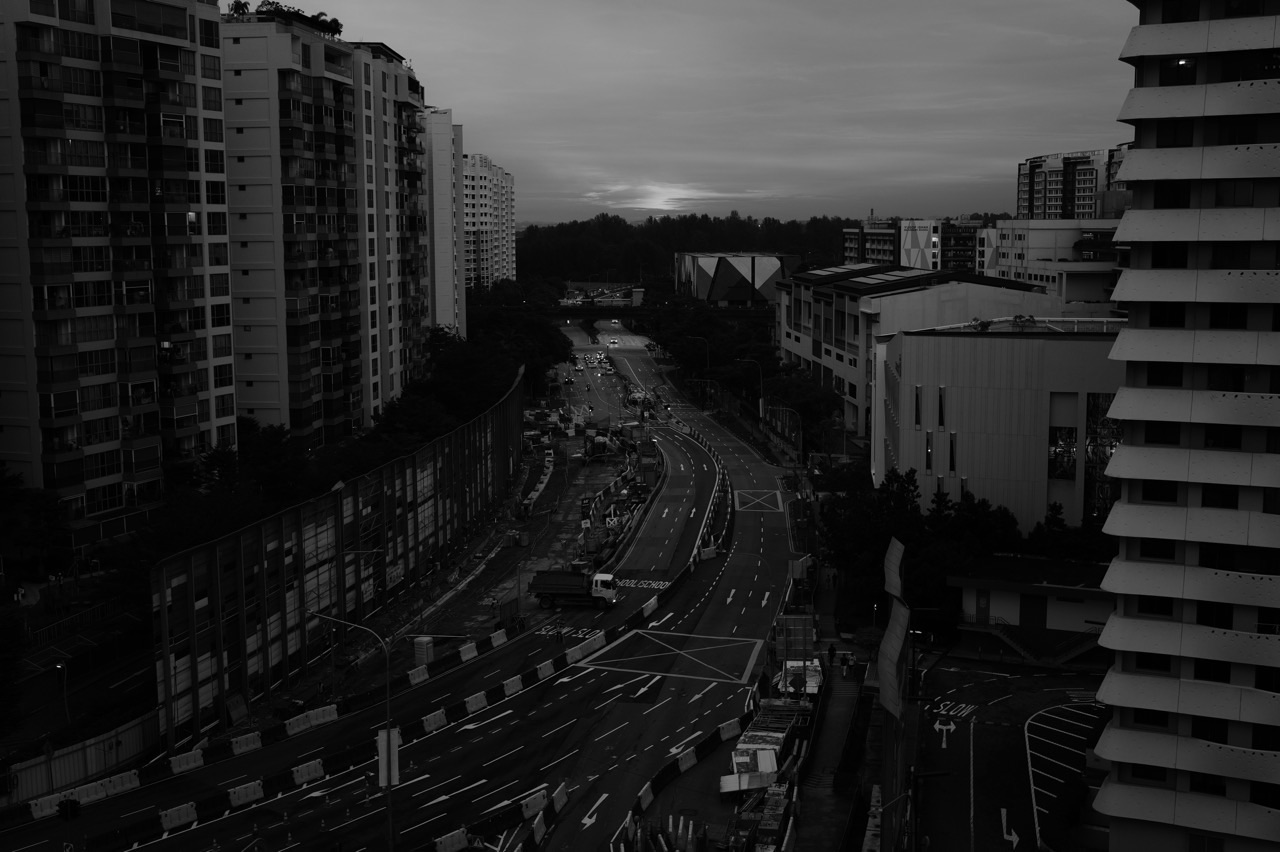
Quick answer for Punggol condo residents: not every swimming pool, gym, sky garden or playground automatically closes because of one PSI reading. The MCST and relevant facility operator communicate the actual arrangements, while the current NEA one-hour PM2.5 and MOH health advice guide personal outdoor exposure. Shared open corridors, enclosed gyms, rooftop decks and privately managed apartments are different settings.
This guide explains real common-property responsibilities and shared-air decisions without accusing a named building of poor ventilation or inventing a universal closure threshold.

Quick answer: an open condo facility is not necessarily suitable for outdoor exertion
Does haze close every condominium gym, pool, play deck and rooftop garden in Punggol? No universal automatic closure applies to every development merely because a regional PSI threshold has been crossed. The actual MCST or facility operator decides the availability of specific shared amenities under the relevant estate rules, operational controls and safety responsibilities. A parent should check the dated estate notice and NEA’s current one-hour PM2.5 before taking a child to a strenuous outdoor game. An open gate is not an individual medical clearance.
The correct family response can be proportionate. A healthy resident may choose a suitable lower-exertion activity under MOH advice, while a vulnerable person may need to avoid outside exposure. The operator may modify an organised rooftop fitness session without closing all indoor facilities. Do not copy a nearby estate’s message as if it governs every condo in Punggol. Ask what exact facility, time and booking is affected, which source informs the decision, and when management will review it.
Who is the MCST and what does it control?
BCA’s strata living guidance explains that the Management Corporation Strata Title consists of subsidiary proprietors, or unit owners, and is empowered under the Building (Strata Management) Act to manage shared common property. The elected management council handles many day-to-day decisions and may engage a managing agent. A tenant uses the estate under their tenancy and its applicable by-laws, but does not automatically have the same general-meeting voting rights as a unit owner.
This division matters when managing haze. A portable purifier in a private bedroom, the corridor ventilation, an outdoor barbecue pit and the work of a landscape contractor can fall under different people’s responsibilities. A managing agent cannot issue a national air-quality reading in place of NEA. Residents should take common-property concerns to the proper management channel, private unit maintenance to the responsible owner or contractor, and medical questions to a qualified clinician.
Outdoor, open-sided and enclosed facilities are different
Punggol developments may include podium gardens, open-sided covered corridors, enclosed function rooms, pool decks and air-conditioned gyms. Shade and shelter protect against rain and sunlight but do not necessarily filter regional PM2.5. An open rooftop with a gentle breeze can still receive transported smoke. A room that looks enclosed may have different actual filtration and fresh-air provisions from another room across the same development.
It is useful for a managing agent to identify which amenities are genuinely open-air, naturally ventilated, mechanically supplied with air or fully enclosed. The information can make a facility announcement much clearer. Residents should not hear ‘all public areas are filtered’ unless that is supported by a credible building-system assessment. A roof over a walkway is not a certified haze shelter, just as a cool air-conditioned room is not proof that all pollutants or CO2 are controlled.
Which NEA number matters for today’s pool or gym?
For an outdoor activity happening now, MOH’s 2026 guidance uses the one-hour PM2.5 band to guide appropriate activity. For tomorrow’s planned class or group event, the forecast 24-hour PSI is useful for contingency planning, with another check close to the session. A manager should not use a concentration of PM2.5 150 µg/m³ as though it were an index value of PSI 150; these differ in units, time averaging and purpose.
NEA includes Punggol in its North reporting region, not an individual sensor at every private pool or balcony. A screenshot from another region can mislead, and the latest timestamp matters. When a resident has asthma or another medical condition, a personal care plan may require more caution than the general advice for healthy people. Facility availability and personal fitness for an activity are related questions but not the same one.
Covered lift lobbies and corridors are not necessarily filtered
A pedestrian connector or sheltered podium walkway may make a journey to Punggol MRT easier for a family with a stroller or an older resident. That does not mean its air is equivalent to a managed enclosed room. Regional smoke can travel through open-sided corridors and breezeways, including spaces that feel pleasantly cool. Residents should not assume they can wait for an hour in a covered common area during worse haze without considering the current public guidance.
The managing agent can explain what is naturally ventilated and what relies on maintained mechanical systems. Do not block essential grilles, install unauthorised fans in shared access routes or erect temporary screens that impede emergency circulation. A person with symptoms may choose a direct route and a comfortable suitable indoor destination. Shelter and accessibility are helpful, but must not be falsely advertised as complete particulate protection.
Does a lift fan mean there is a HEPA filter?
A lift car may have a ventilation fan or system appropriate to its design, but the grille or the feeling of moving air cannot establish that the lift has high-efficiency particulate filtration. The actual specification, servicing arrangement and airflow need to be assessed by the relevant specialists. The management corporation has common-property responsibilities and can consult qualified maintenance contractors where necessary.
If residents observe unusual odours or suspected faults, report the time and location factually. Do not tape over the fan, spray chemicals through a grille or place a portable purifier inside the lift without authorisation. Specialist maintenance protects safe operation for everyone, including wheelchair users and people who rely on the lift daily. A regional haze episode does not prove that every smell in a lift came from a forest fire or a nearby worksite.
The air-conditioned gym question
An indoor condo gym can offer an alternative to an outdoor Waterway Park run, but a treadmill session remains strenuous exercise and the actual indoor-air arrangement matters. An air-conditioner may cool predominantly recirculated air without having a certified HEPA particle filter. A person with a relevant heart or lung condition should follow their clinician’s guidance and not assume that an indoor machine makes maximal exertion appropriate regardless of symptoms.
NEA’s April 2026 building ventilation guidance explains how ventilation and particulate air cleaning have different functions. A responsible MCST can ask its facilities provider about actual filter maintenance and outdoor-air arrangements. Do not treat a green building logo or a high-tech display as a measured PM2.5 value for every workout station. The site operator should communicate any genuine change to classes or room access.
A sparkling swimming pool does not certify outdoor air
Outdoor pool water can look clear while the air above it contains regional fine particles. Swimming laps, coaching drills and energetic water play can involve considerable breathing and exertion. A family’s decision should reflect the current MOH activity advice, the individual’s health and the actual operator’s notice. A cloudy or smoky horizon does not itself establish that a particular swimming pool’s water is contaminated.
Pools may be temporarily closed for separate reasons such as lightning, maintenance or pool-water testing. These should not automatically be described as haze closures. BCA’s common-property management guide includes aquatic facility maintenance as a potential MCST service and points to relevant regulatory standards. The operator’s actual rules matter; do not invent a universal permission, licence or haze refund condition for a named Punggol condominium.
The common playground is still outdoors
A condo playground may have slides, climbing structures and a garden canopy, but a child frequently runs, climbs and jumps more energetically than the accompanying adult. An open-air play deck cannot be regarded as filtered simply because it is within a private estate. MOH recognises children as more vulnerable to haze, and families should adjust the intensity and duration of outdoor activities according to current guidance and individual health.
If a session is postponed, a safe alternative might be a quiet home game, reading or appropriate indoor family recreation. A condominium clubhouse may have booking, noise and supervision restrictions, so it is not automatically an unlimited indoor playground. Do not relocate ball games to lift lobbies or common corridors, where they can obstruct access and create hazards. The Punggol playground haze guide has other family alternatives.
Rooftop gardens and barbecue pits add their own questions
A rooftop garden can offer scenic sunset views, and a barbecue pit may be attractive for weekend gatherings. Regional smoke may still reach those open-air spaces, and charcoal cooking adds local emissions of its own. It can be sensible to postpone optional outdoor smoke-producing activities on a haze day, particularly for young children or vulnerable neighbours. Do not assume a high floor or sea breeze creates a permanent clean-air zone.
Booking conditions are specific to the development’s by-laws and management arrangements, so a general government haze advisory does not automatically guarantee identical refunds or rescheduling across all condos. If plans change, contact the actual operator before promising guests a new date. Never operate charcoal or fuel-burning equipment in unsuitable enclosed common rooms, where fire and carbon monoxide risks can be serious even on a clean-air day.
Portable HEPA and designed ventilation have different roles
A suitable HEPA-style room cleaner can lower some airborne particle levels when sized and operated effectively, while mechanical ventilation supplies or removes air as designed. Ordinary portable particulate filtration does not itself remove occupant-generated CO2 or replace fresh air. A closed function room might have reasonable filtration but insufficient ventilation relative to an unusually large gathering. The two issues need separate checks.
NEA provides updated guidance on ventilation and indoor air quality. An MCST may need to consult an actual mechanical services contractor about filters, air supply, maintenance and building safety, not buy a fashionable gadget because a resident shared a dramatic advertisement. Do not seal required vents to force a low display number. The Punggol CO2 and HEPA guide explains that distinction for household readers.
Cleaning, landscaping and security staff also need protection
Security guards, pool maintenance workers, cleaners and landscape teams can spend substantial time outdoors. Their exposure pattern differs from a healthy resident walking a few minutes to the lift. MOM’s workplace haze guidance expects employers to assess work intensity, duration and health factors, and take stronger precautions at higher 24-hour PSI. A public notice telling residents to avoid the rooftop does not replace the contractor’s actual safety programme.
Management can coordinate with the contracted employers about changed duty times, rest periods, job rotation, postponing nonessential work and suitable personal protection where genuinely required. Residents should not demand that every gardener finish heavy outdoor tasks immediately because the view from their balcony is imperfect. A fair estate response protects the people who maintain shared facilities as well as the families using them.
Common-area air improvements have governance and costs
BCA explains that the management corporation budgets for maintenance of common property, which can include specialist lift work, pool maintenance and other service contracts. New filtration, replacement components or cleaning arrangements can involve procurement and recurrent costs. A unit owner cannot automatically purchase any device and send its receipt to the MCST as though the expense was approved. Even a helpful proposal needs evaluation against the actual building design, budget and governing procedures.
Owners can raise substantive issues through the council or a general meeting, while tenants can submit observations through the managing agent and landlord. Useful proposals explain the location, the problem observed, evidence, estimated cost and professional assessment required. No association between a Punggol skyline photo and a particular condo’s maintenance quality should be alleged without verifiable data. Good governance means decisions can be explained rather than pressured through during a smoky weekend.
A dated and scoped MCST haze notice works better
A useful fictional announcement might say: ‘This evening’s organised rooftop running session will not proceed under the current outdoor activity advice. Residents should review NEA and MOH guidance for their individual circumstances. The clubhouse remains subject to normal booking rules. We will reassess tomorrow and advise affected participants.’ That states an exact activity and what changes without claiming every private amenity in Punggol must legally close.
Management communications should name the issuer, date, effective time, affected facility and contact channel. If a pool closes for lightning, call it a weather closure rather than a haze closure. Avoid circulating photographs of other buildings’ notices without context. The best message leaves residents knowing what to do next, which helps children, older people, staff and guests adapt calmly without making the atmosphere itself the source of every disagreement.
Private lots and shared spaces need different repairs
A condominium owner is generally responsible for maintaining their own unit, while the MCST manages common property. BCA cautions that there are exceptions and the registered strata title plan matters in deciding responsibility. If a bedroom has condensation or a faulty individual split air conditioner, this may follow the unit’s repair arrangements. If a common function room has a known mechanical problem, the management agent may need to organise appropriate common-area inspection.
During haze these distinctions become important because a resident might expect one person to control all ventilation. Yet a private portable filter, a common duct and a lift fan are different systems and may have different contractors. If the boundary is unclear, ask the managing agent and the unit owner for the relevant strata or equipment details rather than performing an unapproved alteration. The aim is to restore safe actual function, not assume every odour is evidence of negligence.
By-laws still matter when outdoor activities change
An MCST’s by-laws may regulate booking of barbecue pits, clubhouses, common courtyards and other shared property. Owners are required to follow properly enacted by-laws, and tenants usually have to follow the rules that apply to their occupation. A regional air-quality advisory does not suspend normal restrictions on noise, common-property use or safety. A family cannot turn the residents’ reading lounge into an unsupervised indoor playground merely because the outdoor deck is uncomfortable.
Where the rules are unclear or an urgent change is needed, contact management and request the applicable policy in writing. A resident can ask whether a one-off rescheduling accommodation is available, but should not assert a universal refund right without the actual terms. BCA’s strata management guidance explains dispute mechanisms, while case-specific legal interpretation belongs to qualified advisers and the relevant authorities.
What if a resident thinks a closure is unfair?
A person may think the rooftop garden should remain available while another thinks it should close. The sensible conversation begins by identifying the exact current MOH recommendation, the type of activity, the users’ health needs and the actual management decision. A common-area closure for maintenance is not a haze closure, and an individual preference to avoid an open terrace is not itself a legal order preventing neighbours from entering.
Ask for the dated notice and next review time, then use the estate’s documented feedback or council process. If a serious strata by-law or common-property dispute remains unresolved, BCA’s guidance discusses appropriate routes including the Strata Titles Boards where relevant. Do not spread accusations about a named council member or managing agent from a screenshot whose date is missing. Clear records and fair questions usually produce better outcomes.
A guest or tenant needs an authentic notice
A guest invited to a Punggol condominium for a birthday may not have access to the residents’ app. Their host should verify whether an outdoor barbecue, playground or pool booking remains available and relay actual changes before guests travel. A general forwarded PSI table does not communicate which amenity is operational. Include the correct date, arrival instructions and a safe indoor Plan B if the booking genuinely changes.
Tenants also need a legitimate channel for receiving notices about common-area access or emergency arrangements. However, they should not impersonate owners to exercise AGM voting rights. When a repair is unit-specific, inform the landlord through the agreed channel. For common amenities, the managing agent may be able to confirm operating status directly. These are ordinary strata management responsibilities that become especially useful during unpredictable weather.
Avoid confusing PM2.5 sensors with certified building performance
A resident may bring a small air-quality meter into a condo gym or lounge. Low-cost devices can estimate particle trends but are sensitive to placement, humidity, model quality and averaging time. A reading taken right next to an air-cleaner outlet does not describe every part of the room. An instant app AQI may not be Singapore’s PSI. Such observations can motivate a better question, but they cannot establish the chemical origin of smoke or prove a statutory ventilation breach by themselves.
A useful concern includes instrument type, units, room position, time, actual occupancy and repeated observations where appropriate. Management can decide whether a competent review is warranted. The official ambient reading remains NEA’s regional public measurement. A single individual home sensor is not a substitute for an independent mechanical ventilation assessment or a medical judgment about a resident’s respiratory condition.
CO2 monitoring and a busy function room
When several families gather in an enclosed function room, their breathing adds carbon dioxide. A portable HEPA filter can reduce particles but does not remove ordinary exhaled CO2. An actual ventilation system may bring in fresh air, and CO2 measurements can provide some information about ventilation adequacy when obtained correctly. NEA’s April 2026 guidance discusses appropriate NDIR monitoring methods and operational benchmarks for certain enclosed premises; that context matters.
Do not treat a fleeting high reading beside someone’s mouth as a legally proven unsafe room. Conversely, a low PM2.5 display cannot establish sufficient fresh-air dilution. If the estate is assessing a busy room, use qualified facility staff, representative occupancy and consistent measurements. Avoid making ventilation adjustments that defeat smoke filtration or other building safety provisions. The Punggol CO2 ventilation guide explains the technical distinction in accessible terms.
Swimming-water safety cannot be inferred from haze photographs
Some residents worry that a grey atmosphere means the condo pool water must be contaminated. The visible condition of the sky does not identify the actual pool-water chemistry or microbiological quality. Pool maintenance follows its own operating and regulatory requirements, which depend on the type of facility. Water-related closure information should come from the responsible operator and relevant authority where applicable, not from a picture of smoke over the Punggol Waterway.
The main personal haze question for an outdoor swim is what air swimmers are breathing and how strenuous the activity is. A healthy adult doing vigorous laps, a preschool child playing and a medically vulnerable older resident may need different precautions. At the same time, lightning or maintenance can make swimming unsuitable irrespective of the air pollution reading. Keep these hazards separate to avoid a misleading ‘water is safe because PSI is low’ claim.
Guest parties and deposits need the actual booking terms
A family might have paid to use the function room, garden terrace or barbecue pit. If outdoor haze makes the planned activity unattractive or management changes the venue arrangements, the next step is to consult the estate’s booking conditions and written notice. Deposits, cancellation windows, capacity rules and permitted alternatives vary. An MCST might offer a new date in one case without establishing a right across every privately managed development in Singapore.
Tell guests the change before their journeys, especially families with children or mobility needs. Do not promise an enclosed room is filtered without technical evidence, or require people to stay at an outdoor picnic merely because food has been ordered. A calm Plan B can still preserve a celebration. The purpose of safety guidance is to help people make proportionate choices, not to make every event impossible.
Pets and condo walking routes
Residents may use common garden paths to walk dogs or reach nearby Punggol park connectors. Animals can also be affected by poor outdoor conditions, but species, health and veterinary circumstances differ. A pet’s short necessary toilet trip is not equivalent to an hour-long outdoor run. Residents can adjust optional walking time and observe the animal’s wellbeing without assuming that a shaded common path removes airborne smoke.
Follow the estate’s pet by-laws and shared-path etiquette. Do not bring an animal into a common indoor lounge that prohibits pets simply because the outdoor air is poor. If an animal develops concerning signs, contact an appropriate veterinary professional. The Punggol haze and pets guide covers dog walks, cats and birds in more detail.
Accessibility is part of choosing an indoor alternative
A family with an older resident or a wheelchair user may find a function room accessible only from certain lifts or entrances. When haze alters a rooftop or poolside activity, management should consider whether the proposed substitute has a safe step-free route, enough circulation space and the required permissions. It is not helpful to tell everybody to use a staff-only staircase or a wet car-park ramp merely because that route is shorter.
Residents can ask management which accessible facilities remain operating and whether lift or entrance maintenance affects the plan. The answer should be factual, not an unsupported promise that the entire estate is barrier-free. A secure route with a reasonable return path may be more important than saving a minute outdoors. Personal mobility and clinical restrictions require individual decisions alongside the general haze advice.
Security and emergency access remain important
Residents’ first instinct during smoky air may be to close all doors to prevent infiltration. But building access, emergency staircases, fire-fighting equipment and required ventilation have safety functions that cannot be ignored. Do not tape up common-area vents, obstruct corridors with personal purifiers or install screens that block emergency access. SCDF’s building fire guidance is relevant even when the smoke visible across Punggol is regional rather than a local emergency.
If unusual smoke appears to emerge from a unit, electrical equipment or a rubbish facility, assess safety and contact emergency services where appropriate. Do not assume it is harmless regional haze because the public PSI is Elevated. Ordinary smoke odours can also arise from cooking or incense without proving a fire. The response should depend on what is observed and on SCDF’s instructions, rather than on an unverified neighbourhood accusation.
What the estate managing agent can verify
Residents can reasonably ask which operator is responsible for a facility, whether maintenance is current, which areas use mechanical ventilation, and whether an announced closure or alternative use has been formally approved. Not every answer requires disclosure of a private contractor’s full operational records, but a clear management response should identify the relevant authority and likely follow-up. For technical questions, a building professional may need time to check the actual installation.
A credible managing agent should not promise an immediate ‘zero PM2.5’ reading, because outside particles, indoor activities, door use and sensor uncertainty can affect measurements. The useful question is whether the system is maintained and appropriate for its intended use under prevailing standards. A long-term improvement may require budget approval, procurement and consultation with owners. This is better handled with documented proposals than a rushed purchase in response to an alarming social-media post.
A three-stage MCST response as readings change
Before a predicted haze day, the estate can review outdoor event bookings, staff safety arrangements and its official information sources. When air quality deteriorates, issue a dated notice for actual affected facilities, check if any outdoor strenuous session requires modification and coordinate with contractors about exposed tasks. As the situation improves, use updated readings and real facility conditions to decide when normal arrangements can resume.
None of these stages assumes a universal legal rule requiring all condo amenities to close at the same PSI. The operating decision can be tailored to a particular facility, taking relevant MOH advice, by-laws, individual health, weather and maintenance into account. A published review time prevents repeated uncertainty. Management should correct old notices rather than leaving screenshots circulating long after the underlying conditions have changed.
A sample condo message that avoids false certainty
A useful fictional notice might read: ‘As current haze conditions may affect prolonged outdoor activity, the management is reviewing tonight’s rooftop exercise session. Residents should consult NEA’s one-hour PM2.5 and MOH’s personal activity guide. Any session change will be confirmed through the estate’s official channel by the stated time. Existing clubhouse booking rules remain unchanged unless separately notified.’ This is specific without pretending every facility is closed.
If a decision is final, replace ‘reviewing’ with the actual cancellation or change, identifying how affected bookings are handled. Residents also need to know whether the announcement is about tomorrow’s forecast PSI or current PM2.5. A message stripped of source, date or next steps should not be treated as binding evidence of a closure. Good management communication is as much about what is not changed as about what has changed.
Worked case: rooftop jogging and enclosed gym
Imagine an estate near Punggol Waterway with a rooftop running path, outdoor pool and enclosed gym. Tomorrow’s forecast PSI suggests the management should prepare contingencies. On the day, current one-hour PM2.5 rises and the rooftop exercise organiser changes its scheduled strenuous session. The managing agent confirms the affected event and issues a dated notice. Residents choose their own activity in light of health guidance.
The gym remains governed by its actual operating rules and technical ventilation arrangements, not automatically certified safe by a glass door. A child with asthma avoids the outdoor poolside game, while contracted gardeners follow their employer’s risk controls. This is a fictional illustration, not a claim about any named Punggol condominium’s closures or systems. It shows why ‘all amenities shut at PSI 101’ is an inaccurate shortcut.
Worked case: a tenant reports a persistent lobby odour
A condo tenant notices an irritating smell near the lift on two evenings. They record the approximate time and location and send a factual request to the managing agent, without posting identifiable footage of a neighbour. The agent considers whether there is a common-area maintenance issue, local cooking smoke, regional haze or another cause that needs professional attention. The tenant also contacts their landlord if their own unit is affected.
No one declares the air toxic from a single consumer sensor value or prescribes a particular medical cause for another resident’s headache. If a credible fire emerges, the situation immediately becomes an emergency and follows SCDF directions. Otherwise, the ordinary maintenance process can investigate and report back. Accurate observations, privacy and appropriate escalation are better than social-media accusations.
Frequently asked questions about Punggol MCST haze arrangements
Can the MCST close a rooftop exercise area? It may manage common-facility operations under applicable powers and rules; check its actual notice. Does a closed gym automatically have clean air? No, verify its actual ventilation and filtration. Can a covered condo corridor act as a haze shelter? Not merely by having a roof. Who maintains the lifts? The appropriate common-property management and specialist maintenance arrangements.
Does haze contaminate the pool water automatically? A smoky sky is not a pool-water quality test. Do tenants vote at MCST AGMs? Not automatically; voting rights generally attach to subsidiary proprietors. Can I claim back money for a privately bought purifier? Not without the relevant approvals or agreement. Do all children need a mask at the playground? Follow MOH and individual health advice; a mask is not permission for strenuous outdoor play.
More questions residents often ask
Are SportSG closure rules automatically binding on all private pools? Do not assume so; SportSG’s own facility plans are not a universal substitute for each operator’s rules. What about BBQ pit deposits? Check actual booking terms. Can management decide on common-area expenditure? It must work within the Act, budget and governance procedures. Who protects condo security guards and gardeners? Their employers’ relevant MOM occupational safety plans.
Can owners challenge a by-law? BCA guides describe governance and dispute routes, including applicable Strata Titles Boards processes. What if the haze looks much worse than the official reading? Visibility is influenced by moisture and light; consult the original NEA data and report any local problem factually. When should the pool reopen? Under the actual operator’s decision and relevant health, weather and maintenance conditions—not a date invented by a blog.
The practical management checklist
A managing agent can prepare a short checklist before the next dry-season haze episode: identify outdoor and enclosed amenities, confirm NEA and MOH links, review contracted outdoor work, check how air systems are maintained, keep emergency circulation clear, set review responsibilities and draft a residents’ notification template. This is ordinary prudent planning, not a claim that a new special MCST regulation has come into force.
Residents can make the process easier by keeping requests specific, distinguishing private-unit and common-property issues, respecting people’s medical privacy and following actual notices. If a facility is open but a family member is medically vulnerable, the resident may still choose not to use it. A condo can preserve neighbourly life during haze by combining transparent management with individual health decisions rather than creating needless conflict.
Fast table: which Punggol condo space needs which decision?
| Shared area | Relevant question | Responsible route |
|---|---|---|
| Outdoor pool or deck | Outdoor air, intensity, weather and maintenance | Operator notice + MOH advice |
| Enclosed gym | Actual filtration, fresh air and class requirements | MCST / facility contractor |
| Open-sided corridor | Is it exposed to outdoor air? | MCST design information + personal exposure decision |
| Lift lobby or lift | Actual ventilation and maintenance | Managing agent / qualified lift specialists |
| Rooftop garden / BBQ pit | Event rules, booking, outside smoke and exposure | MCST by-laws and dated facility notice |
| Unit bedroom | Private equipment, windows, moisture | Owner / occupant, relevant qualified adviser |
| Outdoor cleaning / landscaping | Prolonged work and occupational controls | Worker’s employer / MOM guidance |
Further Punggol haze reading
- Punggol condo and HDB property viewing during haze
- HDB indoor air, filters and windows
- Ventilation and CO2 versus PM2.5
- Playgrounds, children and indoor alternatives
- Swimming during haze
- Outdoor work and employee risk controls
- Haze headaches and when to seek help
- One-hour PM2.5 and forecast PSI
- Punggol 2026 Haze Master Index
- eduKateSG Punggol lifestyle and haze companion
Authoritative sources and editorial scope
- BCA: Condo Living and MCST Responsibilities
- BCA: Strata Management Guides (updated January 2026)
- BCA: Responsibilities of Subsidiary Proprietors
- BCA: Guide 11, Maintenance of Common Property
- BCA: Strata Insights (October 2026)
- NEA: Indoor Ventilation and Filtration (April 2026)
- NEA: Regional Air Quality
- NEA: Current Haze Readings
- MOH: Public Haze Activity and Health Guidance
- MOM: Workplace Haze Guidelines
- SportSG: Haze Management (applies to its framework)
- SCDF: Residential Emergency Safety
Reviewed 18 October 2026. This guide describes general MCST governance and official haze safety principles. It does not announce a closure, diagnose a building ventilation defect, interpret a particular strata plan or provide case-specific legal advice. All case examples are hypothetical and photographs are illustrative.


