
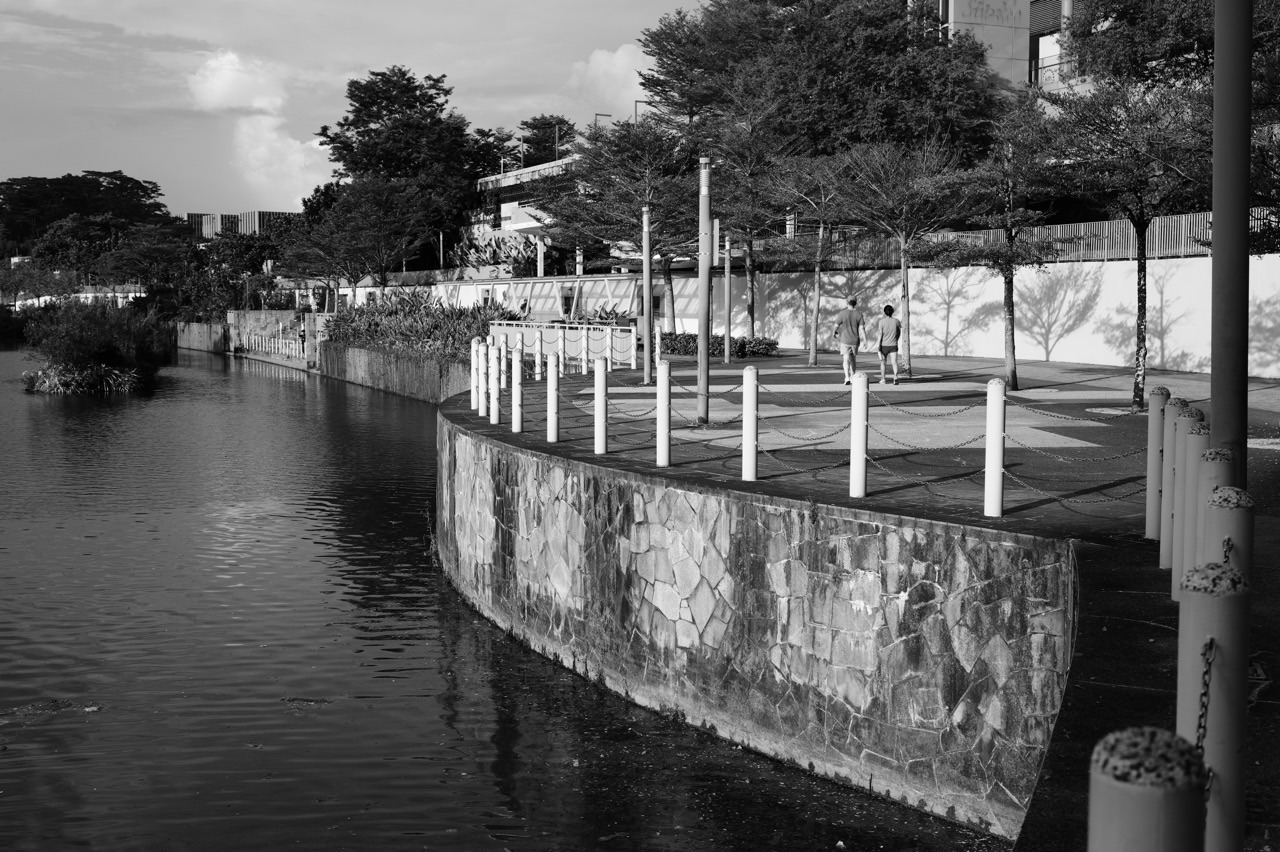
Training together on a running route in Punggol is one of the most rewarding free things to do in Punggol during the school holidays: four weeks of cool Waterway mornings, ending in a homemade family race day.
HDB says the Punggol Waterway is 4.2 kilometres long. NParks says the park connector along it is 8.4 kilometres. Both are right, and working out why is the perfect warm-up for a running family.
This is idea #38 in eduKate Punggol’s Top 100 Things to Do in Punggol During the School Holidays. Inside are Punggol’s best family running routes, a gentle four-week plan that works for different ages, the shared-path manners that keep everyone safe, and how to dodge heat, storms and haze.
The point is not speed.
It is the finish line you cross together.
A child who learns that a goal which felt impossible in week one can be done in week four has learnt something no stopwatch can measure.
This idea is perfect for families who want to:
- build a healthy morning habit over the holidays;
- set one shared family goal and actually reach it;
- exercise for free, starting from their own doorstep;
- help a teen build stamina before the new school year;
- see the Waterway at its quietest and coolest; or
- end the year with a medal ceremony in the living room.
Quick look
- Best for: Primary 3 to Secondary 4 and parents; younger children on shorter bridge-to-bridge stretches
- Time needed: 30 to 45 minutes, three mornings a week, for about four weeks
- Cost: free
- Best time: before 7.30am, or after 6.30pm on clear evenings
- Nearest MRT/LRT: Damai or Sam Kee LRT for the Waterway; Punggol MRT
- Rain plan: swap to a rest day or an indoor stretch session; never run through lightning
See all 100 school-holiday ideas · Chat with eduKate Punggol on WhatsApp · Visit eduKate Punggol on Facebook
A Running Route in Punggol Is Bigger Than It First Appears
Running is the simplest sport in the world. Shoes, a path, go.
Training for a run is different.
It asks a family to choose a goal, make a plan, stick to it on mornings when bed is very comfortable, notice small improvements, and adjust when things go wrong. That is goal-setting in its purest form. It is also exactly what children will need for a long revision term, a school project or a CCA season.
Punggol makes it easy. NParks lists Punggol Waterway Park as open 24 hours, with paths along Sentul Crescent, and the Waterway Park Connector cuts right through the town. Our Punggol running routes guide describes the Waterway as flat, with promenades on both banks and bridges to cross. Flat, scenic, close to home, with natural landmarks every few hundred metres: few towns are friendlier to a beginner family.
And the health case is clear. Singapore’s physical activity guidelines, as summarised on HealthHub, suggest children aged 7 to 17 average 60 minutes of moderate-to-vigorous activity a day across the week. Three family runs a week makes a cheerful dent in that.
The Hidden Lesson in Bridge-to-Bridge Running
Tell a nine-year-old, “We are going to run five kilometres,” and you may see panic.
Say instead, “Let’s run to that bridge, then walk to the next one,” and you see a nod.
Same distance. Different story.
Breaking a big goal into visible chunks is one of the most useful thinking tools a child can own.
The Waterway’s named bridges, from Jewel Bridge in the west to Sunrise Bridge in the east, with Adventure, Kelong and Wave Bridges between, make perfect checkpoints. By week three, the same child who panicked at “five kilometres” is saying, “Can we run past two bridges this time?” They have learnt to see a big task as a series of small ones, and to trust that small ones add up. That is precisely how strong students approach a long examination paper: one question, one section, one checkpoint at a time.
Why Punggol Families Love This Running Route in Punggol
The Waterway has a way of making a morning run feel like a small holiday of its own.
The joys of a family Waterway run
- It is free, flat and open 24 hours
- Bridges give children natural, motivating checkpoints
- Both banks mean you can make loops of different lengths
- Our running guide notes toilets and water points along the park
- Early mornings are cool, calm and full of birdsong
- Waterway Point and One Punggol are close by for a post-run treat
- Every family member can go at their own pace and still finish together
- Progress is easy to see: one more bridge, one less walking break
And there is something special about a family arriving home sweaty and pleased at 8am, while the rest of the block is just waking up.
What You’ll Find: Punggol’s Family Running Routes
These distances come from our running routes guide; status notes come from NParks, checked in October 2026.
Waterway Classic (about 5 km): the family favourite
Start in Punggol Waterway Park near Sentul Crescent, close to Damai or Sam Kee LRT. Run along one bank, cross a bridge at about the 2.5-kilometre mark and come back on the other side. The path is paved, and it suits beginners. For younger children, simply turn back earlier.
Full Waterway (about 8 to 9 km): for keen teens
The whole length on one bank and back on the other. The stretches near Waterway Point get busy in the evenings, so go early, especially at weekends.
Punggol Promenade (3 to 5 km): for sea views
Out and back along a chosen section of the Promenade’s paved paths and boardwalk. Punggol Point Park is closed for upgrading from 11 August 2026, with works expected to end on 31 December 2027, so follow any diversion signs near the coast and do not plan a run into the park.
Lorong Halus and the red bridge (about 6 to 8 km): exposed but beautiful
A quieter route towards Lorong Halus Wetland and the red Lorong Halus Bridge, with little shade on some stretches. Best for older teens on cool, clear mornings.
Coney Island (about 5 km out and back): the wild one
Compacted gravel and sand, with casuarina shade. NParks lists Coney Island Park as open from 7am to 7pm, with no lighting, and no food or drinks are sold on the island. Carry water and leave by about 6.30pm.
How to Plan a Brilliant Family Run
1. Choose a goal for each runner
One family, several goals. A Primary 2 child might aim for one kilometre without stopping; a teen might aim for the full Waterway Classic. Write them down. If anyone has a health condition, check with your doctor before starting.
2. Pick a race day
Choose a morning in the last week of December, about four weeks after you start. Put it on the calendar in big letters.
3. Use a run-walk plan
A gentle approach many beginners use: in week one, run for one minute and walk for two, repeated for about 20 to 25 minutes. Each week, run a little longer and walk a little less. Our first 5K walk-run plan sets out a fuller version.
4. Run three times a week, not seven
Rest days let legs recover and keep enthusiasm high. Monday, Wednesday and Friday mornings, for example, leave weekends free.
5. Learn the shared-path rules
Keep left, look behind before stopping or turning, and run in single file when it is busy. LTA allows cyclists up to 25 km/h on shared paths, so sudden swerves are risky. Wear something bright for early starts.
6. Check heat, rain and haze every morning
Look at the forecast and haze.gov.sg before lacing up. When in doubt, rest. A missed session is better than a bad one.
7. Celebrate race day properly
Homemade medals, a finish line made of a ribbon or toilet paper, and a special breakfast afterwards. Every runner who reaches their own goal wins.
A Sample Holiday Day, Hour by Hour
A training morning in week two.
6.40am: Water and a weather check
A glass of water and a small banana or slice of bread. Check the forecast and the air. Bright shirts on.
7am: Warm-up walk to the Waterway
Brisk walking for five minutes, then some gentle leg swings and skipping.
7.10am: Bridge-to-bridge intervals
Run, walk, run, walk, with bridges as checkpoints. Little ones turn back with one adult at the first bridge; older ones carry on with the other.
7.40am: Cool-down and stretch
Walk slowly for five minutes, then stretch calves and thighs on a quiet patch of grass, well away from the path.
8.15am: Breakfast and the training log
A hearty breakfast at home. Each runner writes one line in the family log: distance, how it felt, one thing that went well.
Afternoon: Rest and a covered plan
Afternoons in the monsoon season are for indoor ideas, such as the library or a board game. Legs need the rest anyway.
Three Ways to Enjoy It
For little explorers (Primary 1–3)
Keep distances short and playful: run to the next lamp post, then walk to the bench. A “family mile” race day suits this age beautifully. Preschool siblings can join on a scooter or in a stroller with a parent; scooters must give way to people on foot and slow down on busy stretches, and riders should dismount on Kelong, Wave and Adventure Bridges, where NParks does not allow riding.
For big kids (Primary 4–6)
This is the age for owning the plan. Let them time intervals, keep the log and set the route. Primary 6 children who have just finished the PSLE often find a running goal a refreshing, very different kind of challenge.
For teens (Secondary 1–4)
Teens can aim for the Waterway Classic without walking breaks, or even the Full Waterway. A teen preparing for school fitness tests such as NAPFA next year will appreciate a head start. Older teens can run with a friend, sharing the route and agreed return time with a parent.
The Learning Bridge: Mathematics Without the Worksheet
Running is a moving Mathematics lesson.
- Doubling and measurement: Why is the waterway 4.2 kilometres but the connector 8.4 kilometres? Because the connector follows both banks. Children love solving a real-world puzzle with a simple doubling.
- Time and rates: If you ran 2.5 kilometres in 20 minutes, how many minutes per kilometre is that? It is everyday division, and older children will recognise the link between distance, time and speed from their Mathematics lessons.
- Data: A training log turns into a lovely line graph of minutes run without stopping. Upward lines are very motivating.
One question per run is plenty. For a calm holiday plan for Mathematics, see our guide to using the school holidays for Mathematics.
Little Hiccups and How to Dodge Them
The heat
Run before 7.30am or after 6.30pm, carry water on any run longer than 45 minutes, and check MSS’s heat stress advisory. Our guide to heat stress and outdoor exercise in Punggol has more.
Thunder and lightning
Storms are common on afternoons from November to January. If you hear thunder, stop and head indoors; open shelters and bridges are not safe places to wait. MSS has a lightning alert page.
Haze
October 2026 brought unhealthy haze readings across Singapore. Check haze.gov.sg before every run, and rest on poor-air days. Our guide on returning to running after haze explains how to restart sensibly.
Cyclists and busy paths
Keep left, run in single file when busy and never stop suddenly in the middle of the path.
Wildlife
Otters live along the Waterway, and NParks has issued wild boar advisories on the Promenade Nature Walk. Keep your distance, never feed wildlife, and do not chase anything for a photo.
Stitches and blisters
Slow to a walk for a stitch and breathe out steadily. Well-fitting shoes and proper socks prevent most blisters.
What a Great Day Looks Like
You will know the training is working when your family:
- gets out of bed on run days with only mild grumbling;
- needs fewer walking breaks than last week;
- knows the bridges by name;
- keeps left and checks behind without being told;
- talks about “our race” at dinner; and
- crosses the race-day finish line together, grinning.
That shared finish is the medal that matters.
When to Go
The 2026 year-end school holidays for MOE primary and secondary schools run from Saturday 21 November to Thursday 31 December 2026, according to MOE. Starting in the last week of November gives you about four weeks of training before a race day just after Christmas. Secondary students at O-Level venue schools, who finished Term IV on 23 October, can start even earlier.
Run before 7.30am, when it is coolest, or after 6.30pm on clear evenings, avoiding Coney Island after dark because its gates close at 7pm. Sunrise and sunset times shift through the year, so check them on the day. Weekday mornings are quieter than weekends. If you want to keep the habit going, MOE’s 2027 calendar sets the next breaks at 13 to 21 March, 29 May to 27 June, 4 to 12 September and 20 November to 31 December 2027.
Getting There from Around Punggol
Most families can jog or walk to the Waterway from home, which doubles as the warm-up. NParks lists Punggol MRT and Damai LRT as the nearest stations for Punggol Waterway Park, and our running guide suggests starting near Damai or Sam Kee LRT for the Waterway Classic. Check the shortest path from your block on OneMap. If you drive, NParks lists two small carparks on Sentul Crescent, with fees.
Start: Punggol Waterway Park, along Sentul Crescent
Nearest stations: Damai LRT (PE7), Sam Kee LRT (PW1), Punggol MRT (NE17)
Entry: free, open 24 hours
Quick Details
Activity: a four-week family run-walk plan ending in a homemade race day
Where: Punggol Waterway Park and the Waterway Park Connector (Waterway Classic route)
Best ages: Primary 3 upwards; shorter distances for younger children
Cost: free
Time needed: 30 to 45 minutes, three times a week
Booking: none
Accessibility: NParks lists the park as wheelchair accessible and the connector as wheelchair-friendly
Status checked: October 2026, NParks Punggol Waterway Park page and NParks PCN page (no closures listed at the time of checking; Punggol Point Park closed)
What to Bring
- Comfortable running shoes and proper socks
- A water bottle (essential for runs over 45 minutes)
- A cap and sunscreen
- Bright or reflective clothing for early starts
- A phone with a timer for intervals
- A small towel
- The family training log
- Ribbon and cardboard for race-day medals
Frequently Asked Questions
What is the best running route in Punggol for beginners?
The Waterway Classic, about 5 kilometres out and back along Punggol Waterway Park, is flat, paved and easy to shorten for children.
How long is the Punggol Waterway?
HDB gives the waterway’s length as 4.2 kilometres. NParks describes the Punggol Waterway Park Connector, which runs along both banks, as 8.4 kilometres.
Are there toilets and water along the route?
Our running guide notes toilets and water points along Punggol Waterway Park. Always carry your own water too.
Can a primary school child run five kilometres?
Some can, with gradual training; many younger children are happier with shorter goals. Choose a target that suits your child, build up slowly and stop if anything hurts.
Can we run through Punggol Point Park?
No. It is closed for upgrading from 11 August 2026, with works expected to end on 31 December 2027. Follow diversion signs along the coast.
Can we run on Coney Island?
Yes, between 7am and 7pm. The trail is gravel and sand, there is no lighting and no food or drinks are sold, so carry water and leave by about 6.30pm.
What should we do about cyclists?
Keep left, run in single file on busy stretches, and check behind before stopping or turning.
Helpful Reading for Punggol Families
- Top 100 Things to Do in Punggol During the School Holidays
- Punggol School Holiday Guide: A Week-by-Week Plan for the Year-End Break
- The Best Running Routes in Punggol, With Distances
- First 5K Running in Punggol: Walk-Run Plan, Waterway Routes and Heat Safety
- Punggol Heat Stress and Outdoor Exercise
- Punggol Waterway Park Guide
- School Holiday Mathematics Plan: Repair, Consolidate or Prepare Ahead?
- NParks PCN: Punggol Waterway Park Connector
- NParks: Punggol Waterway Park
A Family Run for Punggol Families
Five bridges. Four weeks. One finish line.
For little ones, it is a race to the next lamp post and a cardboard medal.
For big kids, it is a plan they made and a goal they reached.
For teens, it is stamina, freedom and a quiet pride that lasts into the new school year.
And for parents, it is the memory of running beside your child along the Waterway at dawn, both of you a little out of breath, both of you smiling.
Plan the Rest of Your School Holidays
Shoes laced, race day pencilled in. Browse the full Top 100 Things to Do in Punggol During the School Holidays, or carry on to idea #39, the golf driving range, for a completely different way to practise patience and aim.
And if a calm, small-group learning block is also on your holiday list, eduKate Punggol teaches English, Mathematics and Science in classes of three. Come find out more.
Book a consultation · Chat on WhatsApp
eduKate Punggol
Small-group English, Mathematics and Science
Primary and Secondary
By appointment · +65 8823 1234
Properly taught kids shine a bright light into the future.
← Previous: #37 Fitness-corner family challenge · All 100 ideas · Next: #39 Golf driving range →
Checked October 2026. Opening hours, prices, programmes and closures change, so please confirm with the official source before you go.


