
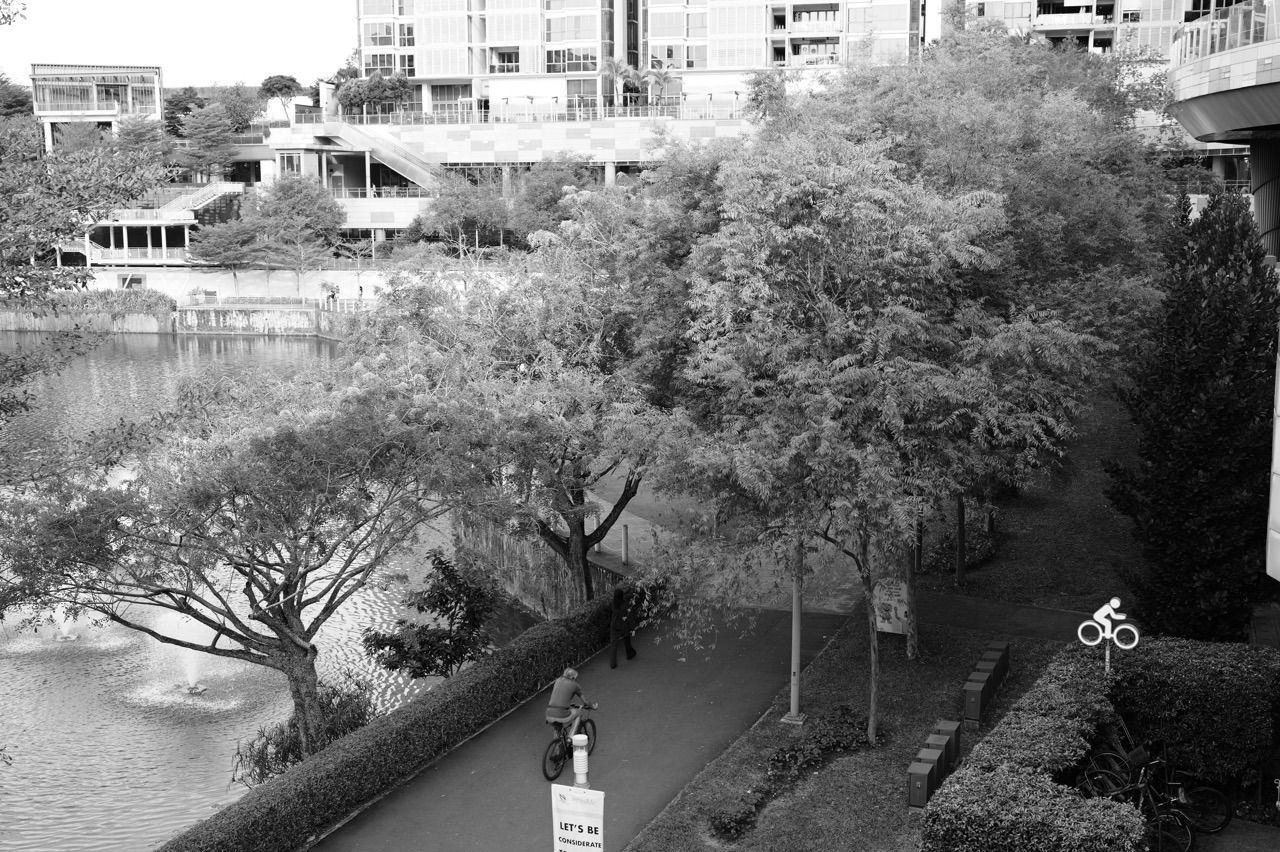
Helping a child learn to cycle in Punggol is one of the most rewarding things to do in Punggol during the school holidays: wide, flat Waterway paths, cool early mornings, a nearby rental shop with learning bicycles, and six weeks of time on your side.
Picture it: a quiet path by the Waterway, a wobbling bicycle, and a small voice shouting, “Don’t let go!” to a parent who let go ten metres ago.
This is idea #23 in eduKate Punggol’s Top 100 Things to Do in Punggol During the School Holidays. Below you will find a simple, step-by-step way to teach riding, where to practise safely in Punggol, the rules you need to know, a sample morning, and how to tell when your child is ready for a real family ride.
The point is not to finish in one morning.
It is to give a child the feeling of doing something they could not do yesterday.
That feeling lasts much longer than the scraped knee.
This idea is perfect for families who want to:
- teach a first bicycle ride without pressure;
- use the cool holiday mornings for something active;
- help an older child or teen who never quite learnt;
- build confidence, patience and a “try again” habit;
- prepare for family rides along the Waterway later; or
- swap screen time for fresh air and a proud grin.
Quick look
- Best for: first-time riders of any age, most often preschool to lower primary
- Time needed: short sessions of 30 to 45 minutes, repeated over several mornings
- Cost: free with your own bicycle; rental of a learning bicycle is extra
- Best time: about 7.30am to 9am on a weekday, when paths are quieter and cooler
- Nearest stations: Punggol MRT/LRT, Damai LRT or Sam Kee LRT for the Waterway
- Rain plan: postpone, play balance games at home, and try again the next dry morning
See all 100 school-holiday ideas · Chat with eduKate Punggol on WhatsApp · Visit eduKate Punggol on Facebook
Learning to Cycle in Punggol Is Bigger Than It First Appears
Riding a bicycle looks like one skill. It is really five or six small skills wearing a trench coat.
A child has to balance, steer, pedal, look ahead, brake and stop, often all within the same three seconds. No wonder the first attempts look like a newborn giraffe on wheels.
The good news is that each of those skills can be practised on its own, in order, and Punggol is an unusually kind place to do it. Our Cycling in Punggol guide describes the Waterway loop as flat and easy, with promenades on both banks, and recommends it for young children and first rides. Our Family Cycling guide adds the most important principle of all: practise basic handling and braking in a safe, permitted area before you go anywhere busy.
Small steps. Short sessions. Quiet paths.
That is the whole method.
And there is a bonus. A child who learns to ride this December can join the whole family on the Waterway by the March holidays.
The Hidden Lesson in Learning to Ride
Here is something worth trying on the second morning. Ask your child to lift both feet and glide, and count out loud how long they stay balanced.
The first try might be “one”.
The fifth might be “three”.
By the end of the week, it might be “eight”.
Write the numbers down. Show your child the list.
Nothing about the bicycle changed. The child did.
This is the quiet lesson underneath every wobble: progress is visible if you measure it. A child who sees “1, 3, 8” on paper learns that getting better is not magic, it is practice. That is the same feeling we want them to have about spelling lists, times tables or a tricky Science concept. You try, you notice, you adjust, you try again. Teachers call it a feedback loop. Children just call it “getting it”.
Why Punggol Families Love Learning to Cycle Here
Some neighbourhoods make cycling feel like a battle with traffic. Punggol’s park connectors make it feel like a morning out.
The Waterway sits within walking distance of many homes, so you can practise for half an hour, go home for breakfast and come back tomorrow without a long journey.
The joys of learning to cycle in Punggol
- The Waterway paths are flat and paved, which our cycling guide recommends for first rides
- Long, open stretches let you see far ahead before you set off
- A rental shop at SAFRA Punggol lists children’s learning bicycles
- Early holiday mornings are cooler and calmer than weekend afternoons
- Benches and shade along the way give natural rest stops
- Food and toilets are close by at Waterway Point and One Punggol
- Once riding, children have kilometres of park connector to grow into
- The skill opens the door to future family rides around Punggol and beyond
Most of all, there is something special about learning beside the water you will one day ride along together.
What to Expect: The Skills, the Places and the Rules
Before you start, it helps to know what you are teaching, where you can practise, and which rules apply.
The skill ladder
Our Family Cycling guide describes a series of skill stages, from equipment checks and basic handling through to a short outing and, later, a new route. In practice, most families find this order works:
- check the bike and helmet;
- walk the bike beside you, using the brakes;
- glide with feet off the ground on a lowered saddle;
- add pedals and pedal from a standing start;
- steer around wide, gentle curves;
- brake and stop on purpose; and
- ride a short, quiet stretch with an adult alongside.
Where to practise
Choose a short, familiar, legal cycling path near home, one you can see from end to end, with an easy way back. Early mornings on a quiet, wide stretch of the Waterway paths work well. Our guides advise keeping young children on the side away from the water, and not learning to brake for the first time on a narrow bridge or beside the water’s edge. Obey any “No cycling” signs: from 1 July 2025, LTA does not allow bicycles on converted Pedestrian-Only Paths.
The no-ride spots on the Waterway
NParks does not allow cycling or riding devices on Kelong Bridge, Wave Bridge, Adventure Bridge or the boardwalk at Punggol Waterway Park. Teach your child early that “we hop off and push here”. It is a good habit, and a good excuse for a rest.
The rules worth knowing
LTA sets speed limits of 25 km/h on cycling paths and shared paths and 10 km/h on footpaths. Helmets are compulsory for cyclists on roads, and our guides strongly recommend them everywhere. A white front light and a red rear light are needed when riding in the dark. NParks asks riders on park connectors to ride single file, slow down and give way, especially in Attention Zones marked with red dotted lines. Check LTA’s active mobility rules for the full picture.
Borrowing the right bicycle
If your child has outgrown their old bike, or you would rather not buy one yet, Bike Stop at SAFRA Punggol lists children’s learning bicycles and adult learning bicycles for rental. At the time of checking in October 2026, SAFRA listed it as open Friday to Sunday, 9am to 8pm, by appointment on Tuesdays and public holidays, and closed on Mondays, Wednesdays and Thursdays. Call 9830 3117 to check sizes, prices and availability before you go.
How to Plan a Brilliant Learn-to-Ride Morning
The best sessions are short, cheerful and planned. Here is how.
1. Check the air, the heat and the sky
Look at haze.gov.sg first. October 2026 brought unhealthy haze readings to Singapore, and hard breathing is not what a learner needs. On very hot days, glance at the heat stress advisory, and keep an eye on the forecast for thundery showers.
2. Fit the bike and the helmet
The saddle should be low enough for your child to put both feet flat on the ground while sitting. The helmet should sit level and snug, with the strap fastened. Check the brakes, tyres and bell. LTA’s safer cycling checklist is a handy reminder.
3. Choose your stretch before you leave
Decide exactly where you will practise: a wide, quiet, permitted path you can see clearly, away from bridges, crossings and the water’s edge.
4. Start with stopping
Before any pedalling, teach the brakes. Walk beside the bike, squeeze, stop. Then glide, squeeze, stop. A child who knows they can stop is a child who dares to go.
5. Balance first, pedals second
Let your child scoot and glide with feet off the ground. Only when they can glide for a few seconds do the pedals come in. Hold their shoulders or upper back rather than the handlebars, so they learn to steer for themselves.
6. Keep sessions short and end on a win
Thirty to forty-five minutes is plenty. Finish with something they can do well, even if it is just one good glide, so they go home wanting more.
7. Agree on a signal
Our Family Cycling guide suggests agreeing on who leads, who follows and what the stop signal is. Practise the signal before the first real ride.
A Sample Holiday Day, Hour by Hour
Here is how one relaxed learn-to-ride morning might look.
7.15am: A quick breakfast
Something light. Fill water bottles and check the helmet strap at home.
7.40am: Walk to the Waterway
Walk the bike to your chosen stretch. On the way, let your child practise walking it beside them and squeezing the brakes.
7.50am: Brakes and glides
Ten minutes of “glide and stop”. Count the glide seconds out loud and write them down.
8.10am: Pedals on
Try a few starts from standing, one pedal raised. Celebrate every few metres, not just the long ones.
8.25am: Rest and water
Sit in the shade. Ask, “What felt easier today than yesterday?”
8.35am: One last good ride
Finish with one easy, successful glide or ride, then walk home together before the heat builds.
Later: Breakfast number two and the chart
Back home or at Waterway Point, add today’s best glide time to the chart on the fridge. Tomorrow, you go again.
Three Ways to Enjoy It
Learning to ride looks different at different ages.
For little explorers (Primary 1–3)
Keep it playful. Use games: “glide to that tree”, “stop on the shadow”, “ring the bell when you see a bird”. Praise effort loudly and wobbles kindly. Preschool siblings can ride a balance bike or scooter alongside on a quiet stretch, with an adult beside them.
For big kids (Primary 4–6)
Many already ride. Help them polish real-road habits for park connectors: looking over the shoulder without swerving, braking smoothly, keeping left and slowing for walkers. Let them plan a short practice route and time it. If they are still learning, give them privacy and patience; older children can feel embarrassed, so a quiet early morning helps.
For teens (Secondary 1–4)
A teen who never learnt can absolutely learn now, often faster than a small child because they understand the steps. Go very early, choose a quiet stretch and let them set the pace. Teens who already ride can be wonderful coaches for a younger sibling. Remind them of the rules: under-16s may not ride power-assisted bicycles on cycling paths or roads, even with supervision.
The Learning Bridge: Science Without the Worksheet
A bicycle is a moving Science lesson, as long as you keep the claims modest.
- Forces: Primary Science introduces forces as pushes and pulls, and friction as a force that can slow things down. When your child squeezes the brakes and feels the bike slow, they are experiencing friction at work. Upper primary children can compare stopping on a dry path with stopping on a damp one (carefully, at walking pace).
- Observing and recording: writing down glide times each day is exactly the kind of simple data collection Science encourages. Older children can draw a bar graph of their progress.
- Fair testing: Primary 5 and 6 children can test one change at a time, such as saddle height, and notice whether gliding gets easier. Change one thing only, keep everything else the same.
Keep it light: the ride comes first, the questions second. If you would like more ideas for gentle holiday Science, our article on using the school holidays for Science explains how to repair, consolidate or prepare ahead without overloading a child.
Little Hiccups and How to Dodge Them
Every learner falls. The trick is making the falls small and the recoveries quick.
Tumbles and tears
Choose a smooth, wide path, keep speed low, and dress for it: covered shoes, and long sleeves or light knee protection if your child is nervous. A plaster and a hug fix most things.
Heat
Shade is patchy at midday. Practise early, drink water, and stop if anyone feels dizzy or unwell.
Rain and lightning
The year-end holidays fall in the Northeast Monsoon season, when thundery showers often arrive in the afternoon. Wet paths are slippery for learners. If you hear thunder, head indoors, and check the MSS lightning page.
Haze days
On poor-air days, skip the outdoor session. Balance games at home, or a library visit, are fine substitutes. Our Punggol Haze Indoor Activity Planner has ideas.
Busy shared paths
Joggers, dog-walkers and confident cyclists share the Waterway. Practise early, keep left, and walk the bike through crowded spots. Our cycling guide notes that paths near Waterway Point get busy in the evening.
Frustration
Some days it will not click. End early, on a small win, and try again tomorrow. Learning to ride is a holiday project, not a test.
What a Great Day Looks Like
You will know the session went well when your child:
- can stop on purpose, every time;
- glides a little longer than yesterday;
- looks ahead instead of down at the wheel;
- hops off and pushes at the no-ride bridges without being told;
- asks, “Can we come back tomorrow?”; and
- tells someone at dinner, “I did it by myself.”
That last sentence is worth every early alarm.
When to Go
The 2026 year-end school holidays for MOE primary and secondary schools run from Saturday 21 November to Thursday 31 December 2026, according to MOE. Six weeks is a generous window for a learner: three or four short sessions a week is often enough to see real progress. If December slips by, MOE’s 2027 calendar offers the March holidays (13 to 21 March), June (29 May to 27 June) and September (4 to 12 September).
Weekday mornings between about 7.30am and 9am are best: cooler air, quieter paths and plenty of daylight. Avoid weekend afternoons and busy evenings near the malls.
Getting There from Around Punggol
Most families can simply walk their bikes from home to the nearest stretch of the Waterway; check OneMap for the shortest path. NParks lists Punggol MRT and Damai LRT as the nearest stations to Punggol Waterway Park, and Sam Kee LRT is close to the western side. Bike Stop is at SAFRA Punggol on Sentul Crescent, beside the Waterway.
Location: Punggol Waterway Park and its park connector, along Sentul Crescent
Nearest MRT/LRT: Punggol MRT (NE17), Damai LRT (PE7), Sam Kee LRT (PW1)
Rental: Bike Stop, #01-04A, SAFRA Punggol, 9 Sentul Crescent, Singapore 828654
Quick Details
Activity: teaching a child (or teen) to ride a bicycle on quiet, permitted paths
Where: quiet stretches of the Punggol Waterway paths, away from bridges and the water’s edge
Best ages: any first-time rider; most often preschool to lower primary
Cost: free with your own bicycle; rental prices vary by bicycle type, so check with Bike Stop
Time needed: 30 to 45 minutes per session, over several mornings
Booking: none for the paths; call Bike Stop (9830 3117) for rentals, and book ahead on Tuesdays and public holidays
Accessibility: paved, flat paths; NParks lists Punggol Waterway Park as wheelchair accessible and elderly friendly, so grandparents can watch
Status checked: October 2026, NParks park page (no closures listed) and the SAFRA Bike Stop page
What to Bring
- A bicycle that fits, with working brakes and a bell
- A well-fitted helmet
- Covered shoes and comfortable clothes
- Light knee or elbow protection for nervous learners
- Water bottles and a small snack
- Plasters and antiseptic wipes
- A notebook for glide times and progress
- Sunscreen and a cap for the walk home
- A light raincoat in case of a sudden shower
Frequently Asked Questions
What is the best age to learn to ride?
There is no single right age. Many children learn between preschool and lower primary, but older children and teens learn well too, often quickly, because they understand the steps.
Is it allowed to cycle in Punggol Waterway Park?
Yes, on the paths, but NParks does not allow cycling on Kelong Bridge, Wave Bridge, Adventure Bridge or the park’s boardwalk. Riders dismount and push across.
Does my child have to wear a helmet?
Helmets are compulsory for cyclists on roads, and our guides strongly recommend them on every path, especially for learners.
Can we rent a learning bicycle in Punggol?
Bike Stop at SAFRA Punggol lists children’s learning bicycles. At the time of checking it opened Friday to Sunday, with Tuesdays and public holidays by appointment. Call 9830 3117 first.
What speed is allowed on shared paths?
LTA sets 25 km/h on cycling paths and shared paths, and 10 km/h on footpaths. Learners should be far slower than that.
Should we remove the pedals?
Many families find that gliding with feet off the ground, on a lowered saddle, builds balance before pedalling. You can also simply let your child scoot along with the pedals out of the way.
What if my child is scared?
Go slower. Start with walking the bike and braking, praise every small step, and end every session on a success.
Helpful Reading for Punggol Families
- Top 100 Things to Do in Punggol During the School Holidays
- Punggol School Holiday Guide: A Week-by-Week Plan for the Year-End Break
- Cycling in Punggol 2026: Routes, Bike Rental and Safety Rules
- Family Cycling in Punggol: Shared Paths, Helmets and Children
- Bike Stop at SAFRA Punggol: Rental Hours and Rates
- Punggol Waterway Park Guide
- Active Play for Punggol Primary School Children
- School Holiday Science Plan: Repair, Consolidate or Prepare Ahead?
- LTA: Active Mobility Rules and Code of Conduct
- NParks: Sharing the Park Connector Network
Learning to Cycle in Punggol for Punggol Families
Every confident cyclist was once a wobbly one.
Brakes become trust.
Glides become balance.
Balance becomes freedom.
For little ones, learning to ride is a daily dose of brave.
For big kids, it is the start of real independence on the paths.
For teens, it is proof that it is never too late to learn something new.
And for parents, it is the quiet joy of running alongside, letting go, and watching them ride away.
Plan the Rest of Your School Holidays
There are ninety-nine other ideas waiting in the full Top 100 Things to Do in Punggol During the School Holidays. Once your new rider is steady, idea #24, a family bike rental day, is the perfect first big ride together.
And if a calm, small-group learning block is also on your holiday list, eduKate Punggol teaches English, Mathematics and Science in classes of three. Come find out more.
Book a consultation · Chat on WhatsApp
eduKate Punggol
Small-group English, Mathematics and Science
Primary and Secondary
By appointment · +65 8823 1234
Properly taught kids shine a bright light into the future.
← Previous: #22 LRT West Loop adventure · All 100 ideas · Next: #24 Family bike rental day →
Checked October 2026. Opening hours, prices, programmes and closures change, so please confirm with the official source before you go.


