
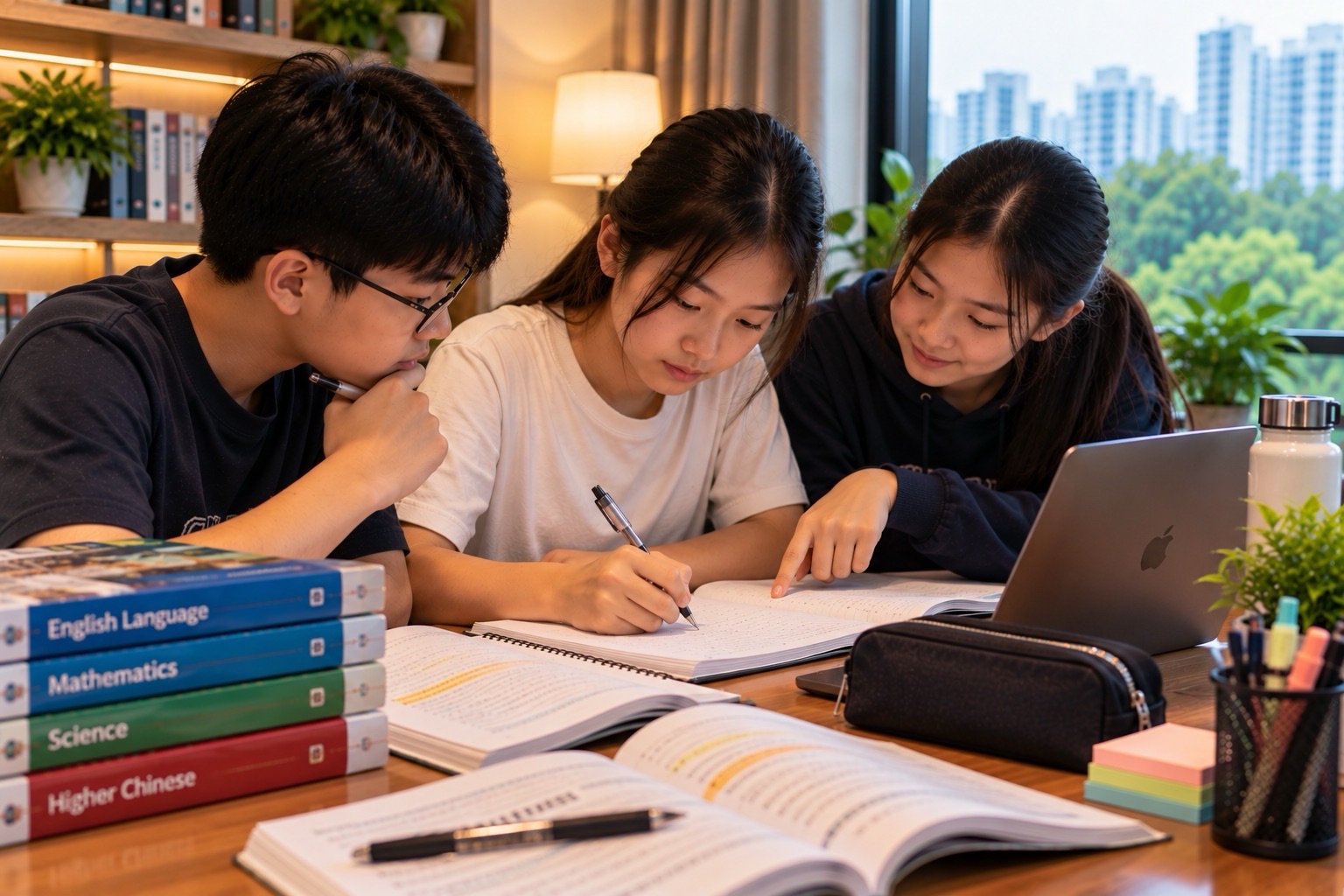
Looking for History source-based questions (SBQ) tuition in Punggol because your child says, ‘I understand the source, but I never know how to answer’? You have found a very precise learning problem. In Secondary History, the answer is not always sitting in one sentence waiting to be copied. Students need to interpret evidence, identify viewpoint, compare claims and decide what a source can—or cannot—support.
The core aim of Punggol History tuition for source-based questions is to build independent evidence-based judgement. A strong student does not simply paste ‘inference + evidence’ into every answer. They read the exact task, understand what kind of historical claim it demands, choose the relevant clue and explain why the clue earns that claim. The difference is subtle, but it changes the whole quality of an SBQ response.
This parent-friendly History tuition guide covers source-based question techniques for lower-secondary learners and students preparing for more demanding upper-secondary Humanities work. The examples are original teaching scenarios rather than real historical documents; the correct answer format, marks and level must always be checked against the school’s current instructions and the applicable official syllabus.
Explore the Punggol History Tuition series
By level: Sec 1 · Sec 2 · Sec 3 · Sec 4
Source skills: SBQ · Inference · Reliability
Learning pathway: Pure History · Combined Humanities
Revision: Revision Notes · Exam Preparation · Essay Writing
Why Source-Based Questions Feel So Unpredictable
A child can complete ten inference questions beautifully and then stumble over one asking about usefulness. They may know how to quote but not why they are quoting. They may spot a source’s purpose yet forget to link it to the enquiry. The problem is not always effort; often the learner has learned a formula without learning when it applies.
A source may be a speech, photograph, poster, letter, table, recollection, newspaper article or official document. Each contains information and limitations. The same source can be excellent evidence for one historical question and weak evidence for another. That is why historical source work is not a mechanical hunt for ‘the answer’ inside the text.
First, Decode the SBQ Task
| Question language | What to decide | Mistake to avoid |
|---|---|---|
| What can you infer? | What reasonable claim follows from a precise detail? | Repeating the words without an inference. |
| How similar or different? | Which common issue both sources address, and what relationship exists? | Writing two unconnected summaries. |
| What is the purpose? | What is the author trying to achieve with a target audience in context? | Guessing a motive without textual or contextual support. |
| How useful? | How well does this source help answer this particular enquiry? | Calling all old sources useful or all biased sources useless. |
| How reliable? | How far is the specific claim trustworthy in light of evidence and context? | Declaring a whole source true or false from one label. |
| To what extent do sources support a view? | Which evidence supports, qualifies or challenges the stated interpretation? | Counting sources without weighing their content. |
Different school and examination formats may use these terms with particular conventions. Good tuition begins with the exact wording on the child’s paper. The tutor should not force a ‘reliability’ template on an ‘inference’ question just because both happen to use the same source.
A Complete Mini SBQ Packet: A Fictional Punggol-Area Reading Room
All the following texts are made-up classroom sources; they make no factual claims about an actual Punggol institution. The question is: ‘Did a new neighbourhood reading room serve residents effectively in its opening months?’
Source A: Organisers’ announcement
Our new reading room will bring books and a quiet learning space closer to every family. Residents are invited to visit and enjoy a welcoming centre.
Source B: Student diary
I like the reading room because I can do homework there after school, but the doors close before my brother finishes his training on two evenings.
Source C: Fictional volunteer note
We welcomed many visitors at the launch. Later in the month, some parents asked us to extend the hours and add more books for younger readers.
Notice the beautiful tension: the sources provide different windows on the same imagined situation. The announcement describes a promise and invitation. The diary records one useful experience and one limitation. The volunteer note reports interest and requests for improvement. A good historian lets all three speak without flattening them into a single slogan.
Skill 1: Inference — Claim, Evidence and Connection
Question: ‘What can you infer from Source B about the reading room?’
Thin answer: ‘The room is good because the student likes it.’ That is a simple interpretation, but it lacks a clearly articulated basis and omits the nuance.
Improved answer: ‘The reading room was useful to at least one student as a place for after-school study. The writer says it helped with homework, which suggests the space met a practical learning need. However, the writer also describes closing times as a limitation for the family.’
Why this works: the claim is limited to the experience the source actually records. A sentence from one diary cannot establish that all students benefited. The writer also notices mixed evidence rather than forcing the whole source into ‘positive’ or ‘negative’.
The one-sentence self-check
If somebody asked, ‘Where did the source give you permission to make that claim?’, could you point to the exact detail?
Skill 2: Comparison — Put Sources in Conversation
Question: ‘How similar are Sources A and B in their views of the reading room?’
Both present the reading room as potentially beneficial, but in different ways. Source A promotes an intended community benefit, while Source B reports a personal benefit and adds a practical limitation. A comparison should identify the same dimension—benefit and accessibility—then show how each source handles it.
The weaker habit is to write a paragraph about A, another about B, and finish with ‘therefore they are different’. The stronger habit is to write ‘Both sources suggest ___, but they differ because ___.’ Each part receives evidence.
A source’s disagreement on one point does not mean total disagreement. Teach students to separate a shared broad judgement from a different detail. That is especially helpful when exam questions use words such as how far, similar and different.
Skill 3: Purpose — Ask What the Writer Wanted to Do
Source A’s announcement invites families to visit. It is reasonable to suggest the organisers were attempting to encourage use of the room. But students should not write that the organisers ‘wanted to deceive residents’ without evidence. Purpose is a contextual inference, not a licence to invent motives.
A useful process is to identify the source type, likely audience, central message and intended effect. Then ask what feature of the source supports that interpretation. A recruitment poster, for example, may emphasise attractive benefits to encourage action. That does not prove every claim is false; it reveals a reason to examine those claims critically.
Skill 4: Utility — Useful for Which Question?
An important SBQ lesson is that a source can be limited yet still useful. Source A is useful for understanding how the organisers represented the project at launch. It is less conclusive about whether the reading room achieved its promises months later. Source B is useful for one user’s experience, but it cannot establish experiences across every household.
Teach students to complete this sentence: ‘This source is useful for investigating ___ because ___. However, it is limited for investigating ___ because ___.’ Usefulness is always connected to an enquiry, not awarded automatically because a source is old, official or detailed.
Ask for additional evidence that would help: usage logs, a series of visitor comments or documented operating hours. These are suggestions for further investigation, not facts supplied by the fictional sources.
Skill 5: Reliability — Evaluate the Claim, Not the Label
A child may be tempted to write: ‘Source A is biased because it is from the organisers, so it is unreliable.’ This is a shortcut. Organisers can provide accurate information, but an announcement alone might not establish actual attendance or satisfaction. The issue is what the evidence supports and what other sources can check.
Similarly, Source B is first-hand for its author’s experience but not necessarily representative of all residents. Source C might corroborate that visitors arrived and requested changes, although its statement ‘many visitors’ remains imprecise. A careful evaluation distinguishes personal experience, institutional intention and verifiable outcomes.
A productive tutor question is: ‘Reliable evidence of which precise statement?’ That single phrase moves the learner away from indiscriminate praise or dismissal.
Skill 6: Corroboration — Where Independent Evidence Meets
Corroboration is more than finding two similar phrases. Students should ask whether sources independently support the same claim, whether they cover the same time and place, and whether one may have repeated the other. Two sources sharing wording are not necessarily two independent observations.
For example, Sources B and C both mention a need for changes or extended access, but they arise from different vantage points. They might strengthen the conclusion that some users saw practical limitations. They do not automatically prove the limitations affected everyone. Good corroboration increases justified confidence without removing uncertainty.
How Historical Context Changes Interpretation
A speech before a policy begins and a diary written after it starts answer different questions. A photograph captures a moment, not necessarily a whole trend. A historian must know the period, the relevant actors and the circumstances before making broad judgements. That is why factual knowledge still matters in source-based work.
An effective lesson alternates between recall of historical context and direct work on sources. Teach the student to ask: ‘What had already happened when this source was produced? Who could know what at that moment? Would the author have access to the outcome they are discussing?’
SBQ Writing: Longer Is Not Automatically Better
When parents see three lines of feedback asking for ‘development’, the impulse is to tell the child to write twice as much. But a long answer with an unsupported claim is still weak. First repair the reasoning. Then add the particular explanation the assessment demands.
In the fictional packet, ‘The reading room helped students because it helped students’ adds length but no causal connection. ‘The diary writer could use a quiet space after school to complete homework’ shows the practical benefit. A tight relevant explanation may do more work than an ornamental paragraph.
Six Common SBQ Mistakes and Their Repairs
| Symptom | Why it hurts | Try this |
|---|---|---|
| Copying a quotation without a claim | Evidence has not been interpreted. | Write the inference in plain language before selecting the quote. |
| Claiming ‘everyone’ from one witness | The scope exceeds the evidence. | Ask who and what the source actually covers. |
| Writing two source summaries | No comparison relationship is stated. | Choose one shared comparison dimension. |
| Saying ‘biased = useless’ | Author perspective is treated as automatic disproof. | Judge usefulness for a defined enquiry. |
| Inventing a source purpose | A motive is guessed from stereotype. | Use message, audience and context as evidence. |
| Repeating a tutor’s perfect answer | The method may not transfer. | Try an unfamiliar source with the scaffolding removed. |
An Efficient SBQ Tuition Lesson Plan
- Read the question first. Circle the command word, the stated claim and any time or place boundary.
- Read the source carefully. Identify what is directly asserted, its author and the context supplied.
- Make one defensible claim. Avoid packing three speculative inferences into one answer.
- Select the tightest evidence. Use only the detail that proves the point.
- Explain the bridge. Say why the evidence supports the claim.
- Evaluate when asked. Consider provenance, audience, limitations, other evidence or the broader historical context as the task requires.
- Practise transfer. Return to the same skill with a fresh source a few days later.
A strong small-group tutor may first let students offer differing interpretations and defend them. But the final answer must be written independently. Discussion is powerful precisely because it exposes assumptions; copying the most confident student does not train the skill.
A Ten-Minute Home Practice That Does Not Turn Parents into Markers
Select a short school-approved source. Ask your child to mark one sentence F for explicit fact, I for plausible inference and U for unknown from this source alone. Then ask for one evidence-backed conclusion. You are not trying to reproduce an exam marking rubric. You are helping them notice the boundary between observation and explanation.
For the first few sessions, use familiar reading material so that the child can focus on the reasoning step. Later, vary the source: poster, diary, chart, letter, photograph. The new format is a test of transfer. Keep a small record of the error type rather than a stack of copied model answers.
How to Check SBQ Progress Without Overreacting to Marks
- Your child reads the task before hunting for supporting lines.
- Each inference is tied to a relevant detail, not a vague impression.
- Comparisons address the same dimension across sources.
- The learner says when an inference is possible but uncertain.
- Utility and reliability answers identify the enquiry and specific claim.
- Purpose answers use audience, message and context without invented motives.
- Fresh questions are handled with less prompting and more efficient writing.
Review two or three examples over several weeks. If the student performs perfectly with tutor-led highlighting but struggles independently, the next lesson should reduce scaffolding. The aim is competence that appears under new conditions.
Frequently Asked Questions About History SBQ Tuition in Punggol
Can my child memorise a single SBQ answering template?
A flexible structure can help organise writing, but there is no honest universal formula that fits every inference, comparison, purpose, usefulness or reliability question. Students need to know why each kind of question demands different reasoning.
Should every SBQ answer quote the source?
Many school tasks expect source evidence, but what counts as adequate support and whether direct quotation is preferable depend on the particular assessment. Teach relevant evidence selection and follow the school’s marking instructions.
Why does the teacher say ‘not supported’ when the answer sounds sensible?
A statement can be plausible in ordinary life without being established by the supplied historical evidence. Ask the student to identify the precise source clue and the size of the claim. Narrowing the claim may solve the problem.
Is a primary source always more reliable than a secondary source?
No. Sources answer different questions. A contemporary personal letter may reveal feelings but contain limited factual coverage; a later scholarly synthesis may bring together broader evidence. Judge the claim and enquiry, not the category alone.
Does History SBQ help with Social Studies?
Many reading and evidence-evaluation habits transfer, but the subjects have their own syllabus requirements, formats and content. Verify the relevant paper instead of assuming identical answer templates.
How can a tutor help when my child runs out of time?
First distinguish reading, planning and writing bottlenecks. Train task recognition and concise evidence selection before applying sensible time limits. Timed drills work best after accuracy is stable.
How This Skill Grows From Secondary 1 to the SEC Years
Lower-secondary learners begin with source comprehension, inference and simple comparison. More advanced students must handle several sources, contextual knowledge, competing interpretations and substantiated judgements. Each stage relies on the same principle: the claim cannot outrun the evidence.
For families preparing for 2027 and beyond, use the official SEAB subject and year-level syllabus information to check the paper that applies to the student. School pathways and the transition to the Singapore-Cambridge Secondary Education Certificate should not be flattened into one catch-all format.
Useful Resources and the eduKate Series
- Secondary 1 History Tuition | Historical Inquiry — foundational inference and chronology.
- Secondary 2 History Tuition | Comparison and Judgement — the next stage of source interpretation.
- Exam Techniques for Students — how to read, decide, execute and check under timed conditions.
- Checking Written Answers in Exams — review command words, evidence and the final claim.
- MOE Lower Secondary History Syllabus — source-based inquiry and communication objectives.
- SEAB SEC Syllabuses for School Candidates — check the correct year and subject.
Editorial note: All reading-room sources are original fictional exercises. They illustrate historical reasoning and do not reproduce official exam questions or a proprietary marking scheme. Always follow the applicable school and examination syllabus.


