
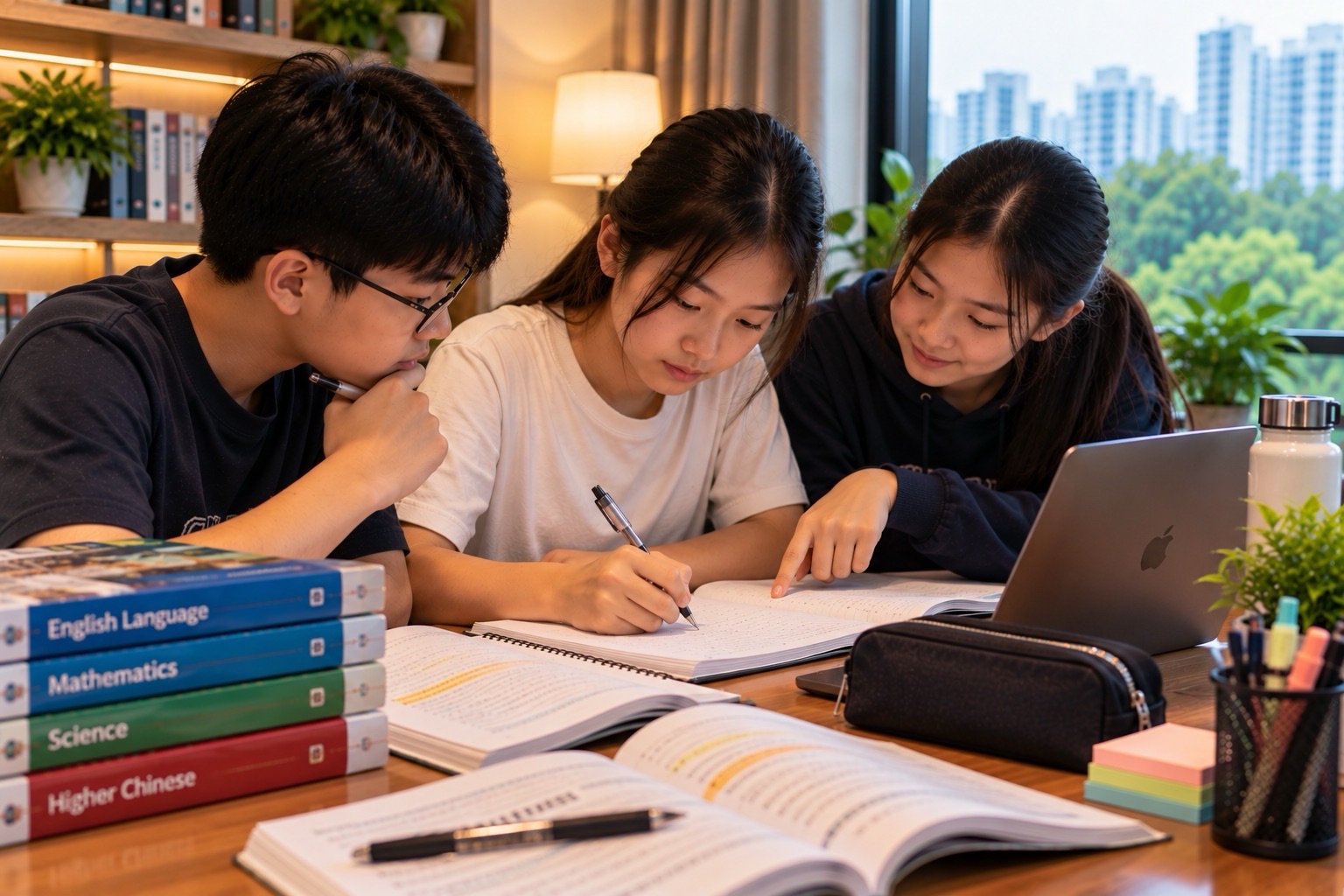
If your child is taking Secondary 4 History in Punggol, you may have heard the phrase, ‘I know all the content, but the marks are still unpredictable.’ It is one of those worrying sentences that deserves a closer look. More hours of rereading may not help if the real obstacle is a missed command word, a speculative inference or an essay that never explains its own evidence.
The core aim of Punggol Secondary 4 History tuition is to convert knowledge into dependable examination performance without sacrificing historical understanding. A good tutor helps the learner retrieve relevant facts, interpret unfamiliar sources, construct arguments, allocate time sensibly and use feedback to fix repeat errors. The destination is not a rehearsed answer to yesterday’s paper. It is a calm method that still works on a new one.
This article is designed for parents of Sec 4 History students in Punggol, Sengkang and surrounding North-East neighbourhoods. It addresses O-Level History revision, Combined Humanities History, standalone History and the SEC transition. Exact paper structures, timings, subject codes and assessment conventions must be verified for the child’s examination year, level and enrolled subject.
Explore the Punggol History Tuition series
By level: Sec 1 · Sec 2 · Sec 3 · Sec 4
Source skills: SBQ · Inference · Reliability
Learning pathway: Pure History · Combined Humanities
Revision: Revision Notes · Exam Preparation · Essay Writing
The First Decision: Which History Examination Is Your Child Sitting?
Parents sometimes collect a handful of past-year papers from relatives and assume they are interchangeable. They are not. Different syllabus years may have changed content or question formats. Standalone History and Humanities (Social Studies, History) are distinct subjects, and G2 and G3 have different specifications.
For candidates sitting the 2026 GCE O-Level, SEAB lists History under code 2174 and Humanities (Social Studies, History) under 2261. For the 2027 Singapore-Cambridge SEC G3 listings, History is K330 and Humanities (Social Studies, History) is K336. The SEC G2 listings identify History as K227 and Humanities (Social Studies, History) as K230. These are official listings current in October 2026; check the version for the student’s own sitting.
The most useful document in the family folder is the current official syllabus or the teacher’s exact assessment guide—not a generic label such as ‘O-Level History notes’. Ask the tutor to show how their chosen practice reflects the correct year and course.
| Check | Why it affects tuition | Simple parent action |
|---|---|---|
| Examination year | Syllabuses and formats can change. | Record the child’s actual sitting year. |
| G2 or G3 level | Course expectations are not identical. | Confirm the school’s subject allocation. |
| Standalone History or Humanities | Paper coverage and revision allocation differ. | Check timetable and recent test front page. |
| Topics completed | A full paper may contain material not yet taught. | Share the school’s current scheme of work. |
| Assessment weaknesses | A low mark does not identify the cause. | Keep two marked scripts and one fresh attempt. |
What an Effective Secondary 4 History Tutor Diagnoses First
A score is an outcome, not a diagnosis. A learner may lose marks because their knowledge is inaccurate, because the question has been misread, because a source’s words were confused with an inference, because evidence was irrelevant or because an explanation stopped at description. These mistakes can produce similar marks while demanding quite different teaching.
Ask your child to bring a recent source-based question, a recent essay and the teacher’s feedback. A tutor should try to discover the first point of failure. The goal is not to offer comforting guesses about effort. It is to identify the specific mental move to repair.
| What the marker writes | What may be wrong | A targeted repair |
|---|---|---|
| ‘Not answering question’ | Command word or scope not decoded. | Rewrite the task as a one-sentence question before using notes. |
| ‘Unsupported inference’ | Conclusion goes beyond what the source establishes. | Find the exact supporting detail and narrow the claim. |
| ‘More explanation needed’ | Paragraph gives facts without causal logic. | Insert the mechanism between evidence and outcome. |
| ‘Insufficient contextual knowledge’ | Key chronology, people or developments are missing. | Retrieve core facts from the prescribed topic, then apply them. |
| ‘Compare sources’ | Answers are two summaries, not one comparison. | Choose a common dimension before discussing either source. |
| ‘Judgement unclear’ | Essay weighs nothing or ends in a summary. | Make the criterion and relative conclusion explicit. |
| ‘Ran out of time’ | Planning or writing is poorly allocated. | Analyse where minutes were spent before drilling speed. |
The priority matters. If your child knows the chapter but constantly misreads questions, the next hour should focus on task interpretation. If they can plan beautifully but cannot name the relevant events, knowledge retrieval needs attention. Strong Sec 4 tuition spends time where improvement has the best chance of transfer.
A Three-Part Sec 4 History Revision System
Part 1: Secure the historical knowledge
A reliable answer still rests on accurate content. In the relevant syllabus, students should know the important developments, chronology, actors and historical concepts. For some courses this may include studies of inter-war developments, World War II, Cold War relations and decolonisation; the current syllabus decides exactly which topics apply. Do not ask your child to learn everything found in a mixed archive of old worksheets.
Revise by enquiry rather than by chapter title alone. Instead of a note labelled ‘Chapter 4’, make one that asks, ‘What circumstances and decisions contributed to this historical outcome?’ Beneath it, list the events that support possible answers, the relationships among them and one limitation. This gives knowledge a purpose.
Part 2: Practise source-based reasoning
Source-based case studies reward careful interaction with documents, not spontaneous opinions. Students must identify what a source directly states, what can be inferred, how authors’ perspectives matter and whether other evidence strengthens or limits the conclusion. A source’s usefulness or reliability can be judged only in relation to a claim or enquiry.
Timed practice should come after this method is sound. A student who reads too quickly and makes unsupported leaps will usually make those leaps faster under pressure. First aim for precise interpretation, then add time constraints appropriate to the actual paper.
Part 3: Build independent essay arguments
A History essay needs relevant evidence arranged as explanation and, when the question requires it, a defensible judgement. Memorising pages of prepared prose is brittle. A small change in wording can make the stored essay answer the wrong question.
Practise a short planning routine: mark the command word, identify the outcome or claim, retrieve two or three strong facts, organise causal links, and decide what judgement the evidence supports. Then write. An efficient plan prevents the familiar disaster of a long opening paragraph followed by hurried, undeveloped arguments.
A Complete Fictional Practice Set: Did the Bus Reform Work?
All sources in this section are original fictional teaching materials. They are not accounts of a real Singapore transport policy and are not official examination questions. Their purpose is to show a transferable method.
Source A, a fictional council announcement: ‘The new bus route will provide a reliable connection for residents who currently walk a long distance to the market.’
Source B, a fictional resident’s letter two months later: ‘I now reach the market more easily, but the final service leaves before I can finish my evening shift.’
Source C, a fictional operator’s summary: ‘Passenger numbers were strong in the first month. Several requests concerned evening operating hours.’
Question one: What can be inferred about residents’ experiences?
A weak response announces that the bus reform solved everything or that the reform failed because of the evening schedule. Neither conclusion follows from the packet. Source B establishes a benefit for one user and a limitation for that same user. Source C independently reports some demand for later services but does not quantify satisfaction across all residents.
A better response identifies a mixed but evidence-supported outcome: the new route appears to have improved access for at least some residents, while its hours did not meet every user’s needs. The student should quote or refer to the details that support each part and avoid grand claims about the whole town.
Question two: Is Source A reliable evidence that the reform succeeded?
It is helpful evidence of what organisers publicly intended before implementation. It is not, by itself, a verified account of the later result. Source B’s first-hand experience and Source C’s operational summary provide some relevant post-implementation information, although neither gives a complete population-wide evaluation. The key is to judge reliability for the specified conclusion.
Question three: Was access the most important achievement?
Now the student has moved from source reading to an evaluative enquiry. They could argue that improved access was significant for travellers who previously walked far, while noting limits of evening service and the absence of long-term evidence. If an essay asks for a comparison with other achievements, the student needs appropriate additional contextual evidence. They should not invent it to fill the structure.
The strongest History answer is not the boldest claim. It is the strongest claim the available evidence can responsibly carry.
The Command-Word Check That Saves Wasted Writing
Before practising a full paper, ask your child to explain the difference among four common instructions. Describe asks for an account; explain demands reasons or mechanisms; compare asks how items relate on a shared dimension; evaluate asks for a reasoned assessment. Teachers may use particular forms and rubrics; the student should follow those instructions.
One of the most useful drills is to give three questions on the same material and ask the child to make three different outlines. That reveals whether they can truly read tasks or merely recognise familiar chapter words.
| Prompt | Weak reflex | Better mental move |
|---|---|---|
| Why did the development occur? | List every event in the chapter. | Choose factors and explain how they contributed. |
| How similar are the accounts? | Retell each source separately. | Use one shared issue and compare both perspectives. |
| How useful is the account? | Say it is useful because it contains information. | Define the enquiry, value and limitations. |
| How far do you agree? | Write only points that support agreement. | Weigh relevant evidence and make a bounded judgement. |
History Notes for Secondary 4: The 90-Second Retrieval Rule
Revision notes should let a learner recover relevant knowledge without reading several pages. A useful evidence card carries a historical claim, three anchor facts, one causal connection and an uncertainty or alternative factor. The student closes the card and explains its content aloud in ninety seconds.
If they cannot retrieve any examples, the content is unstable. If they know examples but cannot explain the link, the argument is unstable. If they explain fluently only with the card open, independence is not yet secure. This one drill turns notes into a diagnostic instrument rather than decoration.
Why More Full Papers Are Not Always the Answer
A full timed paper is useful when the student can answer each question type competently and now needs stamina, selection and pace. It is a poor first response to a basic inference problem. In that case, repeating large papers simply recreates the same failure more expensively.
For persistent source errors, practise two short questions with detailed feedback and then a new parallel source. For essay weaknesses, plan and write a single relevant paragraph, explain the error and rewrite it. For content gaps, alternate retrieval with application. Reserve full papers for integration and realistic pacing.
A Practical Error Log That Doesn’t Become Another Notebook
| Field | Example entry |
|---|---|
| Task | Comparison of two sources. |
| Error | I compared different issues in each source. |
| Reason | I read A and B separately rather than finding a shared dimension. |
| Repair | Before writing, finish ‘Both sources discuss…’. |
| Transfer check | Try another unseen pair on Friday. |
| Result | Succeeded independently / needed a prompt / not yet secure. |
A five-line error log is enough. More important is the transfer check: can your child avoid the same problem on an unfamiliar question three or four days later? If not, rereading the correction is not yet learning.
How to Allocate Revision Time Between Sources and Essays
Do not apply an arbitrary ‘half the time on essays’ rule to every History student. Begin with the specific paper’s structure and the learner’s score profile. If source interpretation is the larger bottleneck, allocate more targeted practice there. If essays collapse due to missing historical facts, prioritise content retrieval plus explanation.
A tutor should maintain both components so that a strong source result does not hide an essay weakness, or vice versa. The final stages should include mixed practice because students must switch mental tasks within the applicable assessment. The exact timing ratio should be adapted to the official paper, not inferred from a generic internet guide.
A Six-Week Sec 4 History Recovery Cycle
| Week | Target | Evidence of improvement |
|---|---|---|
| 1 | Diagnose syllabus fit, content accuracy, source skills, writing and time use. | A small baseline folder and ranked weak areas. |
| 2 | Repair high-frequency source errors using short unseen texts. | Claims are narrower and evidence is selected deliberately. |
| 3 | Strengthen causal explanations and essay paragraph structure. | Paragraphs have fact-to-outcome mechanisms. |
| 4 | Practise comparative and evaluative judgements. | Student weighs alternatives without rote balance. |
| 5 | Integrate mixed question types with appropriate time limits. | Cleaner task switching and fewer avoidable errors. |
| 6 | Use an unseen school- or syllabus-aligned paper and re-diagnose. | Progress is visible without prompt-dependent support. |
This is an illustrative cycle, not a promise that every learner becomes exam-ready in six weeks. A child who has missed major syllabus topics may need a longer recovery period. A high-performing learner may concentrate on precision, alternative perspectives and time management instead.
A Calm Weekly Home Routine for a Busy Punggol Family
Secondary 4 revision competes with other subjects, school consultations and co-curricular responsibilities. Consistency usually beats heroic one-night sessions. Try ten minutes of knowledge retrieval on Monday, fifteen minutes of source analysis on Wednesday, one purposeful essay plan or paragraph on Friday and a focused error review over the weekend.
The next session should be chosen from the last error, not from a random pile of worksheets. As examinations approach, adjust frequency around school obligations, rest and actual examination dates. Parents can provide structure without supervising every sentence.
What to Do When Time Is Running Out in the Exam
First identify where the time is going. Some students reread the same source repeatedly because they do not know what the question seeks. Others write elaborate introductions for short answers. Some copy lengthy passages instead of explaining them. Some spend too long arguing with one difficult prompt.
- If reading consumes too long: practise reading the task first, then locating the relevant part of the source.
- If planning consumes too long: learn a short command-word and claim outline.
- If writing consumes too long: edit unnecessary scene-setting and repeated evidence.
- If accuracy falls under pressure: establish a quick final check for scope, source labels, chronology and conclusions.
- If the learner gets stuck: practise the paper’s legitimate question-order and return strategy within the official instructions.
Never teach a fixed minute-per-question allocation without checking the current paper and student’s needs. A tutor should use actual mark weighting, task difficulty and realistic practice data.
How Small-Group History Tuition Can Help a Sec 4 Student
Discussion is valuable when students have to defend an interpretation. One learner may notice a contradiction, another may point out an author’s limited perspective. That produces exactly the sort of accountable reasoning that good historical enquiry needs.
But an examination is answered individually. Ask whether a small-group class requires each student to plan and write independently, receives specific corrections and revisits the same skill. A group that only watches the tutor complete model answers may look busy without building performance.
Private tuition can be useful for unusually specific gaps, uneven ability or confidence concerns. A course’s worth is not determined by class size alone. It is determined by diagnosis, feedback, content accuracy and transfer.
An Honest Way to Evaluate Progress
Do not judge a tutor only by the next mark. Assess whether the student can identify question demands, recall prescribed facts without notes, explain causal relationships, evaluate evidence proportionately and produce coherent written answers on unfamiliar tasks. These are leading indicators of better performance, though no outcome is guaranteed.
Keep a baseline response and a later response to a different but comparable question. Ask the learner to explain what they did differently. They should be able to identify a specific change—more accurate context, tighter inference, better causal reasoning—not just ‘I wrote more’.
Common Questions From Sec 4 History Parents
Can a History tutor guarantee an A grade?
No. Learning and examination outcomes depend on prior preparation, classroom coverage, student effort, health and the actual paper. A responsible tutor can provide a transparent plan and evidence of improving skills, not certainty about an external result.
Is it too late to start tuition close to a History examination?
Targeted support can still help with a defined problem, especially command words, essay structure or repeated SBQ mistakes. It cannot honestly replace learning an entire course overnight. Prioritise the most frequent errors and protect rest.
Should my child memorise model essays?
Use model essays to notice how claims, evidence and explanations work. Do not rely on reproducing full paragraphs regardless of the question. Flexible argument formation is safer when the prompt changes.
Are older O-Level History papers useless after syllabus changes?
Not necessarily. They may provide useful reasoning drills when clearly identified and adapted. But they should not be treated as exact simulations if content or format has changed. Verify using the official subject-year syllabus.
Does the student need more writing or more memorisation?
Check a source response and an essay. If facts are absent, knowledge needs attention. If facts are accurate but irrelevant, task selection needs work. If facts are relevant but undeveloped, teach explanatory links. Assign the intervention to the problem.
What if my child panics before timed papers?
Build confidence through short, well-understood tasks and gradual time pressure rather than repeated overwhelming tests. If distress is severe or persistent, communicate with the school and seek appropriate support. Tuition should not make a learner afraid to attempt a question.
Can parents help without understanding the historical chapters?
Yes. Ask the child what the question demands, which fact supports their claim and what they changed after feedback. Parents can check the logic of an explanation without pretending to know every historical detail.
How will Secondary 4 History change under the 2027 SEC?
The SEC listings distinguish G2 and G3 syllabuses and subject codes. Avoid assuming that old O-Level or N(A)-Level materials automatically reproduce the 2027 paper. Consult the official year-specific documents and ask the tutor to explain the match.
The Final Revision Principle: Practise the Next Useful Move
The best Secondary 4 History tuition does not turn every lesson into a frantic paper marathon. It chooses the smallest intervention that can improve the student’s next independent attempt. If a source inference is unsupported, fix evidence scope. If an essay is descriptive, fix the causal mechanism. If knowledge is missing, rebuild the relevant chapter relationships. Then test the repair without the tutor’s prompt.
Confidence before a History exam comes from repeated proof that you can handle unfamiliar questions—not from pretending every question will be familiar.
Read Next: Punggol History Tuition and Official Guidance
- Secondary 3 History Tuition: The Upper-Secondary Bridge
- History Source-Based Questions: Inference and Evaluation
- O-Level History Essay Writing: Building Arguments
- Manage Multiple Subjects During Exam Season
- eduKateSG Reference: Responsive Small-Group Teaching
- SEAB: 2026 O-Level Subject List
- SEAB: 2027 SEC G2 Subject List
- SEAB: 2027 SEC G3 Subject List
Editorial note (October 2026): The bus-route sources and timelines are fictional teaching examples, not authentic records or official exam questions. Any study schedule is illustrative. Verify the latest year-specific SEAB syllabus, paper structure and applicable assessment guidance before selecting revision materials.


