
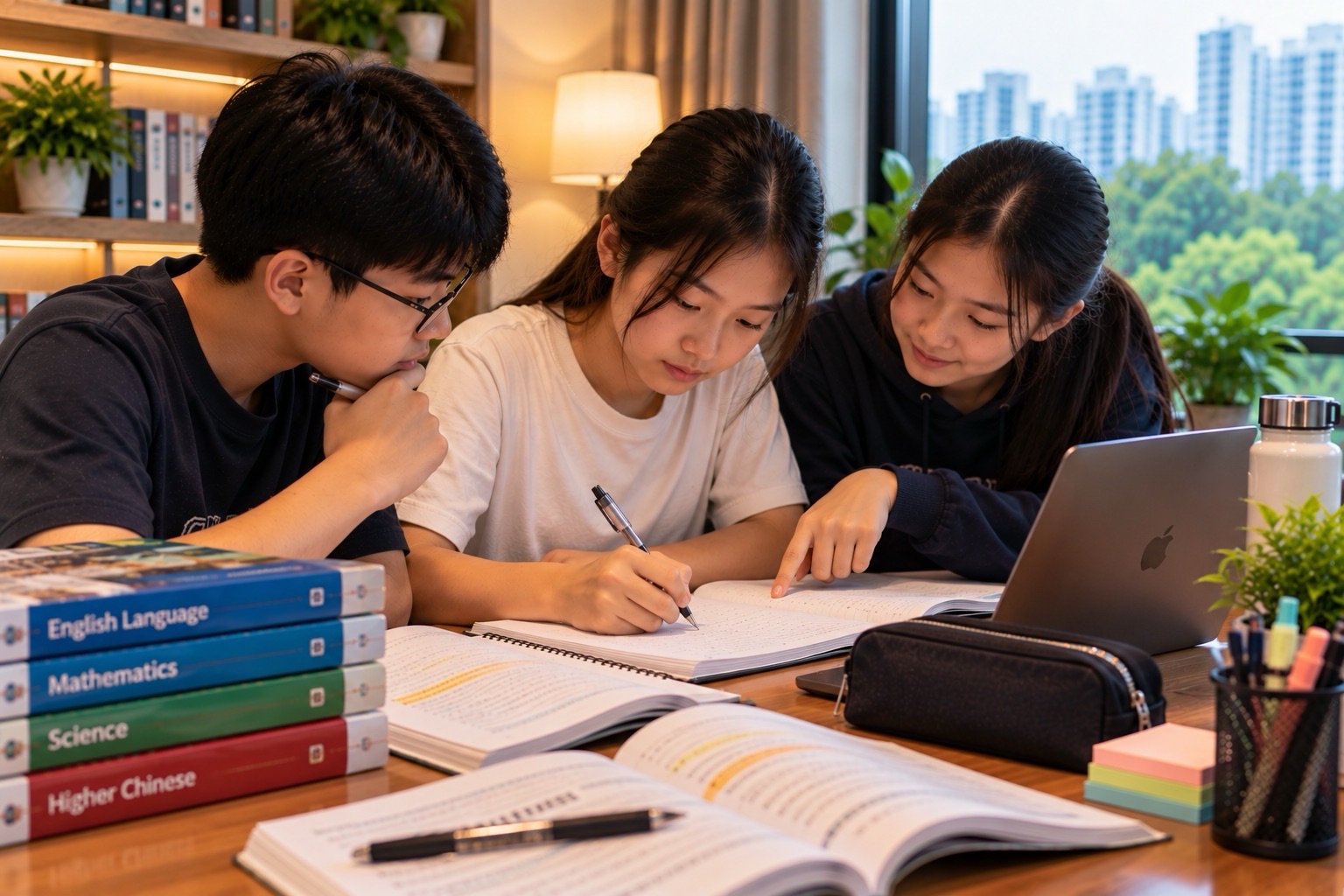
Unseen poetry analysis for Punggol Literature tuition becomes urgent when a Secondary school student can understand individual English words but freezes at a poem they have never met before. Parents searching for unseen poetry tuition, O-Level Literature in English, poetry analysis, literary devices and Literature exam preparation often hear, “I don’t know what the poet wants.” The child’s concern is real: a short poem can compress uncertainty, emotion, voice and imagery into only a few lines.
The core aim of Punggol Literature tuition for unseen poetry is to teach a transferable close-reading method that lets students interpret a fresh poem without depending on a memorised answer. The student should be able to establish the literal situation, notice words and patterns, trace changes of feeling or perspective, explore a defensible reading, test it against evidence and express the insight clearly. Surprise should become an invitation to investigate, not a signal to panic.
A poem is not a riddle with one secret password. It is a made thing: words chosen and arranged to shape how a reader experiences an idea. An unfamiliar poem becomes manageable when the learner discovers that they need not understand every possibility before saying something worthwhile and justified.
The Core Aim in One Sentence
Unseen poetry tuition should turn “I don’t get it” into a sequence of precise questions that the poem itself can help answer. Good analysis starts with what the lines actually do; stronger interpretation grows from that foundation.
Did You Know? The First Reading Is Allowed to Be Incomplete
A common mistake is expecting immediate total understanding. Students may read the opening lines, feel unsure, and conclude that they are bad at Literature. Skilled readers also meet uncertainty. The difference is that they manage it: mark a puzzling image, continue reading, and return once a later detail offers a clue.
The first reading should usually answer a modest set of questions. Who seems to be speaking? Is anything happening? Is there an identifiable place, person or object? What feeling seems strongest at first? Which line surprises me? These answers may be provisional. Provisional is not the same as careless.
The Six-Move Unseen Poetry Reading Routine
Move 1: Establish the literal ground
Before announcing a theme such as loss, freedom or nostalgia, ask what the poem literally describes. A person waits at a station; rain gathers on a window; an old house is being emptied. Make the student separate observed details from a story they have invented. If the literal situation is misread, every later claim becomes precarious.
Move 2: Notice what is unusually specific
Why does the poem say a cracked cup rather than a cup? Why is the street named but the person unnamed? Why does a quiet room suddenly become “furious”? Specificity offers a way in: underline a word whose meaning, connotation or placement seems more forceful than a neutral alternative.
Move 3: Follow the voice and tone
The speaker may sound amused, restrained, bitter, affectionate, astonished, resigned or conflicted. Tone is not merely a label. Ask what words create it, whether it changes and what emotional distance exists between the speaker and the subject. A speaker might use cheerful language to conceal anxiety; the contradiction matters.
Move 4: Trace movement and structure
A poem may shift from past to present, outside to inside, one person to another, observation to confession, certainty to doubt. Follow repeated words, stanza breaks, contrast, line endings and punctuation. Structure is a series of decisions made across the reading experience, not simply the number of stanzas.
Move 5: Test two plausible readings
A thoughtful student can briefly entertain alternatives. Is the empty chair a sign of bereavement, independence or a relationship strained by absence? What evidence supports each? What detail weakens one interpretation? This is where open-mindedness becomes disciplined rather than vague.
Move 6: Answer the exact question
The examination question sets the direction. If the task asks how the poet makes a place feel threatening, do not write three paragraphs explaining that the poem concerns childhood. Select the details most relevant to threat, explain the choices and shape a connected answer. The best knowledge is knowledge used at the right moment.
A Worked Unseen Poem: Four New Lines
To practise without relying on a prescribed or copyrighted text, consider this original teaching example:
By morning, the bicycle is wet.
Original four-line practice poem written for this guide
The bell holds one last drop of rain.
Beside the gate a yellow coat
Waits longer than the road remembers.
What literally appears? A bicycle, rainwater, a bell, a gate and a yellow coat. The poem does not explicitly tell us who owns the coat or why it is there. A reader who immediately declares “the boy died in a road accident” has supplied a narrative that the four lines do not establish.
What feels suggestive? “One last drop” creates a sense of something nearly finished. A coat that “waits” gives an inanimate object a human action, hinting at absence or expectation. “Longer than the road remembers” presents memory as limited and waiting as unusually prolonged. There may be tenderness, loss or unresolved hope, but the lines keep the identity and fate of the absent person uncertain.
A weaker answer says: “The poem is sad because it uses personification.” A stronger answer says: “By describing the yellow coat as something that ‘waits’, the poet turns an ordinary abandoned object into a figure of expectation; the unusual comparison with the road’s failing memory suggests that this waiting outlasts the attention of the surrounding world.” Now the interpretation is anchored to particular choices.
A second defensible reading might see the coat as a sign of everyday routines suspended, not necessarily tragic death. Its colour is bright, while everything around it is wet and still; the contrast can make the scene both vivid and strangely lonely. One can consider this possibility without claiming the poem specifies an exact event.
Why This Example Works: From Observation to Effect
- Observation: the bell has a remaining raindrop; the coat is left by the gate.
- Language: “last” signals ending; “waits” animates an object; “remembers” personifies the road.
- Possible effect: ordinary objects seem to preserve an emotional trace.
- Interpretation: the poem may explore waiting, absence or memory.
- Evidence check: the lines suggest these ideas but do not establish a detailed backstory.
Notice how an analytical paragraph can develop without naming every literary device under the sun. The devices are valuable only because their effect explains why the reader experiences the scene differently.
Simile, Metaphor and Personification: Explain the Particular Choice
Students can lose confidence when they cannot instantly label a technique. Reassure them that close reading begins with meaning. If a line compares footsteps to falling stones, first ask what the comparison makes the footsteps feel like. Heavy? Final? Threatening? Then ask whether the local context supports that interpretation. Naming “simile” alone earns no deep insight.
Personification is especially tempting because it is easy to spot. A door “sighs” may sound weary, but a door that “accuses” sounds morally charged. The same broad technique can create very different effects. The tutor should stop using generic model sentences that could be attached to any example.
Imagery and Sensory Detail
Colour, texture, temperature, movement and sound provide routes into mood. But “dark” does not always mean evil; “red” does not always mean anger. A dark room can offer safety, privacy or fear depending on the surrounding language. Students should learn to hold ordinary associations lightly and ask how the poem confirms, revises or challenges them.
One useful exercise is to replace a key adjective with a neutral alternative. If “the reluctant morning” becomes “the morning”, what disappears? The original phrase makes dawn seem unwilling, perhaps slowing the feeling of arrival. The point of replacement is not to rewrite the poem better; it is to hear what the writer’s actual words contribute.
Sound: Hear It Before You Label It
Rhythm, rhyme, repetition, alliteration, assonance and pauses can direct attention. Read a small section aloud naturally. Does a repeated sound create pressure, pace, softness, insistence or unease? Sometimes the sound adds little of consequence, and students should not manufacture an elaborate claim simply because two consonants match.
A sentence such as “the repeated s sound makes the line calm” is too automatic. Ask whether the words themselves are gentle, whether the rhythm slows, and whether the sound really reinforces that mood. Close reading is not a hunt for marks attached to letters.
Enjambment, End-Stopping and Line Breaks
A line ending is a place where the poem briefly controls what the reader knows. When a sentence runs across lines, the poet can prolong a thought or delay a word’s impact. When punctuation firmly ends a line, the effect may be closure, interruption, insistence or a carefully placed pause.
Yet students should not claim “enjambment creates suspense” every time. Ask what expectation exists at the line ending and how the next line answers or subverts it. In our original coat poem, breaking after “coat” briefly lets the coat remain a visible object before the next line gives it the human action “Waits”. The sequencing is the evidence for a meaningful structural effect.
Tone Shifts: Find the Turning Point
A poem can begin playfully and end in regret, or begin in sorrow and discover a measured peace. Mark changes in tense, punctuation, pronouns, landscape or diction. Then ask which word most clearly reveals the shift and why it matters. The change often carries a poem’s central tension more effectively than a generic summary of its theme.
Try asking, “What did we believe two lines ago that we no longer believe?” This question is more precise than “What is the theme?” for a child who struggles to feel the poem moving.
Speaker, Poet and Point of View Are Different
The poem’s speaker is the voice speaking within the work; the poet is the real creator of the poem. The speaker may be unreliable, fictional, exaggerated or deliberately uncertain. A student should not assume that a first-person poem is the poet’s diary, or that an accusation in the poem is automatically the writer’s personal belief.
A small change from “I” to “we” can widen experience from private to shared. An “you” may address a specific absent person or recruit the reader as a participant. Ask students to map the pronouns, then explain what relationship they create.
How to Build a Paragraph That Actually Analyses Poetry
A dependable early structure is claim → precise evidence → close explanation → link to question. The aim is not to squeeze every thought into an identical sentence template. The structure merely prevents two common problems: quotations that are dropped without interpretation, and observations that drift away from the question.
Suppose the task asks how the original poem portrays a sense of waiting. A clear paragraph can focus on the coat being made to “wait”. Explain the personification and how the line extends that waiting beyond what the road can “remember”. A second paragraph could consider the quiet rainwater details and how the ordinary morning contrasts with an emotional time that refuses to move on.
If an answer repeats “this shows sadness” five times, the student has not developed it five times. Encourage exact verbs: prolongs, unsettles, softens, exposes, isolates, exaggerates, delays, challenges, contrasts. Every analytical verb should explain a real effect rather than decorate the response.
Common Unseen Poetry Errors and Their Repairs
- Inventing a whole biography: return to what is stated and what is only suggested.
- Paraphrasing each line: choose a significant feature and explain the effect.
- Labelling every technique: prioritise details that answer the question.
- Assuming one emotion: check whether tone shifts or conflicting feelings coexist.
- Quoting too much: use short, exact words and analyse them closely.
- Ignoring structure: notice movement, line breaks, contrasts and endings.
- Fearing an unusual interpretation: test plausibility with textual evidence.
- Writing before reading the question: decide which effects matter for this task.
How to Practise Unseen Poetry in a 15-Minute Session
A short, consistent routine often beats a long revision marathon. Spend three minutes on a first read and literal situation, four minutes marking language choices, three minutes comparing possible meanings, and five minutes writing one paragraph. These minutes are a practice scaffold, not an official examination timing recommendation. Adjust them to the learner’s level and the school’s assessment.
The next week, use a completely different poem: perhaps one about celebration instead of loss, or a humorous speaker rather than a solemn one. A transferable method should not depend on every poem containing the same handful of themes. Students become stronger when new texts require them to change their initial assumptions.
How a Tutor Should Give Feedback on Poetry
Marking only “good point” or “needs more analysis” is not enough. The useful feedback identifies the exact missing link. Does the quotation fail to support the claim? Has the student named an effect without explaining the word? Have they confused speaker and poet? Is the reading plausible but insufficiently precise?
Show an improved two-sentence version, then ask the learner to revise their own paragraph without copying the model. Finally, offer fresh lines to see whether the repair transfers. The lesson’s purpose is not a beautiful corrected page; it is a more capable next attempt.
Unseen Poetry and O-Level Literature in English
For the 2026 Singapore-Cambridge O-Level Literature in English syllabus, SEAB describes assessment involving prose, poetry and drama, close analysis of language/form/structure, coherent response and textual evidence. Check the SEAB subject list for the appropriate year and the child’s own school’s text and assessment requirements. Full Literature and the Humanities with Literature route should not be treated as interchangeable.
For examination preparation, the student’s practice set should contain unfamiliar texts and prompts, calibrated to the actual course. Timed answers are valuable when they measure a skill already taught; repeated timed failure without a specific repair merely teaches the learner to hurry more anxiously.
What Small-Group Poetry Discussion Can Achieve
In a small group, students can compare initial readings: one hears wistfulness, another hears relief, and a third sees a tension between the two. The tutor asks, “Where does the text support each impression?” and models how to disagree respectfully with the evidence in hand. This is intellectual companionship, not a guessing game.
The eduKateSG small-group tutorial reference illustrates the value of closely observed thinking and carefully sequenced practice. For Literature, the same teaching principle can create more opportunities to hear each student’s interpretation before written answers hide the reasoning.
Weekday or Weekend Poetry Tuition for Punggol Families?
A weekday slot might help a Secondary student bring a school poem while its difficulties are fresh. A weekend slot may offer quieter space for a longer close-reading discussion or written response. The better choice depends on fatigue, school timetable, CCA, travel and whether the student can practise independently between lessons.
A parent can ask for one visible change after each session: the child finds evidence faster, notices tone shifts more reliably or can explain a line break without a prompt. These are stronger indicators than the sheer number of poems completed.
Frequently Asked Questions About Unseen Poetry
Must students memorise literary devices?
Knowing common terms is helpful, but recognising and explaining actual writer’s choices matters more than reciting a glossary. Teach the technique in context and immediately connect it to meaning.
What if my child cannot tell what a poem is about?
Begin with the literal scene and voice. Identify who or what appears, what changes and which phrases are unclear. A careful paraphrase of the situation is often the best first repair before interpretation.
Can two students give different readings and both be correct?
They may both offer defensible readings if their explanations fit the text and the question. Strong responses acknowledge complexity without ignoring limits imposed by the words.
Should we buy a collection of model answers?
A few annotated examples can teach quality, but heavy dependence on them can weaken independence. Use models to ask why an explanation works, then set unseen material that requires the child to reconstruct the method.
How long does it take to improve unseen poetry?
There is no honest universal timeline. A student missing literal comprehension needs a different repair from one who reads insightfully but writes vaguely. Track progress with equivalent fresh texts, a stable rubric and a comparison of independent answers over time.
Related eduKate Learning Routes
- The Core Aim of Punggol Literature Tuition | Secondary School Literature Tuition — the broader Sec 1–4 learning pathway.
- Punggol English Tuition | Reading Comprehension — reading and evidence fundamentals.
- Inference and Evidence in English — the boundary between claim and proof.
- Punggol Atlas — wider local education guidance.
- SEAB 2026 O-Level syllabuses — official assessment context.
The Core Aim: Unfamiliar Does Not Mean Impossible
A student who can pause at an unfamiliar poem, identify the literal scene, notice an unusual choice, investigate more than one meaning and form an evidence-led response has learned a skill that grows far beyond a single examination. Literature is an invitation to see more clearly, not a contest to guess what an adult was thinking.
That is why the strongest Punggol Literature tuition for unseen poetry teaches a reading habit that travels: from one poem to the next, from one question to another, and from a coached classroom attempt to a thoughtful answer written alone. Properly taught kids shine a bright light into the future.


