
Soil looks quiet, but it is a busy scientific system.
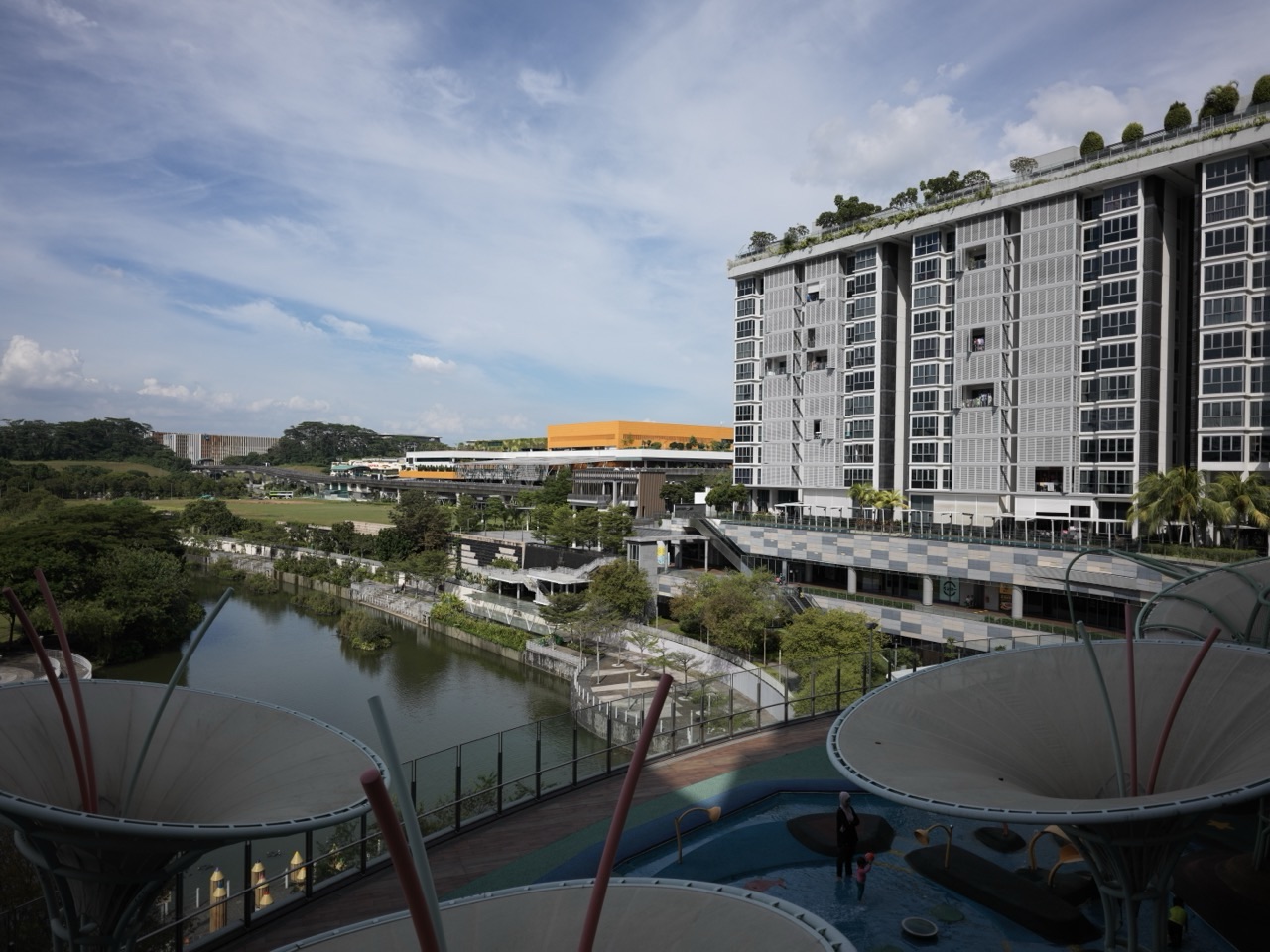
Water enters it, air occupies its spaces, roots grow through it, microorganisms live within it, particles move, nutrients dissolve and surfaces change after rain. In a place like Punggol, where parks, planted corridors, waterways and built surfaces sit close together, soil becomes an ideal bridge between Biology, Chemistry, Physics and environmental Science.
This article continues the Journey of Learning Advanced Science in Punggol by looking below the surface.
For the larger local context, begin with Punggol Waterway as a Living Laboratory and Punggol as a Classroom.
Soil Is Not Just Dirt
Soil is a mixture. It may contain mineral particles, organic matter, water, air and living organisms.
Different soils behave differently because their particle sizes, pore spaces, organic content and degree of compaction differ.
That affects how quickly water enters, how much water is retained, how well air moves through the soil and how easily roots can grow.
Permeability Describes How Easily Water Moves Through
Permeability is about the ability of water to pass through a material.
A coarse, loosely packed material may allow water to move through more easily than a fine or compacted material. But the exact behaviour depends on pore connectivity as well as particle size.
For a deeper route, see Soil Permeability and Drainage — Particle Size, Infiltration and Saturation.
Infiltration Is About Water Entering the Ground
When rain falls on a surface, some water may infiltrate into the ground while some becomes surface runoff.
Vegetated soil, compacted ground, paved surfaces and saturated soil can behave very differently.
This gives students a useful urban Science question: why does water disappear quickly from one patch but collect on another?
Drainage Is a System
Drainage is not one pipe or one canal. It is a network of surfaces, slopes, inlets, channels, storage areas and waterways that guide water through a town.
Students can observe that the path water takes depends on gravity, surface shape, permeability and obstruction.
This is a good example of systems thinking: a change upstream can influence conditions elsewhere.
Erosion Shows That Water Can Move Matter
Moving water can carry particles away from a surface. The amount moved depends on water speed, particle size, slope, surface cover and other conditions.
Plant roots can help stabilise soil by holding particles together and changing how water enters the ground.
This is where plant Biology meets environmental Physics.
Roots Change the Soil Environment
Roots are not passive anchors.
- They absorb water and mineral ions.
- They release substances into the surrounding soil.
- They create channels as they grow.
- They interact with microorganisms.
- They can change soil structure and stability.
A planted area is therefore a living soil system, not simply decoration.
Capillary Action and Water Movement
Water can move through narrow spaces because of interactions among water molecules and surfaces.
This phenomenon, together with root pressure and transpiration-related processes, helps connect soil water to plant transport.
For a deeper extension, see Capillary Action — Adhesion, Cohesion, Surface Tension, Paper and Xylem.
A Simple Permeability Investigation
- Prepare equal volumes of different safe soil or granular materials.
- Use containers with the same geometry.
- Add the same volume of water.
- Measure the time taken for water to pass through or the volume collected in a fixed time.
- Repeat the trial.
- Compare the results.
- Explain the pattern using pore size, packing and water movement.
The important part is not only the result. Students should also ask whether each sample had the same mass, depth, packing and starting moisture.
Urban Surfaces Create Contrasts
| Surface | Possible water behaviour |
| Grass and soil | infiltration plus some runoff |
| Compacted soil | lower infiltration and greater runoff |
| Concrete path | very low infiltration unless designed as permeable pavement |
| Drain | rapid directed flow |
| Vegetated edge | slower movement, root interaction, possible retention |
These contrasts make Punggol a useful outdoor classroom because students can see several surface types within a short walk.
From Soil Science to Plant Science
Once students understand how water enters and moves through soil, the next question is obvious: how does the plant move that water upward and use it?
That leads directly to the next article, Plant Science — Photosynthesis, Transpiration, Stomata and Water Transport.
How eduKate Can Use Soil in Tuition
A tutor can begin with a familiar rainy-day question: why does one patch flood while another drains quickly?
From there, the lesson can move into permeability, particle size, roots, runoff, erosion and systems.
In a three-student class, one student can explain the physical process, one can identify biological influences, and one can challenge the experimental design.
Continue the Journey
- Next: Plant Science — Photosynthesis, Transpiration, Stomata and Water Transport.
- Then: Microbiology and Decomposition — Microbes, Decay, Food Safety and Ecosystems.
- Then: Wind and Airflow — Pressure, Drag, Ventilation and Buildings.
- Return to the Punggol Science Tuition hub.
A student who learns to read the ground scientifically begins to see every rainy path, planted verge and drain as part of one connected water-and-soil system.


