
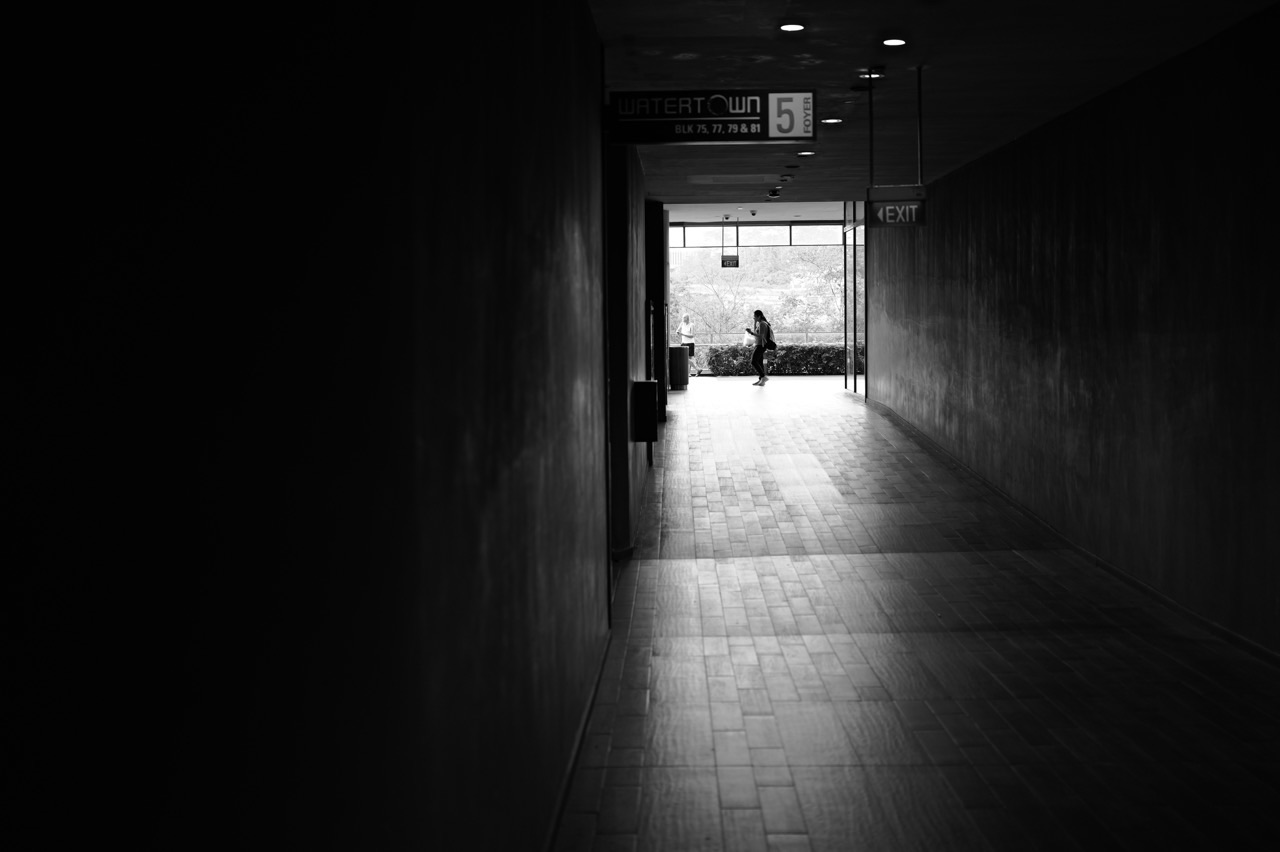
Wind is invisible, but its effects are everywhere.
Leaves move. Clothes dry faster. A cyclist feels resistance. A sheltered walkway feels calmer than an open bridge. Warm air leaves a building. Rain changes direction in a gust.
These are all clues that air is a moving fluid.
This article continues the Journey of Learning Advanced Science in Punggol by connecting airflow, pressure, drag, ventilation and building design.
It follows naturally from Weather and Atmosphere in Punggol and Human Biology and Exercise.
Air Has Mass and Pressure
Because air has mass and its particles move, it exerts pressure on surfaces.
Pressure differences can drive airflow.
This gives students a foundation for understanding wind, ventilation and many fluid systems.
Heating Creates Convection
When air warms, its density can decrease relative to surrounding cooler air. Warmer air may rise while cooler air moves in to replace it.
This creates convection currents.
In buildings, convection interacts with fans, ducts, openings and air-conditioning systems.
Open Spaces and Sheltered Spaces Feel Different
A wide open area may allow stronger airflow. Walls, buildings and vegetation can block, redirect or channel the wind.
This means the exact shape of the built environment affects local airflow.
Students can notice these differences along walkways, near building corners and beside open water.
Drag Opposes Motion Through Air
A moving cyclist experiences air resistance because the body and bicycle must push through air.
Drag depends on factors including speed, shape, frontal area and fluid properties.
At higher speed, drag often becomes increasingly important.
This connects local cycling to Physics and energy demand.
Streamlining Reduces Resistance
A streamlined shape helps air move around an object more smoothly and can reduce drag under suitable conditions.
This principle appears in bicycles, vehicles, helmets and many engineered forms.
Ventilation Is Controlled Airflow
Ventilation supplies fresh air and removes heat, moisture and pollutants.
Natural ventilation uses openings, wind and buoyancy-driven flow. Mechanical ventilation uses fans and controlled systems.
A building may use both.
Airflow Affects Thermal Comfort
Moving air can increase heat loss from the body by convection and can increase evaporation from skin.
That is why a breeze can make a warm day feel more comfortable even when the air temperature itself has not changed much.
This links airflow to Human Biology and Exercise.
Airflow Affects Evaporation
Wind can remove moist air from above a wet surface, maintaining a stronger concentration gradient for evaporation.
That influences drying clothes, plant transpiration and sweat evaporation.
One Physics idea therefore connects to both daily life and Biology.
Buildings Redirect Wind
Tall structures, narrow gaps and corners can create locally faster or more turbulent airflow.
Students should be careful not to overgeneralise from one windy spot. Building geometry, wind direction and surrounding structures all matter.
This makes urban airflow a good example of complex systems.
| Observation | Possible explanation |
| Strong gust between buildings | airflow channelled by geometry |
| Calmer sheltered path | reduced exposure to prevailing wind |
| Warm exhaust near equipment | mechanical removal of heat |
| Leaves moving strongly on one side only | local flow pattern or shielding |
A Simple Airflow Investigation
Students can make a qualitative airflow map without dangerous equipment.
- Choose several safe outdoor locations.
- Use a light ribbon or other safe visual indicator.
- Record direction and relative strength qualitatively.
- Repeat at similar times on several days.
- Note building orientation and weather.
- Compare patterns.
- Avoid claiming exact wind speed without proper measurement.
Airflow and Air Quality
Air movement can disperse pollutants, but local geometry can also trap or redirect them.
This connects airflow to environmental Chemistry and urban design.
Airflow and Smart Buildings
Modern building systems can use sensors to control fans, ventilation and cooling according to temperature, occupancy and air-quality conditions.
This connects directly to Research, AI and Learning Beyond the Syllabus and to smart-building Science.
How eduKate Can Teach Invisible Systems
Airflow is useful because students cannot see the air itself. They must infer its behaviour from effects: moving leaves, pressure changes, temperature differences and measured flow.
That is exactly what scientific modelling is for.
Continue the Journey
- Previous: Microbiology and Decomposition.
- Earlier: Weather and Atmosphere in Punggol.
- Earlier: Materials and Structures in Punggol.
- Return to the Punggol Science Tuition hub.
Once students learn to reason about airflow, an invisible part of the city becomes visible through its effects. That is one of the great pleasures of Science: learning to see what cannot be seen directly.
Browse more learning guides
Use the Punggol Science article index to find another topic, or return to Learning Routes to choose a subject or school-year guide.


