
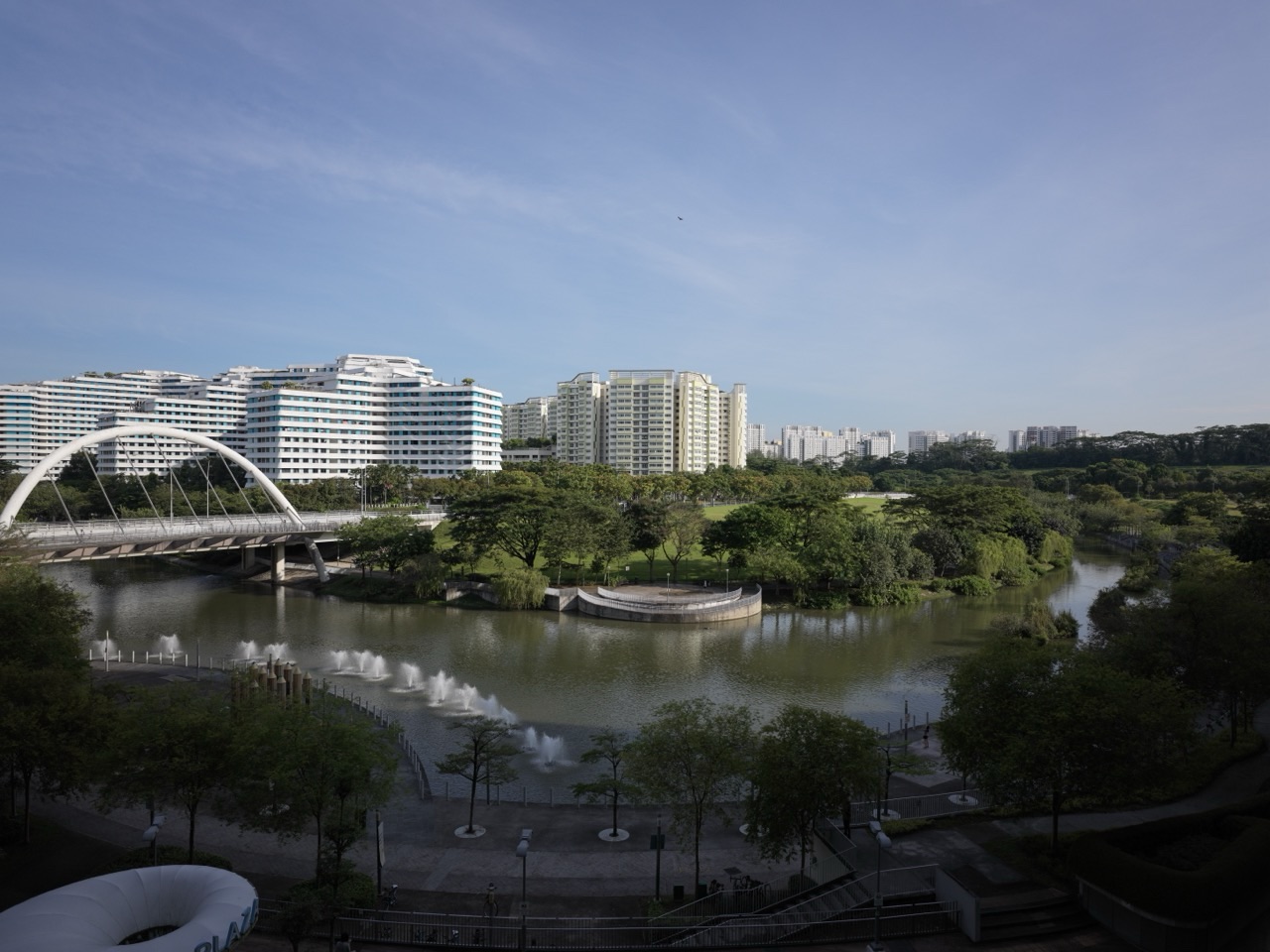

Science tuition in Punggol can use the Waterway as a starting point for one of the most visually powerful ideas in Science: light changes what we see because it can reflect from surfaces and change direction when it passes between materials. A student looking at reflections on Punggol Waterway can begin with observation, but the stronger scientific work happens when that observation is rebuilt into a safe model using mirrors, glass or water at home.
Parents searching for Punggol Science tuition, reflection Science, refraction experiment, Primary Science light, PSLE Science application or Secondary Physics light can use this page as a study/reference route. The learning goal is to separate three questions: where light travels, where it changes direction and why the image or object appears displaced.
This page does not claim an eduKate Waterway experiment or outdoor optics class. Families should observe public water only from normal public paths and bridges. Do not lean over railings, enter water or use lasers outdoors. Any hands-on optics work should be done safely at home with ordinary low-risk materials.
Reflection and Refraction Are Different Mechanisms
Reflection occurs when light changes direction at a surface and returns into the original medium. A mirror is the clearest school example.
Refraction occurs when light changes direction as it passes from one transparent medium into another because its speed changes.
A water surface can produce both effects. Some light can reflect from the surface while some enters the water and refracts. That is why real scenes can look more complicated than textbook diagrams.
Primary 3–4: Start With What Is Visible
Younger students can begin by looking at safe water reflections from a public path.
- Can the sky be seen in the water?
- Can nearby buildings or trees be seen?
- Does the reflection become harder to see when the surface is rippled?
- Does the reflection change when the viewer changes position?
The child should describe what changes without immediately claiming a cause.
Why a Rippled Surface Changes a Reflection
A smooth surface has many small regions oriented similarly, so reflected rays are organised enough to form a clearer image. A rippled surface has many changing orientations, so reflected light is sent in more directions and the image becomes distorted.
This explanation connects visible experience to a ray model.
Primary 5–6: Build a Safe Refraction Model at Home
A classic low-risk setup uses a transparent glass of water and a pencil or straw.
- Place the glass on a stable table.
- Put the pencil partly into the water.
- Observe from the side.
- Change the viewing angle slowly.
- Record how the apparent position changes.
The pencil is not physically bent. Light from the underwater portion changes direction as it leaves the water and enters air, so the eye traces the rays back to an apparent position.
Worked Example: “The Pencil Bent in the Water”
Weak observation: “The pencil bent.”
Better observation: “The submerged section appeared displaced relative to the section in air.”
Better explanation: “Light from the submerged section was refracted when it moved from water into air, changing the apparent position of that section.”
The improved answer distinguishes appearance from physical change.
Primary Science: Light Travels in Straight Lines—Within a Uniform Medium
Students often memorise “light travels in straight lines”. The more precise statement is that in a uniform transparent medium, light travels along straight paths. At boundaries between media, its direction may change.
This is a useful example of how school rules become more precise as students progress.
Secondary Physics: Angle of Incidence and Angle of Reflection
For reflection, students can use a mirror, paper and a safe low-intensity light source under supervised indoor conditions. The incident ray, normal and reflected ray can be drawn so the angle of incidence and angle of reflection are measured from the normal rather than from the mirror surface.
A common examination error is measuring the wrong angle. The geometry matters as much as the vocabulary.
Secondary Physics: Why Refraction Happens
When light enters a medium where its speed is different, its direction can change unless it travels along the normal. At school level, students often learn the rule that light bends toward the normal when entering an optically denser medium and away from the normal when leaving it.
The deeper model is that wave speed changes across the boundary, producing the change in direction.
Worked Example: Why Looking Into Water Can Mislead Distance
Objects under water can appear at a different depth because refracted rays entering the eye are interpreted as though they travelled in straight lines from an apparent position.
This is why visual judgement alone is not a reliable method for estimating underwater depth. The observation becomes a lesson about perception and model-based inference.
Use Waterway Reflections as Observation, Not Measurement of Water Quality
A bright reflection, dark appearance or distorted image on water says something about light, viewing angle and surface condition. It does not by itself tell the student whether the water is clean or polluted.
This connects to the existing Floating Wetland Science guide, where visual appearance is explicitly separated from measured water quality.
A Safe Observation-to-Model Sequence
- Observe a reflection from a safe public position.
- Describe what changes when the water surface is calm or rippled.
- Return home.
- Use a mirror to model reflection.
- Use a glass of water and pencil to model refraction.
- Draw ray diagrams.
- Write a short explanation linking the local observation to the model.
This sequence is useful because it separates public observation from controlled experimentation.
How This Connects to School Science
- Primary: light sources, straight-line travel, shadows, reflection and observation.
- PSLE: unfamiliar application, evidence, diagrams and mechanism-based explanation.
- Secondary: ray diagrams, laws of reflection, refraction, optical density, apparent depth and wave models.
What Parents Can Ask
- What did you see?
- Was the object physically changed or only its appearance?
- Where did the light change direction?
- Which part is observation and which part is the model?
- What diagram would make the explanation clearer?
Local Public Reference
NParks identifies Punggol Waterway as an 8.4 km public park-connector route along the town’s man-made waterway and Punggol Waterway Park as a public park along Sentul Crescent. These are useful observation environments, not experimental laboratories. Official references: NParks — Punggol Waterway and NParks — Punggol Waterway Park.
Study/Reference Boundary
This page is a Science study/reference owner. It does not claim an eduKate Waterway optics field trip, reflection experiment or outdoor Physics programme.
Continue through Shadow Length and Light Direction, Field Investigation Report and Punggol Science Inquiry.
A reflection on the Waterway is the beginning of the lesson. The Science begins when the student separates appearance from mechanism and rebuilds the observation with a model that can be tested safely.
Continue Through the Science System
Continue Through the Science System
Explore the Punggol Science reading library for related guides.


