
Lunch is where Punggol begins changing direction.
The morning moved outward: children to schools, adults to work, commuters to trains, families to childcare. Around lunch, some of those flows begin returning. School dismissals start for younger pupils, office workers appear at hawker centres, people working from home step outside, errands are combined with meals and the first afternoon handoffs begin.
For searches such as Punggol food, Punggol hawker centre, living in Punggol, Punggol schools, Punggol lunch, student care Punggol and Punggol tuition, the useful story is not merely where to eat. It is how lunch connects one half of the local day to the next.
For a dedicated food map, use The Punggol Food Guide. This article is about the rhythm around it.
Midday is not one lunch hour
Punggol contains several lunch clocks.
- School children eat according to the school timetable.
- Office workers and campus staff often move in a more conventional lunch window.
- People working from home can shift meals earlier or later.
- Preschool and childcare meals belong to another routine entirely.
- Parents on leave, grandparents and caregivers may use lunch as part of an errand route.
- Shift workers may be eating what feels like dinner while everyone else calls it lunch.
That variety is one of the reasons the town feels different at midday from both morning and evening. Movement is distributed rather than fully synchronized.
Punggol’s hawker centres are infrastructure, not decoration
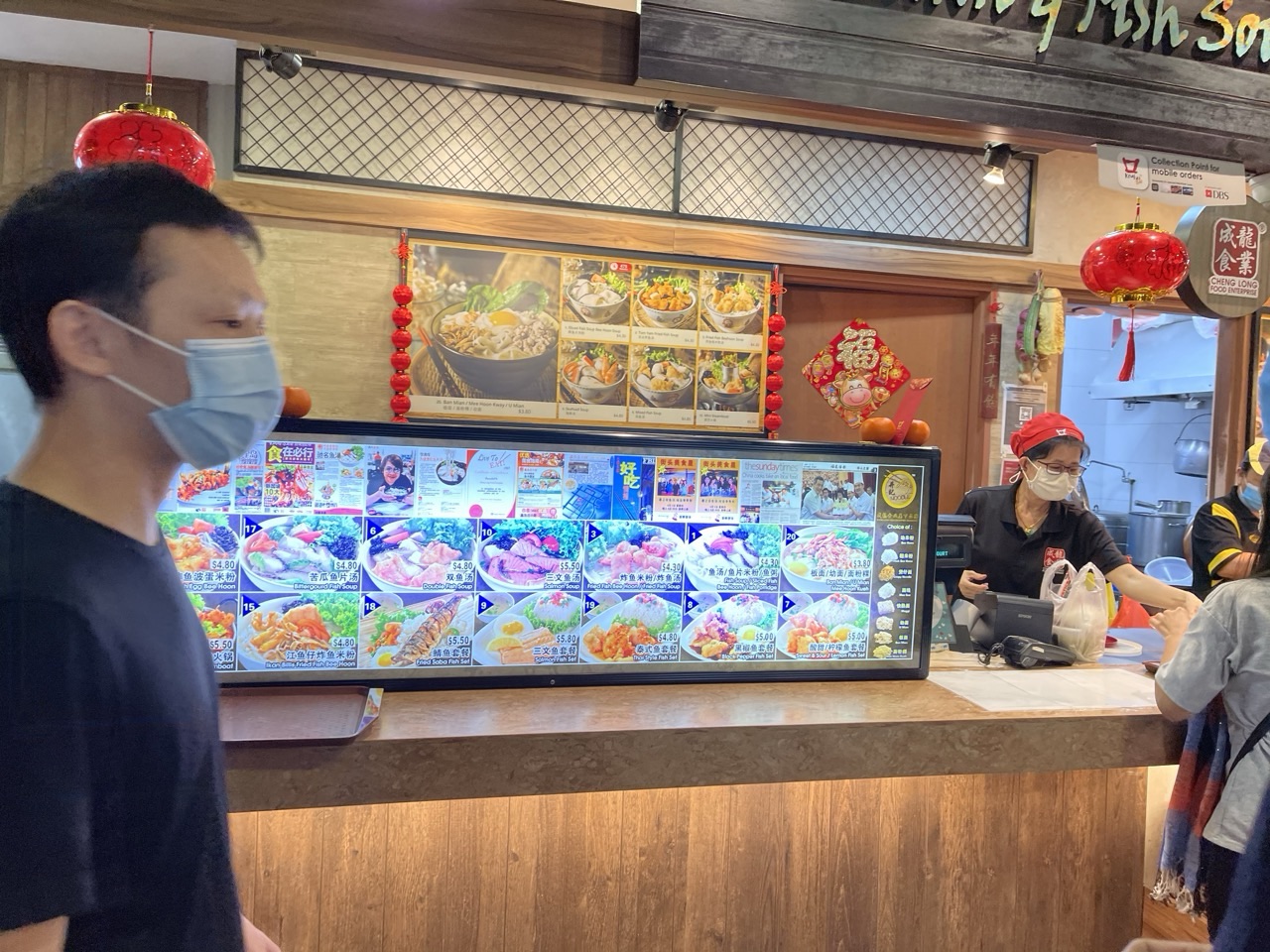
A hawker centre looks like a food destination when viewed from outside local life. For residents, it is often part of the operating system.
It solves lunch during a busy workday. It gives grandparents and grandchildren an easy meeting point. It lets a parent combine a library trip with a meal. It provides a lower-friction option on days when cooking would push the whole evening late.
One Punggol Hawker Centre and Punggol Coast Hawker Centre serve different parts of the town, while neighbourhood coffee shops remain essential because proximity usually beats novelty on an ordinary Tuesday.
For the specialist food map, continue to Punggol Hawker Centres & Coffee Shops.
School dismissal changes the town before many adults notice
Primary pupils do not all leave school at the same time every day, but the first school-dismissal flows alter the neighbourhood.
You begin to see uniforms again. School buses reappear. Parents and grandparents move toward gates. Student-care transport and walking groups become visible. Food outlets near schools and transport nodes receive another small wave.
For working parents, this is the beginning of the second coordination problem of the day. Morning asked: how does the child reach school? Midday asks: where does the child go next?
That answer might be home, student care, a grandparent’s flat, CCA, tuition later in the day or another family arrangement. The best plan is not the most impressive one. It is the one that the child understands and the adults can repeat.
Student care is part of the education day even when it is not a classroom
Student care occupies a practical middle ground between school and home.
Parents tend to evaluate it through logistics: proximity, pickup, homework support, meals, safety and operating hours. Children experience it more broadly. It is also where they spend a significant piece of the week, manage transitions, interact with peers and recover from school before the evening begins.
Families comparing arrangements can use Student Care Centres in Punggol.
Work-from-home lunch can either reset the day or dissolve it
Remote work removes the commute from lunch, but it does not automatically create rest.
A person can easily eat beside a laptop, answer messages through the meal and reach mid-afternoon without having mentally left work. The benefit of a neighbourhood like Punggol is that a short walk can create a genuine boundary.
Walk to food. Pick up groceries. Sit somewhere that is not the desk. Make one small errand part of the break. The aim is not leisure for its own sake. It is to return to the second half of the day with attention restored.
Lunch is also when household errands become efficient
A local town works well when one outing can satisfy several needs.
Lunch can combine with a supermarket stop, library return, pharmacy visit, collection, banking task or simple household purchase. One Punggol, Waterway Point, Oasis Terraces, Punggol Plaza and Punggol Coast each support different combinations.
The practical test is not “Which centre is best?” It is “Which cluster solves the tasks I actually have today with the least unnecessary travel?”
Parents should notice the energy level of the child who returns
A child leaving school at lunchtime does not arrive home as a blank slate ready for another programme.
The child has already spent hours listening, reading, writing, moving, socialising, following rules and solving small problems. Some children return energetic. Others are quiet. Some need food immediately. Some need fifteen minutes with nobody asking a question.
This is important when families plan homework or tuition. The correct next step depends not only on the clock but on the learner’s state.
A strong tuition timetable respects that reality. Use the Punggol Tuition Timetable 2027 for the schedule-design route.
The best midday meal is often the one that protects the afternoon
Families can spend too much energy trying to optimise every meal as an isolated event.
On school days, lunch has another job: it has to support what comes next. A child heading into student care, CCA or tuition needs enough time to eat without turning the meal into another rush. An adult returning to work needs something that does not consume the entire break. A caregiver managing a younger child needs predictability.
The quiet luxury of a local routine is repeatability. You know where to go, roughly how long it takes and what the next part of the day will require.
By 2 PM, the afternoon machine is already starting
What looks like a calm lunch period contains the opening moves of the busiest family hours.
Children are moving toward care arrangements. CCAs begin later. Tuition schedules approach. Parents start calculating evening pickup, dinner and homework. The town slowly shifts from individual midday errands back toward family coordination.
That next phase is already mapped in What happens in Punggol | Between School and Dinner.


