
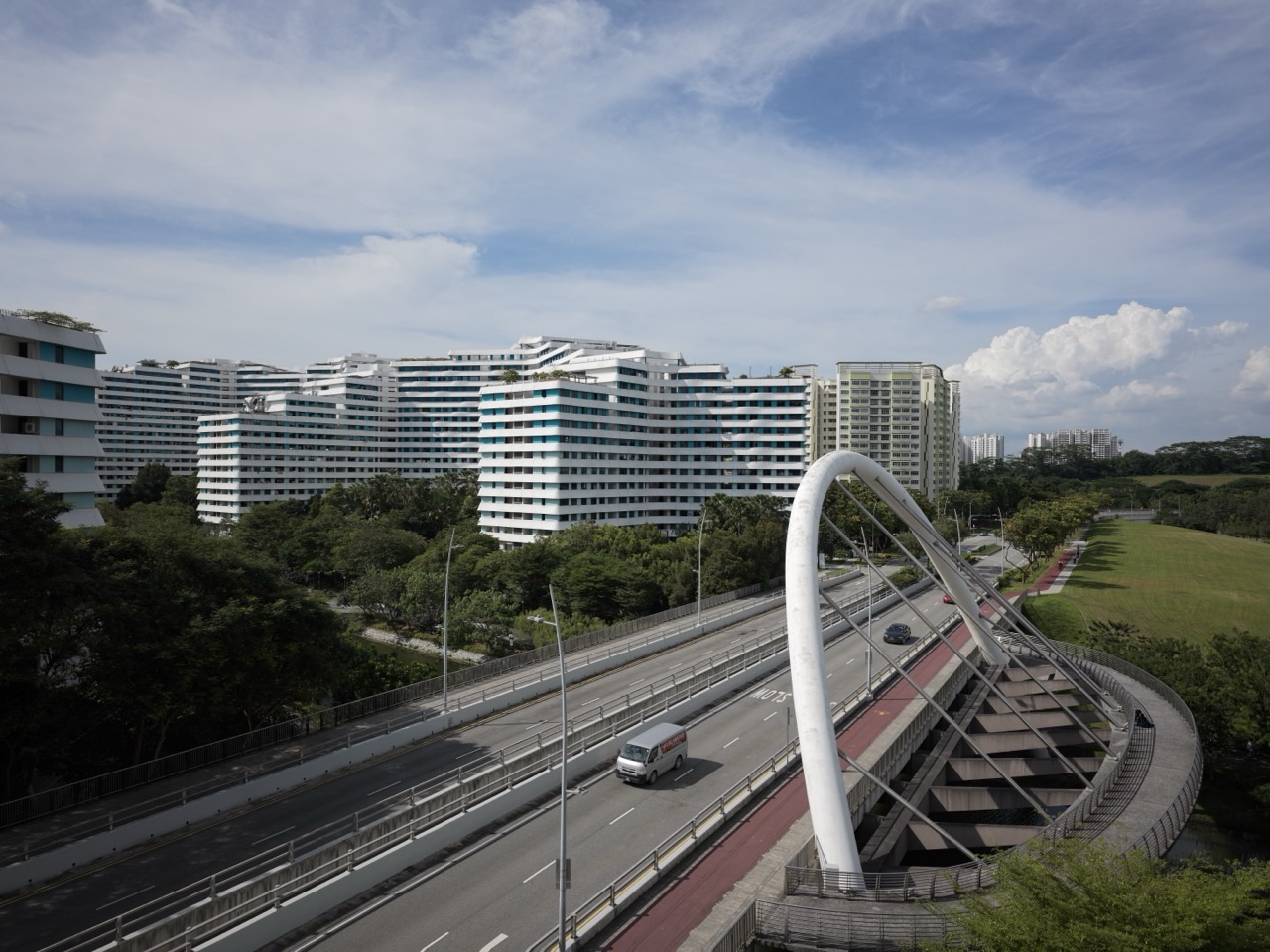
Education in Punggol can be measured in examination results, but it can also be seen in quieter signs of capability. Can a child read a route map? Estimate how long a journey will take? Manage a small amount of money? Pack what is needed for school? Notice when a deadline is approaching? Ask for help clearly? Recover when a plan changes? These are ordinary acts, yet together they form the infrastructure of independent learning.
Parents searching for Punggol education, student independence, life skills or a practical Punggol parent guide are often asking a deeper question: when should a child stop being carried through every process and begin operating parts of life alone? The answer is not an age at which supervision disappears. Independence is built through carefully transferred responsibility, one repeatable task at a time.
Punggol is a useful classroom for this transition because everyday life already contains maps, LRT and bus connections, public spaces, shops, libraries, school routes, timetables and family errands. The point is not to make children prematurely adult. It is to use safe, ordinary experiences to connect school knowledge with the practical capability to act.
Independence is not the absence of help
A child is not independent simply because an adult has stepped away. Independence means the learner can perform an appropriate task, recognise a problem, use available information, ask for help when necessary and check the result. Good support therefore has a direction: enough help to create success today, followed by less help as competence becomes stable.
This principle also explains good teaching. The purpose of explanation, worked examples, prompts and feedback is eventually to make those supports unnecessary for familiar tasks. A learner who can only perform while an adult is beside them has not yet completed the transfer.
The family can teach independence through five ordinary systems
| Everyday system | What the child practises | School capability underneath it |
|---|---|---|
| Travel | Routes, sequence, timing, contingency | Planning and spatial reasoning |
| Money | Prices, budgets, change, comparison | Numeracy and judgment |
| Time | Duration, deadlines, preparation | Self-regulation |
| Maps and public information | Symbols, directions, notices, signs | Reading for purpose |
| Responsibility | Remembering, checking, repairing | Executive function and agency |
These systems are educationally useful because they contain real consequences. A route chosen badly takes longer. A budget ignored runs out. A bag packed carelessly leaves something behind. The feedback is immediate and meaningful in a way that a worksheet sometimes is not.
Travel teaches sequence, estimation and contingency
A journey is a problem with a beginning, an end and constraints. Even a familiar trip asks the learner to understand sequence: leave home, reach the correct stop or station, travel in the correct direction, change when necessary and recognise the destination. As confidence grows, the child can estimate duration and consider alternatives.
The parent can transfer control gradually. At first, the adult narrates the route. Next, the child identifies the next stop. Later, the child plans the route while the adult accompanies. Only when the family judges it safe and appropriate does the child carry more responsibility independently. The educational principle is staged release, not sudden freedom.
Maps make this process visible. A child who can interpret a local transport map is coordinating symbols, direction, distance, sequence and purpose. That is applied literacy and applied mathematics occurring at the same time.
Money turns mathematics into consequence
Money gives number sense a practical edge. A young child can compare two prices. An older child can estimate a total before paying. A teenager can work within a fixed amount, compare value rather than simply cost, and understand that spending one way removes another option.
The strongest lesson is not arithmetic alone. It is opportunity cost. A budget teaches that resources are finite and choices compete. This same structure appears later in time management, examination strategy and adult financial decisions. Choosing what not to do is part of intelligent planning.
Parents can keep the tasks proportionate: pay for one item, check the receipt, estimate change, compare sizes, or plan a small purchase. There is no need to create artificial “life skills lessons” when ordinary family errands already contain the mathematics.
Time management begins with learning duration, not owning a planner
Students are often told to manage time before they have learned how long tasks actually take. A timetable then becomes decorative. The more useful starting point is duration awareness. How long does it take to travel home? Finish a standard homework set? Pack for the next day? Read ten pages with attention? Correct five mathematics errors properly?
When a child begins predicting duration and comparing the prediction with reality, planning improves. A learner who consistently thinks thirty minutes of work will take ten minutes is not necessarily lazy; the internal model is inaccurate. Measurement can repair the model.
The companion article Education in Punggol | A Parent’s School-Week Map shows how these estimates can be placed inside a sustainable week.
Reading maps and signs is reading for action
School reading often asks the learner to understand a passage and answer questions. Everyday reading frequently asks the learner to do something. A sign tells you where to go. A notice tells you what has changed. A timetable tells you when something happens. A map tells you how places relate. A form tells you what information is required.
This is why practical literacy matters. A child may read fiction fluently yet still need practice extracting the exact information required from public text. Parents can occasionally hand the task over: “Which exit do we need?”, “What time does this close?”, “Which line tells us what to bring?” The adult is teaching the child to treat text as operational information.
Responsibility grows when consequences are small enough to learn from
Children cannot learn responsibility if adults prevent every minor error. Nor is it useful to allow mistakes with consequences too large for the child to manage. The useful zone lies between those extremes: forgettable, repairable problems that produce clear feedback.
A forgotten non-essential item can become a packing lesson. A missed self-imposed reading target can become a planning lesson. A small budgeting error can become a comparison lesson. The parent’s response matters. If every mistake triggers rescue, the child learns that noticing is optional. If every mistake triggers humiliation, the child learns to hide errors. The educational response is calm repair.
Primary 1–2: build routines before autonomy
For younger Primary children, independence begins with predictable routines. Put the school bag in one place. Bring the water bottle to the same area. Check a simple visual list. Choose between two appropriate options. Carry a small responsibility from beginning to end.
The adult still supplies most of the structure. The child’s job is to operate inside it successfully. Repetition matters because the goal is not a one-off demonstration. It is for the routine to become reliable enough that the parent can reduce prompting.
The Primary Pathway provides the wider academic progression. Independence should grow alongside academic demand rather than being postponed until the child is already overwhelmed.
Primary 3–4: make the child the first checker
Middle Primary is a good time to change the order of help. Instead of the parent checking first, the child checks first. “What do you think you need tomorrow?” comes before the adult supplies the answer. “Which question are you stuck on?” comes before the parent scans the whole worksheet. “What does the notice say?” comes before the adult translates it into instructions.
This shift builds metacognition: the ability to notice what one knows, does not know, has completed or has forgotten. It is one of the foundations of later independent study.
Primary 5–6: connect independence with examination preparation
Upper Primary students should increasingly know their own error patterns. A child preparing for PSLE should be able to say more than “I am weak in English” or “Math is hard”. They should begin identifying whether the repeated issue is vocabulary, inference, careless transfer, a missing method, weak explanation, timing or another specific pattern.
This is educational independence in academic form. The learner notices the problem, seeks appropriate help, practises the repair and later checks whether the repair holds. Tuition can support this loop, but the learner should not remain a passive passenger inside it.
Secondary school: the operating system must move into the student
Secondary school increases the number of moving parts. More subjects, different teachers, larger assignments, CCA demands and changing assessment patterns make parent-operated micromanagement difficult to sustain. The student needs a personal system for deadlines, materials, revision and help-seeking.
A useful parent role is audit rather than control. Once a week, ask the student to show what is due, what is difficult and what is currently at risk. If the learner cannot produce a coherent answer, the problem is not solved by the parent taking over the entire calendar. The system itself needs to be taught.
Continue through the Secondary Pathway for the larger school transition.
Help-seeking is a form of independence
Independence is sometimes confused with doing everything alone. Strong learners know when solitary effort has stopped being productive. They can identify what they do not understand and ask a focused question.
Compare “I don’t get this” with “I understand how to start, but I do not know why the second step changes the sign.” The second question gives the teacher usable information. Teaching children to formulate precise help requests reduces dependence because each episode of help becomes more efficient.
Tuition should strengthen agency, not remove it
A tuition system becomes educationally weak when the student waits for the tutor to identify every problem, select every question, explain every correction and decide every next step. The short-term experience may feel smooth, but the child is practising dependence.
Good tuition gradually asks more of the learner: bring the error, explain the attempt, identify the uncertainty, try again, retrieve later and transfer the method to an unfamiliar question. Families considering support can begin at When Do Punggol Students Need Tuition? and use the subject routes for English, Mathematics and Science.
Use Punggol as a sequence of small capability laboratories
A family does not need a special programme. Ordinary local life contains enough material. Ask the child to choose the route to a familiar place. Let them compare two purchases. Have them estimate the return time. Ask them to read the relevant sign. Let them carry the library book and remember the return. Give them one small errand inside a safe family context. Each task transfers a little more control.
The broader town context is collected in What about Punggol?, while the eduKatePunggol Atlas connects the family, learning and town layers.
The independence ladder
- Watch. The adult performs the task and explains only the important decisions.
- Assist. The child performs one part while the adult holds the rest.
- Lead with supervision. The child decides and acts while the adult checks quietly.
- Perform. The child completes the familiar task independently where appropriate and safe.
- Adapt. The child handles a variation, notices a problem or asks for help without being prompted.
- Teach back. The child can explain the process clearly enough for someone else to follow.
The ladder works academically as well. Watch a worked example, complete one with prompts, attempt one alone, handle a variation, then explain the method. Everyday independence and school independence share the same structure.
Common parent mistakes
Mistake 1: giving responsibility without teaching the system
“You are old enough; manage it yourself” is not instruction. If the child has never learned how to break down the task, set reminders or check completion, withdrawing help may simply expose an unbuilt skill.
Mistake 2: correcting every small inefficiency
Children need room to discover that one route is slower, one packing system is unreliable or one study plan is unrealistic. Safe inefficiency can be useful feedback.
Mistake 3: confusing speed with competence
An adult can perform the task faster. That is not the point. If the parent always takes over because the family is rushing, the child gets fewer repetitions of responsibility. Build extra time when teaching a new routine.
Mistake 4: rescuing before the child identifies the problem
Before helping, ask the child to state what has gone wrong. Naming the problem is part of solving it.
Frequently asked questions
At what age should a child become independent?
Independence is task-specific, not a single age milestone. A young child can manage a simple packing routine while still needing close travel supervision. An older student may travel confidently but still need help organising a major assignment. Transfer responsibility by capability and safety.
Does independence mean parents should stop checking homework?
No. The checking process should change. Ask the child to check first, explain what was difficult and identify where help is needed. The goal is to move the parent from first-line operator to second-line support.
What if my child makes careless mistakes when given more responsibility?
Use a smaller responsibility and a clearer checklist, then build again. Careless failure may indicate that the task is too large, the routine is not yet automatic, or the child does not know what “check” actually means.
Can tuition help a child become more independent?
Yes, if the tutor deliberately fades support and requires the student to retrieve, explain, attempt, correct and transfer. A lesson that keeps the student permanently dependent on prompts solves today’s question but not tomorrow’s learning problem.
Why use everyday Punggol life for education?
Because real tasks contain purpose and feedback. Routes, prices, notices, schedules and errands allow children to apply reading, mathematics, planning and judgment in contexts where the outcome matters immediately.
Build independence through staged release, not sudden freedom
Independence becomes reliable when one layer of responsibility moves at a time. The child first performs the task with an adult, then with the adult nearby, then with a known backup, and finally with ordinary self-management. The exact stages vary by task, but the principle remains stable.
This prevents families from confusing age with readiness. A child can be independent in one area and still need support in another.
Use a four-part readiness test
- Knowledge: does the child know what to do?
- Execution: can the child do it repeatedly without heavy prompting?
- Recovery: does the child know what to do when something goes wrong?
- Judgement: can the child recognise when the task exceeds their current authority or ability?
Independence is stronger when all four are present.
Travel independence should include route explanation
A child who can follow a memorised route is not yet fully independent if one disruption makes the route unusable. Ask the learner to explain landmarks, transfers, the backup path and the agreed contact rule.
The student should know where they are, not only what button the phone says to press next.
Money independence should include stopping rules
Buying a school item requires more than paying. The child should know the spending boundary, what specification matters, when an alternative is acceptable and when to return without buying.
That judgement is more important than simply completing the transaction.
Time independence should include estimation and review
Ask the student how long a route, homework block or errand will take, then compare estimate with reality. The learner gradually builds a more accurate internal model of time.
Good time management begins with calibration, not a more complicated planner.
Map independence should include mental anchors
Children should know major local anchors—home, school, Punggol MRT or Punggol Coast where relevant, library, known LRT stations and familiar family meeting points. A map becomes more useful when it connects to a mental model already carried by the child.
This is why wayfinding and location language are part of independence, not separate navigation topics.
Responsibility should include repair after mistakes
Children will forget items, misjudge time and make poor small decisions. The independence system should teach recovery: retrieve the item, inform the right adult, rebuild the route, correct the error and change the weak step.
Parents should not rescue every ordinary mistake so quickly that the child never experiences the work of recovery.
Use an error budget
Choose tasks where a mistake is inconvenient but recoverable. A small stationery errand, library return or familiar route rehearsal provides more room for learning than a high-consequence task with no safe fallback.
Independence should expand through manageable errors, not through avoidable risk.
The final measure is reduced adult coordination
As capability grows, parents should need fewer reminders, fewer pickup rescues, fewer repeated instructions and less checking of ordinary tasks. The child notices the need, acts, checks and recovers more often without adult intervention.
That is independence in practice: not freedom from structure, but the ability to carry more of the structure oneself.
The quiet measure of education
A child’s education is succeeding when capability begins to travel with them. They can use what they know outside the worksheet, notice what they need, make a plan, act, check, repair and ask for help with increasing precision. Marks remain important evidence in school, but they are not the only evidence.
In Punggol, families can build this capability without creating another schedule of enrichment. The town already supplies the raw material. The parent’s task is to transfer responsibility carefully enough that everyday life becomes practice for the larger goal of education: a young person increasingly able to navigate the world without needing someone else to operate it for them.
Explore the Punggol education and town-life library for related guides.


