Science Tuition Punggol Near Waterway Point / Punggol MRT
Science Tuition Punggol Near Waterway Point / Punggol MRT
Summary
If you are looking for Science tuition in Punggol near Waterway Point or Punggol MRT, the real question is not only location.
Convenience matters.
Parents need a tuition centre that is easy to reach after school, after CCA, during busy weekdays, or on weekends. Students need a place where they can arrive without feeling exhausted before the lesson even begins.
But good Science tuition must be more than nearby.
It must be clear.
It must be structured.
It must know where the child is in the Primary 3 to Primary 6 Science journey.
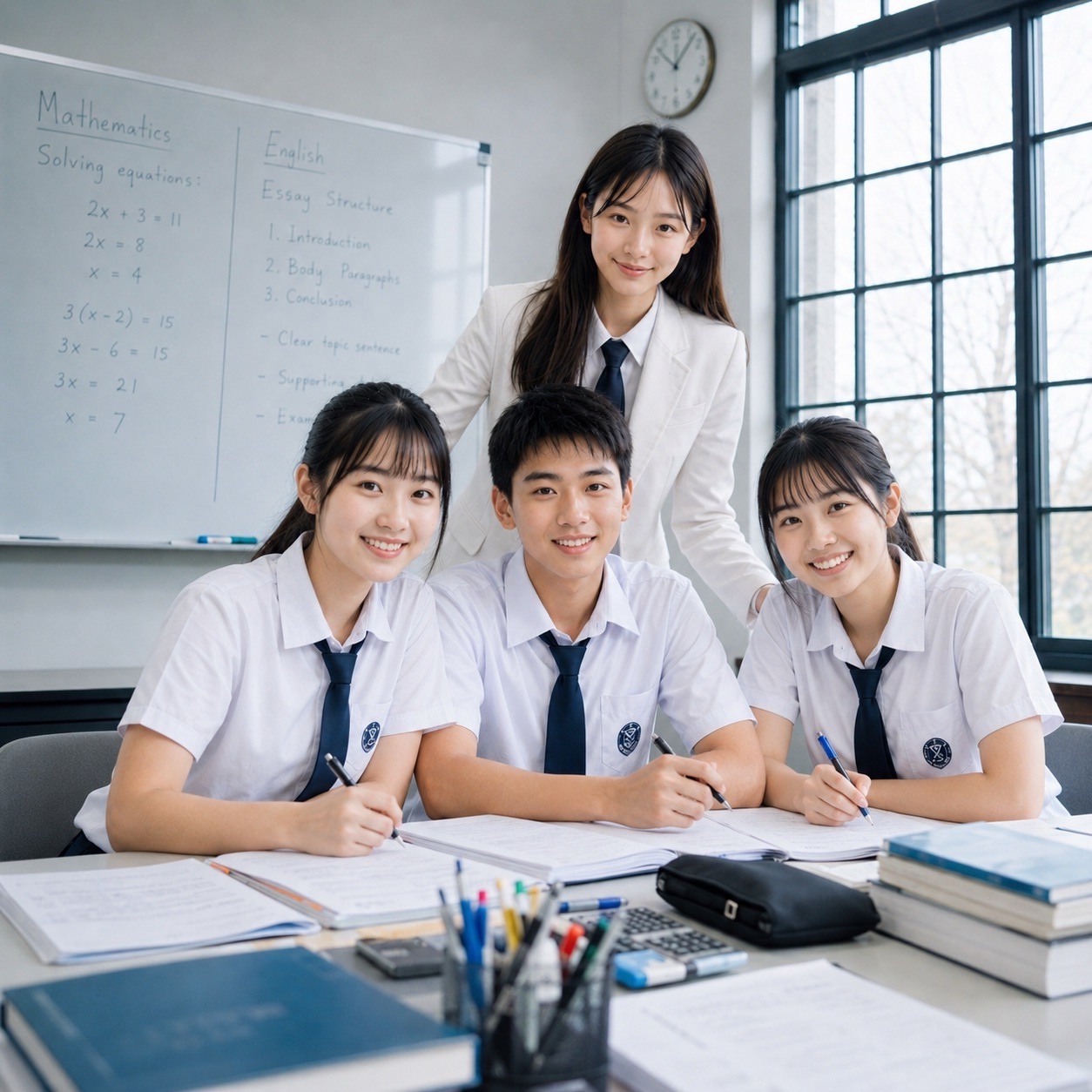
At eduKate Punggol, our Science tuition near Waterway Point and Punggol MRT is designed to help students build strong foundations, connect concepts, prepare for PSLE Science, and improve with close guidance in small-group tutorials.
Primary 3 is the shift into formal Science.
Primary 4 is the straddle between beginner learning and stronger concept mastery.
Primary 5 is the first of two PSLE years, where the engine must start.
Primary 6 is the final build, where students assemble their Science knowledge to PSLE AL1 standards and present answers clearly under national examination conditions.
Science is not just about doing more worksheets.
Science is about learning how the world works.
And when children learn Science properly, they become clearer thinkers, better problem-solvers and more confident learners.
Why Location Matters for Punggol Parents
Punggol families are busy.
Children move between school, homework, CCA, enrichment, family time and rest.
Parents need tuition that fits into real life.
A tuition location near Waterway Point and Punggol MRT makes the weekly routine easier. Students can travel more conveniently. Parents can plan drop-off and pick-up more smoothly. Lessons become part of a sustainable academic rhythm instead of another source of stress.
This matters more than many people realise.
A tired child does not learn well.
A rushed child does not absorb deeply.
A family under constant logistical pressure may find it harder to maintain tuition consistently.
So location is not just convenience.
Location supports consistency.
And consistency is one of the quiet foundations of academic success.
Science improvement does not happen in one dramatic lesson.
It happens week by week.
Concept by concept.
Correction by correction.
Question by question.
A convenient Punggol location helps students stay with the process long enough for real improvement to happen.
Near Waterway Point, Near Punggol MRT, But Focused on the Child
Being near Waterway Point or Punggol MRT helps parents find us.
But what happens inside the lesson is what changes the child.
At eduKate Punggol, Science tuition is not simply about sitting through a class.
The child must be seen.
The child’s mistakes must be understood.
The child’s answer must be checked.
The child’s weak concepts must be repaired.
The child’s confidence must be built.
This is why small-group tuition matters.
In a large class, a child can hide.
They can copy notes.
They can nod along.
They can look busy.
They can leave with the same confusion they arrived with.
Science mistakes are often hidden inside the child’s thinking.
A student may use the right keyword but not understand it.
A student may know the fact but not the concept.
A student may choose the correct MCQ answer by guessing.
A student may write an open-ended answer that sounds scientific but does not answer the question.
The tutor must be able to see these problems.
Small-group tuition gives more space for that.
Science Tuition Must Match the Child’s Level
Primary Science is a four-year journey.
A Primary 3 student should not be taught like a Primary 6 student.
A Primary 6 student cannot still be answering like a Primary 3 student.
Each level has a different job.
Primary 3 starts the Science journey.
Primary 4 strengthens the connection.
Primary 5 starts the PSLE engine.
Primary 6 completes the final build.
This is why tailored Science tuition is important.
Good teaching does not only ask, “What topic is the child learning?”
It also asks, “What stage of thinking is this child in?”
A younger child may need vocabulary, observation and simple explanation.
A middle-primary child may need stronger concept links.
An upper-primary child may need exam strategy, MCQ precision and open-ended answer sequencing.
The teaching must match the stage.
That is how tuition becomes useful.
Primary 3 Science: The Shift
Primary 3 is the shift.
It is the first year Science becomes a formal subject.
Before Primary 3, many children experience Science naturally. They look at plants, animals, rain, magnets, shadows, food, toys and the world around them. They ask questions. They wonder why things happen.
That curiosity is valuable.
Primary 3 turns that curiosity into structured Science learning.
The child now learns to observe carefully.
They learn to classify.
They learn to compare.
They learn to use scientific words.
They learn that Science answers need reasons.
This is a big change.
A child may know what they mean but not know how to write it properly.
They may understand an idea in everyday language but lose marks because the Science language is too vague.
So Primary 3 Science tuition must be clear and encouraging.
The goal is not to scare the child.
The goal is to help the child feel that Science can be understood.
At eduKate Punggol, we help Primary 3 students build comfort with Science, learn the correct vocabulary, and begin forming proper explanations.
This is where the foundation starts.
Primary 4 Science: The Straddle
Primary 4 is the straddle year.
It sits between beginner Science and PSLE Science.
Primary 3 begins the subject.
Primary 5 and Primary 6 become the PSLE years.
Primary 4 is the in-between year that must connect cleanly.
If the connection is strong, the child enters Primary 5 with confidence.
If the connection is weak, the disconnect amplifies.
A vague answer in Primary 4 becomes a bigger problem in Primary 5.
A weak concept in Primary 4 becomes a difficult open-ended question in Primary 6.
A careless habit in Primary 4 becomes examination loss later.
This is learning inertia.
A weak habit keeps moving forward unless something interrupts it.
Primary 4 is the year to interrupt weak habits early.
The child must learn that Science is not a set of separate facts.
Science is connected.
Materials connect to properties and uses.
Plants connect to systems and functions.
Matter connects to heat and change.
Life cycles connect to survival and continuity.
At eduKate Punggol, Primary 4 Science tuition helps students move from beginner naming to stronger explanation.
The child begins to understand how Science ideas fit together.
That connection protects the PSLE years.
Primary 5 Science: The First PSLE Year
Primary 5 is the first of two PSLE years.
At eduKate Punggol, we do not relax in Primary 5.
This is the year the Science engine must start.
Primary 5 is where the child begins to see how Primary 3 and Primary 4 Science combine into a larger picture.
Think of Science like a painting.
Primary 3 and Primary 4 are the broad strokes across the canvas.
They give the child colour, shape and coverage.
Primary 5 and Primary 6 add the high-definition detail.
Now the child must connect the strokes.
Now the child must see the full picture.
Now Science becomes more integrated.
At Primary 5, we focus on three major aims.
The first aim is MCQ discipline.
Students aiming for strong PSLE Science results must treat MCQ seriously. MCQ is not guessing. It requires careful reading, concept accuracy, elimination and trap awareness.
The second aim is concept connection.
Small slivers of earlier Science knowledge must now combine into bigger systems.
The third aim is open-ended readiness.
Students must begin thinking in PSLE sequence.
Observation.
Concept.
Cause.
Effect.
Evidence.
Conclusion.
This is how the Science answering engine starts.
Primary 6 Science: The Final Build
Primary 6 is the final PSLE build.
The child has collected many Science blocks from Primary 3, Primary 4 and Primary 5.
Now the child must assemble them.
Quickly.
Accurately.
Clearly.
Think of it like LEGO.
It is not enough to own the pieces.
The child must know which piece to use, where to place it, how to connect it, and how to complete the structure under time pressure.
Then the child must present that structure to a national examination board through clear answers on the paper.
This is Primary 6 Science.
It is not only knowledge.
It is performance with precision.
At eduKate Punggol, Primary 6 Science tuition focuses on final repair, final polish and final presentation.
We strengthen MCQ accuracy.
We sharpen open-ended answers.
We connect topics across the full primary syllabus.
We train timing.
We reduce careless mistakes.
We prepare students to answer with confidence under PSLE conditions.
The fastest child in PSLE Science is not the child who rushes.
The fastest child is the child who can think clearly, assemble the answer correctly, and present it without wasting motion.
That is what we train.
MCQ Accuracy and Open-Ended Precision
Science has two very different scoring demands.
MCQ rewards precision.
Open-ended questions reward explanation.
Some children know the topic but lose MCQ marks because they misread the question.
Some children can choose answers but cannot explain concepts in writing.
Some children memorise keywords but use them in the wrong place.
Some children write long answers but miss the question.
Science tuition must train both sides.
For MCQ, students must learn to read carefully, compare options, eliminate wrong choices and avoid traps.
For open-ended questions, students must learn to identify the concept, use the correct keyword, explain cause and effect, and link the answer to the question.
This is especially important for PSLE Science.
The child must not only know Science.
The child must show Science.
Marks are awarded for what is presented clearly.
That presentation must be trained.
Why Small-Group Science Tuition Helps
Science learning needs attention.
A child’s mistake may not be obvious from the final answer alone.
Two students may get the same question wrong for different reasons.
One may not know the concept.
Another may know the concept but misunderstand the diagram.
Another may use the wrong keyword.
Another may answer without linking to the question.
In a small group, the tutor can diagnose more carefully.
The tutor can ask, “Why did you choose this answer?”
The tutor can see whether the child is guessing or reasoning.
The tutor can correct the misconception before it becomes a habit.
The tutor can help the child practise the right answer structure.
Small-group tuition gives children more opportunity to be heard, corrected and guided.
This is important because Science improvement often depends on small corrections repeated consistently.
A better word.
A clearer sentence.
A stronger link.
A corrected misconception.
A sharper MCQ habit.
Over time, these small corrections become better results.
Tailored Science Tuition Near Punggol MRT
Parents searching for Science tuition near Punggol MRT often want two things.
They want convenience.
And they want results.
But strong results require more than proximity.
They require the right teaching system.
At eduKate Punggol, we tailor Science tuition by level and need.
For Primary 3, we build the shift into formal Science.
For Primary 4, we build the bridge from beginner to stronger Science thinking.
For Primary 5, we start the PSLE engine.
For Primary 6, we complete the final build.
This helps students improve at the correct stage.
A Primary 3 student gains confidence.
A Primary 4 student gains connection.
A Primary 5 student gains PSLE direction.
A Primary 6 student gains examination control.
That is tailored learning.
Science Is Not More Work. It Is Better Direction.
Many children already work hard.
They read notes.
They complete worksheets.
They revise before tests.
But effort without direction can feel frustrating.
A child may study for hours and still lose marks because the answer is vague.
A child may memorise a model answer but fail when the question changes.
A child may do practice papers but repeat the same mistake.
Good Science tuition gives direction.
It shows the child what to repair.
It teaches the child how to answer.
It helps the child understand why the mistake happened.
It connects topics so Science becomes clearer.
This turns effort into progress.
That is one of the main purposes of tuition.
Not more noise.
Better direction.
Science Tuition Near Waterway Point for Busy Families
Waterway Point and Punggol MRT are central parts of the Punggol routine.
For many families, tuition near this area makes practical sense.
Parents can plan more easily.
Students can travel more conveniently.
Weekly lessons become easier to maintain.
But the deeper value is what happens after the child arrives.
The child learns to observe more carefully.
The child learns to explain more clearly.
The child learns to connect Science concepts.
The child learns to avoid MCQ traps.
The child learns to write open-ended answers in sequence.
The child learns to prepare for PSLE with calmness and structure.
Convenience brings the child to the lesson.
Teaching changes the child inside the lesson.
Both matter.
Building Confidence in Science
Science confidence is built through clarity.
A child becomes confident when they know what to do.
They know how to read the question.
They know which concept applies.
They know how to use the keyword.
They know how to explain the answer.
They know how to check options.
They know how to correct mistakes.
This is not fake confidence.
It is earned confidence.
At eduKate Punggol, we want students to feel that Science may be difficult, but it is understandable.
Difficult questions can be broken down.
Weak concepts can be repaired.
Careless habits can be reduced.
Open-ended answers can be trained.
PSLE preparation can be structured.
When students see the path, they become calmer.
When they become calmer, they think better.
When they think better, they answer better.
Science, Education and the Future
Science tuition is not only about marks.
Marks matter.
School results matter.
PSLE matters.
AL1 matters.
But Science education is also about helping children understand the world.
Science teaches children to observe.
To compare.
To question.
To test ideas.
To use evidence.
To explain clearly.
To understand systems.
These are future skills.
A better world needs people who can think clearly.
A better society needs children who can understand complexity.
A better civilisation needs learners who can solve problems with reason and responsibility.
That begins in small lessons.
A Primary 3 child learning to observe.
A Primary 4 child learning to connect.
A Primary 5 child learning to think in systems.
A Primary 6 child learning to present clearly under pressure.
Every stage matters.
Properly taught children shine a bright light into the future.
When Parents Should Consider Science Tuition
Parents may consider Science tuition if their child shows signs of confusion or inconsistency.
The child memorises but cannot explain.
The child loses marks in open-ended questions.
The child makes careless MCQ mistakes.
The child cannot connect topics.
The child uses vague everyday language.
The child knows facts but cannot apply them.
The child struggles with diagrams, tables or experiments.
The child studies hard but results do not improve.
The child is entering Primary 5 or Primary 6 and needs stronger PSLE preparation.
These signs do not mean the child cannot succeed.
They mean the child needs clearer guidance.
And the earlier the guidance begins, the cleaner the learning path becomes.
Final Word: Science Tuition Punggol Near Waterway Point / Punggol MRT
Science tuition near Waterway Point and Punggol MRT gives families convenience.
But at eduKate Punggol, the real value is the teaching.
We help students build Science from Primary 3 to Primary 6 with clear progression.
Primary 3 is the shift.
Primary 4 is the straddle.
Primary 5 is the engine start.
Primary 6 is the final PSLE build.
We teach concepts.
We connect ideas.
We train MCQ accuracy.
We sharpen open-ended answers.
We repair misconceptions.
We prepare students for school assessments and PSLE Science.
This is tailored learning for academic success.
Because Science is not just another subject.
Science is how children learn to understand the world.
And when children understand the world more clearly, they become stronger, calmer and more capable learners.
That is the eduKate Punggol Science journey.
From curiosity to confidence.
From foundation to PSLE readiness.
From simple observation to AL1-standard explanation.
Near Waterway Point.
Near Punggol MRT.
Focused on helping every child learn Science properly.
Primary & Secondary Science Small-Group Tutorials (max 3 pax)
For parents living in Punggol, education is top priority. With the MOE Science syllabus growing in scope and depth, students need more than rote memorisation — they need conceptual clarity, exam strategies, and confidence.
At eduKate Punggol, located near Waterway Point and Punggol MRT (NE17/PTC), we specialise in small-group Science tuition (max 3 pax). This format ensures each child receives personal attention, immediate feedback, and structured progression from Primary 3 Science to Secondary 4 Pure/Combined Science.
Start with our hub: Punggol Science Tuition Overview.
Contact us for our latest Science tutorial schedules

Why Choose Science Tuition Near Waterway Point
1. Location Convenience for Parents
- Transport hub: Punggol MRT/LRT connects seamlessly via the North East Line and LRT loops, plus direct access to the bus interchange.
- Easy drop-offs/pick-ups: Classes are minutes from Waterway Point, a central meet-point for meals, errands, or study breaks.
- Local context: Waterway Point anchors the Watertown integrated development, right along the scenic Punggol Waterway.
2. eduKate’s 3-Pax Format
- Small groups encourage active participation while giving tutors the space to address each child’s weaknesses.
- More focused than big classes, yet more engaging than 1-to-1 tuition.
- Immediate clarification builds confidence and prevents misconceptions from compounding.
Learn how we structure lessons: Punggol Science Tuition — Small Group.
3. Curriculum Alignment
Our Science lessons follow MOE’s Science learning outcomes, ensuring continuity with school tests and national exams. Students practise with SEAB-aligned question types: MCQs, structured questions, and open-ended investigations.
Authoritative references:
Primary Science Tuition in Punggol (P3–P6)
Building Curiosity into PSLE Confidence
From Primary 3, students transition into a formal Science curriculum. We emphasise:
- Conceptual clarity: particles, systems, energy, life cycles.
- Process skills: observing, classifying, comparing, inferring.
- Problem-solving heuristics: breaking down multi-part questions.
PSLE Preparation
By Primary 5–6, exam technique matters:
- Tackling open-ended questions systematically.
- Avoiding “keyword loss” in answers (a common reason students lose marks).
- Building stamina to sustain focus over full papers.
Dive into our level-specific pages:
- Primary 5 Science Tuition (Punggol)
- Primary 6 Science Tuition (Small Groups)
- PSLE Science (Punggol Focus Page)
For a broader philosophy: Punggol Tuition Overview.
Secondary Science Tuition in Punggol (Sec 1–4)
Lower Secondary (Sec 1–2)
We ensure students adapt smoothly to combined science across Biology, Chemistry, and Physics strands. Key skills:
- Drawing and labelling diagrams with accuracy.
- Handling simple equations (density, speed, energy).
- Writing precise definitions to secure method marks.
Explore: Punggol Secondary 2 Science Tutor.
Upper Secondary (Sec 3–4)
Students choose Pure or Combined Science. We scaffold lessons for both tracks:
- Biology: Cells, genetics, human systems.
- Chemistry: Atomic structure, chemical bonding, stoichiometry.
- Physics: Forces, electricity, energy, waves.
We also train exam resilience:
- Identifying command words (“explain vs describe”).
- Practising full-paper timing (2–3 hours).
- Marking with SEAB rubrics to mimic school and O-Level expectations.
Explore:
Our Teaching Methodology
Step 1: Diagnose
Short assessments identify gaps — whether weak in concept recall (e.g., photosynthesis) or application (e.g., interpreting graphs).
Step 2: Rebuild
Tutors reteach concepts using models, experiments, and analogies. For instance, kinetic particle theory is explained with hands-on demonstrations.
Step 3: Automate
Timed drills + error analysis help students “bank marks” consistently. Open-ended questions are trained with model-answer frameworks.
Check fees context: Punggol Science Tuition Fees.
What Parents Say
“My daughter always lost marks in open-ended questions. At eduKate, she learned to write answers with keywords. Her C improved to an A in 6 months.” — Parent, Punggol Sec 2
“The 3-pax class means my son isn’t lost in a crowd. His tutor explains patiently, and now he looks forward to Science lessons.” — Parent, Primary 5
Getting Here (Waterway Point / Punggol MRT)
- By MRT/LRT: Punggol MRT/LRT (NE17/PTC) links to the North East Line and the Punggol LRT loops, providing easy access across the estate.
- By mall: Waterway Point connects directly to MRT/LRT and the bus interchange. Parents can run errands or wait comfortably while classes are in session.
- By car: Ample parking at Waterway Point and nearby lots, with quick access via Punggol Central.
Interlinking Your Child’s Journey
Science often overlaps with Maths and English — so we encourage parents to explore:
Together, these build the language, numeracy, and scientific reasoning needed to excel across subjects.
Conclusion
Science isn’t just about memorising facts. It’s about thinking critically, applying knowledge, and communicating clearly. At eduKate Punggol, near Waterway Point and Punggol MRT, we provide small-group Science tuition that balances syllabus rigour with personal attention.
From Primary 3 curiosity to Secondary 4 exam readiness, our 3-pax system ensures no student is left behind — and every student is equipped to thrive.
📌 Book your consultation today: eduKate Punggol Science Tuition