
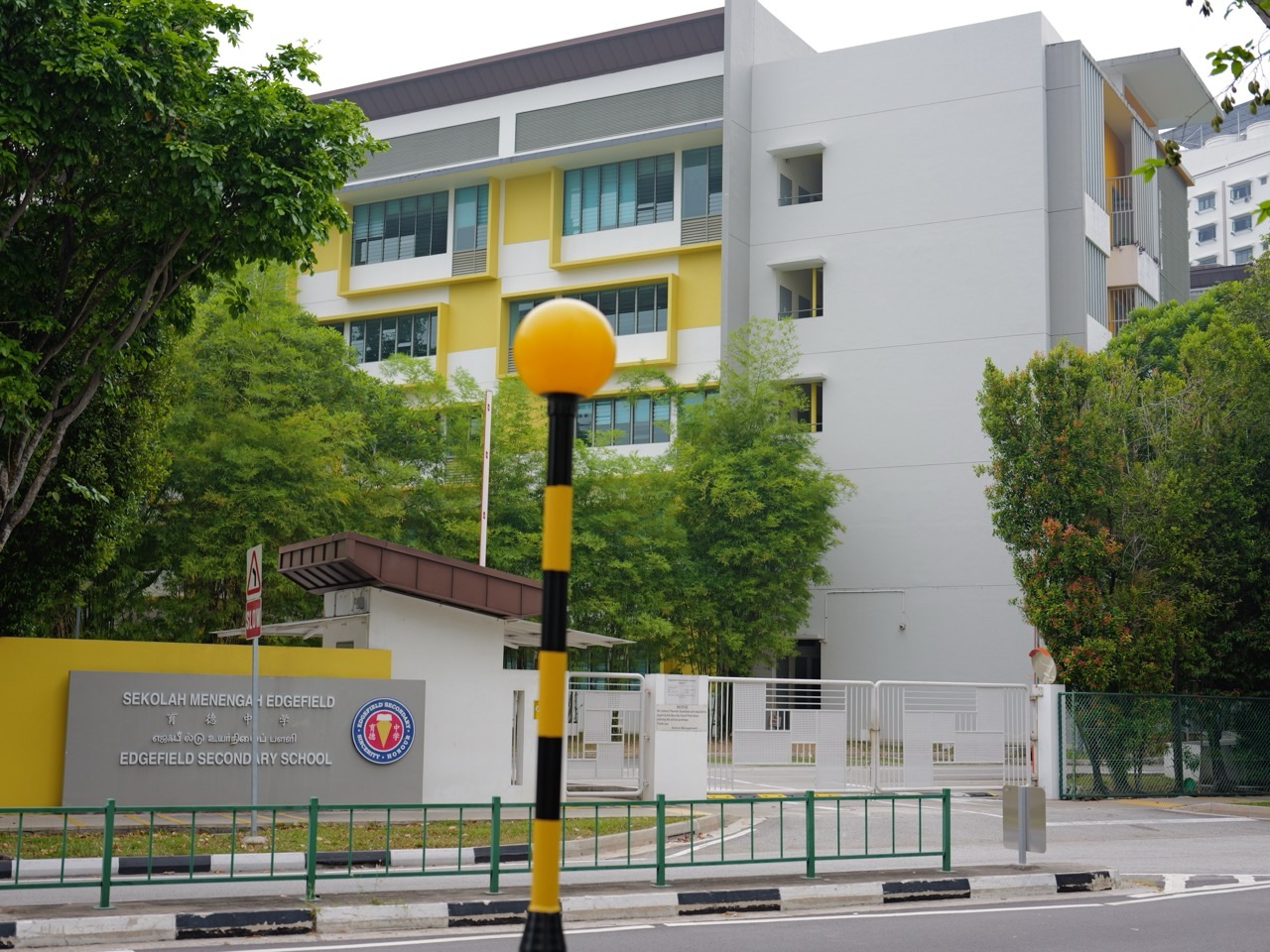
PSLE Score 21 gives your child a choice between Posting Group 2 (PG2) and Posting Group 3 (PG3). This is not a requirement to choose PG3 simply because it is the more academically demanding starting level. A Punggol family should study two complete school-choice lists before deciding. On the PG3 route, Bartley and Junyuan Secondary each had a previous cut-off of 21, while Yuying, Meridian and Loyang View recorded 22. Punggol’s four local schools had earlier PG3 endpoints below 21. Read MOE’s exact score-to-Posting-Group table.
On the PG2 route, the earlier school figures look different: Yusof Ishak’s PG2 cut-off was 22, Edgefield and Greendale each 23, and Punggol Secondary 24. These are previous results for the 2026 Secondary 1 intake, not promised 2027 admission. The Posting Group selected for ordinary S1 submission applies to all six school choices—parents cannot mix PG3 for one school and PG2 for another. Compare the academic start, the four subject results, actual schools, support and daily travel, then submit the six schools for the one group chosen.
- Score 21 is a real choice: PG2 or PG3, with G2 or G3 as the indicative starting level of most subjects.
- One group for all six: make two draft school lists, but select a single Posting Group for the official ordinary S1 submission.
- PG3 school evidence: previous COPs were 21 at Bartley and Junyuan; 22 at Yuying, Meridian, Loyang View and East Spring.
- PG2 local comparison: previous COPs were 22 at Yusof Ishak, 23 at Edgefield and Greendale, and 24 at Punggol Secondary.
- Subject flexibility: a PG2 child can be offered more demanding levels for eligible individual subjects under Full SBB; confirm rules and offerings.
- Parent’s decision: assess learning pace, fit, commute and six genuinely acceptable choices before choosing a group.
Reviewed 19 November 2026, Singapore. All school COP comparisons refer to the completed 2026 Secondary 1 intake (2025 PSLE cohort). These are not the 2027 intake’s cut-offs. Confirm live eligibility and the applicable Posting Group in MOE guidance.
Chapters — choose a decision to investigate
- 1. Understand the score-21 fork before choosing schools
- 2. A non-negotiable submission rule: one Posting Group for all six
- 3. The PG3 school finder for Score 21
- 4. How to interpret the PG3 historical figures at twenty-one
- 5. Build the PG2 comparison separately
- 6. The two school tables show why mixing columns is dangerous
- 7. What PG3 means for academic pace at Secondary 1
- 8. What PG2 can still offer for a child strong in particular subjects
- 9. Use the child’s real learning profile, not one total
- 10. Compare a complete week for each Posting Group
- 11. Bartley, Junyuan and wider PG3 choices: do your geography
- 12. The Punggol PG2 alternative: four local schools compared fairly
- 13. The SEC examination does not lock a twelve-year-old into one future
- 14. Read the school-choice rules and boundary ties correctly
- 15. Two families can reasonably decide differently at Score 21
- 16. Ask about CCAs, ALPs, LLPs and participation
- 17. 2026 results week: decide the group, then finalise the six
- 18. Frequently asked questions and the parent decision
1. Understand the score-21 fork before choosing schools
A child with PSLE Score 21 has something a Score 20 child does not have under the ordinary MOE framework: a choice of Posting Group. The published table places Scores 21 and 22 in a PG2-or-PG3 option band. This matters for school admission and the indicative starting subject levels. PG3 typically begins with G3 subjects; PG2 typically begins with G2 for most subjects, with subject-level flexibility for eligible strengths.
The family should not treat PG3 as an automatic badge of ambition or PG2 as a failure. Choosing either group is a decision about a suitable educational starting point and a realistic range of schools. Ask what your child has found difficult in Primary 6 and which kinds of challenges they respond to positively. The child’s actual subject ALs and work habits deserve attention alongside the total.
If relatives press you to choose the “higher” label, ask them what concrete benefit they expect for this particular child. Then test that expectation against the available schools and the pupil’s current learning profile. A decision that can be explained in specific terms is better than one made out of fear of a label.
Family action: Write two short headings—PG3 route and PG2 route—and keep their school evidence separate from the start.
2. A non-negotiable submission rule: one Posting Group for all six
MOE’s S1 system guidance states that pupils eligible for two Posting Groups may select one based on preference and that the selected group applies to all the secondary school choices entered. This is the pivotal rule for the score-21 family. You cannot submit Punggol Secondary as PG2 for one choice, Bartley Secondary as PG3 for another, and assume the system will switch groups individually.
To compare the options fairly, create two full drafts of six schools. The PG3 draft uses PG3 historical ranges, PG3 eligibility and the associated subject start. The PG2 draft uses PG2 data. The same school may appear in both draft lists, but its previous cut-off can differ considerably between groups. Verify the current portal instructions and the personalised eligibility before submission.
A parent who keeps one mixed table may mistakenly regard a PG2 cut-off of 24 as evidence that a PG3 applicant with 21 can enter a local school. That is comparing different admission queues. Check the correct column first; only then compare schools by fit and preference.
Family action: Put “PG2” or “PG3” at the top of each draft and never copy a row from the other group without relabelling it.
3. The PG3 school finder for Score 21
If the family chooses PG3, the local Punggol comparison is sobering. Edgefield’s previous PG3 COP was 14, Yusof Ishak 15, Greendale 16 and Punggol Secondary 19. Seng Kang Secondary also ended at 19. All are numerically more selective than twenty-one in that completed posting exercise. The family should therefore look beyond Punggol instead of assuming the nearest school provides a ready PG3 option.
Bartley and Junyuan recorded historical PG3 cut-offs of 21, matching the child’s score. Schools such as Yuying, Meridian, Loyang View and East Spring recorded 22, giving a numerically less stringent previous comparison. The school research should still ask about the child’s journey and interests, not only the admission number. A school with a previous 22 is not guaranteed to take Score 21 next year.
Names also need location checks: Bartley Secondary is in the Toa Payoh area, not simply wherever the Bartley station name suggests. Junyuan is in Tampines. If your child takes a CCA, consider how they will get home after a late session.
| School | 2026 intake PG3 COP | What Score 21 means historically |
|---|---|---|
| Punggol Secondary (Punggol) | 19 | Numerically weaker than the old PG3 boundary |
| Seng Kang Secondary (Sengkang) | 19 | Numerically weaker than the old PG3 boundary |
| Hougang Secondary (Hougang) | 20 | Numerically weaker than the old PG3 boundary |
| Peicai Secondary (Serangoon) | 20 | Numerically weaker than the old PG3 boundary |
| Bartley Secondary (Toa Payoh) | 21 | Exact previous PG3 boundary |
| Junyuan Secondary (Tampines) | 21 | Exact previous PG3 boundary |
| Yuying Secondary (Hougang) | 22 | One point numerically stronger than old COP |
| Meridian Secondary (Pasir Ris) | 22 | One point numerically stronger than old COP |
| Loyang View Secondary (Pasir Ris) | 22 | One point numerically stronger than old COP |
| East Spring Secondary (Tampines) | 22 | One point numerically stronger than old COP |
Family action: Build a PG3 research basket with at least three schools whose previous PG3 COP was 22, if your travel and school-fit checks allow.
4. How to interpret the PG3 historical figures at twenty-one
An earlier PG3 cut-off of 20 is one point more selective than the child’s Score 21, while a previous 21 is an exact historical match and 22 is numerically less stringent by one point. These are measurements of what happened in a completed exercise. They are not percentages, guarantees or predictions of the new cohort’s demand.
For example, a family considering Bartley at the previous PG3 endpoint of 21 can reasonably investigate the school and place it according to genuine preference. It should also plan for the possibility that the 2027-entry cut-off changes. The same applies to Junyuan. A list containing only schools with previous endpoints equal to twenty-one or below could leave the family with too few acceptable alternatives.
MOE’s shortlisting guidance encourages two or three schools with less stringent earlier cut-offs. The key is that the child should still want to attend those schools. It is not enough to collect numerical headroom and then ignore actual access, support and daily life.
Family action: On the PG3 draft, mark each COP “below 21”, “21” or “above 21”, and note why the school fits.
5. Build the PG2 comparison separately
If the family selects PG2, different opportunities come into view. The previous PG2 cut-offs at Punggol’s four local schools were 22 for Yusof Ishak, 23 for Edgefield and Greendale, and 24 for Punggol Secondary. A result of 21 is numerically stronger than all four of those historical endpoints. That makes them reasonable schools to research in the PG2 draft, but it does not guarantee entry and does not answer which fits best.
Neighbouring Compassvale, North Vista and Seng Kang Secondary had previous PG2 cut-offs of 24. These schools may be practical from particular parts of Punggol, depending on the route. Peicai, Bartley and Yuying had previous PG2 cut-offs of 25, widening the range of historical comparisons if their journeys work.
Do not decide solely by how many schools have a numerically less stringent COP in PG2. The starting subject levels and the child’s learning needs matter as well. A list with more historical flexibility can still be the wrong route for a child if the academic decision has not been discussed carefully.
| School | 2026 intake PG2 COP | What Score 21 means historically |
|---|---|---|
| Yusof Ishak Secondary (Punggol) | 22 | One point numerically stronger |
| Edgefield Secondary (Punggol) | 23 | Two points numerically stronger |
| Greendale Secondary (Punggol) | 23 | Two points numerically stronger |
| Punggol Secondary (Punggol) | 24 | Three points numerically stronger |
| Compassvale Secondary (Sengkang) | 24 | Three points numerically stronger |
| North Vista Secondary (Sengkang) | 24 | Three points numerically stronger |
| Seng Kang Secondary (Sengkang) | 24 | Three points numerically stronger |
| Peicai Secondary (Serangoon) | 25 | Four points numerically stronger |
| Yuying Secondary (Hougang) | 25 | Four points numerically stronger |
| Bartley Secondary (Toa Payoh) | 25 | Four points numerically stronger |
Family action: Make a second six-school draft using only PG2 data; include at least two local and two neighbouring candidates worth visiting.
6. The two school tables show why mixing columns is dangerous
In a single school, PG3 and PG2 usually have different historical ranges. A parent who writes “Punggol Secondary 24” without recording PG2 may believe the figure applies to Score 21 taking PG3. It does not. The subject-level start and the admission group are linked at the moment of posting, so the columns must remain separate.
Use the first table to investigate the PG3 option and the second for PG2. Both refer to the 2025 PSLE cohort entering Secondary 1 in 2026. If you find a conflicting value online, verify that the reporting year, affiliation status, school programme and Posting Group match. The first number in a range is not a minimum score a stronger-scoring child must reach.
When the family begins comparing actual school programmes, use current school pages rather than assuming a programme listed several years ago remains unchanged. The historical COP is a planning reference, not a complete description of the school or its present offerings.
Family action: Check that the six final names in each draft match the Posting Group written at its top.
7. What PG3 means for academic pace at Secondary 1
For a child posted through PG3, most subjects begin at G3, the most academically demanding of the three general subject levels. That can be a suitable starting point when the child’s readiness and confidence match the learning expectations. It does not automatically make the school day easier or harder in every other way: travel, independence, friendships and CCA routines still need attention.
Ask about the child’s experience with more challenging material. Do they persist and ask for help, or become discouraged when several concepts are unfamiliar at once? Has a teacher described subject-specific difficulties that deserve attention? No single parent observation settles the correct group, but these questions are more constructive than treating one label as proof of success.
If PG3 is selected, investigate how the receiving schools introduce their curriculum, how pupils can obtain consultations and how parents are informed about persistent difficulties. It is better to understand the actual support process before the child needs it urgently.
Family action: Ask your child to describe a recent difficult learning task and what helped them complete it.
8. What PG2 can still offer for a child strong in particular subjects
A child choosing PG2 typically starts most subjects at G2. Under Full Subject-Based Banding, eligible pupils may take English Language, Mathematics, Science and/or Mother Tongue Language at more demanding levels when their individual PSLE results meet the relevant criteria. An AL5 or better in a Standard-level subject is a key published starting condition for the G3 offer; confirm the current arrangement with the receiving school.
This matters because an aggregate of 21 can hide uneven strengths. One child may be confident in Mathematics but need more support for English; another may be a strong reader but find Science explanations demanding. A PG2 route can allow a family to discuss subject-specific strength without insisting that every subject must begin at the same level. That does not mean any individual G3 subject offer is automatic.
Ask how the school communicates subject-level placement, how pupils can adjust when appropriate, and what assessment evidence is considered later. Avoid promising a particular upper-secondary combination or post-secondary destination based only on the starting Posting Group.
Family action: For the PG2 draft, write the four subject ALs beside the school list and note any G3-eligible subject to verify.
9. Use the child’s real learning profile, not one total
Two hypothetical pupils can both score 21 through very different patterns. One may have AL4, AL5, AL6 and AL6; another may have AL2, AL4, AL7 and AL8. The same aggregate therefore cannot tell you which subject-level mix the child needs or which school setting will help them settle. Specific subject ALs and the child’s experience of learning must be considered.
Write down what the pupil can already do independently. Do they understand the mathematical idea but forget to present steps? Can they explain a Science process verbally but struggle to write it? Do they read comfortably but rush comprehension questions? These observations allow you to ask schools about everyday instruction and feedback rather than making blanket judgments about ability.
There is also room to celebrate competence. A child should be able to identify a subject or activity they enjoy while discussing areas needing support. School choice is not merely the prevention of failure; it is also the beginning of new opportunities to learn, participate and grow.
Family action: Use four short rows, one for each PSLE subject: current strength, current gap and what to ask the school.
10. Compare a complete week for each Posting Group
Do not compare only curriculum labels. Pick one credible school from each draft and picture a normal Wednesday: morning reporting, lessons, a CCA session, the journey home, dinner, homework and rest. The family can ask which school day seems manageable and why. This comparison may reveal that a theoretically attractive school requires a tiring commute the household cannot sustain.
The academic starting level matters, but so does access to help. Investigate whether the child knows whom to approach when confused, how the school introduces new subjects and whether consultations are available. Ask what the transition looks like during the first term rather than assuming every pupil will settle in the same way.
A family need not choose the shortest journey every time. A longer journey can be justified by a meaningful educational preference, provided the child understands the route and the household has a dependable plan. The goal is a realistic week that leaves enough room for learning and participation.
Family action: For one PG3 candidate and one PG2 candidate, complete a sample after-CCA evening timeline.
11. Bartley, Junyuan and wider PG3 choices: do your geography
Bartley and Junyuan are significant because the previous PG3 cut-off at each was 21. But the schools are not located in the same part of Singapore and will not have equivalent travel implications for Punggol children. An appealing old cut-off should trigger a route check, not replace it. Use the exact current school address and public transport connections.
A child interested in either school should investigate normal classroom life and participation in CCAs. Ask what happens if they do not receive their first-choice CCA and how the school introduces Secondary 1 pupils to unfamiliar routines. Such questions will also help the family compare with other schools at 22, including Yuying, Meridian, Loyang View and East Spring.
When a school is farther away, test the return trip rather than assuming a parent will always collect the child. If a practical route exists and the student is enthusiastic, the distance might still be manageable. If the family has no dependable plan after activities, that concern needs resolving before including the school.
Family action: Choose one route beyond Punggol and note walk, waiting, transfers and late return, not just train time.
12. The Punggol PG2 alternative: four local schools compared fairly
Yusof Ishak, Edgefield, Greendale and Punggol Secondary occupy different locations in the estate. Their historical PG2 cut-offs of 22, 23, 23 and 24 are useful reference points for a score-21 PG2 draft, but not an educational ranking. Look at what each offers and how a child would experience an ordinary school day.
You can begin with eduKate’s four-school Punggol comparison, then verify current school and programme details. Ask about support for students who take a mix of subject levels, what CCAs are accessible to new pupils, and how the school helps children become independent. If the child already has a strong preference, ask what actual feature creates it.
The historical advantage of a particular PG2 number should not blind the family to daily geography. Two pupils from different blocks may have opposite commuting preferences. A local school should earn its place in the six because it works for the child, not simply because the town name appears familiar.
Family action: Ask your child to select the two Punggol schools they would most like to investigate in the PG2 scenario and explain why.
13. The SEC examination does not lock a twelve-year-old into one future
Singapore’s secondary framework now uses G1, G2 and G3 subject levels, and the Singapore-Cambridge Secondary Education Certificate (SEC) examinations begin with the graduating cohort in 2027. A pupil starting Secondary 1 in 2027 is not taking SEC immediately. It is enough for the family to understand the direction of change while focusing on the child’s first years of learning. SEAB has the examination overview.
Neither PG2 nor PG3 should be advertised as a guaranteed ticket to a particular JC, polytechnic, ITE or other pathway. Later subject combinations, performance and admissions requirements matter. Under Full SBB, pupils can have different subject-level profiles, and opportunities to adjust may arise when relevant criteria are met.
Rather than making a fixed future prediction, ask how each school supports students in making later subject decisions. A strong school-choice conversation identifies the next useful learning habits and growth opportunities, not an inflexible career plan for a child at the start of secondary education.
Family action: Keep future pathway questions on a separate page headed “Review when subject choices are due”.
14. Read the school-choice rules and boundary ties correctly
MOE’s ordinary posting process prioritises stronger PSLE scores. At an equal score for the last places, citizenship, school preference order and computerised balloting are applied in the prescribed sequence. Do not treat a match with a previous cut-off as assurance of admission, and do not believe that listing a school first can overcome every other factor.
For a Score 21 family, this rule applies only after the Posting Group has been chosen and the right group-specific school data is used. Comparing a PG3 COP at Bartley with a PG2 COP at Yusof Ishak as if they were one list is not a meaningful application of the rules. They belong to two different possible submissions.
When a school has affiliation, SAP language or specialised programme conditions, verify the exact rule relevant to the child. Successful DSA placement also changes the ordinary posting route. Check the outcome and the personalised official documents rather than relying on advice that describes another family’s case.
Family action: Check that your preferred order is intentional and that no item depends on an unverified exception or affiliation.
15. Two families can reasonably decide differently at Score 21
Imagine a pupil who enjoys an academic stretch across subjects, asks questions readily and has several PG3 schools within a manageable journey. After checking support and the full weekly routine, the family may prefer PG3. The choice is rooted in the child’s readiness and actual acceptable schools, not in the idea that PG3 makes the child inherently more accomplished.
Now imagine a pupil with a strong individual subject but uneven confidence in others. A PG2 start, combined with an eligible G3 subject where offered, may provide a more suitable opening. The family may also find several local schools whose school culture, routines and travel work especially well. This is a different reasonable decision from the same total.
Both stories are illustrations, not promises about the academic outcome or the ability of any real pupil. The family needs its own evidence, its own subject ALs and a realistic six-school list. The right question is not “Which group sounds more prestigious?” but “Which starting point will this child be ready to engage with, in the schools we can actually choose?”
Family action: Write one reason for PG3 and one reason for PG2, each supported by an observation about your child or a school.
16. Ask about CCAs, ALPs, LLPs and participation
A school’s current CCA list or Applied Learning Programme description is an invitation to investigate, not a guarantee that every applicant joins a particular team, competition or specialist activity. The distinction matters for pupils whose Posting Group decision is being influenced by interest in one school. Ask whether participation is part of the normal curriculum, optional or limited by selection.
Encourage your child to name an activity they already enjoy and one they would be willing to try as a beginner. Ask the school how incoming Secondary 1 pupils are introduced to choices and what happens if their first preference is unavailable. A realistic account of participation tells you more than a trophy photograph.
Make the same inquiry for schools on both group drafts. PG2 and PG3 are not interchangeable admission columns, but the human questions—belonging, learning support, friendships and opportunities to participate—still matter to every child.
Family action: Record one actual activity-related question and the answer from each top-choice school.
17. 2026 results week: decide the group, then finalise the six
SEAB has announced PSLE results on 24 November 2026 at 11.00am, with the S1 choices portal open from 11.30am that day until 30 November at 4.30pm. Posting results are tentatively scheduled for 18 December. These are Singapore times; consult the official release for any update.
When the actual results are issued, confirm the child’s eligible groups and individual subject ALs. Select the Posting Group only after reviewing both six-choice drafts and discussing readiness and school fit. Then submit one coherent set of six preferences, all in the chosen group. Check codes, names, any applicable eligibility condition and the final order.
Retain the portal verification or confirmation and keep a copy of the agreed list. Treat any permitted amendments carefully and verify that the updated order was actually accepted by the system. If the instructions differ from an older guide, the current official portal and primary school guidance take precedence.
Family action: Choose one adult to submit and one to verify; write the chosen Posting Group at the top of the final family worksheet.
18. Frequently asked questions and the parent decision
Can my child select PG3 at Bartley and PG2 at Punggol Secondary in one submission? No. For an eligible two-group pupil, MOE’s system guidance says one selected Posting Group applies across all six ordinary school choices. Prepare two research lists but submit one group.
Does choosing PG2 rule out learning anything at G3? No. Under Full SBB, individual subject-level flexibility exists for eligible pupils. Verify the child’s actual ALs, current criteria and school arrangements. Conversely, PG3 should not be chosen merely because its label sounds more demanding.
Is PG3 at Score 21 the only ambitious decision? No. A sensible school, positive learning habits, suitable challenge and willingness to seek help matter on either route. Neither choice automatically determines the child’s future JC, polytechnic or ITE options.
What should a parent do today? Build both drafts, compare the child’s readiness and the complete school day, then check MOE SchoolFinder and the Punggol score hub. The PG3-versus-PG2 local-school guide and the commute workbook help turn that comparison into a real plan.
Family action: Explain the final decision in one sentence about your child’s needs, one about the schools, and one about the daily routine.
Source and method note: Posting Group eligibility MOE; one selected Posting Group for all six preferences MOE system guide, section 4.3 (check current portal instructions); historic COPs 2026 intake compilation, to be rechecked in MOE SchoolFinder; SEAB 2026 release schedule. These references are not probabilities of posting, rankings or promises of a specific programme.
More Punggol PSLE school-finder guides: Score 20 PG3 · Score 22 PG2 or PG3 · All PSLE scores


