
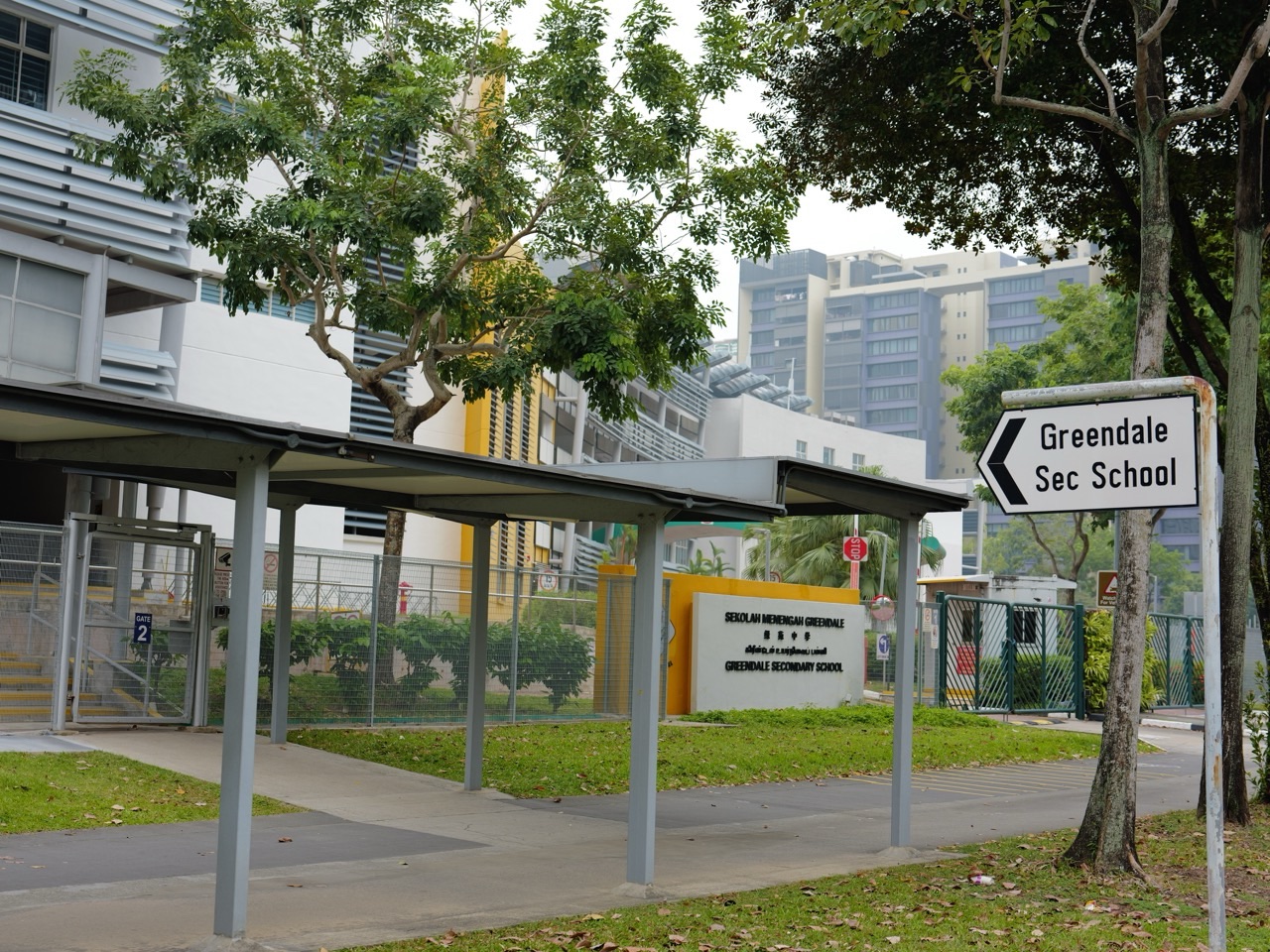
If your Punggol child receives PSLE Score 23, the ordinary Secondary 1 school-entry route is Posting Group 2 (PG2). Greendale Secondary School, at 51 Edgedale Plains, Singapore 828866, recorded a 2026-entry PG2 last-posted cutoff of 23. That is an exact historical boundary for Score 23, so it should be treated as a prior boundary match that cannot forecast how the 2026 PSLE cohort will be posted. The school’s distinctive learning includes Design, Technology & Engineering — Design, Code and Build and Outdoor Adventure Education; investigate those experiences alongside classroom support, CCAs and a workable journey.
For the 2026 PSLE cohort, results will be released on Tuesday 24 November 2026 at 11.00am. The S1 Portal opens at 11.30am that day and the six-school choice window closes Monday 30 November 2026 at 4.30pm. Before submitting, read the child’s actual English, Mathematics, Science and Mother Tongue Achievement Levels, check the correct PG2 column in MOE SchoolFinder, and compare all four Punggol schools honestly: Yusof Ishak PG2 22, Edgefield and Greendale PG2 23, and Punggol Secondary PG2 24 for the completed 2026-entry exercise. No older cutoff is a promise of a 2027 place.
- PSLE Score: 23; ordinarily PG2, not the PG2/PG3 option band at Scores 21–22.
- Greendale Secondary School: 51 Edgedale Plains, Singapore 828866; prior PG2 last-posted 23.
- Historical assessment: exact previous-year match; admissions for the new 2027 intake are not confirmed.
- Other local PG2 cutoffs (2026 entry): Yusof Ishak 22; Edgefield 23; Greendale 23; Punggol Secondary 24.
- ALP: Design, Technology & Engineering — Design, Code and Build; check ordinary versus selected activities.
- LLP: Outdoor Adventure Education; ask about normal student participation.
- Curriculum: PG2 usually starts most subjects at G2; individual G-level offerings depend on subject-specific rules.
- Parent moves: verify six genuine school choices, travel, subject support and CCAs.
- Deadline: submit in the official S1 Portal by 30 November 2026 at 4.30pm.
Quick information: a comparison parents can use immediately
| School | 2026-entry PG2 last posted | What Score 23 meant at that previous boundary |
|---|---|---|
| Yusof Ishak Secondary | 22 | One point more stringent; historically aspirational |
| Edgefield Secondary | 23 | Exact prior boundary; not guaranteed |
| Greendale Secondary | 23 | Exact prior boundary; not guaranteed |
| Punggol Secondary | 24 | One point less stringent; still not guaranteed |
For Greendale Secondary School, the previous cutoff was 23, and the school is on 51 Edgedale Plains, Singapore 828866. The exact previous cutoff match makes Greendale relevant to Score 23, but not safe. Families should also research schools with past PG2 cutoffs of 24 and 25 that the child would genuinely attend. The above figures describe the school entry following PSLE 2025, not the still-uncompleted exercise after PSLE 2026. Verify the group-specific range in MOE SchoolFinder before parents rank and submit any school.
These numerical comparisons do not measure teaching quality. A child may be better supported in a school with a less stringent cutoff because of culture, programmes, teachers or travel. A school with a more stringent cutoff is not automatically a better learning environment. Parent judgement should begin with the actual pupil and what they need to succeed in a normal week.
What makes Greendale Secondary School a distinct school?
The school’s official learning emphasis on hands-on construction, coding, sustainable engineering and the confidence to learn through outdoor challenges gives parents a reason to investigate further. An Applied Learning Programme is most useful when the child wants to participate in the work behind the name: observing, building, writing, testing ideas, reflecting after errors and collaborating with peers. It does not secure admission to a professional qualification or guarantee participation in every selected enrichment activity.
Look for the difference between what all incoming Secondary 1 pupils experience and what only selected teams do. A school can provide a broad classroom introduction and still offer extra competitions or trips to a smaller group. The ordinary experience should carry the family decision because the pupil needs an enjoyable and supportive school even without winning any prize.
The Learning for Life Programme gives another view of school culture. Parents can ask how students learn resilience, empathy, responsibility and teamwork, and what concrete support exists for a pupil who finds a project stressful. A slogan cannot prove that every class has the same experience. Ask teachers for one ordinary example of how they guide pupils through a mistake or disagreement.
Above all, confirm the child’s actual subject readiness. A pupil scoring 23 might be relatively strong in Science and weak in writing, while another has the opposite profile. The overall total cannot tell us which kind of G2 subject support will be most helpful.
Why this school is a historical match—but not a promise
Greendale’s completed 2026 Secondary 1 intake recorded a PG2 last-posted score of 23. This matches the numerical total of a new Score-23 child. In a family school-choice list, that is an exact prior boundary rather than a margin. A parent should not confuse matching a published number with receiving a conditional school offer.
Greendale is situated at 51 Edgedale Plains. The similarity between Edgedale Plains and Punggol Secondary’s Edgefield Plains can create errors when families plan the journey. Verify the school’s name and student entrance rather than assuming that one local bus or walking route works for both.
The school’s ALP in Design, Technology and Engineering may offer a strong reason for a child who loves making and understanding things to investigate the school. But an attractive technical programme and the previous cutoff are separate facts. The first helps explain motivation; the second helps frame admission uncertainty.
For a Score-23 applicant, the family should also understand that Punggol Secondary previously ended at PG2 cutoff 24, which is one point less stringent, while Yusof Ishak’s 22 was one point more stringent. These figures make different historical comparison categories, but none predicts the 2027 intake.
Design: empathy comes before drawing a product
Greendale’s official ALP asks pupils to use design thinking to understand and address real problems. Students are encouraged to consider the people affected, generate possibilities and assess whether a proposed solution is workable. This helps move learning beyond memorising technology terms or copying a model from an online tutorial.
For example, a class designing a device to help manage an indoor garden needs to understand who will use it, which condition matters and what happens when the system fails. The most impressive-looking object may not be the safest or most useful. Parents can ask how the school teaches pupils to compare trade-offs and improve an idea after criticism.
Not all children arrive with the same confidence in drawing or speaking. A pupil may be good at identifying an overlooked need while struggling to make a polished sketch. Another might be strong at visualising shapes but less sure about explaining them in words. Ask how teachers assign roles and give feedback so each child develops more than their existing strength.
An at-home conversation can start with a simple school-bag organisation problem: what does the user need, what are the constraints and how would the family test a small improvement? The point is learning the reasoning behind a design, not manufacturing an expensive prototype before admissions.
A child may enjoy design thinking regardless of their future career. Communication, responsible decision-making and the ability to revise plans are useful in humanities, business, Science and many other pathways.
Code: from blinking LEDs to meaningful instructions
Greendale’s 2026 programme page gives specific Secondary 1 examples of using Arduino microcontrollers to make a buzzer sound, control LEDs and move a servo motor. These introduce computational thinking, inputs and outputs and the relationship between a sequence of instructions and a physical response.
A pupil who loves computer games might discover that creating even a simple device requires concentration and debugging. If a command produces the wrong output, the student has to identify whether the code, wiring or assumptions caused the issue. Teachers can use that frustration constructively by encouraging small tests rather than guessing.
Ask the school whether all incoming Secondary 1 pupils receive a suitable introduction and how those with no private coding background are supported. A schoolwide ALP should be judged by the ordinary learning pathway, while selected robotics teams or competitions have different membership rules.
Coding also depends on Maths and English. Students must often measure quantities, describe a process and explain why something did not work. A Score-23 pupil with uneven subject strengths will need clear ordinary G2 teaching and correction, not simply access to machines.
The school also describes using Arduino with its hydroponic setup. That creates a natural reason to discuss data reliability: if a device displays an unusual reading, what should a student check before changing the system? A well-designed activity teaches independent judgment about technology.
Build: models, 3D printing and real constraints
Greendale’s ALP provides opportunities for cardboard construction, computer-aided design, 3D printing and laser cutting. The school’s 2026 description explicitly includes computer modelling and rapid prototyping for Secondary 1. This can help students see how a digital idea becomes a physical object with dimensions, material limits and practical flaws.
Some pupils love the final product but dislike the slow work of adjusting measurements or fixing a component that does not fit. Parents can ask the child whether they enjoy revision after a failed print or whether they mainly want to see the machine operate. The former can indicate readiness to persist with applied learning, though children can also develop that habit with good teaching.
Parents should ask what the normal class receives, how materials and equipment are supplied and what safety routines apply. There is no reason to buy a personal 3D printer to prepare for Secondary 1, and no guarantee every pupil will take part in every competition or tertiary-institution visit shown in school materials.
The school’s public page describes a Young Engineers Award (Applied Learning) after completing the Secondary 1 and 2 programme. This is a programme-completion recognition, not a polytechnic diploma or a reserved place in engineering higher education. Families should verify the exact current requirements and avoid turning an enrichment outcome into a career promise.
The best educational value is often a child’s growing capacity to plan, test, explain and collaborate. Those skills can be nurtured in ordinary lessons even if the pupil never chooses an engineering-related qualification.
Outdoor Adventure Education and classroom belonging
Greendale’s Learning for Life emphasis is Outdoor Adventure Education, which supports resilience, teamwork and character through supervised challenges. The school has publicly described outdoor experiences, but parents should confirm the actual incoming cohort’s programme and how participation is adapted to different physical abilities.
A child who is already confident outdoors may enjoy discovering new challenges. A pupil who is nervous about unfamiliar activities may still develop confidence with appropriate preparation and safe supervision. Parents should ask how teachers help students who hesitate, how staff teach teamwork and what alternatives exist when a pupil has a documented support need.
Outdoor education should not be measured solely by whether the teenager completes a difficult activity. Learning to communicate a concern, support a peer and reflect on a mistake can be equally important. A family should ask how these habits are developed in ordinary class work, not just on a special excursion.
The school uses the language of a Collaborative, Thinking and Safe environment in its 2026 open-house material. Ask concrete questions about what pupils do when someone is excluded from a group or when a child needs help with homework. A strong school fit involves daily relationships and academic feedback.
Check how the child plans to join a CCA and how late activities may finish. Outdoor learning can build resilience without making a long, exhausting return from school desirable.
The real six-choice decision: Greendale or Edgefield?
Greendale and Edgefield had the same prior PG2 last-posted score of 23. For a Score-23 child, both are exact historical matches and neither is a safety guarantee. Their learning identities differ: Greendale emphasises engineering and outdoor challenge while Edgefield uses enterprise and sport-based character education. The pupil may have a clear preference even when the numbers are identical.
Punggol Secondary’s previous PG2 cutoff 24 gives a one-point less stringent historical comparator. Some Sengkang and Hougang schools also ended at 24, and schools such as Yuying, Peicai, Serangoon Secondary and Meridian ended at 25. Families who are willing to travel can study these as possible preferences with different numerical histories and different school cultures.
Ask the student which challenge they are willing to work on after a first attempt fails: debugging a motor, organising a student enterprise event, investigating a local environment or learning a new outdoor skill. Listen to the process they enjoy, not only to a headline about prizes. Good school-choice conversations reveal what the child is likely to participate in.
Any preference must be realistic. Check transport to 51 Edgedale Plains from the actual Punggol home, reporting time, CCAs and a reliable late return. A family may choose Greendale because of genuine fit, not because one point in a past table establishes teaching quality.
Rank all six schools sincerely and keep a record of what is confirmed by official sources. A narrow preference list full of unverified assumptions can produce an outcome the family is not prepared for.
PG2 at Score 23: what the score permits and what it does not
Under the current ordinary PSLE posting bands, Scores 23 and 24 are assigned to Posting Group 2. Scores 21–22 ordinarily offer a PG2/PG3 option, while Score 25 offers a PG1/PG2 choice. A Score-23 family should not use a different band merely because another school’s PG3 or PG1 cutoff looks attractive. The actual result slip and MOE guidance determine the eligible group.
Full Subject-Based Banding separates the admission Posting Group from the level of an individual subject. A PG2 pupil usually takes most starting subjects at G2, but a subject can be offered at another G level where the child’s individual Achievement Level and the school arrangements meet the applicable criteria. The total Score 23 cannot, by itself, guarantee G3 Mathematics, English or Science.
One child might excel at Mathematics but need more help extracting evidence from a reading passage. Another may speak confidently but find fraction and algebra questions difficult. Those different patterns matter for a supportive start. Parents can ask the primary teacher about the actual result profile and the receiving school about its subject placement, corrections and additional help.
The Singapore-Cambridge Secondary Education Certificate is introduced from 2027 under Full SBB, replacing the former separate N- and O-Level pathways. Later admission to JC, polytechnic, PFP, ITE and other options depends on relevant subjects, their levels, results and rules applicable when the student is ready. A child’s first secondary school and PSLE total alone cannot promise a future institution.
Do not turn the post-PSLE holidays into compulsory advanced tuition across all subjects. A school can provide more meaningful advice about actual starting levels after posting, and a short, targeted bridge is often better than a stressful attempt to master several years of curriculum.
Choose six real schools, not six predicted percentages
Parents should start by writing down six schools their child would genuinely attend, then use historical group-specific scores to understand which past boundaries were more or less stringent. For Score 23, the local 2026-entry figures were Yusof Ishak 22, Edgefield 23, Greendale 23 and Punggol Secondary 24. Each has a different educational identity. A last-posted cutoff is an admission outcome, not a school-quality rating.
The numerical direction deserves care: smaller PSLE totals are stronger. Against Score 23, a school with previous PG2 cutoff 22 was more stringent, 23 was an exact boundary, and 24 or 25 was less stringent. MOE recommends including two or three less stringent previous cutoffs where appropriate. This offers useful variety in the application but is not a guarantee that any school will keep the same cutoff.
Regional schools such as Seng Kang Secondary, Compassvale, North Vista and Hougang Secondary had previous PG2 cutoffs of 24. Other school options with previous cutoff 25 include Yuying, Serangoon Secondary, Peicai and Meridian. Some families may prefer those programmes, while others will find the commute from Punggol too demanding. The family must check each school’s actual group-specific SchoolFinder details before including it.
The S1 posting process uses the current cohort’s scores and available places, not a probability score assigned by a website. Where equal-score pupils compete for final places, citizenship, preference order and computerised balloting can be relevant. No parent can infer a personal percentage chance from a single previous boundary. Rank by sincere preference after understanding the risk.
A supposed safety school is not useful if the child would refuse to attend, the commute is unworkable or the school cannot provide needed support. The sixth choice is a real possible placement. Carefully compare school culture, subjects, CCAs and transport before submitting all six.
The actual journey from Punggol is part of the learning plan
A household in Punggol Coast or Northshore may have a different first-mile travel problem from one near Matilda, Oasis, Punggol Field, Waterway Point or Sumang. A journey estimate beginning at Punggol MRT hides the time needed to reach that point. Compare the actual block-to-school-gate route at realistic reporting hours, including waiting, transfers, walking, rain and crossings.
Do not confuse the four school names and addresses. Edgefield Secondary is at 36 Punggol Field; Greendale is at 51 Edgedale Plains; Punggol Secondary is at 51 Edgefield Plains; Yusof Ishak is at 8 Sumang Walk. A similar road name or a school close to a friend’s home does not necessarily imply a simple route for this pupil.
The late CCA return matters. A pupil carrying sports equipment or leaving a project meeting after normal dismissal may feel very different about a commute from a parent attending a weekend open house. Ask the school about reporting times and the expected CCA schedule, then have the child practise a safe return route with an adult.
A good transport plan includes a safe crossing, an alternative route when a service is disrupted and a trusted person to contact. Time matters because students need sleep, meals, homework, friendships and recovery. A campus that is wonderful educationally may not suit the family when the daily journey becomes chronically exhausting.
Proximity itself does not guarantee a mainstream S1 posting place. It is a powerful school-fit factor when the child actually obtains a place, but it cannot be substituted for the official group and score rules.
What to ask about care, belonging and learning support
An Applied Learning Programme may be exciting while the ordinary classroom is the place where most learning takes place. Ask how the school supports a pupil who cannot complete a Mathematics explanation, how teachers give feedback after a poor test and whether a child can ask for help without embarrassment. Look for a concrete process rather than a general statement that every learner receives individual attention.
Secondary 1 can be socially unfamiliar. Ask about form-class orientation, making friends, bullying prevention, cyber-wellness and the pathway for reporting a problem. A pupil should know at least one trusted school adult and how to communicate a concern through the appropriate channels.
A pupil with a documented educational or health-related need may require specific adjustments or support. Discuss this privately with prospective and posted schools rather than assuming every school has identical specialist resources. It is responsible to ask what support is genuinely available, how information is transferred and how progress will be reviewed.
CCAs may offer belonging beyond academic work. Some welcome complete beginners; others have trials, auditions, training commitments or additional costs. The child should choose an activity they want to attend consistently, not a group name that looks prestigious but is not accessible or enjoyable.
Parents should distinguish participation in a schoolwide ALP or LLP from selection for a particular competition, leadership position, overseas journey or professional partnership. A published showcase proves the school offers or has offered an experience, not that every incoming pupil will receive it.
A four-week family preparation plan after PSLE
In the results week, review the official Score 23 and the four individual subject ALs. Let the child express disappointment or excitement without arguing about school brands. Explain the ordinary PG2 rule, look at previous cutoffs as references, and jointly choose schools the child would accept. Avoid saying that a school with cutoff 23 is already secured.
In the following week, invite the child to read a short article and explain one inference with evidence. Check a few foundational Mathematics topics such as fractions, negative numbers and the principle of equality. In Science, discuss an experiment’s variables and how to distinguish an observation from a conclusion. These short tasks can reveal meaningful gaps without overwhelming the pupil.
Once the actual S1 posting is announced, follow the assigned school’s orientation, uniform, financial-assistance, booklist and device instructions. Do not buy expensive school-specific materials for a hoped-for school, especially if the family is awaiting official FAS arrangements. Test the child’s real journey before the first day.
During the first month of Secondary 1, monitor patterns rather than treating each awkward day as failure. Ask what the pupil understood, whether they have a friend or trusted adult and whether homework and CCA schedules are manageable. If distress, isolation or academic difficulty persists, contact the school early with specific examples and ask for a practical plan.
The purpose of this preparation is to develop independence and confidence. A pupil who can explain a mistake, ask for clarification and travel safely is acquiring the habits that will matter throughout secondary school.
A six-school decision worksheet with actual parent questions
| Criterion | What to record for this school | What to ask the child |
|---|---|---|
| Official entry | PG2 cutoff 23 from 2026 S1 intake; 2027 pending | Would you still want this school with no promised offer? |
| Academic fit | Ask about G2 English, Mathematics and Science feedback | Which subject do you enjoy? Where might you need help? |
| Applied learning | Design, Technology & Engineering — Design, Code and Build | Would you enjoy the ordinary project process? |
| Character learning | Outdoor Adventure Education | What sort of teamwork makes you feel included? |
| CCA access | Current beginner availability, selection and dismissal | Which CCA would you consistently attend? |
| Travel | Trial actual home-to-gate route and later return | Can you explain how you would travel safely? |
| Wellbeing | Form-class support and help-seeking processes | Whom would you ask if you felt lost or unhappy? |
A completed worksheet is more useful than an internet ranking. Ask school staff which answers are current for the 2027 cohort and which refer to a past event. If a programme is selective, record the condition rather than promising automatic access. Where the family lacks information, write ‘to verify’ instead of turning a parent’s wish into a fact.
The child should rank schools by genuine preference after these conversations. If two schools had identical historical cutoffs, their order should be driven by learning, culture and practical fit. If one school had a less stringent prior cutoff, that informs risk but should not automatically override a clear student preference.
Confirmed results and school-choice calendar for 2026
| Event | Singapore date/time | What parents should do |
|---|---|---|
| PSLE results | Tuesday 24 November 2026, 11.00am | Collect the result; review Score 23 and individual ALs. |
| S1 Portal opens | Tuesday 24 November 2026, 11.30am | Select six real PG2 school preferences using official profiles. |
| S1 Portal closes | Monday 30 November 2026, 4.30pm | Submit through Singpass and keep the confirmation. |
| S1 posting result | Tentatively Friday 18 December 2026 | Check MOE’s final announcement and follow receiving-school instructions. |
These dates are confirmed or identified as tentative by SEAB’s official 17 November 2026 release. The December result date remains tentative until MOE provides a further notice. One parent uses valid Singpass to submit the online preferences; families who need assistance should contact the child’s primary school before the deadline.
A student with an accepted DSA-Sec offer or another specialised admission arrangement should follow the specific official instructions applying to that case. A standard six-school form cannot be substituted for those rules. Submitting a choice is not the same as receiving a school offer.
Frequently asked questions: Score 23 and Greendale Secondary School
Does Score 23 guarantee a Greendale PG2 place?
No. Greendale’s previous PG2 last-posted score was 23. That is an exact historical match, and actual 2027 entry is unknown.
Do all pupils receive a Young Engineers Award?
The school describes an award after completing its lower-secondary ALP under specified conditions. Confirm how it will operate for the new cohort.
Are school engineering visits or overseas trips automatic?
No. The official school page notes some trips are for selected students; do not treat them as universal entitlements.
Does the Outdoor Adventure LLP require every pupil to kayak?
Do not assume a specific activity for every cohort. Ask the school about current lessons, safety and suitable adjustments.
How does Greendale differ from Edgefield if the old cutoffs are equal?
The schools have different ALP and LLP emphases. Compare ordinary teaching, pupil interests, student support and the commute.
Can a Score-23 pupil choose PG3?
No, not under the ordinary current PSLE score bands. Score 23 ordinarily belongs to PG2. Scores 21–22 offer the PG2/PG3 option; the child’s official result controls individual eligibility.
Why is a previous cutoff of 24 less stringent than Score 23?
Lower PSLE totals are stronger. A previous PG2 cutoff of 24 is numerically one point more permissive than a new Score-23 result, though it guarantees nothing about the new cohort.
Can the school promise admission if Score 23 equals its old cutoff?
No. An old last-posted score is a historical reference, not a fixed admission requirement or a reservation.
Does the school’s PG1 or PG3 column help with a PG2 application?
No. Group-specific cutoffs concern different posting pools. Read the PG2 figures for a PG2 applicant.
What if my child is strong in one subject but weak in another?
Use their individual subject ALs and teachers’ observations to ask about G-level differentiation and appropriate support. The aggregate Score 23 does not guarantee a particular G3 subject.
Do CCAs admit every interested pupil?
Not always. Trials, auditions, capacity, commitments and training times can apply. Ask about current beginner pathways.
Can an ALP guarantee a later polytechnic or JC place?
No. Later admission depends on the child’s actual secondary subjects, G levels, grades and rules then in force.
What if the school is far from our Punggol block?
Test morning and late-CCA routes from the actual home. A sustainable routine matters more than a guessed journey time.
What if our allocated school is not our first choice?
Follow the official posting and registration instructions, keep the assigned place secure and ask about any relevant official appeal procedure without assuming a change is guaranteed.
Parent checklist before submitting six school choices
- Read the actual PSLE Score 23 and confirm the ordinary PG2 posting route.
- Check each subject AL and prepare questions about G2 learning and possible individual subject levels.
- Verify Greendale Secondary School’s official school profile, 2026-entry PG2 cutoff 23, programme information and campus.
- Keep previous-year school cutoffs separate from the still-unknown 2027 posting outcome.
- Ask what ALP, LLP and CCA opportunities are open to ordinary Secondary 1 pupils and which are selected.
- Investigate form-class support, ways to ask questions and how the school responds to wellbeing concerns.
- Test a weekday journey from the actual Punggol home to 51 Edgedale Plains, Singapore 828866, including a late CCA return.
- Rank six genuinely acceptable eligible schools, including historically less stringent options when they fit.
- Submit before Monday 30 November 2026 at 4.30pm and keep the S1 Portal acknowledgement.
- After posting, follow the actual receiving school’s uniform, booklist, orientation and reporting instructions.
Final parent guidance: Greendale Secondary School can be a good fit for a child interested in hands-on construction, coding, sustainable engineering and the confidence to learn through outdoor challenges. Its 2026-entry PG2 cutoff of 23 provides historical admission context, not a guarantee or a measure of school quality. The decision should integrate subject learning, family transport, the child’s own interests, school culture and six real options.
Official information: Greendale Secondary School’s school programme information, character and student-development information, MOE SchoolFinder, MOE Full Subject-Based Banding and MOE Secondary 1 Posting. Related eduKate resources: the Score-23 PG2 Punggol school finder, the Score-23 versus Score-24 Punggol cutoff comparison, the nearby PG2 school guide and the six-school parent decision matrix.
Editorial note, 19 November 2026: The cutoffs in this article describe the completed 2026 Secondary 1 intake after PSLE 2025. They are not the cutoff that will eventually be set by the new 2027-entry exercise. School programme descriptions come from the current 2026 official school publications and should be rechecked for January 2027. “Best fit” describes the needs of an individual child, not a national ranking or an assurance of admission.


