
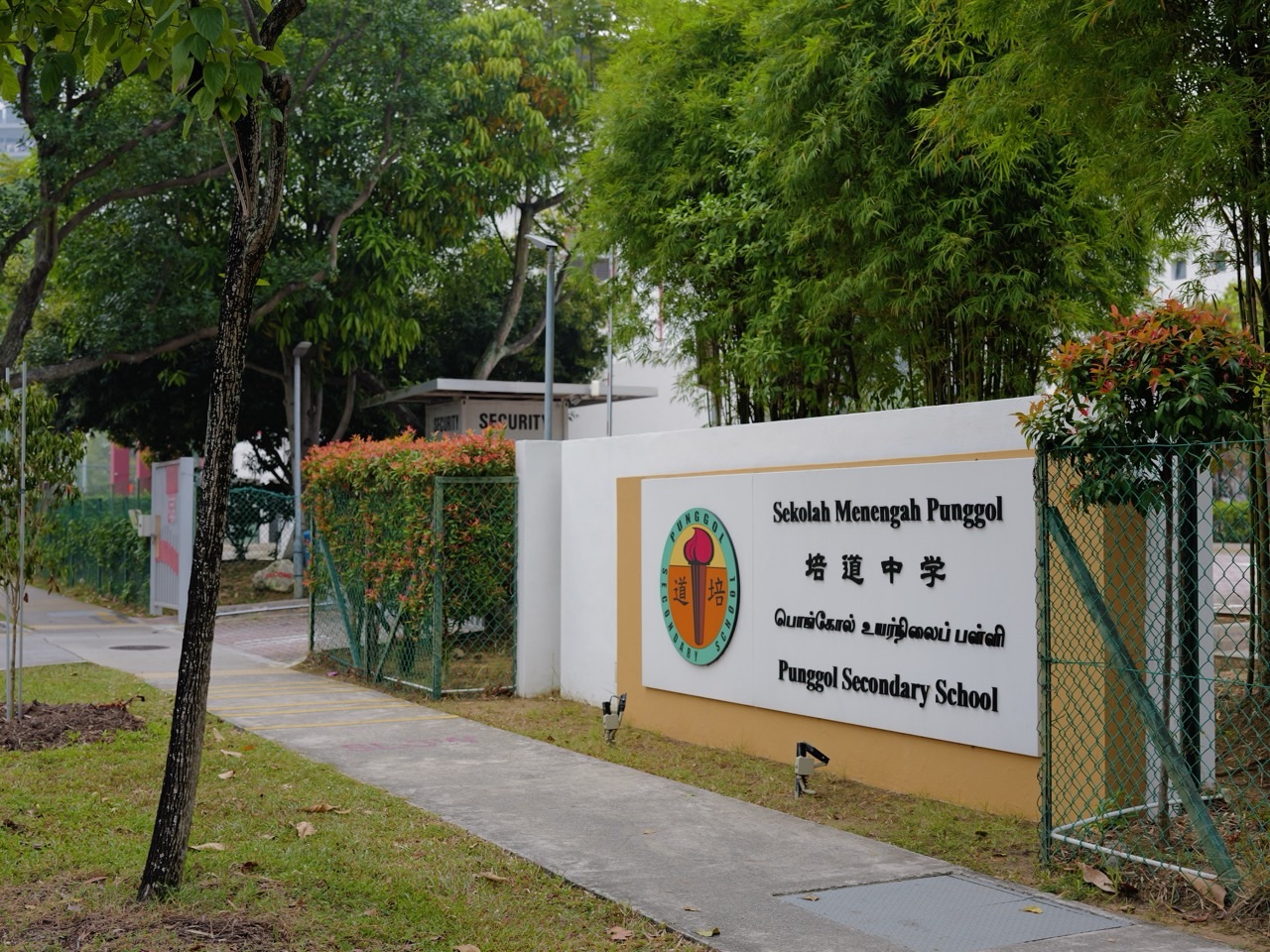
PSLE Scores 23 and 24 both enter ordinary Secondary 1 through Posting Group 2 (PG2), but their local school comparisons are not identical. In the completed 2026 S1 intake, Edgefield and Greendale Secondary had previous PG2 cut-offs of 23, and Punggol Secondary had 24. A Score 23 child exactly matched Edgefield and Greendale’s old boundaries and was one point numerically stronger than Punggol Secondary’s former endpoint. A Score 24 child exactly matched Punggol Secondary and was one point beyond the old Edgefield and Greendale results. None is an admission guarantee for 2027. Use MOE’s Posting Group table and correctly dated PG2 data.
Punggol parents should compare school culture, G2 lessons, eligible G3 subject flexibility, CCAs, teaching support and the real journey from their home, then build six genuinely acceptable preferences. Neighbouring Compassvale, North Vista, Seng Kang and Hougang Secondary previously ended at PG2 24, while wider schools at old PG2 25 provide further research options. Neither Score 23 nor 24 may select ordinary PG1 simply because a school’s PG1 cut-off looks less selective. The PG1/PG2 choice band is Score 25, not these two scores.
- Same posting route: Scores 23 and 24 use PG2, with G2 as the indicative starting level for most subjects.
- Edgefield and Greendale: previous PG2 COP 23; exact historic match at Score 23, stricter than Score 24.
- Punggol Secondary: previous PG2 COP 24; one-point historical margin for 23, exact boundary for 24.
- Yusof Ishak: previous PG2 COP 22; historically more selective than both scores.
- Neighbouring options: Seng Kang, Compassvale, North Vista and Hougang at old PG2 24; examine wider schools at 25.
- Learning and life: check subject levels, actual programmes, CCAs, support and complete commuting.
- Application: six eligible genuine preferences; official portal closes 30 November 2026 at 4.30pm.
Editorial verification: 19 November 2026. All numerical cut-offs here refer to the completed 2026 Secondary 1 intake for the 2025 PSLE cohort. The future 2027 cohort’s cut-offs are not known and must not be presented as admissions promises.
Chapter index — One point inside Posting Group 2
- 1. The same PG2 route does not mean identical school comparisons
- 2. The four Punggol schools in a single previous-year table
- 3. Score 23 at Edgefield and Greendale: previous boundary, not certainty
- 4. Score 24 at Edgefield and Greendale: investigate without false hope
- 5. Punggol Secondary PG2 24: one-point margin versus exact match
- 6. Yusof Ishak PG2 22: what ‘more selective’ means
- 7. The Sengkang trio with previous PG2 24
- 8. Hougang Secondary and the neighbouring-school problem
- 9. Wider schools at old PG2 25: the numerical differences
- 10. A previous COP does not equal a guaranteed admission threshold
- 11. PG2 is an entry route; G2 is a subject level
- 12. A strong individual subject may justify a G3 offer
- 13. School fit beyond admission: the child’s strongest interests
- 14. Learning support: turn results into meaningful questions
- 15. The real daily journey can change the ranking
- 16. A six-school strategy without fictional certainty
- 17. How the tie-breaker affects a previous boundary match
- 18. How to talk with a child who narrowly missed a preferred school
- 19. The SEC future and the first Secondary 1 term
- 20. The exact 2026 result and posting timeline
- 21. Frequently asked questions about the 23–24 PG2 boundary
- 22. Official links and the two dedicated score guides
1. The same PG2 route does not mean identical school comparisons
Both PSLE Score 23 and Score 24 belong to Posting Group 2 under the ordinary Secondary 1 Posting Group table. Neither total has a PG1-or-PG2 choice, and neither permits a family to use the PG3 admission column. That makes this a one-point comparison within the same entry route, not a transition to a different Posting Group.
PG2 generally guides a pupil to begin most subjects at G2 under Full Subject-Based Banding. A pupil with relevant strengths may be offered individual subjects at a more demanding level when their PSLE subject grades meet the current criteria. The family’s first duty is to understand that academic starting point and then research school environments where the child can learn.
At the previous school cut-offs, one point can still matter. Edgefield and Greendale had PG2 endpoints of 23, while Punggol Secondary ended at 24. These differences affect how the two scores compare with old admission data, but they are not guarantees of future outcomes.
Family action: Write ‘PG2’ beside both scores and keep historical values labelled with the previous intake.
Chapter 1 · MOE SchoolFinder · All Punggol score guides
2. The four Punggol schools in a single previous-year table
In the completed 2026 Secondary 1 intake, Yusof Ishak Secondary’s PG2 cut-off was 22; Edgefield and Greendale had 23; and Punggol Secondary had 24. A Score 23 pupil is a historical exact match at Edgefield and Greendale and one point numerically stronger than Punggol Secondary’s former endpoint. A Score 24 pupil matches Punggol Secondary’s old endpoint but is one point beyond Edgefield and Greendale.
That creates a meaningful difference in local research baskets. However, parents should not assume the child with Score 23 is guaranteed Edgefield or Greendale, or that the child with Score 24 cannot enter a school that previously ended at 23. Next year’s cohort, choices and places are not known until posting is complete.
Beyond the numbers, all four schools have different educational features and daily journeys. A child may choose a school because they want to join a particular CCA, feel comfortable on the campus or value a simpler route. A historical cut-off cannot rank these aspects.
| School | 2026 intake PG2 COP | At Score 23 | At Score 24 |
|---|---|---|---|
| Yusof Ishak Secondary (Punggol) | 22 | One point beyond previous boundary | Two points beyond previous boundary |
| Edgefield Secondary (Punggol) | 23 | Exact previous boundary | One point beyond previous boundary |
| Greendale Secondary (Punggol) | 23 | Exact previous boundary | One point beyond previous boundary |
| Punggol Secondary (Punggol) | 24 | One point numerically stronger | Exact previous boundary |
| Compassvale Secondary (Sengkang) | 24 | One point stronger | Exact previous boundary |
| North Vista Secondary (Sengkang) | 24 | One point stronger | Exact previous boundary |
| Seng Kang Secondary (Sengkang) | 24 | One point stronger | Exact previous boundary |
| Hougang Secondary (Hougang) | 24 | One point stronger | Exact previous boundary |
| Peicai Secondary (Serangoon) | 25 | Two points stronger | One point stronger |
| Yuying Secondary (Hougang) | 25 | Two points stronger | One point stronger |
| Bartley Secondary (Toa Payoh) | 25 | Two points stronger | One point stronger |
| Meridian Secondary (Pasir Ris) | 25 | Two points stronger | One point stronger |
Family action: Record the four local PG2 old cut-offs and investigate the actual schools separately.
Chapter 2 · MOE SchoolFinder · All Punggol score guides
3. Score 23 at Edgefield and Greendale: previous boundary, not certainty
Edgefield and Greendale are especially relevant to Score 23 because both recorded an earlier PG2 last-posted score of 23. Equality with that result does not promise a seat in the new 2027 intake. If the next cut-off becomes 22, the family will face a stricter numerical condition; if it becomes 24, the comparison would be less stringent. These are illustrations of possible changes, not a forecast of which way either school will move.
Parents should ask what their child likes about each school and what first-term support is available for G2 subjects. Edgefield has described innovation and entrepreneurship activities; Greendale has highlighted design and outdoor learning. These descriptions are starting points for current verification, not guarantees that every new pupil can join a selected programme.
At a school visit, use the same questions at both campuses: how do students get feedback when confused, how do they choose CCAs, what help is available for settling in, and what does a normal return journey look like?
Family action: Mark both old PG2 23 schools ‘exact historical boundary’ on the Score 23 shortlist.
Chapter 3 · MOE SchoolFinder · All Punggol score guides
4. Score 24 at Edgefield and Greendale: investigate without false hope
For a Score 24 pupil, Edgefield and Greendale’s previous PG2 endpoints of 23 were one numerical point more selective than the child’s result. Families may still research a school that is sincerely preferred, because future cut-offs change. But it would be misleading to call either a safe place based on the old data or put all six choices at similarly more stringent historical boundaries.
Use the child’s actual preferences and wider school list to decide whether one of these local schools deserves a place. A family may value a nearby campus or a particular activity, and that is a legitimate reason to investigate. The plan should also contain suitable schools whose previous PG2 endpoints were 24 or 25, if realistic from the home.
The goal is not to avoid disappointment by denying every aspiration. It is to balance hope with factual evidence and other schools the child could attend positively if the first preference is not posted.
Family action: Write one reason for any more selective school and several real alternative options.
Chapter 4 · MOE SchoolFinder · All Punggol score guides
5. Punggol Secondary PG2 24: one-point margin versus exact match
Punggol Secondary’s previous PG2 last-admitted score was 24. At Score 23, the child’s result was one point numerically stronger than that completed-year boundary. At Score 24, the child matches the prior endpoint exactly. Neither situation means a guaranteed seat. It describes the previous exercise and the child’s relationship to that old number.
The school’s current programme information and school culture deserve investigation independently of the historic range. Punggol Secondary has described environmental education and community involvement, which may appeal to pupils who enjoy project work, service or leadership. Ask whether these experiences are school-wide, optional or selective and what ordinary Secondary 1 pupils actually do.
Travelling from Punggol Central, Northshore, Matilda or the waterway developments can produce different journey requirements even within the estate. Test the complete route from home and confirm normal school activity times before ranking the school.
Family action: Ask what makes Punggol Secondary a genuine preference for your particular child.
Chapter 5 · MOE SchoolFinder · All Punggol score guides
6. Yusof Ishak PG2 22: what ‘more selective’ means
Yusof Ishak Secondary’s previous PG2 endpoint of 22 was numerically more selective than both Score 23 and 24. That does not make the school inherently better or worse for either child. It simply means the earlier admission competition ended with a stronger last-posted score in that group.
If Yusof Ishak is a favourite, ask why. The child might be attracted to a programme, campus atmosphere, a CCA or friends, while the parent may value proximity. Those interests can inform the research even though the previous cutoff does not support a comfortable numerical comparison. Keep the rest of the school list genuinely researched.
One unusual choice can be consistent with a responsible application. A list in which every preference depends on a much more lenient future cut-off is more difficult to justify. Parents need a realistic range of eligible schools and a willingness to support the actual posted result.
Family action: Do not borrow Yusof Ishak’s PG1 or PG3 range when evaluating Score 23 or 24 PG2.
Chapter 6 · MOE SchoolFinder · All Punggol score guides
7. The Sengkang trio with previous PG2 24
Compassvale, North Vista and Seng Kang Secondary recorded previous PG2 cut-offs of 24. For Score 23, those old endpoints were numerically less stringent by one point; for Score 24, they were exact matches. This provides a useful second ring of school candidates for Punggol families whose local preferred schools have uncertain historical margins.
Treat the three Sengkang schools as separate places. Current programmes, student cultures and transport routes differ. A family near the western side of Punggol may find one route much easier than another. Even a school at an exact historic boundary should be researched for a positive educational reason rather than inserted only to complete the list.
Ask how the schools help pupils adapt to multiple subjects, introduce new CCA options and seek support. A cut-off chart cannot tell parents which school will support their child’s particular learning needs.
Family action: Compare the normal home-to-gate route to two Sengkang candidates.
Chapter 7 · MOE SchoolFinder · All Punggol score guides
8. Hougang Secondary and the neighbouring-school problem
Hougang Secondary also recorded a previous PG2 endpoint of 24. This provides another historical match for Score 24 and a one-point numerically less stringent comparison for Score 23. Yet the school is not interchangeable with a Punggol or Sengkang campus: the route, school-day routine and programme offerings may change the practical fit.
Parents should test whether the child can make the journey independently and return after a late CCA. A route that is convenient for a Punggol Central household may be more difficult for a family closer to Punggol Coast. Avoid inventing journey times for an entire estate, because the starting block and connections matter.
If the school’s learning environment and activities suit the child, include it among the candidates. If the commute is unsustainable, choose another school with a workable route rather than keeping it only because an old score appears useful.
Family action: Record school fit separately from the numerical admission comparison.
Chapter 8 · MOE SchoolFinder · All Punggol score guides
9. Wider schools at old PG2 25: the numerical differences
Schools such as Peicai, Serangoon Secondary, Bartley, Junyuan, Yuying, Meridian, East Spring and Loyang View had previous PG2 endpoints of 25 in the completed 2026 intake references. A Score 23 pupil is numerically two points stronger than a prior 25, while a Score 24 pupil is one point stronger. That difference can help parents diversify a historical research list.
These wider schools vary geographically, academically and socially. A family may prefer a Pasir Ris school because of a programme or find a Hougang school much easier to reach from home. Neither the previous cut-off nor the travel distance alone identifies the best school.
MOE recommends including two or three schools with less stringent previous COPs. Families can explore schools with former PG2 25 endpoints to apply that principle where the child would actually want to attend, while remembering that no previous cutoff guarantees the new posting.
Family action: Select three wider schools at old PG2 25 that pass the real travel test.
Chapter 9 · MOE SchoolFinder · All Punggol score guides
10. A previous COP does not equal a guaranteed admission threshold
MOE SchoolFinder reports the scores of the first and last pupil admitted into a school’s group in a previous completed posting exercise. The last score is the historic COP, not a target grade announced for future applicants. Because lower scores are stronger, a child with 23 was numerically stronger than an earlier last score of 24, while a child with 24 was equal to it.
That arithmetic can be helpful, but it does not give a percentage of acceptance. The new cohort’s results and school choices may shift the endpoint by a few points. A historical boundary may also involve tie-breakers if the next year ends at the same score.
Parents should preserve the actual reporting year, group and any affiliation or school-specific category when copying values. An old PG1 endpoint of 27 cannot be used as evidence about PG2 admissions at Score 24.
Family action: Write ‘2026 intake historical PG2 only’ above every numerical table.
Chapter 10 · MOE SchoolFinder · All Punggol score guides
11. PG2 is an entry route; G2 is a subject level
Posting Group 2 facilitates secondary admission and gives the indicative level of most subjects at the start. G2 describes a general subject level under Full Subject-Based Banding. They are related but not identical concepts, and pupils can potentially offer different subjects at different levels when eligible.
A child with Score 23 may have strengths that warrant a more demanding individual subject, while another with Score 24 may need help strengthening an essential concept. The group does not determine every learning experience, CCA opportunity or future pathway. Secondary schools can explain their current placement and support arrangements.
Parents should not suggest that a pupil must move to PG3 to do well or that every PG2 pupil shares the same difficulties. Practical learning habits and suitable challenge are more useful in helping a child settle.
Family action: Ask how the school determines individual subject levels and monitors progress.
Chapter 11 · MOE SchoolFinder · All Punggol score guides
12. A strong individual subject may justify a G3 offer
MOE’s published Full SBB rules permit eligible PG2 pupils to take English Language, Mathematics, Science or Mother Tongue at a more demanding level. A Standard-level PSLE subject at AL5 or better can qualify a pupil for the corresponding G3 or G2 subject offer, while AL6 can support a G2 offer under the applicable criteria.
The total Score 23 or 24 is not enough information to determine whether the child meets the conditions in an individual subject. Read the actual four ALs. One student may have a stronger Mathematics result, another may show confidence in a language subject. A subject-specific offer is distinct from the Posting Group used to enter the school.
Ask the school to explain the actual offer, timetable and support. Do not promise that the pupil can choose any subject at any level because a friend’s child received a different combination.
Family action: Record relevant subject ALs on the school research sheet.
Chapter 12 · MOE SchoolFinder · All Punggol score guides
13. School fit beyond admission: the child’s strongest interests
A pupil might like design and engineering, team sports, performing arts, reading, computing or community projects. These interests can be a legitimate reason to investigate a particular school, but a brochure may highlight selected competitions rather than the activities available to every new pupil.
Ask whether the school-wide applied or life programme reaches all Secondary 1 pupils, how CCA preferences are collected, whether there are trials and what happens if the first choice is unavailable. Also ask how teachers and peers support pupils who are quiet or uncertain.
An ordinary learning environment where the child feels comfortable asking for help can matter more than a small difference in historical COP. The parent should not turn the search into a ranking of schools by their last-admitted numbers alone.
Family action: Let the child choose an activity they genuinely want to explore at each leading school.
Chapter 13 · MOE SchoolFinder · All Punggol score guides
14. Learning support: turn results into meaningful questions
Two pupils with the same PSLE aggregate can have different strengths and areas of difficulty. Ask the child which subject topics felt confusing and why. For Mathematics, separate conceptual understanding from showing working. For English, distinguish reading the passage from writing a clear response. For Science, consider whether the child can explain evidence rather than recite definitions.
These observations make school conversations more useful. Instead of asking a general ‘Is this school good for PG2?’ question, ask how a Secondary 1 pupil seeks extra guidance, receives feedback and learns to organise homework across multiple teachers. A useful answer describes actual routines.
Parents should avoid assuming that a school with a more selective former cutoff automatically gives better support. The child’s needs and the school’s current practices matter.
Family action: Prepare one subject-strength question and one settling-in question for a school visit.
Chapter 14 · MOE SchoolFinder · All Punggol score guides
15. The real daily journey can change the ranking
School choice is not made from Punggol MRT station alone. A child might live near Sumang, Northshore, Matilda, Punggol Field or Waterway Point, with very different routes to the same school. Include walking, waiting for a bus or LRT, transfers, crossings and reaching the correct entrance.
Test a realistic weekday morning and a later afternoon journey after CCA. Ask whether a parent can reliably collect the child when needed, or whether the pupil must travel independently. Weather and service delays should also be considered.
A longer route may be worthwhile for a genuine educational reason, but it can reduce rest and participation. The school with the most convenient old cutoff is not automatically the school with the best possible week for the pupil.
Family action: Write a morning, late-return and disruption plan for every top choice.
Chapter 15 · MOE SchoolFinder · All Punggol score guides
16. A six-school strategy without fictional certainty
SEAB recommends submitting six school preferences and including two or three schools with previous COPs less stringent than the child’s result. For both Score 23 and Score 24, suitable PG2 schools whose old endpoint was 25 can help form such a research basket. The important qualifier is that every school must still be a genuine preference that fits the child’s needs.
Build a longlist of eight to ten eligible schools, remove those with unacceptable travel or programme restrictions, and then rank the final six by actual family preference. Do not put a less appealing school first only because the historic number is more selective. Choice order expresses what the family would prefer if several schools could take the pupil.
At the previous boundary, posting remains uncertain. Avoid words such as guaranteed or impossible based on the old year, and do not invent a probability that MOE has not provided.
- Verify actual score and PG2 route
- Keep completed-year PG2 cut-offs separate from PG1 and PG3
- Check all four Punggol schools without promises
- Research two or three viable Sengkang or Hougang alternatives
- Check suitable old PG2 25 schools as additional candidates
- Ask about learning support, CCAs and subject-level offers
- Rank six schools the child would genuinely attend
Family action: Read the final six choices aloud and ask for one positive reason for each.
Chapter 16 · MOE SchoolFinder · All Punggol score guides
17. How the tie-breaker affects a previous boundary match
Under ordinary S1 posting, PSLE merit is the starting consideration. When equal-scoring pupils compete for the remaining places, MOE uses tie-breakers in the prescribed order: citizenship, school-choice order and computerised balloting when necessary.
A score of 23 at an earlier PG2 cutoff of 23 or a score of 24 at an earlier PG2 cutoff of 24 is a historical match. It does not prove that the new cut-off will equal the old one, or that a tie-breaker will necessarily be needed this time. The future applicant pool is not known in advance.
Rank genuinely preferred eligible schools rather than attempting to manipulate the list with unsupported theories. Confirm whether affiliation, language, gender or a successful DSA-Sec commitment changes the process for any particular pupil.
Family action: Check the final preference order and any relevant special conditions.
Chapter 17 · MOE SchoolFinder · All Punggol score guides
18. How to talk with a child who narrowly missed a preferred school
A child may feel disappointed when a school previously ended at 23 but their result is 24. The parent can explain that old cut-offs change by cohort and do not judge the child’s personal worth. It is sensible to research that school if the child has a genuine interest, while also discovering other environments that might help them learn and participate.
Ask what made the preferred school appealing. Was it a friend group, a nearby journey, a favourite CCA or a feeling of familiarity? Those needs may be met at another school, or the family may make a plan to help the pupil adapt to a new route.
A calm choice process does not hide uncertainty or promise a first preference; it supports the pupil in seeing that they have meaningful options beyond one school’s former cutoff.
Family action: Ask your child to find one positive feature in at least two acceptable alternatives.
Chapter 18 · MOE SchoolFinder · All Punggol score guides
19. The SEC future and the first Secondary 1 term
The Singapore-Cambridge Secondary Education Certificate is implemented for relevant graduating cohorts from 2027. A child entering Secondary 1 in 2027 begins lower-secondary studies first; their later pathways depend on subsequent subject choices, results and entry criteria, not only the PSLE Score 23 or 24.
Help the pupil prepare for the school routine rather than rushing through an entire advanced syllabus. Practise keeping a homework record, reading instructions, packing materials and asking a clear question when a concept is confusing. Maintain rest and the activities the child enjoys.
Parents can revisit individual subject-level options and later education routes when the school has real evidence of progress. It is not helpful to promise that PG2 automatically means a fixed JC, polytechnic or ITE destination.
Family action: Choose one study habit and one independent-travel habit for the first month.
Chapter 19 · MOE SchoolFinder · All Punggol score guides
20. The exact 2026 result and posting timeline
SEAB has confirmed that the 2026 PSLE results will be released on Tuesday, 24 November at 11.00am. The ordinary S1 Portal opens at 11.30am on results day, with school choices closing at 4.30pm on Monday, 30 November. Posting results are tentatively due Friday, 18 December. All times are Singapore local time.
Both Score 23 and Score 24 use PG2 as the ordinary Posting Group. Parents should use the correctly dated PG2 SchoolFinder information, check official school codes and submit six genuine preferences before the closing time. Keep the actual portal acknowledgement; a paper draft is not a submitted application.
If there are questions about a school’s eligibility, the child’s primary school can help during the official window. Leave time to resolve issues instead of beginning a sixth-choice search near the deadline.
Family action: Set an earlier household closing time and verify the final saved list.
Chapter 20 · MOE SchoolFinder · All Punggol score guides
21. Frequently asked questions about the 23–24 PG2 boundary
Do Scores 23 and 24 use the same Posting Group? Yes, PG2. Does Score 23 guarantee Edgefield or Greendale because their old PG2 cutoff was 23? No. It matches a completed-year boundary, not a future offer. Is Punggol Secondary guaranteed for Score 24? No, even though its former PG2 endpoint was 24.
Can a Score 24 child choose PG1 because a preferred school’s old PG1 cutoff was 27? No. The PG1/PG2 option band begins at Score 25. Can a PG2 pupil take G3 Mathematics? Potentially, when their individual Mathematics AL and current school criteria permit.
Which is the better school? The best fit depends on learning needs, actual programmes, wellbeing, interests and commuting. A historical admission number is not a school-quality ranking.
Family action: Use the correct PG2 group and make six genuinely acceptable choices.
Chapter 21 · MOE SchoolFinder · All Punggol score guides
22. Official links and the two dedicated score guides
Continue with Score 23 — Punggol PG2 school guide and Score 24 — Punggol PG2 school guide, then use the complete score-by-score hub to compare the adjacent transitions. The present article concentrates on the one-point difference within PG2 rather than creating a new admission category.
Verify the rules through MOE Posting Groups, historic ranges and current schools through MOE SchoolFinder, subject levels through Full Subject-Based Banding, ties through MOE’s posting process, and current dates through SEAB’s 2026 announcement. Any current official instruction takes precedence over an older parent article.
Keep the family worksheet with the child’s actual result slip, dated PG2 school data, school names and codes, fit and travel notes, a genuine six-choice order and the final official submission acknowledgement.
Family action: Save the verified worksheet and support the child in preparing for the actual posted school.


