
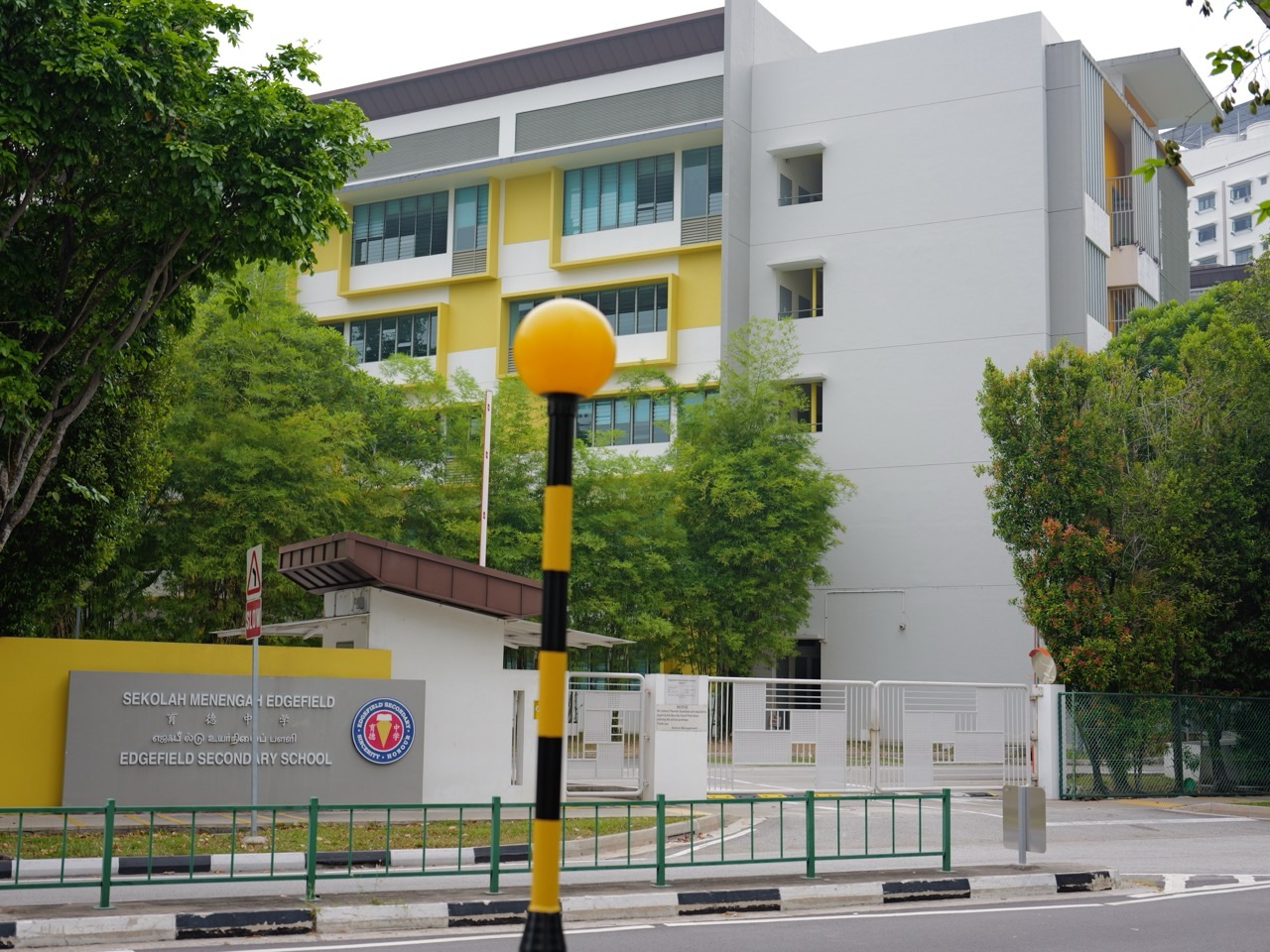
Yes, twins can attend the same secondary school after PSLE, but the Secondary 1 Posting exercise does not guarantee that they will be allocated together, even if they put the same school first. Each child has an individual PSLE Score, subject Achievement Levels and Posting Group eligibility. Parents in Punggol should therefore prepare a separate, realistic six-school list for each twin, while exploring where their eligible school options overlap. The four mainstream schools located in Punggol are Edgefield Secondary, Greendale Secondary, Punggol Secondary and Yusof Ishak Secondary. Living in the same household or being twins does not automatically create an ordinary school-posting priority.
When 2026 PSLE results are released at 11.00am on Tuesday, 24 November 2026, siblings may discover one has a PG3 score while the other is eligible for PG2, or one is in a Posting Group option band. The same school can have different historical admission boundaries for each group. The completed 2026-entry cut-offs for Punggol schools are useful starting references, but they do not guarantee 2027 admission. This guide walks families through different-score examples, the question of choosing one school versus two, arrangements for school-day travel and independence, and what to submit through the S1 Portal before Monday, 30 November 2026 at 4.30pm.
Quick parent summary
• Give each twin a separate, truthful school-choice assessment using their own score and official options.
• There is no ordinary S1 posting guarantee that twins will receive the same school.
• Compare each child with the correct PG1, PG2 or PG3 historical school cut-off, not one shared number.
• A common school may simplify travel and family coordination, but educational fit is still individual.
• The four Punggol schools all accept multiple Posting Groups historically, with distinct previous cut-offs for each.
• Build six genuine preferences for each child, including suitable historically less stringent alternatives.
• Check and submit each child’s required application separately within the official window; keep each acknowledgement.
Why a pair of twins needs two admissions plans
Twins often grow up attending the same primary school, sharing routines and relying on one another. By Primary 6, however, they may have very different strengths. One may love Mathematics and Science while the other reads widely, enjoys language and performs in arts activities. Their PSLE totals may therefore differ, and their school preferences may also differ. It is unfair to assume they should receive the same academic route or must make the same choices because they were born together.
The sensible starting point is two separate worksheets: Twin A’s official PSLE Score, individual subject ALs and eligible Posting Groups, and Twin B’s corresponding results. Then compare school profiles and the historical admission range relevant to each pupil. There may be a large overlap in suitable options; there may be only one or two schools that both children genuinely want and have a historically plausible comparison for.
Parents can express a preference for keeping the children together without allowing that wish to erase other important facts. A child who needs a gentler Mathematics learning pace should not be pressured to select a more demanding route merely because their twin is comfortable there. Equally, a pupil who is excited about a more specialised curriculum should not automatically give up that interest to maintain the same daily timetable.
Does MOE treat twins as a joint application?
The ordinary Secondary 1 Posting rules use each candidate’s own PSLE results and preferences. Do not assume there is a special ‘twins must be posted together’ option that overrides academic merit or the usual equal-score tie-breakers. If the primary school provides any case-specific guidance, follow the personalised official instructions, but prepare for the possibility of different outcomes.
A family should also avoid assuming that naming the same first choice produces a linked allocation. If one twin meets a school’s competitive range and the other does not, the two can receive different postings. Even if both have identical totals and citizenship, an equal-score tie can involve their individual preference positions and computerised balloting. There is no basis for promising a shared place before the posting results.
If both children have already received accepted Direct School Admission offers or another special placement, those separate commitments may alter the ordinary form requirements. Check each offer and the school’s binding conditions rather than using a general six-school instruction for everybody.
How different Posting Groups change the same Punggol school’s history
The following completed 2026 Secondary 1 intake historical cut-offs come from the previous cohort who took PSLE in 2025. They are last-admitted scores, not advance thresholds or guaranteed places for January 2027. A lower numerical PSLE total indicates stronger aggregate PSLE performance, and each Posting Group has its own reference column.
| Punggol mainstream school | Past PG3 COP | Past PG2 COP | Past PG1 COP |
|---|---|---|---|
| Edgefield Secondary | 14 | 23 | 27 |
| Greendale Secondary | 16 | 23 | 27 |
| Punggol Secondary | 19 | 24 | 27 |
| Yusof Ishak Secondary | 15 | 22 | 27 |
Suppose one twin has PG3 Score 15 and the other has PG2 Score 23. At Edgefield, the first child would compare Score 15 with the earlier PG3 endpoint of 14, while the second would compare Score 23 with PG2 23. A parent cannot simply declare that Edgefield’s 23 means both twins are at the historical boundary. They are applying through different group comparisons.
At Punggol Secondary, the same two pupils would compare PG3 Score 15 with previous COP 19 and PG2 Score 23 with previous COP 24. Both are numerically stronger than those earlier endpoints, but that still does not guarantee places in the next cohort. Educational fit, vacancies and applicant demand remain relevant.
For a twin in the option band at Score 21–22, the form may offer PG2 or PG3. For a twin at Score 25, the option may be PG1 or PG2. The family should discuss the academic implications of each pupil’s actual option and not choose a route solely because the other twin is following it.
Scenario 1: one twin scores 12 in PG3 and the other 18 in PG3
Both children ordinarily use PG3, but their comparison to Punggol’s past school ranges differs. At Score 12, the first twin had a numerically stronger score than all four earlier PG3 endpoints of 14, 16, 19 and 15. At Score 18, only Punggol Secondary’s old PG3 endpoint of 19 was numerically less stringent; the other three local schools’ past PG3 endpoints were more competitive.
This creates a difficult family choice if both children want Edgefield because it is near home. The younger or second twin’s previous admission comparison is historically more ambitious, even though the household and morning route are identical. It would be unwise to tell the children they are certain to attend Edgefield together.
A family can include a school both children sincerely like, but the broader lists should not be identical by default. The Score-12 pupil may also want an IP or another school outside Punggol, subject to actual eligibility. The Score-18 pupil may need more emphasis on PG3 options with less stringent historical endpoints. One child need not sacrifice suitable academic exploration merely to avoid separation.
Scenario 2: one twin scores 21 and the other scores 24
A child scoring 21 may be offered PG2 or PG3, while Score 24 ordinarily enters PG2. Parents might choose PG2 for the Score-21 child because that creates a shared Posting Group. But the decision should be based on academic readiness, individual subject grades and suitable schools—not only a desire to use the same group label. Full Subject-Based Banding allows individual subject levels under the applicable criteria.
Under PG2, the four Punggol historical endpoints were 23, 23, 24 and 22. A Score-21 child had a numerically stronger historical comparison with all four. A Score-24 child was at Punggol Secondary’s old boundary and numerically worse than the other three older endpoints. The family can see why a single identical four-school shortlist does not address the two students’ different historical risks.
The children’s own interests may also differ. One could enjoy Greendale’s engineering work while the other prefers Punggol Secondary’s community and environmental learning. A genuine preference should be written honestly. The family can coordinate transport for two campuses if that produces better educational options.
Scenario 3: one twin scores 25 and the other 28
A Score-25 child may have an ordinary PG1/PG2 option, while a Score-28 child may qualify for PG1 only if the required English and Mathematics subject conditions are met. If both are eligible for PG1, the four Punggol schools’ prior PG1 endpoints were all 27. That means Score 25 had a numerically stronger comparison than the old endpoint, whereas Score 28 was numerically worse than the old 27.
A parent cannot assume that one twin’s PG1 eligibility and previous admissions outlook transfers to the other. The Score-28 family should check other eligible PG1 schools with suitably less stringent previous endpoints in Sengkang, Hougang and elsewhere. If the child does not satisfy the ordinary PG1 subject conditions, follow the primary school’s personalised advice instead of filling a standard form from guesswork.
This case also illustrates why the group selection of the Score-25 child should not be decided merely to match the other twin. Ask what starting subject pace suits that child, what support they need and which schools offer the right environment.
Scenario 4: twins have exactly the same PSLE total
Even identical totals do not guarantee identical school allocation. A school may have enough places for both, but if it has only one remaining seat and otherwise eligible candidates share the same score, the prescribed tie-breakers can matter. Citizenship is considered first for relevant equal-score competition, followed by school-choice order and computerised balloting when required. One twin could be posted and the other not.
Do not present this as a likely outcome or invent a percentage. There may be plenty of places or none at the school being considered; the family does not know the final 2027 applicant distribution. The correct approach is to preserve genuine school preferences for each child and prepare practically for either shared or separate postings.
When the same school genuinely makes sense
| Possible benefit | Why it may help | What to verify |
|---|---|---|
| Shared morning route | May simplify family transport and build confidence | Children may have different reporting or after-school times |
| Familiar school processes | Parents already know school communication channels | Actual requirements can change by cohort |
| Mutual reassurance | The children may feel comfortable with one another nearby | They might be placed in different classes or groups |
| Shared school resources | Some household planning may be simpler | Devices, uniforms and materials remain individually prescribed |
| One school community | Parent meetings and staff contacts may overlap | Each child’s educational support and preferences still differ |
These benefits are real reasons to compare a common school, but they are not admissions advantages. If both twins like Punggol Secondary and its subject support and activities suit them, listing it can be an authentic family preference. If only one likes the school, the other should be allowed to explain concerns without being accused of making family life difficult.
The family should plan for independence even in a shared school. One twin may train after school while the other comes home earlier. They may have separate friends, CCA equipment and homework demands. Expecting the more confident twin to supervise the other at all times can strain their relationship.
When different schools may actually be better
A child who is academically strong and loves research may wish to investigate a school with a particular curriculum outside Punggol, while another prefers a nearby mainstream school with suitable subject support. A pupil who needs a calmer transition might value familiar travel, whereas a sibling interested in performing arts may prefer a school with a specific drama or choir opportunity. Those interests can be compatible with different schools.
A parent can support both pupils by explaining that separate schools are not evidence that one is superior. Each institution offers a learning community and practical opportunities. A child entering PG1 or PG2 should not be made to feel second-class compared with a twin in PG3. The SEC framework and Full Subject-Based Banding support developing individual academic strengths.
The household may need two routes, two parent portals and two sets of registration instructions, but that can be managed with a clear family calendar. Families should make the children’s education central instead of treating administrative convenience as the sole priority.
What to ask at the four Punggol schools
Edgefield Secondary
Edgefield at 36 Punggol Field emphasises enterprise, initiative and collaborative problem-solving through its Growing the Edgefield Mindset ALP, alongside character development through sport. Ask whether each twin could enjoy ordinary lessons and available CCAs, and how support differs by individual subject level.
Greendale Secondary
Greendale at 51 Edgedale Plains highlights design, technology and engineering, with outdoor adventure education. One twin could love coding while the other enjoys field-based teamwork. Ask what each would experience, not whether both could be guaranteed the same Robotics CCA.
Punggol Secondary
Punggol Secondary at 51 Edgefield Plains emphasises environmental learning, community leadership and broad school life. Its prior PG3 19 and PG2 24 endpoints may be relevant to the two children’s different scores. A historical range is only an admissions reference, not a judgement of school quality.
Yusof Ishak Secondary
Yusof Ishak at 8 Sumang Walk includes smart-city STEM and leadership. If both children are interested in the school’s culture and the commute is practical, it is worth researching. Ask how they would enter different subject teaching groups, and whether different CCA dismissal times affect family travel.
The two-child school-choice worksheet
| Decision row | Twin A | Twin B |
|---|---|---|
| Official PSLE Score | Record actual total | Record actual total |
| Posting Group or option | Record individual eligibility | Record individual eligibility |
| Strongest subject | Individual AL and support plan | Individual AL and support plan |
| Three genuine school interests | Child A’s priorities | Child B’s priorities |
| Past school COP comparison | Correct PG-specific column | Correct PG-specific column |
| School-day travel | Independent route and late CCA plan | Independent route and late CCA plan |
| School-choice order | Six genuine preferences | Six genuine preferences |
| S1 confirmation | Save individual submission record | Save individual submission record |
Give each child time to explain their preferences privately before comparing answers as a family. One twin might choose a school mainly because of the other, but that should be understood rather than assumed. A shared first choice is appropriate only if the school truly appeals to both and is formally eligible for both.
MOE recommends including two or three schools with less stringent previous cut-offs than each child’s score where suitable. For one twin scoring PG3 16, a previous PG3 COP of 19 was less stringent; an old PG3 14 was more competitive. For a PG2 twin with Score 24, previous PG2 COP 24 is an equal historical boundary, not a less stringent buffer. Both children need school lists suited to their individual results.
A calm plan if the twins are posted to different schools
- Explain before posting that school allocation is individual and that the outcome is not a judgement of either child’s worth.
- Plan two routes using the actual school gates and the family home rather than assuming identical transport.
- Create a household calendar for reporting, school events and CCA days without making one twin manage the other.
- Ask each receiving school about the child’s subject levels, orientation, learning support and communication.
- Allow each pupil to establish friendships and interests in their own school.
- Keep shared family time, meals and conversation even when the school routines differ.
- If either child struggles, contact the actual school for support rather than treating separation itself as a failure.
- Do not promise a school transfer solely to reunite the twins; official transfer opportunities depend on requirements and availability.
The decision to seek a later transfer should be considered only after understanding the actual posting, the child’s wellbeing and the formal transfer process. A move to another school is not automatic and may disrupt classes, subject options and friendships. The family should avoid telling a child that different postings are temporary unless there is a confirmed official arrangement.
The 2026 PSLE and 2027 entry timetable
| Milestone | Announced date |
|---|---|
| PSLE results released | Tuesday, 24 November 2026 at 11.00am |
| S1 Portal opens | Tuesday, 24 November at 11.30am |
| Ordinary six-school choices close | Monday, 30 November at 4.30pm |
| S1 posting results | Tentatively Friday, 18 December; official confirmation to follow |
SEAB’s 17 November 2026 results release confirms the dates and school-choice guidance. One parent with valid Singpass can normally submit the online choices, and a family needing help should contact the primary school before closing time. With twins, carefully verify the correct child and individual result before completing each submission.
Frequently asked questions
Will MOE post twins together because they live in the same family?
Do not assume an automatic joint allocation under the ordinary S1 process. Each child’s score, eligibility and choices matter. If the family has a special circumstance, seek personalised MOE or primary-school guidance before the deadline.
Can the twins list exactly the same six schools?
They may share preferences where both are formally eligible, but the six choices should reflect each individual’s actual route and genuine interests. Different PG options may make an identical list historically unbalanced for one child.
If one gets a place, is the other guaranteed the same school?
No. An admitted sibling does not reserve another place in the ordinary exercise. That remains true when the children are twins and have equal scores.
Should one twin choose PG2 instead of PG3 just to match the other?
Not automatically. The child’s subject strengths, academic pace and real school options should determine the selected route where an option band is offered.
What if the children get the same school but different CCAs?
That is common and not inherently a problem. CCA allocation has separate school procedures. The family should plan different dismissal times and help both children develop individual interests.
Does an identical PSLE Score guarantee an identical posting?
No. Separate school preference lists, actual vacancies and the applicable tie-breaker process can lead to different outcomes. Do not invent a probability before the posting results.
Official references and related eduKate guides
- SEAB: 2026 PSLE result release, six choices and posting timeline
- MOE: S1 Posting procedures and parent portal
- MOE SchoolFinder: actual school profiles, Posting Groups and historical cut-offs
- MOE: Full SBB and the difference between Posting Groups and subject levels
- eduKate Punggol: family sibling attendance and ordinary S1 priority
- eduKate Punggol: equal-score citizenship and preference tie-breakers
- eduKate Punggol: exact previous COP matches are not guaranteed
- eduKateSG: immutable Secondary 1 learning and small-group teaching reference
Parent conclusion: Keep twins together when it is genuinely suitable and the individual posting outcomes permit it, but do not make shared schooling the only acceptable outcome. Two careful school lists, clear admission comparisons, a good transport plan and respect for each child’s own strengths will serve the family better than a promise that neither MOE nor a previous cut-off can guarantee. Submit both children’s proper choices by the official deadline.


