
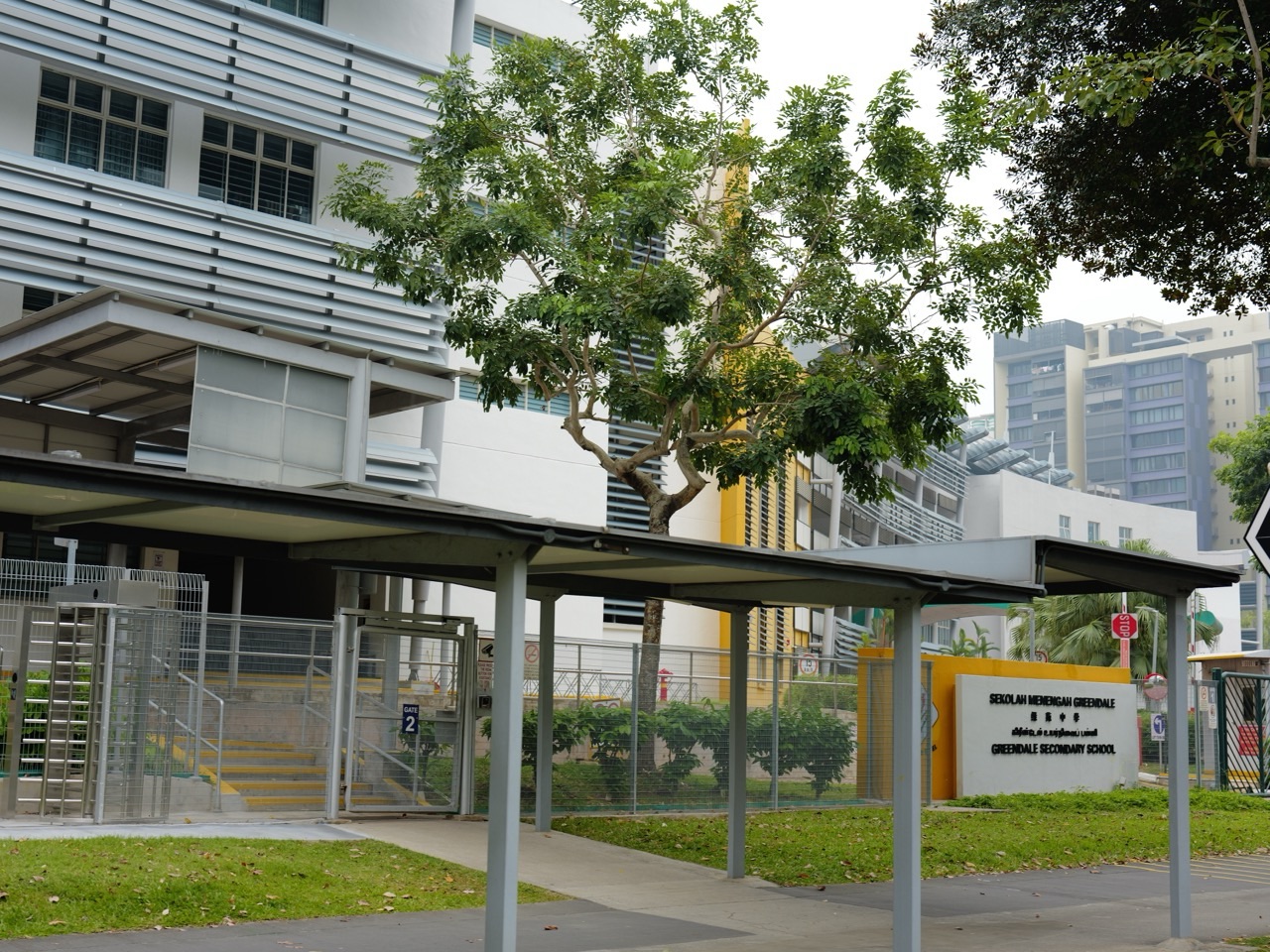
For a Punggol child who loves cooking, baking, nutrition, food technology, making things or designing useful products, all four local mainstream secondary schools deserve a closer look because lower-secondary Food and Consumer Education (FCE) and Design and Technology (D&T) form part of the common curriculum under Full Subject-Based Banding. Edgefield Secondary, Greendale Secondary, Punggol Secondary and Yusof Ishak Secondary are all located in Punggol, but their distinctive school-wide programmes and eventual upper-secondary subject offerings may differ. Start with the child’s official 2026 PSLE results, released Tuesday, 24 November at 11.00am, and check the Posting Group before treating any school as an eligible option.
The most important distinction is between common lower-secondary exposure, a specialist CCA and an examinable upper-secondary subject such as Nutrition and Food Science. Being taught FCE at Secondary 1 does not guarantee that a pupil can offer every food-related subject at G1, G2 or G3 in Secondary 3. Parents should compare actual curriculum, practical learning facilities, teaching and study support, school culture, costs and the journey home after CCA. This article uses the four Punggol schools’ 2026-entry historical cut-offs as reference points only, not promised 2027 admission scores, and gives a six-choice decision worksheet for the upcoming 2027 Secondary 1 intake.
Quick parent summary
• Food and Consumer Education and Design and Technology belong to the lower-secondary common curriculum under Full SBB.
• FCE develops food preparation, nutrition, safety, sustainable consumption, consumer decisions and related practical skills.
• A common FCE lesson is not a guaranteed specialist food-science elective or future SEC subject.
• Ask each local Punggol school about current lower-secondary practical lessons and upper-secondary Nutrition and Food Science or D&T availability.
• Greendale has a design, coding and engineering ALP; Punggol Secondary focuses on environmental sustainability; Yusof Ishak includes urban farming; Edgefield encourages initiative and enterprise.
• Confirm school entry using the right PG1, PG2 or PG3 historical column; previous COPs are never 2027 guarantees.
• Submit six genuine school preferences by Monday, 30 November 2026 at 4.30pm.
What does the child mean by loving cooking or food science?
A pupil may enjoy following a recipe, experimenting with flavours, serving meals to family, learning about ingredients, studying how food changes during heating, or thinking about the cost and sustainability of different choices. These are related interests, but they lead to different learning questions. A child who likes baking may enjoy the precision of quantities and temperature, while another who enjoys shopping for ingredients may be curious about budgeting and consumer decisions.
Ask the pupil to describe a favourite food project: what did they make, how did they decide on ingredients, which part was challenging, and what would they change next time? A good explanation may reveal interest in Chemistry, Biology, design, Mathematics or communication. The child does not need professional chef skills at age twelve. Secondary 1 should develop foundational understanding and curiosity, not demand that a pupil already knows a future career.
An applied-learning interest is not a reason to ignore English and Mathematics. Reading a food label, interpreting a recipe, calculating proportions, understanding a written safety instruction and explaining the outcome of a practical task all use core academic skills. A school that teaches those foundations patiently may support the child’s interest better than one chosen only because a promotional photograph shows a well-equipped room.
The six common curriculum subjects under Full SBB
MOE’s Full Subject-Based Banding framework has been implemented from the 2024 Secondary 1 cohort. It places pupils of differing Posting Groups in mixed form classes and provides shared lower-secondary curriculum experiences. The six common curriculum subjects are Art, Design and Technology, Food and Consumer Education, Music, Physical Education, and Character and Citizenship Education.
| Lower-secondary common subject | A useful practical skill | Why it matters for a food- or design-interested pupil |
|---|---|---|
| Food and Consumer Education | Food literacy, practical preparation and consumer choices | Connects everyday decisions with nutrition and health knowledge |
| Design and Technology | Design, making, testing and evaluation | Helps pupils understand a user need and prototype a solution |
| Art | Visual communication and creative design | Useful for presenting ideas and understanding aesthetics |
| Music | Listening, discipline and collaboration | Broadens creativity beyond one technical interest |
| Physical Education | Movement and healthy habits | Connects wellbeing with a balanced daily routine |
| Character and Citizenship Education | Responsibility and respectful decision-making | Helps pupils make ethical and thoughtful choices |
These common experiences should not be confused with the Posting Group or the eventual examinable SEC subject level. A child entering through PG1 can learn FCE alongside pupils whose other subjects are taken at G2 or G3. The shared curriculum helps students interact across different strengths and interests, while English, Mathematics, Science, Mother Tongue and Humanities can be studied at the appropriate individual levels.
MOE’s official syllabus for FCE describes nutrition and health, safe food management, consumer literacy, financial considerations, food security, sustainability and scientific principles during food preparation. That is more than learning to follow a recipe. It encourages pupils to explain choices and to make decisions supported by evidence.
Common FCE, upper-secondary Nutrition and Food Science, and CCAs
| Learning route | What parents can reasonably expect | What needs independent verification |
|---|---|---|
| Lower-secondary FCE | Broad exposure within the common curriculum | How the particular school organises practical lessons, assessment and safety |
| Lower-secondary D&T | Practice in design and making | The actual school curriculum and project opportunities |
| Upper-secondary Nutrition and Food Science | A formal elective at specified G levels where offered | Whether the school offers the subject, selection criteria and available combinations |
| Upper-secondary D&T | A formal subject or option where offered | Which G-level syllabuses and timetable combinations actually exist |
| Food, service or related CCA | A selected activity where the school offers one | Current club name, recruitment, fees and participation rules |
| ALP or school-wide practical activity | Authentic problem-solving within a named school programme | Whether the topic is food-related at all, and whether all pupils participate |
National syllabuses exist for different subjects, but a national syllabus listing does not require every individual school to offer all possible upper-secondary options. The pupil may later need to meet subject-choice conditions at the end of Secondary 2. Ask current school staff about actual offerings and how the school supports students who have an emerging practical interest.
Parents should also be careful with special programmes. Certain elective arrangements such as the Art Elective Programme or Music Elective Programme can replace some ordinary lower-secondary subjects in participating schools. If the family considers an institution outside the four Punggol schools with such a programme, check the timetable and how that affects future D&T or Nutrition and Food Science options. A route that is wonderful for a committed artist may not be ideal for a child whose main interest is food science.
Greendale Secondary: design thinking, coding and practical engineering
Greendale Secondary is at 51 Edgedale Plains, Singapore 828866. Its official Design, Technology and Engineering ALP describes design thinking, Arduino programming, building, 3D modelling, hydroponics and aquaponics. These experiences could interest a pupil who likes the scientific or technical side of food systems, smart farming and product design.
A child interested in making a useful kitchen tool might appreciate the design process, while a pupil curious about growing edible plants could be interested in the school’s farming-related technology. However, none of these ALP descriptions proves that Greendale offers every possible Nutrition and Food Science examination subject. Ask specifically about the 2027 lower-secondary FCE, upper-secondary elective options and how pupils can explore design before deciding.
The school also offers outdoor adventure and student-development experiences. A practical learner still needs suitable classroom support and a safe journey. Greendale’s programme may be attractive, but the parent should not automatically rank it first without checking the child’s actual Posting Group and school history.
Punggol Secondary: food choices, waste and environmental learning
Punggol Secondary is at 51 Edgefield Plains, Singapore 828870. Its Environment Education ALP and community leadership focus may help a pupil connect everyday food decisions with environmental responsibility. Topics such as food waste, sustainable consumption, packaging and local conservation may provide authentic questions for students to investigate.
The school also has a published Environmental Club, but the club and the compulsory lower-secondary FCE curriculum are different arrangements. A child who wants to study food labels, meal budgets or scientific cooking should ask about the actual FCE timetable, school facilities and any upper-secondary Nutrition and Food Science option rather than infer it from the school’s environmental projects.
Punggol Secondary’s historical cut-offs may be less stringent than some local neighbours in one Posting Group, but that is not a ranking of food teaching, safety or facilities. Judge the specific educational opportunities and whether the child feels supported and motivated there.
Yusof Ishak Secondary: urban farming and sustainable cities
Yusof Ishak Secondary is at 8 Sumang Walk, Singapore 828676. Its S4TEM@YI programme includes urban farming, coding and sustainable city problems. A pupil who enjoys understanding where food comes from, how plants are grown and how resources can be managed may find these experiences interesting.
Ask about actual Secondary 1 participation and whether the desired activities are school-wide, a CCA or selected enrichment. Some students may be fascinated by food production and technology but less interested in formal culinary work. The family should separate those interests before selecting a school purely because its website shows urban farming.
For families living near Sumang, the school’s location may simplify travel; households near Oasis or Edgedale may have a different journey. A child who participates in a late STEM or CCA activity should still have a safe and realistic route home.
Edgefield Secondary: enterprise and creating useful products
Edgefield Secondary is at 36 Punggol Field, Singapore 828814. Its Growing the Edgefield Mindset (G.E.M.) applied-learning direction focuses on initiative, enterprise and collaborative problem-solving. A pupil who likes inventing useful products or planning a small food-related project might find such an approach appealing, even though G.E.M. is not a specialist culinary programme.
Parents should ask what a normal new Secondary 1 pupil actually does in the ALP, what practical common curriculum experiences are available and whether any food-related enrichment exists. Do not assume that a school’s entrepreneurship theme includes a cooking club, food-business incubation or professional chef training unless the school confirms it.
It is also worth asking how teachers help a pupil express an idea clearly in English, interpret costs in Mathematics and test a proposed design. Strong foundations matter for practical creativity; a small project should be used to develop reasoning and confidence, not simply to collect a certificate.
Historical scores for the four Punggol schools
The following figures are last-posted scores for the completed 2026 Secondary 1 intake based on PSLE 2025. They are historical references for 2027-entry applicants, not guaranteed future COPs or a ranking of food or technology programmes. A lower numerical PSLE Score indicates stronger aggregate performance.
| Punggol school | Past PG3 COP | Past PG2 COP | Past PG1 COP |
|---|---|---|---|
| Edgefield Secondary | 14 | 23 | 27 |
| Greendale Secondary | 16 | 23 | 27 |
| Punggol Secondary | 19 | 24 | 27 |
| Yusof Ishak Secondary | 15 | 22 | 27 |
A PG3 pupil scoring 18 might love Greendale’s technology work, but its earlier PG3 cut-off was 16, numerically more competitive than that pupil’s result. Punggol Secondary’s old PG3 endpoint was 19, while Edgefield’s was 14 and Yusof Ishak’s 15. This suggests different historic admission selectivity, not that one school is best at practical lessons. The family must plan a balanced list and research appropriate schools beyond Punggol when necessary.
A PG2 pupil scoring 24 should compare the PG2 values of 23, 23, 24 and 22. A Score 25 pupil may be offered PG1 or PG2, with dramatically different local historical ranges. The family’s choice of group should be informed by overall academic readiness and genuine school options rather than an assumption that practical students belong to one particular route.
A more hands-on learner can thrive in many subject settings when lessons are appropriately challenging and there is meaningful feedback. Neither a high nor a low PSLE Score should be used to stereotype a pupil’s aptitude for making, cooking, engineering or design.
A home learning exercise that combines Mathematics and food literacy
Step 1: read a real label carefully
Choose an ordinary packaged-food label at home and ask the pupil what serving size, ingredient order or other available information means. Encourage them to explain what the label actually states before drawing conclusions. Do not invent medical nutrition recommendations; the purpose is consumer literacy, numeracy and reading comprehension.
Step 2: scale a simple recipe
With appropriate adult supervision, use a safe recipe that the household already knows. Ask how ingredient quantities change when servings increase or decrease, and encourage the child to explain the ratio. A pupil who finds fractions difficult can begin with concrete measurements and diagrams instead of rushing into complicated algebra.
Step 3: compare possible costs
Write down hypothetical or genuine store prices and discuss how to compare them fairly by quantity. Include food waste and the difference between buying a bulk pack and actually using all of it. The child learns consumer judgement and estimation, not merely mechanical calculations.
Step 4: test and reflect safely
After a safe food activity, discuss what worked, what changed during preparation and what the child would do differently. Young pupils should follow appropriate kitchen hygiene, adult supervision and safe handling of heat or sharp equipment. A written reflection develops English and Science explanation along with practical responsibility.
What parents should ask a school’s FCE or D&T staff
- How is lower-secondary Food and Consumer Education organised for the 2027 Secondary 1 cohort?
- What cooking, nutrition, consumer-literacy and food-safety concepts are covered in ordinary lessons?
- How are practical activities supervised and what hygiene or safety rules are taught?
- How does the school support a student who has little cooking experience?
- Which Design and Technology experiences are compulsory and which involve selection?
- Does the school currently offer upper-secondary Nutrition and Food Science or D&T at any relevant G level?
- What will determine students’ upper-secondary subject choices in the eventual cohort?
- Are there food, design, sustainability or enterprise CCAs and how are places allocated?
- What fees, materials or equipment are needed and which items are supplied by the school?
- How are pupils helped with Mathematics measurement, written instructions and explaining practical work?
An accurate school may explain that some upper-secondary options or details for the 2029 subject-selection stage are not yet fixed. That is a responsible answer. Do not pressure school staff to promise a specific subject to a child who has not yet entered Secondary 1. Use the current offerings as evidence and keep the possibility of later changes explicit.
Making six school choices that actually fit
- Read the child’s official 2026 PSLE Score, four subject ALs and personalised Posting Group eligibility.
- Choose the correct route before interpreting any school COP, and prepare separate lists where an option band is offered.
- Identify whether the pupil likes cooking, nutrition, sustainable food systems, design, engineering or enterprise most.
- Ask each school about its ordinary common curriculum, distinctive programmes and actual later subject offerings.
- Check teacher support, student wellbeing, CCAs and practical activity arrangements.
- Compare historical cut-offs within the same PG1, PG2 or PG3 column, clearly identifying them as prior-cohort figures.
- Include two or three schools with less stringent previous COPs where suitable, as MOE encourages.
- Test real school-day and late CCA travel from the family’s Punggol home.
- Rank six eligible schools in genuine preference order and confirm school codes before submission.
- Keep the official S1 Portal acknowledgement and wait for the receiving school’s registration and subject instructions.
Under ordinary posting, academic merit determines the first part of the process; in a relevant equal-score competition, citizenship, preference order and computerised balloting are the tie-breakers. A school’s food or design offering does not confer extra ordinary posting points. Being a Punggol resident does not create automatic home-distance priority at one of the four local schools.
Important dates after PSLE 2026
| Milestone | Announced timing |
|---|---|
| PSLE results released | Tuesday, 24 November 2026, 11.00am |
| S1 Portal begins accepting choices | 24 November at 11.30am |
| Ordinary S1 school-choice deadline | Monday, 30 November at 4.30pm |
| Posting result | Tentatively Friday, 18 December; final date to be confirmed |
These dates come from SEAB’s official 17 November 2026 announcement. The application is accessed through MOE S1 Posting, and one parent with valid Singpass may normally submit. Families needing assistance should contact the primary school before the deadline.
Frequently asked parent questions
Will PG1, PG2 and PG3 students all study FCE in Secondary 1?
Full SBB’s lower-secondary common curriculum includes Food and Consumer Education for students in mixed form classes. The school can explain how practical lessons are organised for its cohort. Do not assume a pupil’s Posting Group excludes them from all practical learning.
Does an FCE lesson mean the child can take upper-secondary Nutrition and Food Science?
No automatic guarantee. The upper-secondary subject is distinct and depends on school offerings and later selection. Ask the school what is currently available.
Is Greendale the best cooking school because it has an engineering ALP?
Its DTE and hydroponics experiences are relevant to practical design and food-production technology, but not proof of superior culinary instruction or a dedicated food-science elective. Compare actual lessons and the child’s interests.
Can a pupil who struggles academically still enjoy D&T?
A student can enjoy design and practical problem-solving while needing extra help with reading or Mathematics. The correct academic level and targeted support should be discussed with the school, not determined by a stereotype.
Should we choose a school solely because of an upper-secondary elective?
Not solely. The pupil’s interests and eligibility may change before Secondary 3. Include core teaching, school culture, friendship, CCAs and a manageable commute in the decision.
Do we need to buy cooking equipment before school starts?
Wait for the receiving school’s official registration, uniform, booklist and practical lesson instructions. Do not assume that a household must privately purchase specialist equipment before the actual posting.
Verified official references and eduKate guides
- MOE: lower-secondary Food and Consumer Education syllabus under Full SBB
- MOE: Full Subject-Based Banding and common curriculum
- Greendale: design, engineering, hydroponics and practical learning
- Punggol Secondary: environmental sustainability and community learning
- Yusof Ishak: urban farming and smart city programme
- Edgefield: G.E.M. initiative and enterprise learning
- MOE SchoolFinder: historical school score ranges and programme offerings
- SEAB: 2026 results release and S1 school-choice dates
- eduKate Punggol: nature and sustainability school-choice guide
- eduKate Punggol: Science and Mathematics learning support
Final parent move: A pupil who loves cooking or design deserves a school where that curiosity can connect with real knowledge, safe practice and broad academic development. Compare actual common curriculum experiences and elective availability; do not confuse FCE, a CCA, an ALP and a future SEC subject. Choose six eligible schools that fit the child and family, then follow the correct submission deadline.


