
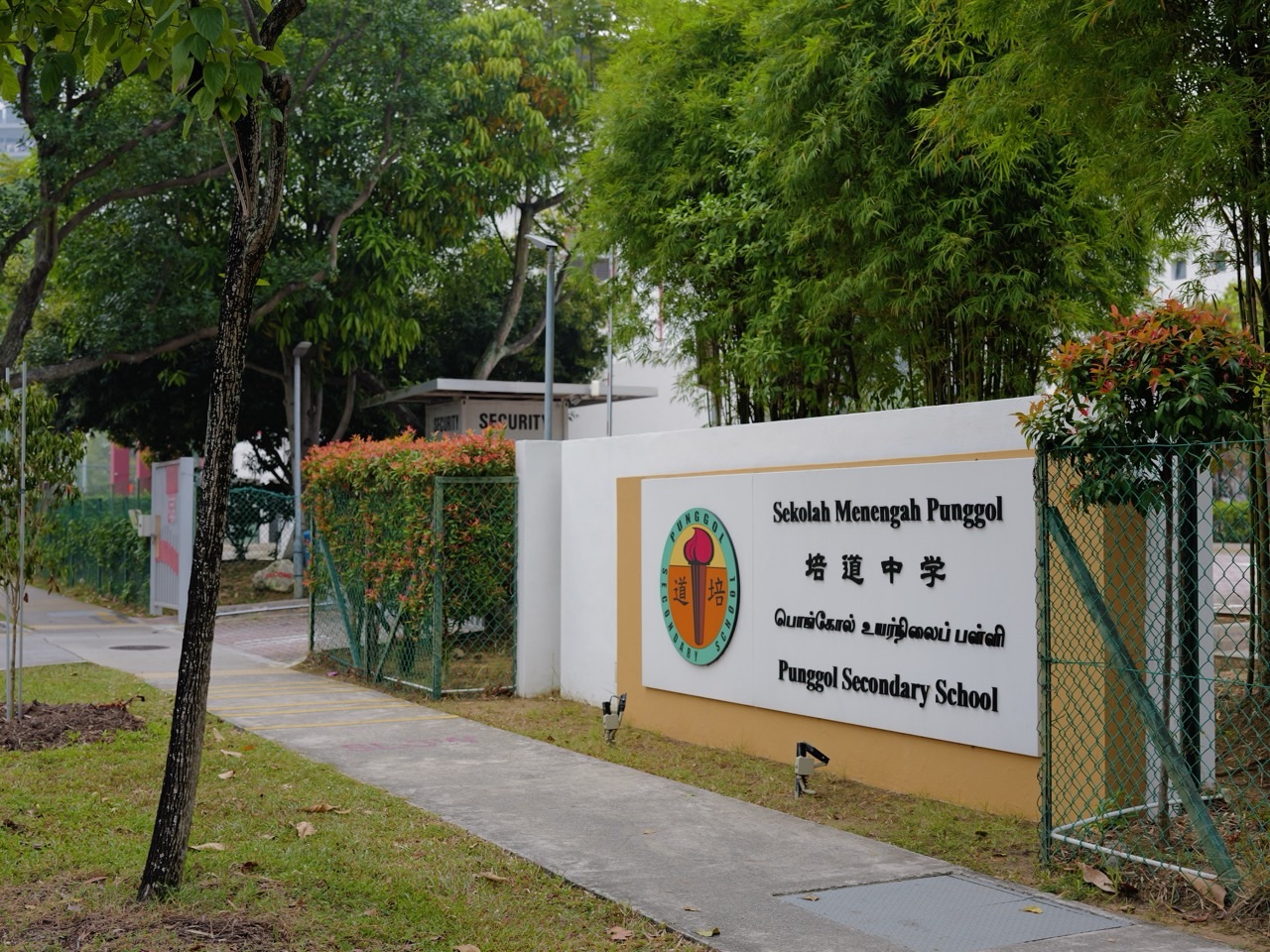
If your child enjoys animals, plants, the environment, climate change or practical sustainability projects, Punggol Secondary School is a particularly relevant school to investigate—but it is not the only Punggol school where environmental learning happens. Punggol Secondary publishes an Applied Learning Programme in Environment Education and an Environmental Club. Greendale Secondary includes hydroponics and aquaponics in its design-and-engineering programme; Yusof Ishak Secondary includes urban farming and sustainable smart-city questions in S4TEM@YI; Edgefield Secondary develops initiative and authentic problem-solving through G.E.M. All four are mainstream schools in Punggol, and the child must still meet the correct PSLE school-entry requirements.
For parents receiving PSLE results on Tuesday, 24 November 2026 at 11.00am, the next decision is where the child can study appropriate English, Mathematics, Science and Humanities subjects while exploring nature in a responsible way. A school-wide sustainability programme is not identical to a selected Environmental Club, and neither automatically guarantees an examinable upper-secondary Geography or Biology offering. This guide compares the four local schools, explains their completed 2026-entry PG1/PG2/PG3 cut-off points as historical evidence rather than 2027 promises, and offers a six-school decision worksheet for Secondary 1 entry in 2027. The S1 school-choice portal closes on 30 November at 4.30pm.
Quick parent summary
• Punggol Secondary has an Environment Education ALP and a published Environmental Club.
• Greendale’s lower-secondary design, technology and engineering work includes hydroponics, aquaponics, coding and sustainable technology.
• Yusof Ishak’s S4TEM@YI includes urban farming, coding, aeronautics and sustainable city problems.
• Edgefield’s G.E.M. develops creative problem-solving and initiative; check the actual projects offered to new pupils.
• Ask what every Secondary 1 pupil experiences, what requires a CCA allocation and which upper-secondary subjects are actually offered.
• Compare PSLE Scores within the selected Posting Group only; previous COPs are not admission guarantees.
• Choose six eligible schools by educational fit, historical range, student support and safe travel.
What does a love of nature actually look like?
A child may spend weekends watching birds, growing herbs on a balcony, following wildlife videos, learning why the weather changes or becoming concerned about plastic pollution. Another may enjoy collecting numbers and making graphs about rain, temperature or food waste. These interests overlap but involve different skills: observation, practical science, data handling, explanation, ethical reflection and teamwork.
Ask your child for one specific example of an environmental question they want to answer. How does a waterway become polluted? Why do some plants grow better under different conditions? How can food waste be reduced without making the household’s routine unreasonable? The question gives parents something concrete to ask a school rather than simply selecting whichever open-house poster has the most pictures of greenery.
A school should help the learner investigate carefully. Nature education is not just visiting a park or collecting a service certificate. Pupils may need to measure, compare, evaluate evidence, communicate honestly and change an idea after discovering a mistake. These are habits shared by Science, Geography, Mathematics and good writing.
Compare four kinds of environmental opportunity
| Opportunity | What it may teach | Parent’s question |
|---|---|---|
| School-wide Applied Learning Programme | Real-world application of classroom knowledge | What does every incoming Secondary 1 pupil actually do? |
| Environmental Club or related CCA | Regular campaigns, conservation, research or service | How are pupils allocated and what activities run in 2027? |
| Lower-secondary Science and Geography | Concepts, evidence, ecosystems, places and human impacts | How do teachers connect the subjects with local examples? |
| Upper-secondary Science or Geography subjects | More demanding formal curriculum and later SEC subjects | Which combinations and G levels will actually be offered? |
| External nature activities | Safe outdoor observation and interest-led learning | What can families do without assuming an external club counts as school CCA? |
These categories should not be treated as interchangeable. A child who enjoys environmental stewardship through a school-wide ALP may not automatically receive a place in an Environmental Club. Similarly, a school’s ALP title does not mean it offers every possible G3 Biology, Chemistry or Geography combination at upper secondary. The school can explain its curriculum, selection and future subject-choice framework.
Parents should keep the child’s wider education in mind. Environmental studies draw on language to explain a proposal, Mathematics to quantify a claim, Science to understand causes and Humanities to consider people and policy. A student who loves nature still benefits from strong English comprehension, numeracy, friendships and a manageable weekly routine.
Punggol Secondary: Environment Education and a dedicated Environmental Club
Punggol Secondary School is at 51 Edgefield Plains, Singapore 828870. Its principal’s message explains that its Environment Education Applied Learning Programme develops appreciation of the relationship between Science and Nature for sustainable living. Its published Environmental Club page describes green campaigns, e-waste awareness, tree planting, bird observations and clean-up activities.
For a child who likes observing birds or helping with conservation, these are concrete reasons to investigate the school. The Environmental Club has described e-waste campaigns linked to Earth Hour, conservation work and nature-monitoring experiences. Ask whether the 2027 incoming cohort has places, what regular meetings look like and how much of its work is available to a beginner. Do not tell the child they will automatically receive a selected environmental project or competition place.
The school also emphasises community and youth leadership, which can complement conservation learning. A student who collects data might help explain environmental results to younger children; another might enjoy organising a clean-up campaign. Ask how pupils are taught to reflect critically on whether a project actually helps the community rather than merely participating for a photograph.
The relevant parent question is not ‘Is Punggol Secondary the best green school in Singapore?’ There is no reliable simple ranking. Ask how the child can learn, contribute and build academic confidence there. A school that supports responsible investigation and meaningful service can be valuable even if the old admissions cut-off is less stringent than another school’s.
Greendale Secondary: hydroponics, aquaponics and sustainable technology
Greendale Secondary is at 51 Edgedale Plains, Singapore 828866. Its official Design, Technology and Engineering ALP explicitly describes hydroponics and aquaponics, Arduino-based monitoring, modelling and prototyping. Incoming Secondary 1 students have been introduced to basic coding and electronic components that can be used to monitor hydroponic systems. Older pupils engage with more complex design and community challenges.
This makes Greendale interesting to a child who enjoys nature and technology together. They might learn how sensors help monitor growing conditions, how a system is designed and how to evaluate whether a proposed solution works. The subject is not only robotics; it connects agriculture, sustainability, engineering and interpretation of data.
Parents should ask whether the hydroponics experience is delivered to the whole Secondary 1 cohort, which parts are assessed through normal learning and what extra opportunities are selected. A photograph of a plant-growing rack does not guarantee that every pupil will travel overseas or join an engineering competition. The school also offers outdoor learning that may help pupils build teamwork and resilience, subject to current arrangements.
A child who finds Mathematics difficult should not be told that sustainability engineering requires no numbers. Measurement, ratios, graphs and interpretation are useful in gardening and sensor projects. Ask how the school supports pupils who are curious but have uneven subject foundations.
Yusof Ishak Secondary: urban farming and smart-city sustainability
Yusof Ishak Secondary is at 8 Sumang Walk, Singapore 828676. Its S4TEM@YI programme focuses on Science, Technology, Engineering and Mathematics for the sustainable development of a smart city. The school specifically includes school-wide learning involving urban farming, coding and aeronautics, with an emphasis on environmental responsibility.
An environmentally curious pupil may enjoy considering how dense urban neighbourhoods can reduce resource use, grow food efficiently or use technology to answer practical questions. The school also publishes a STEM Club, but that is a distinct co-curricular offering. Ask which opportunities every incoming pupil receives and which depend on CCA selection or later study.
The school’s location may be particularly convenient for some western Punggol families, while a household near Oasis or Riviera may face a different journey. Environmental interest is not a reason to ignore the actual school timetable, late project days and safe route home. Check the child’s travel needs along with the curriculum.
Edgefield Secondary: initiative and authentic problem-solving
Edgefield Secondary is at 36 Punggol Field, Singapore 828814. Its Growing the Edgefield Mindset programme emphasises inventiveness, enterprise and collaboration. That approach may appeal to a pupil who wants to turn an environmental concern into a practical project, such as reducing waste or helping peers use resources more carefully.
However, the programme should not be described as a dedicated Environment Education ALP. A parent’s useful question is whether the school has actual 2027 sustainability-related projects, other Science opportunities or CCAs that would suit the child. An enterprise project might develop persuasive writing and planning, but it should be judged by the experiences actually available to incoming pupils.
Edgefield also offers other student-development and arts activities. A child who loves nature may nevertheless prefer its culture, friendships or journey. School choice is about a complete daily education, not merely matching one interest word to an ALP title.
The four local historical Posting Group cut-offs
These figures describe the completed 2026 Secondary 1 intake following the 2025 PSLE. They are earlier last-posted scores, not predetermined thresholds or guaranteed seats for the 2027 intake. The lower the numerical PSLE Score, the stronger the aggregate result. Compare the child’s actual selected Posting Group with the corresponding column.
| Punggol mainstream school | 2026-entry PG3 COP | 2026-entry PG2 COP | 2026-entry PG1 COP |
|---|---|---|---|
| Edgefield Secondary | 14 | 23 | 27 |
| Greendale Secondary | 16 | 23 | 27 |
| Punggol Secondary | 19 | 24 | 27 |
| Yusof Ishak Secondary | 15 | 22 | 27 |
A PG3 pupil with Score 18 might find Punggol Secondary appealing for its Environmental Club. Its old PG3 endpoint of 19 was numerically less stringent than the pupil’s score, while Greendale’s was 16, Yusof Ishak’s 15 and Edgefield’s 14. The history suggests a different level of admission competitiveness, not a guaranteed offer or a school quality ranking. The family can consider the preferred school alongside suitable alternatives.
At PG2 Score 23, Punggol Secondary’s earlier PG2 endpoint was 24 and Greendale’s was 23. At Score 25, the ordinary personalised form may offer PG1 or PG2; the four local PG1 endpoints were 27 while PG2 endpoints were 22–24. Those are very different six-choice planning situations. An ALP theme cannot be used to borrow an easier score from another Posting Group.
If the four local schools provide too narrow a historical range for the child’s actual group and total, investigate eligible schools in Sengkang, Hougang and other accessible estates. No Punggol address creates automatic ordinary S1 home-distance priority, so the child needs a balanced list of genuine alternatives.
Three families, three different green interests
Family A: the child loves birds, mangroves and photography
This pupil keeps a notebook of birds and enjoys slow observation rather than building electronic gadgets. Punggol Secondary’s Environmental Club and environment focus may be particularly interesting. The family can ask about nature-monitoring and conservation work for ordinary students. However, it should not assume every project shown in the school’s archive will repeat in 2027, or that an Environmental Club place is guaranteed.
A family could also explore other schools with Geography, Science and outdoor opportunities. The child’s enjoyment of careful observation may translate into English descriptive writing, scientific method and data logging. The strongest school fit will preserve those interests while supporting the wider curriculum.
Family B: the child wants to build a smart farm
This pupil enjoys coding, design and plant-growing systems. Greendale’s documented hydroponics and aquaponics work and Yusof Ishak’s urban-farming and smart-city programme are useful places to research. The parent can ask what the child actually builds, whether lessons include debugging or measurement, and how teachers guide pupils who have never used microcontrollers.
A strong technology theme does not automatically mean the school offers examinable Computing or every desired upper-secondary Science subject. The family should verify the current subject options and the child’s academic readiness before deciding.
Family C: the child wants to lead a community sustainability campaign
This pupil may enjoy communicating with people, organising a recycling drive or presenting a plan to reduce food waste. Punggol Secondary’s community leadership, Edgefield’s enterprise work and Yusof Ishak’s future-ready community approach all suggest questions worth asking. The family should prioritise opportunities to plan, test and evaluate a project responsibly rather than assume any school will appoint the child as a leader immediately.
An ordinary Secondary 1 student can develop leadership gradually. Being interested in helping the environment is a strength; it should not become a pressure to hold a title or win a competition before the child has even learned the school routine.
What questions should parents ask at an open house?
- What nature, sustainability or environment activities does every incoming Secondary 1 pupil participate in?
- Does the school have an Environmental Club or another current CCA where my child can learn or contribute?
- How are CCAs allocated, and what happens if a preferred club has limited places?
- Does the school teach environmental data, climate or ecosystems through Science, Geography or its ALP?
- Which formal upper-secondary Science and Geography subjects are currently offered at the relevant G levels?
- What teacher feedback and study support are available when the pupil struggles with Mathematics or written explanation?
- Are field trips and outdoor activities compulsory, selected or optional, and how are safety and costs handled?
- How does the school distinguish a genuine environmental outcome from a promotional project?
- Can pupils suggest their own projects, and what support or approval would they need?
- How will the ordinary and late-CCA journey work from the family’s Punggol home?
Ask for clear examples and the current cohort’s information. A school might show a project completed by talented older pupils, but a new Secondary 1 student may receive an introductory version. That can be appropriate; good learning builds skills gradually. Avoid promising a future national competition or overseas trip on the basis of a brochure.
A four-week environmental learning plan before January
Week 1: observe one real place carefully
Choose a safe nearby public place with an adult when needed. The child might note types of plants, birds, shade or litter. Ask them to record observations separately from interpretations. For example, ‘I saw three birds near the water’ is an observation; ‘the water is clean because there are birds’ would require more evidence.
Week 2: ask one measurable question
The pupil could compare shade temperatures using an appropriate safe method or record a household food-waste category without photographing private information. Help them decide what to measure, how often and what they cannot conclude from the small sample. Mathematics enters naturally through counting, tables and simple comparisons.
Week 3: read an explanation
Find age-appropriate material about Singapore’s environment and ask what evidence supports its claims. Encourage the child to distinguish a source from a guess and to explain uncertainties. This improves English comprehension, Science and Geography simultaneously without turning every interest into a test.
Week 4: design a practical, modest response
If the pupil identifies a real issue, help them propose one small, lawful, safe change that family members can try. They might improve sorting of recyclables or reduce food waste. Record what worked and what did not. The child learns that environmental action is not just a slogan; it requires observation, careful reasoning and respectful cooperation.
A parent worksheet for the final six-school choice
| School-choice factor | What to record |
|---|---|
| Official route | Actual total, relevant subject ALs and selected Posting Group |
| Past admissions history | Correct 2026-entry PG1, PG2 or PG3 COP, clearly marked historical |
| Environmental experience | School-wide ALP, available club and any special selected projects |
| Academic growth | Science, Geography, English and Mathematics subject support |
| School culture | Teacher communication, friendships and pastoral care |
| Practical life | Morning route, late CCA return, programme costs and family schedule |
| Preference | Would the child still like the school without the first-choice CCA? |
MOE encourages families to include two or three schools whose previous COPs were less stringent than the child’s total, where suitable. At PG3 Score 16, an old PG3 endpoint of 19 was less stringent, while an old COP of 14 was more stringent. This is a planning guideline rather than a probability formula. Rank six schools in genuine preference order and do not use a programme title to bypass eligibility.
The 2026 PSLE school-choice timetable
| Event | Announced timing |
|---|---|
| PSLE results released | Tuesday, 24 November 2026 at 11.00am |
| S1 Portal opens | Tuesday, 24 November at 11.30am |
| Ordinary six-choice deadline | Monday, 30 November at 4.30pm |
| Posting results | Tentatively Friday, 18 December; final confirmation to follow |
SEAB confirmed the results and submission window on 17 November 2026. One parent with valid Singpass can submit through the MOE S1 Portal; contact the primary school in time if assistance is needed. A pupil with a confirmed DSA-Sec place follows the relevant individual instructions.
Frequently asked questions
Is Punggol Secondary the only Punggol school for environmental learning?
No. It has a distinctive Environment Education ALP and published Environmental Club, while Greendale offers hydroponics and aquaponics through design and engineering, Yusof Ishak includes urban farming and smart-city sustainability, and Edgefield can develop responsible problem-solving. The experiences are different, not interchangeable.
Will my child join Punggol Secondary’s Environmental Club automatically?
Do not assume automatic CCA allocation. Ask about the receiving school’s actual 2027 recruitment, places and alternatives if the first preference is unavailable.
Does a sustainability ALP guarantee upper-secondary Geography or Biology?
No. A school-wide programme, a CCA and an examinable subject are separate. Check the named school’s actual current G-level subject offerings and later selection rules.
What if my child wants a future career in environmental science?
That is a useful interest, but a twelve-year-old need not decide a career now. Good foundations in Science, Mathematics, reading, data interpretation and communication will support many possible future pathways.
Should a family choose a school farther from home for a green programme?
Only after comparing the actual educational value and safe travel, including late CCA days. A suitable nearby school can also nurture an environmental interest through regular subjects and outside learning.
Does a less competitive historical cut-off mean weaker science teaching?
No. A past COP records the last admitted pupil in an earlier cohort, not a measure of teaching quality. Compare real curriculum and student support rather than ranking a school by one number.
Official sources and related eduKate parent reading
- Punggol Secondary: Environmental Club and conservation activities
- Punggol Secondary: Environment Education ALP and community leadership
- Greendale Secondary: DTE, hydroponics, aquaponics and coding
- Yusof Ishak: smart-city STEM and urban farming
- Edgefield: Growing the Edgefield Mindset
- MOE SchoolFinder: school programmes, subjects and previous COPs
- SEAB: 2026 PSLE results and six-school submission
- eduKate Punggol: how to check actual CCA choices
- eduKate Punggol: connecting Science interests with mathematical foundations
Final parent move: A pupil who loves nature can thrive where they can observe, test ideas, write clearly, use numbers responsibly and contribute to their community. Compare the four Punggol schools by the actual experiences available to this child, not a vague ‘green school’ ranking. Use the correct historic Posting Group cut-offs, check real CCAs and subject options, and submit six genuine school choices before the deadline.


