
Choosing G2 or G1 Secondary 1 schooling in Punggol is not a choice between ‘university’ and ‘no university’. A child enters a school through Posting Group 2 or Posting Group 1, usually beginning most academic subjects at G2 or G1 respectively; later outcomes depend on which subjects the student actually takes, at what levels, and with what grades. From 2027, the Singapore-Cambridge Secondary Education Certificate (SEC) records G1, G2 or G3 results. From 2028, MOE’s new Post-Secondary Admissions Exercise (PSE) coordinates eligible applications for JC, MI, Polytechnic and ITE Higher Nitec routes. A suitable pathway can develop across several stages instead of being fixed by PSLE.
For Punggol families, the immediate school shortlist includes Edgefield Secondary, Greendale Secondary, Punggol Secondary and Yusof Ishak Secondary, plus suitably accessible schools outside town. The 2026-intake historical last-posted PSLE Scores were PG1 27 at all four and PG2 23, 23, 24 and 22 respectively. These are dated reference figures, not admission promises for any later year. Select a realistically accessible school with appropriate learning support and a practical journey; then preserve future options by monitoring subject levels, academic readiness and interests throughout secondary education.
- PSLE and school entry: PG1/PG2 are Posting Groups, not lifelong destinations; PSLE Score 25 may offer a choice between them according to the official notice.
- 2027 SEC: the first graduating cohort sits SEC at the subject levels actually offered—G1, G2 and G3—not one identical examination standard for every pupil.
- 2028 PSE: the planned coordinated main admissions exercise covers JC, MI, polytechnics and ITE Higher Nitec pathways, with separate eligibility rules.
- ITE Year 1: G1-based pathways are relevant; Year 2 entry generally needs a qualifying five-subject G2/mixed profile and the announced raw ELMAB3 benchmark of 19 or better.
- PFP: the announced framework uses at least five qualifying G2 or mapped G3 subjects, a raw five-subject G2-based aggregate of 12 or better and minimum subject grades.
- Direct Polytechnic Year 1: the announced 2028 framework can count one G2 Best subject alongside four required G3 components, with the applicable ELR2B2 conditions.
- JC/MI: the announced 2028 gross L1R4 threshold is 16 or better for JC and 20 or better for MI, with prescribed G3 subjects and other minimum requirements.
- University: a later suitable diploma, A-Level or other recognised qualification may provide an application route; neither PG1 nor PG2 guarantees or forbids university admission.
There are three different decisions, years apart
The first decision happens after PSLE: where will the child enter Secondary 1, and under which Posting Group? The second is repeated through secondary education: what G1, G2 or G3 subject mix is appropriate now, and what should change as the child grows? The third happens when the student has actual national examination results and applies for a post-secondary institution. Families make unnecessary mistakes when they treat all three as the same decision.
A student can start in PG1, take stronger individual subjects at G2 or G3 when eligible, move through suitable school reviews and eventually hold an SEC profile different from that of another PG1 entrant. Another student can enter through PG2 and find that a practical Higher Nitec or PFP route is better aligned with interests than forcing a demanding G3-heavy plan. Neither route is a judgement of worth.
A simple map of qualifications—not a ranking of human beings
| Stage or pathway | What determines eligibility | What parents should understand |
|---|---|---|
| Secondary 1 PG1 or PG2 | PSLE Score, official posting group rules, school choices, availability | School entry is not the final qualification |
| SEC examination | Subject levels actually offered and examination results | G1, G2 and G3 use distinct grading scales |
| ITE Higher Nitec Year 1 | Appropriate SEC subject profile and course-specific G1-aligned entry rules | Practical training; some students may need enhanced foundation support |
| ITE Higher Nitec Year 2 entry | Qualifying G2/mapped G3 subject profile; announced raw ELMAB3 ≤19 | Faster entry applies only when criteria are met |
| Polytechnic Foundation Programme | Qualifying G2/mapped G3 five-subject profile; raw aggregate ≤12 and subject minimums | One-year foundation before diploma Year 1, not an automatic diploma award |
| Polytechnic diploma Year 1 | Qualifying G3-heavy ELR2B2 profile, aggregate and course prerequisites | One eligible G2 Best component under 2028 changes |
| Junior College / Millennia Institute | Prescribed G3 subjects, L1R4 and subject minimums | A-Level path, with distinct JC/MI entry criteria |
| University application | Later accepted qualification, course prerequisites, competition and selection | No direct promise from PSLE or SEC alone |
This summary reflects the public policy framework announced up to 14 November 2026; details must be checked for the applicant’s actual year. Read MOE 2026 announcement on 2028 PSE, MOE’s revised JC and MI criteria, SEAB SEC qualification and grade-mapping guide and the relevant institution’s current admissions pages before preparing any real application.
What changes when SEC begins in 2027?
The SEC replaces the separate GCE N(T), N(A) and O-Level certifications for the relevant mainstream graduating cohort. The name is common, but the subjects remain examined at their respective General levels. SEAB identifies G1 grades as A–E, G2 as 1–6, and G3 as A1, A2, B3, B4, C5, C6, D7, E8 and 9. An A at G1 is not automatically a G3 A1; a G2 grade 2 is not the same printed result as G3 A2.
Where a post-secondary aggregate needs results from a more demanding subject level, SEAB sets out official grade mapping. For example, G3 A1 through B3 map to G2 1 when a qualifying G2-scale aggregate is calculated. G2 1–3 map to G1 A when a relevant G1-scale calculation calls for it. The underlying SEC still records the actual level examined. See SEAB SEC qualification and grade-mapping guide, not an unofficial conversion invented by a parent group.
The dates deserve precision. A Secondary 1 child entering in 2027 is not taking SEC in 2027. The first SEC graduation year is 2027 for the cohort already in upper secondary. A child entering Secondary 1 in 2027 on an ordinary four-year secondary route would be expected to sit SEC in 2030, with post-secondary application later. Future arrangements should be checked again nearer graduation.
What the 2028 admissions reform actually does
MOE announced a new Post-Secondary Admissions Exercise beginning in 2028, enabling candidates to consider eligible courses across several post-secondary sectors in a coordinated process after SEC results. It is not a promise of a seat. Each institution and course still has minimum entry requirements, selection rules and capacity. MOE also set a tie-break order for applicants with equal net aggregate scores in the new PSE: citizenship, choice order, gross aggregate and computerised balloting. This is a post-secondary rule and must not be confused with the S1 school-posting tie-break rules.
Other routes such as DSA-JC, Polytechnic EAE and ITE EAE are planned to continue under their respective rules. Parents should preserve a child’s interests and portfolio without mistaking CCA participation for a guaranteed place. For 12-year-olds, this is a direction of travel, not a list of application forms to complete now.
The G1-oriented route: SEC to Higher Nitec and beyond
For many children who study predominantly G1 subjects, ITE’s practical, industry-linked Higher Nitec courses can be an important next step. Under the announced 2028 framework, admission to the Year 1 stage of the enhanced three-year Higher Nitec structure is aligned to G1, using four qualifying G1-level subject results and the relevant course criteria. Specific applicant profiles, including students with few passes, may need an Enhanced Foundation Programme arrangement; families must read ITE’s actual course and intake conditions rather than assume all candidates enter an identical three-year course.
ITE states that its programmes cover areas such as engineering, information and communications technology, business, design, health sciences and hospitality. The right selection starts with a practical interest and the programme’s entry conditions, not a generic assumption that every ‘ITE course’ is the same. See ITE’s secondary school leavers guide and ITE entry qualifications.
For Punggol parents, the three main ITE college locations are ITE College Central at 2 Ang Mo Kio Drive, Singapore 567720; ITE College East at 10 Simei Avenue, Singapore 486047; and ITE College West at 1 Choa Chu Kang Grove, Singapore 688236. A teenager may be eligible for a course at a particular college but must still make the daily journey. Test transport at the actual class time, not by measuring straight-line distance.
The G2-oriented route: direct Higher Nitec Year 2
For the announced 2028 intake, direct entry into the second year of the three-year Higher Nitec structure generally requires a qualifying set of five G2 subjects or a permitted mix of G2/G3 subjects, with a raw ELMAB3 aggregate of 19 points or better on the G2 scale. The initials refer to English Language, Mathematics and three qualifying other subjects, with the applicable calculation and minimum requirements. G3 grades may be mapped to G2 for the admission formula, but the student does not retroactively sit a G2 exam.
Take a fictional SEC profile whose five relevant G2 results are English 3, Mathematics 3, Science 2, Humanities 2 and Mother Tongue 4. The raw sum would be 14. That is numerically within the announced Higher Nitec Year 2 aggregate threshold of 19, but it would not meet the PFP raw aggregate threshold of 12. The example illustrates the difference between routes, not an automatic offer: eligibility also depends on permitted subject selections, course prerequisites and current rules.
A family should examine the actual Higher Nitec course curriculum and whether the child would thrive in applied learning with projects and industry experiences. Year 2 entry reduces foundation time for those ready to cope; that can be appropriate for some students and too demanding for others.
Polytechnic Foundation Programme: the 12-point question
PFP offers a one-year foundation route at a polytechnic for eligible secondary school leavers before progression into a diploma, subject to the programme’s requirements. From the 2026 intake, most applicants enter broad clusters covering Sciences; Design, Engineering and Technology; or Humanities, Art, Media and Business, with subsequent diploma allocation based on the programme’s rules and performance. Specified specialised diplomas follow their own arrangements.
Under the announced 2028 SEC-related changes, eligible students with G2 subjects, G3 subjects or mixed G2/G3 profiles may be considered. The central academic benchmark is a raw five-subject ELMAB3 score of 12 or better calculated at the G2 level, together with minimum grades in English, Mathematics, the relevant subject and Best subjects. The precise eligible subjects and cluster rules must be checked for the intake. PFP is not automatically open to a child who studied four G1 subjects without the required qualifying G2/G3 portfolio.
For a worked illustration, consider a fictional G2-level profile English 3, Mathematics 2, relevant Science 2, Humanities 3 and Mother Tongue 2. The five numbers total 12. This meets the headline numerical threshold, but the parent must still check that each chosen subject satisfies the permitted category and minimum grade rules, and that the desired cluster or course can offer a place. The raw threshold is a gateway to consideration, not a diploma reservation.
Start with the official PFP portal and each polytechnic’s updated instructions. If a child is already very clear about a vocational interest, PFP may be attractive; if interests are still changing, the broader cluster structure can be helpful. But no parent should pressure an 11- or 12-year-old to decide an eventual diploma simply to rationalise PG2 instead of PG1.
Direct Polytechnic Year 1: a different qualification profile
Direct admission to a diploma in Polytechnic Year 1 has a different set of subject requirements. From the announced 2028 framework, the revised ELR2B2 aggregate can use one permitted G2 Best subject while the other four components remain G3, together with an adjusted general net aggregate cut-off of 22 and specific course minimum requirements. Certain courses have separate details. Therefore, having five G2 grades does not by itself satisfy direct Polytechnic Year 1 admission, even if those grades are excellent.
The five Singapore polytechnics are Nanyang Polytechnic (Ang Mo Kio), Temasek Polytechnic (Tampines), Republic Polytechnic (Woodlands), Singapore Polytechnic (Dover) and Ngee Ann Polytechnic (Clementi). A Punggol family should first identify actual diplomas worth pursuing, check their entry requirements, then evaluate campus location and transport. Never select a diploma purely because its campus looks nearest; content, student fit and the occupational possibilities matter as well.
Where the polytechnic campuses are relative to Punggol
| Institution | Town and address | Useful travel-planning question |
|---|---|---|
| Nanyang Polytechnic | 180 Ang Mo Kio Avenue 8, Singapore 569830 | Which public-transport route is most dependable to the Ang Mo Kio campus? |
| Temasek Polytechnic | 21 Tampines Avenue 1, Singapore 529757 | Would direct bus options or a rail-and-bus combination work better from home? |
| Republic Polytechnic | 9 Woodlands Avenue 9, Singapore 738964 | How manageable is the cross-island journey on class and project days? |
| Singapore Polytechnic | 500 Dover Road, Singapore 139651 | How many changes and how much door-to-door time would the Dover commute require? |
| Ngee Ann Polytechnic | 535 Clementi Road, Singapore 599489 | Would the longer westward journey still be appropriate for the chosen course? |
This table is a location guide, not an admissions shortlist. For travel advice and published campus access, see NYP’s visitor guide and TP’s transport guide, alongside the other institutions’ official pages. Timetables and routes can change; no journey duration is invented here.
JC and Millennia Institute: G3 subject breadth is essential
MOE’s announced 2028 system moves JC admission to the five-subject L1R4 computation, with the general gross qualifying threshold of 16 or better. MI uses an L1R4 threshold of 20 or better, with the prescribed subject mix and minimum grades. The main academic components require G3 subject qualifications; a PG1/PG2 pupil with only G1/G2 results cannot assume that the L1R4 numbers become applicable by mapping them upward. Read MOE’s revised JC and MI criteria and confirm details for the child’s actual cohort.
JC or MI can lead to A-Level qualifications and, for successful applicants meeting later requirements, university study. But the pathway is not inherently superior for every adolescent. A student who prefers hands-on investigation and project-led assessment may find a polytechnic diploma a better match. A student with strong theoretical interests, the necessary G3 subjects and good independent study habits may prefer the JC or MI route. The correct destination depends on readiness and goals, not family prestige.
How university can remain possible after different beginnings
The route to a university often runs through a later qualification: a recognised polytechnic diploma, an appropriate A-Level result or another accepted qualification. ITE Higher Nitec can support progression into diploma study under the relevant conditions; strong Higher Nitec graduates may have specific polytechnic progression opportunities. None of these are automatic and university admission still depends on grades, prerequisites, competition and institutional policy.
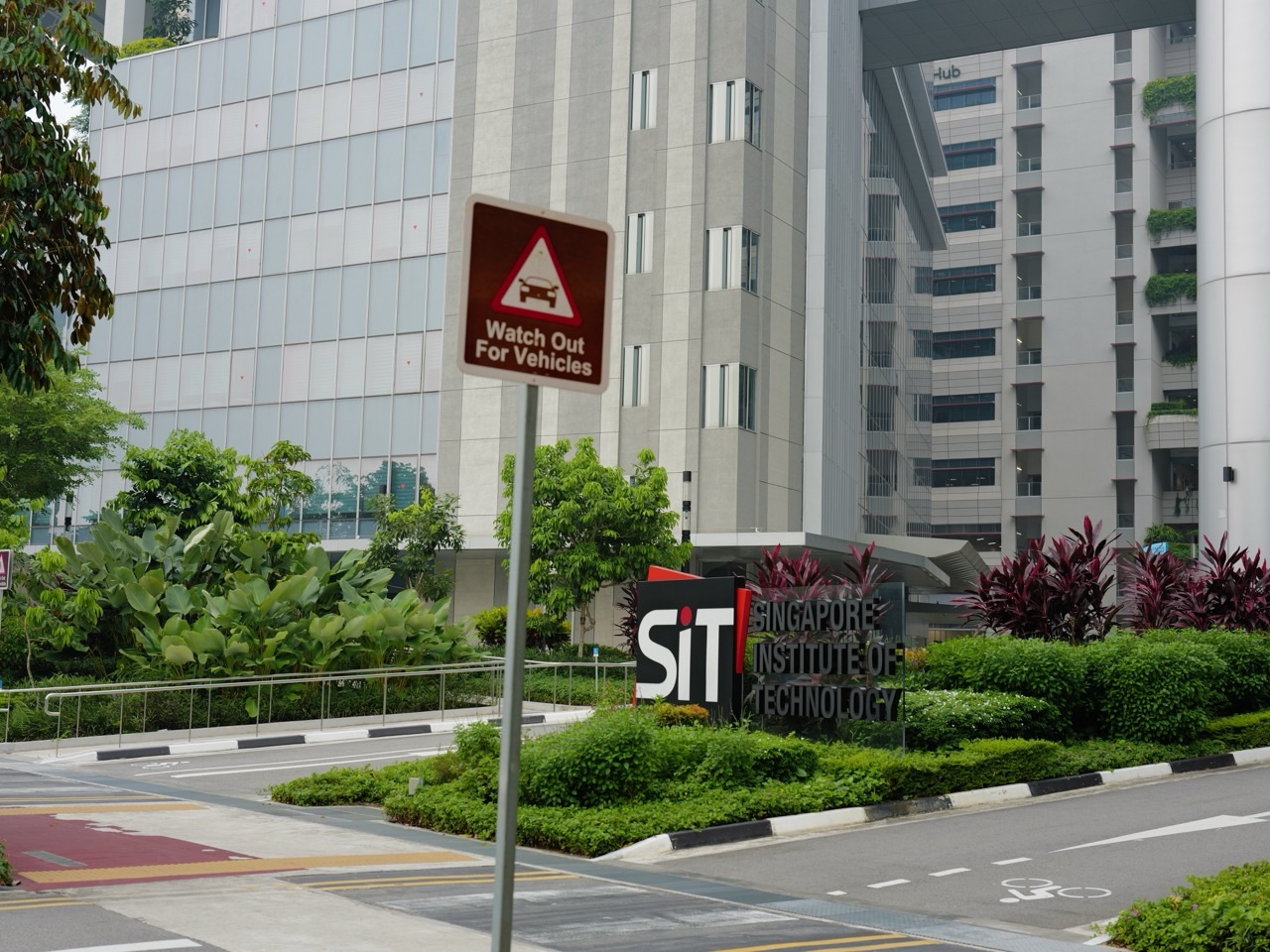
Punggol itself now hosts the Singapore Institute of Technology (SIT) at 1 Punggol Coast Road, Singapore 828608. The campus is served by Punggol Coast MRT and sits in Punggol Digital District. This gives local families a visible example of an applied university and its industry connections. Its location does not confer a neighbourhood admissions advantage or mean a G1 or G2 child can enter SIT without later qualifications. See SIT’s official campus information and research the individual degree’s requirements years later.
How a 2027 Secondary 1 parent should plan across four years
| Stage | What the parent should ask | What evidence matters |
|---|---|---|
| After 2026 PSLE, before 2027 S1 | Which eligible PG and school offers the best fit? | PSLE notice, school offerings, correct historical PG range, transport |
| Secondary 1 | Which subjects merit more stretch or foundation repair? | Individual ALs, teacher feedback, marked scripts, sleep and workload |
| Secondary 2 | Are subject levels changing appropriately? What interests are emerging? | Multiple-term progress, subject options, Humanities and CCA interests |
| Secondary 3 | Do subject choices preserve plausible destinations? | Actual G1/G2/G3 subject portfolio, available combinations, career guidance |
| Secondary 4 and SEC | Which current post-secondary routes fit these real results? | SEC grades, official mapping, aggregate, subject prerequisites |
| Application year | Which eligible courses should be ranked and why? | Current PSE rules, course requirements, campus travel, career interest |
The first SEC cohort graduates in 2027 and applies in 2028, but a child entering Secondary 1 in 2027 would typically sit SEC later. This planning table is about maintaining useful decisions, not assuming a 2028 set of thresholds will remain unchanged by the child’s eventual application year.
Four Punggol school conversations worth having now
- At Edgefield Secondary on Punggol Field, ask how subject-level options, entrepreneurial learning and learning support operate for ordinary PG1/PG2 entrants.
- At Greendale Secondary on Edgedale Plains, ask how design and engineering activities connect to mathematics or science foundations, and how teacher reviews of subject readiness work.
- At Punggol Secondary on Edgefield Plains, ask how environmental learning, student leadership and school support help pupils with mixed G1/G2/G3 profiles.
- At Yusof Ishak Secondary on Sumang Walk, ask about sustainable STEM interests, academic pacing, actual subject combinations and the daily transport routine from home.
These are research prompts, not guarantees about class allocation. Use school open houses, SchoolFinder and the actual offer letters for specifics. A family living in Punggol should also consider suitable Sengkang and other nearby-area schools when the child’s score, Posting Group and travel needs justify them. A school cannot be recommended simply because it lies in the same estate.
PSLE score example: why choosing PG1 versus PG2 matters but does not settle the future
A fictional Score 25 pupil has the official PG1/PG2 choice. The 2026-intake historical PG1 last-posted score of 27 at the four local Punggol schools makes the pupil numerically more competitive than that previous PG1 reference. The PG2 historical points of 22–24 across the same schools were numerically more competitive than 25. That is a major distinction when preparing a realistic school-choice list—but it is only about that admission stage, not about which child will eventually qualify for university.
A sensible family may choose PG1 for suitable entry and still accept a G2 subject offer where the individual PSLE grade warrants it. Another family may choose PG2 and seek other schools if local PG2 historical demand suggests competition. Neither family should promise an end destination at age twelve. The plan can change after a year of actual subject work.
A parent’s pathway decision tree
- Confirm the child’s official PSLE eligibility and build an honest S1 school shortlist.
- Choose a school with appropriate subject-level provision, pastoral care, CCA options and commute.
- Read each actual G-level offer and decide based on that subject’s evidence, not generalised ambition.
- Review the subject profile with teachers over several years and understand likely later programme prerequisites.
- At SEC results, record every subject, actual G level and grade before performing any aggregate calculation.
- Apply the official mapping only where the chosen post-secondary formula specifies it.
- Compare qualifying ITE, PFP, polytechnic, JC or MI choices by course fit, travel and future plans.
- Consider university pathways only with the later accepted qualifications, institution criteria and realistic aspirations in view.
FAQ: answers parents should be able to give without fear
Does choosing PG1 mean my child cannot enter a university?
No. PG1 is a Secondary 1 admission route, not a lifetime restriction. Later qualifications, performance, prerequisites and admissions decisions determine future applications. For many students the route is through further study, potentially including ITE and a diploma.
Does choosing PG2 automatically qualify the child for PFP?
No. The announced PFP framework requires an appropriate five-subject G2/mapped G3 profile, a raw aggregate of 12 or better and minimum grades. PG2 is not a PFP admission score.
Is an ELMAB3 of 14 good enough for PFP?
It is above the announced raw PFP threshold of 12 and therefore does not satisfy that headline criterion. A score of 14 may be within the different Higher Nitec Year 2 numerical threshold of 19 if all other eligibility and course rules are met. Check current rules in the year of application.
Can a pupil with mostly G2 SEC results go straight into Polytechnic Year 1?
The announced 2028 direct route remains G3-heavy: four prescribed G3 components and one permitted G2/G3 Best component, plus course requirements and aggregate rules. Mostly G2 results alone do not satisfy that standard, but PFP or other qualifying routes may be relevant.
Can ITE lead to Polytechnic and then university?
Potentially, yes, for students who satisfy each programme’s academic and admissions criteria. It is a real multi-stage route, not a guaranteed staircase. Achievement and fit matter at each stage.
Is studying at SIT Punggol automatic for children from Punggol?
No. SIT is a university with its own degree-specific admission rules. A nearby home does not replace the relevant qualification or selection requirements.
Official reference links
- MOE SchoolFinder
- MOE Secondary 1 posting
- SEAB SEC qualification and grade-mapping guide
- MOE 2026 announcement on 2028 PSE
- MOE’s revised JC and MI criteria
- ITE’s secondary school leavers guide
- Polytechnic Foundation Programme portal
- ITE college addresses
- SIT Punggol location and transport
- Punggol secondary school address and historical score reference
Editorial verification: 14 November 2026. National score thresholds described are the published framework for the 2028 intake, subject to course-specific rules and future updates. Local PSLE last-posted scores refer to the 2026 Secondary 1 intake following the 2025 PSLE. Fictional result examples illustrate arithmetic, not individual admissions advice. Families must confirm rules and programme details for the student’s actual graduation year.
Continue with the connected guide: PSLE Scores 4–32 in Punggol | 2027 Secondary School Choice Hub. Use its linked index to compare the related questions and choose your next reading.


