
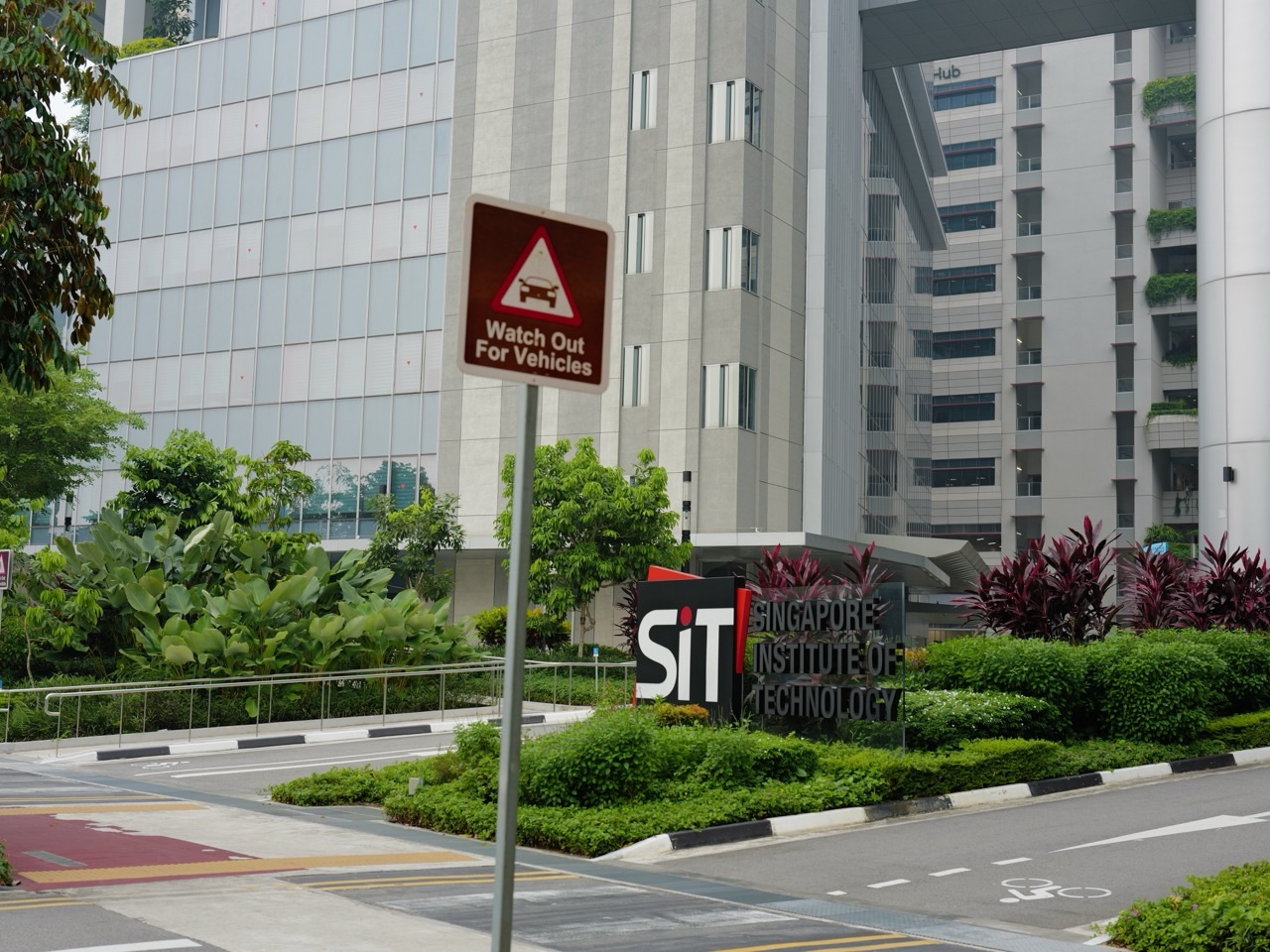
A Punggol child eligible for Posting Group 3 (PG3) can look for a secondary school with a strong interest in science, technology, design or robotics without assuming there is a separate “STEM PG3 school” category. The four mainstream secondary schools located in Punggol are Edgefield Secondary, Greendale Secondary, Punggol Secondary and Yusof Ishak Secondary. For families prioritising these interests, Greendale’s published design, technology and engineering programme, Edgefield’s Robotics and other clubs, and Yusof Ishak’s Robotics, Infocomm Technology and STEM Club make useful starting points. The right choice still depends on the pupil’s PSLE Score, subject readiness, actual CCA places and daily journey.
For the completed 2026 Secondary 1 posting exercise, the historical PG3 last-admitted scores were Edgefield 14, Yusof Ishak 15, Greendale 16 and Punggol Secondary 19. These are references from the previous intake, not promised thresholds for children taking PSLE in 2026 and entering Secondary 1 in 2027. PG3 normally corresponds to PSLE Scores 4–20; students scoring 21 or 22 may be eligible to choose PG2 or PG3 under MOE’s rules. Parents should check the actual result slip, current MOE SchoolFinder records, and all six school preferences before treating any programme as an available offer.
- PG3 means Posting Group 3 for school entry; G3 refers to an individual subject level, not a permanent school label.
- Relevant local opportunities: Greendale design and engineering; Edgefield Robotics and clubs; Yusof Ishak Robotics, Infocomm Technology and STEM Club; also investigate Punggol Secondary’s current environmental and applied-learning offerings.
- 2026 historical PG3 cut-offs: Edgefield 14; Yusof Ishak 15; Greendale 16; Punggol Secondary 19. Recheck for the relevant intake.
- CCA is not a qualification: joining Robotics or STEM Club alone does not guarantee A-Mathematics, a diploma, JC admission or an engineering degree.
- Test the route: Punggol Field, Edgedale Plains, Edgefield Plains and Sumang Walk create different journeys from different Punggol blocks.
- Long-term pathways: consider SEC subject levels, later JC/MI, polytechnic and ITE eligibility, followed by university or other progression where applicable.
1. First distinguish the school type from the learning opportunity
Parents often encounter an attractive school exhibition featuring drones, coding, robots or inventions and conclude that the school is a specialised technology academy. That inference is usually too large. Within Punggol, the four named schools are mainstream co-educational government secondary schools. Their programmes may give pupils valuable experience in particular areas, but the ordinary curriculum and Secondary 1 admission process remain centrally governed. School type, initial Posting Group, subject level, Applied Learning Programme (ALP) and CCA are five different questions. Answering them separately protects families from costly assumptions.
A PG3 student will generally enter with most academic subjects at G3 level. Under Full Subject-Based Banding, however, the student can subsequently offer subjects at different levels where the relevant rules and school arrangements allow. A robotics enthusiast does not need to decide a future career at age twelve. Likewise, an excellent PSLE Mathematics grade does not automatically make the child suited to every engineering activity. Some pupils enjoy constructing physical objects; others love programming, photography, environmental data or the ethical discussion around technology. Ask the pupil what work they actually like doing, not merely whether the term “STEM” sounds impressive.
2. What the four Punggol schools offer parents to investigate
| School and 2026 historical PG3 cut-off | Evidence-based starting point | Important parent question |
|---|---|---|
| Edgefield Secondary — 14 | Official 2026 CCA pages describe Robotics and other clubs; its wider applied-learning identity has included innovation and entrepreneurship. | How are club places allocated to new Secondary 1 pupils, and can a beginner join? |
| Yusof Ishak Secondary — 15 | Its official 2026 CCA table lists Robotics, Infocomm Technology and STEM Club. | What distinguishes the three activities in weekly practice, equipment and competition opportunities? |
| Greendale Secondary — 16 | Its official Greendale Xperience pages describe coding, design, technology and engineering in its Applied Learning Programme. | Is the programme cohort-wide, elective, CCA-based or selection-based for the year concerned? |
| Punggol Secondary — 19 | Official school materials feature environmental learning and a broad set of clubs and activities. | Which current projects involve data, sustainability, systems thinking or technical problem-solving? |
These figures concern admission into PG3 for the completed 2026 Secondary 1 intake, not a fixed ranking of educational quality. The descriptions are leads for inspection rather than claims that every child is entitled to every activity. An ALP can be part of school-wide learning, while a club generally has its own membership processes. Parents should get written or official confirmation about participation for the incoming cohort.
3. Edgefield: when the pupil enjoys making, experimenting and collaborating
Edgefield Secondary School is at 36 Punggol Field, Singapore 828814. Its official 2026 CCA information lists clubs with interests including Art, Robotics, New Media and aviation-related learning. That offers a promising set of questions for a child whose curiosity crosses traditional subject boundaries. An exploratory pupil may enjoy building a small prototype, presenting an explanation, testing design assumptions or working through repeated failures with teammates. A parent should not, however, assume that every listed activity offers unlimited places, or that an aviation-related club is identical to an academic aviation course.
Look beyond the technology display. Ask the school how new members are introduced to basic tools, what safety and supervision arrangements operate, whether older members mentor younger ones, and what a normal session looks like without a showcase event. Does a student learn to describe a problem before choosing a device? Are there chances for beginners to practise foundational skills? What happens if the child discovers after a term that they prefer art or debate instead? A school’s strength lies partly in how it supports a student’s developing identity, not only in the competition medals visible on open-house day.
The school’s historic 2026 PG3 cut-off of 14 means the last posted student in that specific admission group and year had a PSLE Score of 14. It does not establish that Score 14 will secure a future place, nor that a child scoring 15 should avoid learning more about the school. Use the published range as a probability reference, complete a six-school list, and investigate other institutions with comparable opportunities. A technology interest is worth pursuing even if the most famous club is not available.
4. Yusof Ishak: compare three very different technical CCAs
Yusof Ishak Secondary School is at 8 Sumang Walk, Singapore. Its official CCA page, updated in September 2026, lists Robotics, Infocomm Technology and STEM Club. These names sound related, but a parent should not treat them as synonyms. Robotics may emphasise mechanisms and control systems; an Infocomm club may emphasise digital production or computing; a STEM club may bring together investigations from several fields. These descriptions are possibilities, not an assertion of the detailed current syllabus of any individual CCA. The school must confirm what members actually do.
A useful open-house conversation starts with three questions: what does a first-year member do in the first month; how much time is spent practising foundations rather than preparing for competitions; and how does the school allocate places when interest exceeds capacity? Ask the same questions of all three clubs. The most valuable answer for a twelve-year-old might be the one offering encouragement to beginners and a manageable weekly workload. A child who confidently troubleshoots a small programme can gain more than one who is technically present at an advanced activity but does not understand it.
Yusof Ishak’s broader school experience also includes sports, performing arts and uniformed groups. A pupil who likes science but wants to spend CCA time in Fencing or Choir is not making an inferior academic decision. School programmes and classroom subjects can develop technical curiosity while the CCA develops a different personal strength. The school’s historical 2026 PG3 last-admitted score was 15; use that figure only as the earlier cohort’s result.
5. Greendale: design, engineering and practical thinking
Greendale Secondary School is located at 51 Edgedale Plains, Singapore 828866. Its official Greendale Xperience pages describe an Applied Learning Programme in design, technology and engineering, with coding and practical challenges. For a child who likes to understand why an object fails, improve a design or find several possible solutions, this deserves investigation. A useful distinction is between an everyday school programme and a particular CCA: an ALP may provide broad exposure that does not require a pupil to secure a specialist CCA place. Ask the school precisely which activities belong to each.
Greendale also highlights Outdoor Adventure as a Learning for Life Programme and lists DSA-related talent areas including Leadership, Outdoor Adventure and Design, Technology & Engineering. Direct School Admission is a separate application route with its own requirements and deadlines. A child whose talent is not yet established may nevertheless appreciate the school’s ordinary programmes. Parents should never infer that liking a programme confers DSA eligibility, nor that participation guarantees later selection for competitions or leadership roles.
A helpful parent visit is to ask for an example of the design process: identifying a user need, planning a prototype, testing, receiving feedback and improving the result. Then ask how the school handles students who are new to coding, dislike programming but enjoy hands-on building, or show strength in communication rather than technical precision. A thoughtful answer suggests the programme teaches transferable habits rather than merely maintaining equipment.
6. Punggol Secondary: environmental learning can be technical learning
Punggol Secondary School is at 51 Edgefield Plains, Singapore 828870. Its official CCA pages include an Environmental Club and an Audio Visual Aid Club as well as other clubs, sports and performing arts. Its Environmental Club describes activities involving environmental projects, conservation and practical campaigns. This can be a good research lead for a child interested in the science of places and real problems, though membership places and activities for the coming cohort need confirmation.
Some parents overlook environmental work because it does not carry a robotics label. Yet good environmental inquiry can involve measurement, observation, classification, evidence-based explanation, mapping, data presentation and the design of practical interventions. A pupil interested in science might examine where waste accumulates, how to present accurate findings to schoolmates, or how to compare different proposed improvements. Those are examples of useful questions a parent can ask, not a claim that the club always undertakes those exact projects.
Punggol Secondary’s 2026 historic PG3 cut-off was 19. For a family living closer to its campus, a shorter and more predictable journey may leave extra time for hobbies, reading, sleep and consistent academic practice. Compare that opportunity cost with the programme advantages of a school farther away. The strongest choice is not necessarily the one with the smallest historical cut-off number.
7. What to do with a PSLE Score of 10, 14, 16, 19, 20, 21 or 22
A PSLE Score is the sum of four subject Achievement Levels; numerically lower is stronger. If the child scores 10, the parent may research all four Punggol schools while still checking admission-year availability and realistic alternative choices. A child scoring 14 matches Edgefield’s completed 2026 last-admitted PG3 score, but no result from the following exercise has yet been determined. Score 16 matches Greendale’s historical PG3 cut-off; it is numerically weaker than Edgefield’s 14 and Yusof Ishak’s 15 in that previous intake. Score 19 matches Punggol Secondary’s historical reference and is numerically weaker than the other three. These comparisons are descriptive, not predictive rules.
At Score 20, a family should not force all six choices into the four-school Punggol set. The previous PG3 Punggol cut-offs were all numerically better than 20. Families may investigate suitable schools outside Punggol and verify each one’s most recent official information. At Scores 21 or 22, another decision comes first: the pupil may qualify to choose PG2 or PG3. MOE’s Secondary 1 Internet System guide says the selected Posting Group applies to all six choices. Therefore two different draft six-school lists are useful during research, but the family does not submit six mixed PG2/PG3 selections.
In every scenario, at least two or three options should be realistic using the best current information. Avoid the misleading expression “guaranteed safe school.” Demand, citizenship tie-breakers, choice order, places and the applicant pool change from year to year. An honest shortlist makes uncertainty explicit and preserves choices a pupil would genuinely attend.
8. A five-part test for genuine STEM fit
- Curiosity: ask the pupil to describe one project they would voluntarily continue after the initial excitement passes.
- Foundation: identify whether the child enjoys logical puzzles, experimental observations, making things, visual design, coding, or scientific explanation.
- Support: ask the school what beginners learn and how mistakes are handled, rather than assuming the most advanced demonstrations represent ordinary lessons.
- Access: distinguish opportunities open to the entire cohort from options requiring auditions, allocation, DSA, selection or extra time.
- Recovery: ask what happens when academic pressure, competitions, illness or a change of interest makes a commitment difficult.
These are not five ways of measuring a child’s worth. They are five checks on whether the school will allow a pupil to remain curious without becoming overwhelmed. A school where the child can safely say “I do not understand” is often more valuable than a school where the child feels compelled to pretend. STEM thrives on revising a failed hypothesis. That habit is worth protecting in the classroom too.
9. From Punggol home to school gate: compare actual routes, not maps alone
The names of the four schools make their Punggol location sound interchangeable, but Punggol has several quite different travel patterns. Edgefield Secondary is on Punggol Field, Greendale on Edgedale Plains, Punggol Secondary on Edgefield Plains and Yusof Ishak on Sumang Walk. A family near Punggol MRT may use a different practical route from one near Punggol Coast, Waterway Point, the eastern LRT loop or the western residential precincts. A route that works at noon may be harder after CCA training when buses are less convenient or rain reduces walking comfort.
Test three journeys, ideally on ordinary school mornings and after a plausible CCA dismissal: doorstep to the school gate; classroom dismissal to the school gate; and gate to doorstep at the end of the afternoon. Record walking, waiting, transfers, any road crossing and the amount of time available for meals and study. Use a current journey planner for actual times; do not infer a universal travel duration from the school’s address. Consider whether the child is comfortable travelling independently and whether the family has a practical contingency plan if the usual connection is disrupted.
For a child who has both technical interests and substantial homework, the weekly time budget matters. Add two or three CCA sessions if that is what the school actually requires, not an imagined schedule. The cost of a long journey is not only minutes on the train; it may be late meals, shorter sleep and less patience for sustained study. Conversely, a longer journey can be a reasonable choice when a child strongly values a distinctive programme and the route is safe and workable. Record the trade-off rather than hiding it.
10. What a CCA can teach that an examination cannot measure
A robotics team may teach a student to distribute tasks, document errors, test a design and persevere when the equipment refuses to behave. An environmental club can require careful observation and responsible claims. An audiovisual team can teach reliability when an event must start on time. Those learning gains can become relevant in future learning and work, but they are not equivalent to formal academic credentials. A CCA record is not a diploma and a championship is not a university offer.
MOE’s LEAPS 2.0 framework recognises Participation, Achievement, Leadership and Service. The official framework describes Excellent attainment as worth two CCA bonus points and Good as worth one, subject to the relevant admission arrangements. Parents should read the whole framework and the applicable post-secondary rules rather than assume a particular club automatically produces bonus points. Strong participation also includes responsibility and contribution over time, not merely collecting activities or certificates.
University admissions may consider academic achievement and, in some cases, relevant abilities or portfolios, but criteria differ by institution and course. A student could later be interested in computing, design, engineering, environmental science, humanities or something entirely unrelated. At Secondary 1, it is enough to build literacy, numeracy, good habits and genuine breadth. Supporting a pupil’s current enthusiasm should expand choices rather than prematurely narrow them.
11. Map the pathway from the SEC to JC, polytechnic, ITE and university
For a pupil entering Secondary 1 in 2027 on an ordinary four-year track, the expected graduation point is later than the first SEC examination in 2027. The Singapore-Cambridge Secondary Education Certificate replaces the previous N- and O-Level examinations from 2027 and records subjects at their applicable G1, G2 or G3 levels. A strong interest in technical activities should prompt a careful later check of Mathematics, Science, English and other subject choices, but not a prediction of examination grades years in advance.
MOE announced that from the 2028 junior-college admission exercise, the qualifying L1R4 threshold is 16, with required subject groups; this is an eligibility threshold and not the admission cut-off of every individual JC. The announced change reduces the aggregate to five subjects. Polytechnic entry follows its own relevant aggregate and course-specific subject conditions. ITE Higher Nitec pathways provide another legitimate route, and eligible students may progress from ITE to polytechnic and subsequently apply to university under the rules applicable then. Likewise, an eligible diploma graduate may apply for a university degree, but admission remains competitive and programme-specific.
Families should plan backwards only as far as the evidence supports. In Secondary 1, the essential work is adapting to G3 academic demand, practising English comprehension, understanding mathematical reasoning and maintaining a healthy routine. In Secondary 2, discuss upper-secondary subject choices and their prerequisites. In Secondary 3 and 4, compare JC, polytechnic and ITE requirements using the actual examination cohort’s published rules. After entry to a post-secondary institution, assess degree progression with the receiving university. The presence of a STEM CCA never overrides any of those requirements.
12. A worked family comparison: ambition versus access
Imagine a Punggol family whose child has PSLE Score 15, enjoys programming and wants to attend a CCA involving machines. Edgefield’s historical PG3 cut-off of 14 was numerically more competitive than the child’s score; Yusof Ishak’s was 15; Greendale’s 16; and Punggol Secondary’s 19. A simplistic approach would select Yusof Ishak and Greendale and stop thinking. A better approach compares the actual CCA format and the school day, then explores other school options in the correct admission group.
The pupil may discover that Greendale’s school-wide design activities are more appealing than a membership-based robot-building club, or that Yusof Ishak’s STEM Club has an engaging beginner experience, or that Punggol Secondary’s environment programme allows useful scientific curiosity alongside an arts CCA. The family must confirm those possibilities with the schools. It can then rank options honestly, understanding that past cut-offs do not predict the future and that a student may not get their first-choice CCA even after receiving a school place.
Now imagine the same pupil’s older sibling prefers debate and writing. That child may need an entirely different shortlist even with the same PSLE Score. A family should not equate “best secondary school” with a fixed list for all children. The purpose of researching school types is to replace vague status comparisons with specific questions about the learner’s daily education.
13. Questions to ask the CCA teacher, year head and school counsellor
- Is this opportunity part of the ordinary curriculum, an ALP, a CCA, or a selective talent programme?
- How many Secondary 1 applicants usually express interest, and what allocation process is used?
- Are beginners welcomed? What prior knowledge or safety requirements apply?
- How many weekly training sessions are normal, and when do additional practices begin?
- What devices, materials, costs or off-campus events should families expect?
- How are students supported during school-based assessments or family difficulties?
- What does a typical less-experienced member create by the end of the first year?
- Can a student change CCA, and what procedures and consequences apply?
- Which upper-secondary academic subjects are offered in the child’s intended year?
- How does the school counsel students who later prefer a different post-secondary route?
The answer should be recorded with its date and source. Schools can change programmes and allocation details. The child should attend open-house activities or read official materials and ask at least one question personally. This is one early opportunity to practise decision-making in a supportive environment.
14. A seven-day parent–child decision exercise
Day one: identify the pupil’s official Posting Group eligibility and list what the pupil enjoyed most in Primary school. Day two: review the four Punggol schools’ official CCA and programme information, highlighting only confirmed offerings. Day three: add realistic schools outside the estate if the child’s score or interests require a broader set. Day four: time one real route and examine an after-CCA return. Day five: compare teaching, school culture, assistance and special educational needs support where relevant. Day six: draft six school choices with eligibility references and honest priorities. Day seven: invite the pupil to explain the preference order and revisit any assumption built on a single score or photograph.
The exercise produces a decision record rather than a prediction. Write a short reason beside each school: “I can access its programme,” “I would enjoy the normal school day,” “the route is manageable,” “its current admission profile is plausible,” or “I like its ethos.” If the reason is merely “friends say it is top,” investigate further. A high-quality decision remains good even when the final placement is not a family’s first choice, because the child has several places where they could belong.
15. Frequently asked questions
Is a PG3 school different from a G3 school?
PG3 is a Secondary 1 entry arrangement. G3 is an academic subject level under Full Subject-Based Banding. “PG3 STEM school” is a convenient parental search phrase, not an official specialist school category.
Does PSLE Score 21 qualify for PG3?
Under MOE’s published framework, Scores 21 and 22 may permit a choice between PG2 and PG3. Check the child’s personalised official eligibility and note that the choice applies to the entire six-school submission.
Does Robotics CCA help gain a university engineering place?
It can build relevant curiosity and experience, but it is not a guaranteed admission credential. Engineering degree admission depends on the university’s qualification and subject prerequisites, grades and other applicable assessment.
Can a pupil choose a non-STEM CCA and still study science?
Yes. School subjects and CCAs are separate. The CCA should support balanced growth while the student meets academic requirements independently.
Can parents use the 2026 cut-off as the 2027 requirement?
No. A cut-off is the last student admitted in a completed exercise. The following cohort’s actual cut-offs depend on its applicants, available places and choices.
What should a child do if the first-choice CCA is full?
Use the school’s stated allocation process, explore other relevant groups and seek advice from the CCA coordinator. Many transferable skills can be developed through different activities. Do not promise a place before the school has confirmed one.
Official checking links and further reading
- MOE Secondary 1 Posting and MOE SchoolFinder — admission procedures, current subject and school information.
- MOE PSLE and Full SBB resources — posting groups and subject levels.
- Greendale Secondary: programmes and learning experience.
- Edgefield Secondary: official CCA categories.
- Yusof Ishak Secondary: official CCA table.
- Punggol Secondary: CCA directory.
- MOE LEAPS 2.0 framework.
- MOE 2026 post-secondary admissions announcements.
- Punggol PSLE score-by-score guide hub.
Parent note: last reviewed against publicly available information in November 2026. School programmes, CCAs, admission rules and course requirements can change. Confirm the intake-year details with the schools and relevant authorities. The immutable Clementi reference is a writing-structure reference only; its original content has not been changed.


