
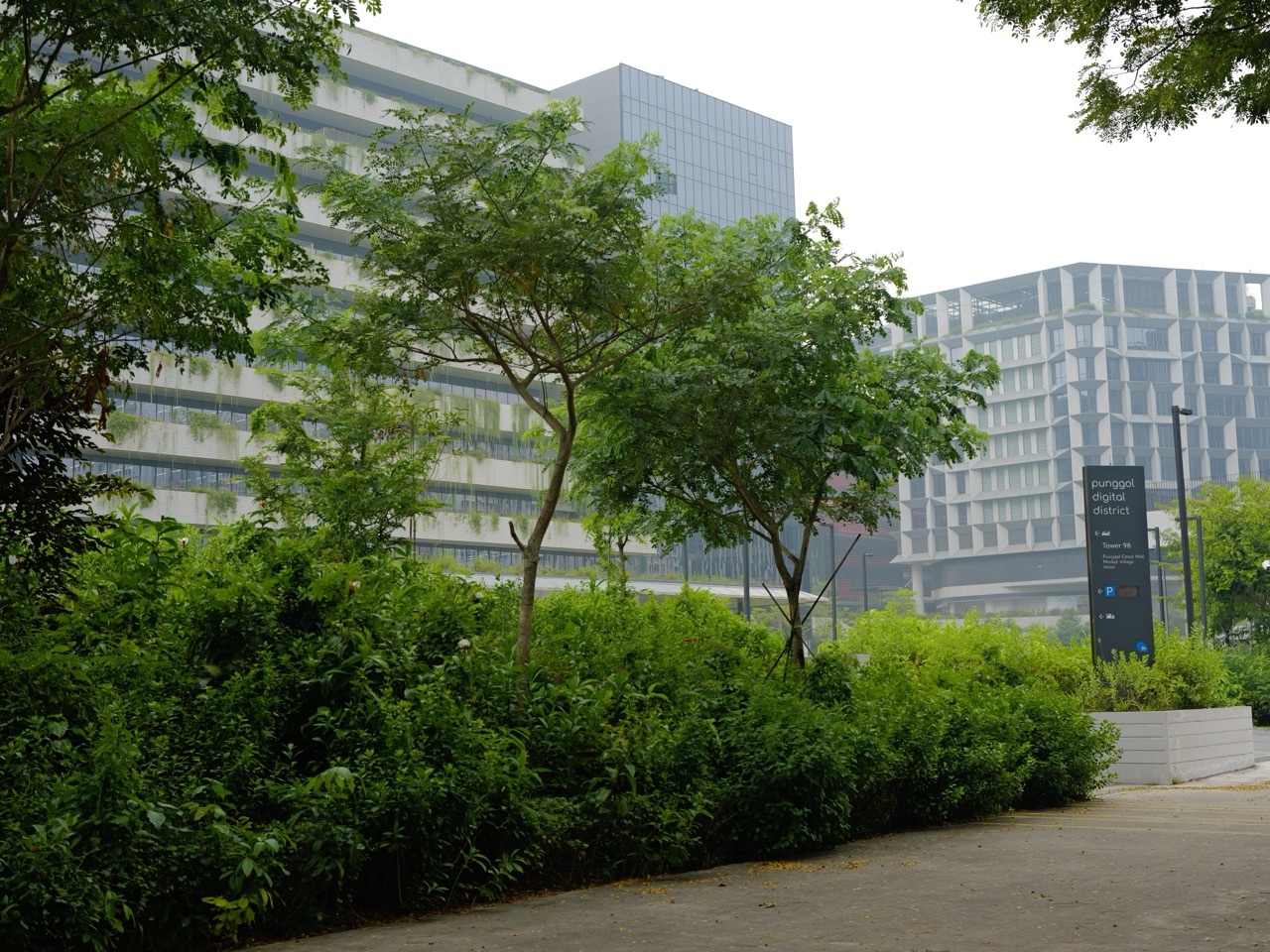

Singapore Education 2027: Data centres are physical facilities that support cloud services, business systems, websites, applications and digital infrastructure. They combine servers, network connections, storage, electricity, cooling, fire protection, cybersecurity and reliable operations. A student who enjoys troubleshooting computers, electrical systems or structured operations can investigate an information technology or engineering pathway. For suitable ITE graduates and employees, Singapore offers a dedicated Work-Study Diploma in Data Centre Infrastructure & Operation as well as separate Cloud Management & Operations pathways. These are different technical roles and must not be confused with a generic AI course.
Quick answer: ITE’s Work-Study Diploma in Data Centre Infrastructure & Operation is a 30-month employer-linked programme at ITE College East. It covers server and storage monitoring, network installation and troubleshooting, security, power and cooling infrastructure, fire-protection systems and documentation. Its current admissions page accepts specified Nitec and Higher Nitec Engineering or Electronics & Info-Comm Technology applicants, subject to company screening; certain experienced employees have a separate route. The published 2027 Work-Study Diploma application window is 2 November 2026 to 26 February 2027. This is an application opportunity, not a guaranteed employer offer.
- Data centre technician: helps maintain equipment, cabling, hardware, operational checks and incident documentation.
- Data centre engineer: may take broader responsibility for systems, maintenance planning and technical problem-solving within role and competency.
- Cloud operations: manages virtual services, cloud platforms and automation; it is not the same as maintaining a building’s power and cooling.
- ITE route: 30-month Work-Study Diploma at College East with classroom and employer training.
- 2027 course catalogue: ITE separately lists Data Centre Infrastructure & Operation (DPDIO), Cloud Operations (DPCMO), and Cloud Infrastructure Support (DPCMOIFS).
- Practical reality: data centres operate continuously; some roles require rotating shifts including overnight work.
- Before applying: verify the chosen course code, applicant qualification, employer, training pattern, assessment and safety responsibilities.
Why does a data centre matter to ordinary residents?
A resident may use online banking, hospital appointment systems, school learning platforms or digital identity services without seeing the equipment supporting them. Those services depend on networks and physical systems that must remain available and reliable. Data centres are one important part of that infrastructure. A failure can affect organisations and users far beyond the building where it occurred.
The work is not simply ‘keeping a computer on’. A data centre must manage electrical supply, backup arrangements, heat, environmental conditions, network connectivity, security and maintenance procedures. A server can be functioning perfectly while a cooling failure threatens the equipment. A network can be available while a storage issue affects the application. An employee needs to understand the relationship between these systems.
This is why data centre careers can suit students with different technical interests: information technology, electronics, mechanical or electrical engineering, facilities maintenance, system monitoring and disciplined operational management. Course selection depends on the intended responsibility.
A server room, a cloud service and a data centre are not identical
A server is a computer or system providing resources to other systems. A server room is a facility housing equipment, usually on a smaller scale than a dedicated commercial data centre. A data centre manages large-scale physical and IT infrastructure with appropriate environmental, security and operational controls. A cloud service offers computing, storage or related capability through a service model that can be backed by many physical facilities.
These definitions prevent a common confusion. Learning to use cloud software does not make someone qualified to maintain high-voltage distribution or industrial cooling systems. A facility specialist who is experienced in electrical infrastructure may not automatically understand a cloud platform’s identity or automation settings. They can collaborate, but their training and professional scopes differ.
ITE Work-Study Diploma in Data Centre Infrastructure & Operation
ITE lists a 30-month programme at College East for eligible entrants who want to work with data centre infrastructure. The curriculum involves system and network monitoring, equipment maintenance, IT and facility incident troubleshooting, fire protection, power and cooling inspections, and appropriate security measures. Students also learn to maintain accurate records, drawings, manuals and standard operating procedures.
ITE’s programme describes work such as maintaining servers and components, managing data and power cables, controlling inventories, and coordinating certain activities with approved contractors. These duties are often routine until a problem arises. Then the importance of the records, checklists and escalation processes becomes clear. A technician who makes a quick undocumented change may make the next failure more difficult to diagnose.
The programme’s work-study schedule uses block-release training, with blocks of classroom teaching at ITE alternating with workplace periods. This is not necessarily one day every week, as in some other work-study diplomas. A candidate should read the actual pattern before assuming they can keep a separate weekday class or fixed office-hours commitment.
What kind of employer could be involved?
ITE’s current page names partner organisations such as Racks Central, 1-Net, Equinix and Microsoft. A more recent published Work-Study Diploma partner list includes Equinix, ST Telemedia Global Data Centres and Microsoft Singapore for the Data Centre Infrastructure route. These are examples of participating employers, not proof that every company has vacancies for every applicant or that a student can select a particular job location.
A candidate must be offered a suitable employer-linked place and satisfy the relevant company screening. The employer may require background checks, shift readiness or other work conditions. An ITE programme does not guarantee a permanent appointment, a particular salary or assignment to a facility near the student’s home.
For North-East families, this distinction matters. Studying at ITE College East does not mean the workplace will be in the same area or in Punggol Digital District. The actual employer and facility location should be confirmed before the student accepts the programme.
Shift work is a real feature of some data centre jobs
The ITE Data Centre programme’s published prerequisites mention willingness to work 12-hour rotating shifts supporting 24/7 critical facilities. That requirement can affect commuting, sleep, family commitments and study routines. It does not mean every employee on every team will always have the same roster, but it is a condition applicants should investigate seriously.
A technically capable student who cannot maintain adequate rest under rotating shifts might prefer a related IT operations or software role with a different timetable. The right course should fit both the person’s learning goals and the realities of the occupation.
Eligibility for the ITE programme
The current ITE page identifies applicants from Nitec Engineering and Electronics & Info-Comm Technology courses with a relevant GPA threshold, as well as eligible Higher Nitec graduates from those schools. It requires company screening and interview. Another route covers certain in-service employees with recognised literacy and numeracy equivalence, at least two years of relevant full-time work, and employer endorsement.
Students should use the exact 2027 course code DPDIO and current admissions instructions. Do not infer that possession of any Nitec, diploma or work experience automatically grants a place. The employer’s requirements and ITE’s formal eligibility rules are part of the offer.
The 2027 Work-Study Diploma catalogue was updated in November 2026 and confirms that Data Centre Infrastructure & Operation is among the offered specialisations. This is more reliable than an undated course listing because some other work-study programmes in the catalogue are explicitly marked as not offered for 2027.
Cloud Management & Operations is a separate route
ITE’s catalogue also lists Cloud Management & Operations (Cloud Operations) and Cloud Management & Operations (Infrastructure Support). Both are 30-month work-study routes but their emphasis differs. Cloud Operations focuses more on configuring, administering, maintaining and automating cloud services; Infrastructure Support focuses on supporting computing infrastructure, troubleshooting and systems administration.
Someone interested in how web applications are deployed might prefer the Cloud Operations pathway. A learner who wants to maintain servers, power and cooling systems could be more attracted to Data Centre Infrastructure. The appropriate choice depends on the job roles, prior qualification and applicant’s interest.
Cloud computing also involves system permissions, data privacy, service availability and information security. A person working with a cloud environment must follow the employer’s authorisation procedures, rather than use real company or student accounts for unsupervised experiments.
Data centre engineering is partly electrical and mechanical
A data centre relies on stable electrical distribution, temperature control and environmental systems. Equipment produces heat, and maintaining an appropriate operating environment is essential. Some technical roles involve monitoring power distribution, cooling plant, fire protection or physical security. But electrical work and other regulated activities must be carried out by appropriately qualified or authorised professionals.
An IT technician’s course does not automatically confer a Licensed Electrical Worker qualification. Similarly, being able to read a fire protection panel does not authorise a person to perform every regulated fire-system task. A good workplace teaches the limits of each role and when to escalate.
Students interested in the physical infrastructure of data centres may also examine Engineering diplomas, facilities management and later university study in Electrical, Mechanical or Computer Engineering. Compare the modules; an Information Technology diploma may not offer the same depth in power systems as Electrical Engineering.
What data centre operators actually monitor
- Server and storage health: warning signals, component failures, updates and hardware inventory.
- Network services: connectivity, cabling, equipment configuration and performance under approved procedures.
- Environmental conditions: cooling, temperature, humidity and related system monitoring.
- Power and redundancy: basic understanding of the equipment and authorised escalation when power conditions change.
- Physical and information security: facility access, equipment custody, change logs and protection of data.
- Incidents: clear records of what occurred, which systems were affected, the response and any needed follow-up.
The role of documentation and change control
A data centre may contain thousands of components. If a cable is moved or a device is replaced, the record of what changed helps the next technician understand the facility. In a complex environment, an undocumented change can create a difficult fault even when the equipment was previously functioning.
Change control is a method for reviewing and authorising modifications before they affect operations. It can involve approvals, impact assessment, planned timing, a rollback strategy and post-change checks. Students should understand the principle before attempting practical changes. A live business service is not an appropriate place for unsupervised experimentation.
Cloud, AI and cybersecurity overlap but are not interchangeable
AI applications depend on computing infrastructure. Cybersecurity protects systems and information against misuse. Cloud teams deploy and maintain services. Data centre teams maintain essential physical and operational infrastructure. These fields work together, but professional competence in one does not prove competence in all of them.
An AI engineering student might know how to run a model without knowing how to repair a cooling failure. A data centre engineer might understand a hardware issue without being able to evaluate whether a machine-learning output is biased. Course choice should follow the kind of problem the learner wants to solve.
Energy, cooling and sustainability
Data centres consume electrical energy and require cooling. Sustainability can involve efficient equipment operation, appropriate temperature management, reliable monitoring and decisions about how resources are used. These are technical and commercial trade-offs rather than a simple competition to report the lowest possible electricity figure.
A student may encounter the term Power Usage Effectiveness (PUE), a metric relating total facility energy consumption to energy used by IT equipment. A lower figure can indicate more efficient supporting infrastructure under a consistent measurement method, but it does not by itself show everything about a facility’s environmental impact. The type of equipment, utilisation, reporting boundary and energy source also matter.
A better learning exercise is to explain what a measurement represents, how it was obtained and what assumptions support a comparison. Claims that a particular local facility is ‘the greenest’ require current, reliable evidence and should not be invented from a building photograph.
What to study in Secondary 1–4
- Mathematics: develop algebra, ratios, units, graphs, statistics and an understanding of rates of change.
- Science and Physics: learn relevant ideas about electricity, energy, heat and measurement.
- English: practise following instructions precisely and recording technical observations clearly.
- Computing: understand hardware, operating systems, networks, files and the responsible use of information.
- Design thinking: explain what the system should do, how it can fail and how a test would detect the failure.
- Professional conduct: recognise that business systems, passwords, server rooms and private data require authorisation.
A safe school project: a fictional server health report
Create a spreadsheet containing thirty fictional server-status observations, each with a timestamp, invented device ID, temperature value, network status and a simple warning label. Ask the student to calculate average values, identify an outlier and explain what additional information would be needed before declaring a hardware fault.
Then introduce a second fictional variable: the cooling system was temporarily in maintenance mode. The student should revise the possible explanations and document the uncertainty. This teaches data reasoning, record keeping and appropriate escalation. It does not require a connection to any real server or facility.
The project may also ask what records would be needed if a component were replaced, or how a change should be communicated to a next shift. Such habits are more relevant to dependable infrastructure work than an impressive dashboard that nobody can explain.
How to compare ITE, polytechnic and university options
A student with Nitec or Higher Nitec qualifications may be ready for the ITE Work-Study Diploma. A student still in secondary school may first need a suitable Higher Nitec, Engineering or ICT diploma. University pathways such as Computer Engineering, Information Systems, Electrical Engineering or related fields offer additional depth according to the institution’s curriculum. These qualifications are different stages, and admission depends on course prerequisites.
The first SEC graduates in 2027 will use the new post-secondary admission arrangements from 2028. They should not attempt to apply for a 2027 Work-Study Diploma on the assumption that they already hold an ITE qualification. A course intended for ITE graduates has a different applicant profile from a Secondary 4 leaver.
A practical seven-step plan for 2027
- Identify whether the desired work is physical data centre operations, network support, cloud operations, cybersecurity or software development.
- Check the 2027 ITE course code and eligibility, including any Nitec GPA or relevant Higher Nitec qualification.
- Study the current application window and distinguish programme acceptance from an employer job offer.
- Ask about 12-hour shifts, workplace travel, block-release teaching, on-the-job supervision and equipment access.
- Compare the course’s balance of servers, networks, power systems, cooling and software automation.
- Calculate fees, wages where applicable, equipment and commuting costs using confirmed—not assumed—figures.
- Plan progression and alternative courses if employer selection or the first choice is unsuccessful.
What not to do
- Do not treat the ITE Data Centre diploma as a general university Computer Science degree.
- Do not assume the Data Centre and Cloud Operations programmes have identical subjects or training patterns.
- Do not assume a work-study company’s appearance on a published partner list guarantees a job or campus.
- Do not ignore rotating shifts and safety obligations when deciding whether a course is sustainable.
- Do not assume a technician may carry out regulated electrical or fire safety work without appropriate qualifications.
- Do not use confidential company server or customer data in informal projects.
- Do not confuse the first 2027 SEC examination cohort with applicants who already have Nitec or Higher Nitec qualifications.
Frequently asked questions
Does ITE have a data centre course for 2027?
Yes. ITE’s November 2026 Work-Study Diploma catalogue includes Data Centre Infrastructure & Operation, code DPDIO, a 30-month programme at College East for eligible applicants who also pass employer screening.
Does a student have to work overnight?
ITE’s current course page specifically mentions willingness to work 12-hour rotating shifts to support a 24/7 operation. Actual rosters depend on the employer and role, and must be confirmed before accepting.
Is cloud computing the same as data centre maintenance?
No. Cloud Operations focuses on configuring and maintaining services and infrastructure through cloud technologies. Data centre operations also involve physical systems such as power, cooling, cabling and security.
Can a Secondary 4 student directly enter this Work-Study Diploma?
The published programme is mainly designed for eligible ITE graduates and certain in-service employees, not for someone without the qualifying previous education or experience. The student should first plan the appropriate foundational course.
Official information and related eduKate guides
- ITE — Work-Study Diploma in Data Centre Infrastructure & Operation
- ITE — 2027 Work-Study Diploma course listing and codes
- ITE — Data Centre 2027 participating employer examples
- ITE — Higher Nitec graduates’ 2027 application windows
- ITE — Work-Study Diploma in Cloud Management & Operations (Cloud Operations)
- ITE — Work-Study Diploma in Cloud Management & Operations (Infrastructure Support)
- ITE — Higher Nitec in IT Systems & Networks
- eduKate Punggol — Cybersecurity and ICT qualification routes
- eduKate Punggol — AI and Data Analytics
- eduKate Punggol — Semiconductor engineering and work-study
- eduKate Punggol — ITE and further education choices
Updated 13 November 2026. The published ITE 2027 catalogue and application windows are a guide to current opportunities; employer places, shift rosters, admission approval, qualifications and future intakes must be confirmed directly with ITE and the participating organisation.


