

Singapore Education 2027: Cybersecurity appears in course titles at ITE, polytechnics and universities, but the qualifications teach different levels of knowledge and prepare students for different roles. A secondary-school student considering computing, a Higher Nitec graduate seeking a related diploma, and a working adult looking for technical retraining should not use the same admissions checklist. This guide connects the stages and explains what a learner actually needs to understand before claiming an interest in protecting computer systems.
Quick answer: ITE offers a recognised Higher Nitec in Cyber & Network Security with published two-year and three-year routes. Its current course pages say that from the AY2027 polytechnic intake, Higher Nitec graduates from this course with net GPA 2.5 or above may apply for Year 1 of a related polytechnic diploma, subject to course mapping and admissions. Singapore Polytechnic’s 2027 Common ICT Programme names Cybersecurity & Digital Forensics among the specialisations students can explore. At degree level, related computing and information-security qualifications have their own entry and work-study arrangements.
- Secondary-school foundation: English comprehension, Mathematics, Computing where offered, logical reasoning and disciplined problem solving.
- ITE: networked computer systems, devices, servers, virtualisation, security infrastructure and monitoring security events.
- Polytechnic: more detailed study of networks, software, security operations, investigation and digital forensics within a diploma curriculum.
- University: computing, information security, mathematical reasoning, software systems and deeper theoretical and applied work.
- Career: support and analyst roles can be relevant early destinations, while senior specialist work takes sustained competence and experience.
- Important date distinction: AY2027 admissions are not the same thing as the first 2027 SEC graduates applying for post-secondary education in January 2028.
What does a cybersecurity worker actually protect?
Cybersecurity is about protecting systems, information and services against unwanted access, disruption, misuse and damage. The real work may include understanding network traffic, identifying weak configurations, monitoring events, investigating suspicious behaviour, documenting risks and recommending changes. It also involves policy, communication and the judgement to distinguish an important signal from ordinary system activity.
A student may be attracted to cybersecurity by stories of hackers breaking into systems. That is a misleading starting picture if it suggests that the profession is about testing any computer one can reach. Legitimate security work requires clear authorisation, defined scope, responsible handling of data and accurate documentation. A useful classroom project can involve a deliberately isolated practice environment, with no interference in other people’s accounts or networks.
The capacity to explain a system is often as important as the ability to run a tool. An analyst who sees unexpected traffic must decide what it means, how confident they are and what evidence supports their conclusion. Guessing can disrupt legitimate services; ignoring a genuine incident can create harm.
ITE Higher Nitec in Cyber & Network Security
ITE’s official course-finder lists Higher Nitec in Cyber & Network Security as a full-time course at ITE College Central, East and West. A published two-year pathway is described as 24 months, while the three-year version is described as 36 months. Different candidate qualifications and entry routes determine eligibility. Applicants should not assume they can select the shorter duration merely because they prefer it.
The taught areas include managing end-user systems and networked servers, network configuration and operations, support for virtualised infrastructure, security measures, vulnerability assessment and monitoring cybersecurity operations. This is a foundation in how computer systems work. A student who cannot explain an IP address, the relationship between a device and a server, or what a security log records will benefit from understanding those basics before learning advanced technical terminology.
ITE’s pages publish specific GCE O-Level and N(A)-Level entry conditions and other qualifying routes for Nitec holders. Eligibility based on the newer SEC qualifications will be governed by the relevant later admissions guidance. A candidate should check the exact year, Mathematics and English conditions and other approved subjects, not copy someone else’s old qualifications.
What the 2027 GPA progression rule actually means
ITE’s course pages explicitly state that from the AY2027 polytechnic intake, Higher Nitec graduates in Cyber & Network Security with net GPA of 2.5 and above may apply for first-year admission to a related diploma at polytechnic. Three words in this rule matter: net GPA, may apply and related. The rule is not a guarantee of a place, nor is it permission to enter every diploma at any campus.
A student must check the official Joint Polytechnic Admissions course mapping and the current admissions exercise. The institution may require additional course-specific conditions, and places can be competitive. The right planning question is not merely ‘Can I get 2.5?’ but ‘Which diploma do I want to progress to, what higher result would improve my competitiveness, and which foundational skills will I need there?’.
ITE also identifies possible Work-Study Diploma progression routes, including Cyber Security & Forensics, Cloud Management & Operations and other relevant technical fields. These are conditional alternatives for eligible candidates; a student interested in workplace learning should check qualification requirements and employer arrangements before ranking a work-study route against a full-time polytechnic diploma.
2027 polytechnic courses: direct specialisation or Common ICT?
Singapore Polytechnic’s Common ICT Programme has a published 2027 course page describing a route that introduces several ICT areas before students select a discipline. The page lists Applied AI & Analytics, Cybersecurity & Digital Forensics and Computer Science as the specialisation options after an initial exploratory period. The exact allocation rules and available places must be confirmed with the institution.
For a student who knows they enjoy computers but cannot yet distinguish data science from cybersecurity, a common programme can provide structured exploration. But it is not a free reservation for any preferred specialisation. Read the programme’s admission criteria, the timing of the choice and how the institution allocates the subsequent diploma path.
Singapore Polytechnic also identifies its separate Diploma in Cybersecurity & Digital Forensics, course code S54, in its 2027 post-secondary course information. Other polytechnics have their own computing, IT, security and related programmes. Similar titles do not establish identical modules or learning outcomes.
How cybersecurity differs from AI and software engineering
Cybersecurity often intersects with programming, network administration, operating systems and data analysis, but the main questions differ. A software developer asks how to build a reliable application; a security specialist asks how it can be compromised, what risks that creates and how those risks can be reduced. A data analyst investigates patterns and measures. An AI specialist develops or evaluates models. Real teams may need all four forms of expertise.
For example, a student could build a small, isolated web application for a school project. In software engineering, success might mean that users can log in and save a record. In cybersecurity, the next questions are whether passwords are handled safely, whether the program limits access to authorised users, and whether an accidental exposure can be detected. That thinking requires first understanding what the application is supposed to do.
A student who learns only the names of popular security tools may be less prepared than one who knows networking fundamentals, basic scripting, operating system processes and documentation. The tool is not the principle. Build the mental model first.
University routes and work-study degrees
A university computing or information-security programme usually demands deeper mathematics, programming, algorithmic reasoning and systems knowledge. SkillsFuture’s Work-Study Degree page lists, for example, the NUS Bachelor of Computing (Information Security) among the programmes participating in work-integrated learning arrangements. That does not mean every student automatically receives a sponsoring employer, admission or the same placement terms.
The Singapore Institute of Technology also publishes a Bachelor of Science (Honours) in Applied Computing via a Competency-based Stackable Micro-credential (CSM) Pathway for working professionals. Its published information describes topics including computing, machine learning and cybersecurity, with a modular structure supporting continued employment. The programme page showed a January 2027 intake and an application window in 2026, which should be treated as a specific published cycle rather than an always-open admission route.
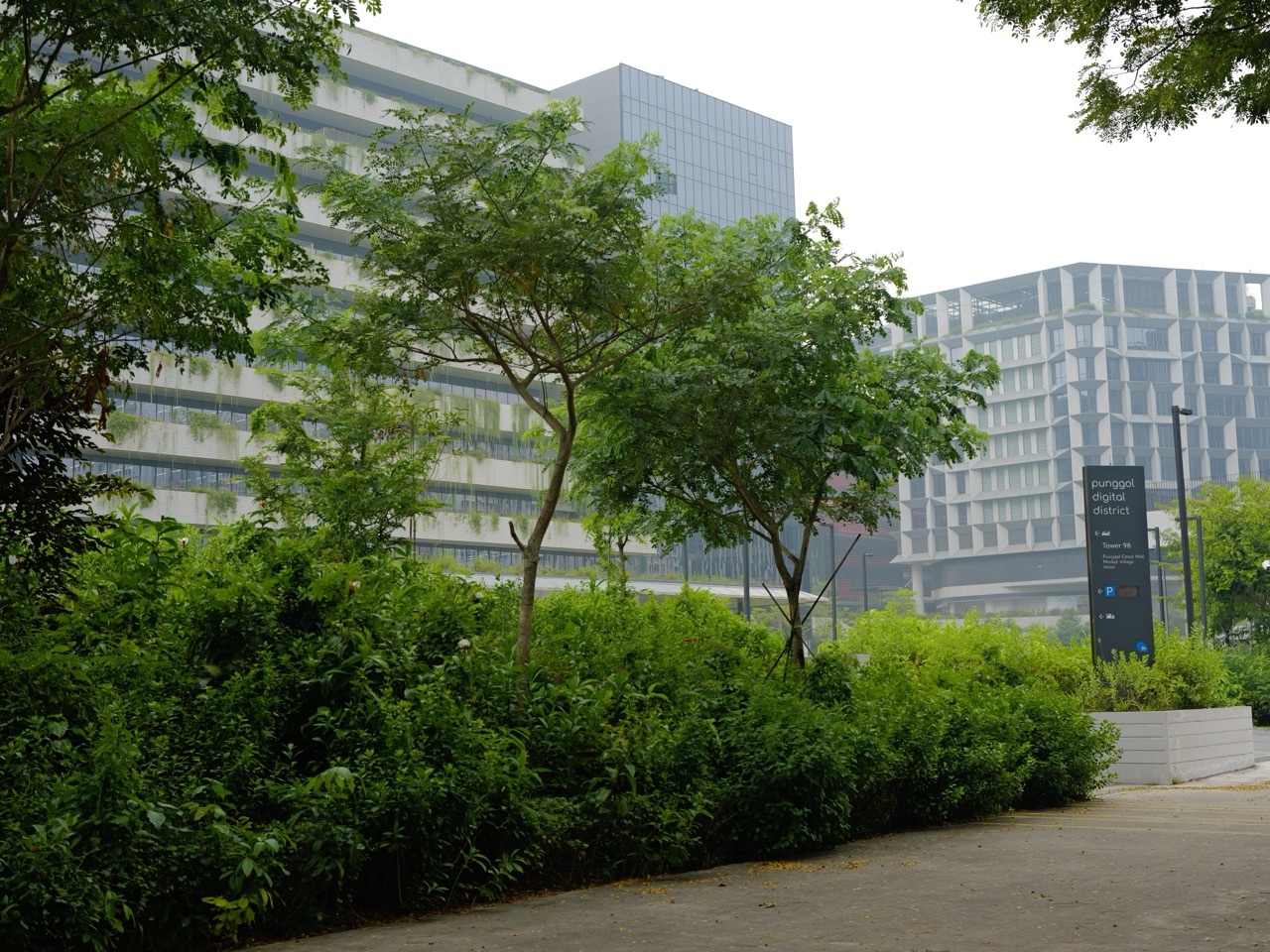
SIT’s Punggol campus makes applied university education particularly visible to North-East residents. But travel convenience should be considered after checking that the qualification, delivery mode, professional goals and prerequisites are appropriate. A computer security specialist may also need work experience, industry certifications and continuing study after graduation.
Skills to build during Secondary 1 to Secondary 4
- English: read technical instructions accurately and learn to write a clear explanation of an issue, what was tested and what remains uncertain.
- Mathematics: strengthen fractions, ratios, algebra, functions, basic statistics and logical reasoning appropriate to the subject level.
- Computing: learn fundamental programming constructs, data representation and debugging where school or safe learning resources allow.
- Networks: understand at a conceptual level how devices, addresses, servers and services communicate.
- Cyber safety: distinguish permission-based testing from unauthorised access. Use only owned or explicitly approved practice systems.
- Systems thinking: ask what an application is supposed to do, what could go wrong and how a change can be checked.
- Documentation: keep a simple project log that records decisions, errors, fixes and the evidence that a fix worked.
A harmless practical learning example
A beginner can create a local, offline spreadsheet that tracks fictional system events and use it to practise identifying unusual patterns. The task might be to spot repeated failed login attempts in simulated data, distinguish them from ordinary activity, and explain why further checking would be needed. The learner can write a short report identifying the observation, possible explanations and a sensible next verification step.
This exercise develops reasoning without scanning live websites, collecting anyone’s private data or interfering with real networks. It also demonstrates a professional habit: a pattern is a reason to investigate, not permission to accuse someone of wrongdoing or claim a confirmed breach.
Preparing a convincing portfolio for 2027 course applications
For aptitude-based admissions where a portfolio is relevant, show work that the student actually completed. A small coding application with a clear readme, a documented network simulation or a responsible security-awareness resource can be credible. Explain the original problem, decisions made, challenges, corrections and what the student would improve next.
If the project was done in a group, describe the student’s own contribution honestly. If the work used external libraries or tutoring, disclose that involvement accurately. Panels may ask detailed questions, and the applicant should be able to explain the technical principles without depending on a rehearsed script.
What parents should compare before enrolling
- Confirm the correct entry year, qualifying certificate, subject-level eligibility and minimum grades.
- Read the module list. Find out whether the course is mainly IT operations, security investigation, secure programming, network engineering or something else.
- Ask about laboratory facilities, approved practice environments, software requirements and the cost of a suitable laptop.
- Compare direct diploma entry, common ICT exploration, ITE, Work-Study Diploma and university routes as separate options.
- Check progression and employment claims using the official course page. A qualifying GPA creates an application opportunity, not a guaranteed placement.
- Discuss safe conduct and the need for authorised technical testing.
- Plan study time for Mathematics, English and foundational Computing rather than buying advanced materials prematurely.
What not to do
- Do not assume all computing, AI and cybersecurity courses teach the same skills.
- Do not assume the ITE net GPA 2.5 progression rule guarantees any polytechnic diploma.
- Do not treat the 2027 SEC examination year as the AY2027 post-secondary intake for the same students.
- Do not describe cybersecurity education as permission to attack or test public systems without written authorisation.
- Do not use real customer or school data in an informal student security experiment.
- Do not purchase costly tools or certifications without examining whether the intended course requires them.
- Do not trust claims that a short cybersecurity course guarantees a senior specialist job.
Frequently asked questions
Can Higher Nitec Cyber & Network Security graduates enter a polytechnic in 2027?
ITE says those with net GPA of 2.5 and above may apply for Year 1 of related diploma courses from the AY2027 intake, subject to mapping, eligibility and available places. It is not an automatic offer.
Is the SP Common ICT Programme the same as a Cybersecurity diploma?
No. The Common ICT Programme provides an exploratory entry route, followed by selection into a specialisation under the institution’s rules. A direct cybersecurity diploma is a specified course from admission.
Does cybersecurity require programming?
Many technical roles benefit from programming, scripting and systems knowledge. Course requirements vary, but the ability to reason about software and operating systems is valuable even in security operations.
Can students try cybersecurity safely before choosing a course?
Yes. They can use controlled classroom simulations, sample data, approved practice exercises and education platforms within the rules. Avoid testing systems belonging to other people or organisations without permission.
Official links and related eduKate reading
- ITE — Higher Nitec in Cyber & Network Security (24-month pathway)
- ITE — Higher Nitec in Cyber & Network Security (36-month pathway)
- Singapore Polytechnic — Common ICT Programme and 2027 course options
- SIT — Applied Computing CSM degree for working professionals
- SkillsFuture — Work-Study Degrees and university course examples
- MOE — First SEC results and 2028 post-secondary admissions exercise
- eduKate Punggol — 2027 Secondary G1 G2 G3 subjects
- eduKate Punggol — 2027 Polytechnic diplomas and EAE
- eduKate Punggol — 2027 ITE Higher Nitec routes
Information reviewed on 4 November 2026. Course availability, 2027 admissions, GPA requirements, progression lists and work-study arrangements are subject to official updates. All technical projects should be conducted legally in controlled or authorised environments.


