
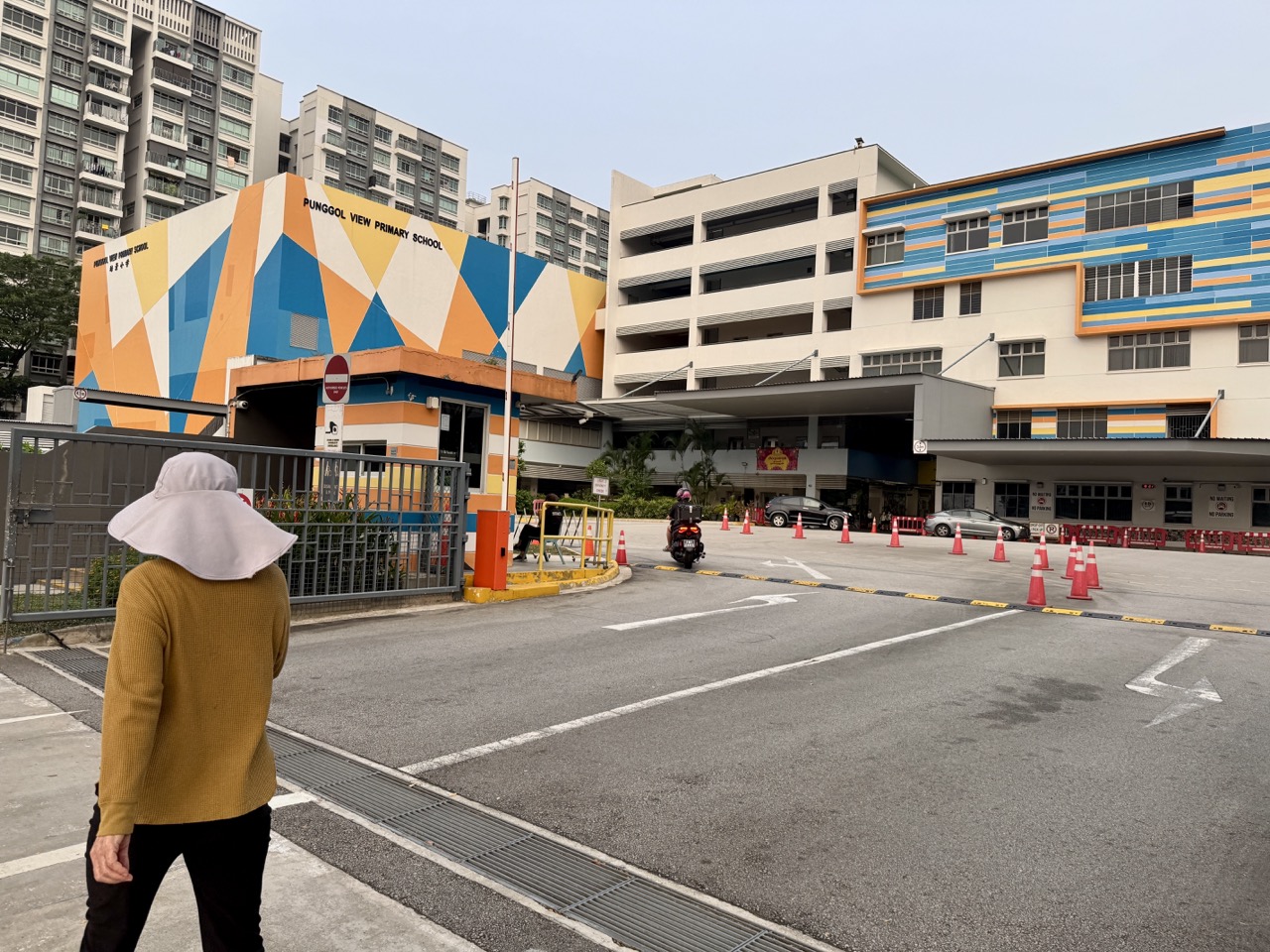
The 2026 PSLE results are tentatively due between 24 and 25 November 2026, with the exact date subject to SEAB confirmation. If a parent believes a subject grade does not accurately reflect the child’s examination performance, SEAB allows an appeal for review of PSLE results through the primary school. The application and payment must reach the school within five working days from the day results are released; late requests are not accepted. SEAB says the outcome is communicated through the school within six weeks after the appeal closing date. This is a formal check of results, not an opportunity to select a preferred Achievement Level.
A PSLE results review is not the same thing as appealing a Secondary 1 school allocation. The first asks whether an examination subject result was accurate; the second concerns a school place after the posting exercise. Parents should keep ordinary Secondary 1 posting choices and deadlines moving even if they request a review. This article explains who to contact, what an independent review involves, what cannot be requested, and how Punggol families can protect the child’s wellbeing while waiting.
- Release date: 24–25 November 2026 remains a tentative results window until SEAB confirms the specific date.
- Appeal route: ask the child’s primary school to submit the PSLE results review application.
- Deadline: within five working days from results release; confirm the school’s own cut-off time for collecting and forwarding requests.
- Payment: a fee is charged per subject; ask the school for the current amount and payment method.
- Scope: SEAB describes independent senior-marker re-marking and thorough checks of mark entry accuracy.
- Outcome: normally through the primary school within six weeks after the appeal submission deadline.
- No scripts for viewing: SEAB does not release marked PSLE answer scripts or detailed raw marks for inspection.
- No promise of change: many properly awarded results remain unchanged after review.
- Separate school application: submit the ordinary Secondary 1 posting choices on time where eligible.
- Protect privacy: never upload the child’s result slip or identification details to unverified ‘appeal consultants’.
Why a parent may consider a PSLE results review
A child may perform consistently well in one subject during the school year, feel confident after the national examination, then receive a much weaker grade than expected. The discrepancy deserves a calm examination of the facts, not automatic accusations. School assessments and PSLE papers are not identical, but a parent may still reasonably ask whether SEAB’s formal results review mechanism is appropriate for that subject.
The important first step is to identify the specific subject that causes concern. Ask the child and school what is actually known: the reported Achievement Level, whether the subject is Standard or Foundation, and whether any approved examination arrangement or absence affected the result. Keep feelings and administrative facts separate. A formal review can verify an awarded result; it cannot substitute for an unrelated school-admission appeal.
What exactly is an appeal for review of PSLE results?
SEAB defines a results review as checking whether the issued result is correct. Its public FAQ states that an independent senior marker, different from the original marker, undertakes re-marking and checks the accuracy of mark entries for the relevant subject paper or papers. That makes it a genuine formal quality-control procedure rather than merely a parent receiving another copy of the result slip.
However, the existence of a re-marking process does not imply that the original marking was wrong. National examinations already use controls and checking processes before release. A review may confirm the existing result. Parents should therefore think of the application as a verification request based on genuine concern, not a purchase of a higher AL or a second chance to answer questions.
Is this the same as a request to see the PSLE paper?
No. SEAB explicitly states that marked PSLE answer scripts are not released for viewing because national examination grading and mark schemes are confidential. A parent cannot normally obtain a photocopy of a marked essay, Science response or Mathematics working simply by paying a review fee. Nor does the formal appeal give a family unrestricted access to the marks assigned by individual examiners.
This distinction prevents unnecessary frustration. Parents may wish to discover exactly which comprehension answer lost marks or whether a composition deserved a different score, but the review procedure checks the result using authorised examiners rather than supplying a private teaching report. If the family’s aim is future learning rather than verification, schoolwork and teacher feedback are better diagnostic starting points.
Can a parent request the exact raw marks in every PSLE subject?
SEAB’s FAQ says detailed national-examination marks and marking information are not released for private inspection. The official PSLE result slip reports the prescribed subject grades and overall PSLE score. An Achievement Level covers a band of achievement; it is not a disclosure of the exact raw mark or the number of incorrect questions.
Do not trust a paid service claiming to recover the exact raw marks from an AL number. Two pupils can receive the same AL with different marks within the band. A parent can use the AL to interpret the student’s readiness for secondary learning, but cannot reverse-engineer a precise number of lost marks from it. The normal appeal process will not transform the result slip into a line-by-line script.
What is the deadline for the 2026 review?
SEAB’s current PSLE FAQ states that the appeal application and payment must be submitted through the child’s school within five working days from the day of results release. The exact 2026 release day was still tentative as at 6 November. As a result, publishing a single exact appeal deadline before the official results announcement would be irresponsible.
Ask the school for its own practical submission and payment cut-off as soon as results are issued. The school needs time to process the request and send it through authorised channels. Treat the school-specified closing time as binding for family planning. Do not wait until the last hour because one social-media post counts weekends differently; the official school instructions prevail.
Is there a fee and can parents appeal multiple subjects?
SEAB charges an appeal fee for each subject submitted for review. Therefore, a family concerned about English and Science should ask the school how those two requests are recorded and what the total payment would be. The fee and payment process for the current exercise are communicated through official channels. Do not assume the amount from a previous cohort remains unchanged in 2026.
A parent might want to appeal all four subjects simply because the overall score is disappointing. That can create fees without any specific reason to question each subject result. Review the individual grades thoughtfully and ask which subject result raises a genuine accuracy concern. The decision should be deliberate, evidence-aware and proportionate rather than based on the hope that one of several paid requests will improve the total.
What if the school cannot answer immediately?
The first person who picks up the school telephone may not handle national-examination appeals. Ask politely for the staff member or examination coordinator responsible for PSLE results reviews and the written submission instructions. State the candidate’s identity privately through the school’s official channel and identify the subject grade being queried. A teacher may need to consult the school’s examination team before confirming the next steps.
Record the date of the call, the formal deadline and any documents or payment details. Do not assume the appeal has been lodged merely because the family expressed dissatisfaction in a conversation. Ask how the school confirms receipt of the application. A short written checklist will be more reliable than several family members making different enquiries without sharing notes.
What happens after the school submits the appeal?
Once the prescribed application and payment are received, the formal review process follows SEAB’s assessment controls. The review may include re-marking by an independent senior marker and checks that marks were accurately recorded. Parents are not normally invited to debate individual marking points or appoint an examiner. The integrity of the process depends on consistent standards across candidates.
The family’s realistic role is to retain the acknowledgement, maintain contact details with the school and wait for the official outcome. A review is not made faster by publicly naming examiners or contacting multiple unrelated institutions. Meanwhile, continue ordinary schooling and posting arrangements according to published deadlines.
When will the appeal outcome be known?
SEAB’s public PSLE FAQ says the result of a review is released through the school within six weeks of the closing date for review applications. This is a processing window, not a promise that an individual parent will receive a response exactly six weeks after paying. For a late-November results release, the waiting period can overlap with school posting and the holiday season.
That overlap is why parents must not defer every Secondary 1 decision pending the review. Ask the primary school how a changed examination result, if one were to occur, would be handled within the relevant administrative framework. Do not assume an automatic change of school or that ordinary posting deadlines will pause for one family’s application.
What if the original grade is confirmed?
A confirmed grade means the formal review did not produce a change in that result. This may be disappointing, but it is not proof that the child did not work hard, nor that parents were wrong to ask a factual question. The examination authority has applied its defined verification procedure; the family should then use the actual result to plan the next education step.
The productive conversation now shifts from ‘Was the number recorded correctly?’ to ‘What is our child’s starting position for Secondary 1?’ Look at the relevant Posting Group, school’s subject levels, reading and numeracy needs, travel and wellbeing. A clear learning plan is possible even after an unpleasant surprise. The child’s identity should not be equated with the outcome of an administrative process.
What if the review leads to a changed grade?
SEAB’s review system can adjust an examination result when its formal checks justify a change, although this is not the expected outcome of every appeal. Parents should obtain the written outcome and ask the school exactly what document or result record is affected. Do not rely on a verbal claim that a friend or tutor has seen a revised grade.
Any implications for the overall PSLE score, secondary eligibility or existing posting arrangement should be raised promptly through the school and MOE’s applicable process. A revised subject result is an examination finding; reassignment to a school is a separate administrative question. Do not announce a guaranteed new place until an authorised school-posting decision has actually been communicated.
Can the awarded grade change downwards?
Some parents worry that asking for a review might create an even worse result. SEAB maintains a separate official FAQ on whether reviews can lead to downward adjustments; the answer depends on the examination authority’s published policy and should be checked directly for the child’s cohort. It would be unwise to make an unconditional promise based only on a relative’s memory.
Before paying, ask the school for the current official guidance and the consequences of a review. A family’s decision should rest on what the actual procedure permits, not stories of dramatic increases or losses of marks from overseas exam systems with different rules.
Can parents request a second review?
SEAB’s public FAQ says it does not carry out repeated reviews of a result after the formal appeal outcome, explaining that appeals already involve an independent senior-marker re-marking and thorough mark-entry checks. This means a parent should not assume there is an unlimited series of escalating appeals that can be purchased until the preferred grade appears.
If a family has a legitimate question about the outcome letter or administrative process, it can ask the primary school for clarification. But a request for explanation should not be presented to the child as a guaranteed route to another re-marking. Knowing where the defined process ends helps a family shift attention to a suitable school and new learning goals.
Is a PSLE result appeal the same as a school posting appeal?
No. A PSLE review concerns the accuracy of national examination results and is handled through SEAB and the school. A school posting appeal concerns admission or transfer after the Secondary 1 allocation, under MOE or school rules. The latter can involve the current posting-year cut-off point, programme eligibility and available vacancies. One process cannot substitute for the other.
For example, a child might agree that the awarded PSLE score is correct but dislike the assigned secondary school. That family should understand the school posting and transfer rules, not pay for a subject re-marking without an academic accuracy concern. Conversely, a child with a genuine results query should meet SEAB’s five-working-day deadline even if the family is still selecting schools.
What if the child already has a DSA-Sec placement?
An accepted DSA-Sec allocation normally brings an admissions commitment, subject to the applicable PSLE academic eligibility for the chosen school or programme. A parent concerned about one examination grade should check the DSA offer conditions and ask how the child’s actual score affects the allocation. Do not assume a review will bypass required eligibility or reopen a closed DSA preference exercise.
If the family is considering a review, keep the issue precise: which subject result requires verification and why? The primary school can advise about the application and the separate DSA implications. The receiving secondary school’s programme and admission office may also need to clarify its official commitment requirements.
Why school prelims are not definitive evidence of a marking mistake
School preliminary examinations and the national PSLE differ in question design, marking, setting and candidate experience. A child who scored 85 on a familiar school paper may perform differently on a national paper under pressure. A large discrepancy is understandably upsetting, but it does not prove that a marker made an error.
The family can still consider SEAB’s formal review if there is a genuine concern. It should not expect the prelim percentage to be substituted automatically for the national result. In conversations with the child, avoid claiming that the school or exam board must have lost marks simply because the family expected a different AL.
What if the child says a question was unfair?
Students sometimes recall a surprising question or a passage they could not interpret. National examination marking follows structured standards, but a student remembering difficulty is not the same as proof that an individual result was miscalculated. Teachers can help explain whether a topic was within the relevant syllabus and whether the child interpreted the question as intended.
If the concern is a specific examination incident rather than simply the awarded grade, tell the school the facts and ask what official incident or results-review procedure applies. Avoid combining every worry into a single emotional accusation. Different types of concerns are handled through different processes, and accurate classification helps the school respond appropriately.
A results-review scenario: English AL unexpectedly lower
Imagine a fictional student who usually enjoys reading and writing but receives an English AL two bands weaker than the family’s prediction. The parent first checks that the result slip belongs to the student and that the correct subject is being read. The family asks the school for any relevant explanation and the formal review procedure within the short application period.
While the enquiry proceeds, the family prepares a school shortlist using the actual reported PSLE score. It does not enter a hypothetical stronger result into the S1 portal or miss the deadline. If the review later changes the grade, the family asks the school how to handle the revised outcome officially. If not, the student enters secondary school with a plan to strengthen particular reading and writing skills.
A results-review scenario: two subjects seem surprising
Suppose Mathematics and Science both appear weaker than expected. A parent might be tempted to request review of every subject. Instead, write the actual reported AL beside the predicted range and note whether there were known examination circumstances such as illness or disrupted concentration. Ask the school what process applies to results accuracy and whether an incident-related request is separate.
If the family decides to seek formal reviews of two subjects, the relevant per-subject fees and deadlines must be met. The parent should keep records of both requests rather than assuming one form automatically covers all papers. This gives the family a clear administrative trail and avoids repeated calls to multiple teachers with inconsistent information.
What about Foundation subjects?
Foundation English, Mathematics, Science and Mother Tongue have their own PSLE grade scale, typically A, B and C. These grades are mapped to numerical equivalents for the overall score. A results review concerns the subject’s actual awarded grade, not an imaginary Standard-subject AL inserted into the calculation.
For example, a Foundation A maps to 6 for the aggregate; it is not Standard AL1. A parent who misapplies the mapping may think an arithmetic error has occurred when the result is actually being interpreted incorrectly. Before requesting a paid review, read the official scoring explanation and ask the school to clarify any unfamiliar notation or approved exemption.
What if the total PSLE score appears not to match?
Check the four reported subject contributions, including the prescribed conversion for Foundation grades. The ordinary total is their sum. If the child’s actual case involves Mother Tongue exemption or another approved arrangement, do not attempt to solve it using a generic worksheet. The school can explain the official result-slip notation and what any special arrangement means for scoring.
An apparent mismatch deserves immediate clarification, but the parent should first distinguish a misunderstanding from an actual clerical error. If the issue is the printed document or candidate details, ask the school what separate correction route is appropriate. The formal paid results review may not be necessary for every document query.
What documents should parents keep?
Keep a secure copy of the result slip, the school’s official appeal instructions, proof of payment where relevant, an acknowledgement of the request and any written outcome. Record the subject or subjects and the school’s deadline. Do not put the student’s NRIC or birth certificate details into public posts or parent-group messages.
Parents often lose time searching through scattered screenshots. A simple private folder titled ‘PSLE 2026 Results’ is enough. It can hold the ordinary S1 application confirmation too, clearly labelled as a different process. This organisation makes it easier to explain the status if the school contacts the family during the December holidays.
How should parents speak to a disappointed child?
The examination result is already released and the appeal, if any, is an adult administrative decision. The child does not need to defend every remembered answer during dinner. A useful message is: ‘We will check the official result carefully. We also need to choose a school where you can learn well. These are two separate tasks, and you can help with the second one.’
Allow the child to describe disappointment without promising that the grade will rise. If the child is very upset, normal food, sleep, recreation and an unhurried conversation may help more than immediate repeated examination analysis. A respectful process models how adults deal with uncertainty without blaming people they have not met.
What should Punggol parents do while waiting for an outcome?
Research eligible secondary options using the current SchoolFinder and the child’s official reported result. For each school, compare programmes, subject levels, CCAs, student support and a real journey from the family’s Punggol home. A route from Northshore may feel different from a route starting near Punggol Field, even for the same school.
Keep the school list realistic and genuinely ranked. Don’t tell a child that an appeal will definitely secure a more competitive school. If the result changes later, follow official advice about the effect on the posting process; until then, the family should make a valid application within the normal deadline.
Four-week action plan after a surprising result
Week one: collect and read the result slip, ask the school about the five-working-day review window, decide which subject if any needs formal verification, complete payment and obtain acknowledgement. At the same time, prepare the ordinary Secondary 1 posting list where the child is eligible.
Week two: continue with school research and household planning without daily speculation about the grade. Week three: respond to school posting information and start learning about the assigned school. Week four: organise the child’s transport, books, orientation and support needs. These are family stages, not SEAB’s formal review timetable; the result may remain pending beyond them.
Why repeated tutoring is not an appropriate response to an unresolved appeal
A parent may immediately enrol in several lessons because a surprising grade feels like evidence of failure. Yet the administrative question of grading accuracy and the educational question of learning gaps are separate. The receiving school’s curriculum and a diagnostic conversation with the child will determine whether any particular skill needs help.
Where the child struggles with comprehension, fractions or scientific explanation, focused teaching may be useful. Where performance is already strong and the family is merely anxious about status, more tuition can crowd out rest. Sign up for Mathematics tuition only after the student’s starting position is clear.
Frequently asked: can I appeal a PSLE result after six weeks?
No. The application deadline is within five working days from release of results, according to SEAB’s PSLE FAQ. The six-week period concerns the expected outcome after the appeal closing date, not an extra time allowance for submitting a new request.
Frequently asked: how much does a review cost?
SEAB says a fee is charged for each subject. Ask the primary school for the amount applicable to the 2026 exercise and the payment method; do not use a price copied from an old blog post.
Frequently asked: will I be able to read the examiner’s comments?
No general right to view marked PSLE scripts or confidential marking details is provided through a review. SEAB’s public FAQs explain that marking documents are not released for viewing.
Frequently asked: does re-marking mean my AL must improve?
No. An independent review checks accuracy and may confirm the original award. It is not a purchased improvement or an opportunity for the child to redo the paper.
Frequently asked: do I submit the appeal directly to the portal?
For school PSLE candidates, SEAB directs parents to apply and pay through the child’s primary school. Check that school’s current instructions rather than following a private GCE candidate tutorial.
Frequently asked: what happens if payment is late?
SEAB’s FAQ says applications will not be processed if the appeal fee has not been paid by the stipulated deadline. Confirm receipt with the primary school during the actual application window.
Frequently asked: can I appeal a school posting result at the same time?
They are different processes with different authorities and conditions. A results review asks whether the subject result was accurate; a school posting appeal concerns a later allocation.
Frequently asked: how soon can a reviewed result change my assigned school?
Ask the primary school and MOE for the applicable procedure if the official result is revised. Do not promise an automatic reassignment, a particular deadline or an available place without a current official decision.
Frequently asked: can I appeal repeatedly?
SEAB’s published FAQ states that further re-reviews are not carried out after the formal independent review, because the procedure already includes a rigorous check. Clarify any official outcome through the school.
Frequently asked: should I share the slip in a parent chat for advice?
No. Protect the child’s sensitive identity and education information. Use authorised school and SEAB channels and keep documents in a private folder.
Related PSLE guides and the next decision
Use these articles to move from the official result to the correct subject, posting and school-choice process.
- PSLE results collection and first 48 hours
- PSLE Achievement Levels and Posting Groups
- Secondary 1 posting: cut-off points and six school choices
- Primary 5 Standard vs Foundation subjects and Primary 6 preparation
- Affiliated secondary schools, first choice, reserved places and COP
- Integrated Programme vs SEC track for Secondary 1 in 2027
Official sources and related guides
- SEAB PSLE appeal procedure and five-working-day deadline
- SEAB: What a results review involves
- SEAB: Outcome within six weeks
- SEAB: Cannot view marked PSLE scripts
- SEAB: No repeated re-review after appeal outcome
- SEAB: Official 2026 PSLE dates
- MOE: Secondary 1 posting guidance
- eduKate Punggol: Results collection and first 48 hours
- eduKate Punggol: Existing PSLE results appeal guide
Fact-checked 6 November 2026. This is an independent parent guide, not a SEAB or MOE decision. The final release date, deadline and payment instructions for a candidate’s cohort must be obtained from the child’s school and the official examination authority.


