
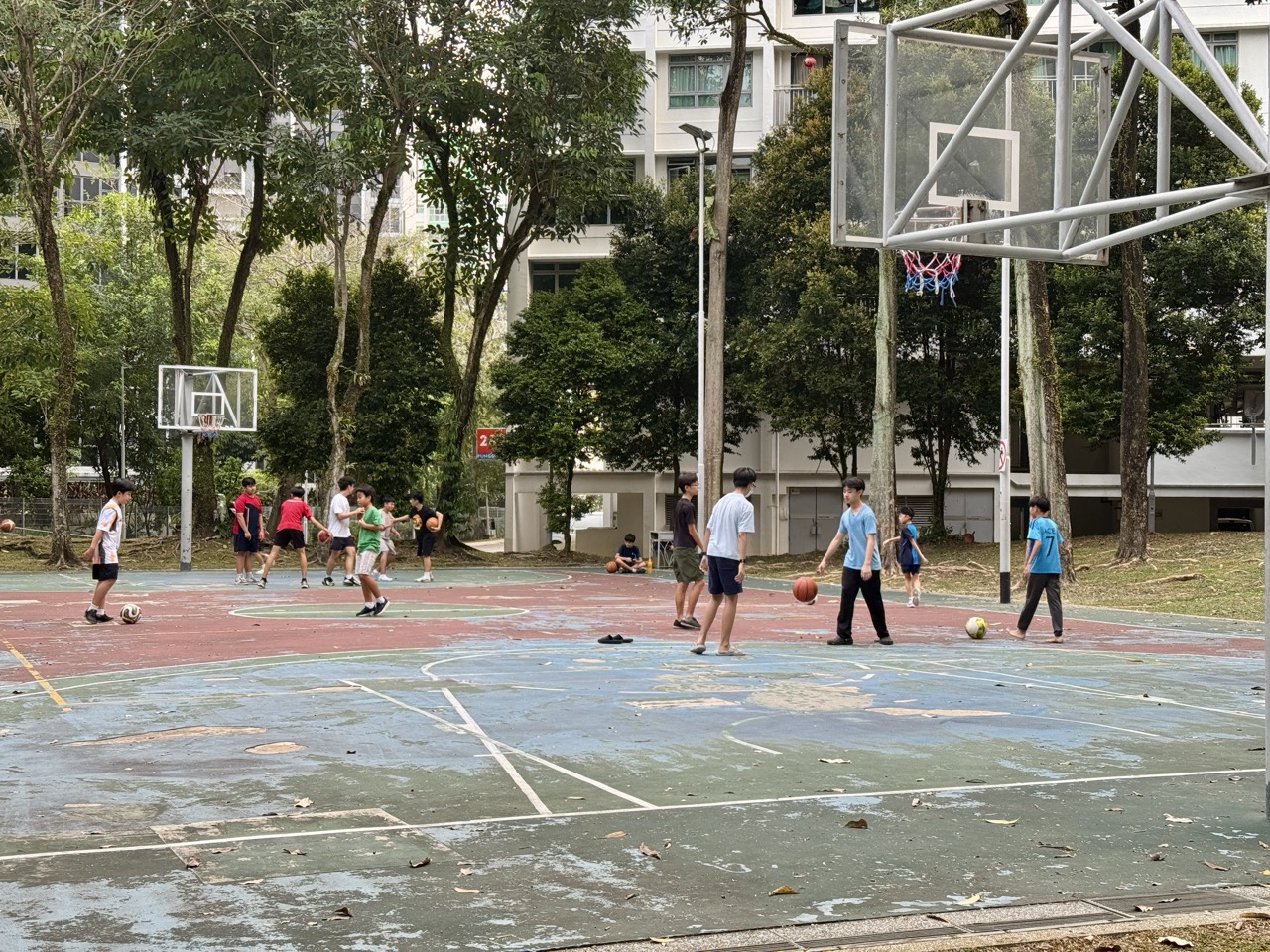
Physical Education (PE) in a Singapore secondary school helps students move confidently, participate in games and sports, understand physical fitness, manage risks and develop the habits of an active life. For a learner entering secondary school through Posting Group 1 or studying mostly G1 academic subjects, PE remains part of the school’s common holistic curriculum—not a separate national 2027 G1 SEC subject with a K-code. The priority is not to compare the teenager with classmates who run faster or play a particular sport. It is to help each student understand movement, participate safely, improve from their starting point and discover activities they can continue beyond school.
MOE’s 2024 Physical Education Syllabus began implementation for secondary and pre-university levels in 2025. At secondary level it organises learning through Physical Activity, Outdoor Education, and Physical Health and Safety. It emphasises becoming confident participants, using games-related knowledge and skills, engaging with outdoor environments and making informed choices about health and safety. Schools organise lessons, assessment and specific activities within this framework. NAPFA fitness assessment, sports CCAs and school team selection are related experiences, but they are not all the same thing as the PE curriculum. The parent should first check the school’s programme, the student’s current participation and any relevant safety or health arrangements.
- Official syllabus: MOE’s 2024 PE syllabus, implemented at secondary level from 2025.
- Three learning areas: Physical Activity, Outdoor Education, and Physical Health and Safety.
- Physical Activity: games-related skills, principles, cooperation, fitness conditioning and safe participation.
- Outdoor Education: outdoor living, sense of place and risk assessment, including age-appropriate planning and navigation.
- Physical Health: physical fitness, safety and risk management, nutrition, personal hygiene and self-care.
- NAPFA: a fitness assessment programme; it is not a 2027 national SEC G1 PE paper or a complete measure of a student’s physical education.
- CCA: an additional co-curricular opportunity, not a requirement that every student must join competitive school sport.
- For students with health or access needs: discuss appropriate participation, accommodations and safety with the school rather than forcing one uniform target.
- Parent’s first action: ask what activity is being taught and which one movement, safety or cooperation skill the student is practising.
- Home aim: make regular enjoyable movement realistic without turning family time into another examination.

What actually happens in a Secondary 1 PE lesson?
A lesson may begin by explaining the learning goal and reviewing relevant safety rules. Students warm up and practise movements or tactical decisions, apply them in an age-appropriate game or activity, receive feedback and reflect on how they can improve. The teacher can change the space, equipment, team size or game rules to help students participate. The goal may be knowing where to move to support a teammate or how to make a safe decision rather than simply scoring more points. A learner may be praised for reading a game well even if they are not the fastest runner.
PE should not be reduced to free play without teaching, nor should it be treated as another high-pressure competition every week. Students learn particular skills and concepts, practise them and demonstrate greater independence. School facilities, teacher planning and weather affect what can be offered. A Punggol secondary school with a covered court, field or other activity spaces may organise its programme differently from another school. Parents should rely on their child’s actual timetable rather than a generic online list of sports that every school supposedly plays in the same month.
Does G1 mean a different, easier Physical Education syllabus?
G1 is a General academic subject level within Full SBB, while PG1 is a Posting Group used at admission. The MOE secondary PE syllabus is a shared holistic curriculum rather than a separate SEC G1 examination subject. Teachers respond to students’ diverse readiness, abilities, interests and learning needs through appropriate instruction and activities. The fact that one student takes G1 Mathematics and another takes G3 Mathematics does not determine whether either enjoys badminton, understands teamwork or needs support with physical movement. Academic subject labels should not become sporting labels.
A learner who feels insecure during PE may benefit from a different starting challenge, clear demonstrations or a supportive partner. Another who already plays a sport may need help using skills tactically, cooperating rather than dominating, or trying unfamiliar movements. Both should be able to make progress. Parents can ask the PE teacher which learning outcome the child is working toward and what manageable practice would help. The answer should not be “your child must train like an elite athlete because secondary school has started.”
The three learning areas in the MOE secondary PE syllabus
| Area | What it teaches | Illustrative school-life activity |
|---|---|---|
| Physical Activity | Games-related concepts, fitness conditioning and safe, skilful participation | Moving into space in a small-sided game |
| Outdoor Education | Outdoor living, local places, planning and risk assessment | Planning an age-appropriate outdoor route and identifying hazards |
| Physical Health and Safety | Fitness, nutrition, self-care and risk-management habits | Explaining why warm-up, hydration and safe conduct matter |
These areas overlap. An outdoor trip can involve physical movement, navigation, group communication and safety decisions at once. A game can teach agility, communication and fair play while building fitness. A conversation about health can inform how a teenager prepares for an active afternoon. The syllabus is organised to help students connect knowledge to practice. A child who understands an activity’s safety rules but cannot yet perform the movement confidently is learning one part of the process; teaching should then build the next component rather than dismiss the entire effort.
Physical Activity: skills before scoreboards
Games involve decisions as well as movement. In basketball, a student can learn where to move to offer a passing option, how to defend without unnecessary contact and when a pass is more useful than an attempted shot. In badminton, they may learn to return to a useful position after hitting and anticipate where the shuttle may travel. In other games, similar ideas of space, timing, cooperation and decision-making appear. PE helps students apply these concepts in manageable settings, not only memorise the professional rules of every sport.
A student who rarely receives the ball may not be learning much in an unmodified full-size game. The teacher can create smaller teams, simpler rules or alternate roles to provide meaningful participation. This does not eliminate challenge; it adjusts the activity so the learner can understand the relationship between a decision and its consequence. When the child is ready, the task can become more demanding. Parents can support by asking what the student learned about movement or teamwork rather than whether their team won.
Why small-sided games can be valuable for beginners
In a full game, faster or more experienced students may receive most of the action. Smaller games provide more chances to make decisions, receive feedback and develop confidence. A two-against-two practice may allow a novice to practise passing and support runs before moving into a larger match. The relevant teaching question is whether the modified activity helps the student learn a desired skill. A child might improve at reading a teammate’s position even though the score remains modest. The quality of participation matters.
This principle connects with good academic teaching: making the critical skill visible. Just as a Mathematics tutor checks the exact step where a solution goes wrong, a PE teacher can observe whether a student looked up before passing, kept a safe distance or anticipated movement. Generic encouragement is helpful emotionally but less useful instructionally than precise feedback such as “you were open for the pass when you moved into the free space.” The student can then try the same idea again in a new play situation.
Movement confidence: what if my child says they are bad at sports?
“Bad at sports” is a broad judgment that can hide several different experiences. The child may dislike one activity, struggle with coordination, feel embarrassed changing in front of peers, fear contact, be unsure of rules or have a relevant health concern. Ask which part feels difficult. A child who finds basketball intimidating may enjoy walking, cycling, dance or another activity with different demands. PE aims to build broad competence and positive participation; no single sport captures an entire person’s ability to live actively.
Avoid comparing children publicly or using a timed run as a measure of character. A supportive conversation recognises progress: the student can perform a movement more reliably, understands the rules, communicates better with teammates or is now willing to try an unfamiliar activity. If the difficulty involves pain, injury, medical restrictions or a disability, work with the school and qualified professionals on appropriate participation. Exercise should not be used as punishment or an attempt to shame a teenager about appearance or body size.
Physical fitness: a lifelong resource, not one test result
Physical fitness has different components, such as aerobic endurance, muscular strength and endurance, flexibility and movement abilities. Activities can develop these in different ways. A student may be comfortable walking long distances but still be learning the coordination required for a ball game. Another may be skilful in sport while needing stronger habits for regular activity outside training. MOE’s PE syllabus encourages students to understand fitness in relation to enjoyable, sustainable movement rather than one-off performance alone.
For a parent, the first useful question is how the child currently participates and whether the activity fits the child’s needs and capacity. A teenager who rarely moves outside school might begin with regular comfortable movement in a safe setting and gradually develop confidence. That is different from prescribing an intense new training programme based only on a school score. Any specific medical or exercise restrictions should be discussed with an appropriate professional. The broader goal is to make active living possible across the years.
NAPFA: what it measures and what it does not
NAPFA stands for the National Physical Fitness Award. It provides a formal fitness-assessment context within Singapore’s wider physical education and fitness landscape. However, parents should not confuse NAPFA with the entire PE curriculum or assume it is an SEC subject examination. The published MOE secondary PE syllabus is broader: it covers games, outdoor learning, safety, nutrition and healthy participation. The school communicates any relevant NAPFA schedule and procedures for its students. A parent should check current school notices rather than apply an outdated timing or grading chart to every cohort.
A lower fitness assessment result may be a useful prompt for reflection, but it does not explain every aspect of the student’s health, effort or ability to enjoy movement. Testing conditions, familiarity with the activities and individual circumstances can all affect performance. Parents can ask the PE teacher which skills and health-related fitness concepts the child can work on safely. The aim is not to train until the student becomes distressed. It is to understand the component, choose appropriate support and maintain a positive relationship with physical activity.
Outdoor Education: more than going on a camp
Secondary outdoor education can develop navigation, outdoor living, a sense of place, risk assessment and sound decision-making. MOE’s syllabus describes progress toward greater independence in outdoor settings. Schools may provide experiences involving route planning, shelters, cooking or camps under the relevant age-level curriculum and supervision. These are not invitations for students to carry out unsupervised fire-making, unfamiliar hiking or equipment use at home. Teachers plan learning experiences and risk controls to make the activities appropriate.
The educational value lies partly in planning. A student considering a day activity should think about weather, route, daylight, group needs, safe behaviour and how to seek help. When a plan changes, they may need to adjust responsibly rather than panic. Outdoor education also creates opportunities to care for shared environments. A walk through Punggol’s public spaces can support observation, but a formal school camp has different requirements for supervision, equipment and assessed learning outcomes. Keep those settings separate.
Outdoor navigation: how to read a place before travelling
A map shows relative positions and possible routes, while on-the-ground conditions may include temporary closures, traffic, uneven surfaces or other details. Students can learn to orient a map, identify landmarks and recognise when a route might not be safe or convenient. A family planning an ordinary Punggol walk can discuss visible signs, crossing points and places to stop. The lesson is not a competition to walk the farthest distance. It is learning to make a reasoned plan and follow appropriate safety guidance.
The same care applies to public transport, cycling and waterside spaces. Students should use marked routes and follow current rules rather than treating an online illustration as a safety clearance. A planned journey may need to be changed when conditions are unsuitable. Parents can discuss how to recognise that a decision should be revised. This develops a responsible attitude toward outdoor activity and helps teenagers understand that flexibility is often a sign of good planning, not a failure to complete the original schedule.
Risk assessment: look before you act
Risk assessment means identifying potential hazards, thinking about how harm could occur and taking reasonable precautions. In a school activity, the teacher has responsibility for the organised programme and its risk controls. Students learn to notice conditions such as heat, slippery surfaces, damaged equipment or crowded movement spaces. A simple learner question is “What could go wrong, and what should I do before starting?” This supports safer action, not fear of activity. The goal is informed participation.
For instance, an outdoor court may be wet after rain. A teenager should not ignore the surface because friends are eager to play. They can assess whether the surface is safe, choose another suitable location or postpone the activity. The same reasoning applies to carrying water, wearing appropriate footwear and following teacher directions. Parents should not ask a child to use a damaged goalpost, unsafe exercise equipment or an unfamiliar route simply to prove determination. Good judgment is one of the skills PE is designed to develop.
Heat, rain and haze: how weather changes a PE day
Singapore’s hot and humid climate means outdoor activity plans require attention to weather and conditions. Schools follow applicable safety policies for heat, lightning, rain and haze, and may modify activities, move indoors or stop when necessary. Parents should check the school’s actual instructions rather than predict that PE will always happen outdoors. A student should know to report concerning symptoms promptly and follow the adult supervisor’s directions. A lesson postponed for safety is not evidence that the school has neglected PE.
Families can help by ensuring appropriate clothing and water are available according to school guidelines, and by encouraging students to recognise when they need help. Students should not push through dizziness, severe pain or heat illness symptoms to demonstrate resilience. The next step is to seek appropriate adult or medical assistance. Online exercise advice cannot substitute for the judgment of staff who know the actual conditions and the child’s circumstances. Safety is part of quality participation.
Physical Health and Safety: learning how to look after oneself
MOE’s secondary curriculum covers physical fitness, safety and risk management, nutrition and personal hygiene or self-care. Students learn not only how to move but why certain habits matter. They may discuss warm-ups, recovery, sustainable activity and the effect of everyday decisions on health. A well-designed lesson gives students opportunities to apply the concepts, such as planning for safe participation or choosing appropriate routines. It should not require teenagers to count calories obsessively or treat body size as an academic grade.
The objective is informed, responsible choice. A student can learn that different physical activities place different demands on the body and that rest and recovery matter. They can also understand that food supplies energy and nutrients needed for ordinary functioning. Parents should avoid using PE as a reason to restrict meals or shame a child about appearance. For personalised nutrition, injury or health concerns, consult qualified professionals. PE teaches general principles; individual medical care is a separate matter.
Warm-up and cool-down: what these activities are for
A warm-up prepares students gradually for the activity ahead through appropriate movement and attention to the demands of the sport. A cool-down allows a transition toward rest and can provide time for reflection. Exact activities depend on the exercise and teacher’s instructions. A sprinting session, dance lesson and low-intensity walk may call for different preparation. Students benefit from understanding the purpose rather than treating a warm-up as a punishment to endure before the “real” game starts.
Teachers also use routines to establish safe transitions, check readiness and reinforce expectations. A learner should know when to stop and report pain, an injury or feeling unwell. Students should not assume that a stretching routine makes an unsafe surface or damaged equipment safe. Physical preparation, suitable equipment, supervision and environmental conditions work together. Parents can model gradual preparation and appropriate rest during family outings without attempting to prescribe an exact regimen for a child they have not medically assessed.
Hydration and nutrition: practical habits without food anxiety
Students need to understand the importance of adequate fluids, suitable meals and recovering appropriately from activity. In Singapore, the heat makes attention to hydration especially important. The actual amount needed varies with the student, environment and activity; do not rely on one universal number from an online guide for every child. School instructions and individual healthcare advice take priority. A teenage student who regularly skips water because they want to finish an activity quickly is missing an important element of safe participation.
A constructive home discussion asks whether the teenager feels prepared for PE and understands how to care for themselves afterwards. There is no need to moralise about one snack or declare that particular foods automatically create better athletes. MOE’s curriculum promotes informed health behaviour within a broader context. The aim is a sustainable relationship with activity and food, not an unrealistic attempt to control every physical outcome through pressure.
Teamwork, fair play and confidence in mixed-ability groups
Sports provide opportunities to learn respect for rules, teammates and opponents. A confident player who excludes less experienced classmates may score points but undermine the group. A quieter student who communicates clearly, supports others and follows a tactical plan can make an important contribution. PE teachers can develop these skills intentionally through team activities and reflection. This is another reason that a scoreboard is not the only measure of learning. Fair play includes responsibility for the effect of one’s actions on others.
A useful student reflection asks: Did everyone have a meaningful role? Did I listen to a teammate? Did I respect the decision even when it was disappointing? What would help the group work better? Parents can ask these questions after school sport without turning the conversation into a lecture. The answers reveal relationship skills that students can use in class projects and later workplaces. Physical skill and character development are connected but not automatically identical; both need purposeful teaching.
PE, CCA and school teams: three related but different experiences
PE is part of the school curriculum. A sports CCA is a co-curricular activity that can develop more sustained participation or specialisation in a particular sport. A school team may have selection and training requirements for competition. A student does not necessarily have to qualify for a competitive team to benefit from PE or enjoy movement after school. A learner who prefers recreation may still develop valuable physical competence. Parents should ask the school about its actual CCA options, attendance expectations and participation arrangements.
Singapore also recognises holistic development through systems such as LEAPS 2.0 in secondary schools, but parents should not assume that PE lesson performance directly converts into the same CCA achievement or bonus points. The frameworks serve different purposes. A family planning a weekly schedule should balance academic commitments, CCA, travel, rest and health. Choosing a sport the child dislikes purely for an imagined admissions advantage can undermine enjoyment. The goal is responsible participation and sustainable development.
Inclusive PE: students do not all have the same starting point
Students have different physical capabilities, developmental experiences, access needs and health considerations. An inclusive approach seeks meaningful participation with appropriate support, task adaptation and safety. A child recovering from an injury may need a different activity; another student may benefit from clearer demonstrations, different equipment or additional time to learn a movement. Parents should communicate relevant information through the school’s appropriate channels, respecting privacy. The teacher can then advise how the student participates under school procedures.
A fair lesson does not mean giving every child identical tasks regardless of circumstance. It means providing suitable opportunities to learn and demonstrate progress. A student who improves coordination or understands a game strategy is learning, even if they remain less competitive than a classmate. Avoid using another teenager as a standard for every movement. If the school offers adjustments or alternative activities, discuss them constructively. The purpose is to support safe, dignified learning rather than remove the child from physical activity without consideration.
What if a student dislikes PE or refuses to participate?
Start by asking what exactly feels difficult. The problem may involve a sport, anxiety about public performance, uncertainty about the rules, changing-room concerns, peer interactions, a previous negative experience or a genuine health issue. An immediate accusation of laziness rarely identifies the cause. Listen for specific information, then work with the PE teacher or relevant staff on a manageable response. A student who feels unsafe or is being teased needs a different intervention from one who simply lacks confidence in a new sport.
The child should also understand that school participation has responsibilities and that avoiding a lesson may not solve the underlying problem. A constructive plan might involve clear goals, appropriate adaptations, teacher check-ins and gradual practice. If physical or psychological distress is significant, follow appropriate school and professional support channels. The aim is to help the teenager take part safely and build confidence, not to win an argument about whether PE is important.
Assessment in PE: how can improvement be recognised?
MOE’s PE curriculum includes assessment principles that help teachers judge student learning and guide feedback. This may involve observing skills, tactical understanding, safe practices and application of concepts in activities. Individual schools communicate their own expectations and methods. It is misleading to describe PE as universally unassessed simply because it lacks a national G1 SEC paper. Equally, one fitness test should not be treated as a complete report on all of PE. Parents can ask what the student is being taught and what would demonstrate greater competence.
An improvement may be visible in a new performance: the learner uses a safer technique, maintains control of movement, understands a game decision or makes a better outdoor plan. A student who was unable to explain a risk in Week 1 but can identify it in a new setting in Week 4 has learned something valuable. Feedback should be specific enough that the child knows what to do next. General labels such as “sporty” or “weak” rarely provide a useful instruction.
A four-week home support plan: movement without exam panic
Week 1 — Find an enjoyable starting activity
Ask the teenager which school PE activity they are learning and what aspect feels comfortable or difficult. Choose an ordinary safe activity they enjoy, such as a family walk or a school-approved low-pressure game. Discuss one personal goal that is about participation or a movement skill, not body size or comparison with others. Check appropriate footwear, weather and any known restrictions. Keep the plan within the child’s safe abilities; if health concerns affect activity, consult the appropriate professional or school before changing routines.
Week 2 — Observe one movement or teamwork skill
Instead of practising an entire sport at once, ask the child to notice one idea the PE teacher is teaching: moving to a useful position, communicating before passing or observing safe space. The learner can explain when the skill matters and try it in a suitable recreational setting. If the school activity is unfamiliar, discussing a diagram or observing a match may be sufficient before practice. The aim is to understand cause and effect: what decision changed, and what happened?
Week 3 — Plan a short outdoor activity responsibly
Choose a familiar public route and discuss time, weather, access, appropriate clothing, water and safe crossings. Ask the teenager to identify one possible risk and one way to reduce it. No special equipment, unsupervised camping or adventurous hiking is needed. The child can help plan a family outing and reflect afterwards on what changed. This develops planning, sense of place and responsible choice, which align with the Outdoor Education learning area.
Week 4 — Review whether the activity remains sustainable
Ask what improved: confidence trying a new skill, understanding of rules, teamwork, safety or willingness to move regularly. Compare with the starting position, not with another child’s fitness. If the student continues to dislike an activity, identify what aspect remains difficult and discuss school support. If progress is steady, continue enjoyable movement without adding a rigid training schedule. For students with a specific sporting goal, seek appropriately qualified coaching and suitable health guidance rather than extrapolating from a generic parent article.
Three Punggol learning stories about participation
Alicia is accurate with instructions but worries about team games
Alicia understands basketball rules but hesitates to ask for a pass because she fears making a mistake. Her teacher assigns a manageable goal: move into a clear supporting position and call for the ball during a small-sided exercise. After practice, Alicia explains where she moved and why. Her progress is not measured by becoming the top scorer. It is developing confidence, reading space and communicating when she is ready. A supportive family conversation asks which decision she made successfully, not whether she beat the more experienced players.
Ben enjoys running but overlooks safety conditions
Ben is enthusiastic about outdoor activity and wants to play immediately after a heavy shower. His teacher asks him to inspect the playing surface, consider the conditions and decide whether the activity should proceed. Ben learns that checking the environment is a responsibility rather than a sign of fear. At home, the family discusses a similar decision for a neighbourhood activity. The important transfer is that he can identify a risk and choose a safer alternative without needing an adult to prompt every step.
Mira dislikes one sport but discovers a different route into activity
Mira finds some competitive ball games discouraging. Her PE teacher helps her recognise that the curriculum includes other movement and outdoor experiences. Mira becomes more confident with a non-contact activity and learns how to pace herself appropriately. The change is not a promise that every student must love every sport. It is a reminder that active living can take multiple forms, and that an enjoyable sustainable activity may help a learner build positive participation over time.
Punggol opportunities beyond the school gate
Punggol has park connectors, neighbourhood sports spaces and recreational facilities that can support ordinary family movement. Students may enjoy walking, suitable cycling or community games depending on age, skill and the conditions. But this article does not assert that any specific court, pool or facility is available at a particular moment. Check opening conditions, access rules and safety notices before planning. Familiar local spaces can make activity easier to integrate into life without an expensive new programme.
A family may choose a brief shared walk after dinner or an age-appropriate weekend activity, recognising that weather, schoolwork and energy levels vary. Not every outing needs to be an assessment. Sometimes the most useful achievement is the child’s willingness to move for enjoyment. If the teenager wants more structured sport, school CCAs or recognised community programmes may provide additional opportunities. Compare actual commitments and consider rest. There is no need to turn every spare hour into training.
Should parents enrol a child in extra PE or sports lessons?
Specialist sports coaching can be useful for a student with a clear interest and appropriate programme, but it is not automatically necessary because their academic subjects are at G1 or because a fitness result is lower than hoped. Start by identifying what the child wants to improve and whether school instruction, safe self-practice or ordinary recreation already addresses it. Do not use a tuition centre’s academic programme as a substitute for qualified coaching or medical guidance. eduKate’s small-group tuition in Punggol is for its offered academic programmes; it should not be described as a specialist sports-training provider without confirmation.
The best decision is often modest: ask the student what they enjoy, understand the PE teacher’s feedback and choose an activity that is realistic to continue. If the child has pain, physical limitations or a health concern, work with the appropriate school or healthcare professional before attempting a new regime. Reducing unnecessary performance pressure does not reduce the value of PE. It makes room for skill, confidence and sustained participation—the broader outcomes the curriculum seeks.
Frequently asked questions about G1 PE
Is there a separate 2027 G1 SEC Physical Education syllabus code?
No. School PE follows MOE’s secondary curriculum rather than a standalone 2027 SEC G1 subject paper.
Which syllabus applies to secondary PE now?
MOE’s 2024 PE syllabus began implementation for secondary and pre-university levels in 2025.
What are the three secondary PE learning areas?
Physical Activity, Outdoor Education, and Physical Health and Safety.
Is NAPFA the same as PE?
No. NAPFA assesses physical fitness; the school PE curriculum also includes games, safety, outdoor learning and broader health knowledge.
Does every student have to represent the school in sport?
No. PE curriculum participation and competitive school-team selection are different things.
Can a child with different physical abilities participate?
Schools can consider suitable adaptations and safe participation arrangements. Discuss relevant needs privately with the appropriate staff.
What if my child dislikes PE?
Ask what part is difficult—skill, confidence, peer relationships, safety or health—then work with the school on an appropriate response.
Should I focus on NAPFA scores alone?
No. Focus also on safe movement, confidence, knowledge and regular enjoyable participation.
Are camps part of Outdoor Education?
Schools may organise supervised outdoor learning and camps according to their programmes; check the actual activities and instructions.
What about heat, rain or haze?
Schools apply safety guidance and can change, postpone or stop activities. Follow current school notices and do not force unsafe participation.
Does my child need paid sports coaching to pass PE?
Not automatically. Ask the PE teacher for the actual learning target and consider suitable support only if a specific need remains.
What is one useful parent question after PE?
Ask what movement or safety decision the student learned and how they might use it again.
Official sources and further reading
- MOE: 2024 Physical Education syllabus (secondary implementation from 2025).
- SEAB: 2027 G1 national examination directory.
- How PG1 Works at Punggol: PE, fitness, outdoor learning and safe movement.
- Punggol school PE: movement skills and inclusive games.
- Punggol PE and NAPFA parent guide.
- Punggol outdoor activity safety: haze, PSI and PM2.5.
The practical starting point: ask your teenager to identify one activity or movement skill they are learning, one safety decision and one way they have become more confident. PE is most valuable when students grow into adults who can take part safely and enjoy being active.


