
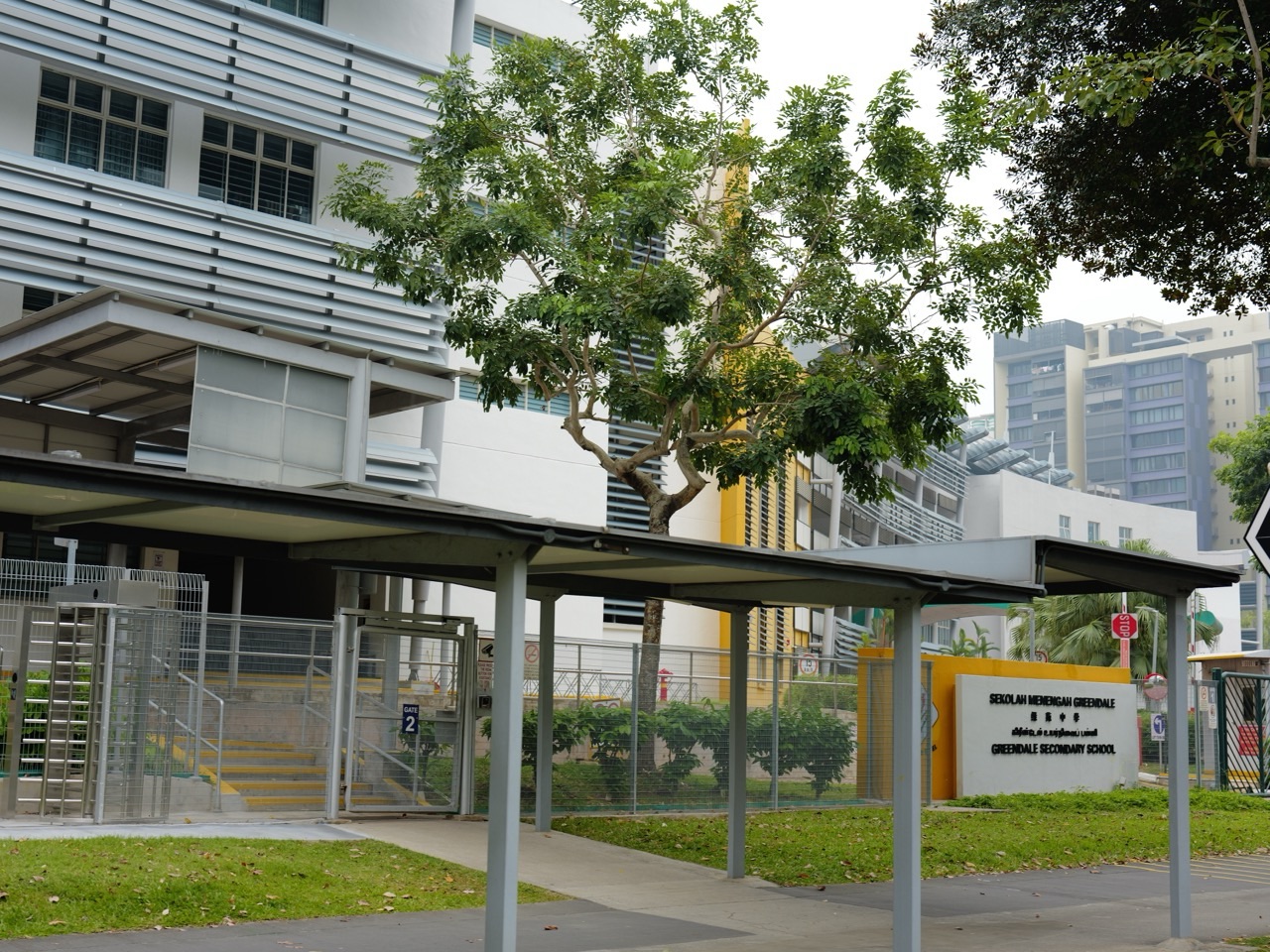
AEIS school postings are final under MOE’s published outcome rules, and requests to transfer to a different school or obtain AEIS test marks are not considered through the outcome exercise. Successful international students are allocated a mainstream school by MOE according to the admission exercise and available vacancies. It is not a school-choice system in which parents can rank alternatives after seeing a result. If an offer names a school outside Punggol, a family’s preference for a closer campus is not itself a right to change the placement.
Parents should nevertheless distinguish three very different concerns: wanting a more convenient school, needing clarification about an error in the official letter, and facing a serious practical problem that requires official guidance. The first does not override the centralised posting rules. The second and third deserve a precise enquiry to the correct authority, without promising a successful appeal. The immediate priority remains to read the current MOE AEIS outcome instructions, follow reporting deadlines and keep the child’s education and immigration arrangements lawful and continuous.
Quick answers:
- Can we choose another school? The published AEIS outcome rules treat school postings as final; do not assume an alternative school can be selected.
- Can we request the examination marks? The normal AEIS result is an admission outcome, not a marks slip for school selection.
- Where are results released? MOE’s AEIS Internet System (AEIS-IS), not the Candidates Portal used to register.
- Can we ignore the school offer while enquiring? No. Follow the official reporting instructions and clarify any conflict promptly.
- What about an unsuccessful result? Check eligibility for a subsequent S-AEIS or AEIS, or lawful alternative schooling options; another attempt is a new process, not an appeal.
- Punggol address: does not guarantee posting to a Punggol school.
- Important distinction: a later ordinary school transfer and an immediate AEIS posting-change request are not necessarily the same administrative process.
Reviewed 6 November 2026. This independent explanation does not decide individual cases and does not offer an appeals service. The child’s actual MOE outcome notice and current official directions take priority.
1. Why is the AEIS school posting final?
AEIS is a national admission route for international students seeking a place in mainstream government and government-aided schools. The exercise is constrained by eligibility, assessment performance and vacancies at the relevant levels. A result is therefore an offer of a specific available school place, rather than a certificate giving the family freedom to choose an individual school.
Parents sometimes compare AEIS with the Secondary 1 posting process for PSLE students, where school preferences play a central role. The procedures are different. A family that has not understood this distinction may plan a home move around a preferred school and discover only in December that the actual offer has another location.
MOE’s AEIS outcome page should be read for the current rule, school-offer terms and reporting dates. In recent published outcome instructions, postings are final and transfer requests and releases of test results are not considered. Do not substitute old user comments or a tuition centre’s informal assurance for the current official notice.
What does “final” mean in a family’s decision?
It means the family should respond to the actual named school rather than treat the offer as a temporary holding place while searching for a different one through AEIS. That response begins with practical information: the school’s name, reporting window, location, grade, entry requirements and immigration conditions.
It does not mean parents are prohibited from asking an official question when something in the letter is unclear or factually wrong. A clarification about the document is different from a request for a more prestigious campus. The authority can explain what process, if any, applies; a general article cannot promise an exception.
2. Why don’t parents receive school-by-school AEIS cut-off scores?
A common search is “AEIS passing marks”, followed by “Which school can I enter with this score?” This mental model comes from other selection systems where an exam score is used to rank school choices. AEIS does not operate like a publicly available school-by-school marks marketplace.
The official result communicates whether the student has a school admission offer and, if so, the school and next instructions. Parents should not expect a numerical result to support negotiation between schools. That is why private claims such as “95% guarantees this school” deserve scepticism. Without official data identifying examination, cohort and vacancy conditions, the claim is not a reliable admissions rule.
The absence of a detailed marks report does not prevent a family from working on learning. A parent can examine the child’s independent writing, mathematical reasoning and schoolwork to identify gaps. Those are legitimate educational assessments, but they cannot be relabelled as an official AEIS score.
The difference between learning evidence and admissions evidence
Suppose a student consistently solves algebra problems accurately in a tutoring session. That is evidence about a skill under those conditions. It is not proof of the mark achieved in the AEIS paper. Equally, an unsuccessful AEIS outcome does not tell a parent which exact topic caused the result. Do not invent a diagnosis simply to create a confident explanation.
If a tutor recommends further teaching, ask for the actual learning evidence: which task was attempted, which operation failed, how the error was explained and whether a later variation was solved independently. A useful lesson can proceed without a fictional examination breakdown.
3. What if the child’s name, details or school information look wrong?
Before taking any action, identify the exact problem. A name-order difference, missing middle name, incorrect passport number or apparent inconsistency in an offer may need official clarification. A school location that the family simply dislikes is not the same type of issue.
Keep a private copy of the official outcome, the child’s relevant identity record and a short factual description of the discrepancy. Contact the channel listed on MOE’s current outcome page or the offered school as appropriate. Do not edit the official letter, ask a third party to produce a replacement or post the child’s details on a public discussion board.
A clear question might be: “The child’s official passport displays these initials, while the outcome uses this different spelling. Can you advise how the record should be corrected and whether this affects reporting?” This is specific and answerable. “Please give us another school because something is wrong” combines unrelated requests and may obscure the genuine problem.
Do not assume that asking a question pauses the reporting period. Unless the relevant official instructs otherwise, treat the deadline as still active and seek prompt direction on how to comply while the discrepancy is reviewed.
4. Reporting is an important step, not a formality to postpone
A successful applicant should read the complete admission outcome and comply with the school’s reporting instructions in the stated period. MOE’s published guidance has warned that places may be offered to other applicants if candidates do not report as required. The precise deadline can differ by test level and exercise year, so the child’s own notice is more important than a generic article’s calendar.
For 2026 AEIS families awaiting entry in 2027, the result windows and school reporting arrangements occur close to the end of the year. A parent travelling for work or a family leaving Singapore for holidays should identify who can complete each required step and whether the school has specified any alternative arrangements. Do not leave the matter until the deadline has passed.
What to prepare for a school reporting appointment
- The official AEIS outcome and any printed copy requested.
- Child’s current passport and identification records as instructed by the school.
- Parents’ or guardian’s contact details and evidence where required.
- Previous schooling information if requested.
- Existing immigration pass or documentation for a Student’s Pass application if applicable.
- Questions about uniform, textbooks, first school day, Mother Tongue and transport.
This is a practical planning list, not a substitute for the school’s exact requirements. Carrying extra records does not grant a new school choice. Conversely, a missing required item can delay completing the legitimate offer.
5. Can a student transfer schools later after joining?
Parents should distinguish an AEIS school-posting request from a possible later school transfer under the rules applicable to an already enrolled student. The first concerns changing the specific offer produced by a national admissions exercise. The second may involve separate administrative rules, school vacancies, student status and approval conditions.
Do not assume that an ordinary primary school transfer service open to a particular category of students automatically applies to a newly posted international student. Search results for a different MOE transfer scheme can be misleading because the applicant category and purpose are different. Ask MOE and the current school which procedure, if any, can apply to the child’s circumstances.
Immigration status adds another layer. ICA’s school-transfer Student’s Pass FAQ says a student changing schools may need to apply for a Student’s Pass under the new school following successful admission. That concerns immigration documentation; it does not create an educational right to transfer into a school without a vacancy or approval.
What if the present journey is genuinely difficult?
Start by measuring the actual problem: travel distance, duration, accessibility, supervision, health or safety needs. Discuss school-day transport and care arrangements. If the problem is substantial, contact the official channel with evidence and ask what lawful options exist. Avoid asserting that a transport inconvenience necessarily creates a right to a new AEIS posting.
A family’s hardship deserves to be described accurately. A request can be respectful and precise without overstating what the policy provides. Independent education writers and commercial agents should not claim decision-making authority they do not possess.
6. What if the school is good but different from what the family imagined?
Families sometimes hear that one school has a better reputation, a preferred activity or a shorter journey. Those preferences can be meaningful but are often based on partial information. Before rejecting an actual offer, find out what the school provides: curriculum, student support, co-curricular opportunities, subject offerings, transport and the daily routine.
One way to evaluate the offered school is to ask whether the child can learn effectively and feel safe there. A school outside the immediate neighbourhood may still provide a manageable environment. A very close school might not be available at the required level. A realistic decision should not depend only on a school’s name or a ranking without a clear source.
If the child is anxious about not knowing anybody, that is a transition issue worth addressing directly. The first weeks can be made less daunting through a safe route, school contact, simple help-seeking language and opportunities to meet classmates. These steps are useful whether or not the family originally preferred another school.
7. If there is no offer, S-AEIS is a new application—not an appeal
An unsuccessful AEIS applicant may be eligible for a later S-AEIS or AEIS. MOE’s published AEIS Internet System FAQ explains that unsuccessful candidates may apply again, provided they meet the permissible age range. But this is not a request to reconsider the previous mark. The family must use the applicable new exercise and satisfy its current eligibility and registration requirements.
S-AEIS also does not offer every AEIS entry level. The published supplementary exercise covers Primary 2–4 and Secondary 1–2, not Primary 5 and Secondary 3. Families should not pay for preparation aimed at an ineligible level because somebody advertises a “second chance”. Check the child’s date of birth and current MOE conditions first.
When a new attempt is feasible, preparation should follow actual learning evidence. If the child struggled with Singapore-style Mathematics wording, work on reading the relationships before increasing timed practice. If the student needs stronger academic English, choose reading, writing and language-use exercises that reveal comprehension rather than memorised answers. A sensible retake should have a learning purpose beyond simply repeating the previous timetable.
8. Four illustrative family situations
Case A: a family expects the nearest Punggol primary school
The household has signed a lease near a school and receives an AEIS offer elsewhere. The correct first step is to understand that distance does not reserve a place in that named school. The family can assess transport, school support and the actual reporting notice. A housing choice is not proof that MOE must change the posting.
Case B: the offer contains an apparent identity discrepancy
A child’s surname has been entered in a different order from the passport. This is a records question. The parent should contact the relevant official promptly with the exact mismatch, retain the original documents and ask how reporting should proceed. It should not be reframed as an opportunity to request a different school.
Case C: a Secondary student is disappointed by an unfamiliar school
The student hoped to join friends at another campus. Parents can acknowledge that preference while making the actual school’s programme and social opportunities more visible. A calm first-week plan can help the student settle. Buying a new preparation package or threatening to ignore the offer would not solve the underlying uncertainty.
Case D: no offer arrives, but the student wants to try again
The family should confirm that the child remains eligible for the next relevant exercise, verify the scope of that exercise and evaluate alternative education arrangements during the wait. It should not insist that the original examination must have had a particular score or assume that the next attempt is unrestricted.
9. How to write a precise official enquiry
Parents can avoid long messages that mix school preference, exam marks, identity concerns, housing hardship and immigration questions. Identify one issue at a time and send it to the right authority. For example:
We have received the AEIS offer for our child and understand that the school posting is final under the published rules. We would like clarification about the following specific issue: [factual description]. The relevant official notice says [instruction]. Please advise the appropriate next step and whether we should continue reporting to the offered school during the stated period.
This is a model request, not a promise that the recipient will grant a policy exception. Do not include complete passport details in an insecure public message. Use the official contact channel and supply identification through the method requested.
If the issue is primarily immigration-related, consult ICA. If it concerns examination registration or a technical Candidates Portal problem, consult SEAB. If it concerns admission outcome or school posting, follow MOE’s official direction. Directing the right question to the right organisation is usually more useful than copying the same emotional story to every possible inbox.
10. Exam results, academic progress and the child’s sense of belonging are different
A child may interpret an unfamiliar school as evidence that they did not perform well enough, even where no detailed marks are released. Parents should avoid reinforcing that speculation. The actual school offer is an administrative decision within a vacancy-constrained system. It does not provide a complete account of the child’s ability or future success.
After starting school, the child’s progress should be judged through real work, teacher feedback, daily adjustment and wellbeing. A tutor can help repair an identified gap in Mathematics or English. A school counsellor or teacher can help with transition issues. Family conversations can provide stability. None of these roles is interchangeable with MOE’s admissions decision.
For children entering Secondary school, Full Subject-Based Banding adds flexibility in subject levels. The receiving school can explain the child’s actual programme and suitable options, rather than parents treating the AEIS test level as a permanent label of worth.
11. A four-week plan after receiving an offer
Week 1: understand and secure the offer
Read the outcome, confirm the named school and follow the reporting instructions. If something appears factually wrong, seek clarification promptly. Do not allow a preference for another school to crowd out a compulsory deadline.
Week 2: organise travel and immigration
Test the school route during realistic commuting hours where possible. Check the child’s valid pass and whether ICA Student’s Pass formalities apply. Keep documents and contacts together, and confirm any school instructions about guardianship or local support.
Week 3: prepare a manageable school routine
Check books, uniform, meals and daily reporting time. Ask about Mother Tongue arrangements and classroom language. Give the child a small number of practical tasks they can control, while adults manage administrative questions.
Week 4: identify support from real learning evidence
Once schoolwork begins, examine marked tasks and feedback. Determine whether the main barrier is a missing syllabus concept, academic English, time management or another practical issue. Choose any additional support according to that evidence rather than automatically adding lessons because the child is new.
This is a planning framework; the actual December-to-January reporting window may require administrative tasks to be completed sooner. Official dates always take priority.
Frequently asked questions
Can I appeal for another Punggol school after AEIS?
MOE’s published AEIS outcome rules treat postings as final and do not consider school-transfer requests as part of the exercise. Check the current official outcome notice and do not rely on claims of guaranteed appeals.
Can I see my child’s actual AEIS English and Mathematics marks?
The normal admission outcome is not a detailed marks report for school selection. MOE’s outcome instructions have stated that requests for release of test results are not considered.
Does a Punggol home address guarantee a Punggol school?
No. AEIS posting depends on the national process and available vacancies.
Can we refuse the posted school and choose another?
An AEIS offer does not confer a general right to choose another school. Before rejecting a real place, read the official consequences and seek advice on lawful alternatives.
What happens if we miss the reporting deadline while asking questions?
Do not assume an enquiry suspends the deadline. Contact the school or MOE promptly and follow their directions; an uncompleted reporting obligation can put the offer at risk.
What if the outcome letter has a wrong passport number?
Raise the factual discrepancy with the official contact and retain the original evidence. Do not edit the letter yourself or create a second identity.
Can we transfer schools later after joining?
Any later transfer is a separate matter governed by its own eligibility, vacancies, school approval and immigration conditions. It is not an automatic right created by AEIS admission.
Does S-AEIS act as an appeal against a failed AEIS?
No. S-AEIS is a separate supplementary admissions exercise with its own application, eligibility and test process.
Can a private agent guarantee a posting change?
No private agent can make an official MOE school-posting decision. Treat any such guarantee with caution and use official government instructions.
What is the best next step if the assigned school is far away?
Confirm the reporting requirements, test the actual commute, assess any genuine hardship and contact the relevant authority for case-specific instructions without assuming an exception will be granted.
Official sources and connected eduKate guides
- MOE: AEIS Outcome and School Reporting
- SEAB: Release of AEIS School Offers
- SEAB: AEIS and S-AEIS FAQs
- ICA: Student’s Pass After a School Transfer
- AEIS Singapore | Parent Hub
- AEIS 2026 Results and Punggol School Choices
- Unsuccessful AEIS Results: S-AEIS and Schooling Options
One useful next action: read the entire outcome notice and mark the reporting deadline. The family can make its next decision from confirmed facts without treating disappointment or uncertainty as an instruction to abandon the offered school.


