
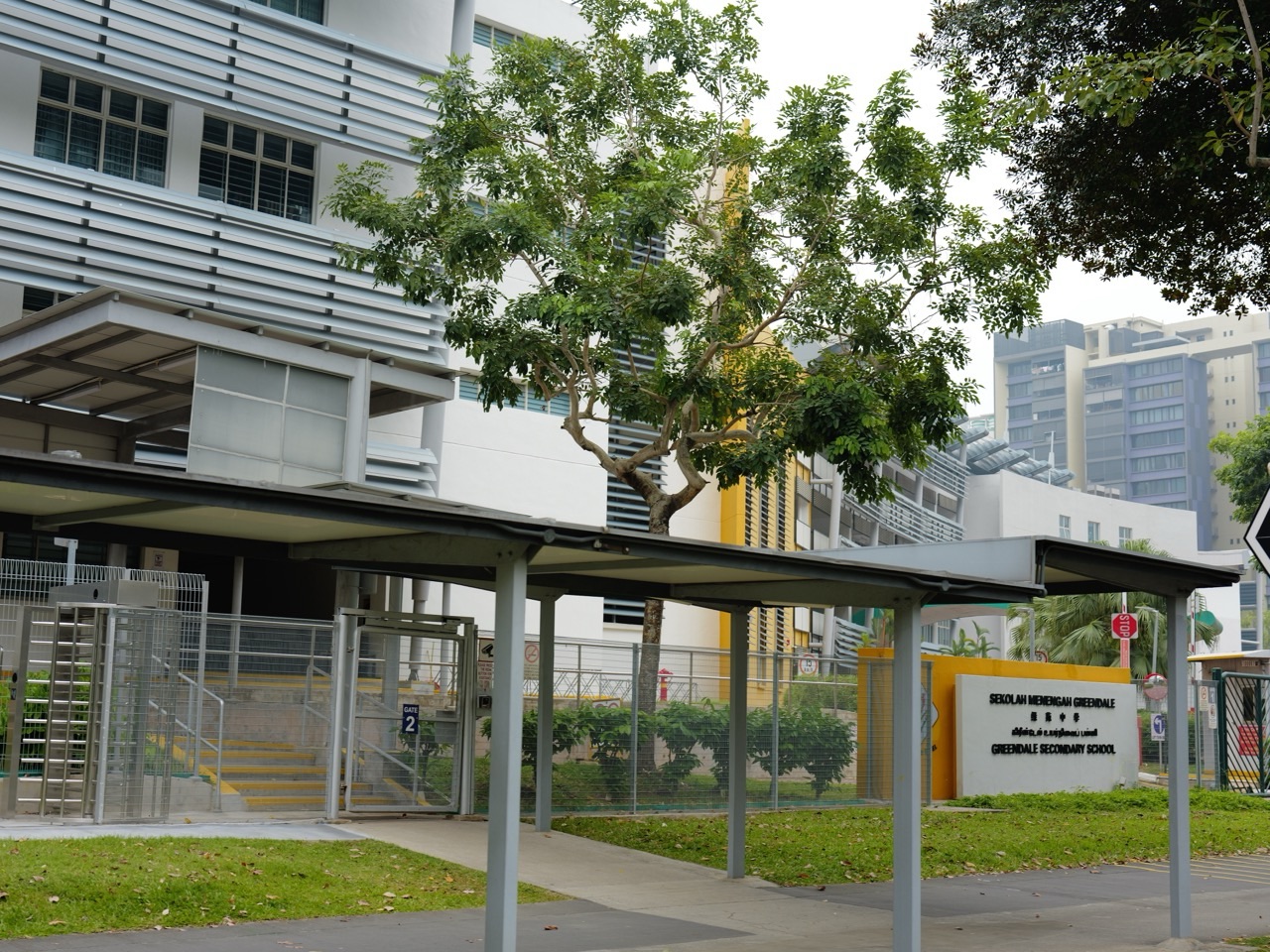
AEIS results do not work like the PSLE school-choice exercise. International students who sat Singapore’s 2026 Admissions Exercise for International Students will receive an admission outcome through the AEIS Internet System in December 2026. A successful outcome names the school offered by MOE. Parents do not receive a ranked list of Punggol schools to choose from, and the child is not entitled to a particular school simply because the family lives nearby.
For parents waiting in Punggol, the practical job is to check the correct result window, access the correct government system, act within the school’s reporting deadline, and plan for a realistic school journey. The exam performance is important, but the offer also depends on available vacancies. A school place is therefore a specific offer, not an open invitation to negotiate a preferred campus or entry level. Families should have both an offer-day plan and a no-offer plan ready before December.
Quick information for 2026 AEIS families:
- Result system: AEIS Internet System (AEIS-IS), linked from MOE’s official outcome page; not the SEAB Candidates Portal used for test registration.
- Secondary 2–3: outcome window expected 10–14 December 2026.
- Primary 2–5: outcome window expected 17–21 December 2026.
- Secondary 1: outcome window expected 21–25 December 2026, with the announced dates described as tentative when checked.
- School choice: no AEIS preference-ranking list; MOE makes a school offer subject to the exercise’s rules and vacancies.
- Punggol address: relevant to family planning and may be considered in posting, but does not reserve a school in Punggol.
- Next action after success: follow the offer and school-registration instructions without missing the reporting period; resolve immigration arrangements with ICA if required.
These 2026 result windows were reported from MOE’s published outcome schedule in October 2026. They are included as planning dates, not a permanent annual calendar. Recheck the live MOE AEIS outcome page immediately before using them; changes or individual instructions take priority.
1. Two online systems, two different jobs
Many families understandably remember the website where they registered for the test and return there on results day. This is a common point of confusion. SEAB’s Candidates Portal (CP) is where candidates apply, upload documents, track registration status and receive their entry proof. AEIS-IS is where MOE releases school-admission outcomes. SEAB explicitly states that AEIS outcomes will not be released through the Candidates Portal.
Use the official MOE outcome link when the window opens and follow its sign-in instructions. Avoid following a link in an advertisement, a messaging group or a paid consultant’s form. A familiar-looking website is not proof of authenticity; the place to start is the MOE domain.
A ten-minute result-day checklist
- Find the child’s exact test level: Primary 2–5, Secondary 1 or Secondary 2–3.
- Recheck the MOE outcome window for that group. Do not assume every applicant’s result opens on the same day.
- Have the application information and identity details required by MOE ready.
- Go from the official MOE AEIS outcome page to the AEIS Internet System.
- Read the entire result notice, not only the school name or the word “unsuccessful”.
- Save the official result information securely and note any reporting instructions and deadlines.
- If an offer is shown, contact the offered school using its published official details if any information is unclear.
- Do not post the child’s personal application or passport details in public forums to ask for help.
If the website is slow, the correct response is to retry through the official site during the announced period, not to send personal data to an unofficial “results checking” service. If a genuine technical problem persists, use the contact route listed by MOE or SEAB.
2. Why does AEIS give a school offer rather than a school-selection list?
AEIS places international students into existing mainstream school vacancies. This is fundamentally different from the idea that exam success purchases admission to a chosen school. MOE must match a student who meets the exercise’s assessment and eligibility requirements against the places that are actually available. Performance, acceptable school level and vacancy conditions matter. The intended residential area may also be relevant, but it does not make the nearest school compulsory.
Imagine two children who both meet the performance threshold for a particular stage. One lives close to a school with no vacancy at the relevant level; another may be considered for a school where a place is available. Distance alone cannot create a seat. That is why families should not infer school admission probabilities from Google Maps or from another family’s posting result.
The exercise is national, not Punggol-specific. There is no separate AEIS quota that families can reserve by registering a Punggol home address. The complete family decision therefore involves school admission, residential plans, transport, income and immigration arrangements—not simply examination marks.
Is there an AEIS cut-off point for each school?
Parents sometimes search for “AEIS cut-off points”, “AEIS pass mark” and “AEIS school list”. These are natural questions, but AEIS is not the PSLE Secondary 1 school posting exercise. MOE does not provide parents with a public school-by-school AEIS cut-off table that allows them to predict a particular placement. Treat private-company acceptance-rate claims carefully, especially if the method, year and candidate count are not disclosed.
Can the student be placed at a lower level than expected?
For Primary applicants, the range of possible school levels can depend on the child’s age, test level and performance. An applied-for level should not be presented as a guaranteed school year. Before applying, families should check the MOE eligibility table for the specific birth year and understand possible lower-level outcomes. For Secondary applicants, follow the current official rules for the selected Secondary test and any offer; never assume an overseas grade automatically determines the Singapore class.
3. What does a Punggol home address actually mean?
Punggol is an attractive place to build a family routine because neighbourhoods, public transport and housing are planned together. It can still be a difficult place to make assumptions about AEIS posting. The estate contains multiple schools serving local demand, but individual school vacancies change and an international applicant is not automatically allocated to the school closest to home.
Here is the distinction that prevents expensive mistakes:
- Reasonable planning: “We intend to live in Punggol. We will declare the correct residential information and prepare for several possible school journeys.”
- Unsafe assumption: “We rented beside a named school, so MOE must post our child there.”
- Reasonable planning: “We will compare public transport time, school start times and supervision needs after we receive the actual offer.”
- Unsafe assumption: “If our child does well, we can transfer into our favourite Punggol school immediately.”
If the family has not yet signed a long lease, consider how much flexibility is available before the school offer is known. If the family is already settled in Punggol, prepare an alternative transport plan, including the journey at school-day hours. A route that appears short on a weekend can feel different when a child carries books in the morning rain.
How to judge the offered school’s everyday practicality
Assess the school from the perspective of a child rather than a postcode:
- Where is the official school entrance, not simply the centre of the map pin?
- What is the realistic school-day journey using current MRT, LRT and bus schedules?
- Is the child old enough and confident enough to travel independently?
- What is the backup plan for wet weather, service disruption or a sick caregiver?
- Will the student need to attend early assemblies, remedial lessons or co-curricular activities?
- Does the family have a school contact and emergency pick-up arrangement?
Once the child is allocated a school, these questions are immediately actionable. Before allocation, the same questions help the family avoid assumptions rather than force a premature decision.
4. What should a successful family do after seeing the offer?
The offer notice is a beginning, not the final administrative step. MOE publishes reporting windows and the offered school may specify what documents and actions are needed. Missing a compulsory reporting deadline can put a place at risk. Because the December period is busy and families may be travelling, it is sensible to keep the necessary adult, contact number and documents available.
Step 1: read the named school and reporting instructions
Check the official notice for the school, applicable school year and registration arrangements. The child’s name and other personal details should match the official records. If there is a discrepancy, raise it with the official school or government contact; do not independently edit a document.
Step 2: prepare the documents the school asks for
The school may request identification, contact and guardian information, prior education records and immigration documentation. Use the actual school’s issued list rather than a list copied from an old blog. Organise both digital and paper copies where appropriate and keep sensitive information secure.
Step 3: check immigration status early
International students generally need a valid immigration basis to pursue full-time school in Singapore. A child who has a qualifying Dependant’s Pass, Long-Term Visit Pass or Immigration Exemption Order may be exempt from applying for a separate Student’s Pass; others may need an ICA Student’s Pass after receiving the required school acknowledgement. The ICA process is separate from the AEIS academic assessment.
Do not assume the AEIS entry proof, a short-term visit document or a school admission outcome is itself a Student’s Pass. Consult ICA’s government-school Student’s Pass instructions for your exact immigration situation.
Step 4: build the first-week routine
Ask the school about uniform, textbooks, supplies, reporting time and the first day’s arrangements. Confirm transport, meals, contact numbers and the child’s ability to ask for help. Especially for a student who is new to English-medium teaching, emotional and practical readiness matter alongside academic placement.
5. What if the result is unsuccessful?
An unsuccessful AEIS outcome is difficult, but it is important to respond to what the result actually tells you. It does not normally disclose a school-by-school cut-off or a full diagnostic of every subject mistake. A family should not turn the single outcome into a claim that the child is incapable of learning in Singapore. Instead, determine which admission routes are still eligible and what learning gaps can be identified independently.
The next S-AEIS is commonly the first route a family examines. However, it covers fewer entry levels: Primary 2 to 4 and Secondary 1 to 2. It does not include Primary 5 or Secondary 3. For children near an age limit, the next exercise may not offer the same application choice. Check the child’s birth date, intended year and MOE’s current table before booking preparatory classes or tests.
A school outside the MOE mainstream system may be another lawful educational option, depending on family circumstances, school admissions and immigration status. It is not a fallback that becomes automatically available on the day of an AEIS rejection. Contact the school directly for its rules and fees and verify student pass eligibility with ICA.
What not to do after an unsuccessful result
- Do not assume a private agent can obtain a secret MOE vacancy.
- Do not pay for a guaranteed AEIS posting or a claimed guaranteed appeal.
- Do not use one disappointing result to decide that the child is weak in every school subject.
- Do not apply for an ineligible S-AEIS level because a preparation centre happens to teach it.
- Do not ignore a family’s legal stay or schooling obligations while planning another examination.
A productive post-result review separates English comprehension, writing, Mathematics foundations, accuracy and time pressure. The family can use actual schoolwork and diagnostic problems to identify what should be improved, even though it cannot see a detailed AEIS marks breakdown.
6. Four cases that show how the system behaves
Case A: successful result, unfamiliar school
A family lives in Punggol, but the named school is outside its preferred walking distance. The useful next step is to examine the offer, reporting instructions and transport, not assume that “success” grants the right to swap to a closer school. If there is a genuine exceptional situation, approach the official contact with evidence rather than relying on verbal promises from third parties.
Case B: Secondary 1 outcome still pending
On 10 December, a Secondary 1 applicant sees friends checking results for Secondary 2 and 3. That does not necessarily mean their own result is missing. Different level groups have different scheduled windows. Read the MOE notice for the child’s test level, not the group chat’s schedule.
Case C: Primary applicant offered a different level
A family expected the child’s overseas grade to translate directly into a Singapore primary year. The offered level is different from their expectation. Rather than immediately rejecting the school, check the official age-and-level framework, ask the offered school what the learning sequence looks like and consider the child’s actual academic and language readiness. The right evaluation involves future progression, not only the prestige of a year label.
Case D: no offer before a housing decision
Another family planned to move to Singapore only if the child entered a mainstream school. The absence of an offer changes the housing, visa and schooling plan together. The sensible response is to review the next eligible exercise, current immigration conditions and real alternatives before signing commitments that depend on an unconfirmed school place.
7. The financial side of a school offer
AEIS test fees are separate from the monthly charges of the school eventually attended, and both are separate from any paid preparation course. School fees for international students depend on the student’s category, level and the fee schedule in force for the year. Miscellaneous fees, uniform, textbooks, transport, meals, insurance or immigration expenses can add to the family budget.
One useful family exercise is to build a monthly estimate with three headings: unavoidable school and government charges; daily travel and school expenses; optional support such as tuition. If the child is already coping well, optional support need not become an automatic cost. Where academic help is needed, a specific assessment of the starting position will make the spending more rational.
Always use MOE’s official current school fees information and ICA’s Student’s Pass pages rather than a fee screenshot from an old admission year.
Frequently asked questions
When are 2026 AEIS results released?
The published planning windows are 10–14 December for Secondary 2–3, 17–21 December for Primary 2–5, and tentatively 21–25 December for Secondary 1. Verify the live official MOE page just before results day.
Where do parents check the result?
Through MOE’s AEIS Internet System, accessed from the official outcome page—not through the registration Candidates Portal.
Can parents select or rank Punggol schools?
No. AEIS posts students to available school places under the national admissions process.
Can a high AEIS score force admission to a particular school?
No. AEIS results are not a school-selection currency, and admission depends on the exercise’s rules and vacancies.
Will the child get a detailed marks slip?
MOE’s AEIS process provides an admission outcome rather than an ordinary detailed score report for parents to use in choosing schools.
What if the family cannot report to school within the window?
Contact the offered school immediately using official details. Do not assume a late arrival is automatically accepted or that the place will remain held indefinitely.
What if no school is offered?
Check whether the child’s age and level permit a later S-AEIS application, and evaluate schooling and immigration alternatives without assuming any is guaranteed.
Does living near a school mean there is a vacancy?
No. Residential distance and actual admissions vacancies are different facts.
Original sources and related reading
- MOE: AEIS Outcome — always check this source for live dates and reporting instructions.
- SEAB: AEIS Release of School Offers — confirms that AEIS-IS, not Candidates Portal, releases outcomes.
- MOE: AEIS overview — eligibility, test and placement updates.
- ICA: Student’s Pass — immigration requirements after an offer.
- Punggol Education System | AEIS Singapore — our parent hub.
- Where Do I Check My Child’s AEIS School Offer? — the dedicated login guide.
- Can S-AEIS Admit My Child to Primary 5 or Secondary 3? — level restrictions.
- Missed the AEIS Application Deadline — planning the next route.
Editorial check: 6 November 2026. This independent explanatory guide is not an MOE or SEAB admissions service and cannot change an examination outcome or secure any school. Published date windows and requirements should be verified against the current official notice before action.


