
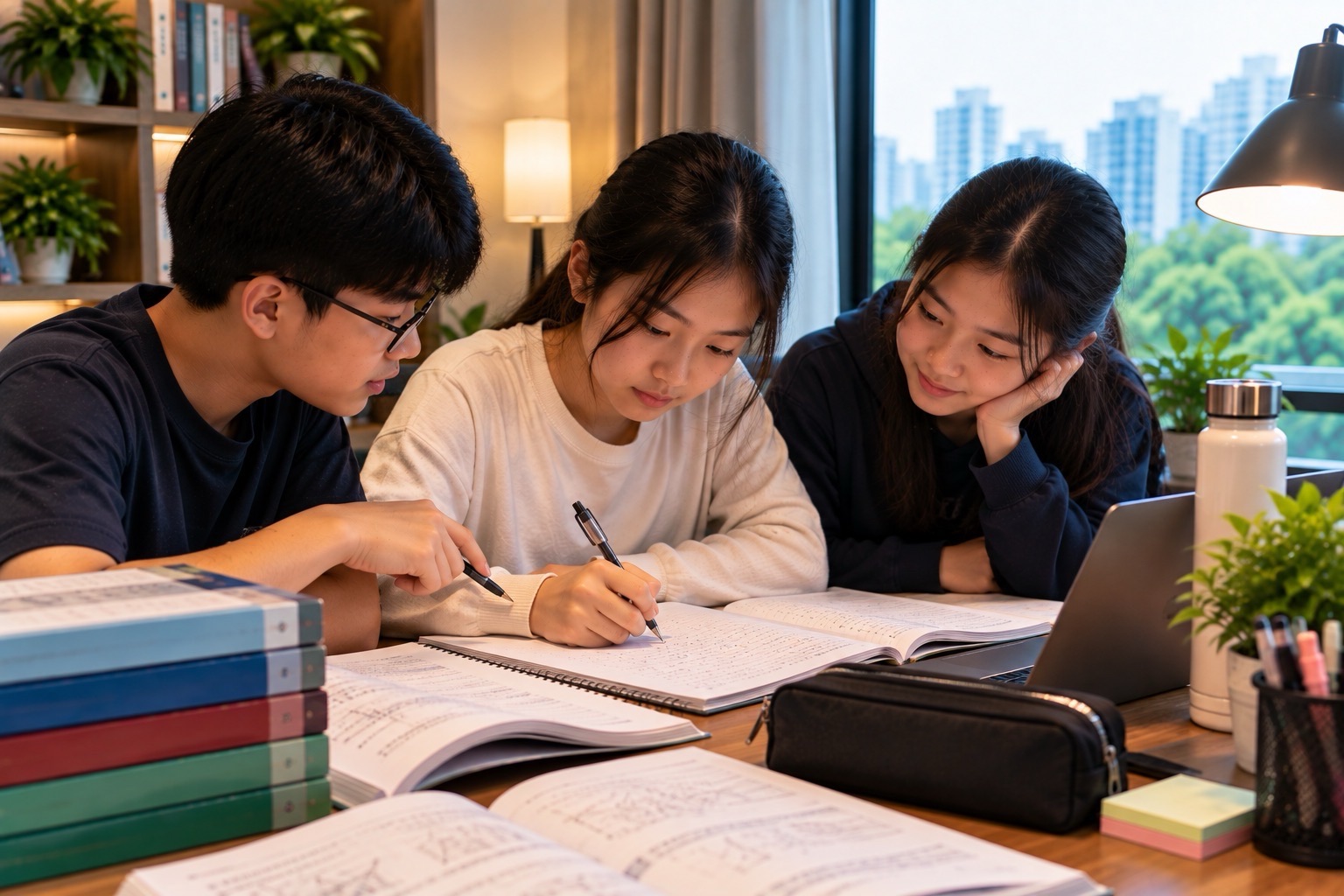
Secondary 4 G1 English tuition in Punggol should begin with the candidate’s actual examination year, original writing and comprehension responses, and the skills that still require independent practice. eduKatePunggol offers small-group tutorials of up to three learners, normally lasting ninety minutes. A useful tutor can identify whether a response failed through missing task information, unsupported reading inference, sentence grammar or examination pacing, then teach a precise correction and test it in a new task.
A pupil graduating in 2026 follows the GCE N(T)-Level English Language Syllabus T 1195, while the first Singapore-Cambridge SEC is in 2027, with G1 English Language code K100 and earlier reference 1195. The published 2027 K100 scheme has four papers: Writing 30%, Language Use and Comprehension 40%, Listening 10% and Oral Communication 20%. The two years’ paper requirements must not be confused, even though their English language skills overlap.
Quick answers about G1 English tuition
- Check the actual 2026 GCE N(T) 1195 or 2027 SEC K100 examination entry before choosing a revision paper.
- 2027 K100 has Writing (70 raw marks, 30%), Language Use/Comprehension (60, 40%), Listening (20, 10%) and Oral (40, 20%).
- The 2027 Writing examination is computer-delivered and includes Editing, Situational Writing of at least 180 words and Continuous Writing of at least 120 words.
- The 2027 Listening paper uses multiple-choice and multiple matching; Oral includes screen reading and video-based spoken interaction.
- Three-person tuition is effective only when each candidate receives personal feedback and handles a changed independent task—never a guaranteed grade.
Navigate: 2026 vs 2027 · Why three learners · 33 teaching situations · 90-minute tutorials · Parent checklist · FAQs · Official sources
The national examination year changes the correct paper
SEAB’s official 2026 GCE N(T)-Level school-candidate list gives English Language Syllabus T code 1195. The 2027 G1 SEC list gives English Language code K100, with 1195 as its earlier reference. The shift forms part of the introduction of one Secondary Education Certificate at G1, G2 and G3 levels. The relevant paper is determined by the candidate’s actual school registration, not by a tuition website’s broad claim about Secondary English.
| 2027 SEC G1 English K100 | Duration | Marks | Weight |
| Paper 1 Writing | 1 h 20 min | 70 | 30% |
| Paper 2 Language Use and Comprehension | 1 h 20 min | 60 | 40% |
| Paper 3 Listening | About 45 min | 20 | 10% |
| Paper 4 Oral Communication | About 20 min including 10 min preparation | 40 | 20% |
For 2027 K100, Paper 1 has grammatical editing, situational writing worth thirty marks and continuous writing worth thirty. A visual text supports situational writing, which asks for at least 180 words. Continuous writing requires at least 120 words on one of two topics. Writing is computer-delivered. Paper 2 tests vocabulary and grammar through separate modified cloze tasks, plus narrative or recount reading and three non-narrative texts, at least one using visuals.
The 2027 Listening component uses multiple-choice and multiple-matching tasks. Oral comprises reading aloud from a computer screen and spoken interaction based on a video clip. SEAB notes that the oral discussion does not ask candidates what people say in that clip. These statements describe the specific published K100 2027 syllabus. A candidate in 2026 should use the actual 1195 paper conditions; other cohorts must consult their corresponding documents.
2026 GCE N(T)-Level official subjects · 2027 G1 English K100 syllabus · SEAB 2027 G1 subject list.
Why a final-year answer can look good while losing marks
A candidate may produce grammatically accurate sentences and still omit a necessary action from a situational message. Another may use a powerful vocabulary word that does not mean what the writer intended. A pupil may quote a story correctly when asked for a reason yet give an event rather than a cause. Oral practice can also sound confident while failing the examiner’s follow-up. These are not one general problem of weak English. Each requires a different teaching move.
A tutor should first inspect the original attempt and ask what the student thought the question required. The correction can then be specific: identify the recipient, select a relevant passage clue, restore agreement in a clause or listen to the new question. After a short explanation, change the stimulus and remove the model. Independence on the new response is a clearer outcome than an attractive corrected copy of the original paper.
Why three learners may benefit from close feedback
In a tutorial of three, a teacher can inspect all first attempts and allow brief peer comparison. One child may notice a visual-text detail, another an alternative interpretation and the third a missing content requirement. This discussion can expose hidden assumptions. It does not, by itself, demonstrate that each candidate could answer a similar national question alone. After feedback, every learner needs a fresh individual task.
- Confirm the candidate’s subject and exam year before paper simulation.
- Collect an individual uncorrected answer rather than show the model first.
- Name the actual language or task error behind the lost mark.
- Use a relevant near-miss example to clarify what changes the answer.
- Let pupils exchange ideas without relying on one confident speaker.
- Set an unfamiliar separate retest and revisit it later.
- Review class match, fatigue and whether extra tuition remains useful.
Some candidates need more private teaching time, specialist literacy support or simply a manageable school revision schedule. Others are already able to learn and self-correct independently. The maximum group size creates an opportunity for feedback, not a universal claim of superiority over every other arrangement. A responsible tutoring centre should be willing to recommend reduced hours or a different format if appropriate.
How to turn an error into a transferable skill
Locate the first incorrect decision
Read the original prompt and pupil answer together. Ask what the task wanted, which information was selected and why the wording was used. A vague label such as careless does not explain how the pupil can improve. The useful target may be a missed audience, unsupported inference or wrong grammatical relationship.
Explain why one answer is valid and another is not
Compare two emails with different intended readers, a literal fact and an inference, or a cloze word that fits the grammar but changes the passage meaning. Ask the pupil to say which condition controls the correct response. This builds a decision they can repeat without the teacher.
Remove the model and change the task
Use a new notice, story, sentence or video topic. Give each student thinking time and an individual answer. Correcting the original worksheet is a useful stage but not proof of independent skill. The changed example shows whether the learner can choose the relevant idea.
Check again under appropriate conditions
Later bring the same skill back in a mixed or timed task following the correct examination-year instructions. If the mistake returns, refine the explanation. If it remains corrected, practise integration and checking. A short error record makes the progression visible.
Thirty-three G1 English exam-year teaching situations
1. Check 2026 versus 2027 examination identity
First difficulty. A pupil receives a 2027 SEC K100 paper and assumes its code and every instruction necessarily apply to 2026 GCE N(T) English.
What to teach. SEAB’s 2026 N(T) English Language Syllabus T is 1195. In the first SEC cohort of 2027 the subject is G1 K100, with 1195 as reference. Use the actual school entry to choose a simulation.
Small-group method. Each learner identifies their real examination year and subject before practising an unfamiliar paper.
Independent changed task. An unlabelled new paper is assessed for code and year before being timed.
Important limit. Historical materials may be useful for overlapping skills but should not be misrepresented as exact current papers.
2. An email begins with a reader and purpose
First difficulty. The student writes a friendly greeting to a school organiser but never explains what approval is requested.
What to teach. Identify sender, reader, request, essential supporting facts and appropriate tone before drafting. Check whether the recipient could act on the message.
Small-group method. Three learners plan distinct fictional messages, then draft and revise without copying each other.
Independent changed task. A fresh prompt to a librarian produces a clear opening and requested response.
Important limit. Politeness is valuable but cannot replace required content.
3. The missing date in situational writing
First difficulty. The candidate copies the event name from a poster but omits the deadline the recipient needs.
What to teach. Read source text and visuals carefully; create a short required-facts checklist and compare it with the finished message before editing grammar.
Small-group method. Each learner checks a different detail, then writes a changed task individually.
Independent changed task. A new event message includes its actual stated date and any qualifying condition.
Important limit. A visually small instruction can be more important than decorative design.
4. Do not invent information from a visual
First difficulty. The pupil sees people eating in a poster and promises that the event provides free food.
What to teach. Separate directly stated facts from attractive suggestions or assumptions. A photograph does not establish price or availability.
Small-group method. Three pupils identify a supported claim and a near-miss inference before handling a new notice.
Independent changed task. A changed flyer is used accurately without invented benefits.
Important limit. Writing task fulfilment requires fidelity to the supplied source.
5. The 2027 situational-writing minimum
First difficulty. A candidate practising for 2027 produces a 70-word note when the K100 task asks for at least 180 words.
What to teach. Use the official year-specific minimum and develop the required purpose, relevant facts and reasons, not padding. The 2027 situational section is worth thirty raw marks.
Small-group method. Learners compare a brief incomplete message with a sufficiently developed response before writing independently.
Independent changed task. A new K100-style prompt gets a purposeful response meeting the published 180-word minimum.
Important limit. The 2026 candidate must check 1195’s own instructions rather than borrow a future-year rule.
6. Choosing one of two continuous writing topics
First difficulty. The student chooses a prompt from its first familiar word and later writes an unrelated memorised story.
What to teach. Read both full topics, identify the intended form and plan a plausible original response that can be completed in time.
Small-group method. Each student proposes a different plan and checks whether it actually answers the question.
Independent changed task. A new pair of prompts leads to a justified choice and focused outline.
Important limit. An impressive opening does not repair an irrelevant plot.
7. The 2027 continuous-writing minimum
First difficulty. The pupil memorises a long accident narrative and ignores whether the chosen 2027 task requires at least 120 words on a different topic.
What to teach. For K100’s published 2027 continuous writing, choose one topic, write at least 120 words and maintain clear narrative or descriptive purpose.
Small-group method. Three learners each outline setting, main event and consequence, then create original prose.
Independent changed task. An unseen personal-recount prompt is completed with a coherent original text meeting the applicable minimum.
Important limit. Writing length alone is not a guarantee of content or language quality.
8. A story’s decision and consequence
First difficulty. A candidate lists a lost object, rain and a happy ending but never reveals how the main character solved the problem.
What to teach. Use a simple progression of goal, obstacle, response and outcome. Ask why one event causes the next rather than adding random drama.
Small-group method. Each pupil proposes a different credible resolution and then writes a fresh story privately.
Independent changed task. An unfamiliar honesty prompt produces a narrative with a meaningful decision.
Important limit. Exaggerated accidents are optional, not compulsory storytelling techniques.
9. A useful opening rather than decorative delay
First difficulty. The writer spends several paragraphs describing weather before identifying the event or purpose.
What to teach. Introduce the situation or viewpoint promptly; add only details that help the reader imagine or understand it.
Small-group method. Three learners compare overlong and purposeful openings, then revise separate original pieces.
Independent changed task. A new recount starts with the relevant event without a memorised scene-setting page.
Important limit. The most ornate introduction is not necessarily effective.
10. A conclusion that belongs to the story
First difficulty. The student ends a personal account with a generic inspirational quotation unrelated to the events.
What to teach. Return to the character’s decision and explain the result or learning in natural terms. A conclusion should follow from the story’s own details.
Small-group method. Each learner evaluates an ending against its earlier events and makes a private revision.
Independent changed task. An unfamiliar story resolves its central issue rather than introducing an unrelated new claim.
Important limit. A closing sentence should not fabricate a moral that the events never supported.
11. Editing a grammatical agreement error
First difficulty. The pupil underlines an unusual correctly spelled noun but overlooks ‘The players was ready’.
What to teach. Identify the true subject and its verb: players were. The 2027 K100 editing section tests grammatical errors or redundancy, not spelling or punctuation.
Small-group method. Students compare correct and incorrect structures and each edits unfamiliar sentences alone.
Independent changed task. A new paragraph contains justified agreement corrections without changing correct vocabulary.
Important limit. The exact editing instructions remain examination-year specific.
12. Editing a redundant word
First difficulty. A learner substitutes a synonym for an unnecessary underlined word, keeping the sentence wordier and less natural.
What to teach. Determine whether the word should be removed rather than replaced. For example, ‘return back’ commonly needs only ‘return’ in the intended meaning.
Small-group method. Three pupils identify a genuine redundant word versus an essential qualifier before separate new editing items.
Independent changed task. An unfamiliar sentence becomes concise without losing its intended meaning.
Important limit. Deletion is valid only when grammar and meaning remain intact.
13. Editing time reference in a recount
First difficulty. The student changes all past-tense verbs to present after seeing one present verb in direct speech.
What to teach. Trace the narration’s timeline and distinguish quoted speech or general facts from the narrator’s completed actions.
Small-group method. Each pupil explains a different time marker and then edits a changed paragraph.
Independent changed task. A new story retains consistent past narration and appropriate present dialogue.
Important limit. Blind tense changes can introduce errors.
14. Vocabulary cloze with fifteen alternatives
First difficulty. The pupil chooses the first bank word that resembles the gap’s neighbour, ignoring tone and sentence function.
What to teach. In 2027 K100 Modified Cloze I, ten gaps are answered from a bank of fifteen words. Check word class, meaning and whole-passage coherence.
Small-group method. Each student defends a different candidate and rejects a plausible but misleading alternative.
Independent changed task. An unfamiliar word-bank passage is completed by context rather than list position.
Important limit. A local grammatical fit can still distort paragraph meaning.
15. Grammar cloze with your own words
First difficulty. A candidate waits for vocabulary options in Modified Cloze II, missing a singular subject in the previous sentence.
What to teach. The 2027 grammar cloze asks candidates to supply their own words. Trace agreement, tense and reference across sentence boundaries.
Small-group method. The group explains different grammatical dependencies, then everyone handles a changed cloze privately.
Independent changed task. A fresh short passage uses appropriate verb and pronoun forms without a word bank.
Important limit. Vocabulary cloze and grammar cloze assess different decisions.
16. Narrative comprehension and pronoun reference
First difficulty. The reader credits an event to the wrong character because ‘she’ is linked to the first girl named.
What to teach. Trace actions and names through surrounding sentences. Replace the pronoun provisionally with each name and test coherence.
Small-group method. Each pupil maps one reference and answers a different follow-up on new text.
Independent changed task. An unfamiliar two-person story is understood without reversing who acted.
Important limit. Ambiguous wording should not be forced into unsupported certainty.
17. Literal detail versus inferred feeling
First difficulty. A student writes that a character was happy from a forced smile, ignoring a later line saying they were uneasy.
What to teach. Separate the observed action from a supported emotional inference. Compare multiple clues and choose a proportionate conclusion.
Small-group method. Three learners propose interpretations and point to evidence, then work on fresh scenes.
Independent changed task. A new passage yields a modest evidence-based feeling description rather than a dramatic guess.
Important limit. Inference is not invention.
18. A cause question rather than an event question
First difficulty. Asked why a pupil left, the candidate copies the sentence saying that the pupil went home.
What to teach. Identify the required relation: why seeks a cause, what an event and where a location. Read neighbouring lines for the appropriate reason.
Small-group method. Each learner answers a different command and tests another’s relevance.
Independent changed task. A new recount gets a cause-based answer with supporting context.
Important limit. A verbatim copied sentence can still answer the wrong question.
19. Reading three non-narrative texts
First difficulty. The learner assumes all passages contain a plot and looks for a protagonist in an informational notice.
What to teach. Identify the text type, purpose, key details and intended reader. K100 2027 non-narrative comprehension involves three texts including visuals.
Small-group method. Three pupils summarise different functional texts and then read an unfamiliar one alone.
Independent changed task. An unseen practical notice is understood for its required action, not imaginary story events.
Important limit. Genre affects which evidence is relevant.
20. Eligibility in a visual text
First difficulty. The candidate assumes every student can attend an event from its group photograph despite a restriction in the caption.
What to teach. Read the heading, visual, caption and full conditions together. Give priority to the source’s explicit eligibility rule.
Small-group method. Each pupil identifies a different condition and checks an unfamiliar event flyer privately.
Independent changed task. A new poster is interpreted for accurate audience and deadline.
Important limit. The image may not show every condition.
21. The main idea of a longer informational text
First difficulty. A student remembers examples from several paragraphs but cannot say what they jointly explain.
What to teach. Map the function of each paragraph and state a central message in simple original words. Distinguish main point from illustrations.
Small-group method. Students compare section summaries and independently reconstruct the whole point.
Independent changed task. A new article about reducing waste is summarised accurately without copying all details.
Important limit. Long quotations may conceal the absence of a main idea.
22. Listening when an announcement changes
First difficulty. The pupil records the first meeting time and fails to hear a later instruction changing it.
What to teach. Listen for ‘instead’, ‘moved’ and ‘rescheduled’ and identify the final valid detail. Short notes should support, not replace, full listening.
Small-group method. Three pupils first answer separately, then locate the decisive audio phrase and try another recording.
Independent changed task. A fresh announcement produces the revised venue or start time.
Important limit. The first detail can be superseded.
23. Multiple-matching listening tasks
First difficulty. The learner assigns the second speaker’s choice to the first because they discuss the same topic.
What to teach. Keep track of speakers, their reasons and any revisions. The 2027 G1 Listening paper includes matching as well as multiple choice.
Small-group method. Each pupil matches different claims to voices and then does a new dialogue independently.
Independent changed task. An unfamiliar recording is understood without swapping viewpoints.
Important limit. One conversation can contain several different positions.
24. A visual accompanying audio
First difficulty. The pupil chooses a picture on hearing a familiar word before listening to the full condition.
What to teach. Use images as support while still checking the spoken message’s entire meaning, including negation and changes.
Small-group method. Students identify tempting distractors and explain why a different image fits the actual message.
Independent changed task. An unfamiliar listening item with similar images is answered from complete evidence.
Important limit. A picture alone is not the audio’s full answer.
25. Screen-based oral reading
First difficulty. The candidate reads a screen passage rapidly but ignores punctuation and cannot convey its meaning.
What to teach. The 2027 K100 Reading Aloud part is 15 raw marks. Practise intelligible pronunciation, natural phrase grouping and purpose-aware pace.
Small-group method. Every student receives one personal fluency target and reads a changed passage independently.
Independent changed task. An unfamiliar factual paragraph is read so a listener can follow its meaning.
Important limit. Loudness and speed do not guarantee fluency.
26. Video stimulus and actual discussion
First difficulty. The student describes all visible actions in a clip and fails to develop an opinion relevant to the prompt.
What to teach. The 2027 K100 oral includes a video-stimulus discussion; SEAB says candidates will not be asked what people say in the video. Observe what matters, state a view and give a reason.
Small-group method. Three pupils compare perspectives, then each handles a changed video topic independently.
Independent changed task. An unfamiliar community clip prompts a relevant opinion and explanation.
Important limit. The assessment is interaction, not transcription of the clip.
27. Unexpected oral follow-up
First difficulty. A pupil repeats the prepared speech when the examiner asks for an alternative view or a personal suggestion.
What to teach. Listen to the new command, answer directly and support the response with an example or qualification.
Small-group method. Each learner takes a different unscripted question and receives individual feedback.
Independent changed task. A fresh follow-up is answered without repeating the original monologue.
Important limit. Natural conversation requires listening as well as speaking.
28. Typing is not a substitute for planning
First difficulty. The student types quickly in a computer-based practice but omits vital content because the plan was never checked.
What to teach. For 2027 K100 Writing, use the computer-delivered format when appropriate, while preparing audience, facts, sequence and proofreading first.
Small-group method. Every pupil outlines an independent task, types and checks a changed response.
Independent changed task. An unfamiliar digital writing prompt is completed with a clear purpose and accurate details.
Important limit. 2026 1195 candidates should check their own e-Exam instructions rather than assume every 2027 feature.
29. Time across the Writing paper
First difficulty. The candidate spends most of an eighty-minute 2027-style writing task on a decorative opening and leaves another section incomplete.
What to teach. The published 2027 Paper 1 lasts one hour twenty minutes, with editing, situational and continuous writing. Practise an individual plan, drafting and checking routine.
Small-group method. Three pupils compare different pacing difficulties and test targeted changes on a new practice.
Independent changed task. A changed mixed writing session covers required sections without abandoning relevance.
Important limit. Actual examination-year conditions govern the timer.
30. A concise comprehension answer
First difficulty. The student writes a long answer with an unsupported additional feeling instead of the simple reason requested.
What to teach. Find the instruction, relevant evidence and the smallest complete answer. Remove guesses that do not follow the passage.
Small-group method. Learners compare a vague, precise and overlong response before individual new work.
Independent changed task. An unfamiliar question receives a concise supported reason without unnecessary speculation.
Important limit. More words are not always more marks.
31. A useful personal error record
First difficulty. The learner writes ‘careless’ next to every error and cannot identify what to improve.
What to teach. Record missed audience, wrong reference, unsupported inference, verb agreement or pacing as separate causes. Note the specific teaching and retest result.
Small-group method. Each pupil maintains a private short log with a distinct correction and delayed check.
Independent changed task. A later new task shows the earlier habit repaired without hints.
Important limit. Feedback only helps when it names a changeable action.
32. When extra full papers stop teaching
First difficulty. The pupil completes many practice papers yet repeats the same grammar and comprehension errors while becoming tired.
What to teach. Reduce unreviewed volume, repair repeated concepts and test unfamiliar short sections before another full timed paper.
Small-group method. The tutor chooses different focused work for each student and evaluates whether it helps.
Independent changed task. A new mixed task shows improved independent decisions with a manageable workload.
Important limit. Paper count is not a measure of understanding.
33. When the class needs to change
First difficulty. A student already handles unfamiliar texts independently but continues extra lessons at the cost of rest.
What to teach. Review school feedback, independent skills, fatigue and whether the class offers a clear remaining benefit. Consider a different format or fewer hours.
Small-group method. Each learner has an individual progress review rather than a blanket renewal recommendation.
Independent changed task. An unfamiliar final retest plus realistic weekly schedule guides the next choice.
Important limit. Good tutoring aims to make students less dependent, not permanently enrolled.
Two illustrative teaching scenes
The message without a request
An illustrative Secondary 4 G1 learner writes a polite message about a school event but leaves out the request and its deadline. The tutor asks the pupil to read it as the recipient and decide what action would be possible from the information given. Peers identify missing facts, then every student writes a new message to a different reader. The correction is task fulfilment rather than using a more elaborate greeting. This is a teaching scenario, not an actual student’s result.
The prepared speech that missed the follow-up
Another learner watches a video about community volunteering and recites a memorised speech about sport. The tutor asks for an observation relevant to the actual topic, a clear view and a reason. The learner then answers an unexpected follow-up without the old speech. Each pupil practices a different unfamiliar discussion privately. This scene illustrates teaching rather than promising a national grade.
One possible ninety-minute G1 English lesson
| Illustrative time | Teaching purpose |
| 0–10 | Independent retrieval of an earlier corrected language point |
| 10–25 | Review the original school response and find the first problem |
| 25–45 | Explain a focused writing, comprehension or oral distinction |
| 45–65 | Individual practice, feedback and respectful peer comparison |
| 65–80 | New unseen task without the previous model, timed when useful |
| 80–90 | Student self-check and proportionate next practice |
This is a possible structure rather than a rigid guarantee. If a pupil cannot read a notice accurately, spend more time repairing the meaning before timing a whole writing paper. A candidate with sound comprehension but weak oral listening may need varied unexpected follow-up questions. All learners should remain active while the tutor provides individual feedback.
An eight-week review that does not promise marks
First check the official examination entry and gather original reading, writing, listening and speaking samples. In the first fortnight, identify recurring high-cost errors. In weeks three and four, repair these through targeted contrasts and unfamiliar responses. Weeks five and six can add appropriate mixed and timed sections after the underlying methods hold. Weeks seven and eight revisit earlier mistakes after a delay, review realistic examination practice and adjust the final priorities. This is illustrative, not a guaranteed grade schedule.
Parents can understand a concise progress statement: ‘Previously invented a benefit from a visual text; now uses only supported information in two unfamiliar writing prompts.’ That says what changed and why the teaching mattered. A paper score is useful but can vary with question difficulty. Independence and retention provide more direct evidence of the actual correction.
Seven deeper decisions behind G1 English revision
Getting the examination cohort right
The 2026 English Language Syllabus T is 1195 under the GCE N(T)-Level. K100 is the new code for SEC G1 English Language in the 2027 graduating cohort. They are closely related routes, but any specific computer-based writing requirements, timing and assessment tasks should be checked from the actual year. A tutor can use older questions to practise overlapping language skills, but they must not rename them or claim that all formats are identical without verification. An accurate revision timetable starts with the school examination entry.
The next useful question is which unfamiliar task the learner completed after the model was removed. If the same starting hint remains necessary, the tutor should change the explanation. If the skill persists after a delay, the student may need less prompting or a more demanding application.
What task fulfilment means in practice
An email can be courteous and grammatically sound but still fail its purpose because the recipient cannot tell what they should do next. A situational-writing prompt may require a deadline, reason or action. Teach students to identify writer, reader, purpose and facts before drafting. The child can then check the finished message from the receiver’s perspective. An unfamiliar prompt with a different audience reveals whether that process has become transferable rather than a copied letter template.
The next useful question is which unfamiliar task the learner completed after the model was removed. If the same starting hint remains necessary, the tutor should change the explanation. If the skill persists after a delay, the student may need less prompting or a more demanding application.
Why the two modified cloze parts need different teaching
In 2027 K100 Modified Cloze I, the candidate chooses vocabulary from a fifteen-word bank. Modified Cloze II requires the candidate’s own grammar words. The first demands precise meaning, form and passage coherence. The second demands structural awareness of tense, agreement, reference and other grammatical relationships. A tutor should inspect whether the first error came from not understanding the passage or not recognising the grammatical role. The next lesson should target that cause, then use a new text rather than repeatedly marking the same blanks.
The next useful question is which unfamiliar task the learner completed after the model was removed. If the same starting hint remains necessary, the tutor should change the explanation. If the skill persists after a delay, the student may need less prompting or a more demanding application.
Why an oral video is a starting point rather than a script
SEAB’s 2027 K100 oral uses a video stimulus for spoken interaction, alongside a separate reading-aloud part. Students are not asked to recount what people say in the video; they should engage with the examiners on the topic. A tutor can practise identifying a relevant observation, explaining a view and responding to a new question. In a group of three, peers can share alternative perspectives, but every learner needs an individual unfamiliar follow-up. The goal is responsive communication rather than a memorised speech.
The next useful question is which unfamiliar task the learner completed after the model was removed. If the same starting hint remains necessary, the tutor should change the explanation. If the skill persists after a delay, the student may need less prompting or a more demanding application.
The role of calm timing practice
Timed papers are useful when the student understands how to select information and plan responses. If the pupil still misreads audiences or assigns pronouns incorrectly, a stopwatch may simply make the same mistakes occur faster. First teach the missing distinction, test it on a changed prompt and revisit later. Then introduce appropriate candidate-year timing to study pacing and checking. A useful paper review identifies why marks were lost, rather than merely assigning another entire paper.
The next useful question is which unfamiliar task the learner completed after the model was removed. If the same starting hint remains necessary, the tutor should change the explanation. If the skill persists after a delay, the student may need less prompting or a more demanding application.
Three learners must still produce three independent answers
A class of three can support thoughtful discussion but also conceal uncertainty if one confident child supplies all the important steps. A tutor should receive private first attempts, lead a short comparison and then offer new individual tasks. Track the amount of prompting as well as correctness. One pupil may need more grammar support; another may be struggling with inference or oral listening. These differences deserve separate teaching even when pupils work on one shared theme.
The next useful question is which unfamiliar task the learner completed after the model was removed. If the same starting hint remains necessary, the tutor should change the explanation. If the skill persists after a delay, the student may need less prompting or a more demanding application.
When responsible tuition recommends less tuition
A candidate who is independently reading, writing and self-correcting may not benefit from another ninety-minute class, especially if school commitments and rest are squeezed. Others need a more private pace or specialised support that the group cannot deliver adequately. Review the child’s current scripts, confidence, workload and evidence of continued improvement. An honest provider should be willing to suggest changing or reducing support. The educational objective is independence, not permanent attendance.
The next useful question is which unfamiliar task the learner completed after the model was removed. If the same starting hint remains necessary, the tutor should change the explanation. If the skill persists after a delay, the student may need less prompting or a more demanding application.
How families can support final-year English without overload
A parent can ask who is meant to read a message, which line justifies a comprehension answer or whether a spoken response addressed the actual question. One careful review of a repeated error can teach more than a large pile of unmarked practice papers. Keep original pupil work for the tutor to diagnose rather than copying complete corrected responses before the next lesson.
School assignments, other examination subjects, sleep and family time matter. If the child is already doing well through school support and self-study, another weekly tuition session may not be necessary. A small group should support learning and wellbeing rather than claim that maximum hours guarantee success.
Parent questions before enrolling
- Verify the 2026 N(T) 1195 or relevant later SEC K100 examination entry.
- Bring original marked English work and the pupil’s own first response.
- Ask how each of three learners receives individual diagnosis and an unseen retest.
- Check that the tutor uses real year-specific paper timings and instructions.
- Ask how listening and oral interaction are taught beyond memorised speeches.
- Confirm current fees, class matching and vacancies directly.
- Review the pupil’s workload, wellbeing and progress before extending tuition.
Secondary 4 G1 English exam guide · Secondary 4 English small-group guide · Punggol English tuition enquiry
eduKatePunggol provides tuition in Punggol, but this guide cannot confirm that the exact G1 group has a vacancy or that the listed class structure suits every learner. MOE and SEAB publish independent curriculum and examination information and do not endorse a private tuition provider.
Frequently asked questions
What English examination applies to a G1-route Secondary 4 graduate in 2026?
The applicable 2026 GCE N(T)-Level English Language Syllabus T is 1195. Confirm the school entry.
When does SEC G1 English K100 apply?
The first SEC graduating cohort is 2027; G1 English Language uses K100, with 1195 the earlier reference code.
What are the K100 2027 paper weights?
Writing 30%, Language Use and Comprehension 40%, Listening 10%, and Oral Communication 20%.
Is 2027 G1 Writing computer-delivered?
Yes. The official syllabus describes a computer-delivered Writing paper with editing, situational writing and continuous writing.
What are the 2027 G1 writing minima?
At least 180 words for Situational Writing and at least 120 words for Continuous Writing under K100.
Does G1 Oral Communication use video?
The 2027 paper uses reading aloud from a screen and video-stimulus spoken interaction; the discussion is not a test of the words spoken in the video.
Is there a vocabulary word bank in 2027 G1 Paper 2?
Yes, Modified Cloze I uses fifteen supplied words for ten vocabulary gaps. Grammar Cloze II requires the candidate’s own words.
Can full papers be replaced entirely by vocabulary lists?
No. Writing, comprehension, listening and oral interaction require different skills, and timed integration can help when the foundations are secure.
Does a three-person tutorial guarantee a distinction?
No. The value is individual feedback and independent progress, not a guaranteed national result.
When can tuition be reduced?
When school feedback, unfamiliar individual tasks and wellbeing show the learner is managing effectively without that extra support.
A strong G1 English tutor builds independence
A useful Secondary 4 G1 English tutorial should help the pupil write for an actual reader, understand varied passages, use grammar and vocabulary with meaning, and respond to unexpected spoken questions without constant prompts. Three learners can benefit from close observation and respectful comparison, but their new individual answers are the evidence that matters.
Parents should judge progress from unfamiliar tasks, retained corrections and a sustainable study routine. A successful tutor may eventually be needed less as the student becomes more independent.
More G1 small-group tutor guides for Punggol
Secondary 1 G1 Mathematics | Effective Class Size Tutorials · Secondary 3 G1 Mathematics | Effective Class Size Tutorials · Secondary 2 G1 English | Effective Class Size Tutorials · G1/G2/G3 school tuition parent guide
Official references and related Punggol guidance
SEAB 2026 GCE N(T)-Level school-candidate subject list · SEAB 2027 SEC G1 English K100 syllabus · 2027 G1 SEC subject index · Punggol G1 English exam guide · Punggol tuition enquiries.
Source check dated 6 November 2026. K100 paper details and word minima refer specifically to the 2027 SEC cohort, not automatically to the 2026 N(T) 1195 paper. Verify the current examination entry and year-specific instructions. Neither MOE nor SEAB endorses this private tuition provider.


