
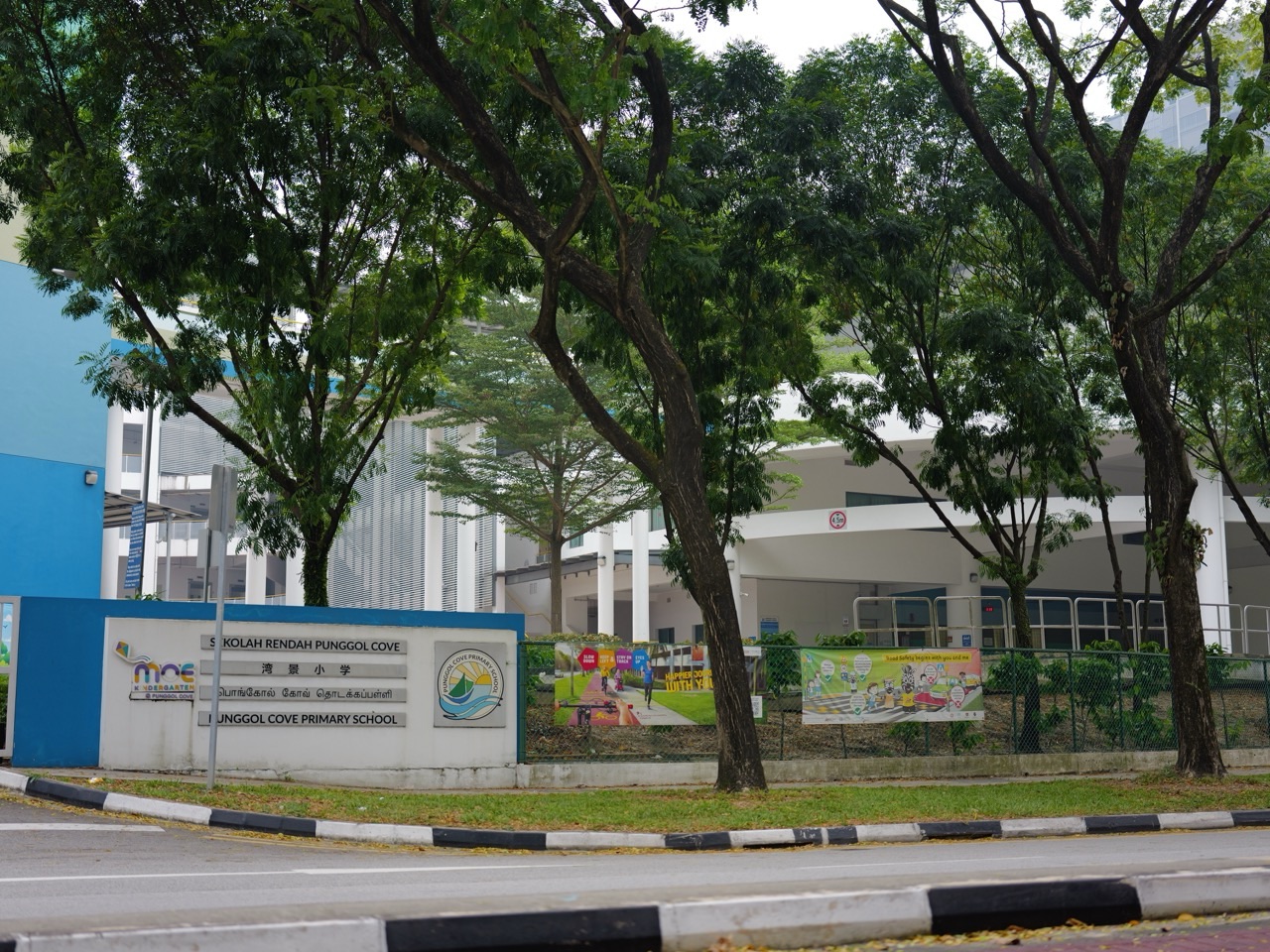
Schools and education at Punggol can change when a family moves home and needs a nearer primary school. MOE’s Primary School Transfer Service is intended for eligible Singapore Citizen or Permanent Resident pupils currently in Primary 1 to Primary 5 whose residence has changed or will change. Crucially, the central transfer process does not let parents choose a preferred receiving school: MOE considers a nearer school with available vacancies. Moving close to a popular campus therefore does not guarantee admission to it.
For the December 2026 transfer exercise, the published application window runs from 2 November at 9 a.m. to 26 November at 4.30 p.m., with an outcome date of 10 December, subject to current MOE instructions. This guide explains the rules, the official online process, address documentation, school vacancies and how Punggol families can plan transport, schoolwork and student care after a confirmed offer. Primary 1 registration and overseas-returning student admission are separate pathways.
- Who: eligible SC/PR pupils in Primary 1–5 with a genuine residence-related move.
- The service is not a general preference-based school-change application.
- No preferred receiving school can be selected in the central transfer service.
- MOE considers schools nearer the new home with places available.
- The published December 2026 application window is 2–26 November.
- An application acknowledgement is not a transfer offer or school placement.
- Use the official MOE portal and truthful address information.
- School reporting, documents and updated residence requirements must be followed.
- A new school does not automatically provide a student-care or transport place.
- Parents should protect learning continuity, friendships and the child’s confidential records.
Definition lock: primary transfer, residence, vacancy and official offer
The Primary School Transfer Service is MOE’s central process for eligible primary pupils seeking a nearer school after a genuine residential relocation. A vacancy is an available place at the relevant school level, not a promise based on a building’s physical proximity. A transfer application is a request to be considered; an official offer identifies the approved placement and reporting requirements. These concepts should not be confused with the separate Primary 1 registration phases, which have different eligibility and school-choice arrangements.
What a relocating Punggol family should check
- The child’s citizenship and current primary level.
- The real new address and applicable official declaration.
- The live transfer exercise opening and closing dates.
- Whether MOE accepts the family situation under the service.
- The inability to select a preferred school in this process.
- The exact official outcome and reporting requirements.
- Transport, student care, books and support after a confirmed offer.

1. The transfer service solves a relocation problem, not a school-preference contest
Moving to a new home can change a child’s school journey substantially. The family may have to cross unfamiliar roads, spend longer on public transport or arrange care at a different time. Singapore’s MOE Primary School Transfer Service provides a central route for eligible families who have changed or are changing their residential address and need a school nearer to the new home. The purpose is practical access, not a general application to whichever popular school a parent would prefer.
The published MOE guidance describes eligibility for Singapore Citizen and Permanent Resident children currently studying in Primary 1 to Primary 5 whose family has relocated or will relocate. It distinguishes the transfer service from the Primary 1 registration exercise, which concerns children entering mainstream primary education in the following year. A Primary 6 child or a family merely hoping for a different school name should not assume the relocation service covers their situation.
What a parent needs to decide
One important condition surprises parents: applicants cannot select a preferred receiving school through the central transfer service. MOE considers a nearer school with vacancies. That is materially different from submitting a ranked list of attractive campuses. Families may still research practical issues, but they should not tell a child that applying guarantees admission to a particular school. The outcome depends on the official placement process.
Parents sometimes believe that moving to an apartment beside a school means a place is automatically available. Residential proximity and school vacancies are separate requirements. A campus may have limited capacity at the child’s level, and the official offer may involve another qualifying school that is closer than the current one. A family’s travel estimate is helpful for planning but cannot override the central allocation rules.
An assumption to correct and a changed case
Another issue is the timing of the move. MOE’s guidance addresses both completed relocations and intended addresses, subject to the relevant declaration and supporting requirements. A family should use accurate information and verify the address-update obligations before reporting to a new school. An invented residence or a borrowed address is not an appropriate way to seek admission and can create serious administrative consequences.
For transfer, imagine two hypothetical parents: one has actually moved farther from the current school and another simply prefers a different school after seeing its awards. Which has the relocation issue the service is intended to address? The distinction protects readers from applying under a mistaken assumption.
2. Who can use the primary transfer route and who should ask about a different route
MOE’s published Primary School Transfer Service FAQ identifies three broad eligibility elements: the child is Singapore Citizen or Permanent Resident, is currently in Primary 1 through Primary 5, and the family has changed its residential address. Parents and adoptive parents can apply, and the FAQ describes processes for certain caregivers and guardians. These conditions are administrative rules, not a test of academic performance or a reward for choosing a particular neighbourhood.
The child’s school level matters. A pupil currently in Primary 5 may be facing the approach of Primary 6, with examination preparation and subject choices that require careful continuity. The family should still read the official eligibility and timing information instead of assuming the service ceases automatically after one particular month. An actual application is considered under the relevant exercise. A Primary 6 pupil should consult the current school and MOE about suitable alternatives rather than try to force the child into a P1–P5 form.
What a parent needs to decide
Children entering Primary 1 belong to the P1 registration and admission system. International students or returning Singaporeans may have their own applicable procedures. A family arriving from overseas should not assume that a local relocation transfer is the right first step. Official admission categories differ for good reasons, including citizenship, previous school attendance and available places. The family can check MOE’s education admissions information for the correct situation.
Some families are staying with grandparents or another caregiver after a household change. The service documentation discusses caregiver addresses under specified conditions and supporting records. Whether that route applies should be confirmed through the official instructions and the current school. Do not assume that a convenient address can be used merely because a relative lives nearby. The residence and care arrangement must be represented truthfully.
An assumption to correct and a changed case
Eligibility to submit an application does not equal eligibility for a desired outcome. The family may satisfy the basic conditions and still face vacancy constraints. It is important to retain the existing schooling arrangement until official instructions establish what should happen next. A parent should not withdraw the child from the current school simply because a transfer form has been submitted.
For a new hypothetical case, a child is a Permanent Resident in P3, moves to a genuinely different residence, and wishes to reduce the travel burden. What is confirmed, and what remains uncertain? The family may meet the broad application criteria, but an actual offer and receiving school remain subject to MOE’s process and vacancies.
3. The November–December 2026 transfer exercise has specific dates
School transfer exercises are date-sensitive. Si Ling Primary School’s official admissions page provides a clear 2026 reference: the December transfer exercise application period runs from Monday 2 November 2026 at 9 a.m. to Thursday 26 November 2026 at 4.30 p.m. The published outcome date is Thursday 10 December 2026. Its reporting period runs from Friday 11 December to Thursday 31 December 2026. These are the 2026 exercise dates, not a promise about a later December cycle.
At the article’s review date of 4 November 2026, that November application window has already opened. A family considering a genuine relocation should check MOE’s live Primary School Transfer Service page for eligibility and any updated instructions before submitting. It is inappropriate to treat a dated school reference as a guarantee that every administrative detail remains unchanged. The current central system and MOE communication take precedence.
What a parent needs to decide
An earlier June 2026 transfer exercise also appeared in the same official school notice, with a different application and outcome schedule. That illustrates why parents should avoid applying the June dates to December or vice versa. A screenshot without a title or year can cause confusion. When a parent shares calendar advice, include the relevant exercise and official link rather than a bare day and month.
The outcome and reporting dates are not ordinary school term dates. The family may need to gather documents, make transport arrangements or arrange a new uniform after an offer. These tasks should be planned, but the new school’s reporting process controls actual admission completion. A parent should not assume that the final reporting date automatically means the child begins classes that day. The school will explain onboarding and term arrangements.
An assumption to correct and a changed case
If the family’s moving date differs from the application date, the official service may allow an intended-address declaration under relevant conditions. This is not permission to invent a residence or submit conflicting records. Parents should read what address evidence is required and when identity information must be updated. A legitimate planned move still needs truthful reporting.
For transfer, imagine an application submitted after the published 26 November closing time. Can the family assume the system will silently consider it for the same exercise? No. The appropriate step is to check the current official guidance rather than predict an exception.
4. An offered school is not chosen through a public ranking
MOE’s FAQ states that parents cannot choose the school under the relocation transfer service. The new placement is considered according to vacancies and proximity to the declared new residence, and the offered school should not be farther from the new home than the current school under the stated rules. This design aims to address the change in travel circumstances. It should not be confused with a transfer motivated primarily by a preferred academic programme or school reputation.
A family may still research possible schools using MOE SchoolFinder, but that exploration is for understanding the local education environment and practical requirements. It does not transform the transfer application into a ranked list. The parent should avoid telling a child that filling the form will produce a place at Oasis Primary or Punggol Cove Primary solely because those campuses are nearby. Each campus’s available space may differ at the relevant level.
What a parent needs to decide
School choice is also more complicated than a visual distance between two map pins. Official criteria and vacancy management determine placement. A family’s preferred bus route, tuition location or relative’s convenience may matter for their life but cannot create a vacancy where none exists. A sensible plan therefore includes the possibility of an offer that is closer but not the family’s first imagined option.
Children can be anxious about leaving known teachers and friends. Parents should discuss the possible change without attaching a promise to a named school. Explain that the responsible authority is considering a nearer appropriate place, and that the family will share the confirmed details once known. Avoid turning the wait into a daily comparison of classmates’ school prestige.
An assumption to correct and a changed case
Some parents hope that a popular school’s past results or distinctive programme will lead to better outcomes automatically. That is not evidence about an individual pupil or the transfer process. School climate, actual curricular demands, support, travel and the child’s adjustment also matter. A closer school may reduce fatigue, but no transfer guarantees improved grades.
For an unfamiliar example, a family lists three Punggol schools from a map and asks MOE to allocate only the first. What is the error? Under the central service, preferred-school selection is not part of the stated application process. The family must understand the real vacancy-based allocation rather than a homemade ranking.
5. Apply through the official MOE transfer system and protect the child’s records
MOE’s online transfer instructions direct families to the Primary School Transfer Service page at moe.gov.sg/primary/transfers and the official application system. The published step-by-step guide describes entering the child’s identifying details, parent or guardian information, the address to be used and a declaration before submission. Singpass is involved in the authorised access process. Parents should follow the live workflow rather than use a third-party form claiming it can submit or accelerate the transfer.
An application may allow several eligible children from the same family to be included according to the current system’s instructions. That does not guarantee they will be offered the same campus or identical arrangements. The official service and actual outcome determine what happens. Families with siblings should ask about the relevant process instead of assuming one household application creates one common school allocation.
What a parent needs to decide
Medical records, birth-certificate identifiers, NRIC details and home addresses are sensitive. Parents should not post their application screenshot into an open group seeking advice. The family can retain a private acknowledgement and contact the current school or MOE through authorised channels if clarification is needed. An external helper requesting Singpass credentials or one-time codes should be treated with caution.
MOE’s documentation explains that the service may use a registered or intended residential address, with relevant conditions. The family must ensure that information is accurate and be prepared to provide suitable proof at reporting. Address changes and caregiver arrangements may require different supporting records. A successful electronic submission is not a substitute for meeting the final document requirements.
An assumption to correct and a changed case
A common mistake is confusing the application acknowledgement with an offer. The acknowledgement establishes that a submission was recorded; it does not decide which school the child will enter. Families should wait for the official outcome before cancelling an existing school bus, buying an expensive uniform or informing the child that a specific campus has accepted them.
For transfer, imagine a forwarded message saying a private agent can secure any Punggol primary-school transfer for a fee. What evidence would be needed? The official MOE process and vacancy-based rules do not support such a guarantee, and families should not share sensitive information with the unverified agent.
6. A genuine address change needs accurate documents and a realistic timeline
Moving house involves more than one date. The family may sign an agreement, receive keys, move belongings, update official addresses and begin living at the new home at different times. MOE’s transfer service allows certain intended-address applications, subject to official conditions and subsequent verification. A parent should read the relevant declaration carefully because the address used for placement must correspond to a genuine eligible arrangement.
One fictional family signs a lease in November and plans to relocate in December. The appropriate question is whether the official transfer service permits the intended address under those circumstances and what must be completed before reporting. A parent should not alter identity records inappropriately to make the timing look easier. The responsible MOE guidance, not informal advice, governs address verification.
What a parent needs to decide
Where a child’s caregiver lives at a separate address, the situation may require additional documentation and consultation with the current school. The transfer FAQ provides guidance concerning caregiver arrangements. This should not be turned into a general shortcut to popular campuses. School authorities need to understand the child’s real care circumstances, which may be relevant to safety and everyday attendance.
Parents can prepare practical materials after reviewing the official requirements: current school details, suitable address records, authorised caregiver contacts and the child’s relevant educational support information. A private checklist reduces last-minute confusion. Avoid uploading full documents into unrelated cloud links or family group chats. Only the responsible institutions should receive sensitive records as necessary.
An assumption to correct and a changed case
A missing document or technical problem can prevent an otherwise eligible family from completing a step. Ask the current school or official support service which evidence is accepted and what to do before the deadline. Do not infer that a sympathetic account in a parent group waives the requirement. The official system’s instructions and MOE decisions remain authoritative.
For transfer, compare two hypothetical cases: an intended genuine relocation with supporting evidence and a convenience address where the child will not reside. The ethical and administrative difference should be clear. The service is intended for real residence-related need, not address manipulation.
7. Plan the practical school change before cancelling existing arrangements
A family that receives an official transfer offer may need to reorganise school materials, transport, after-school care, uniforms, communications and possibly subject arrangements. Those tasks should be completed in the order required by the receiving school. An offer is not the same as having finished reporting and onboarding. Parents should ask which documents and actions are necessary and which school will contact them about the first day of classes.
School-based Student Care Centres are separate services with their own vacancies and registration. A transfer to a new campus does not automatically carry the existing child-care place to that school. The family should confirm whether suitable after-school care is available and whether a new application is required. A childcare gap can be as disruptive as a travel problem, so it deserves planning before the first new school day.
What a parent needs to decide
Transport options also change. A nearer campus may be within reasonable walking distance, require a different LRT route or use a new school-bus operator. The family should confirm the safe route and actual provider details. A shorter journey is not automatically safer if it involves an unsuitable crossing. Children may need supervised practice before moving independently through the new environment.
Textbooks and uniforms are another cost. A new school may have different attire, booklists or CCA arrangements. Ask the receiving institution which items are essential and whether approved financial support is available. Buying multiple sets before an official offer can waste money. Parents should also check any relevant restrictions or arrangements regarding existing CCA commitments.
An assumption to correct and a changed case
Communication systems must be updated. Parents Gateway messages, class details, absence reporting and emergency contacts may need to reflect the new school. A family should not assume that leaving one school automatically completes every other enrolment or app update. The receiving school can explain its onboarding instructions. Parents must keep phone and authorised collection contacts accurate.
For transfer, give the family a fictional confirmed offer and ask them to list the first three steps: report as instructed, confirm safe daily arrangements and obtain the necessary school-specific materials. The answer should follow the real administrative sequence rather than begin with optional purchases.
8. Learning continuity involves more than moving exercise books
A child changing schools partway through primary education may encounter differences in topic order, teaching methods, assessments or classroom routines. Schools share the national curriculum but can sequence parts of it differently. A pupil may have learned one Science concept thoroughly while the receiving class has already moved to a related topic. The family should not assume that all gaps can be solved by copying a classmate’s worksheet.
A useful transition discussion identifies what the pupil already understands and what the new class is currently learning. Teachers can compare relevant work samples or explain the next prerequisite. Parents can help with a short independent question rather than immediately purchase a large tuition package. A targeted correction can make school adjustment easier without overwhelming the child at the same time as a move.
What a parent needs to decide
Children may also have Standard or Foundation subject combinations at upper-primary levels, Mother Tongue arrangements or existing support needs. The family should communicate authorised information through the proper school process. A public article cannot guarantee that every receiving school has an identical class timetable or support programme. Asking for clarification is more responsible than guessing from a neighbour’s school materials.
Some pupils need time to understand classroom expectations and build new friendships. A child who appears hesitant in the first week may be adapting to unfamiliar routines rather than losing academic capability. Parents can listen, identify a trusted adult at the new school and avoid comparing every aspect of the new campus with the previous one. A move can be emotionally meaningful even when it reduces travel.
An assumption to correct and a changed case
Private records such as assessment feedback, SEN plans or health needs should be transferred through authorised school channels. Families should not upload such material to an informal parent chat seeking a quicker introduction. The receiving school can explain what it needs to support the pupil. Protecting confidentiality is part of a respectful transition.
For transfer, imagine a P4 pupil who encounters a ratio topic earlier at the new school than at the old one. Which response is useful? Identify the missing prerequisite, request teacher guidance and practise an appropriate changed example. A new school does not automatically require revising the entire curriculum from Primary 1.
9. Friendships and belonging deserve a plan after a move
A school transfer can mean leaving familiar friends, teachers, activities and routines. A child may be relieved by a shorter commute and sad about losing everyday contact with classmates. Both feelings can coexist. Parents should avoid presenting the move as a clear emotional improvement that the child must celebrate immediately. A calm explanation of confirmed facts and opportunities for appropriate questions can help the pupil adjust.
On the first days, the child needs to know whom to approach if unsure about a classroom location, recess routine or group activity. A teacher or designated peer buddy may be available under school arrangements, but families should not assume every campus uses the same formal buddy programme. Ask the receiving school what support is provided for new pupils and how parents can communicate concerns.
What a parent needs to decide
Families may want the child to make close friends quickly. Friendships take time and cannot be assigned through an administrative form. An age-appropriate practice can involve greeting someone, asking to join a game and respecting a polite refusal. A child who has one difficult interaction has not automatically failed to settle in. Repeated harmful exclusion or safety concerns, however, require suitable school involvement.
Maintaining a few previous friendships may be possible through appropriate family contact, but the child’s personal information should not be distributed to classmates’ parents without care. The family can also preserve meaningful traditions such as reading a favourite book after school. A change of school need not mean replacing every familiar part of life overnight.
An assumption to correct and a changed case
Adults should watch for persistent distress or avoidance while avoiding a diagnosis from one worried morning. Contact the new form teacher with concrete observations if concern continues, and seek qualified support where appropriate. The child should not feel responsible for making the transfer appear successful to justify the family’s move.
For transfer, present a fictional child who enjoys the new timetable but misses a former classmate. How can the family acknowledge both experiences and provide a manageable next social step? That response builds belonging without forcing optimism.
10. What to do when the service does not produce the expected outcome
A transfer application can end without the family receiving the exact school or timing it imagined. Vacancy-based allocation means an eligible application is not a guarantee of the preferred campus. Parents should read the actual official outcome and any response or reporting instructions before deciding what to do next. They should not treat an online school’s past admission statistics as proof that MOE must have made an error in their child’s case.
Where the outcome is unsuitable or unclear, families can contact MOE or the current school through official channels to understand the stated procedures and any available options. A public article cannot promise an appeal will succeed or invent a special transfer route. Eligibility, vacancies and administrative discretion matter. The family’s factual relocation and care circumstances should be described accurately.
What a parent needs to decide
Do not withdraw the pupil from their existing school or terminate every transport arrangement on the basis of an unconfirmed expectation. If the child continues in the current school, the family may need to find a safer or more manageable commute. The school can provide guidance on attendance and relevant support, while actual bus and care providers have their own availability conditions.
Some families may wish to pursue a school transfer for reasons unrelated to changing residence. The central relocation service is not necessarily the appropriate mechanism. Ask MOE or the child’s current school what rules apply instead of declaring that every request can be submitted through the same form. International arrivals, returning residents and post-secondary transfers also have distinct processes.
An assumption to correct and a changed case
A transfer decision should not be used to rank a child’s worth. A pupil may attend a school that was not the family’s original preference and still learn well. Teachers, school support and the child’s daily development matter. The family can respond constructively by obtaining accurate information, maintaining continuity and recognising strengths instead of treating the allocation result as a social verdict.
For the final changed-context check, consider a family that moved but received no named-school choice in the transfer system. Which facts should guide the next action? The official outcome, current address, vacancy rules and MOE contact process, not rumours about privileged admissions or paid agents.
Worked case: moving home in Punggol during November 2026
Imagine a fictional Singapore Citizen pupil in Primary 3 whose family is moving from an address far from the current school to a new residence in Punggol. The family checks eligibility, the 2–26 November 2026 official application window and its real address evidence. They submit through the authorised system without selecting a preferred school and await the MOE outcome. Only after a confirmed offer do they arrange reporting, new transport, schoolbooks and any separate Student Care Centre place. The example illustrates the administrative sequence, not a guarantee that any named Punggol primary will have a vacancy.
Four-week transition planning for a confirmed transfer
Week one: read the official result and complete reporting as directed. Week two: confirm class, teacher, materials, transport and authorised collection. Week three: examine one current learning objective in the receiving class and identify any missing prerequisite. Week four: ask the child about practical routines and friendships, then seek private teacher support for continuing difficulties. The exact timing follows the school’s instructions and the child; it is not a nationally mandated transition schedule.
Frequently asked questions
Who is eligible for MOE’s Primary School Transfer Service?
The published criteria cover Singapore Citizen and Permanent Resident pupils currently in Primary 1 to 5 whose family has moved or is moving residential address, with relevant additional requirements.
Can I select Punggol Cove Primary or another preferred school?
No. MOE’s central relocation service does not let applicants select a receiving school. Placement considers nearer schools with vacancies under its rules.
What are the December 2026 exercise application dates?
The official Si Ling Primary notice records 2 November 2026 at 9 a.m. to 26 November at 4.30 p.m., with outcome on 10 December. Check MOE’s current system for any updates.
Does a home near a school guarantee a vacancy?
No. Distance is only part of the transfer arrangement, and actual availability at the relevant level matters.
Can I apply with an intended new address?
MOE’s guide describes intended-address applications under conditions, with relevant declarations and address-verification obligations.
Does the transfer service include P1 registration or secondary schools?
No. P1 registration and secondary admission or transfer follow their own rules and processes.
Does a transfer offer automatically include student care or a school bus?
No. Student care, transport, uniform and other services have separate availability and enrolment arrangements.
What if my child needs learning or SEN support at the new school?
Discuss relevant needs and records privately with authorised school staff, ask about appropriate support and plan learning continuity.
Your Next Step
If your family has genuinely moved or is moving, open MOE’s current Primary School Transfer Service page and check the eligible level, address conditions and live application window. Do not promise your child a named Punggol school before an official offer. Keep the current school arrangements secure until reporting directions are confirmed, then plan the child’s learning and wellbeing at the receiving campus.
Official sources and related Punggol guides
- MOE Primary School Transfer Service: Current Eligibility, Application and Outcomes
- MOE Official Step-by-Step Primary Transfer Guide
- MOE Primary School Transfer Service Frequently Asked Questions
- Si Ling Primary Official 2026 June and December Transfer Exercise Dates
- Punggol Primary School: P1 Admission, Transfer and Returning Singaporeans
- MOE SchoolFinder
- MOE Primary 1 Registration: Different Admission Process
- Schools and Education at Punggol | Safe School Journeys
- Schools and Education at Punggol | Attendance and Catch-Up Learning
- Schools and Education at Punggol | Student Care and 2027 Fee Assistance
Editorial reference: 4 November 2026. Exercise dates refer to the stated 2026 window and should not be reused for later years. School allocation and vacancies are determined by MOE; all family scenarios are hypothetical.


