
Corporate video production is a legitimate creative industry serving technology companies, retailers, schools, manufacturers and other businesses in Punggol, Sengkang, Pasir Ris and Seletar. The possible work includes product demonstrations, staff training films, interviews, short vertical videos, event recordings, animation, photography and properly licensed media delivery. But a camera operator, drone pilot, production agency and copyright owner may have different rights and obligations. A business planning 2027–2037 needs contracts that define the client, filming location, participants, deliverables, rights and fees. A compelling scene shot beside Punggol Waterway is not automatically lawful for commercial use, and paying a producer does not by itself guarantee ownership of all the footage or music.
NParks’ current guidance says that commercial photography or filming at its parks generally requires a permit application at least two weeks in advance. In nature parks and nature reserves, the relevant commercial filming permit must be applied for at least one month in advance. The Personal Data Protection Commission’s guidance explains that photographs or recordings identifying individuals can fall within Singapore’s Personal Data Protection Act; public-place exceptions may apply in some circumstances, but an organisation’s later marketing use still needs its own lawful basis. IPOS explains that commissioned creators generally own copyright in works such as films and photographs by default, unless a written agreement provides otherwise, while work created by ordinary employees in the course of employment is treated differently. Music and third-party content may require appropriate licences. These real rules make accurate project planning, consent and rights clearance essential business capabilities.
- Industry: Commercial video production, corporate films, short-form social media content, professional photography, editing, animation and media licensing.
- Regional clients: Punggol Digital District enterprises, North-East retailers, Seletar engineering firms, education providers and authorised event organisers.
- Location rules: NParks commercial park filming permits, private landowner permission and separate aviation approvals for drone operations.
- People and privacy: Appropriate consent or lawful basis for collection, use and publication of identifiable images and other personal data.
- Copyright: Creator, employee, client and third-party media rights must be distinguished and documented in proper agreements.
- Supplier roles: Producer, director, camera crew, editor, animator, sound professional, talent agent and authorised media rights holder.
- Economics: Planning, location access, staff, equipment, editing rounds, captions, music licences, storage and client changes.
- 2027–2037: Commercial planning scenarios, not guaranteed social-media views, licences, advertising revenue or public filming access.

Why commercial media production is an industry
A short video may run for thirty seconds, but producing it professionally can require many stages. A business may need to identify the audience, write a script, obtain access, arrange speakers, record sound, film, edit, add accurate text, review rights and publish in the correct formats. Each stage consumes staff and equipment time. A client paying for a film is buying an outcome, not merely the camera’s recording duration.
Different products have different value. An engineering firm may want a demonstration of a process, while a retailer needs a clear product video for customers. A training provider may require subtitles and detailed explanation. A conference organiser may need a reliable recording of speakers. A strong production company chooses the audience and purpose before selecting visual style.
Punggol provides locations but not unrestricted access
Punggol has waterfront routes, Punggol Digital District, the SIT campus, shopping premises and public spaces that could be visually useful in a production. But the site owner or land manager controls relevant filming access. A camera crew may not reserve a busy corridor, block pedestrians or film within restricted offices without permission.
A founder should obtain the correct location agreement before promising clients a particular scene. Publicly accessible does not automatically mean commercially available. An authorised production may need insurance, safety planning and restrictions on equipment or operating hours. A business with reliable permission processes can deliver more consistently than one that arrives unannounced with tripods and asks everyone else to move.
NParks distinguishes parks from nature reserves
NParks says that commercial filming and photography at parks generally require a permit application at least two weeks in advance. Its guidance for nature parks and nature reserves requires at least one month for commercial photography or filming. Those lead times are important when a client wants a promotional video ready next weekend.
A production company should identify the exact location and current rules before quoting. A permit may have conditions, and an application does not guarantee approval. The team should not assume a beautiful open space can be used for an unrestricted all-day shoot. Honest scheduling and alternative locations can prevent expensive cancellations.
Punggol Waterway has shared public uses
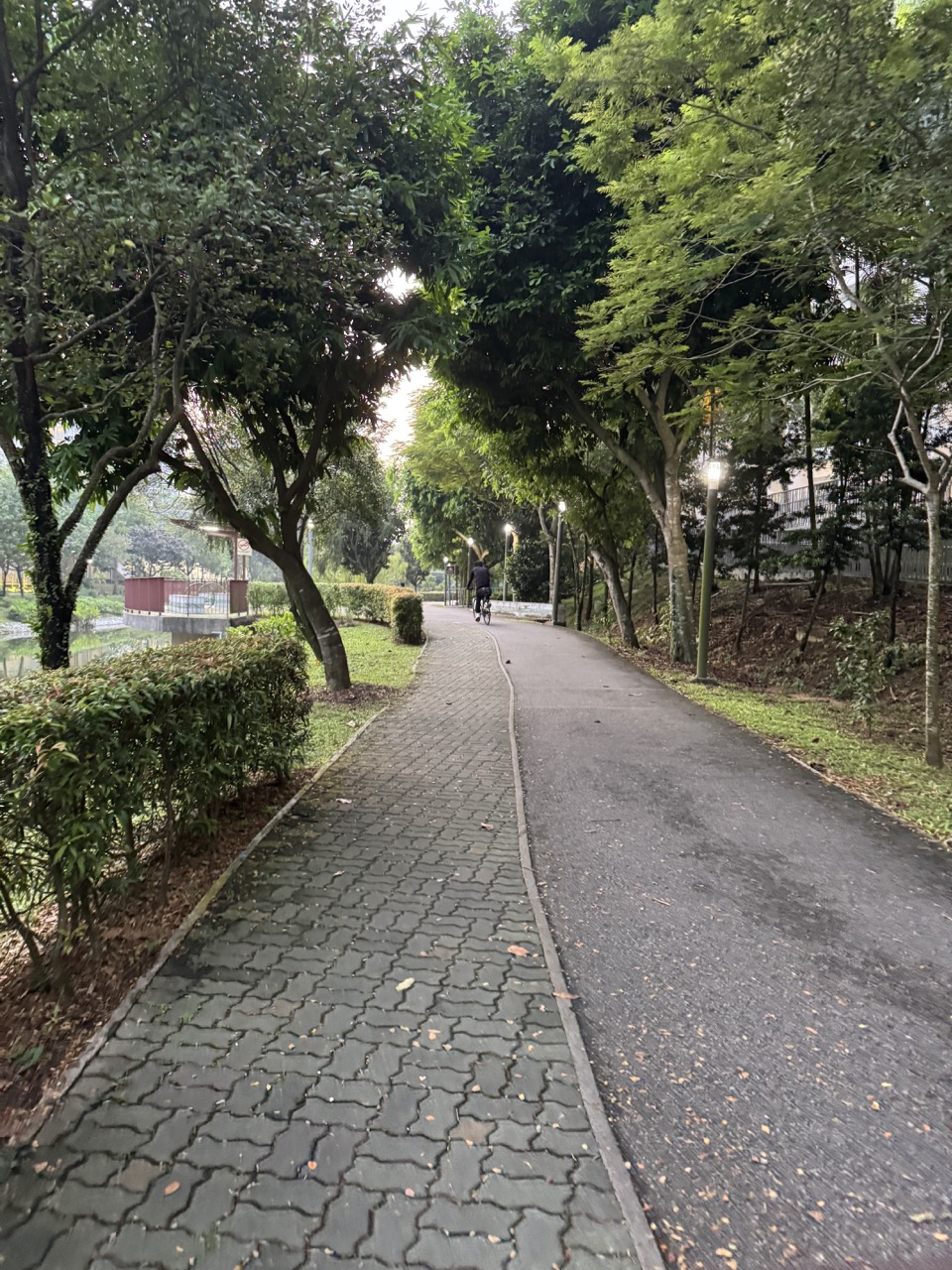
Punggol Waterway Park is an everyday space for residents, families, walkers and other visitors. A commercial camera crew should respect ordinary public access, vegetation and applicable NParks rules. It should not move public barriers or block a path merely to achieve a dramatic camera angle. Filming an advertisement is not a reason to treat public amenities as a private studio.
A good location plan identifies permitted equipment, crew size and timing. A small, respectfully organised shoot may be easier than a complex production involving generators and temporary structures. The company should communicate with the relevant authority rather than ask users to disregard access restrictions. The best creative work can coexist with responsible use of shared space.
Private buildings need actual owner consent
A tenant may allow an interview inside its own approved premises, but filming common areas or external facades may require landlord or managing-agent agreement. A business client is not necessarily authorised to grant access to every part of the building. A production company should obtain a written location arrangement where appropriate.
The contract may address delivery access, public areas, equipment placement and who repairs accidental damage. Security-sensitive offices might restrict filming of screens, documents or access systems. The crew should avoid recording unintended confidential information. Getting these details right saves editing time and protects the customer’s trust.
A drone is subject to different regulations
Aerial footage can be attractive, but commercial drone operations in Singapore have CAAS requirements that differ from ordinary ground filming. A video production company does not become an authorised unmanned aircraft operator merely by buying a drone. The applicable pilot, operator and activity permissions depend on the flight.
Our Punggol commercial drone surveys and geospatial services guide explains these technical and regulatory boundaries. A media producer may engage a properly authorised drone specialist where feasible. It should not advertise aerial scenes above sensitive or restricted locations before flight approval is confirmed. Ground filming and aerial operations belong in separate planning checklists.
Public-space privacy needs context
The PDPC explains that photographs and videos can constitute personal data when a person can be identified. It also describes exceptions where information is publicly available at locations or events open to the public. That does not mean all images captured in public can be reused without restriction for every corporate advertising purpose. The application of exceptions depends on the circumstances.
A production company should identify the people whose images are intentionally central to a campaign and obtain appropriate consent or another lawful basis. Background footage also deserves careful review, especially when children or sensitive situations appear. A sensible filming process minimises unnecessary personal information and makes intended use clear.
A model release is a useful contract tool
Commercial productions often involve actors, presenters or identifiable interviewees. A written release can clarify which recording and uses are agreed, how long material may be used and whether there are limits on editing or promotion. Its legal effectiveness depends on the actual wording and circumstances. A generic release downloaded from the internet may not cover every proposed campaign.
The production company should tell people whether content may appear online, in advertisements or across different countries. A staff member participating in an internal training video may not expect to become the face of a public product promotion. Clear communication and consent reduce disputes and support professional relationships.
Children require particular care in commercial filming
A video featuring children can involve parental or guardian permissions and other safeguarding considerations. A production team should not assume a school principal’s general enthusiasm authorises unrestricted commercial use of every pupil’s image. Schools and education institutions may have additional rules and agreements.
A responsible company plans supervision, comfortable work periods and accurate descriptions of the shoot. It should not pressure a child to perform or expose private information to create emotional publicity. The commercial objective must be compatible with participant welfare. A beautiful final film cannot justify unsafe or exploitative production practice.
Copyright belongs to a legal owner, not automatically the payer
IPOS’s January 2026 guidance explains that the creator of commissioned works such as photographs or films generally owns copyright by default, subject to contracts that allocate ownership differently. An employer generally owns work made by ordinary employees in the course of employment, with specified exceptions. These distinctions affect what the client actually buys.
A production contract should clarify whether the customer receives an assignment of copyright or a licence to use the finished film for defined purposes. A client paying the invoice may reasonably expect extensive usage, but the legal arrangement needs to be documented. A producer should not promise unrestricted ownership when music, stock footage or other third-party material is only licensed for limited use.
Assignment and licence have different effects
An assignment transfers ownership of specified copyright, subject to the contract and law. A licence allows defined use while ownership remains with the original rights holder. A company might permit a customer to publish a video on its website and social channels without assigning every underlying creative asset or project file.
The parties should decide which arrangement fits the purpose. A client seeking global advertising rights may need broader permission than one ordering an internal training video. A production agency should explain material limitations before the campaign launches. Clear contracts avoid disputes when a customer later repurposes the video.
Raw footage needs explicit treatment in the agreement
A client may ask for the edited final video, while later expecting every raw camera clip and the editable project files. Those are different deliverables and may include unused material, third-party assets or sensitive footage. A founder should identify which files are included, their formats and any conditions.
The supplier may offer raw footage or an archive service for an additional legitimate fee. It should not withhold material that the contract already requires. Likewise, a client should not expect ownership of unrelated stock or licensed music. Accurate scope is commercially fair to both sides and reduces post-delivery conflict.
Music rights are not cleared by convenience
Adding a popular song to a corporate video can require permission for the musical work and relevant sound recording or other rights. A personal streaming subscription is not necessarily a licence to synchronise commercial video with the track and distribute it publicly. IPOS lists collective management organisations such as COMPASS and MRSS that administer certain rights.
A production company should check which rights are necessary for the intended media and territories. Some libraries supply licensed music under defined conditions, but the contract still matters. The producer must not assume every track found online is free for advertising. Music clearance belongs in the budget before editing begins.
Royalty-free does not always mean unrestricted use
Some stock footage, music or graphics are marketed as royalty-free. That term can mean a specific licence structure, not universal permission without conditions. Usage may be limited by campaign type, audience, redistribution, duration or other restrictions. A business should read the relevant licence and keep supporting records.
The project file should identify where each asset came from and which rights the client receives. A customer may later request television, outdoor advertising or a much broader distribution campaign. The original licence might not cover it. Clear asset records prevent urgent legal problems when a successful video is republished elsewhere.
The script must be accurate, not just persuasive
A corporate video may describe product performance, prices, company history or regulatory status. Those claims should be checked with the client and suitable subject experts. A production agency is not automatically competent to certify medical, financial or engineering claims. It should not invent facts simply to make narration more dramatic.
A useful workflow includes a factual review before filming and another check before release. A scientific demonstration should distinguish a prototype from approved commercial use. A retailer’s promotion should be accurate about terms. Strong storytelling is compatible with honesty, and inaccurate content can damage both client and agency.
Interviews need a real editorial agreement
A producer may interview staff, customers or experts. The scope should identify the purpose, proposed publication and whether quotations will be edited. A participant may provide information that is confidential or outside their authority to disclose. The production company needs a method for handling those situations.
A good interview process respects what the speaker actually said. Editing can remove pauses and improve clarity, but it should not reverse the person’s meaning. A customer who requests a misleading splice may create reputational and legal risks. Professional judgement is part of the service the production agency sells.
Vertical and horizontal videos are different deliverables
A 9:16 vertical short is useful for particular mobile feeds, while a 16:9 landscape film may fit a website, presentation or other platform. Reframing one recording into both formats is possible but may crop people or important visual details. The producer should discuss deliverables before filming so that composition and graphics support the required versions.
A contract should state each resolution, aspect ratio, length and caption requirement. A client ordering four versions is not necessarily buying only one edit. Multiple outputs increase quality-checking and delivery work. A supplier can price those tasks fairly when the scope is defined from the beginning.
A short video is not automatically quick to produce
A fifteen-second video may need research, scripting, filming, multiple takes, subtitles and approval. Its short duration can make each frame more important. A client may also ask for several cuts tailored to different audiences, which increases editing work. A founder should not price only according to the final number of seconds.
A useful quotation separates pre-production, production and post-production. Changes after filming may require another session. Clear milestones help customers understand why a polished short can cost more than a rough longer recording. The value lies in effective communication, not merely running time.
Subtitles can be an accessibility and quality service
Captions help viewers follow speech in noisy environments and may make content easier to access. They need accurate wording, timing and readable placement. Automated transcription can reduce initial labour but may mishear technical terminology, names or accents. A quality review remains important.
A production agency could offer reliable subtitling and multilingual adaptation as a specialist service. It should know whether the client needs burned-in captions, separate subtitle files or both. Different delivery platforms may have separate requirements. A supplier that handles these accurately can create value without promising a viral campaign.
Multilingual production requires language competence
Singapore businesses may need English, Mandarin, Malay, Tamil or additional languages for different audiences. A translated script should preserve the intended meaning rather than substitute words mechanically. The supplier may need a qualified reviewer who understands the technical subject and local phrasing.
A firm should price translation, voice recording, subtitle timing and review separately where appropriate. A message about medicine, legal rights or machinery safety should not be translated casually by an unverified tool. Quality in multiple languages can expand usefulness, but it also increases responsibility for accuracy.
Animation and filmed footage have different cost structures
An animated explanation may avoid location filming but require character design, illustration, motion, narration and revision. Live-action production depends more heavily on crew, location and performers. Both can create effective content when matched to the actual subject. A product’s technical mechanism may be clearer in animation, while a real customer testimonial may benefit from genuine footage.
A founder should not assume animation is always cheaper because no camera is used. Complex motion graphics can take many hours. The proposal should specify visual style, resolution and review stages. A good supplier chooses the method that communicates accurately at a sustainable price.
Product demonstrations must respect technical limitations
A Punggol engineering or robotics firm may want to show what its prototype can do. Filming a successful trial can be useful, but viewers need context if the performance is limited to controlled conditions. A producer should not claim that an unapproved machine is operating commercially throughout the district simply because it moved along one test route.
The company needs permission to film equipment and access the premises. The client should review performance claims before publication. If a demonstration includes potentially unsafe activity, appropriate qualified oversight is essential. A good video helps prospective buyers understand actual capabilities without manufacturing unrealistic certainty.
Event recording is distinct from event organisation
An event producer may manage the whole conference, while a video team records speeches, interviews and demonstrations. These are separate commercial contracts. A cameraman cannot promise rights to all speaker presentations if the organiser has not obtained those permissions. Recording an audience can also raise data and consent questions.
Our Punggol technology conference and MICE supplier guide examines the wider industry. A media supplier should specialise in reliable audio, safe equipment placement, accurate records and delivery. An event can proceed successfully while a recording still fails if the team has not planned the technical details.
Sound quality can matter more than camera price
Viewers may accept a modest image, but unclear speech can make a training or interview video difficult to use. A professional production should assess the room’s noise, microphone choice, recording and monitoring. A business that spends heavily on cameras while ignoring sound may produce an expensive unusable film.
A supplier should include rehearsal and backup arrangements where appropriate. Sudden air-conditioning noise or an unexpected event can affect recordings. A credible crew listens through monitoring equipment and responds during production. Consistent speech quality is a practical reason for clients to hire professionals.
Lighting must be safe in real spaces
Professional lights can improve an interview but also create heat, electrical and access considerations. A crew should not overload circuits or run cables across busy paths without appropriate precautions. The building owner may restrict equipment and setup. The production team needs trained people and a safe method.
An indoor office shoot may allow a compact lighting kit, while a large outdoor set needs more planning. A founder should choose equipment according to the actual location and client purpose. A beautiful image is not a reason to risk staff or public safety. Responsible work can be efficient without excessive gear.
A location release should define the agreed use
A property owner may permit filming at specified places, dates and hours, while restricting logos, tenants or confidential areas. The producer should keep a record of that permission. A licence to enter a building for one interview is not a universal right to film future advertising campaigns there.
If the customer later wants to reuse footage in a different context, the contract may need review. A producer should not imply that a location release grants copyright ownership of everything visible. Different rights can apply to artwork, brands and people. Good records make future commercial reuse easier and safer.
AI-generated media adds verification challenges
Generative AI may assist with concepts, storyboards or supplementary visuals, but its output can contain invented objects, incorrect product details or accidental likeness issues. A business should not present an AI-generated demonstration as real footage of a completed engineering project. A client may also require disclosure about which materials are synthetic.
The producer should review factual accuracy, rights and confidential information before using AI services. A corporate logo, person’s face or private script may need additional care. A helpful creative tool does not remove responsibility for the final advertisement. Honesty about what is simulated can strengthen audience trust.
Presenter and performer rights deserve respect
An actor or presenter may agree to appear in a specific film under defined compensation and usage terms. The client should understand whether future changes, different markets or advertising campaigns are included. The producer should not assume one day’s appearance fee automatically permits unlimited synthetic cloning of a person’s voice or likeness.
A contract can address editing, reuse and appropriate approvals. Special care is needed for minors. A company seeking a consistent brand presenter should negotiate sustainable rights rather than repeatedly create ambiguities. Professional treatment of performers can be a long-term competitive advantage.
Data retention can create hidden cost and risk
High-resolution video produces large files. A production company may keep multiple camera copies, audio, project files and exports. Storage and backup cost money, and client footage may contain identifiable people or confidential information. A founder should decide how long the business retains material and who may access it.
The service agreement can distinguish short-term working files from optional paid archives. When records are no longer necessary, the company should follow appropriate retention and deletion responsibilities. A producer should not promise lifetime storage without calculating the expense. Reliable file management supports both security and repeat client work.
Client feedback needs a controlled revision process
A video project may involve several decision makers who disagree about script, footage or music. Without a review owner, the team can spend days making contradictory changes. A professional agency should agree on who may approve a stage and how feedback is consolidated.
The quotation can include defined revision rounds and explain the cost of additional filming or major changes. This is not about discouraging reasonable corrections. It is about preventing unlimited unpaid work and keeping the deadline realistic. A clear process improves both client experience and the agency’s financial stability.
A production schedule should include permission and review time
A project may involve scripting, filming access, talent availability, editing and rights clearance. Those dependencies affect the delivery date. A company should not guarantee completion tomorrow when a park permit requires advance application or when the client has not approved the script.
A good project plan identifies critical dates and alternatives. If permission is denied, the parties can select a permitted location or revise the concept. A creative agency that anticipates constraints may be more reliable than one making aggressive deadlines without understanding the work. Honest scheduling is a commercially valuable capability.
Pricing begins with the actual deliverable
A corporate client might request one two-minute overview video, three short social cuts, captions and a still-image set. Another may require filming several technical experts and delivering editable masters. These scopes differ greatly in cost. A founder should specify all formats, locations, participants and usage rights before quoting.
The business should include research, crew, transport, equipment, editing, licensing, review and delivery. An unusually low advertised “per video” price may hide significant exclusions. Buyers appreciate a transparent quote that explains why a product is useful and what work is necessary. Predictable scope supports fair pricing.
A fictional corporate video budget
Imagine a company pays S$8,000 for a defined corporate film. Planning and script development cost S$1,200, crew and equipment S$2,200, editing and captions S$1,900, music and rights allocation S$500, and project administration plus travel S$800. The illustrative total is S$6,600, leaving S$1,400 before wider overhead and tax.
These are invented examples, not actual Punggol production quotes. If the customer requests another filming day or extensive unplanned edits, the margin can disappear. The contract should explain legitimate changes and additional work. A successful creative project needs both effective communication and a financially sustainable process.
Retainer contracts create recurring obligations
A retailer may want four videos every month, with agreed scripting, recording and editing. A retainer can create predictable revenue, but only if the scope is defined. A production company must still fund staff, travel, revisions, licences and equipment maintenance. A promise of unlimited videos for a flat fee can quickly become unviable.
A sensible arrangement might specify deliverable count, formats, maximum filming hours and approval windows. The client benefits from consistent output, while the supplier can schedule crew efficiently. The business should not confuse recurring contracted work with guaranteed social-media success. Creative production and audience performance are related but separate questions.
View counts are not a guaranteed commercial outcome
A video may receive many views without helping a business find customers. Another may reach a small but highly relevant group of buyers. The client and agency should define the intended purpose before deciding how success will be measured. For a technical sales film, qualified enquiries may matter more than viral reach.
A production company should not promise a specific number of views or sales unless it has a defensible contractual basis and real delivery mechanism. Platform algorithms and audience behaviour can change. The creator can control quality and delivery, not guarantee universal attention. Honest metrics lead to better commercial decisions.
Video analytics need interpretation
A client may track watch time, completion, enquiries or website actions. These measures can help assess whether a film communicates effectively, but they can also be misleading. A short video can have a high completion rate while providing little useful information, and a longer film may serve a smaller specialist audience very well.
A supplier should interpret results against the intended purpose and distribution context. It should not manipulate metrics or buy fake views to create an appearance of success. A report can identify what is known and what should be tested next. Creative improvement is a process, not a claim that one video solved every marketing problem.
Industrial clients may need accuracy more than excitement
Seletar engineering firms or Pasir Ris manufacturers may want technical demonstrations for buyers. The footage should represent equipment, safety procedures and specifications accurately. Some processes are confidential or restricted. A production crew should coordinate with qualified staff and follow approved site safety rules.
A film should not depict unsafe work merely for dramatic effect. The client may need to review technical narration and diagrams before publication. A competent media producer can turn complicated information into clear explanations without inventing performance data. That accuracy can make the video valuable to serious buyers.
Educational films are different from entertainment clips
A school or training provider may want an instructional video with accurate concepts and accessible explanations. The agency needs subject review, logical structure, suitable examples and captions. Simply placing animated text over footage does not guarantee learning.
Our Punggol corporate training and workplace learning guide explores the broader training market. A video producer supplies one part of the learning experience. A subject expert should confirm technical accuracy, while the instructor determines how the video fits the programme. Clear responsibilities improve the result.
Animation can protect confidentiality when designed carefully
A client may need to explain a process without showing proprietary machinery or customer records. Animation can depict a simplified model under an agreed script. This may be useful, but the producer must not insert technical details that the client has not approved or present the animation as a faithful view of every real operating condition.
A good contract identifies which parts are conceptual and which claims are factual. The client should review sensitive content before publication. The agency can use visual clarity without compromising intellectual property. A narrow capability in trustworthy explanatory animation can be commercially valuable.
A fictional Punggol startup film
An authorised technology startup wants a two-minute explanation of its service. The production company interviews the team, checks which product features are genuinely available and prepares a short script. It obtains permission for filming inside the office and clarifies who can appear in the video.
The client approves the factual claims and distribution rights before editing is finalised. If the product has not launched, the film describes it honestly as a prototype or planned capability. A clear truthful story can help prospective buyers without falsely claiming regulatory approval or customer success.
A fictional North-East retail video supplier
A small agency offers a monthly package to a local retailer. It plans a compact shoot in the shop under owner permission and produces several appropriate vertical product videos. The contract includes defined revisions, captions and usage rights. The supplier checks that prices and product claims remain accurate.
The retailer evaluates whether the videos help customers understand its offerings. The agency does not guarantee millions of views. A manageable retainer can support both businesses when delivered consistently and priced for real work. The competitive advantage is dependable production, not exaggerated social-media promises.
A fictional commercial park film crew
A business wishes to film promotional footage at Punggol Waterway Park. The agency checks the actual location and NParks commercial filming requirements, allowing at least the published application lead time and waiting for the necessary permission. It prepares a small crew plan that respects public access.
If the request is not approved, the company proposes another lawful location or changes the creative concept. It does not arrive early to film without permission. The client benefits from realistic scheduling and avoids a costly cancelled shoot. Professional location management can be as valuable as camera technique.
A fictional editing and subtitling company
An editor works with authorised corporate recordings and creates accessible English subtitles, then offers properly reviewed additional-language versions. The service keeps source files secure and provides the customer with agreed exports. A technical reviewer checks specialist names, terms and claims.
The company may have low physical equipment costs but substantial staff time. It should charge for transcript review, translations, versions and changes rather than count only video minutes. The value lies in accurate, readable media that the client can use confidently.
A fictional licensed stock-video business
A photographer records material at suitable authorised locations and offers licence agreements for future client use. The company keeps records of property permissions, releases and any other rights. It defines what a purchaser may do with each clip, including commercial advertising or redistribution limits.
The supplier should not imply that any passer-by appearing prominently in a clip has approved unlimited endorsement. It also should not sell material containing confidential scenes recorded without permission. A stock library may create repeated revenue, but rights management and quality control remain ongoing costs.
Equipment ownership can reduce or increase risk
A small production company may purchase cameras, lights, microphones and editing computers. Owning equipment can improve availability but creates depreciation, insurance and maintenance costs. Hiring specialist gear for occasional jobs may be more economical. A founder should compare annual utilisation and actual project needs before buying the newest camera system.
Some clients care about recording format or technical specifications, while others only need a clear finished film. The best equipment choice serves deliverables, not the producer’s personal enthusiasm for hardware. Sound finances allow the team to invest in people, scripts and editing quality as well as cameras.
A small team needs backup arrangements
A producer may depend on one camera operator and one editor. If a key person becomes unavailable, a client deadline can be affected. The agency needs appropriate documented workflows and access to original files so competent substitutes can complete work. Confidentiality agreements and rights must continue to apply.
A larger crew is not always better; small productions can be efficient with a clear scope. The business must know when a project genuinely needs additional lighting, audio or technical support. A reliable roster and realistic schedule can make a small agency competitive without promising unlimited capacity.
2027–2029: prove one repeatable creative niche
In the early period, a new company can focus on a defined product such as short technical explainers, retail video packages or properly authorised event recordings. It should establish location permissions, release templates and copyright contracts early. These foundations protect the business as it develops a portfolio.
Customer demand should be verified through genuine paid projects. A founder should avoid assuming that every Punggol startup wants an expensive documentary. The first milestone is a strong result, satisfied clients and a sustainable margin. A few careful projects can build a stronger reputation than many rushed clips.
2030–2033: scale production and rights management
A successful agency may add multilingual delivery, animation or recurring corporate accounts. More clients introduce scheduling, staff and archive challenges. The company needs proper project management and a way to track rights across multiple campaigns. It should not automatically reuse earlier footage for a new customer without reviewing the original agreement.
AI and production software may improve some workflows, but human judgement remains important for factual accuracy, participant welfare and editing. The dates are planning checkpoints rather than a forecast of local media spending. Growth should follow evidence and dependable service.
2034–2037: adapt to changing platforms and viewing habits
New video formats, distribution channels and creative tools may emerge over a decade. A production agency cannot guarantee that today’s preferred aspect ratio or social platform will dominate in 2037. The durable capability is clear communication, accurate storytelling and lawful rights management.
A resilient supplier keeps its work adaptable and its contractual records organised. Customers should receive usable files and know what rights they possess. No one can guarantee viral results or recurring income. Long-term value comes from being a trusted production partner rather than a company selling the illusion of automatic online popularity.
Commercial media production readiness checklist
- What does the buyer actually need viewers to understand or do?
- Which deliverables, formats, lengths and languages are included?
- Is the filming location private, NParks-managed, restricted or otherwise subject to permission?
- Has commercial filming approval been obtained where required?
- Are aerial shots separately assessed under CAAS rules?
- Which people are identifiable and what consent or other lawful basis applies?
- Are children and vulnerable participants appropriately protected?
- Who owns the commissioned film, raw footage, graphics and project files?
- Are third-party music, footage, photographs and brand assets properly licensed?
- How are technical claims and translations reviewed for accuracy?
- Are filming, editing, captions, revisions and storage included in the price?
- Who may approve changes and final publication?
- Are client data and unpublished materials protected?
- Is the business model viable without guaranteed views or sales?
These questions turn video production into a professional service. Creative quality matters, but so do permission, privacy, rights and financial discipline. The strongest agency delivers content clients can use confidently, rather than attractive footage surrounded by unresolved legal and commercial problems.
Frequently asked questions
Can a company film a commercial advertisement at Punggol Waterway without permission?
NParks says commercial filming at its parks generally requires a permit application at least two weeks in advance. Other properties and specific activities can have separate requirements. Obtain the applicable permission before filming.
Are commercial filming lead times the same in nature reserves?
No. NParks describes at least one month’s advance application for commercial photography or filming in nature parks and nature reserves, rather than the general two-week park guidance.
Does a client automatically own commissioned film copyright after paying the invoice?
Not necessarily. IPOS explains that commissioned creators generally own copyright by default, subject to written agreement, with different treatment for certain employee-created works. The contract should specify ownership and licensing.
Can a production use any song found on a streaming platform?
No. Commercial video use may require permission for musical works and recordings under applicable licences. A personal listening subscription is not a universal commercial synchronization licence.
Does filming in public remove every PDPA obligation?
No such blanket conclusion is justified. Publicly available information exceptions may apply in certain circumstances, but the intended collection, use and publication must be assessed under the actual conditions.
Does paying for a corporate video guarantee social-media views or customers?
No. The production company can deliver agreed content, quality and formats, but audience behaviour and platform distribution remain uncertain. Performance measures should match the client’s real purpose.
Your Next Step: secure rights and location before the shoot
Choose one genuine customer and define the audience, claim, format and deliverables. Confirm filming permissions and participant arrangements, then write down who owns and may reuse the footage, music and graphics. Prepare a schedule that covers scripting, recording, editing and review, and price each stage honestly. A credible Punggol media business creates useful, truthful content with lawful rights—not an unsupported promise that any public location, famous track or paid performer can be used without limits.
Official sources: NParks photography and commercial filming permits, NParks nature park and reserve commercial filming rules, IPOS copyright ownership and commercialisation updated January 2026, IPOS Copyright Act commencement and commissioned works, IPOS collective management organisations and media rights, and PDPC advisory guidelines on photos and recordings. Check the location and each contract’s actual rights before production.


