
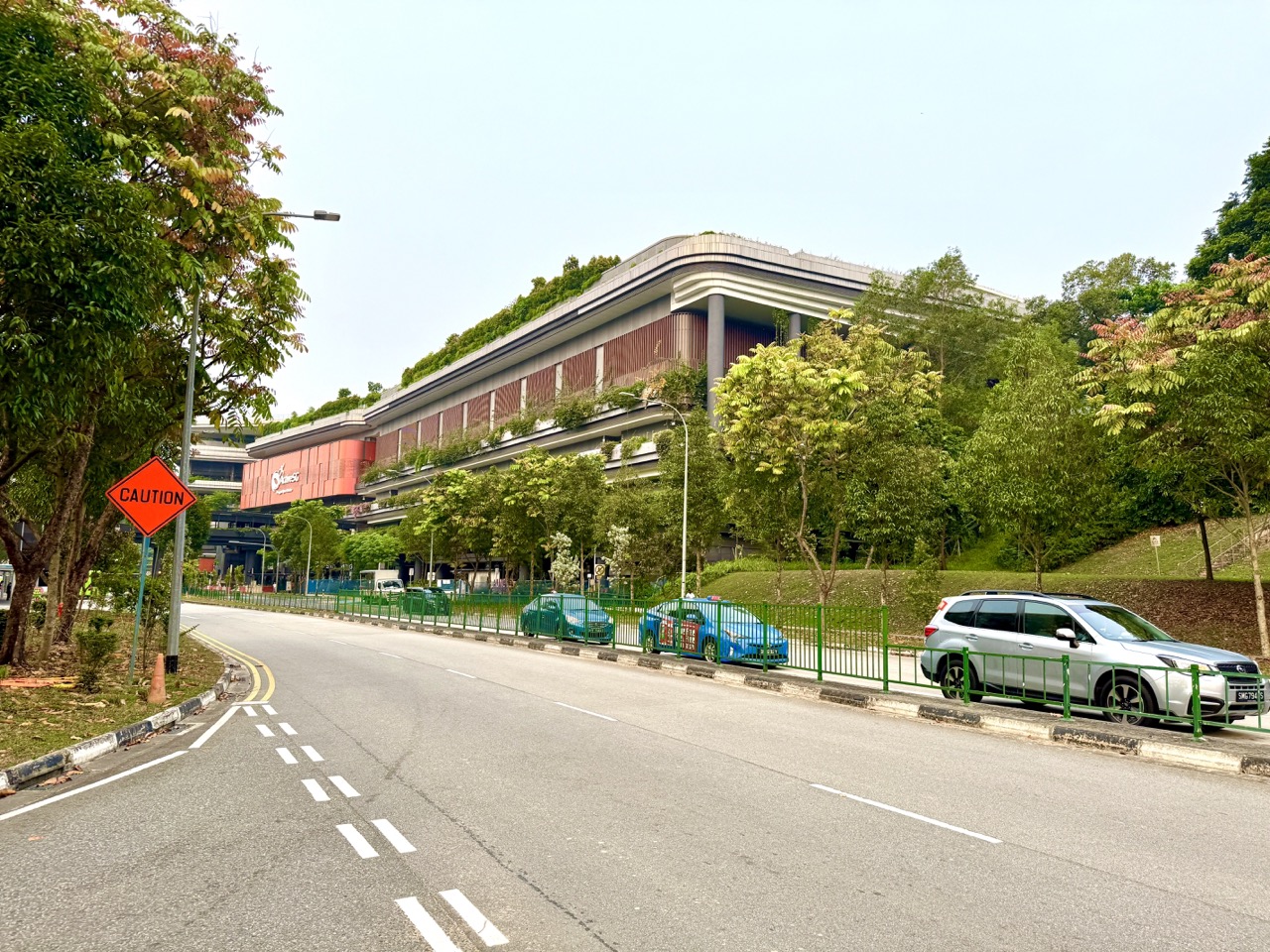
ActiveSG Punggol Sport Centre at 11 Sentul Crescent can inspire a practical lesson in sports photography: how a camera records a moving object, why a fast shutter can freeze a moment, why a deliberate slower exposure can show motion, and how framing changes the story a picture tells. Punggol Sport Centre began selected public operations on 27 October 2026, with its formal opening scheduled for 22 November 2026. These facts do not authorise taking photographs of other players or using a booked sports area as a personal studio. SportSG’s rules restrict unauthorised photography and filming in its facilities, so the safest learning method is to practise with family-owned objects or willing participants at home, using a safe uncluttered space. For actual sports access, consult MyActiveSG+ and current venue directions.
The foundation of action photography is understanding the relationship among shutter speed, aperture, ISO, focus, timing, subject movement and light. Nikon’s sports photography guide explains why action often benefits from short shutter times, continuous autofocus and attention to exposure; its panning tutorial shows how following motion while using an appropriately slower shutter can create a different effect. No one shutter setting is guaranteed for every camera, sport or environment. A photograph is also an editorial choice: it needs an accurate caption, permission where required, and honesty about whether it is a real documented event, a staged exercise or a digitally generated illustration. This article teaches the creative and technical craft rather than repeating a separate venue privacy-policy guide or claiming that photography is permitted everywhere at Punggol.
- Venue context: Punggol Sport Centre, 11 Sentul Crescent; do not assume a regular sports booking includes photography rights.
- First photography question: what is the subject, how does it move, and what should the image communicate?
- Exposure basics: shutter speed controls exposure duration, aperture controls lens opening, and ISO affects the recorded signal and image noise.
- Freezing action: a faster shutter often reduces movement blur, subject to available light and camera capability.
- Showing motion: a slower exposure and controlled panning can retain a moving subject while allowing background streaking.
- Focus: continuous autofocus or suitable prefocusing may help with a moving subject.
- Composition: choose framing, background, timing and clear context rather than simply crop people for maximum drama.
- Accuracy: a staged photo, rendering or AI-generated image must not be described as live documentary evidence.
- Consent: use willing family participants and approved locations; no unauthorised recording of children, players or conversations.
- Safe exercise: photograph a lightweight object moved slowly within a private supervised space, or use paper diagrams.
- This guide: first-principles camera explanations, original examples, picture-selection ethics, troubleshooting, a four-week plan and source links.
Definition lock: sports photography is visual storytelling through motion
Sports photography uses images to communicate activity, skill, relationships or an event. The result depends on camera settings, position, moment and editing choices. One photograph cannot show every stage of a game, so selecting a frame is also selecting information. A child might capture a family member preparing a soft ball toss; the image could emphasise the person’s concentration, movement or interaction with a partner. Its meaning changes with the framing. Sports photography is therefore not simply taking as many images as possible. A strong picture should have a clear subject and purpose, and any documentary claim must remain accurate.
Why this is different from a photography rules guide
A venue privacy guide explains what is restricted, which permissions are relevant and how to protect identifiable participants. This article focuses on the camera craft: exposure, focus, movement, composition and truthful visual communication. The two subjects connect because technical ability does not create the right to photograph other people. A photographer who can freeze a high-speed smash still needs an authorised setting and appropriate consent. Students should learn both without treating a public sports centre as an unrestricted practice studio. The strongest ethical habit is to choose a suitable private exercise before searching for a dramatic subject.
Begin with a clear photographic intention
Before adjusting a camera, decide what the image should show. Is the goal to freeze a moving ball, demonstrate a sequence, document a real permitted event or create a clearly staged portrait? Each task needs different choices. A picture of a child happily holding a racket differs from a frame meant to demonstrate how the racket moves. For a home exercise, write the purpose in one sentence. Then decide where the subject will be, what background is safe and what permissions apply. Photography becomes easier to evaluate when the student knows what a successful image is intended to communicate.

Know the difference between event and illustration
A genuine documentary sports photograph shows something that actually happened under the described circumstances. A staged family practice photo is real as a photograph but not necessarily evidence of a tournament. A generated image is an illustration, not evidence that its depicted event occurred. The writer must label each accurately. Do not create a dramatic AI image of thousands at Punggol’s stadium and caption it as an actual opening crowd. The technical polish of an image does not authenticate its history. A photographer should track the origin, date and context of their work as carefully as shutter settings.
Exposure is the amount of light recorded
A digital camera records light reaching its sensor during exposure. Shutter duration, lens aperture and ISO settings influence the resulting image. These controls are often called the exposure triangle, but they do not all change light physically in the same way. Shutter time and aperture change the light reaching the sensor, whereas ISO concerns how the recorded signal is handled and represented. A beginner should understand the practical trade-offs instead of memorising a triangle as if it were an equation containing three interchangeable quantities. The desired image depends on motion and lighting, not merely achieving a centered meter indicator.
Shutter speed controls the exposure interval
A shutter speed of 1/1000 second records a much shorter interval than 1/60 second. Under otherwise comparable conditions, the shorter interval often reduces blur from subject movement but allows less light to accumulate. That can require changes to aperture, ISO or illumination. Nikon’s sports guidance often suggests fast shutter speeds around 1/500 second or shorter as practical starting points for moving subjects, while recognising that actual movement varies. Do not describe any one number as a universal minimum for every sport. A slowly moving hand and a fast shuttlecock make different demands on the camera.
Faster is not automatically better
A short shutter can freeze detail, but it may result in an underexposed image when light is limited and the camera cannot compensate appropriately. It can also remove the visual impression of motion that a photographer wanted. The student should define the creative goal before deciding on shutter speed. If the purpose is a clear product photograph, freezing all motion may be desirable. If the purpose is showing a toy rolling across a table, some controlled motion blur could communicate speed. There is no universal perfect exposure setting. Technical choices serve the message and must remain within safe lighting and location conditions.
Slower shutters can show movement
A slower shutter integrates the subject’s positions over a longer exposure time, potentially producing blur. This can be used intentionally to suggest movement, but the result depends on speed, direction, distance, stabilisation and camera motion. A child can learn the concept from two images of a small private tabletop object taken under suitable conditions. Avoid running or throwing hard objects to generate blur. The scientific point is that the sensor collects light over an interval, rather than recording one infinitely short instant. A successful blurred image should still communicate an intended subject or action rather than become an unrecognisable accident.
Aperture changes the lens opening
Aperture is the opening through which light enters the lens, commonly expressed as an f-number. Lower f-numbers indicate a relatively larger aperture for the same lens focal length, allowing more light under the basic model. The aperture also influences depth of field and other optical properties. A student should not mistake f/2.8 for a smaller opening than f/8 simply because 2.8 is the smaller number. The notation is a ratio. Use a paper drawing of a wide and narrow opening to build understanding. Specific achievable aperture settings depend on the camera and lens; phone systems may provide different controls.
Depth of field changes what appears acceptably sharp
Depth of field is the range of distances that appear acceptably sharp in an image under the chosen conditions. Aperture, focal length, focus distance and viewing criteria affect it. A wide aperture can create background separation for a subject, but not every setting produces the same blur on every camera. A learner could compare safe still-life photographs with different focus choices and backgrounds. The lesson is deciding whether the surroundings help or distract from the sports story. A blurred background may isolate a racket, while a sharp one may be necessary to show where an event occurred. Choose for purpose.
ISO and image noise
ISO is a camera sensitivity setting that affects how the recorded signal is rendered. Raising ISO can help achieve a usable brightness when a faster shutter is needed, but it may also increase visible noise or reduce image quality depending on camera performance and processing. Nikon’s sports guidance discusses raising ISO when light is limited. Students should not assume that every device handles ISO identically or that a high setting is always wrong. The correct compromise depends on subject motion, lighting and intended output. A modestly noisy sharp photograph may be more useful than a clean but badly blurred one in some circumstances.
The exposure trade-off is a decision
Suppose a fictional camera needs more light while freezing a moving object. The photographer might open the aperture if possible, raise ISO within suitable image-quality limits or choose a better-lit permitted location. Lengthening the shutter might undermine the motion-freezing goal. These choices are interdependent. A child should learn to identify the primary creative requirement and then adjust other controls around it. The correct action cannot be inferred from the words “sports photo” alone. The camera, lens and amount of light matter, as do whether flash is appropriate and authorised. Never use a bright flash toward active players without permission.
Autofocus needs the right subject
Autofocus attempts to adjust the lens so selected subject details appear sharp. A camera may lock onto the wrong part of the scene, such as a bright background instead of a moving object. The operator should select an appropriate focus point or area and learn what the device actually tracks. Nikon recommends continuous autofocus modes for many moving sports subjects. That does not mean the feature guarantees accurate focus in every case. Obstacles, lighting and erratic motion can still cause misses. A student can practise tracking a consenting adult walking slowly in a private safe space, or use a paper diagram without photographing people.
Continuous autofocus versus single focus
Single autofocus often acquires focus for a relatively stationary subject, while continuous modes attempt to update focus as the subject moves. The names and controls vary by manufacturer. A beginner should consult the actual camera manual rather than assume a Nikon-specific label appears on every device. The difference can be illustrated with a stationary ball and a gently moved object, while respecting privacy and supervision. The learner should evaluate whether the intended subject is sharp, not merely celebrate turning on a fashionable mode. The camera still needs an appropriate subject and enough light or contrast for effective focusing.
Prefocusing can simplify predictable action
If a subject will pass a known position, a photographer may focus there in advance and capture the action when it arrives. Nikon describes prefocusing as an alternative when following fast action is difficult. A home exercise can use a predetermined mark on a tabletop and a slow-moving lightweight object, with no human participants required. The skill is anticipating a moment and separating focus preparation from shutter timing. The method will not work equally well when the subject changes its path unexpectedly. Students should recognise that strategy selection depends on the movement, not that one technique is universally superior.
Burst shooting increases choices, not certainty
Continuous shooting can record several frames during an action sequence, depending on the camera’s frame rate, buffer and storage. Nikon explains that the buffer or card may limit a burst. Capturing more frames can improve the chance of recording a useful moment but does not guarantee correct focus, exposure or composition. It can also create unnecessary files that require careful selection and storage. A student should decide when a burst serves the story and when one well-timed photograph is enough. More images are not automatically more authentic. Editorial judgement still determines which frame fairly represents what happened.
Panning follows a moving subject
Panning involves moving the camera to follow a subject during exposure. With an appropriately slower shutter, it can keep some subject detail comparatively sharp while background areas streak, creating a sense of motion. Nikon’s panning tutorial emphasises smooth tracking and notes that the suitable shutter depends on subject speed and desired effect. A learner can practise with a slowly moved toy on a safe tabletop and a stable standing position. There is no reason to pursue cyclists or joggers on busy public paths. Photography should not cause collisions or invade a person’s private activity merely to produce dramatic blur.
Start moving before the shutter opens
A smooth panning motion often begins before the exposure and continues afterward, reducing abrupt changes during the photograph. The exact technique varies with subject direction and camera support. A student may first practise the movement without taking a picture, tracking a slow safe object across a table. The goal is consistent motion, not following somebody into a dangerous path. Ask whether the subject moves in a predictable direction or is changing speed. The photographer’s movement should be a deliberate response to the subject, with a comfortable physical posture that does not strain or block others.
A slower pan is not always successful
If the shutter is too slow relative to the subject’s movement or the photographer’s tracking, the entire subject may become blurred. If too fast, the background may not show the intended streaking. Nikon’s panning examples use varied shutter speeds to demonstrate the trade-off. A student should experiment only in a safe authorised environment and treat failures as information. Write down the camera setting and what changed in the picture. Do not assume a professional’s sample speed applies to every toy, person or lens. Good photography grows from understanding variables and reviewing actual results.

Composition decides what the audience notices
Composition is how the elements of the photograph are arranged within its frame. A child can place a ball toward one side, leaving space in the direction of imaginary motion, or include a safe contextual object. The choice changes how viewers understand the activity. There is no requirement to use the rule of thirds mechanically in every photograph. Ask which detail is essential and which background objects distract from it. A camera angle can make a stationary object appear more dramatic without changing the underlying facts. Creative framing should enhance meaning while avoiding misleading documentary claims.
Give movement room in the frame
A moving subject may feel more natural when the frame includes space in the direction of travel. A racket pointing toward the edge of a cropped photograph might suggest an unfinished movement, while more space can help show where the action is going. This is a compositional choice rather than a universal formula. A learner can rearrange three paper cut-outs and compare their visual effects before using a camera. The point is making deliberate choices about what the viewer can infer. Do not crop away an important person or event context simply to make a factual sports report look more sensational.
Background control matters
A cluttered background can make a small fast object difficult to distinguish. Contrast, colours, lighting and separation affect what viewers notice. A student might photograph a safe coloured ball against both a similar-coloured and a contrasting sheet, then compare clarity. This does not require actual sports hall access. A polished background should not be digitally replaced in a documentary photo when that would materially alter what happened. For artistic work, alterations should be appropriately disclosed. The learning goal is understanding how the environment influences visual communication before editing, not erasing inconvenient facts afterward.
Timing matters as much as settings
A technically sharp photograph can still miss the meaningful moment. A sports story may be communicated by the instant a ball leaves a hand, a cooperative exchange between family members or a respectful acknowledgement after a game. Timing depends on anticipating the event and understanding what is happening, not merely using a fast burst. In a safe home exercise, a child can photograph a slowly rolled ball at the moment it reaches a paper marker. Afterward, ask whether the chosen frame shows the intended event clearly. No high-speed stunts, actual contests or public spectators are necessary.
Angles influence apparent proportions
A camera placed close to an object can exaggerate near parts relative to farther parts, depending on perspective. A racket may look unusually large when photographed very close to the lens. This can be an expressive technique, but a product information article should not misleadingly imply measurements that were not established. A child can compare two safe still-life compositions at different distances and describe the difference. The camera’s field of view and position matter. A photograph is not automatically a scale drawing or a fair representation of actual court dimensions, especially when taken from an oblique angle.
Sports photography can be made with still-life subjects
A pair of suitable clean sports shoes, a family-owned racket, a ball and a folded towel can create a meaningful composition without human subjects. The photographer can explore texture, lighting direction, colour contrast and storytelling through arrangement. For example, an open racket bag beside a practice notebook might suggest preparation. Label the image as staged if it accompanies an article claiming documentary context. Never imply that the objects belong to a famous athlete or that they were used in a real Punggol competition without evidence. Still-life practice is useful precisely because it offers control and avoids unnecessary privacy concerns.
Editing should preserve the intended truth
Ordinary adjustments to brightness, colour balance or crop can help a photograph communicate, but altering factual content raises ethical questions. Removing people from an event scene, inserting an additional crowd or moving a ball’s position may misrepresent what happened if the photo is presented as news. The proper standard depends on whether the work is art or documentary reporting. Label substantial creative changes and keep an appropriate record of the original. Students should not treat an edited image as evidence of real attendance, score or venue conditions. Camera craft and truthfulness belong together in responsible publication.
Privacy rules are not optional camera settings
ActiveSG’s published facility regulations restrict unauthorised photography and filming. A person cannot assume that possessing a phone, DSLR or legitimate badminton reservation grants the right to record other users. An image can identify children or reveal information about personal schedules. For learning, choose consent-based private scenes or still-life objects instead. Do not film changing rooms, gym users or a court dispute to produce a more dramatic assignment. Photography is most responsible when the creator decides what may be recorded before raising the camera. A strong visual story should not depend on exposing somebody who did not agree to participate.
Consent can have different scopes
A family member may agree to one private practice photograph without agreeing to its publication on a website or social-media account. The photographer should explain the purpose, where the image may be shared and how it will be used. Children require appropriate adult safeguarding and respect for their own comfort. A posed photograph for a school lesson is different from an open-ended permission to build a public photo archive. If the participant withdraws or expresses discomfort, take the concern seriously and follow relevant arrangements. An ethical photographer understands that the subject is a person, not simply a convenient source of interesting content.
Do not mistake a public place for unrestricted publication
A walkway, park or sport centre may be open to residents, but that does not automatically eliminate privacy, security or venue restrictions. The purpose and content of a photograph matter. A dated original exterior shot with no identifiable people can support an educational article, while a close-up of an unfamiliar child’s face may require very different consideration. This guide does not give legal permission to photograph anybody. The learner should follow the operator’s rules and suitable law and school policy. When uncertain, a private still-life exercise is usually enough to explore camera technique without creating unnecessary complications.
A documentary caption needs context
A useful caption identifies what the image shows, where it was taken and when, and does not imply an event that did not occur. A Punggol neighbourhood badminton court is not the new ActiveSG indoor Sport Hall simply because both feature badminton. A photograph of the Sport Centre exterior does not prove that every pool was admitting visitors that day. A staged photograph should be called staged where relevant. For a student task, write a caption before showing the image to a reader and ask whether it creates a misleading impression. The caption is part of the evidence, not an afterthought.
Metadata is useful but not a perfect guarantee
Camera files may include capture time, camera model, exposure settings and sometimes location information. These fields can help a photographer review technical choices, but they may be altered, absent or affected by device configuration. Metadata alone does not prove an image’s authenticity or identify the photographer’s permission. It can also contain private information that should not be published unnecessarily. A family can learn to read shutter speed and ISO from their own files without uploading the photographs to a public tool. Technical metadata helps understand how an image was produced, but provenance also requires context and trustworthy records.
A mobile phone has different controls
Many phones automatically choose exposure, focus and image processing settings. Some offer manual or professional controls; others may use computational photography that combines several exposures. A student should learn what their own device actually permits rather than copy a DSLR menu tutorial word for word. Motion can still be explored through subject timing and a safe private setup. A phone’s still image mode may produce a different result from its live photo or video mode. The educational principle remains the relationship between movement, recording interval, focus and light, even when the controls are hidden behind software.
Image stabilisation does not freeze the subject
Optical or electronic stabilisation can reduce the effect of camera movement under suitable conditions. It does not necessarily prevent a fast-moving subject from blurring during a long exposure. A child may notice that a camera held steadily still produces a streaking ball. The subject and camera have separate motions. Explain the distinction with a simple diagram: one arrow for camera shake and another for subject travel during exposure. This helps avoid believing one device feature solves every photographic challenge. The right technique depends on what is moving and what visual result is desired.
Motion blur and focus blur have different causes
A picture may look soft because the camera focused at the wrong distance, because the subject moved during exposure, or because the camera itself moved. These causes require different remedies. A student can compare three labelled fictional diagrams before attempting a safe practice image. If the camera focuses on the background, shortening the shutter may not correct the misplaced focus. If the subject moves rapidly, accurate focus alone may not prevent motion blur. Diagnose the mechanism rather than changing every setting randomly. Systematic troubleshooting makes technical learning more effective and avoids misleading claims about camera defects.
How to troubleshoot a dark action photograph
First check whether the camera recorded the intended subject and whether the exposure is actually too low for the desired output. If light is insufficient, consider a legitimate brighter setting, appropriate aperture, ISO or a different creative approach. Do not use high-intensity lights or flash toward active athletes without permission. A slower shutter may brighten the image but change the motion effect. The photographer should decide which compromise is acceptable. This is not a universal prescription for every camera: the lens, sensor and available modes differ. Review the actual image and adjust only one relevant factor at a time.
How to troubleshoot a blurred subject
Ask whether the blur is caused by focus error, exposure duration, camera motion or image processing. Inspect the chosen focus point and shutter time. A moving subject may need continuous tracking or suitable prefocusing, while a stationary object may not. Try a slower-moving safe subject rather than increasing risk to make the exercise harder. A high-quality learning session changes one condition and observes its effect. Do not claim that every blurred frame is a failure; blur may be the intended artistic expression. The correct question is whether the result communicates the picture the photographer wanted to make.
How to choose among several frames
A burst may yield many similar photographs. Choose a frame that is technically suitable, communicates the intended action and represents the scene fairly. Do not select a single awkward expression to humiliate a child or construct a false story about an opponent. The strongest image may be the one with clear movement and context rather than the most sensational crop. Discuss why the selected frame tells the intended story. If a genuine event is documented, the editor must consider whether the choice distorts the overall event. Selection is a form of authorship with ethical consequences.
A safe original freeze-motion exercise
Place a suitable lightweight soft object on a private clear table. With adult supervision, move it gently along a predictable path while photographing from a stable safe position. Compare settings if the device allows, or compare the result of moving the object at different appropriate speeds. There is no need for throwing, bouncing near glass, sprinting or involving strangers. Ask which frame shows the object most clearly and whether the background remains relevant. Label any numbers as actual settings from the student’s device, not universal sports requirements. The purpose is understanding exposure duration through an observable difference.
A safe original panning exercise
Use a slow safe toy or another controlled object moving horizontally across a table. The photographer follows it smoothly at a comfortable position and tries an available setting appropriate to the device. The goal is observing whether the subject and background show different degrees of blur. No cyclists, children or vehicles are needed. The result may be imperfect; explain what changed in camera movement and shutter time before trying again. A panning technique should not be attempted while crossing a path or standing where somebody might collide with the photographer. Safe preparation is part of learning the craft.

A safe original composition exercise
Arrange a clean racket, ball and practice notebook on a safe flat surface. Create two photographs: one tightly framed around the ball and another including the notebook and racket. Ask a willing viewer what each image seems to communicate. The first may emphasise texture; the second may suggest preparation for sport. Neither is a real match photograph. This helps the student learn that composition changes context. The objects should be family-owned and safe; no need exists to collect unidentified equipment from a public venue. A staged still-life can teach storytelling as effectively as a more difficult action shoot.
A safe original caption exercise
Give the learner three fictional captions for an original building exterior photo. One accurately says “Punggol Sport Centre exterior, October 2026.” Another wrongly claims “Inside the official swimming competition.” A third says “All Punggol pools now free forever.” Ask which statements the picture actually supports. The correct caption does not claim invisible interior facts or permanent access conditions. This combines photojournalism with visual reasoning. The exercise can be completed without taking new pictures. The student should recognise that even a genuine photograph can become misleading through the words attached to it.
A four-week photography learning plan
Week one: understand light, shutter duration, aperture and ISO using still-life pictures and simple diagrams. Week two: practise safe focus and motion examples with family-owned objects. Week three: compare composition, panning and short-exposure results and choose frames for a defined purpose. Week four: write accurate captions, review consent and privacy, and create a small clearly staged educational portfolio. All work can happen at home or in a suitable supervised school setting. Do not plan unauthorised shooting inside Punggol Sport Centre. The aim is technical understanding, purposeful image selection and responsible visual communication, not a professional sports portfolio in one month.
Common sports photography misconceptions
A faster shutter is not always the most expressive choice. Raising ISO is not identical to admitting more light through the lens. Stabilisation may reduce camera shake but cannot necessarily freeze a moving ball. Continuous autofocus does not guarantee perfect sharpness. More burst frames do not prove more accurate journalism. A real image may be wrongly captioned, and a staged image is not a documented competition. A public sports venue does not automatically permit filming. A camera setting is only part of the picture; timing, composition, purpose, consent and truthful explanation matter equally.
Frequently asked questions
Does a court booking allow unrestricted sports photography? No. Follow the operator’s rules and obtain appropriate authorisation and consent where required.
What does shutter speed change? The exposure duration, which affects recorded light and the appearance of movement.
Is 1/1000 second required for every sports photograph? No. Suitable settings depend on movement, light, camera and creative intention.
What does aperture control? The lens opening and, with other factors, the amount of light and depth of field.
What happens when ISO is increased? The recorded image may appear brighter under relevant exposure settings, often with image-quality trade-offs.
Is panning the same as moving the subject? No. Panning means moving the camera to follow a subject.
Does stabilisation remove subject motion blur? Not necessarily. Camera movement and subject movement are separate causes.
Can a staged photo be used in an article? Yes, when appropriately labelled and not falsely presented as documentary evidence.
Are children required to be filmed for a photography lesson? No. Safe still-life and paper exercises are enough.
Can a photo prove the Punggol swimming pool is currently bookable? No. Check the genuine current operator listings.
Official sources and next step
Read Nikon’s Photographing Sports Indoors and Out, panning guidance and continuous shooting lesson for the technical principles. Consult ActiveSG’s venue regulations for relevant filming restrictions and SportSG’s scheduled formal opening for factual context. Related eduKate Punggol guides explain photography and child privacy rules and Optics of sports light and vision.
Your next step: choose one safe private sports-object scene and decide whether to freeze motion or show it. Record the actual settings if your camera permits, select the frame that best communicates the intended action and write an honest caption.
Editorial note: Independent sports photography learning guide prepared 6 November 2026. It provides no permission to film or photograph inside ActiveSG facilities and reports no actual sports-event photography undertaken by the author.


