
Schools and education at Punggol include the practical skill of travelling safely to and from school. A good school journey is not just a familiar route: children need to understand designated crossings, traffic visibility, shared paths, public transport, safe pickup arrangements and what to do when conditions change. Singapore’s LTA and Traffic Police emphasise school-zone protection, pedestrian crossings and the Kerb Drill. From 1 January 2026, lower speed limits at Enhanced School Zones apply throughout the day. Families should follow actual posted signs and school instructions rather than rely on a generic map.
This Punggol guide explains how to teach age-appropriate road judgement, LRT and bus habits, awareness of cyclists and parked vehicles, parent handovers and responses to rain or route closures. It does not recommend an unsupervised travel age, invent a live bus timetable or identify a universally safe route to a particular school. The worked scenarios are fictional and intended for supervised discussion; the current rules of the school, transport operator and road authority govern real journeys.
- Core rule: a short route is not automatically a safe route.
- School Zones help protect pupils; actual speed limits and signs must be followed.
- Enhanced School Zone lower speed limits apply throughout the day from 1 January 2026.
- Kerb Drill: stop, look right, left and right again and ensure crossing is safe.
- Use authorised pedestrian crossings and obey signal instructions.
- Avoid emerging from behind stationary cars and buses where visibility is poor.
- On public transport, follow platform, queue and boarding instructions.
- Shared paths require attention to cyclists and other pedestrians.
- Arrange a clear school-approved pickup and fallback procedure.
- Independence develops with supervised practice, good judgement and suitable adult support.
Definition lock: school-zone safety and travel readiness
A School Zone is a designated road section near a school marked by relevant signs and safety measures. An Enhanced School Zone includes additional safety features where suitable. Road safety is the shared responsibility of drivers, pedestrians and other users. Travel readiness is not simply knowing station names or road directions: it involves recognising hazards, using authorised facilities, seeking help appropriately and adapting to changes. This educational guide does not replace official traffic law or a school’s safeguarding arrangements.
A six-question family journey checklist
- Which route and entrances does the school currently authorise?
- Where are the designated pedestrian crossings and posted signs?
- Which parts involve vehicles, shared paths or platform boundaries?
- Where should the child wait for the agreed responsible adult?
- How will the family handle a missed service, obstruction or weather change?
- What support does the child still need before a different level of independence is appropriate?

1. A safe school journey is a series of decisions, not simply a route
A school journey is more than the line from home to a campus gate. A child may need to move through shared paths, cross roads, wait near vehicles, use public transport or meet a trusted adult at a designated handover point. Each stage creates different questions about visibility, attention and responsibility. A useful family plan explains what the child should do at those decision points rather than simply memorising a sequence of landmarks. The fastest-looking path is not automatically the safest or most appropriate.
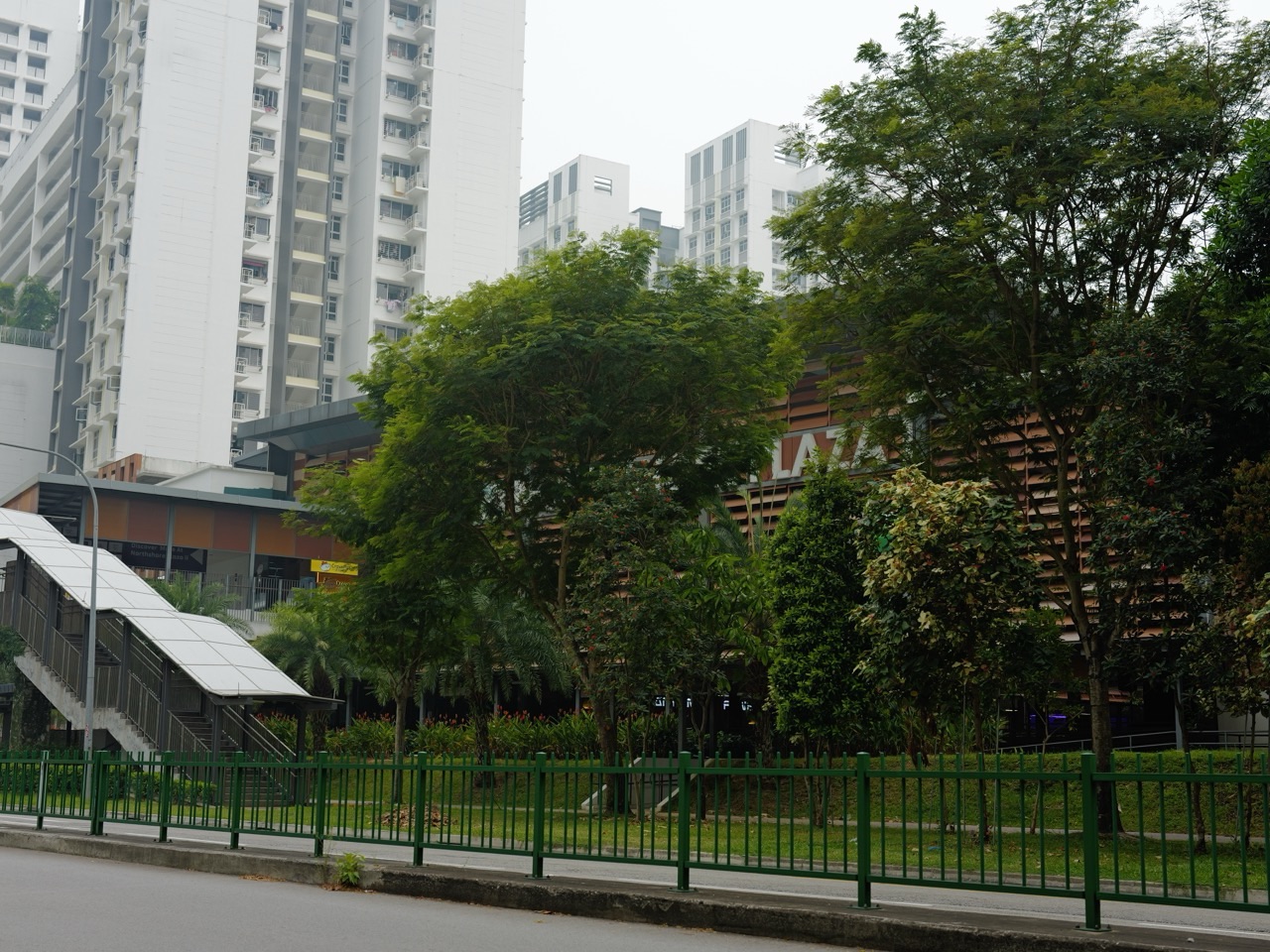
Punggol’s housing estates, LRT system, neighbourhood centres and shared paths create many possible travel arrangements, but no general guide can confirm the best route for an individual family. School gates, crossing conditions, transport services and construction arrangements may change. For practical trips, the parent should check the actual school notice and current official route information. A photograph from October 2026 is a record of one view, not a promise that a crossing will remain identical later.
A teachable safety decision
Children often become comfortable with a familiar route and stop noticing decisions that deserve attention. One of the simplest safety lessons is to identify where a safe action changes: a footpath becomes a shared path, a crossing begins, a vehicle stops near the kerb or a crowd forms around dismissal. Adults can describe these differences in ordinary language before expecting a young pupil to recognise them independently. Familiarity is useful, but it should not replace awareness.
An age-appropriate conversation asks the child what information is needed before choosing to continue. Are they approaching a recognised crossing? Is the pedestrian signal appropriate? Can drivers see them clearly? Are there barriers or an authorised alternative route? A child who can answer those questions during a supervised journey is learning decision-making. A child who merely knows the name of a nearby LRT station may still be unprepared for an unexpected change.
Avoid the shortcut and test the principle
The family should avoid turning independence into a contest with classmates. Some children may be ready for greater responsibility earlier than others because of route complexity, personal readiness and family circumstances. A short journey requiring multiple busy crossings may demand more support than a longer one through a simple, supervised environment. Parents and schools have relevant safeguarding responsibilities that cannot be replaced with a generic age recommendation.
For transfer, provide a fictional map with two routes to a school: one short but involving an unprotected crossing, the other longer and using an authorised pedestrian crossing. Ask which information would be needed to choose responsibly. A correct answer recognises the safety trade-off instead of automatically selecting the shorter line.
2. Understand School Zones and the 2026 Enhanced School Zone change
Singapore’s Land Transport Authority identifies School Zones as demarcated road sections near schools intended to provide safer conditions for school-going children. Drivers should observe the posted school-zone signs and speed limits, and pedestrians should continue to use safe crossings. The design is a safety measure, not permission for children to cross anywhere inside the zone. Road markings, calming features and railings can help communicate the environment, but road users remain responsible for their own actions.
From 1 January 2026, lower speed limits at Enhanced School Zones apply throughout the day instead of only during specified arrival and dismissal periods. This is an important detail for parents who have seen older explanations about time-limited school-zone speeds. The practical instruction remains to follow the posted signs at the actual location rather than assume the same numeric limit across all schools. Individual conditions and road designs differ.
A teachable safety decision
An Enhanced School Zone may have more prominent visual treatment, such as red road surfaces near a school gate, SLOW and SCHOOL markings, traffic calming or designated crossings where appropriate. Children should learn that these signs primarily alert drivers and help shape road behaviour. The existence of coloured pavement does not guarantee that every vehicle has seen or obeyed it. A responsible pedestrian still checks traffic carefully before crossing.
A useful parent exercise is to show a photograph of a school-zone sign and ask what it tells drivers and what it tells pedestrians. Then ask which information cannot be established from a single picture: whether a specific driver is slowing down, where a hidden vehicle may be, or whether a temporary obstruction is present today. This introduces the distinction between infrastructure and actual safety conditions without frightening the child.
Avoid the shortcut and test the principle
One common error is treating signage as a personal safety guarantee. A child may believe that because a zebra crossing gives pedestrians priority, a vehicle must stop in time. Explain that a legal obligation and a driver’s actual response are different. Road users should remain patient and attentive, and drivers must uphold their obligations. Children should not be encouraged to test right-of-way against a moving vehicle.
For an independent check, give the pupil two fictional photos: a school-zone sign beside a designated crossing and an ordinary stretch of road with no crossing visible. Ask what safe next action is appropriate in each without inventing the precise layout or traffic. The learner should choose the permitted facility rather than assume a school-zone label makes every road section safe.
3. The Kerb Drill and signalised crossings make stopping deliberate
Singapore’s Traffic Police teaches a Kerb Drill for pedestrian safety: stop at the kerb, look right, left and right again, and ensure the way is safe before proceeding through an appropriate crossing. Young children benefit from learning this as a purposeful check rather than a gesture performed automatically while already walking. The words help structure attention, but actual vehicle movements, turning traffic and the crossing signals must still be considered.
The official advice also emphasises using pedestrian crossings, walking on available footpaths and avoiding road crossings at bends where approaching vehicles may be hard to see. At signalised crossings, pupils should not cross when the red pedestrian signal is displayed or begin crossing when the green signal is flashing. They should follow current traffic instructions and remain aware that a signal does not make it safe to ignore the road.
A teachable safety decision
Practise the sequence first with a paper street diagram. Place a toy figure at a marked kerb and ask which action must occur before a step into the roadway. A child should be able to identify where a crossing is, what the pedestrian signal indicates and why they must check for moving vehicles. This is preparation for supervised teaching, not a substitute for an adult’s judgement during a real road crossing.
Children sometimes see an adult rush to catch a bus and copy the movement. Parents should model patience rather than signalling that saving a minute is more important than safety. A child who has repeatedly seen adults use a designated crossing and wait appropriately receives a more credible message than one who has memorised a safety poster while adults jaywalk nearby.
Avoid the shortcut and test the principle
Another mistake is using a phone or earbuds in a way that reduces attention while moving near traffic. The Traffic Police advises pedestrians not to be distracted by mobile devices. Teach the child to stop in a safe place if they need to check information, rather than walking into a crossing while looking at a screen. A digital navigation aid is only useful when it does not compromise awareness of the real environment.
For transfer, show a new fictional pedestrian crossing with a turning vehicle and ask what the child should pay attention to. The answer should combine the signal, surrounding traffic and patience rather than repeat the word green as if it settled every possible hazard.
4. Parked vehicles and buses create visibility problems
Road dangers are not confined to moving cars in the centre of a carriageway. A parked vehicle can block a child’s view of oncoming traffic, and a driver may not easily see a small pedestrian emerging from behind a large vehicle. Traffic Police guidance warns children not to cross between stationary vehicles, where sightlines can be limited. The principle is visibility: both the pedestrian and the driver need an opportunity to see one another.
Imagine a fictional school dismissal scene with several cars stopped near a gate. A child spots a parent on the opposite side and wants to cross between two vehicles. A safer plan uses the designated crossing with appropriate supervision rather than taking the shortcut. The adult should not ask the child to run to the vehicle or change the collection point without clear instructions. A few additional steps are preferable to a hidden crossing.
A teachable safety decision
Bus stops and road bends can create similar blind spots. Children should not assume a bus driver can see them if they stand close to the vehicle or move into the road from behind it. Use a paper diagram to explain why a large object blocks a line of sight. The exercise teaches a general principle that transfers to delivery vans, taxis and other common road situations.
Parents who drive also have responsibilities. Rushing to stop at an inappropriate location can obstruct visibility, create conflicts or inconvenience other road users. The official guidance encourages safe designated pick-up and drop-off arrangements and compliance with road markings. Families should follow their school’s actual dismissal plan and the prevailing traffic rules, not copy an informal roadside practice seen on a busy afternoon.
Avoid the shortcut and test the principle
Children may feel embarrassed waiting when classmates have already departed. Adults can establish a clear contingency plan and reassure the child that waiting in the agreed safe location is more responsible than running across traffic to save time. The child should know whom to contact or seek help from if a handover goes wrong. Privacy and safeguarding matter when communicating pickup arrangements.
For a changed-context task, replace the parked car with a large delivery vehicle near a neighbourhood path. Ask what becomes hidden and why the child should choose an authorised crossing with clear visibility. The learner has understood the sightline problem when they can apply it to a new kind of vehicle.
5. The Punggol LRT and bus journey needs platform and boarding habits
A child travelling by LRT or bus must manage a different environment from a walking route. Stations, platforms, vehicles and interchanges have their own signs and operating conditions. The skills include recognising the correct direction of travel, respecting platform and queue boundaries, allowing safe boarding and alighting, and seeking help when information is unclear. These are not simply memory tests about service numbers. A correct route choice is only useful when the child can follow it safely.
Families can prepare through supervised observation and current official transport resources. Identify the station name, relevant signs and a suitable waiting point without expecting the child to use a phone while moving through a crowded area. A paper plan can record the intended service and safe contingency actions. The parent should verify details at the time of travel; this article does not invent service schedules or claim a particular school is served by a specific gate.
A teachable safety decision
Teach children to wait behind designated platform or queuing boundaries and follow official station instructions. Do not rush for closing doors or force entry into a crowded vehicle. If the planned service is missed, the family needs an agreed safe next action. A young pupil should not improvise an unfamiliar journey in response to pressure or embarrassment. Readiness must include knowing when to seek staff or trusted adult assistance.
On buses, appropriate boarding and alighting include giving passengers space, keeping belongings controlled and using suitable handholds or seating according to age and conditions. Do not treat an apparently empty seat as permission to block the aisle with a large bag. The practical teaching target is courtesy linked to safety, not making the child rehearse a long list of prohibitions without understanding why they matter.
Avoid the shortcut and test the principle
Digital navigation can be helpful, but the route displayed on a screen is not a substitute for official signs or live changes. A map may show a connecting path that has temporary maintenance barriers. The child should understand that ‘the phone says turn here’ cannot override restricted access or traffic instructions. Stop in a safe place, verify the information and ask for help when the route is uncertain.
Transfer the plan to a hypothetical disrupted journey in which the intended stop is temporarily inaccessible. Can the child explain that they should remain in a safe public area and contact the agreed responsible person or official staff rather than follow an unknown stranger or take a risky shortcut? That is responsible transport judgement.
6. Shared walking and cycling paths require mutual awareness
Punggol’s shared public spaces can include walking and cycling routes, playground approaches and park connectors. The same path may be used by pedestrians, families with strollers, cyclists and people using mobility aids, depending on the marked facility. Children should learn to read path signs, stay aware of others and avoid sudden movements that create risk. The presence of a broad walkway does not mean every kind of activity is permitted everywhere.
A supervised family walk can identify the differences among a pedestrian-only path, a marked cycling path and a shared path where multiple users are expected. Use the actual posted signs as the reference. Do not ask a child to stand in a cycle lane to take photographs or test a route. Observing safely from a permitted position can develop the relevant awareness without obstructing anyone else.
A teachable safety decision
Some pupils travel with scooters or bicycles, but the legal and practical requirements for different devices and users are not identical. The family should consult current LTA rules and the school’s own policies before deciding whether a particular device is appropriate for the school journey. This article does not assume that all mobility devices are allowed on the same paths or that every school has parking for them.
The educational skill is anticipatory attention. A child should look ahead for turning users, entry points and crossings instead of assuming that everyone will move at a constant speed. If a path becomes crowded, slowing or stopping in a safe location may be preferable to weaving around others. Courtesy is not separate from safety; predictable movement helps people share space.
Avoid the shortcut and test the principle
Parents can practise with a paper diagram showing walkers and cyclists approaching a junction. Ask which movements could conflict and what safer choices are available. Keep the exercise conceptual and do not encourage the learner to test it in a busy public location. The child should explain why unexpected movements create risk, not merely recite the word ‘give way’.
For independent transfer, show a different fictional route where a path changes from shared use to pedestrian-only. Can the pupil identify that the rules and appropriate behaviour may change at the sign? This demonstrates attention to local conditions rather than reliance on one remembered routine.
7. Pickup and dismissal need a clear handover agreement
School dismissal can be busy because multiple pupils and adults move through a limited space at a similar time. A clear family handover plan reduces uncertainty. The child should know the authorised collection arrangement, the designated location and which school adult or procedure to follow when the expected person does not arrive. The parent should use the actual school’s current directions, not a general internet assumption about where students are released.
A plan should describe one primary arrangement and one fallback. For example, a fictional family agrees that the child will remain at the school-designated supervised point if the collecting adult is delayed. The child does not need to wander along a road looking for a familiar car. A fallback plan is valuable because it reduces the pressure to improvise in a crowded environment. The specific supervision policy comes from the school.
A teachable safety decision
Parents should communicate changes through appropriate channels. If someone different will collect the child, confirm the arrangement according to school rules rather than relying on a message passed through another pupil. Avoid sharing the child’s daily location, pickup time or identifying details publicly. A school transport group may be useful for authorised communication, but it should not become a public record of children’s movements.
Children can practise explaining what they would do if a familiar adult is absent or a meeting point is blocked. The answer should refer to approved school staff or the agreed responsible person. A child who can describe this calmly may be better prepared than one who has memorised a phone number but does not know where it is safe to wait. Readiness includes both a plan and a boundary.
Avoid the shortcut and test the principle
Some families feel pressure to use the nearest possible roadside stopping place because other adults do so. Yet convenience is not proof of safety or legality. Follow the posted road markings, school collection directions and traffic guidance. Parents who drive should avoid blocking crossings or creating risks to other pedestrians while waiting. A consistent, lawful routine teaches by example.
For transfer, give a fictional scenario in which the planned collection gate is closed for maintenance. Can the child identify that the family must follow the school’s current alternative instructions and should not leave the supervised area simply to find a shortcut? The learning goal is sound handover judgement.
8. Weather, construction and timetable changes test real readiness
Even a familiar journey can change when heavy rain, a transport disruption or temporary works affect a path. A young pupil’s readiness for greater travel independence should include recognising when the original plan is no longer safe or available. The correct response is not to prove bravery by continuing through barriers. It is to stop in an appropriate location, verify current instructions and seek the agreed adult or official help.
Punggol’s coastal and built environment can experience sudden weather changes. A parent should use authoritative current weather information and school notices rather than assume that conditions will remain dry because the morning began clear. Children should not shelter under unsafe conditions, enter flooded or restricted places or approach open water to complete a planned walking route. The safety plan must take priority over punctuality.
A teachable safety decision
Construction creates another problem: a walkway that existed yesterday may be fenced off today. A route map or old photo may still show it. Teach the pupil to recognise the physical barrier as current information and follow authorised signs rather than squeeze through a gap. A temporary route may require adult assistance, especially if it leads to unfamiliar crossings.
Time pressure can make even adults choose poorly. A child who is late for school may feel that running across a road is justified. Discuss beforehand how the family will handle a delay: contact the school as appropriate, use a safe route and accept that punctuality does not override road safety. Parents can reduce this pressure with realistic departure routines, but no schedule eliminates every unexpected problem.
Avoid the shortcut and test the principle
Digital messages about disruptions may be inaccurate or intended for another school or date. Teach families to identify the responsible authority and current announcement rather than forwarding a screenshot from an uncertain source. The child should not be expected to investigate complex transport changes alone. The parent or designated adult remains responsible for planning a safe alternative suited to the pupil.
For independent transfer, show a fictional transport plan interrupted by heavy rain and a closed path. Ask which parts of the original route can no longer be used, what information should be verified and which adult or official service should be contacted. This tests adaptable judgement, not geographical memorisation.
9. Travel independence should grow gradually and be checked in changed situations
A pupil may learn a route quickly yet still be unprepared for a different situation. True readiness involves navigation, road awareness, communication, attention, a fallback plan and willingness to seek help. Families should decide the appropriate level of supervision according to the child’s development, the route and the school arrangement. There is no single age at which every Punggol child can safely travel independently under all conditions.
Gradual responsibility can begin with describing a safe route while accompanied. The adult may then let the child identify signs, choose between permitted paths or explain what a crossing signal means without surrendering essential supervision. The child should be able to recognise uncertainty and ask for help. A pupil who says ‘I am not sure whether this is our stop’ may be demonstrating responsible judgement rather than failure.
A teachable safety decision
Practice needs variation. The child may know the route in bright daylight but become confused by different lighting, a crowd or a temporary barrier. Parents can use safe paper scenarios to discuss these changes, rather than deliberately expose the child to dangerous conditions. A child’s confidence should come from appropriate repeated learning, not from a one-time challenge to navigate a difficult location alone.
Parents also need to distinguish public safety information from personal travel details. Sharing the specific time and place where a child waits each day can create privacy risks. School notices and emergency contacts should be handled appropriately. Teach children to seek identifiable official staff or trusted adults when help is needed without giving strangers unnecessary personal information.
Avoid the shortcut and test the principle
A common mistake is assuming that an independent journey is better simply because it is more independent. Supported travel may remain the appropriate arrangement for years depending on circumstances. The educational aim is capability and responsibility, not a public milestone or comparison with classmates. A child who can make safer decisions within a supervised routine has still gained valuable independence.
For the final transfer check, give a new fictional route containing a missed stop, an unfamiliar sign and an approaching storm. Ask the pupil which parts of the plan require adult support and what safe decision can be made immediately. The answer should show flexible awareness and an appropriate limit to self-direction.
A four-week, supervised travel-readiness exercise
Week one: review a paper map and identify safe-crossing questions while an adult verifies actual routes. Week two: during an appropriately supervised ordinary journey, discuss one sign and why it matters without obstructing anyone. Week three: use fictional scenarios to examine parked-vehicle visibility, platform waiting and a delayed pickup. Week four: introduce a hypothetical blocked walkway and ask the child to identify which adult or official source should guide the alternative. This is an educational exercise, not a substitute for real supervision or a declaration of readiness to travel independently.
Frequently asked questions
What changed for Enhanced School Zones in 2026?
From 1 January 2026, lower speed limits at Enhanced School Zones apply throughout the day rather than only during specified school arrival and dismissal periods. Drivers must follow posted signs.
What is Singapore’s Kerb Drill?
The Traffic Police teaches pedestrians to stop, look right, left and right again, and ensure it is safe before using an appropriate crossing.
Does a zebra crossing guarantee a vehicle will stop?
No. Drivers have obligations, but children should never treat them as a guarantee. Use designated crossings and check that vehicles have stopped before crossing safely.
Can I use a saved map to choose a child’s school route?
Maps help planning, but current crossings, construction, access conditions and school pickup rules must be checked. Straight-line or old route information is insufficient.
Is there one age at which all pupils can travel alone?
No universal age can settle readiness. Consider route risk, school arrangements, the child’s judgement and a reliable contingency plan.
Can a child ride any mobility device on a shared path?
No. Device and path rules vary. Check current LTA regulations and school-specific requirements before planning travel.
What if the collecting parent is delayed?
Follow the school’s designated supervised waiting and handover procedure, with a family fallback plan agreed beforehand.
Should children keep looking at transport apps while walking?
No. Avoid digital distractions near roads and moving through crowded places. Stop in a safe location to check information.
Your Next Step
Review the actual family school journey with the responsible adult. Choose one safe stopping or crossing decision to explain, check it against the current official instructions and ask the child what they would do if the planned route changed. Never practise by placing a child in traffic or leaving them unsupervised as a test. The skill to develop is careful judgement, not speed or a public milestone.
Official sources and related Punggol guides
- LTA OneMotoring: Road Safety and School Zones
- Singapore Traffic Police: Road Safety Tips for Pedestrians
- LTA: Walking and pedestrian safety infrastructure
- MOE SchoolFinder
- Schools and Education at Punggol | Maps, Field Sketches and Spatial Reasoning
- Schools and Education at Punggol | Learning Journeys, Visit Questions and Reflection
- Schools and Education at Punggol | Primary 3 Transition, Science and Strong Learning Routines
Editorial review: 1 November 2026. Public road-safety facts are referenced to LTA and Traffic Police. All route scenarios are hypothetical and do not establish a live safe route or a specific school’s gate rules. Follow current official signage and school instructions.


