
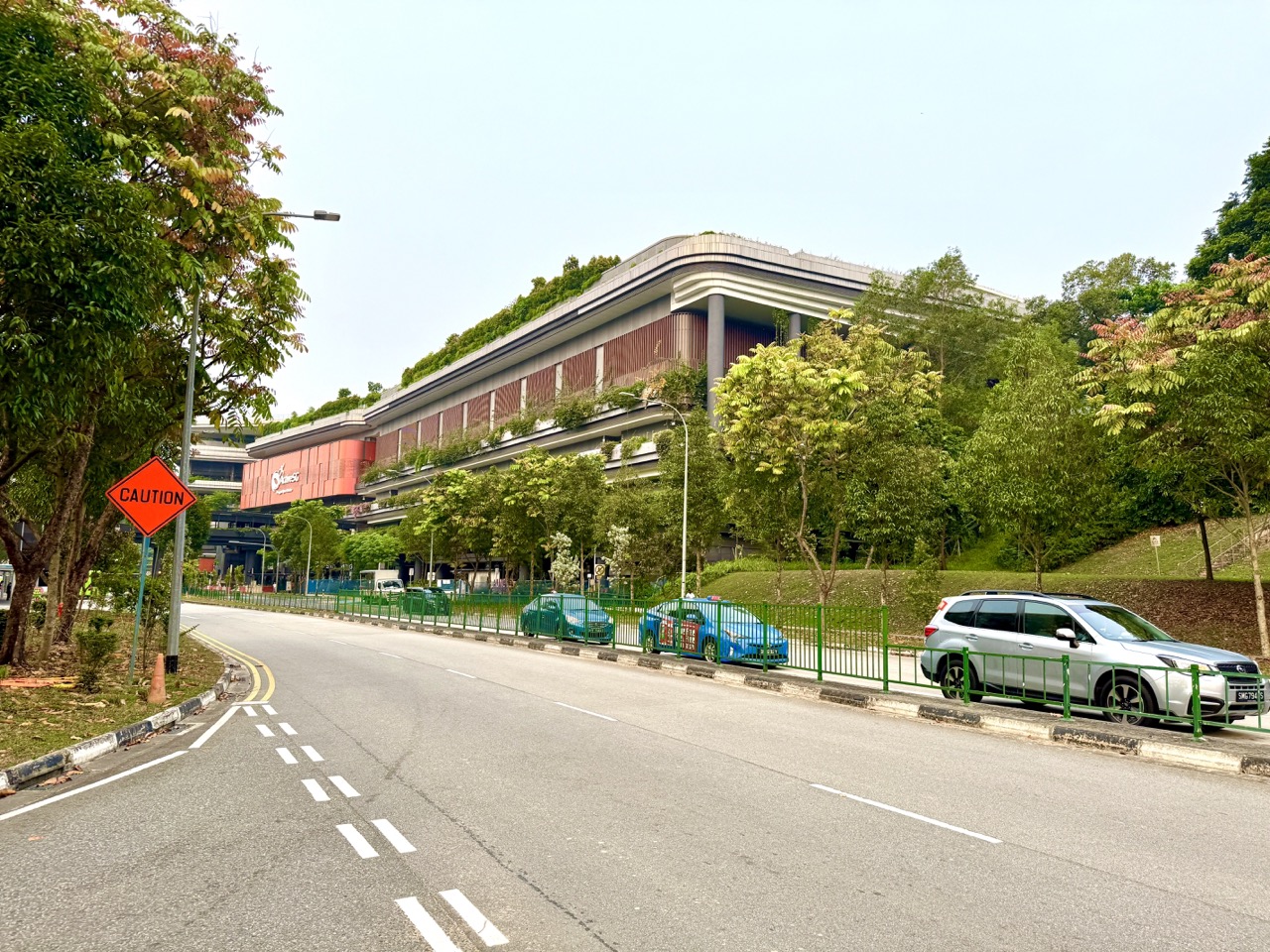
ActiveSG Punggol Sport Centre at 11 Sentul Crescent is a useful place to begin asking scientific questions, but a real investigation should first identify what is being studied, what can be measured, what must remain the same and whether the method is safe. A child may wonder why one ball bounces differently from another, why a court feels slippery after rain, or whether a new racket design changes a player’s result. These are not automatically fair tests. The centre began selected operations on 27 October 2026 and has an official opening scheduled for 22 November 2026. Its sports areas have their own booking and safety conditions; visitors must not turn a public court into a laboratory, collect bodily samples or interfere with other users. The same science-process skills can be taught using paper models, small supervised tabletop activities and clearly labelled fictional data at home.
Singapore’s 2023 Primary Science syllabus frames scientific learning around observing, asking questions, planning and conducting investigations, analysing evidence, evaluating explanations and communicating findings. A 2026 Ang Mo Kio Primary Science briefing illustrates the progression from basic observations to investigations with independent, dependent and controlled variables, as well as reliability, accuracy and validity. The most important lesson is not to produce a spectacular experiment. It is to design a question that the evidence can answer, do it safely, record unexpected results honestly and explain what remains uncertain. This article is about scientific inquiry itself, not a duplicate of sports Physics or a lesson about making impressive statistics charts.
- Venue context: Punggol Sport Centre, 11 Sentul Crescent; actual sport bookings at MyActiveSG+.
- Scientific question: define one observable relationship that can be investigated safely and ethically.
- Independent variable: the factor deliberately changed in a planned comparison.
- Dependent variable: the outcome or response measured.
- Controlled variables: other relevant conditions kept as consistent as practicable.
- A fair test: varies the intended factor while reducing other explanations; a poorly controlled test cannot establish a clear cause.
- Safe practice: use age-appropriate home or supervised classroom models, not public sports facilities or human endurance challenges.
- Evidence: record actual observations, units, procedures and limitations; distinguish recorded data from predictions.
- Repeats: repeated trials can help reveal random variation but cannot automatically remove systematic errors.
- Conclusions: state what the specific evidence supports, not what the researcher wanted to prove.
- This guide: worked inquiry plans, common mistakes, safe demonstrations, ethics, data integrity and a four-week learning sequence.
Definition lock: scientific inquiry is a method, not a list of facts
Scientific inquiry involves asking a question about the natural world, obtaining relevant evidence, using appropriate reasoning and evaluating an explanation. A child can memorise that friction affects motion yet still design a poor experiment if they change several factors at once and measure nothing consistently.
A useful scientific question includes an object or system, a potentially changing condition and an outcome. It must also be answerable using a method that is safe and feasible for the learner. Not every interesting question can be tested by a family at home.
Scientific inquiry therefore includes knowing the limits of the method. A student may learn more by identifying why an apparent experiment is unfair than by conducting a dramatic demonstration without controls.
Why Punggol is a context, not an experimental site
The new sport centre contains gym equipment, sports courts, access routes and a waterway setting. Those features can inspire questions about materials, motion, exercise, surfaces and public infrastructure. But inspiration is not permission.
A public court booking is for the specified sport, not for placing test objects on the floor, measuring strangers, changing lighting or conducting controlled sound tests. A family must also respect photography and filming restrictions.

For ordinary educational work, use a safe table at home, approved school apparatus or publicly available diagrams. A valid investigation depends on its design, not the prestige or size of the location where the idea arose.
Start with something that can actually be observed
A child may say, “This sports shoe is better.” The word *better* is too vague to test. Does the child mean more comfortable, lighter, longer-lasting, more durable or suitable for indoor grip? Each is a different question requiring different definitions and evidence.
Before planning, ask exactly what observation would count as an answer. A small paper model may be used to test a narrow geometric feature, while the safety and grip of commercial sports shoes require professional methods.
The first skill is turning a vague impression into a carefully defined question. Sometimes the correct outcome is deciding that a family cannot investigate the claim safely.
Observation and inference are different
An observation describes what was directly noticed or measured. An inference offers a possible explanation. “The paper model reached the marked line” is an observation. “It travelled farther because this material reduced friction” is an inference requiring evidence.
Students often mix these levels when writing conclusions. A visible difference is not necessarily proof of one cause, especially when many conditions changed.
Ask the child to make two columns: what happened and what might explain it. The separation helps prevent confident assumptions from being mistaken for measurements.
Predictions are not guaranteed outcomes
A prediction states what the investigator expects may happen. It is useful because it encourages a student to think about the relationship before seeing the result. However, a prediction is not a fact to be defended regardless of evidence.
A child may predict a cardboard model will support a lightweight paper load more consistently than a single sheet of paper. The test might produce mixed results. That is an opportunity to examine the method, not alter the recorded observations.
A successful science lesson does not require the original prediction to be correct. It requires responsible reasoning about what happened.
A hypothesis should be testable
A hypothesis can propose a relationship between variables, such as “Under the same conditions, adding a fold to this paper strip may reduce its downward deflection under the same small load.” This is a specific relationship that could be investigated with an appropriate low-risk model.
A statement like “folded paper is always stronger” is much broader and may not be supported by one small demonstration. The material, geometry and loading conditions matter.
Use wording that matches the intended method. The point is to make a claim that could be challenged by evidence, not write an impressive sentence immune to testing.
The independent variable is the intended change
In a fictional paper-strip model, the learner might compare an unfolded strip with an otherwise identical strip given one defined fold. The presence of the fold is the independent variable.
For the comparison to be useful, the paper type, strip dimensions, supports and loading procedure should be held as consistent as possible. Otherwise, the experiment may change more than the intended factor.
Independent does not mean unrelated. It means the factor deliberately selected for variation in the design. The student should be able to identify it in one precise phrase.
The dependent variable is the measured outcome
The dependent variable is what the investigator measures in response to the change. In the paper-strip example, it might be the vertical deflection measured under a small fixed mass, with a consistent procedure.
The student must specify units and a reference position. “It bends a lot” is difficult to compare across trials. “The midpoint moved downward by a measured number of millimetres relative to the starting position” is clearer, provided the apparatus and method are suitable.
Choose a measurement that can be gathered safely and reasonably accurately. A narrow precise outcome is better than several vague judgements.
Controlled variables reduce alternative explanations
Controlled variables are other relevant factors that are kept the same where possible. For the paper-strip test, these might include paper type, strip length, distance between supports, load and observation time.
If the folded strip also happens to be shorter or thicker material, it becomes difficult to know what caused the observed difference. The test may still be interesting, but the causal claim becomes weaker.
A child should list the likely influences before beginning. The list is a planning aid, not a promise that every possible environmental factor can be controlled perfectly.
A fair test isolates a meaningful difference
A fair test aims to compare conditions so that the intended change is the main systematic difference. It does not mean ensuring both sides get the same result or forcing two children to perform equally.
In a home model, two paper strips can be compared under a consistent small load. In a real sports game, two people will not necessarily have identical physiology, experience and technique. Using humans can introduce ethical and methodological complications well beyond a simple school experiment.
Fairness in science concerns the evidence-generating comparison. It should not be confused with fairness in sport competition or court allocation.
Why human sports performance is a difficult school experiment
Suppose a learner wants to find out whether one racket “makes everyone better.” Performance is influenced by practice, strength, skill, fit, weather, opponent, fatigue and many other factors. A short family match cannot isolate the racket as the cause.
Testing minors under pressure can also create unnecessary distress or privacy concerns. A student should not ask strangers to complete strenuous trials or collect biometric information without appropriate consent and oversight.
For basic scientific method, use controlled paper models and fictional datasets. A research question that genuinely involves human performance may require qualified ethics, sport science and safety procedures.
A safe tabletop model: choosing the question
Consider an age-appropriate paper experiment supervised by an adult. The question could be: “Does adding a specified fold to a paper strip change how much it bends under the same small safe load?” First decide whether the materials and setup are appropriate for the child.
Use clean paper, suitable supports and a very light object that will not cause injury if it falls. Avoid sharp cutting, heavy weights or any arrangement that might collapse onto a child. The paper model is not intended to hold people or sporting equipment.
The educational objective is a controlled comparison, not designing a load-bearing device for real use.
Write the method before obtaining results
The student should describe the intended paper dimensions, support distance, way the fold is made, load position, observation timing and measurement method before beginning. This helps prevent accidental changes after seeing the results.
If a method needs modifying for safety, change it, but record what changed. Do not silently rewrite the procedure later to make it appear that every trial followed an identical plan.
Science relies on transparency. The reader should understand what the investigator actually did, not just the conclusion they wish to present.
Use a control condition where useful
A comparison may include a baseline condition, such as an unfolded paper strip, alongside a version with the planned fold. The baseline helps the student interpret what difference the fold made under the specific method.
The word *control* does not mean a condition expected to give zero or a deliberately bad result. It is a suitable comparison point. Some investigations use several controls or reference conditions depending on the question.
Younger pupils can begin with two clearly labelled setups. Older pupils can explain why the baseline helps distinguish explanations.
Keep the load appropriate and supervised
A paper-strip demonstration should use a light, age-appropriate load and stable supports. Do not increase the load until the structure fails dramatically or replace the paper with a real shelf, sports net or safety barrier.
If the setup becomes unstable, stop. The experiment is not worth creating a falling-object or small-parts hazard. Choose a safer paper-only demonstration or use fictional data if the physical model is unsuitable.

Scientific reasoning can be learnt without maximising physical force. The quality of the method matters more than the spectacle of the result.
Measuring deflection requires a reference
To measure bending, identify the strip’s starting position and a consistent point such as its midpoint. Then measure change relative to that reference after placing the same small load under the specified conditions.
If one trial measures the left edge and the next measures the middle, the results are not directly comparable. If the ruler is held at a different angle, reading errors may occur.
Teach the student to label the measurement point and use the same unit. Clear measurement conventions are part of reproducibility.
Repeat trials to observe variation
One result may be influenced by a small inconsistency in folding, load placement or ruler reading. Repeating trials can show whether outcomes are reasonably consistent under the method.
A student might conduct three or five suitable low-risk repeats, depending on available time and the task. Record every result instead of keeping only the most attractive. Repeats do not make an unsafe experiment acceptable, and they do not automatically remove a systematic flaw.
The purpose is to understand variation, not guarantee that all readings become identical.
Reliability and validity are different
Reliability concerns consistency under repeated measurements or procedures. Validity concerns whether the method actually measures or tests what it claims to investigate.
A ruler that always reads two millimetres too high might produce repeatable but inaccurate values. A study of “sporting skill” measured only by the colour of a racket would not be valid, even if the colour is recorded reliably.
Students should not use reliability, accuracy and validity as interchangeable praise words. Each identifies a different quality of evidence.
Accuracy and precision are different
Accuracy concerns closeness to an appropriate true or reference value, while precision concerns how closely repeated measurements agree with one another. They often overlap but are not the same.
A badly calibrated instrument may produce tightly clustered results that are consistently wrong. A correctly calibrated instrument may still produce scattered results if the method is inconsistent or conditions vary.
A student can understand the distinction through invented targets and measurement readings, without conducting complex calibration in a public sports venue.
Instrument resolution matters
A ruler marked in millimetres provides a different level of detail from a ruler marked only in centimetres. A student should not report a paper deflection to six decimal places when the instrument could not resolve such tiny changes.
False precision makes numbers look authoritative without increasing evidence. State a measurement to an appropriate level of detail and note uncertainty when relevant.
An honest answer such as “approximately 4mm” can be better than a highly precise value manufactured from a blurry photograph or uncertain reading.
Parallax can affect a reading
Parallax error occurs when the apparent alignment of a mark changes because the observer views it from the wrong angle. A child reading a ruler from the side may obtain a different apparent value than when viewing it appropriately.
Teach the learner to position their eye consistently and avoid awkward or unsafe postures. The principle can be demonstrated with an ordinary classroom ruler and paper, not public facility measurements.
The important lesson is that measurement involves procedures and instruments. Numbers do not become automatically correct merely because they are written neatly.
Random errors and systematic errors
Random errors vary unpredictably from trial to trial and can contribute to scatter. Systematic errors tend to shift results consistently because of a flaw in the method, calibration or assumption.
Repeated trials may help characterise random variation, but they do not necessarily correct a systematic bias. If a ruler starts from the wrong zero point every time, repeating the measurement can reproduce the same error.
A student should diagnose the method rather than simply increase the number of repeats when results look strange. Better design can be more valuable than more data.
Recording the data honestly
Create a table with trial number, condition, measurement and unit. Include all readings, even those that differ from the prediction. If an attempt failed because the setup collapsed or the ruler slipped, record the problem and decide transparently whether the trial can be interpreted.
Never invent missing measurements because the graph looks incomplete. Do not alter a value to bring it closer to the average.
Scientific integrity means giving future readers enough information to evaluate what happened. Honest imperfections are more useful than fabricated perfection.
Graphs help but do not repair bad methods
A graph can make a pattern visible, but it cannot establish that the underlying experiment controlled relevant variables. Two neat lines might simply reflect how the student changed several conditions simultaneously.
Use appropriate axes, units and labels. If comparing categories, a bar chart may suit the data; if measuring a continuous relationship, another graph may be more appropriate. The display should support the actual research question.
Students should interpret the observed pattern cautiously, especially when there are few trials or large measurement uncertainties.
A difference in readings may be too small to interpret
Suppose two conditions yield readings that differ by one millimetre, but the ruler and method vary by several millimetres between repeats. The apparent difference might not be meaningful under that setup.
Do not announce that the first material is definitively superior. Explain the uncertainty and how better control or measurement could help, if safe and practical.
This is a difficult but valuable scientific habit: recognising when the evidence cannot distinguish two explanations. An honest inconclusive result is still a valid learning outcome.
A second safe model: paper rectangles and airflow
A child might compare how two identically sized paper rectangles fall when released from a small safe height. The original question could concern folding or orientation, but the method must recognise influences such as air currents, release technique and the paper’s mass distribution.
A paper model may help illustrate the importance of controlling variables, but it does not replicate a real badminton shuttlecock. Do not call the result proof of professional shuttlecock aerodynamics.
If the child is young or the space is unsuitable, use a diagram and fictional observations rather than repeatedly dropping objects.
Why a paper shuttle model is not a real shuttle
A badminton shuttlecock involves materials, shape, rotation and aerodynamic behaviour that a small paper craft may not accurately reproduce. A simplified model can demonstrate an idea but also leave out essential features.
Students should list what their model represents and what it does not. For example, it may imitate a broad shape but not the specific mass distribution or air drag of a commercial shuttle.
Understanding model limitations is a central scientific skill. Simplification is useful when acknowledged, misleading when hidden.
A third model: fictional rolling distances
Imagine a table of invented toy-car rolling distances under two ramp surfaces, with the same car and release position. Students can design a fair-test method on paper and identify what must remain constant. They need not physically build the ramp.

If an appropriately supervised safe model is used, it must be small, stable and away from people, pets, stairs and electrical equipment. No public sports surface should be modified.
The aim is to reason about surface effects and experimental control, not produce a guaranteed measurement of any actual Punggol court’s friction.
The same car and release position matter
A rolling comparison becomes less interpretable when one trial uses a heavier car or the object is pushed with a different force. Keeping the car and release point the same reduces alternative explanations for a changed distance.
Students can explain why a release from rest differs from a deliberate push. In the second case, the initial push may vary and affect the result.
This is an opportunity to identify possible confounding variables. The quality of the answer lies in naming the sources of variation, not merely saying “make it a fair test.”
The surface needs a clear definition
Calling one ramp “rough” and another “smooth” may be insufficient if their exact materials and conditions are unknown. A good investigation identifies the surface being compared and whether it is dry, clean and consistently placed.
The student should not assume that all roughness causes the same outcome. Friction, rolling resistance and deformation can depend on the interacting materials and geometry.
A safe fictional example can explore these distinctions without encouraging anyone to apply chemicals or grit to an actual sports court.
A control is not the same as the normal condition
In everyday speech, a control may mean something regulated by a person. In experiments, a control condition is a reference that helps interpret a change. These are different meanings.
For a toy rolling model, the baseline might be the original ramp surface. The experimental condition might use a different covering. Both must have relevant conditions recorded.
A student should explain why the baseline is useful instead of assuming the word control makes the conclusion scientific. Terminology needs a purpose.
Investigations can be observational instead
Not every useful scientific inquiry manipulates a variable. An observational study records conditions as they occur, while an experiment deliberately changes conditions under a planned design.
A family might describe how shaded and unshaded public paths feel during a safe suitable outing. That can generate questions, but comfort descriptions alone do not measure air temperature or establish a causal heat difference. The family should not walk in dangerous conditions to complete the observation.
If a question needs precise temperature data, use appropriate official records or approved instruments under a suitable method. The observational and experimental approaches have different strengths.
Observation without interfering with people
A child visiting Punggol can observe publicly visible building forms or greenery from a permitted route. They should not film other users, count identifiable children’s body shapes or ask strangers for medical information.
A good observational record may contain the date, location, visible feature and weather context, with no unnecessary personal data. When a person is present, privacy and consent considerations apply.
The quality of fieldwork is not measured by how intrusive it becomes. Appropriate non-personal observations can teach scientific description safely.
Climate questions need suitable evidence
Punggol’s waterways and built surfaces can inspire questions about shade, heat and humidity. However, a student cannot reliably conclude that a particular walkway is two degrees cooler simply because it feels pleasant.
Use official weather information and appropriate measurement methods when quantitative claims are necessary. Heat stress, lightning and haze may make outdoor investigations inappropriate on some days.
An honest desk-based inquiry is preferable to a dangerous field visit. Safety is part of scientific decision-making rather than an interruption to it.
Science should not create a maintenance hazard
Do not test slipperiness by pouring water on a sports court, scatter small objects near a ramp, attach devices to facility equipment or conduct improvised noise tests in an indoor hall. Such actions can put other visitors at risk.
When a genuine hazard is noticed, stop the affected activity and report it to on-duty staff. A visitor is not authorised to repeat the failure or collect experimental data from the unsafe condition.
Scientific curiosity carries responsibility. In a shared public environment, preventing harm comes before producing a dramatic observation.
Human consent and privacy are scientific issues
Research involving people can raise questions about consent, personal information, potential harm and fairness. A child should not be asked to compare classmates’ health, appearance or sporting ability without appropriate supervision and safeguards.
For basic school inquiry, fictional or anonymous data are sufficient to teach many ideas. If a formal school investigation involves volunteers, follow the teacher’s ethics and safety requirements.
An experiment is not well designed simply because the numbers are interesting. The process used to obtain them must also be appropriate.
Avoid collecting health readings casually
Pulse, breathing, body temperature and other measurements can reveal personal information or be misinterpreted. An independent blog should not prescribe a family endurance test or diagnose fitness from one reading.
Use clearly hypothetical data to demonstrate units or graphing. If a person needs a health assessment, use appropriate qualified services rather than a student-designed competition.
The difference is important: biological concepts can be learned without converting a public sports outing into an unauthorised medical study.
Correlation alone does not establish cause
Suppose a fictional dataset shows that participants who practise more often have longer rallies. The relationship may reflect practice, prior skill, motivation, age, coaching or several other factors. The data alone cannot isolate one cause.
A controlled design would need to account for relevant alternatives, and real human studies can be complex and subject to ethical requirements. Students should avoid claiming that the graph proves a particular training method works.
Science proceeds by testing explanations against evidence, not turning every association into a guaranteed rule.
A single case is not a universal law
One paper strip folding in a certain way or one family enjoying a new activity does not establish a universal conclusion about all materials or participants. Context, sample size and variation matter.
A student should describe the scope precisely: “Under this small tabletop setup, the folded paper deflected less in these trials.” That is different from “Every folded material is stronger.”
Careful limitation is a sign of good reasoning. Scientific claims become more reliable when the writer does not exaggerate beyond the tested conditions.
Repeatability versus reproducibility
Repeatability often refers to obtaining consistent results using the same method under similar conditions. Reproducibility can involve another person or setup obtaining comparable results following the documented procedure, though terminology may vary across disciplines.
A student can learn the general importance of clear methods by asking a family member to understand the written instructions. The other person need not repeat a potentially unsafe test merely to prove a point.
A procedure should be understandable enough to evaluate. Vague descriptions make it difficult to identify why two results differ.
Negative results can be informative
A hypothesis may predict a clear difference between two paper designs, but the observations may be nearly identical under the method. This does not automatically mean the entire project was wasted.
Perhaps the factor has little measurable effect under those conditions, perhaps the measurement lacks resolution, or perhaps the test needs better control. Different explanations should be considered.
Students should not invent a significant difference to make the result look exciting. An inconclusive outcome can teach scientific reasoning when it is examined honestly.
Changing the question after seeing the data
Sometimes the original question turns out to be unanswerable with the available measurements. A student may refine the question and design a new study. That can be sensible, but the revision must be transparent.
Do not silently rewrite the aim to match whatever happened and then present the result as confirmation of a prediction made beforehand. Keep the original aim and explain why the method changed.
Scientific integrity includes documenting decisions, not merely producing a neat final report.
The role of a scientific model
Models simplify reality to help describe, explain or predict certain phenomena. A diagram of a court may ignore paint thickness; a paper shuttle may ignore true aerodynamics; a toy rolling ramp may not reproduce court traction.
A good model states what it represents and where it may fail. The learner can then use it for a limited question without overclaiming.
The MOE Science framework emphasises models and evidence-based explanation. Students should see models as useful tools that can be improved when their limitations become clear.
Working with a hypothesis and a diagram
A child may struggle to plan an investigation from words alone. A simple diagram can show the two setups, the controlled support distance and the point where the outcome is measured.
Ask the learner to label the changed factor and the measured response directly on the picture. If the diagrams show different paper sizes even though size was supposed to remain fixed, the mistake becomes visible.
This is a practical method of diagnosing an unfair test before performing it. A careful diagram may prevent unnecessary trials.
Evidence tables need units
A table of “deflections” labelled 2, 3 and 4 is incomplete unless we know whether the numbers are millimetres, centimetres or something else. Include column headings and units such as “midpoint deflection (mm).”
If the measurement was only estimated by eye, do not describe it as an instrument reading. Distinguish observed categories from numerical measures.
Clear records allow others to evaluate what the numbers mean. A spreadsheet cannot repair missing units through sophisticated formatting.
Explain the result in ordinary language
After presenting a table, write a sentence describing the observed pattern. For example: “The folded strip appeared to bend less under the chosen small load in these trials.” Then state a limitation, such as variation in the fold or measurement angle.
Do not immediately jump to a sweeping claim about engineering or sports equipment. The explanation should remain connected to the actual sample, method and measurements.
Students can develop more advanced statistical techniques later. The first priority is making a truthful and understandable statement.
Case study: the unfair shuttle comparison
A fictional student compares a feather shuttlecock with a plastic one and declares that one is better after playing two matches. But the partners, wind, temperature, racket, skill level and game intensity may have differed. The study does not isolate shuttle material.
The student could still record the experience as an informal observation, but should not present it as a controlled experiment proving a universal property.
The learning is to identify confounding variables and revise the question. Sometimes the best improvement is choosing a simpler safe model or an authoritative published source instead of repeating a complex real sporting comparison.
Case study: an original paper model
Two pupils want to compare folded and unfolded paper strips using an appropriate lightweight load. They write their method, prepare consistent paper dimensions under adult supervision and choose a clear measurement point.
After a few suitable low-risk trials, they record the results, including any unexpected variations. They discuss whether the support distance or fold precision may have affected the outcome.
The value lies in the planning and evaluation. The children do not claim they have certified a bridge, sports bench or public safety component.
Case study: a Punggol path observation
A family walks along a permitted route near Punggol Waterway on a day with suitable weather. The child notes which sections appear sheltered or exposed and records the date and route. They do not photograph strangers or claim measured temperature differences.
At home, the child identifies a question that would need more evidence: does the type of shelter systematically affect measured surface temperature? They consider what instruments and controls might be required, but do not conduct unsafe heat exposure.
This is still science learning. Formulating a responsible investigable question can be a meaningful outcome without performing every possible experiment.
Case study: a fictional sports graph
An older student receives an invented dataset showing the number of successful serves in several sessions. They identify that the number of attempts was not recorded, making it impossible to calculate a comparable success rate.
Instead of inventing denominators, they explain what is missing and propose a better recording design for a future legitimate study.
The example shows the relationship between research design and numerical interpretation. Statistics is only as useful as the data that the scientific question and method produced.
Primary 3 and Primary 4 learning
Younger Primary science pupils can develop observing, comparing, classifying and simple explanation skills through teacher-guided tasks. A family can ask them to identify which paper object is folded, which has a larger surface and what remains unchanged in a clearly labelled model.
Keep the investigation short, supervised and free from hazardous equipment. Children should understand what they are comparing before being introduced to complex terminology.
A useful success is a clear statement such as “Both strips were the same size, but one had a fold.” This is the beginning of controlled comparison.
Primary 5 and Primary 6 learning
Older Primary pupils can increasingly plan investigations, identify variables, interpret simple data and draw evidence-based conclusions, following the actual MOE syllabus. They can compare a prediction with the observations and discuss whether the test was fair.
The family can practise using a structured written report: aim, changed factor, measured response, controlled conditions, method, results, conclusion and limitation.
A student who finds these terms confusing should return to a simpler demonstration rather than memorise the headings without understanding them. Scientific vocabulary becomes useful only when it describes an actual method.
Lower Secondary learning
Lower Secondary students may extend inquiry to more explicit hypotheses, measurement uncertainty, models and the nature of scientific evidence. They can discuss why repeating a biased method does not guarantee accuracy, why correlation is not causation and when the available evidence is insufficient.
The learner should use current school guidance and safety instructions for practical work. A blog cannot certify classroom equipment or replace teacher supervision.
The educational aim is mature reasoning: knowing what is observed, what is inferred, which alternative explanations remain and how a better investigation might be designed.
A four-week inquiry plan
Week one: identify a simple safe question and distinguish observation from inference. Week two: write a fair-test plan, naming independent, dependent and controlled variables. Week three: use a supervised harmless paper model or clearly fictional dataset to practise recording and interpreting results. Week four: evaluate reliability, validity, limitations and how the method could improve.
No active sports-court testing is needed. A child may choose a home model inspired by a sport but should not pretend it directly certifies professional equipment.
The project is successful when the student can defend the logic of the method, not when every predicted result appears.
Common scientific inquiry mistakes
Do not confuse a hypothesis with a proven fact. Do not change multiple factors and claim one caused the result. Do not treat missing data as zero. Do not hide trials that disagree with the prediction. Do not report precision beyond the instrument’s ability. Do not assume repeated trials remove systematic bias.
Most importantly, do not experiment on public equipment, strangers or children to make a school assignment exciting. Safety and ethics are part of scientific quality.
A strong inquiry states exactly what was tested, what was observed, what conclusion is justified and which questions remain open.
Frequently asked questions
Can we conduct school experiments inside ActiveSG Punggol? Do not assume permission. Public sport facilities have specific permitted uses; use approved school or home models.
What is an independent variable? The factor deliberately varied to investigate its relationship with an outcome.
What is a dependent variable? The response or outcome measured in the investigation.
Why control other variables? To reduce alternative explanations for differences observed between conditions.
Does repeating a test make it automatically fair? No. Repetition does not remove all systematic biases or poor experimental design.
Is a prediction the same as a conclusion? No. A prediction is stated before observation; a conclusion interprets the evidence obtained.
Can the result disagree with the hypothesis? Yes. The investigator should report that outcome honestly and examine the method.
Can a paper model prove a professional shuttlecock is better? No. Simplified models have limitations and are not performance certifications.
May we collect strangers’ heart rates for Science? Not without appropriate ethical and safety arrangements, and it is unnecessary for the lessons here.
Is an inconclusive result a failure? No. It can identify method limitations or show that the available evidence cannot distinguish the hypotheses.
Official sources and your next step
Start with the MOE Primary Science teaching and learning syllabus and Ang Mo Kio Primary’s 2026 Science process-skills presentation. For more advanced inquiry concepts, see the MOE Lower Secondary Science syllabus. Actual Punggol facility permissions are governed by MyActiveSG+ and the official event information. Distinct companion guides cover forces, friction and bounce and statistical sampling and graph interpretation.
Your next step: take one safe paper-based question, identify the factor changed, the response measured and at least three conditions to control. Then explain what evidence would make the conclusion trustworthy and what would remain uncertain.
Editorial note: Independent educational scientific-method guide prepared 4 November 2026. All experimental models are small and illustrative; no public facility testing, human performance trials or product safety certification is authorised. Appropriate school supervision and official venue rules take precedence.


